Missing attribution
Michael Chatt/iStock via Getty Images
Jim Cumming/Shutterstock.com

Brent Coulter/Shutterstock.com
Cavan Images/iStock via Getty Images
ManuKro/iStock via Getty Images
Rob Riggins/iStock via Getty Images
Joshua Moore/iStock via Getty Images
ManuKro/iStock via Getty Images
ArendTrent/iStock via Getty Images
Joesboy/iStock via Getty Images
thangs1/Shutterstock.com
Sandy Hedgepeth/Shutterstock.com
Kevin Schumacher/iStock via Getty Images
Diane079F/iStock via Getty Images
Debraansky/iStock via Getty Images
danlogan/iStock via Getty Images
Joan D Squared/iStock via Getty Images
KathyKafka/iStock via Getty Images
LarryKnupp/iStock via Getty Images
Marine2844/iStock via Getty Images
christiannafzger/iStock via Getty Images
Bob Balestri/iStock via Getty Images
stuckreed/iStock via Getty Images
artiste9999/iStock via Getty Images
WenLaf/iStock via Getty Images
ablokhin/iStock via Getty Images
6381380/iStock via Getty Images
Paul Reeves Photography/Shutterstock.com
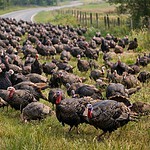


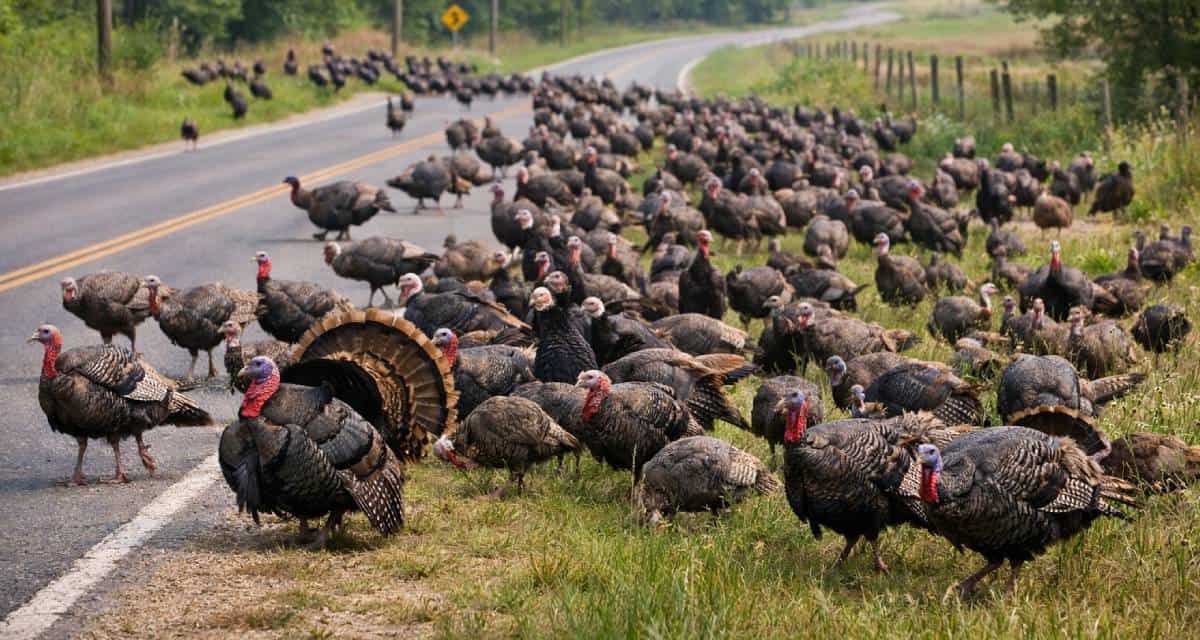
Missouri's 400,000 Wild Turkeys and 27 Other States With Large Flocks
Thanksgiving puts turkey front and center, usually roasted and surrounded by mashed potatoes. But the birds on holiday tables are mostly domesticated turkeys raised on farms, not the wild turkeys that spend their days roaming forests, fields and the occasional suburban street. Their wild cousins can run, fly short distances and survive in landscapes that would seem completely foreign to a barnyard bird.
Wild turkeys are also one of America's big conservation comeback stories. Hunting pressure and habitat loss reduced their numbers dramatically in the past, but reintroductions, habitat work and regulated harvests helped populations return across much of the country. The comeback hasn't been equal everywhere: some states are seeing strong flocks, while others are still wrestling with poor nesting success and fewer young birds surviving each year.
For this Thanksgiving-season look at 28 states, we've placed the states in alphabetical order instead of ranking them from largest to smallest. The population figures are estimates, not direct counts. Most come from a national study published in November 2025 that asked state wildlife biologists for their 2024 estimates; where that study had no figure, we've identified an older, dated estimate from another source or made the gap clear. Methods and years differ, so these numbers shouldn't be treated as a perfect state-by-state leaderboard.
Alabama
Historical benchmark: about 368,000 in 2019; no comparable 2024 estimate reported.
Alabama has been turkey country for generations, and its mix of pine forests, hardwood bottoms and open clearings gives the birds a lot of room to roam. A national wildlife status review listed roughly 368,000 wild turkeys for 2019, but Alabama did not supply a comparable statewide population estimate for 2024. That's an important distinction: repeating the old number as though someone counted that many birds this year would be misleading.
The Alabama Department of Conservation and Natural Resources instead relies on harvest reporting, hunter observations and habitat research to follow the flock's health. Good turkey habitat needs more than trees; it also needs openings and vegetation where hens can nest and young birds can find insects. Some areas have experienced population and reproductive challenges, so the story here is one of active management rather than an endless population boom.
Arkansas
2024 estimate: approximately 113,000 wild turkeys.
Arkansas has plenty of the wooded hills and streamside habitat that eastern wild turkeys favor. A national survey of state turkey biologists estimated about 113,000 birds in 2024, compared with roughly 100,000 in the preceding 2019 assessment. That doesn't mean every county is bursting with gobblers, but it offers a more recent benchmark than the 90,000 figure in the older version of this story.
The Arkansas Game and Fish Commission watches spring harvest results and late-summer brood observations to understand how birds are faring. Young turkeys, known as poults, are especially vulnerable during their first weeks, and nesting conditions can make or break a season's reproduction. Managing forest openings and young, brushy cover helps give hens and their chicks a better shot. It's not quite as glamorous as a Thanksgiving centerpiece, but that's how a healthy flock gets made.
California
2024 NWTF guide estimate: approximately 250,000; no comparable figure in the later national survey.
California might not be the first place that comes to mind when you picture wild turkeys, but the birds are widespread in parts of the state's oak woodlands, foothills and mixed agricultural landscapes. The National Wild Turkey Federation's 2024 spring guide put the population at roughly 250,000. The later national status survey did not receive a comparable 2024 estimate for California, so the 250,000 figure should be treated as a dated guide estimate, not a precise new census.
Turkeys were introduced and established in California through past wildlife-management efforts, and many now live close enough to people to wander through parks, vineyards and neighborhoods. That visibility doesn't tell the entire population story. Drought, changing land use, predators and local habitat quality can all affect nesting and survival. The best places for these birds typically offer a mix of protective cover, feeding areas and somewhere to roost after dark.
Idaho
2024 estimate: approximately 53,700 wild turkeys.
Idaho's wild turkeys aren't evenly sprinkled across the mountains. They favor pockets of suitable habitat, including forest edges, agricultural valleys and river corridors where food and winter shelter are available. A national status survey estimated 53,700 birds in 2024, up from roughly 30,000 in the 2019 survey. That made Idaho one of the clearer examples of an increase in the latest comparable state estimates.
Merriam's turkeys and birds with mixed subspecies ancestry occur in Idaho, reflecting its history of introductions and translocations. State wildlife managers track hunting results and observations to learn where flocks are doing well and where winters or habitat limits are holding them back. The birds may look sturdy, but deep snow and a shortage of accessible food can still make life difficult. A successful fall flock begins with surviving the previous winter and raising young through summer.
Indiana
Historical benchmark: approximately 120,000 in 2019; no comparable 2024 estimate reported.
Indiana's wild turkeys are a restoration success story. After disappearing from much of the state, they were brought back through releases and habitat management. A national assessment placed the flock at roughly 120,000 in 2019, but the more recent cross-state review did not include a comparable 2024 abundance estimate. The old 125,000 figure should therefore not be presented as a fresh head count just because it sounds reassuringly exact.
You can find turkeys in a variety of Indiana landscapes, especially where woodlands meet fields and open ground. Those edges provide nesting cover, insects for young birds and the seeds and nuts adults eat throughout the year. Wildlife officials study harvest and reproductive patterns to make hunting decisions, although a good hunting year doesn't necessarily prove that the statewide population is growing. The comeback is real; the exact size of today's flock is less certain.
Iowa
2024 estimate: approximately 150,000 wild turkeys.
Iowa's farm fields may get most of the attention, but the state's wooded river corridors, oak stands and brushy edges also support wild turkeys. A national survey reported a 2024 estimate of about 150,000, compared with a range of 110,000 to 150,000 in the 2019 assessment. The numbers point to a sizable flock, but they don't erase concerns about how many poults survive from one nesting season to the next.
Iowa's Department of Natural Resources has long used brood surveys, harvest information and habitat projects to guide turkey management. For a hen, a nesting spot with cover nearby can matter more than how picturesque the surrounding woods look to humans. Insects are particularly important food for poults, and rainy or cold stretches can complicate their early weeks. If wild turkeys appear outside your Thanksgiving window, you're seeing the result of years of restoration work and ordinary annual survival struggles.
Kentucky
2024 national-survey estimate: approximately 300,000; Kentucky published a different pre-season estimate.
Kentucky has one of the larger reported wild turkey populations in the latest national comparison. The survey of state biologists listed approximately 300,000 birds for 2024. An earlier Kentucky wildlife-agency status report had estimated about 400,000 before the 2024 spring season, using its own harvest and brood-survey approach. Those two estimates should not be treated as interchangeable, and neither belongs in the article without a date and an explanation of its source.
Eastern wild turkeys make use of Kentucky's forested ridges, pastures and field edges, while the Department of Fish and Wildlife Resources monitors reproductive success and hunter harvests. Hens need concealed nesting areas and open enough ground for young birds to search for insects. Wildlife population estimates are models, not a line of turkeys passing through a turnstile, and different methods can produce different totals. The state's large flock is well supported, even if the exact number is debatable.
Louisiana
2024 estimate: approximately 55,000 wild turkeys.
Louisiana isn't close to the top of this list in sheer numbers, but its eastern wild turkeys remain an important part of the state's forests and bottomlands. A national survey estimated roughly 55,000 in 2024, compared with 40,000 to 50,000 in the preceding 2019 report. That change suggests improvement in the reported statewide total, although any individual stretch of habitat may tell a different story.
Wildlife managers are paying close attention to nesting success, survival and the types of cover a hen needs to raise poults. Prescribed fire and other habitat treatments can help create the varied vegetation that turkeys depend on, particularly in pine-dominated landscapes. Louisiana's turkeys have faced long-term challenges, so it would be premature to call the issue solved on the strength of one estimate. A good rebound is welcome news, not an excuse to stop monitoring the birds.
Maine
2024 estimate: approximately 70,000 to 80,000 wild turkeys.
Maine's turkey comeback would have seemed unlikely when the birds had been absent from the state for generations. Translocation and restoration efforts helped bring eastern wild turkeys back, and a national survey estimated between 70,000 and 80,000 birds in 2024. That's a remarkable change from their historical scarcity, even though severe winters can still make the species' northern home a tough place to live.
Maine's mixed woodlands, farmland edges and increasingly familiar suburban flocks show how adaptable wild turkeys can be. In spring, hens search out quiet nesting cover; by fall, family groups may be feeding on acorns, seeds and leftover crops. Wildlife biologists use harvest and observation information to keep track of the population rather than assuming that every year will look like the last. Even a bird that seems perfectly at home in a backyard still depends on good habitat beyond the fence.
Maryland
2024 estimate: approximately 50,000 wild turkeys.
Maryland's forests and agricultural edges support a wild turkey population estimated at about 50,000 in 2024, according to a national survey of state wildlife biologists. That's higher than the roughly 40,000 reported for 2019 in the same long-term series. The state has come a long way from the era when habitat loss and excessive hunting had made turkeys scarce in much of their former range.
The Maryland Department of Natural Resources uses banding, field studies and hunter information to learn how adult birds survive and how many young join the fall population. Turkeys aren't simply creatures of deep, unbroken forest; they often do best where woods meet openings and reliable food sources. That mix makes Maryland's countryside surprisingly accommodating, even as biologists watch for problems that could affect future nesting seasons. Seeing a flock cross a back road is a small reminder of a decades-long conservation effort.
Michigan
Historical benchmark: approximately 200,000 in 2019; no comparable 2024 estimate reported.
Michigan has one of the clearest comeback stories in northern wild turkey country. Once locally extinct, the birds were reintroduced and now occur in every Michigan county, according to the Department of Natural Resources. The last population figure in the national status comparison was about 200,000 in 2019; a comparable total wasn't reported for 2024, so that older number shouldn't be mistaken for a current statewide count.
The state continued its citizen-science brood survey in summer 2026, asking residents to report hens and poults to help biologists understand reproduction. That information matters because a successful spring hatch does not necessarily translate into many birds surviving the summer. Michigan's woodlots, farmland and rural roads can make turkeys easy to spot, but local winter conditions still matter. The agency's recent assessments describe the population as broadly stable to increasing, rather than offering a new exact tally.
Minnesota
No comparable 2024 national count; Minnesota DNR has described a population exceeding 70,000.
Minnesota's turkey recovery began with a surprisingly small group: 29 wild birds brought from Missouri to southeastern Minnesota in the early 1970s. The Department of Natural Resources has since described a statewide population of more than 70,000, but the latest national status review did not provide a comparable 2024 total. That's a useful caution for a list that might otherwise make every number look equally current and precise.
Wild turkeys are now familiar along woodland edges, in farm country and in parts of the state once considered less promising habitat. The DNR follows harvest and brood information to track trends, although the exact statewide population remains difficult to measure. Turkeys can tolerate cold weather better than many people expect, but deep snow can limit their access to food. Minnesota's success says a lot about carefully chosen release sites and the birds' ability to find new territory.
Mississippi
2024 estimate: approximately 311,578 wild turkeys.
Mississippi has a substantial eastern wild turkey population, and the latest national survey put its 2024 estimate at 311,578 birds. That was above the range reported for 2019 and placed the state among the largest populations in the study. It's still worth remembering that a number this precise comes from estimating methods, not from wildlife workers individually counting 311,578 turkeys in the woods.
The Mississippi Department of Wildlife, Fisheries, and Parks monitors turkey reproduction through observations and hunter reporting, with particular interest in how many poults make it through summer. Warm-weather habitat isn't automatically good habitat: hens need nesting cover, and young birds need insect-rich openings to feed in. Population conditions also vary across the state's different landscapes. Mississippi's recent figures offer encouraging context, but wildlife managers will be watching whether that reproductive success holds up over more than one season.
Missouri
2024 estimate: approximately 400,000 wild turkeys.
Missouri is the standout in the most recent national comparison, with an estimated 400,000 wild turkeys in 2024. Among states that provided estimates for that study, Missouri reported the largest population, ahead of Texas. That's a more defensible claim than the old article's assertion that Texas had the nation's largest flock. The figure is still an estimate, and not every state supplied a current number, so it's best read as the largest reported total in that survey.
Missouri helped restore turkeys well beyond its borders by supplying wild birds for reintroduction programs in other states. At home, the Department of Conservation uses brood counts, harvest trends and habitat work to keep tabs on the species. Turkeys need a patchwork of forest, food sources and nesting cover, not just acres of mature trees. And while Missouri remains a turkey stronghold, researchers have watched reproduction and population declines in parts of the state. Even a big flock is no guarantee of an easy future.
Montana
2024 estimate: approximately 140,000 wild turkeys.
Montana's wild turkeys often look a little out of place against the state's enormous mountain-and-prairie scenery, but the right river valleys and wooded foothills suit them well. A national survey estimated approximately 140,000 birds in 2024. The primary subspecies reported in that assessment was Merriam's turkey, commonly associated with western pine forests and more open landscapes than the dense eastern woods many people picture.
Montana Fish, Wildlife & Parks monitors harvest results and works with landowners and other agencies on wildlife habitat. In a state with serious winter weather, accessible food and sheltered roosting areas can make a difference. Flocks may become very visible near agricultural fields or feeding areas during colder months, but those local gatherings don't necessarily indicate how many birds live statewide. The population is substantial, yet conditions can look very different from one valley to another.
New Hampshire
2024 estimate: approximately 45,000 to 50,000 wild turkeys.
New Hampshire's wild turkeys are hard to miss when a flock marches across a lawn, but their modern abundance took a great deal of effort. The birds were reintroduced in the 1970s after disappearing from the state, and a national survey estimated 45,000 to 50,000 in 2024. That puts the flock well beyond the small founding groups used during restoration, although each spring's nesting results still matter.
New Hampshire Fish and Game collects harvest information and keeps an eye on reproduction and local population changes. The birds feed on seeds, mast and insects, and they roost in trees despite their bulky appearance. Finding food under snow can be a winter challenge, particularly farther north. As with so many states on this list, the bigger lesson isn't just how many turkeys are around today. It's what suitable habitat and long-term protection allowed to happen after populations nearly disappeared.
New York
2024 estimate: approximately 208,600 wild turkeys.
New York's forests and farmland margins hold plenty of wild turkey habitat, and the latest national study listed approximately 208,600 birds in 2024. That was higher than the 180,000 reported for 2019, but the authors cautioned that New York's estimation method changed. In other words, it would be inaccurate to treat the two figures as a clean measurement of population growth.
The New York State Department of Environmental Conservation monitors summer brood sightings and spring hunting results to follow reproductive trends. Turkeys are common in many rural regions, yet the health of individual flocks depends on nesting conditions, predators, weather and changing land use. A flock strolling past a barn or backyard can seem almost tame, but these are capable, wary wild birds that usually retreat into nearby cover. The state's latest estimate deserves a place in the story, with its methodological footnote attached.
North Carolina
2024 estimate: approximately 270,000 wild turkeys.
North Carolina's wild turkeys have staged a comeback across mountains, Piedmont woodlands and coastal-plain habitats. The latest national survey estimated roughly 270,000 birds in 2024, close to the 265,000 reported for 2019. After generations of restocking and habitat protection, turkeys again occur throughout the state, although a single statewide figure can hide meaningful differences among regions.
The North Carolina Wildlife Resources Commission uses brood observations, harvest information and habitat management to understand where turkeys are thriving. Restored populations don't run on autopilot: hens need suitable ground cover for nests, and poults do best where they can move around and catch insects. A strong hunting season can be one useful indicator, but it's not the same as a direct population count. North Carolina's story is primarily a long-term conservation success with the usual year-to-year complications.
Ohio
2024 NWTF guide estimate: approximately 150,000 to 170,000 wild turkeys.
Ohio's wild turkeys have spread far beyond the limited areas where hunters first pursued them after restoration began. The National Wild Turkey Federation's 2024 guide estimated between 150,000 and 170,000 birds. Ohio did not provide a comparable abundance figure for the later national 2024 status survey, so that guide range is better than pretending an old single-number estimate is a fresh census.
The state's 2026 spring turkey harvest totaled 15,887 birds, according to the Ohio Department of Natural Resources, close to the previous year's result. That number describes legally checked harvests, not the overall wild population. Ohio biologists also study hen nesting and survival, which helps explain whether the next generation is doing well. Woodland edges and mixed farmland still give turkeys places to forage and roost, and the species' return remains one of the state's most successful wildlife recovery efforts.
Oklahoma
2024 estimate: approximately 94,000 wild turkeys combined.
Oklahoma's wild turkey story is more complicated than a single flock spread evenly across the state. A national survey of wildlife biologists listed about 88,000 Rio Grande turkeys and 6,000 eastern turkeys for 2024, or roughly 94,000 combined. That distinction matters because the two groups occupy different habitats and face different local pressures. The Rio Grande birds are most closely associated with the drier western landscapes, while eastern turkeys use more heavily wooded areas.
Oklahoma wildlife researchers have been examining nesting, survival and genetics as managers respond to regional declines. A statewide total by itself can't explain what's happening along every river bottom or wooded ridge. In the field, the quality of nesting cover, weather during the early weeks of life and adult survival all affect how many birds hunters and bird-watchers see. The combined estimate is useful, but it shouldn't erase Oklahoma's very different turkey populations.
Oregon
2024 estimate: approximately 45,000 wild turkeys.
Oregon's roughly 45,000 wild turkeys, as estimated in a national 2024 status survey, are a reminder that the Pacific Northwest has its own turkey story. Many birds live in southwestern Oregon and other suitable valleys, rather than across every square mile of the state. Oregon's flocks reflect introductions and mixed ancestry, and the birds have adapted to landscapes with a combination of woods, fields and places to roost.
The Oregon Department of Fish and Wildlife uses harvest reporting and habitat management to follow turkey populations and their impacts. Flocks sometimes gather around rural properties and gardens, which can make the birds seem more numerous than they are statewide. A dry summer, a severe winter or changes in the amount of suitable nesting cover can affect local conditions. The 45,000 estimate is useful context, but it's not a promise that every part of Oregon is equally good turkey habitat.
South Carolina
2024 national-survey estimate: approximately 80,000 wild turkeys.
South Carolina illustrates why a story about wild turkey populations can't be nothing but celebration. The national status survey estimated about 80,000 birds in 2024, down from approximately 120,000 in the 2019 comparison. A separate state wildlife report estimated roughly 87,000 using its own 2024 method. These figures aren't identical, but both point to a smaller flock than the one described in many older accounts of the state's turkey boom.
The South Carolina Department of Natural Resources has documented poor long-term recruitment of young turkeys, which helps explain its concern. In 2025 the state shortened its spring season and reduced the bag limit as managers tried to lessen pressure on the population. Habitat improvements and nesting research remain important, but this is a place where the Thanksgiving-season story deserves a dose of realism. Wild turkeys made an extraordinary comeback; keeping that comeback going is the harder part.
Tennessee
2024 NWTF guide estimate: approximately 250,000 wild turkeys.
Tennessee's eastern wild turkeys live from wooded hills to farm-country edges, and the National Wild Turkey Federation's 2024 guide estimated around 250,000 birds statewide. A later national status study didn't provide a directly comparable 2024 population total, so that 250,000 should be described as a guide estimate rather than a newly confirmed count. It remains a substantial flock in a state where turkey management is a familiar part of wildlife conservation.
The Tennessee Wildlife Resources Agency continued asking residents to report turkey sightings during its 2026 summer survey. Those reports help biologists track poults per hen, an indicator of reproductive success rather than the total population. Weather during nesting season, habitat conditions and predation can create very different outcomes from one region to another. Tennessee has had to adjust its management to those local realities rather than assuming every county follows the same trend.
Texas
2024 national-survey estimate: approximately 322,066 wild turkeys.
Everything may be bigger in Texas, but the claim that it has the nation's largest wild turkey population needs an update. The national status survey estimated 322,066 birds for 2024, placing Texas behind Missouri among states that supplied figures. An earlier 2024 hunting guide published a substantially higher estimate of 451,000. Those totals come from different reporting approaches, so the responsible move is to name the source and year rather than pretend either number is an exact count.
Texas supports Rio Grande, eastern and some Merriam's wild turkeys, although their ranges and local conditions differ greatly. Texas Parks and Wildlife monitors turkey observations and brood production, and its summer 2026 report showed more roadside turkey observations than in 2025 while poults per hen declined. That's a useful reminder that short-term sighting trends and long-term population estimates answer different questions. The birds are a major part of the state's wildlife, but they're not exempt from drought and habitat pressures.
Vermont
2024 NWTF guide estimate: approximately 45,000 wild turkeys.
Vermont's wild turkeys owe their modern presence to a conservation comeback. After disappearing from the state, the birds were reintroduced and gradually spread into suitable woodlands and farm-country edges. The National Wild Turkey Federation's 2024 guide estimated around 45,000 birds, although Vermont did not report a comparable 2024 total in the later national wildlife status survey. The guide figure is helpful context, but it shouldn't be promoted as a current head count.
Vermont Fish and Wildlife follows spring harvest results and observations to watch the population's condition. Turkeys may be conspicuous when they strut or gather in a field, yet their survival also depends on shelter and winter food. Hens require safe nesting sites and good insect foraging areas for their chicks. Like its neighboring New England states, Vermont went from losing its wild turkeys to having flocks show up in everyday places. That is a success worth celebrating without exaggerating the precision of the numbers.
Virginia
2024 NWTF guide estimate: approximately 170,000 to 190,000 wild turkeys.
Virginia's turkey habitat runs from the Blue Ridge to coastal-plain forests, making the bird a familiar part of the state's wildlife. The National Wild Turkey Federation's 2024 guide placed the population at roughly 170,000 to 190,000. The later national status study did not report a comparable 2024 statewide figure, so using a precise 180,000 without a source date would imply more certainty than the data provide.
The Virginia Department of Wildlife Resources relies on annual brood observations, harvest reports and long-term management planning to understand local trends. Its fiscal 2025 annual report documented 21,988 turkeys harvested, a figure that should never be confused with the number of birds living in Virginia. Some regions have experienced decreases while others have held up better. Thanksgiving might be when turkeys get most of their publicity, but the conservation work that protects wild flocks continues all year.
West Virginia
2024 estimate: approximately 116,500 wild turkeys.
West Virginia's steep ridges and wooded valleys are classic eastern wild turkey country. A national survey estimated roughly 116,500 birds for 2024, compared with 112,250 in the 2019 report. That suggests a relatively steady statewide picture in this data series, although conditions vary among wildlife management districts and even from ridge to ridge.
The West Virginia Division of Natural Resources tracks harvests, reproduction and adult survival to help managers understand what is happening to the birds beyond the easy-to-see roadside flocks. Forest structure matters: turkeys need places to roost, openings to feed and dense enough cover to nest. West Virginia has also invested in research focused on hens and young birds. The species can seem almost indestructible when a big gobbler struts past, but successful breeding seasons are what sustain a population.
Wisconsin
Historical benchmark: approximately 350,000 in 2019; no comparable 2024 estimate reported.
Wisconsin is one of America's great wild turkey restoration stories. Birds were brought back in the 1970s, and the species now occurs in all 72 counties. A national survey had estimated approximately 350,000 turkeys in 2019, but Wisconsin did not provide a comparable statewide population estimate for 2024. The old figure should be clearly dated rather than treated as a live count, no matter how tempting it is to put a big number beside the Badger State.
Wisconsin's Department of Natural Resources reported 47,725 registered birds during the spring 2026 season, above its recent five-year harvest average. The department described the population as healthy and generally stable to increasing in most areas. As always, a harvest total is not the same as a census, but it is one piece of the larger management picture. Thanks to reintroductions, suitable habitat and ongoing monitoring, wild turkeys have become ordinary sights in a state where they were once all but gone.