:rarrarorro/iStock.com
Billion Photos/ Shutterstock

lisegagne / Getty Images

Andrey Yushkov/ Shutterstock

JasonDoiy / Getty Images

HannaTor/ Shutterstock

Drazen Zigic / Shutterstock.com

Prostock-studio / Shutterstock.com

Undrey / Shutterstock.com

Public Domain / Wikimedia Commons

Public Domain / Wikimedia Commons

Public Domain / Wikimedia Commons

Lee Reitz / Shutterstock.com

Matteo Benegiamo / Shutterstock.com

Janusz Nawrat / Shutterstock.com

Public Domain / Wikimedia Commons

FOTOGRIN / Shutterstock.com

zimmytws / Shutterstock.com

U.S. National Archives and Records Administration / Wikimedia Commons


18 Lesser-Known Facts About American History and its Government
America's history is filled with fascinating stories, unusual laws, and historical details that don't always make it into the average high school textbook. Even some of the things we distinctly remember learning in school aren't quite as straightforward as we were led to believe.
According to the Annenberg Public Policy Center's 2026 Constitution Day Civics Survey, 35% of American adults couldn't correctly name all three branches of the federal government. However, even those who paid particularly close attention in history class might find a few surprises here. From the actual date America declared independence to the president who managed to win four presidential elections, here are 19 fascinating facts about American history and government.
America Actually Declared Independence on July 2
We might be setting off our fireworks two days late. On July 2, 1776, the Second Continental Congress adopted a resolution declaring the American colonies independent from Great Britain. John Adams was so enthusiastic about the occasion that he believed July 2 would become America's great annual celebration. However, Congress didn't formally adopt the text of the Declaration of Independence until July 4, which ultimately became the date Americans celebrate.
Most Founders Signed the Declaration in August
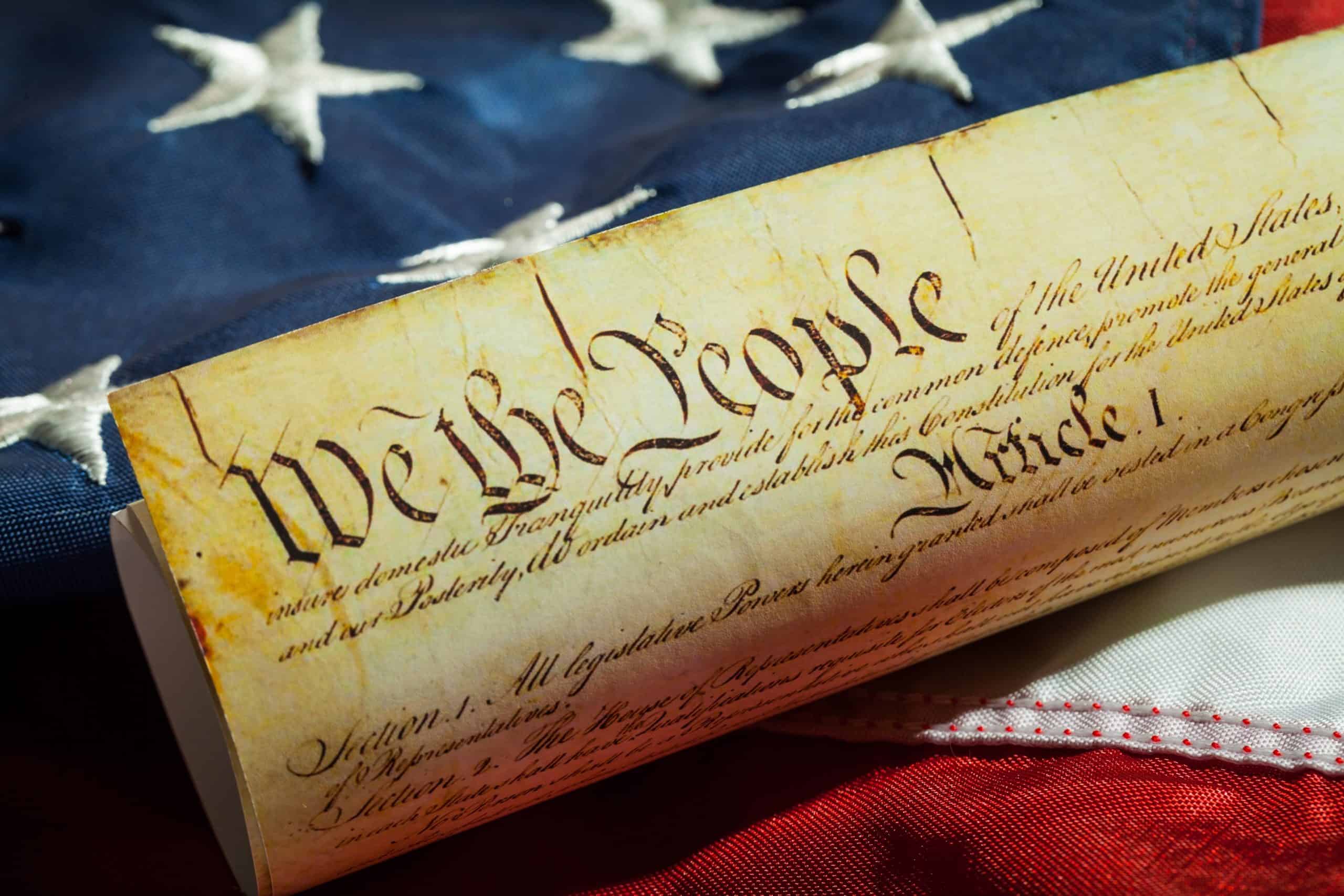
Despite what countless paintings and historical reenactments might suggest, the Founding Fathers didn't all gather around a table to sign the Declaration of Independence on July 4, 1776. Most delegates signed the famous parchment document on August 2, nearly a month later. Several signatures were added at subsequent dates. Eventually, 56 delegates signed the document that would become one of the most recognizable pieces of American history.
Franklin D. Roosevelt Won Four Presidential Elections
George Washington established an unofficial two-term presidential tradition when he stepped down in 1797. More than a century later, Franklin D. Roosevelt broke that tradition, winning presidential elections in 1932, 1936, 1940, and 1944. His presidency spanned the Great Depression and most of World War II. Roosevelt died on April 12, 1945, less than three months into his fourth term, leaving Vice President Harry S. Truman to finish it.
A President Can Serve Up to 10 Years
Although the 22nd Amendment limits presidents to being elected twice, that doesn't necessarily mean eight years is the absolute maximum. Ratified in 1951, the amendment allows someone who assumes the presidency and serves no more than two years of another president's term to subsequently be elected twice. Under the standard presidential succession and election process, that means a president could theoretically spend up to 10 years in the White House.
The First Thanksgiving Wasn't Quite What We Imagine
The 1621 harvest celebration involving English settlers and members of the Wampanoag people really happened. However, much of the familiar Thanksgiving story developed centuries afterward. The gathering lasted three days, and surviving historical accounts mention venison and wildfowl, but don't specifically identify turkey. It was a harvest celebration rather than the establishment of an annual holiday. Nor did the gathering mark the beginning of lasting peace between Indigenous peoples and European settlers.
Thanksgiving Once Fell on Two Different Dates
Abraham Lincoln established the tradition of an annual national Thanksgiving in 1863, during the Civil War. In 1939, Franklin D. Roosevelt moved the holiday a week earlier to extend the Christmas shopping season. Several states refused to go along with the change, leaving Americans celebrating Thanksgiving on different dates. Congress finally settled the matter in 1941 by establishing the fourth Thursday of November as the federal holiday.
English Only Recently Became America's Official Language
Despite English being the country's predominant language since its founding, the United States spent nearly 250 years without an officially designated national language. That changed on March 1, 2025, when President Donald Trump signed an executive order designating English as the official language of the United States. The designation was made through executive action rather than a constitutional amendment or an act of Congress.
Some States Recognize More Than One Official Language
English's federal designation doesn't erase the linguistic heritage recognized by individual states. Hawaii, for example, recognizes both English and Hawaiian as official languages under its state constitution. Alaska recognizes English alongside numerous Indigenous languages. Federal naturalization rules also allow certain applicants who meet age and residency requirements to take their citizenship civics test in a language other than English.
Harriet Tubman Was a Union Spy
Harriet Tubman is best remembered for escaping slavery and subsequently guiding approximately 70 enslaved people to freedom through the Underground Railroad. However, her accomplishments extended well beyond those rescue missions. During the Civil War, Tubman served the Union as a nurse, cook, scout, and spy. Her experience traveling through dangerous territory made her particularly valuable in gathering intelligence behind Confederate lines.
Harriet Tubman Helped Lead a Military Operation
On June 2, 1863, Tubman helped lead the Combahee Ferry Raid in South Carolina alongside Union Colonel James Montgomery and Black Union soldiers. The operation liberated more than 700 enslaved people. The Smithsonian recognizes Tubman as the first woman to lead a major military operation in United States history. It's an extraordinary accomplishment that often receives considerably less attention than her work with the Underground Railroad.
Rosa Parks Was Already an Experienced Activist
The familiar story of Rosa Parks being physically exhausted after a long day at work doesn't tell the whole story. Parks was 42 years old when she refused to surrender her bus seat on December 1, 1955. By that point, she had spent years working with the NAACP and advocating for civil rights. She later explained that she wasn't unusually tired that evening. Rather, she had grown tired of giving in to racial discrimination.
The Montgomery Bus Boycott Lasted Over a Year
Following Rosa Parks' arrest, Montgomery's Black community organized a boycott of the city's public transportation system that lasted an extraordinary 381 days. A young Martin Luther King Jr. emerged as one of the movement's most prominent leaders. Ultimately, a separate federal court case, Browder v. Gayle, resulted in a ruling that segregated public buses were unconstitutional. The Supreme Court upheld that decision in November 1956, paving the way for the boycott to end.
Native American Governance Influenced the Founders
Long before the United States existed, the Haudenosaunee, also known as the Iroquois Confederacy, developed a system of cooperation among independent Indigenous nations. Benjamin Franklin was familiar with the confederacy and its approach to collective governance. In 1988, Congress formally acknowledged its influence on American constitutional development. Historians continue to debate how directly its governing principles shaped the Constitution alongside European and classical political ideas.
Indigenous Women Held Significant Political Power
One particularly fascinating aspect of the Haudenosaunee Confederacy was the political authority exercised by women. Clan Mothers played a central role in selecting chiefs and could remove leaders who failed to fulfill their responsibilities. This system existed long before American women gained nationwide constitutional protection against sex-based voting restrictions in 1920. It also represented a significant difference between Indigenous governance and the political system established by America's Founding Fathers.
America Hasn't Formally Declared War Since 1942
Despite America's involvement in numerous military conflicts since World War II, Congress hasn't issued a formal declaration of war since June 1942, when it declared war against Bulgaria, Hungary, and Romania. Throughout American history, Congress has issued 11 formal declarations of war across five different wars. Subsequent conflicts, including the Vietnam War and the Persian Gulf War, have involved other forms of congressional authorization rather than formal declarations of war.
Military Action Doesn't Always Require a Declaration of War
While the Constitution gives Congress the exclusive authority to declare war, it also establishes the president as commander in chief of the armed forces. Congress can authorize military operations through legislation without formally declaring war. Presidents have also ordered limited military actions based on their asserted constitutional authority. Exactly where presidential authority ends and congressional authorization becomes necessary remains a subject of considerable legal and political debate.
Presidents Aren't Constitutionally Required to Believe in God
Although American presidents have traditionally taken their oath of office with a hand on a Bible, the Constitution doesn't require them to do so. Article VI explicitly prohibits religious tests as qualifications for federal public office. The presidential oath itself allows the incoming president to either swear or affirm their commitment to the Constitution. Neither the use of a Bible nor the familiar phrase "so help me God" is a constitutional requirement.
Racial Discrimination Didn't End With Legal Segregation
The civil rights legislation of the 1960s dismantled many of the legal barriers that had existed for generations. However, eliminating legalized segregation didn't eliminate racial discrimination altogether. A 2023 national KFF survey found that 40% of Black adults, 30% of Hispanic adults, 30% of American Indian and Alaska Native adults, and 28% of Asian adults reported experiencing at least one surveyed form of discrimination in the preceding year that they attributed, at least in part, to their race or ethnicity.