Some songs are just so appealing that you hardly notice the words. You know the tune, and you can sing the chorus without thinking. But what you don’t know is what the hell the song is even about.
First off, there’s the music. A bright, danceable arrangement can smuggle in some truly grim material, and most listeners will never even think twice about it. Secondly, there’s the context factor. The more a song is played at weddings and graduations, the more a certain “meaning” of the song becomes ingrained in our heads, even if the true meaning of the song is unrelated to any particular context. Here are 15 songs almost everybody knows, and almost nobody has gotten right.
“Every Breath You Take” by The Police (1983)
It turns up at weddings and anniversaries. Every. Single. Time. This song has been chosen as “our song” for countless couples because of its gentle guitar line and lyrics that scream true love: “every breath you take, every move you make, I’ll be watching you.”
The issue is how “watching you” is interpreted. Sting wrote this song during the collapse of his first marriage, and for four decades, he’s made sure to remind people that this song is decidedly not romantic. In fact, he refers to it as sinister and claims that it is a song about jealousy and control. The narrator is someone who can’t let go, and the tenderness is the trap.
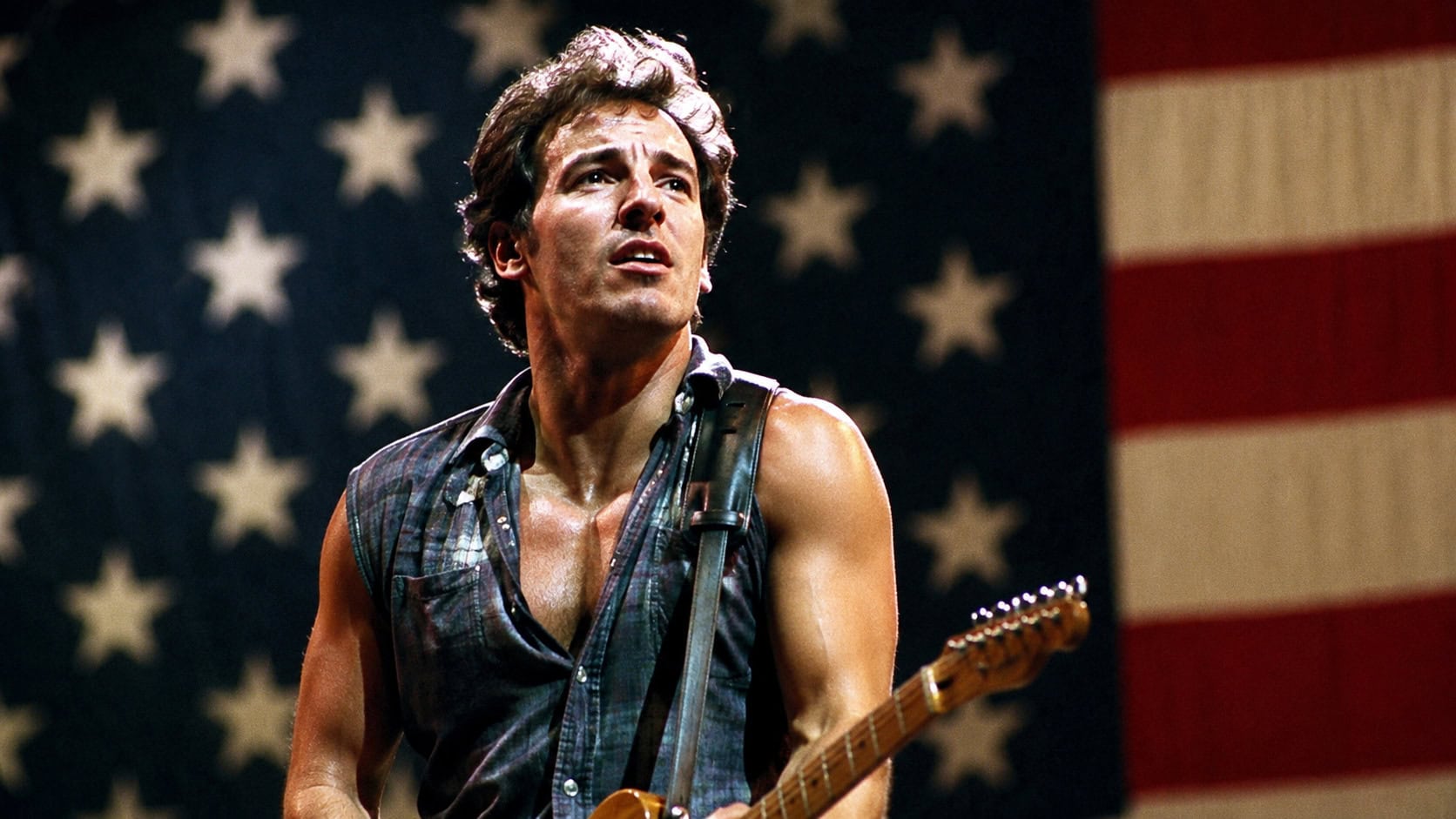
“Born in the U.S.A.” by Bruce Springsteen (1984)

This one feels like a patriotic anthem, and it’s usually played with that meaning in mind since its release. But the lyrics paint a different picture.
It tells the tale of a Vietnam veteran returning home, finding himself unemployed, without any opportunities, unwanted in his own country. It’s angry, not proud. In the end, Springsteen summarized it all in his autobiography, where he stated that it “says more about the song’s worst fans than the song itself,” and added that records are basically Rorschach tests. People heard the chorus and stopped listening.
“Pumped Up Kicks” by Foster the People (2010)
“Pumped Up Kicks” was one of the hardest songs to escape in 2011. The lyrics are told from the perspective of a troubled, socially isolated teen, thinking about an upcoming school shooting. All the other kids with the pumped up kicks better run, better run, outrun my gun.
The artist Mark Foster wanted to sit with a frightening psychology rather than shock people, and he has claimed that the inspiration for this song came from his wish to make the nation pay attention to the gun violence problem. The breezy sound is doing the exact opposite of what the words are saying, which is why so many people bopped along without ever registering the subject.
“Semi-Charmed Life” by Third Eye Blind (1997)
The lyrics go fast, and the “doo-doo-doo” tells everyone you’re living it up 90s style. It has been party fuel for a quarter century.
The twist: It’s a song about crystal meth. The lyrics chart a drug high and the crash that follows, the relationship falling apart while the music keeps grinning. Singer Stephan Jenkins says it was intentional, using the sugary sweetness of the music to counteract the awfulness of the lyrics. Radio stations noticed enough to quietly cut the most explicit verses, which is part of how the song kept its innocent reputation.
“Hey Ya!” by OutKast (2003)

OutKast created something so fun that people listen to the song only for the joy it brings and end up shouting along without hearing a word past the chorus. The song is about a relationship that has been dead for quite some time. In fact, the narrator knows that they are together simply because of routine and that there’s no love anymore, but nobody is ready to admit it.
André 3000 even breaks the fourth wall when he says, “Y’all don’t want to hear me, you just want to dance.” It’s a breakup song disguised as a party, and the crowd proves his point every time.
“Blackbird” by The Beatles (1968)
“Blackbird” was written by McCartney in reference to the civil rights struggle in the US. Back then, the term “bird” was a British slang for a woman. According to McCartney, “the blackbird learns to fly” was a metaphor for Black women who fought for their rights in the South of America during the 1960s.
The tenderness is real, but it is pointed at something specific that the melody alone would never tell you. Only Paul McCartney and an acoustic guitar with a melody so delicate that people assume it’s a nice tune that is about birds and hope. It’s not.
“Total Eclipse of the Heart” by Bonnie Tyler (1983)
A huge power ballad with crashing drums and heartbreakingly desperate desire. It’s supposedly a great love song, perfect for any grand romantic gesture. Turn around, bright eyes.
In reality, it’s a song about vampires. Jim Steinman stated it outright when he said the song was originally called “Vampires in Love” and came out of a Nosferatu musical that he was working on at the time. The lyrics have so many references to darkness and nighttime longing that they only make sense when one takes into account that Jim meant it literally.
It is arguably the most dramatic love song of the decade, and it has never been about the kind of love people had in mind.
“The One I Love” by R.E.M. (1987)
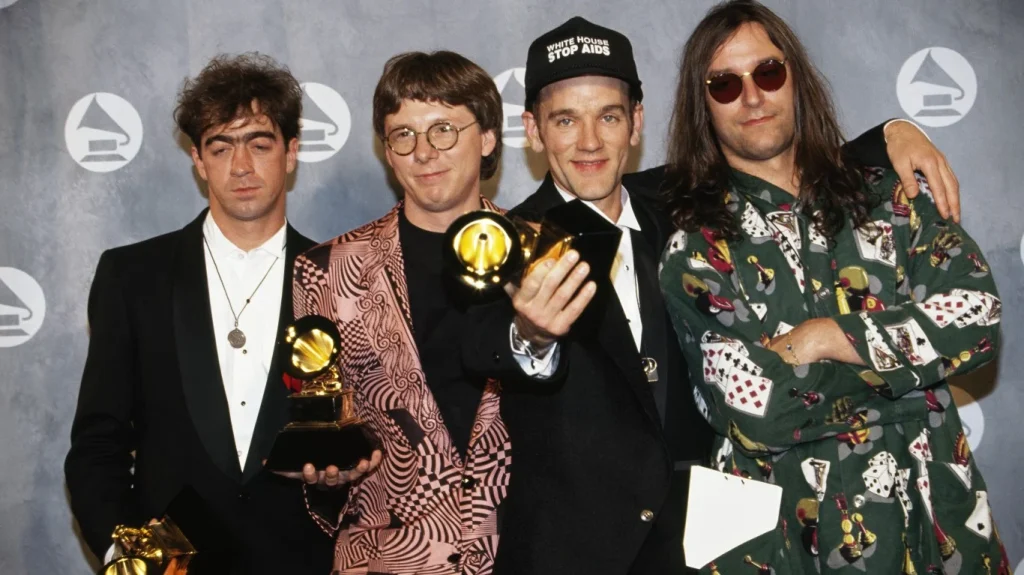
Fans of the group have dedicated this song to their lovers, while others have used it during their wedding ceremonies because they feel that the lines “this one goes out to the one I love” are beautiful. But Michael Stipe himself described the song as brutal. For him, the song is just a simple song on how people use each other, and whoever is being talked to is treated as a prop, something disposable rather than cherished.
He was reportedly uncomfortable that so many listeners took it as romantic, since the lyric is closer to a kiss-off than a valentine.
“Fortunate Son” by Creedence Clearwater Revival (1969)
“Fortunate Son” was written by John Fogerty as a protest against the privileged and the Vietnam War draft, aimed squarely at the sons of senators and millionaires who avoided the war that working-class kids were sent to fight. “I ain’t no senator’s son.” It’s an upraised middle finger to the privileged, which makes its use as patriotic filler one of the more ironic misreadings on this list.
The stomping guitar and snarling vocals have been put into commercials and movie trailers as a symbol of American patriotism. This song is almost the complete antithesis of that same all-American vibe.
“99 Luftballons” by Nena (1983)
This quirky German new wave tune, featuring a cheerful melody, is fondly remembered by many as a fun, slightly silly novelty track about balloons.
The subject of this song is a nuclear war. According to the lyrics, 99 balloons fly up into the air and are mistaken for enemy airplanes, leading to a military overreaction, which results in the cities ending up in ruins.
“99 Luftballons” was created at the peak of the Cold War, and its cheerful melody served as a direct contrast to a tragic plot that concludes with the destruction of cities. The English version, “99 Red Balloons,” makes the plot clearer, but the German original is the one most people hum without knowing they are humming about the end of the world.
“I Will Always Love You” by Whitney Houston (1992)

Whitney’s soaring rendition transformed this song into the ultimate declaration of everlasting love. That’s not what the song is about.
Written by Dolly Parton in 1973, it was originally meant to be a goodbye song. While Dolly Parton was parting ways with her mentor and business partner, Porter Wagoner, the song served as a means of announcing this separation, but at the same time holding him in real affection. It’s a farewell, not a promise to stay. The romance came entirely from the delivery, layered on top of lyrics that are truly about walking away.
“Slide” by Goo Goo Dolls (1998)
The lyrics to “Slide” revolve around a couple of young lovers who face an unexpected situation when they find out they’re going to have a baby. They are weighing their options, including whether to end it or run off and get married. The lines “Do you want to get married, or run away?” are the very darkness that the happy melody tries to hide.
The jangly and catchy tune, which is made to be played on the radio, makes the song feel like it’s about youthful romance. The story underneath is much heavier. It’s a song about a difficult decision, dressed up as a feel-good singalong.
“In the Air Tonight” by Phil Collins (1981)
That drum fill will go down as one of the iconic moments in pop music, and it also became one of the most popular myths. Phil Collins supposedly saw a man let someone drown and made that song as a way to publicly shame him. Some people are sure that they know the whole horrific story by heart.
It didn’t happen that way. Phil Collins has said repeatedly that the story was made up, and he himself doesn’t even know what parts of the song mean himself. What really happened was that he wrote this song during the breakup of his first marriage, and the emotion in the lyrics comes from it, not from anything on the waterfront.
The urban legend is more dramatic than the truth, which is probably why it refuses to die.
“Lucy in the Sky with Diamonds” by The Beatles (1967)
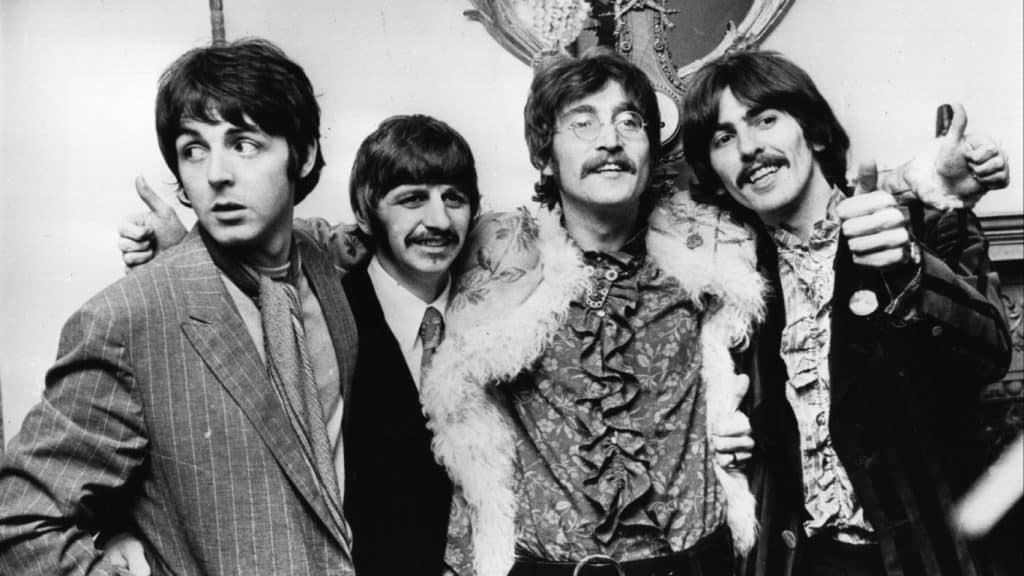
The story John Lennon told was that he derived the name for the song from a drawing that his young son Julian brought home, a picture of his classmate Lucy up in a sky full of stars, and that it was inspired by Lewis Carroll’s “Alice in Wonderland.” While finding the coincidental initials amusing, the group maintained that it was nothing more than a coincidence.
For almost sixty years, it has been assumed that since the letters spell out LSD, the song had something to do with the drug. The explanation remains one of the most quoted bits of popular music trivia. The drug reading stuck anyway, mostly because it was more fun to believe.
“Hallelujah” by Leonard Cohen (1984)
“Hallelujah” means “praise the Lord,” and that is precisely what the song is employed for: funerals, remembrances, church gatherings, or participants in a talent show trying to make something sacred out of it. The song is considered a hymn.
Cohen’s composition is a far cry from all that. He combines images from religion with sex, heartache, and doubt into a “cold and broken hallelujah.” His composition consists of numerous verses that he sifted through for years before picking those suitable for his purposes. What emerged was much more a contemplation of a failed love affair than a hymn. Most popular renditions try to sand down the carnal parts, which resulted in a deeply ambivalent song becoming a reliable pick for solemn occasions.