Rick Stewart/Allsport
"Chris de Burgh Wörthersee Bühne" by pixel0908 is licensed under BY-ND 2.0.
Courtesy of Universal Pictures
"Eddie Murphy David Shankbone 2010 NYC" by david_shankbone is licensed under PDM 1.0.
Capitol Records / Public domain

hurricanehank/Shutterstock.com

sibway/iStock via Getty Images
"Bobby McFerrin be Happy" by jurvetson is licensed under BY 2.0.

"Elton John and Billy Joel at Honda Center, 28 March 2009" by InSapphoWeTrust is licensed under BY-SA 2.0.

IPGGutenbergUKLtd/iStock via Getty Images
pporiphotos/Shutterstock.com







10 Huge Hits From the ’80s That Didn't Age Well
There is a lot to love about the 1980s. The decade gave us unforgettable fashion, massive pop stars, neon everything, and plenty of songs that still sound great today. But even some of the era's biggest hits have become much easier to poke fun at with the benefit of a few decades of hindsight.
Some were relentlessly overplayed. Others leaned so heavily into synthesizers, repetition, sentimentality, or novelty that they now sound inseparable from the decade that produced them. That does not mean they were failures. In fact, most were enormous commercial successes, and several remain crowd favorites. These 10 hits simply occupy that strange corner of 1980s pop where nostalgia and secondhand embarrassment can exist at the same time.
“Lady in Red” by Chris de Burgh
“Lady in Red” is the kind of earnest 1980s ballad that can sound either romantic or unbearably sentimental depending on your mood. Chris de Burgh wrote the song about his wife, Diane, and its straightforward sincerity helped turn it into an enormous international hit.
The song spent three weeks at No. 1 in the United Kingdom in 1986 and later reached No. 3 on the Billboard Hot 100 in the United States. De Burgh had other charting songs before and after it, but nothing matched the extraordinary reach of “Lady in Red.”
What makes the song feel dated today is not that it failed at what it was trying to do. If anything, it succeeded too well. The sweeping arrangement, slow-dance pacing, and unabashed romanticism make it sound instantly tied to the decade that produced it.
“Never Been to Me” by Charlene
“Never Been to Me” had one of the stranger journeys to becoming an ’80s hit because it was not really an ’80s song at all. Charlene originally released it in 1977, when it barely registered on the Billboard Hot 100. Five years later, Tampa radio personality Scott Shannon began playing the old recording on WRBQ-FM. The listener response was strong enough that he contacted Motown, which subsequently reissued the single.
This time, the song took off. It reached No. 3 on the Billboard Hot 100 and went to No. 1 in the United Kingdom, Australia, Ireland, and Canada.
The song finds its narrator looking back at a glamorous but unfulfilling life while advising another woman to appreciate family and stability. The contrast is deliberately bittersweet, although the spoken-word passage in the middle pushes the melodrama to a level that makes the song unmistakably of its time.
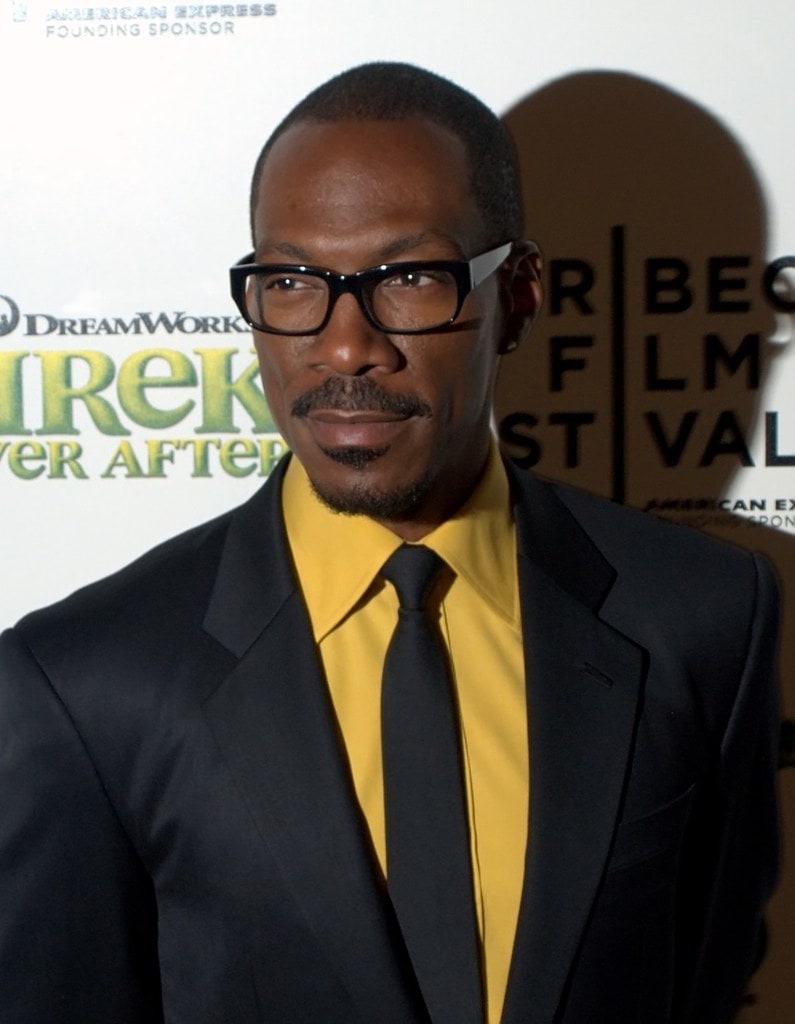
“Party All the Time” by Eddie Murphy
Eddie Murphy was already one of America's biggest comedy and movie stars when he released “Party All the Time” in 1985. Coming off films including “48 Hrs.,” “Trading Places,” and “Beverly Hills Cop,” he hardly needed a second career as a pop singer. He tried one anyway.
Written and produced by Rick James, “Party All the Time” is a glossy synth-funk track about a girlfriend who would rather spend her nights out than stay home. Whatever listeners thought about Murphy's singing, the record was no novelty-chart failure: it climbed all the way to No. 2 on the Billboard Hot 100.
That success is part of what makes the song such an enduring piece of 1980s pop culture. It sounds exactly like what it was: a huge movie star stepping into a recording studio with one of the decade's most distinctive musicians and somehow producing a genuine smash.
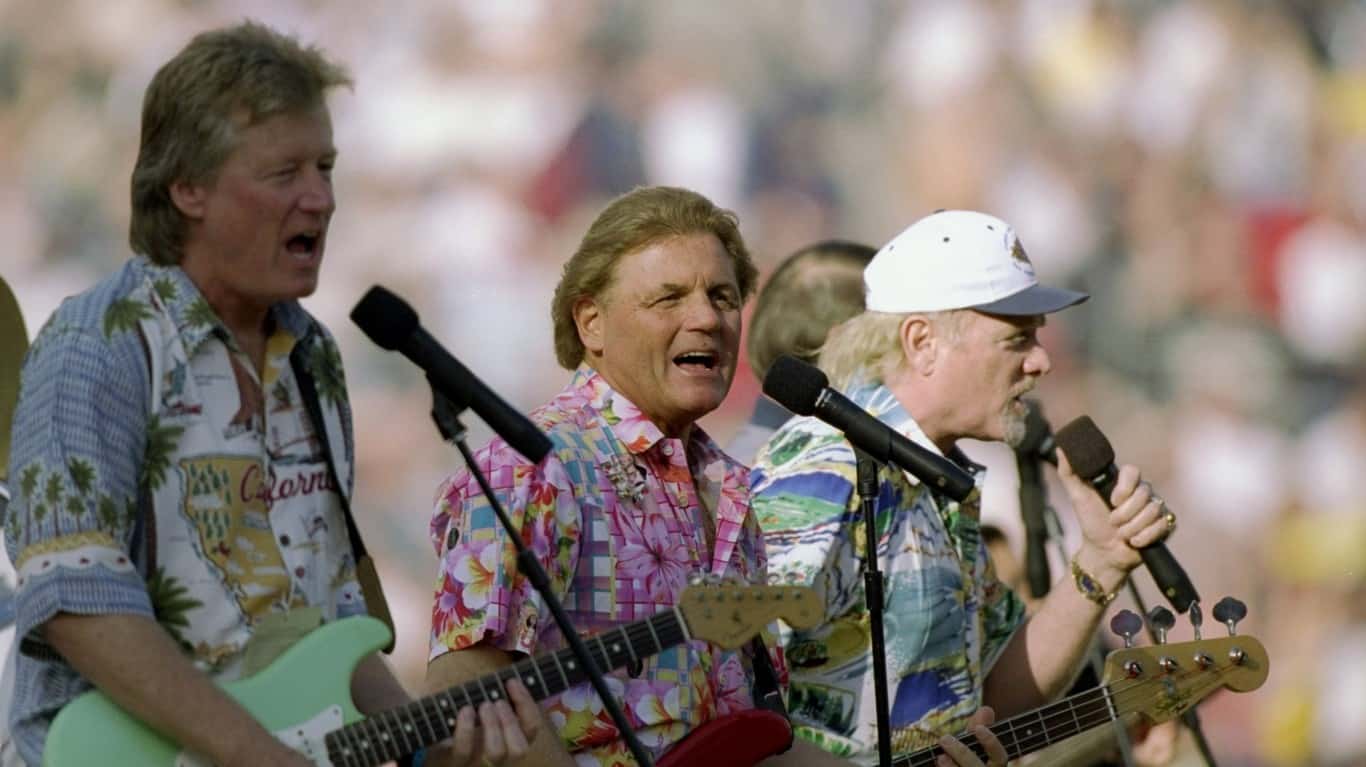
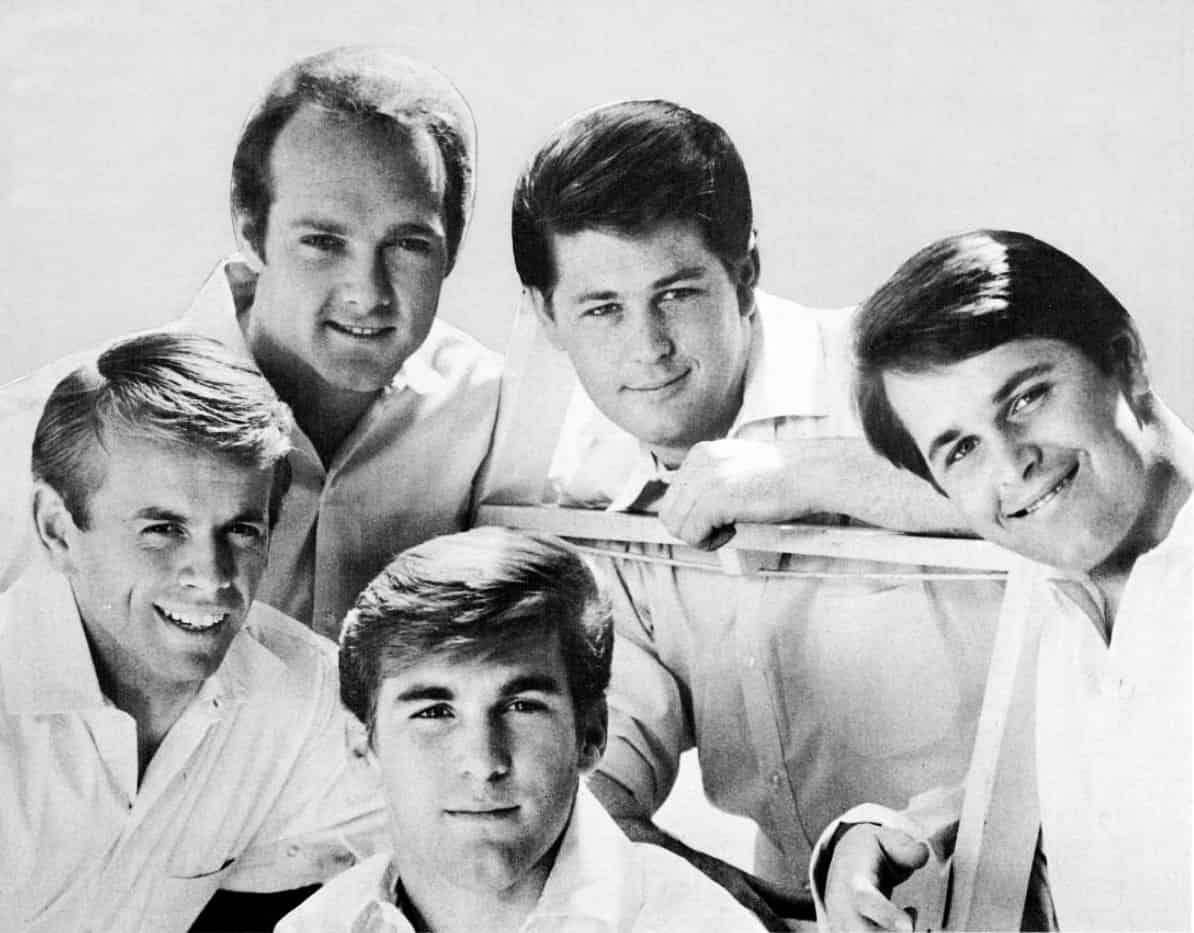
“Kokomo” by The Beach Boys
The Beach Boys made some of the most influential American pop music of the 1960s, which makes the ultra-polished tropical escapism of “Kokomo” an especially strange chapter in the band's history.
Released in 1988 and featured on the soundtrack to “Cocktail,” the song name-checks Aruba, Jamaica, Bermuda, the Bahamas, Key Largo, and Montego Bay on its way to an imaginary romantic destination called Kokomo. It became the Beach Boys' first Billboard Hot 100 No. 1 since “Good Vibrations” 22 years earlier. It knocked Phil Collins' “A Groovy Kind of Love” from the top spot and remained there for one week.
For some listeners, “Kokomo” is breezy fun. For others, its resort-commercial atmosphere is precisely what makes it difficult to square with the band that once made “God Only Knows” and “Good Vibrations.” Either way, its chorus has proved almost impossible to forget.
“Everybody Have Fun Tonight” by Wang Chung
“Everybody Wang Chung tonight” is one of those phrases that instantly identifies the era it came from. Wang Chung built the chorus of its 1986 hit around turning the band's own name into a verb, even though “Wang Chung” was not supposed to mean anything in particular.
The repetition worked. “Everybody Have Fun Tonight” climbed to No. 2 on the Billboard Hot 100 and became one of the band's signature songs in the United States. The synth-heavy production, enormous drums, and chant-like chorus are about as unmistakably mid-1980s as pop music gets.
It is also the kind of hook that can stay lodged in your head long after you wanted it gone. That combination of catchiness and repetition helps explain why the song can inspire both affection and eye-rolling decades later.
“The Final Countdown” by Europe
The keyboard riff that opens “The Final Countdown” is one of the most recognizable sounds of 1980s rock. Europe frontman Joey Tempest wrote the song around an old keyboard idea, and its lyrics imagine leaving Earth for Venus. The band initially thought of it primarily as a dramatic concert opener rather than an obvious pop single.
Instead, it became an international phenomenon. “The Final Countdown” reached No. 1 in numerous countries, including the United Kingdom, and peaked at No. 8 on the Billboard Hot 100 in the United States.
The song's enormous synthesizer fanfare and science-fiction lyrics eventually made it an easy target for parody, but that theatrical quality is also why it has endured. It continues to turn up at sporting events, in movies, and anywhere a scene needs something ludicrously dramatic to happen in the next few seconds.
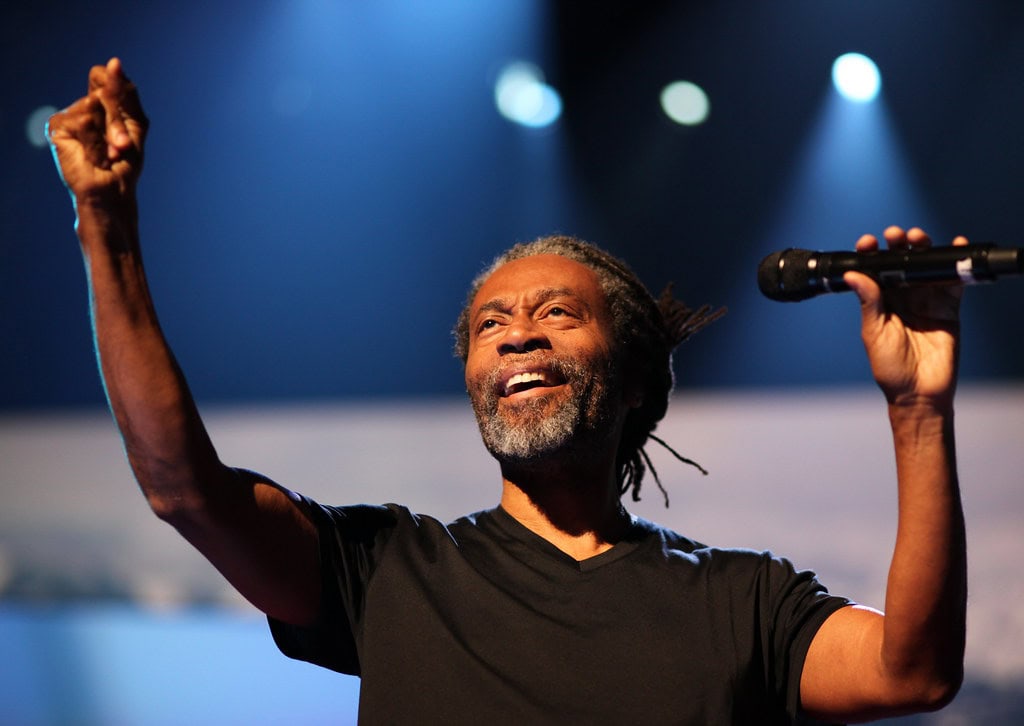
“Don’t Worry, Be Happy” by Bobby McFerrin
Bobby McFerrin was an unusually inventive vocalist long before “Don’t Worry, Be Happy” made him a household name. The 1988 recording uses McFerrin's voice to create the entire musical arrangement, with no conventional instruments, while its title was inspired by a saying associated with Indian spiritual teacher Meher Baba.
The simple message and whistled melody became enormous. “Don’t Worry, Be Happy” was the first a cappella recording to reach No. 1 on the Billboard Hot 100 and later won Grammy Awards for Record of the Year, Song of the Year, and Best Male Pop Vocal Performance.
Its relentless optimism can sound simplistic when separated from the playful performance, which has made the song an easy punchline over the years. Even its political afterlife was unusual: George H.W. Bush's 1988 presidential campaign used the song without McFerrin's endorsement.
“We Didn’t Start the Fire” by Billy Joel
Billy Joel built “We Didn’t Start the Fire” around a rapid-fire catalog of political figures, celebrities, wars, scandals, inventions, and cultural events spanning the years from his birth in 1949 through 1989. That format helped turn what could have been a history lesson into one of the strangest No. 1 singles of the decade.
The song topped the Billboard Hot 100 in late 1989 and has since been used in classrooms, parodied repeatedly, and updated by other artists. Joel himself has been much harder on the composition than many of his critics. He has said the music is among the weakest melodies he ever wrote and once compared it to a dentist drill.
That admission gets at the peculiar appeal of the song. The melody barely changes, but the stream of names and events gives it momentum. Whether that feels ingenious or exhausting can depend entirely on the listener.
“Mickey” by Toni Basil
“Hey Mickey, you're so fine” may be one of the most durable chants in early-1980s pop. Toni Basil's hit was adapted from “Kitty,” a 1979 song recorded by the British group Racey and written by Mike Chapman and Nicky Chinn. Basil changed the title and gender of the person being addressed, then added the cheerleader-style presentation that made her version instantly recognizable.
“Mickey” reached No. 1 on the Billboard Hot 100 in the United States and No. 2 in the United Kingdom. Basil, already an accomplished dancer and choreographer, also directed and choreographed the memorable music video.
The chorus is repetitive by design, and that is both the song's great strength and the reason it can wear out its welcome quickly. More than four decades later, it remains a staple whenever pop culture needs a burst of cheerleader-style enthusiasm.
“We Built This City” by Starship
Few 1980s hits have developed a stranger critical afterlife than Starship's “We Built This City.” The song was a massive commercial success, reaching No. 1 on the Billboard Hot 100 in 1985. It also arrived directly after Jan Hammer's “Miami Vice Theme” at the top of the U.S. chart.
The songwriting team included Bernie Taupin, Martin Page, Dennis Lambert, and Peter Wolf. The song began as an idea about the commercialization and disappearance of live-music culture before evolving into the slick arena-pop single that Starship recorded. That contrast would later become central to its reputation.
In 2004, Blender placed “We Built This City” at No. 1 on its list of the 50 worst songs ever. Seven years later, it won a Rolling Stone readers' poll of the worst songs of the 1980s by what the magazine described as a remarkably lopsided margin. Yet the record was hardly rejected when it was new: it topped the charts, earned a Grammy nomination, and remains instantly recognizable. Its strange accomplishment is becoming both a quintessential ’80s hit and one of the decade's most famous musical punching bags.