Billboard Hot 100

Gorodenkoff / Shutterstock.com

Sophon Nawit / Shutterstock.com

mariakray / Shutterstock.com

New Africa / Shutterstock.com

Lomb / Shutterstock.com

Serhii Yushkov / Shutterstock.com

John_T / Shutterstock.com

rudis / BY-SA 2.0

Texifornian James / BY 2.0

Noval Goya / PDM 1.0






'90s One-Hit Wonders Who Were Everywhere, Then Vanished
The '90s produced some truly outlandish one-hit wonders, at least from the perspective of U.S. pop audiences. These were acts that released the right song at the right time and became almost impossible to escape on American radio. Then, just as quickly, they slipped out of the mainstream. Most kept making music after their biggest hits, even if the wider U.S. audience largely moved on.
Some of those songs were enormous. Several reached the top 10 on the Billboard Hot 100, while others became major radio hits without qualifying for the Hot 100 under the chart rules of the time. You know the songs. But chances are you forgot at least some of the artists. These are 10 acts whose music was everywhere in the '90s, even if their time in the U.S. pop spotlight was brief.
"Mmm Mmm Mmm Mmm" by Crash Test Dummies (1993)
The song didn’t really have a conventional chorus, and singer Brad Roberts sounded like he was gargling gravel. Or worse. The subject matter wasn’t exactly what you’d expect from a smash hit. The lyrics move through three children’s stories: a boy whose hair turns white after a car accident, a girl with birthmarks all over her body, and a boy whose parents take him to a church where worshippers shake and lurch on the floor. By any reasonable measure, it should not have worked.
It did. Somehow it did. Roberts and his deep voice made Crash Test Dummies unavoidable for a brief time. "Mmm Mmm Mmm Mmm" reached No. 4 on the Billboard Hot 100 and spent 24 weeks on the chart.
The band kept releasing music after the hit and has returned to touring in recent years, but it never matched that U.S. pop breakthrough. "Afternoons & Coffeespoons" peaked at No. 66 on the Hot 100. The group had a broader career in its native Canada, but for many American listeners, "Mmm Mmm Mmm Mmm" was the song that stuck.
"How Bizarre" by OMC (1995)
OMC stood for Otara Millionaires Club, a name borrowed from the South Auckland suburb of Ōtara, New Zealand. Pauly Fuemana was at the center of the project by the time "How Bizarre" was released in New Zealand on Dec. 15, 1995. The song became a worldwide hit, reaching No. 1 in New Zealand, Australia, Austria, Canada, Ireland and South Africa. In the U.S., it eventually topped Billboard's Mainstream Top 40 airplay chart.
Despite that American radio success, "How Bizarre" never appeared on the Billboard Hot 100. It was not issued as a commercial U.S. single, which made it ineligible under the chart rules in effect at the time. OMC followed it with "Right On" and "On the Run," which had some additional international success, especially in Europe, but neither matched the reach of "How Bizarre."
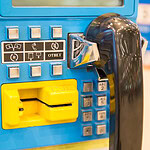
"Standing Outside a Broken Phone Booth with Money in My Hand" by Primitive Radio Gods (1996)
Primitive Radio Gods released "Standing Outside a Broken Phone Booth with Money in My Hand" in 1996, and the song appeared on "The Cable Guy" soundtrack that spring. Heavy alternative-radio play followed. By July, it had reached No. 1 on Billboard's alternative-rock chart, and it remained atop the Modern Rock Tracks chart for six weeks.
The hook used a sample from B.B. King's "How Blue Can You Get?" as performed at Cook County Jail in 1970 and released on the 1971 album "Live in Cook County Jail." Primitive Radio Gods never returned to the same level of chart success, although the project continued releasing music after "Rocket."
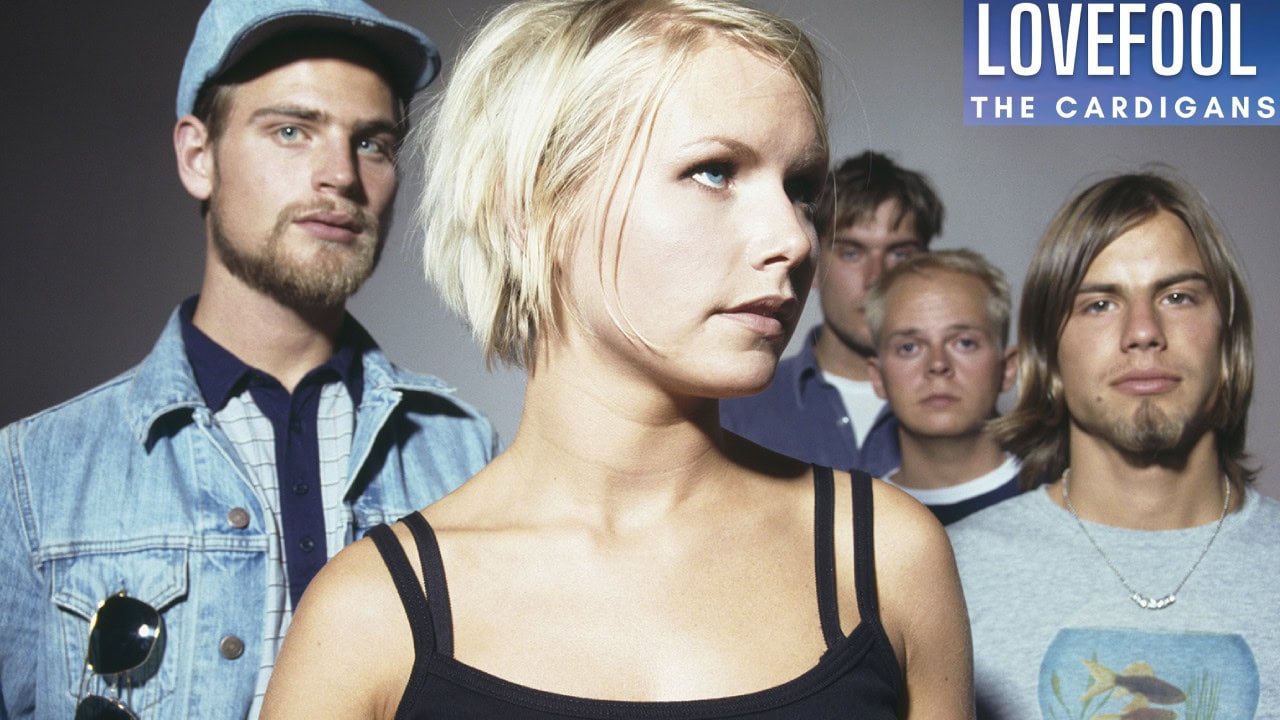
"Lovefool" by The Cardigans (1996)
It’s not every day that you see a Swedish band crack American pop radio. The Cardigans did it with "Lovefool," which spent seven weeks at No. 1 on Billboard's Mainstream Top 40 airplay chart in 1997. The song's appearance on Baz Luhrmann's "Romeo + Juliet" soundtrack helped turn it into an international breakthrough.
"Lovefool" did not appear on the Billboard Hot 100 because it was not released as a commercial single in the U.S., a requirement under the chart rules then in effect. The band followed it with the 1998 album "Gran Turismo," which produced major hits in Europe, including "My Favourite Game" and "Erase/Rewind." In the U.S., though, none of the band's later singles approached "Lovefool" as a mainstream pop-radio hit.
"Sunny Came Home" by Shawn Colvin (1997)
"Sunny Came Home" tells the story of a woman who sets her home on fire as she tries to escape her past, a dark premise set against a warm acoustic arrangement. The song reached No. 7 on the Billboard Hot 100 and went on to win Record of the Year and Song of the Year at the 1998 Grammy Awards.
That success did not come out of nowhere. Colvin already had an established folk and singer-songwriter career and had won a Grammy for her album "Steady On" in 1991. "Sunny Came Home" became her highest-charting single on the Hot 100, but her career continued well beyond that brief stretch of mainstream pop attention.
"Cantaloop (Flip Fantasia)" by Us3 (1993)
Jazz-rap was hardly a sure bet for Top 40 radio in the early '90s. Us3 nevertheless found a way in. The London-based group came to Blue Note Records' attention after sampling the label's catalog, and Capitol and Blue Note ultimately gave Geoff Wilkinson and Mel Simpson access to the archive for the project that became "Hand on the Torch."
The breakthrough track, "Cantaloop (Flip Fantasia)," was built around Herbie Hancock's "Cantaloupe Island" and reached No. 9 on the Billboard Hot 100. The 1993 album "Hand on the Torch" went on to become the first album in Blue Note's history to reach platinum status in the United States.
Us3 returned with "Broadway & 52nd" in 1997 and continued releasing new music well into the 2000s, but nothing matched "Cantaloop" as a U.S. pop hit.
"The Freshmen" by The Verve Pipe (1997)
"The Freshmen" peaked at No. 5 on the Billboard Hot 100 in 1997. The Verve Pipe had been building a regional following in Michigan since forming in Lansing in 1992, and the success of the major-label album "Villains" briefly looked like it might propel the group into long-term mainstream stardom.
It didn’t quite work out that way. Other songs, including "Photograph," "Hero" and "Never Let You Down," received radio attention, but none matched the mainstream crossover of "The Freshmen." The Michigan band kept recording and performing long after its biggest hit.
The group never disappeared entirely. It continued releasing music into the 2020s, and Brian Vander Ark remained active as a performer. For casual listeners, though, "The Freshmen" remains the band's signature hit.
"Save Tonight" by Eagle-Eye Cherry (1998)
"Save Tonight" appeared on Swedish musician Eagle-Eye Cherry's 1997 debut album, "Desireless," before becoming a U.S. hit the following year. The song reached No. 5 on the Billboard Hot 100.
Cherry followed with "Living in the Present Future" in 2000 and "Sub Rosa" in 2003, touring heavily during those years before taking an extended break. He returned with "Can’t Get Enough" in 2012. His U.S. mainstream moment was brief, but his music career did not end with "Save Tonight."
"Lullaby" by Shawn Mullins (1998)
"Lullaby" reached No. 7 on the Billboard Hot 100 after its 1998 release and earned Mullins a 1999 Grammy nomination for Best Male Pop Vocal Performance. The song is built around spoken-word verses and a sung chorus, an unusual structure for a mainstream pop hit.
Mullins was nearly a decade into his recording career in Atlanta when the song broke. He had released music independently, including records on his own label, before "Soul's Core" brought him national attention.
The 1999 release "The First Ten Years" was an anthology of Mullins' earlier work rather than a new studio follow-up. His next studio album, "Beneath the Velvet Sun," arrived in 2000. Mullins continued recording and touring after "Lullaby" and later co-wrote the Zac Brown Band's No. 1 country hit "Toes," even though he never again reached the same level of mainstream pop visibility.
"Steal My Sunshine" by Len (1999)
Len's Marc Costanzo conceived "Steal My Sunshine" at an outdoor electronic-music festival and built the track around a sample of Andrea True Connection's 1976 disco hit "More, More, More." His sister Sharon added the other lead vocal. The master tape later wound up under a bed before it was rediscovered, and the song landed on the soundtrack for the 1999 film "Go." Radio picked it up, and "Steal My Sunshine" reached No. 9 on the Billboard Hot 100. In Canada, it peaked at No. 3 on RPM's national Top Singles chart.
Len released "You Can't Stop the Bum Rush" in 1999 and later returned with albums in 2002, 2005 and 2012. The band did not try to stretch its sudden fame indefinitely: Costanzo later said Len cut a planned 200-show tour short and deliberately stepped away from the public spotlight. "Steal My Sunshine" remained the group's one major U.S. pop hit.