Andrew Clemente

Elizabeth Dover / Shutterstock.com

MaxkyTH / Shutterstock.com

Zamrznuti tonovi / Shutterstock.com

Zamrznuti tonovi / Shutterstock.com

AnnaStills / Shutterstock.com

Takuma Digital Assets / Shutterstock.com

Reniid007 / Shutterstock.com

Peter Kim / Shutterstock.com

rafa jodar / Shutterstock.com

Ugis Bralens / Shutterstock.com

Losev Artyom / Shutterstock.com

PeopleImages / Shutterstock.com

PeopleImages / Shutterstock.com

Sibrapid / Shutterstock.com

Master1305 / Shutterstock.com















15 Songs From the ’90s the Radio Completely Wore Out
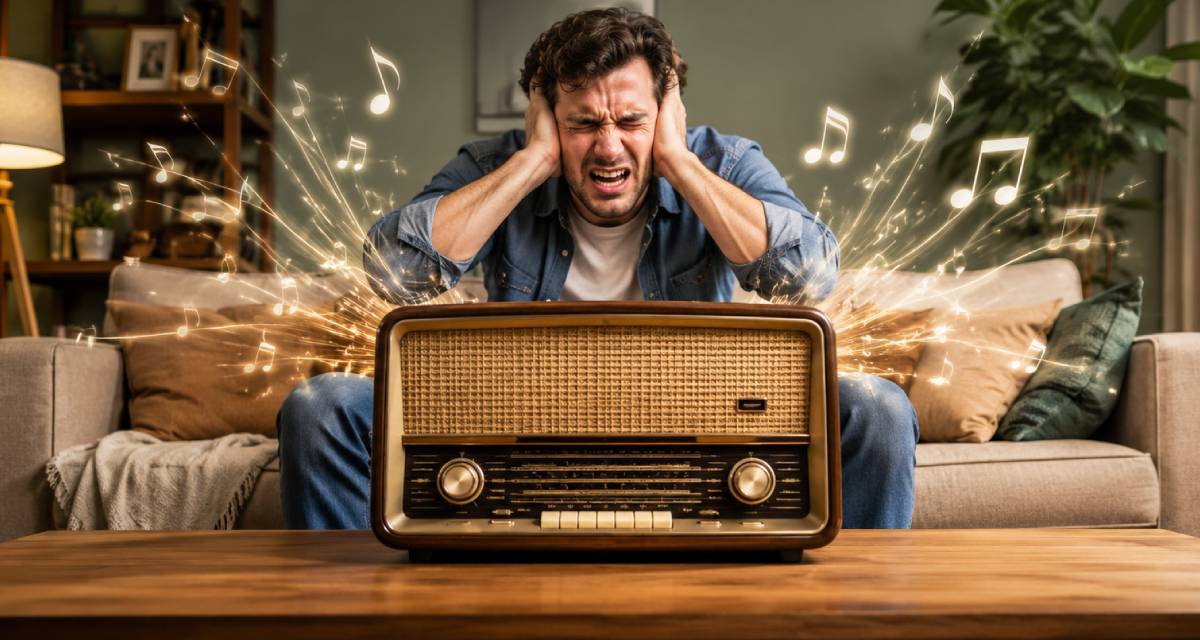
There was a time in the 1990s when listening to certain tracks on the radio was a treat. You were driving your car and you would hear the right track from the right album come on the radio and get ready to rock out to it with no regard for whoever sees you through the window. It would happen again and again and it usually didn’t get old. But some songs were so overplayed that, by the third week, that same treat had become background noise.
1990s radio was like an animal eating its own tail. If a track became successful, radio stations would play it to oblivion. The songs are good, but when you hear them 15 times per day, it’s impossible to appreciate them. Here are 15 tracks people loved until they couldn't.
"Waterfalls" by TLC
When "Waterfalls" came around in the summer of 1995, there was absolutely nothing wrong with it. The production was layered and warm and the harmonies were tight. There was also some weight to the lyrics covering topics like HIV, drugs, violence, and running after the wrong things at the apex of TLC's success. The video won MTV awards and the song itself topped the Billboard Hot 100 for seven weeks.
Seven weeks is important here. That’s a long time. By the time fall rolled around, TLC fans and people who had never even bought a TLC album knew the chorus verbatim, which is the kind of exposure that beats down tolerance.
"Creep" by Radiohead
Released in 1992, "Creep" started off slow in the United Kingdom. It took an American college radio push and a rerelease to turn it into the song that would follow Thom Yorke and his crew for the rest of their careers. By 1993 and 1994, the song was everywhere and the self-loathing anthem that felt incredibly raw the first twenty times lost all of its sting.
As Yorke stated in more than one interview, the problem is that radio programmers decided "Creep" was Radiohead, full stop. For years, listeners only knew the band through that one song. Radiohead eventually refused to play it live for a stretch, which says something about how a song can wear down even the people who made it.
"Enter Sandman" by Metallica
Metallica was a staple of metal music for ten years before the release of the Black Album in 1991. "Enter Sandman" began airing on rock radio stations, and things were never the same again. The riff is undeniably one of the era's great hooks. Bob Rock's production was clean enough to get airplay in places that had never touched Metallica before. The song crossed over hard. Maybe too hard.
That crossover was precisely what killed it for the fans who had been around from the beginning. "Enter Sandman" became synonymous with the period, the song that showed up on any greatest hits of the 90s compilation playlist, any arena intro montage, any channel flipping at 2 a.m. in your hotel room. The fans never stopped liking the song. They just stopped choosing to hear it.
"Black Hole Sun" by Soundgarden
Soundgarden had made a name for themselves playing oddball, heavy music, which makes "Black Hole Sun" a weird choice for mainstream saturation. The song is slow, trance-like, with no tidy resolution in the lyrics. It still managed to become one of the defining radio songs in 1994. Soundgarden lead singer, Chris Cornell, later described composing the song in his head during a single drive home from the studio and writing it down the next day.
The song got Soundgarden MTV daytime rotation along with pop artists they would have never pictured themselves being neighbors with. The band's catalog is deep and rewarding, but the number of casual listeners who have heard more than just "Black Hole Sun" is surprisingly small.
"(Everything I Do) I Do It For You" by Bryan Adams
The soundtrack for The Robin Hood: Prince of Thieves gave birth to a single piece of music that everyone remembers by the title alone. The power ballad by Bryan Adams was a number one hit in the UK for 16 consecutive weeks, holding the record to this very day. In America, it topped the charts and was constantly played during the rest of the year.
It is a well-crafted and emotive song. It does everything a movie ballad should do. The only problem is that it could be heard from summer till Christmas, so when the holidays were finally there, the song had already been playing for half a year. Any adult, having gone through this radio cycle, can remember how annoyingly ubiquitous those opening piano notes became.
"Tubthumping" by Chumbawamba
Chumbawamba was an actively political band from Britain dating back to the beginning of the eighties which didn’t really expect to achieve commercial success. But when "Tubthumping" came out in 1997, it became one of the weirdest mega-hits of the decade. The hook about getting knocked down and getting back up somehow resonated with people. It may have resonated a bit too much as the song was playing non-stop on the radio during the autumn months.
By 1998, Chumbawamba was known for that one song that didn’t even represent their work over the last fifteen years. The band later admitted they found the whole thing more awkward than flattering. Given how thoroughly the song got used up, that seems fair.
"Breakfast at Tiffany's" by Deep Blue Something
"Breakfast at Tiffany's" is about a couple who no longer have anything in common but the vague recollection of enjoying the same dated film. It's a beautifully melancholic idea for a pop song, and back in the summer of 1995, it was absolutely everywhere. The group Deep Blue Something hailed from Texas, and "Breakfast at Tiffany's" was the one that made it onto mainstream radio and into MTV rotation. It got so played out that it would have been hard for any track to survive.
The song had effectively become the entire raison d'être for the band, but their next album barely registered with fans. "Breakfast at Tiffany's" went on to live in 90s nostalgia compilations and movies from that era. The song ultimately outlived the band itself, which is probably a bittersweet feeling.
"Closing Time" by Semisonic
"Closing Time" came out in 1998 and quickly became the song bartenders would play once closing time came around. It was an obvious choice given the explicit title and lyrics. What everyone missed is that Dan Wilson had written the song about the birth of his daughter rather than about bars. The closing time is just a metaphor. The song has layers that fans never understood or cared to try.
Both radio stations and the hospitality industry turned "Closing Time" into a cue track. The song would be played at bar closing time, at the end of stadium games, at graduation parties, at any moment that called for a musical signal to wrap up. By the early 2000s, the song became so much associated with its literal meaning that listening to the song again and trying to find out what Wilson had really meant with it was something most listeners never had reason to do.
"Bittersweet Symphony" by The Verve
No pop song from the '90s has as much legal baggage as "Bittersweet Symphony". Sampling an orchestral track owned by the Rolling Stones resulted in a lawsuit in which Richard Ashcroft and The Verve lost their right to royalties for decades. Mick Jagger and Keith Richards got songwriting credits they did not have anything to do with. That dispute was finally sorted out in 2019, but for many years, the song legally belonged to people who did not write it.
None of that backstory was on anyone's mind in 1997 when the song seemed to be everywhere. The familiar orchestral intro and the catchy tune were instantly recognizable. The video of Ashcroft walking through the crowd and taking no shortcuts for anybody else also became iconic in its own right. But by the hundredth listen, the majesty of the tune was somewhat soured, the way very big things sometimes do.
"Losing My Religion" by R.E.M.
It took R.E.M. a decade to break through with "Losing My Religion" in 1991. It featured the mandolin and had deep lyrical content regarding obsession and frustrated love. The video was an arthouse piece full of religious imagery. Overall, it usually wouldn't be considered a good candidate for the pop radio saturation. But somehow, the song was everywhere.
The exposure on radio was so strong that even a casual listener could sing it from memory. As Michael Stipe noted, "losing my religion" is a Southern slang term for losing control, which amazed many fans who have perceived it literally for months.
"Gangsta's Paradise" by Coolio
"Gangsta's Paradise" was recorded for the soundtrack of Dangerous Minds in 1995 and held the Billboard Hot 100 chart top spot for three weeks during the film's theatrical run. The song used a sample from Stevie Wonder's "Pastime Paradise," and Wonder's presence lent an air of seriousness that many 1990s radio rap hits lacked. Coolio sounded genuinely haunted throughout, which is part of what made the song connect with a larger audience.
Coolio would later express dissatisfaction with the way in which the song defined his whole discography. The rapper did produce other songs, good songs, too, according to most opinions, but the radio and MTV made it seem like the song defined his whole catalog. Once Weird Al Yankovic released the parody "Amish Paradise" that same year, the two became permanently entangled in the cultural memory. It was a lot to carry for one track.
"Iris" by Goo Goo Dolls
The song "Iris" was composed in 1998 for the soundtrack of City of Angels, and became the iconic love song of the 90s. John Rzeznik composed the tune in a tuning that is near-impossible to reproduce in a live performance unless the guitar is restrung, whether this is due to his creative vision or failure to plan ahead isn't quite clear. "Iris" stayed on the number one spot on the Hot 100 Airplay chart for eighteen weeks, which is why people stopped listening to the song once the radio cycle was done with it.
"No Scrubs" by TLC
TLC pops up twice on this list for the same reason they controlled the airwaves in the late '90s: their songs were easy to notice. "No Scrubs" was released in 1999 and spent four weeks atop the Hot 100 and got onto all of radio's pop formats. The song's message of turning away from losers without hope or ambition was a catchy one.
The phrase “no scrubs” became part of everyday language and that kind of saturation has a cost. By the time "No Scrubs" had made it through a full radio cycle, people had heard it too many times to feel much about it anymore.
"Under the Bridge" by Red Hot Chili Peppers
"Under the Bridge" was penned by Anthony Kiedis while other members of the band worked on what turned into their album "Blood Sugar Sex Magik." In the beginning, the song nearly didn't make it onto the album. Rick Rubin, their producer, insisted that "Under the Bridge" should be added and, after its release as a single in 1992, it caught the attention of listeners who were not aware or interested in the band's harder material.
That's the thing about crossover hits. They attract new audiences and reach those who otherwise would not listen to them. By the summer of 1992, "Under the Bridge" could be heard everywhere.
"Livin' la Vida Loca" by Ricky Martin
Ricky Martin was already an established singer long before "Livin' la Vida Loca" came out in 1999, but that song turned him into an international pop star in a way no one, including his record company, would have ever expected. The song reached number one on fourteen charts and stayed there. The production was relentless and the energy borderline aggressive. Radio programmers loved the song and played it nonstop.
The summer moved on, and the song stayed on rotation. By the end of the year, "Livin' la Vida Loca" had been played in heavy rotation for nine months. The people who loved it in April were not the same people listening to it in December.