Pouazity3 / Wikimedia Commons

Hulton Archive/ Getty Images

Fotosearch / Archive Photos via Getty Images

Public Domain / Wikimedia Commons

clu / Getty Images

Public Domain / Wikimedia Commons

Public Domain / Wikimedia Commons

Public Domain / Wikimedia Commons

Rischgitz / Hulton Archive via Getty Images
bonniej / Getty Images

Public Domain / Wikimedia Commons

Public Domain / Wikimedia Commons

Keystone / Hulton Archive via Getty Images

sphraner / iStock via Getty Images

kreicher / Getty Images

Woodkern / iStock via Getty Images

Getty Images

Hulton Archive / Getty Images

dszc / Getty Images


18 American History “Facts” That Aren’t Actually True
American history is full of stories that have been repeated so often they can feel settled, even when the surviving evidence tells a more complicated story. Some myths grew out of patriotic storytelling, poems, family traditions, movies, or simplified school lessons. Others started with a real event but lost important context as the story was retold. Separating the familiar version from what historians can actually document often makes the past more interesting, not less.
This article takes a closer look at 18 persistent myths about American history and what the historical record actually shows. From George Washington's dentures and Paul Revere's midnight ride to the first Thanksgiving and the signing of the Declaration of Independence, some of the best-known stories about the nation's past turn out to be incomplete, exaggerated, or simply wrong.
In the spirit of historical clarity, 24/7 Tempo reviewed primary records and research from institutions including the National Archives, Library of Congress, Smithsonian Institution, National Park Service, Parks Canada, and other historical organizations. In several cases, the truth is less tidy than the legend, especially when historians are still debating exactly what happened.
Thomas Edison Invented the Lightbulb
Thomas Edison did not invent the first electric lightbulb. Scientists and inventors had been experimenting with electric lighting for decades, and British inventor Joseph Swan demonstrated a working incandescent lamp in early 1879. Edison's breakthrough was developing a practical high-resistance incandescent lamp and, just as importantly, an electrical system that could power it. Edison filed his key U.S. electric-lamp patent application on Nov. 4, 1879, and Patent No. 223,898 was granted on Jan. 27, 1880.
Slavery Happened Only in the South
Slavery was never exclusively a Southern institution. Enslaved people lived in all 13 British colonies, and New England was deeply connected to both slavery and the Atlantic slave trade. Massachusetts, for example, established slavery in law in the 17th century and had enslaved African and Indigenous residents. Northern states later moved toward abolition at different rates, while plantation slavery became especially entrenched in the South. By the Civil War, slavery was overwhelmingly concentrated in slaveholding Southern and border states, but its history and economic reach extended far beyond the South.
George Washington Had Wooden Teeth
George Washington suffered from serious dental problems throughout his adult life and eventually wore several sets of dentures, but they were not made of wood. His dental appliances used combinations of materials that included human and animal teeth, ivory, lead, tin, copper and silver alloys, and gold. The exact origin of the wooden-teeth legend is uncertain, although historians believe stained ivory and fine cracks in the material may have given some of his dentures a wood-like appearance.
Christopher Columbus Discovered America
Calling Christopher Columbus the man who "discovered America" leaves out thousands of years of human history. Indigenous peoples had lived throughout the Americas long before Europeans arrived. Columbus's first voyage reached the Bahamas in 1492 and later visited Cuba and Hispaniola, while subsequent voyages reached other Caribbean islands and the coasts of Central and South America. Norse explorers had also established a settlement at L'Anse aux Meadows in present-day Newfoundland around A.D. 1000, nearly five centuries before Columbus. His voyages were historically consequential because they helped begin sustained European contact and colonization in the Americas, not because he found an empty or previously unknown continent.
The First Thanksgiving was a Peaceful Collaboration Between Native Americans and Colonists
The famous 1621 harvest gathering at Plymouth did happen, but the familiar Thanksgiving story simplifies a much more complicated relationship. According to the surviving English account, Ousamequin, also known as Massasoit, arrived with about 90 Wampanoag men, who joined the colonists for three days and contributed five deer to the gathering. The source does not tell us exactly why the Wampanoag came or whether they had been formally invited. The two groups had entered a mutual-protection agreement earlier that year, at a time when the Wampanoag were dealing with the devastating effects of an epidemic and regional political pressures. The cheerful image of two equal groups simply coming together as friends leaves out much of that context and the conflict and dispossession that followed in later decades.
The Emancipation Proclamation Freed the Slaves
Abraham Lincoln's Emancipation Proclamation, which took effect Jan. 1, 1863, did not immediately free every enslaved person in the United States. It declared enslaved people free in designated areas of the Confederacy that were still in rebellion, while leaving slavery untouched in loyal slaveholding border states and exempting certain Confederate areas already under Union control. Its enforcement depended on Union military success, but the proclamation was far more than symbolic. It made emancipation a central part of the Union war effort and authorized Black men to serve in the U.S. military. Slavery throughout the United States was ultimately abolished by the 13th Amendment in 1865.
“The British are Coming!”
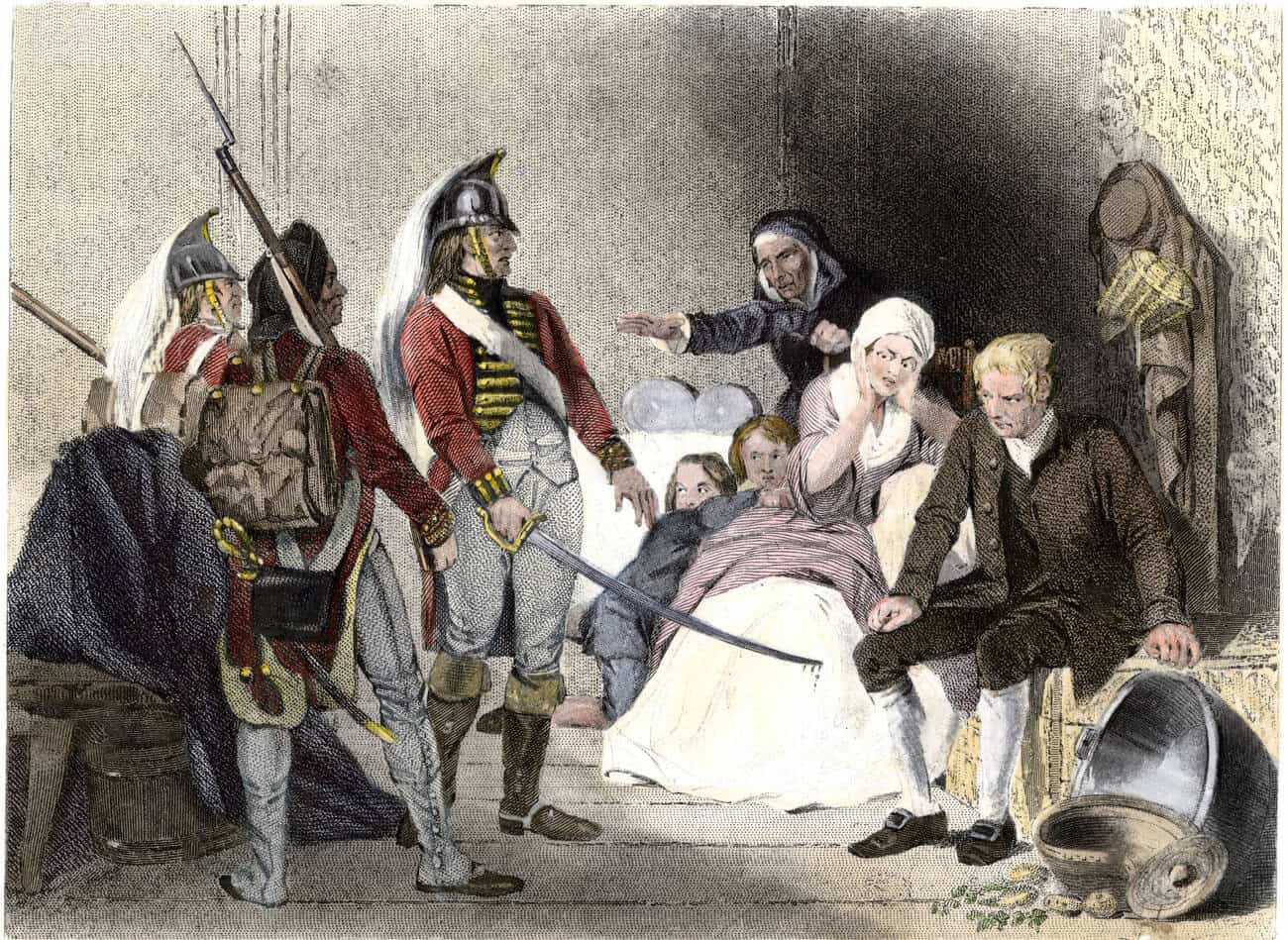
Paul Revere really did ride on the night of April 18, 1775, to warn that British regular troops were on the move, but the image of a lone rider racing through towns shouting "The British are coming!" is legend. His mission was supposed to be discreet because British patrols were operating in the area, and he generally stopped at individual homes to spread the alarm. A contemporary recollection from Lexington records Revere saying, "The regulars are coming out." Revere was also one of several riders who helped spread the warning. Henry Wadsworth Longfellow's famous 1861 poem later helped turn Revere into the singular hero of a much larger alarm network.
The Civil War was Fought Over States Rights
Arguments over federal power, states' rights, economics, and westward expansion all shaped the political crisis before the Civil War, but slavery was the central issue driving Southern secession. Secession declarations and statements from Confederate leaders repeatedly identified the protection of slavery and its expansion as fundamental concerns. The federal government's initial war aim under Abraham Lincoln was preserving the Union rather than immediately abolishing slavery, but that does not change why the secession crisis erupted. Emancipation became an official Union war policy in 1863.
The Declaration of Independence was Signed on Hemp Paper
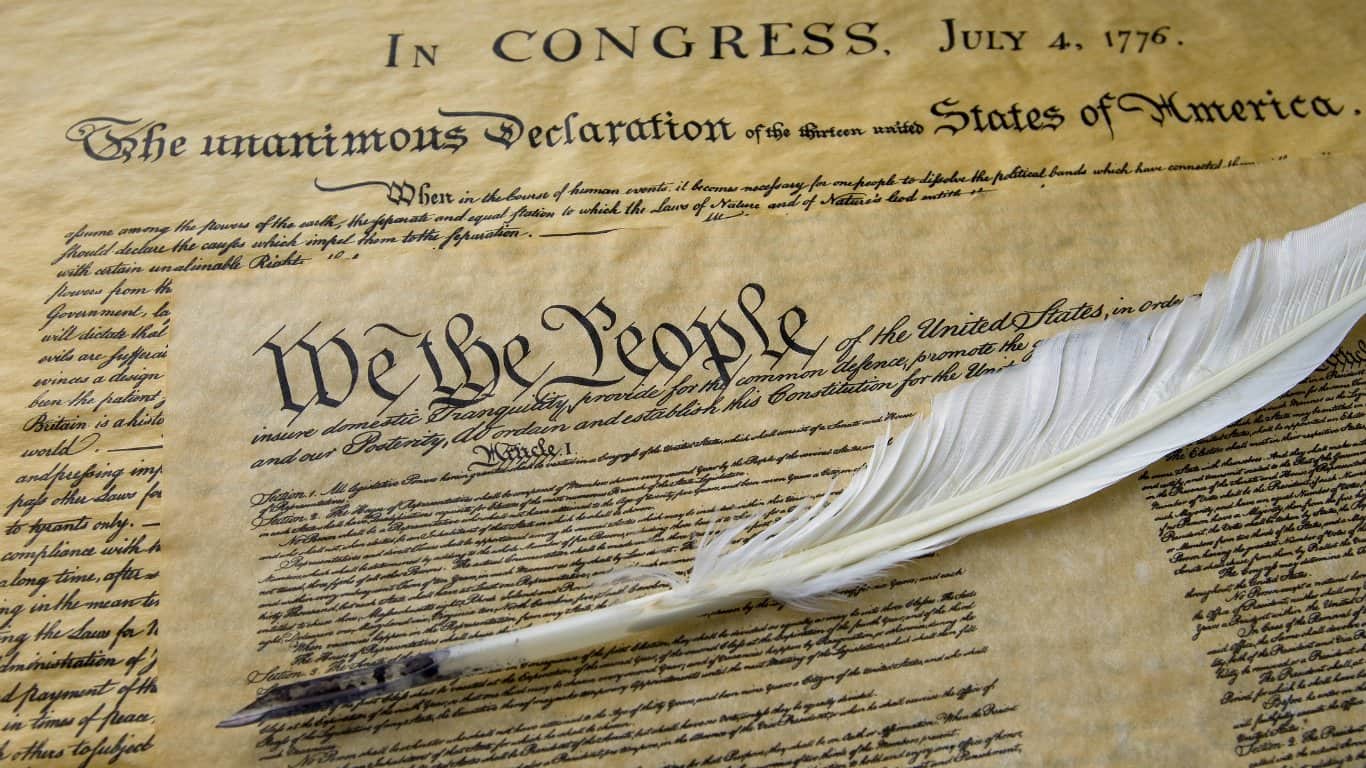
The signed Declaration of Independence displayed at the National Archives is not made of hemp paper. It was engrossed on parchment, an animal-skin writing material. Congress adopted the Declaration's text on July 4, 1776, and on July 19 ordered an official copy to be engrossed on parchment and signed. Delegates began signing that copy on Aug. 2. Drafts, printed versions, and other documents surrounding the Declaration were produced on paper, but the famous signed document itself is parchment.
Niña, Pinta, and Santa María Were All the Ships' Formal Names
The familiar names Niña, Pinta, and Santa María are not exactly wrong, but the naming history is more complicated than the schoolbook version suggests. Niña was a nickname for a ship formally called Santa Clara. Pinta was also a nickname, but the vessel's original formal name has been lost. Columbus's flagship was known as Santa María and also as La Gallega, with historical sources differing over exactly how those names were used. Columbus therefore did sail with the three vessels remembered as the Niña, Pinta, and Santa María, even if those were not simply three neat official names.
John Smith and Pocahontas Fell in Love
John Smith was about 27 when the English established Jamestown in 1607, while Pocahontas was roughly 10 or 11. There is no historical evidence that the two had a romantic relationship. Smith later described Pocahontas saving him when Powhatan's people appeared ready to execute him, but historians continue to debate whether the episode happened as Smith described it, whether he misunderstood a ritual, or whether it happened at all.
Pocahontas was born Amonute and also had the private name Matoaka; Pocahontas was a nickname. She appears to have married a Powhatan man named Kocoum as a teenager. After the English kidnapped her in 1613, she converted to Christianity, took the name Rebecca, and married English tobacco planter John Rolfe in April 1614.
Ronald Reagan Freed the Iran Hostages
The 52 Americans held hostage in Iran were released on Jan. 20, 1981, shortly after Ronald Reagan was sworn in as president, but the agreement securing their freedom was negotiated by the Carter administration. After months of negotiations mediated by Algeria, the United States and Iran reached the agreements known as the Algiers Accords on Jan. 19, Jimmy Carter's final full day in office. Reagan inherited and subsequently implemented those agreements. The dramatic timing of the hostages' departure from Iran helped attach their release to Reagan's inauguration in the public memory, even though the negotiations had taken place under Carter.
Witches Were Burned at the Stake in the Salem Witch Trials
No one was burned at the stake for witchcraft during the Salem witch trials. In 1692, 19 people convicted of witchcraft were executed by hanging. Giles Corey, who refused to enter a plea, was pressed to death beneath heavy stones, and several other accused people died while imprisoned. Burning people convicted of witchcraft occurred in parts of continental Europe, but under the English legal tradition followed in colonial Massachusetts, those convicted of witchcraft were hanged rather than burned.
The Declaration of Independence was signed on July 4th
July 4, 1776, was the day the Continental Congress adopted the final text of the Declaration of Independence, not the day all of its famous signatures were added. Congress had approved the resolution for independence two days earlier, on July 2. After the Declaration was adopted on July 4, Congress ordered an official parchment copy to be prepared. Most delegates began signing that engrossed copy on Aug. 2, 1776, while several others signed later. Independence Day therefore commemorates the adoption of the Declaration rather than a single mass-signing ceremony.
Only Japanese Americans Were Interned During World War II
More than 120,000 people of Japanese descent were forcibly removed and incarcerated in camps during World War II, making their treatment uniquely broad in scope. But they were not the only people confined under U.S. wartime programs. The federal government also selectively detained or interned thousands of people classified as German, Italian, or Japanese enemy aliens, and people of Japanese, German, and Italian ancestry were brought to the United States from Latin America for internment. One important distinction is that the government did not impose a comparable mass exclusion and incarceration program on U.S. citizens of German or Italian ancestry.
The United States Is a Direct Democracy
The United States is both a constitutional republic and a representative democracy, so describing it as one does not cancel out the other. Citizens elect representatives to make laws and govern on their behalf, while the Constitution limits government power, divides authority among different branches and levels of government, and guarantees a republican form of government to the states. What the United States is not is a pure direct democracy in which citizens themselves vote on most national laws and government decisions.
Betsy Ross Designed the American Flag
The famous story that George Washington personally asked Betsy Ross to design the first American flag cannot be verified from contemporary records. The story became widely known after Ross's grandson, William Canby, publicly recounted the family tradition in 1870, nearly a century after the supposed meeting. Ross was a Philadelphia upholsterer who made flags, but there is no surviving evidence proving that she designed or sewed the very first U.S. flag. Francis Hopkinson has a stronger documented claim to a role in its design because he later requested payment from Congress for designing the "flag of the United States of America," although the exact origins of the first flag design remain uncertain.
The Liberty Bell Cracked on Independence Day
There is no historical evidence that the Liberty Bell received its famous crack while ringing on Independence Day. The National Park Service says the exact date and cause of the original thin crack are unknown, although it probably developed in the early 1840s after decades of use. In 1846, workers widened that crack in an attempt to stop it from spreading and restore the bell's tone. During a George Washington's Birthday observance on Feb. 23, 1846, a second crack developed and the repair failed. The bell has not been formally rung since.