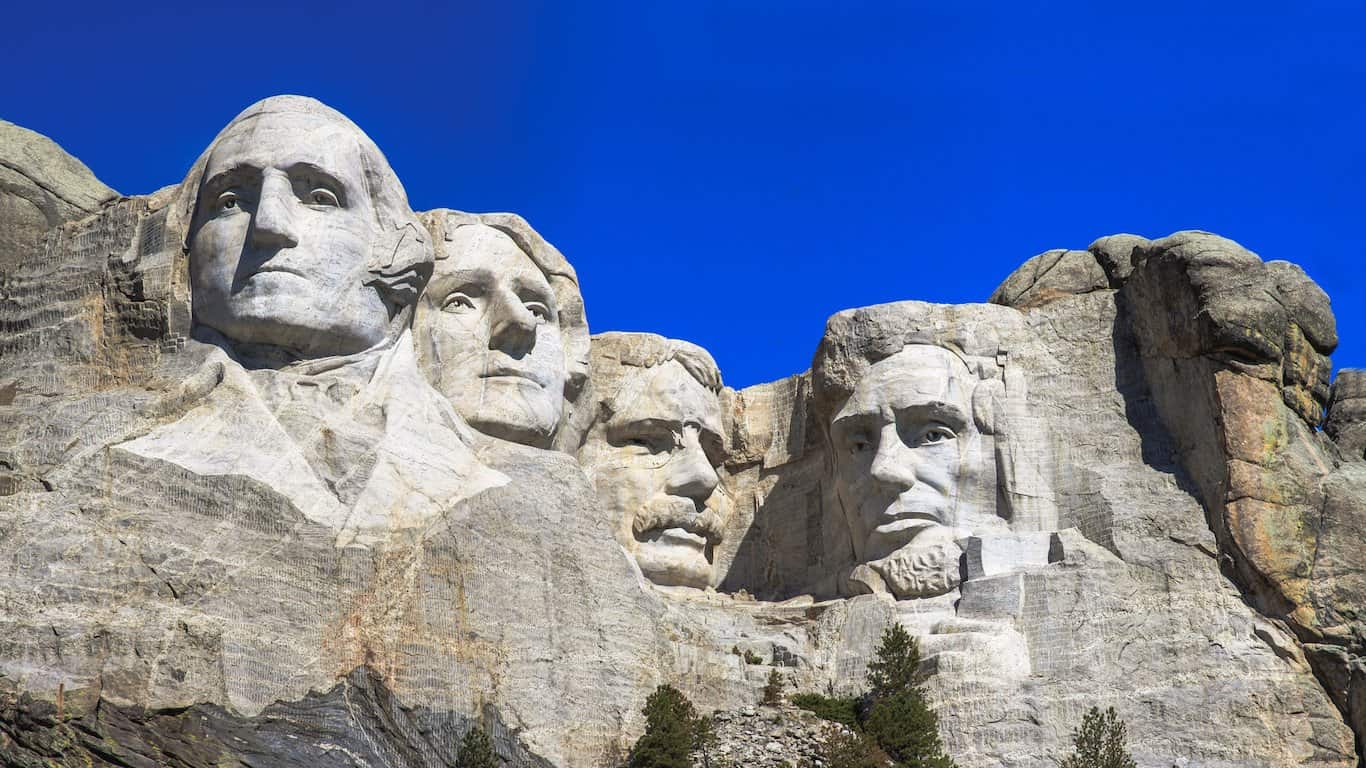
Say “Founding Fathers” and a familiar group usually comes to mind: Washington, Jefferson, Franklin, Madison, and Hamilton. But the name is not an official membership list. It also covers the signers, lawmakers, diplomats, financiers, and political thinkers who helped turn 13 colonies into a nation.
The Constitutional Convention alone brought 55 delegates to Philadelphia in 1787, although only 39 signed the finished document. Some of the men below framed that Constitution. Others shaped independence, the Bill of Rights, the new government, or the political vocabulary Americans still use.
Their stories are not simple hero tales. Several defended liberty while enslaving other people, and some ended their careers in debt or controversy. That makes them harder to summarize, but more revealing to remember.
Gouverneur Morris
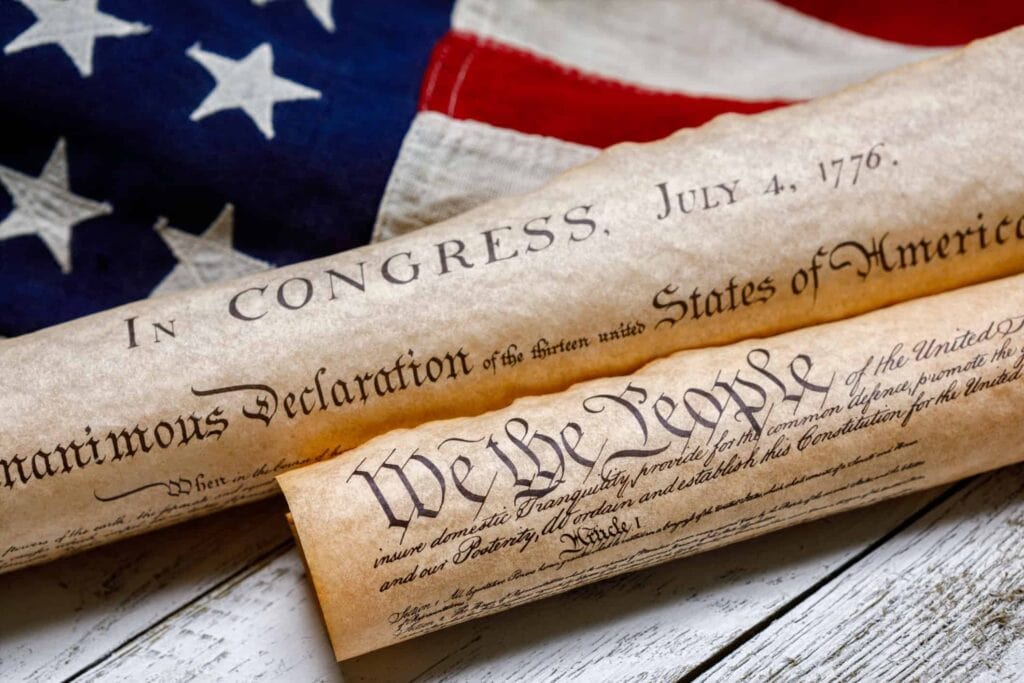
The Constitution was a group project, but Gouverneur Morris gave its final language much of its force. On the five-member Committee of Style, he is widely credited as the principal draftsman of the polished text and its opening words, “We the People of the United States.” He also delivered one of the Convention’s strongest attacks on slavery. Morris condemned the institution and challenged a system that boosted slaveholding states’ representation by counting enslaved people who had no political rights. His objections failed to remove the charter’s concessions to slavery, but his prose and dissent left an unmistakable mark on the document.
Roger Sherman
Roger Sherman had limited formal schooling and began his working life as a shoemaker, then studied enough mathematics and law to become a surveyor, lawyer, and judge. He remains the only person to sign four landmark founding documents: the Continental Association, the Declaration of Independence, the Articles of Confederation, and the Constitution. At the 1787 Convention, Sherman and Oliver Ellsworth helped forge the Connecticut, or Great, Compromise. It created a House based on population and a Senate with equal representation for every state. Approved on July 16 by one vote, the bargain resolved a dangerous dispute and still defines Congress today.
John Dickinson
John Dickinson became the “Penman of the Revolution” after his Letters from a Farmer in Pennsylvania attacked British taxation. Yet he believed declaring independence in July 1776 was premature. Rather than vote against it, Dickinson and Robert Morris abstained, allowing Pennsylvania’s delegation to support the break with Britain. Dickinson did not sign the Declaration, but he later served as a private in the Delaware militia, although he saw no combat. He also signed the Articles of Confederation and led Delaware and Pennsylvania. In an unusual step for a founder, he arranged freedom for the people he enslaved, most during his lifetime.
Charles Carroll of Carrollton
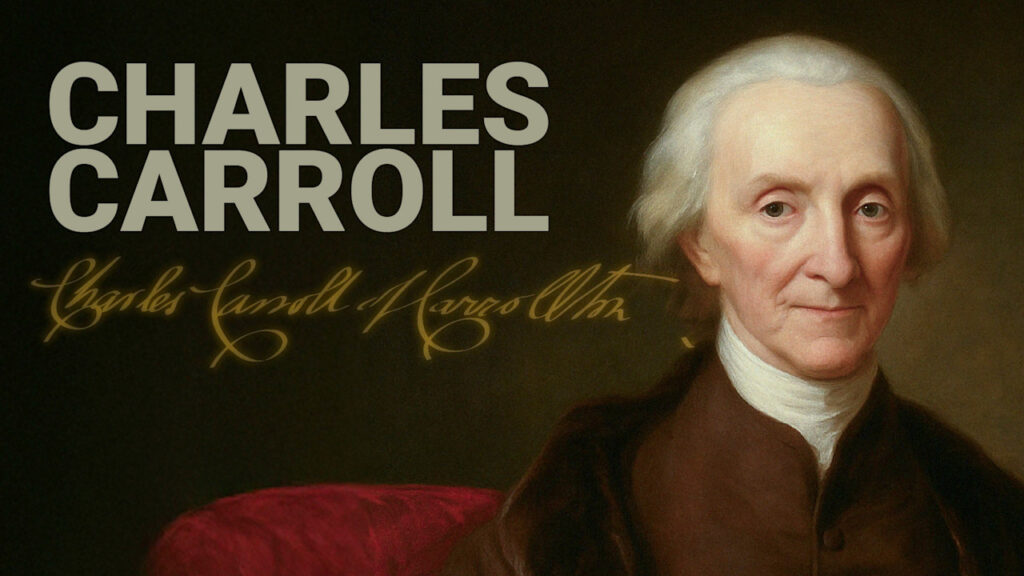
Charles Carroll of Carrollton was the Declaration of Independence’s only Roman Catholic signer. Maryland’s restrictions on Catholics had earlier kept him from elected office. Carroll was enormously wealthy, and that fortune rested partly on the labor of hundreds of enslaved people. He became the Declaration’s last surviving signer, dying in 1832 at age 95. Four years earlier, he laid the Baltimore and Ohio Railroad’s ceremonial cornerstone.
Elbridge Gerry
Elbridge Gerry signed the Declaration of Independence but refused to sign the Constitution. He objected to the new federal system, especially its lack of explicit protections for individual rights, although he later supported ratification. While Gerry was Massachusetts governor in 1812, the legislature drew a state senate map to favor his Democratic-Republican Party, and he signed it. A newspaper cartoon turned one twisting district into a salamander-like monster called “The Gerry-mander.” Gerry did not invent map manipulation, but his name became the term for it. He later served as James Madison’s vice president and died in office in 1814.
Robert Morris
Robert Morris earned the title “Financier of the Revolution” by securing money and supplies when the government struggled to fund the war. He signed the Declaration and Constitution and helped establish the Bank of North America, chartered by Congress in 1781. His taste for large financial bets became his undoing. Land speculation left him unable to pay creditors, and the former power broker spent more than three years in a Philadelphia debtors’ prison before his release in 1801.
James Wilson
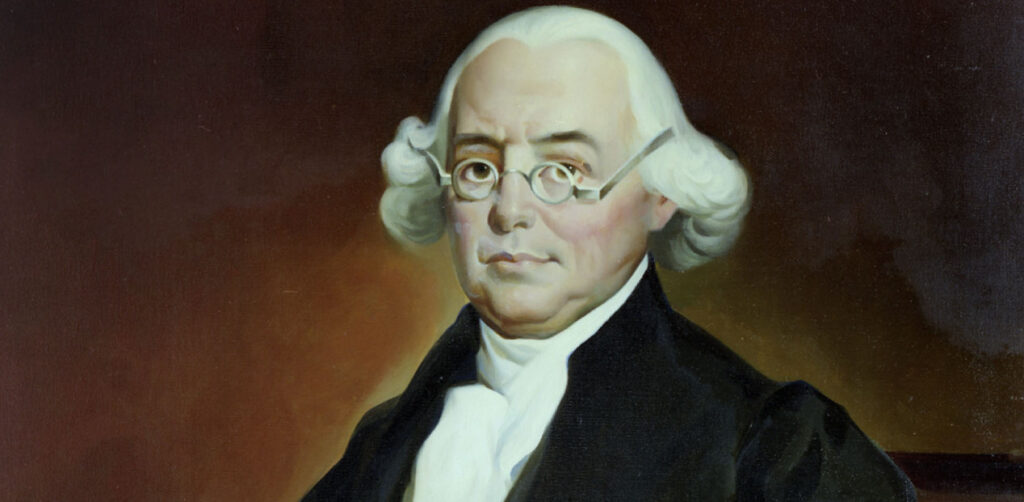
Scottish-born James Wilson was an influential voice on popular sovereignty and the presidency. George Washington appointed him to the original six-member Supreme Court in 1789, the same year Wilson became the College of Philadelphia’s first professor of law. His stature could not protect him from reckless land speculation. Crushed by debt, he was briefly jailed while still a justice. Wilson died in North Carolina in 1798, still serving on the Court.
George Mason
George Mason refused to sign the Constitution for several reasons, most famously its lack of a bill of rights. He had drafted Virginia’s Declaration of Rights in 1776, which influenced the protections James Madison later proposed for the federal Constitution. His record carried a contradiction: Mason denounced the slave trade, yet he enslaved more than 100 people at his death and freed none in his will. His demand for written liberties endured, even though his conduct denied liberty to others.
Rufus King
Rufus King signed the Constitution for Massachusetts, moved to New York in 1788, and became one of that state’s first U.S. senators. George Washington later named him minister to Great Britain. King was the Federalist Party’s last presidential nominee, losing the 1816 election to James Monroe. Back in the Senate, he opposed extending slavery into new states. During the Missouri crisis of 1819 and 1820, he argued Congress had the power to restrict its expansion.