NateBergin / Wikimedia Commons
Dietmar Rabich / Wikimedia Commons
Thoom/Shutterstock.com
Grosseto2 / Wikimedia Commons
Annatsach / Wikimedia Commons
NateBergin / Wikimedia Commons
Petar Milošević / Wikimedia Commons
Óðinn / Wikimedia commons
Sumitsurai / Wikimedia Commons
Leon petrosyan / Wikimedia Commons
Itto Ogami / Wikimedia Commons
Ingo Mehling / Wikimedia Commons
Viktar Palstsiuk / Wikimedia Commons
Terragio67 / Wikimedia Commons
L'Ospite Inatteso / Wikimedia Commons
Herbert Frank / Wikimedia Commons
15 of Europe’s Oldest Churches and Christian Sites Still Standing
Europe is filled with churches that have been standing for well over 1,000 years, including a few whose roots reach all the way back to the Roman Empire. Some were built as Christian churches from the beginning, while others started life as imperial mausoleums or Roman monuments before being converted into places of worship. Either way, these buildings offer a rare look at the earliest centuries of Christianity in Europe.
Many of these sites have survived fires, earthquakes, invasions, religious upheaval, and centuries of rebuilding. What remains today is not always exactly what a visitor would have seen 1,500 years ago, but original walls, mosaics, columns, floor plans, and other ancient features still survive in remarkable condition. Tempo is taking a closer look at 15 of Europe’s oldest churches and early Christian landmarks, along with the history that makes each one so unusual.
Here is a look at 15 of the oldest churches and Christian landmarks in Europe:
Cathedral of Trier
- Country: Germany
- Origins: c. 330–340
- Architectural Style: Late Roman / Romanesque / Gothic
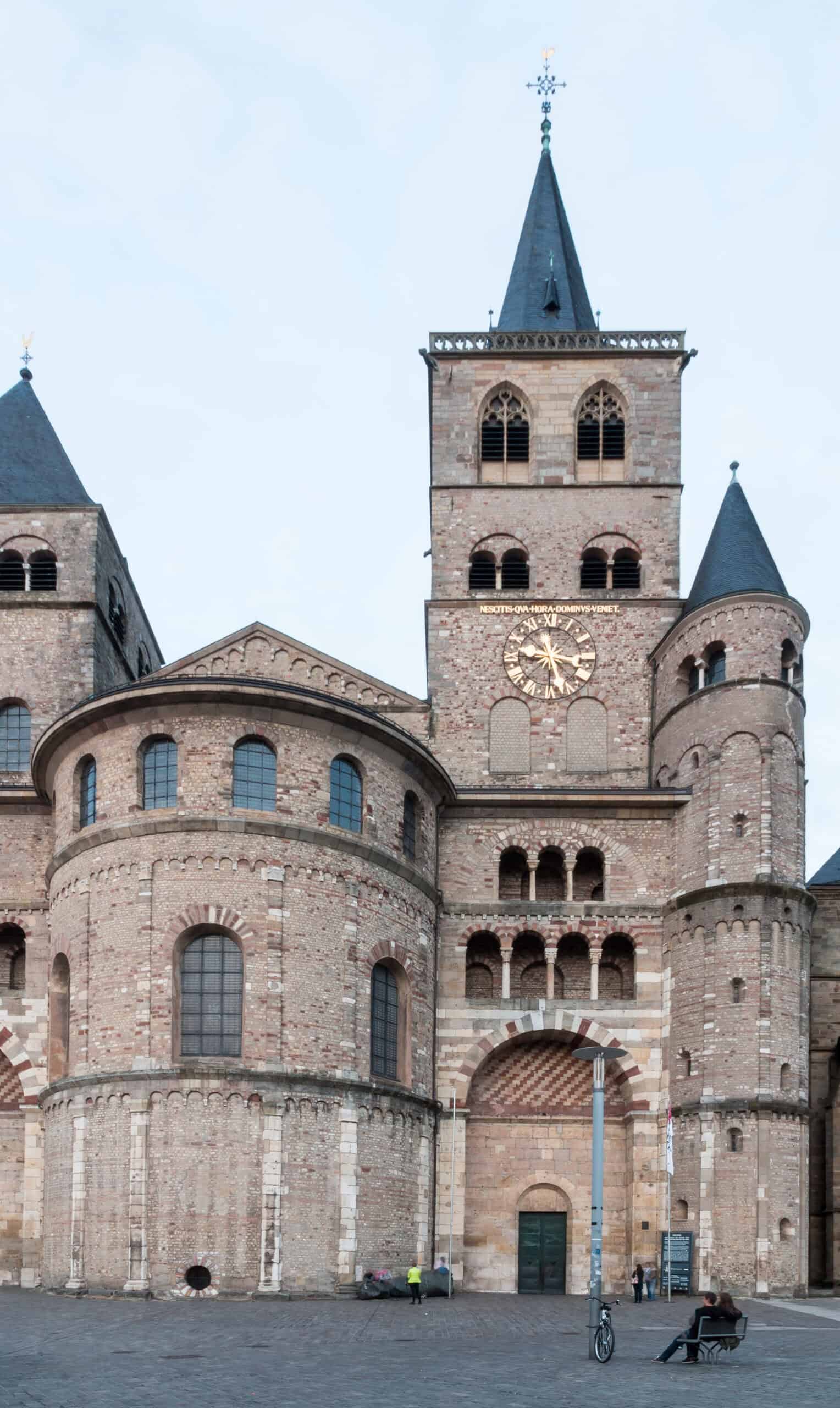
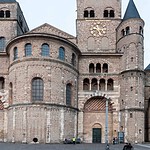
The Cathedral of St. Peter in Trier is considered Germany’s oldest episcopal church and one of the oldest surviving church buildings in the Western world. Its story begins in the fourth century, when a huge Christian complex was built over part of an imperial palace after Constantine granted Christians freedom of worship. The complex was far larger than the cathedral visitors see today, and portions of its Roman construction still survive within the present building.
The cathedral has been rebuilt and expanded repeatedly, so it is best understood as layers of European history rather than a perfectly preserved fourth-century church. Roman walls sit alongside medieval Romanesque and Gothic work, with later restorations added after periods of damage. Together with Trier’s major Roman monuments and the neighboring Church of Our Lady, the cathedral has been part of a UNESCO World Heritage Site since 1986.
Archbasilica of Saint John Lateran
- Country: Italy
- Dedicated: 324 (later rebuilt)
- Architectural Style: Early Christian origins / later Baroque rebuilding
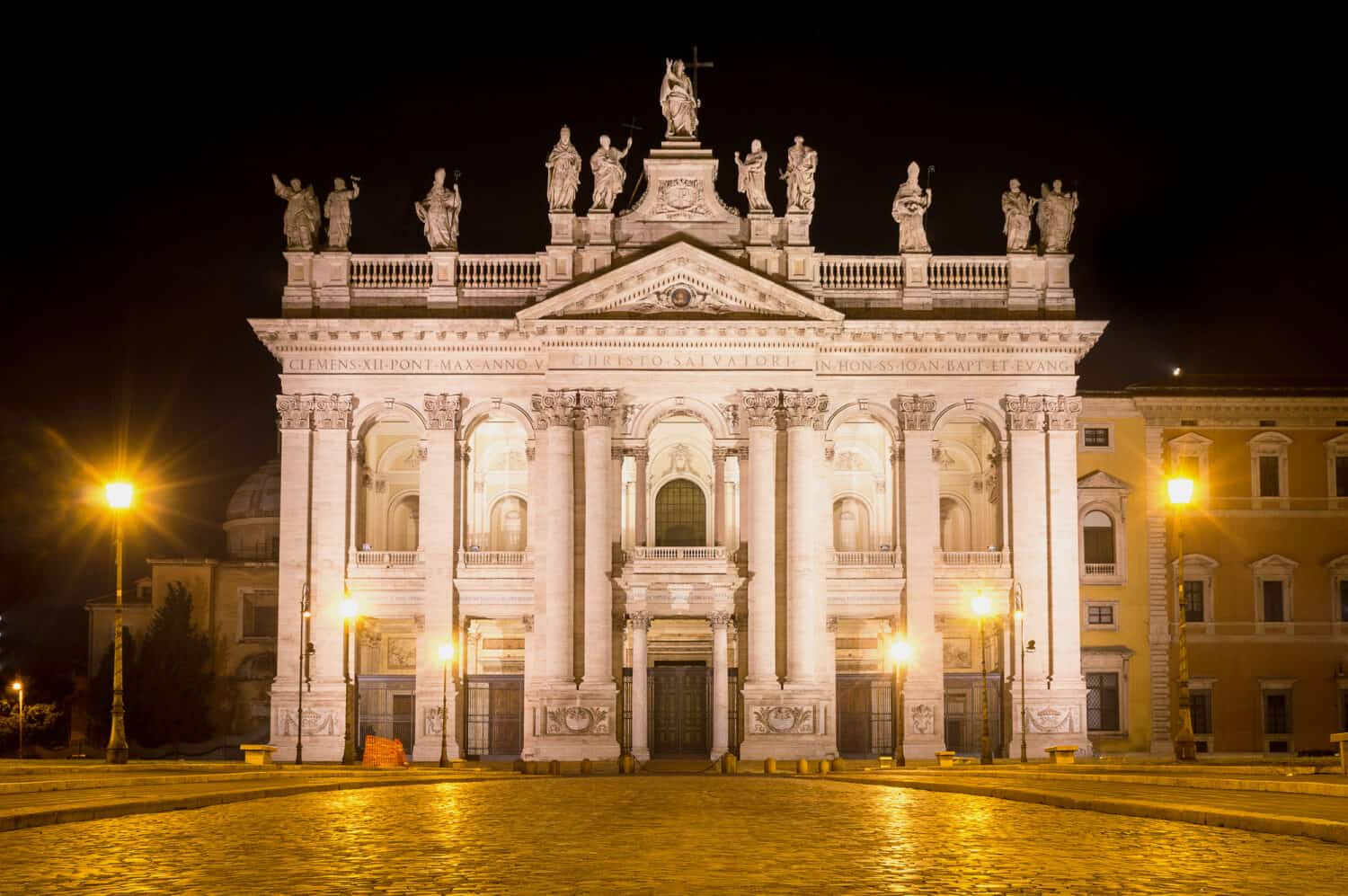
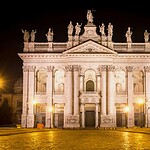
St. Peter’s Basilica may be more famous, but Saint John Lateran is the cathedral of the Bishop of Rome, meaning it is the pope’s cathedral church. The basilica was built with the support of Emperor Constantine and dedicated by Pope Sylvester I around A.D. 324. Vatican sources describe it as the first church where Christians in Rome could freely and publicly celebrate their liturgy after the restrictions of the earlier Roman era.
The Lateran complex also served as the papal residence for centuries before the papacy moved away during the Avignon period. Fires, earthquakes, renovations, and major Baroque rebuilding mean the church visitors see today looks very different from Constantine’s basilica. Its status, however, never disappeared. The inscription on the building still identifies Saint John Lateran as the “Mother and Head” of the churches of Rome and the world.
Santa Costanza
- Country: Italy
- Built: 4th century as a mausoleum
- Architectural Style: Late Roman / Early Christian
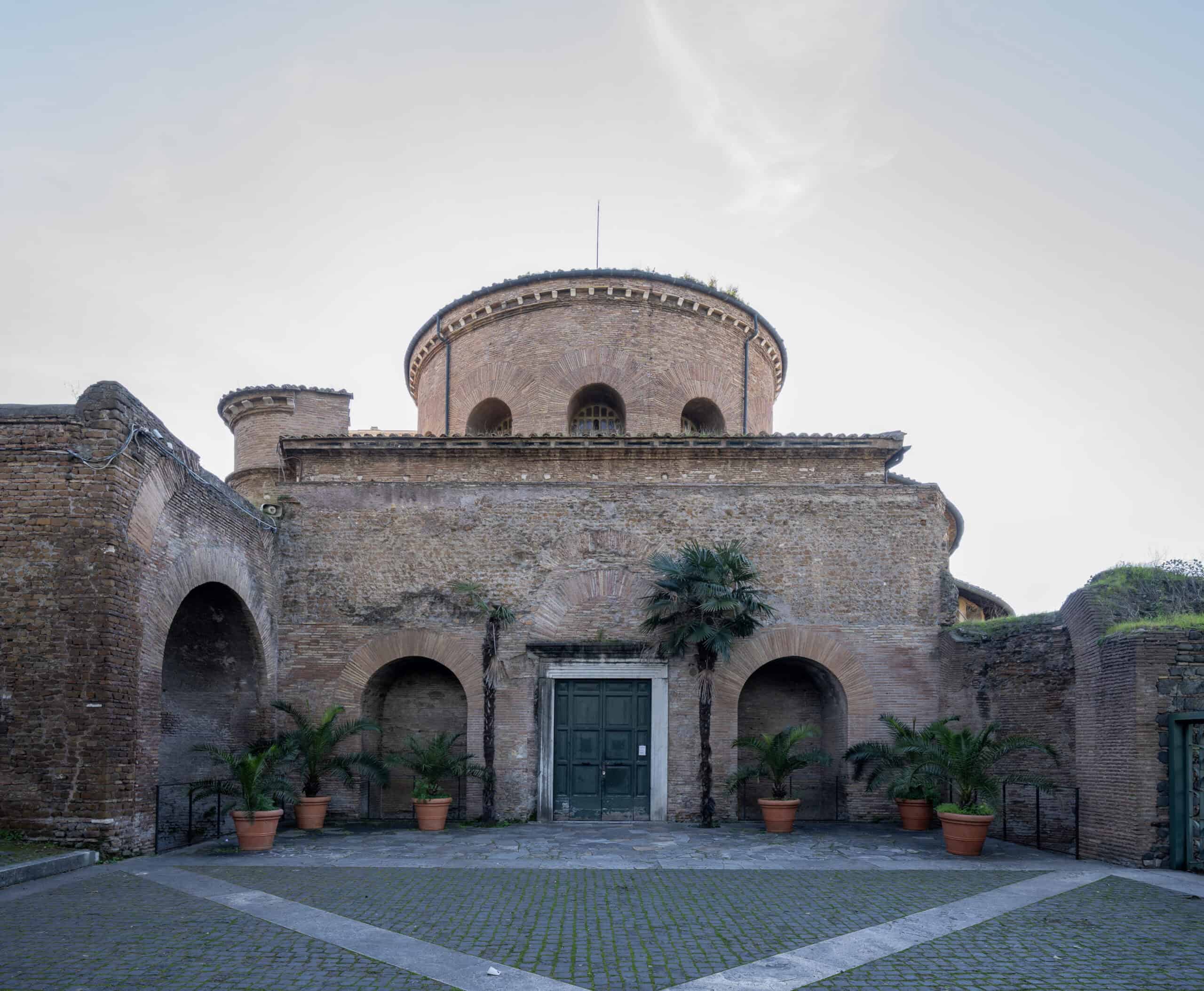
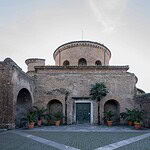
Santa Costanza comes with an important asterisk: it was not originally built as a church. The circular structure was created in the fourth century as a mausoleum associated with Constantina, the daughter of Emperor Constantine, beside an early Christian cemetery basilica on Rome’s Via Nomentana. It later became a church, preserving a building type that grew directly out of Roman funerary architecture.
Inside, paired columns surround a central domed space while a barrel-vaulted ambulatory circles the building. The surviving mosaics are especially important because they rank among the oldest monumental Christian mosaics in Rome. Grapevines, birds, harvest scenes, and other imagery show how early Christian artists borrowed familiar Roman decorative traditions and gave them new meaning.
Rotunda of Saint George
- Country: Greece
- Built: early 4th century; converted to Christian use by late antiquity
- Architectural Style: Late Roman / Byzantine
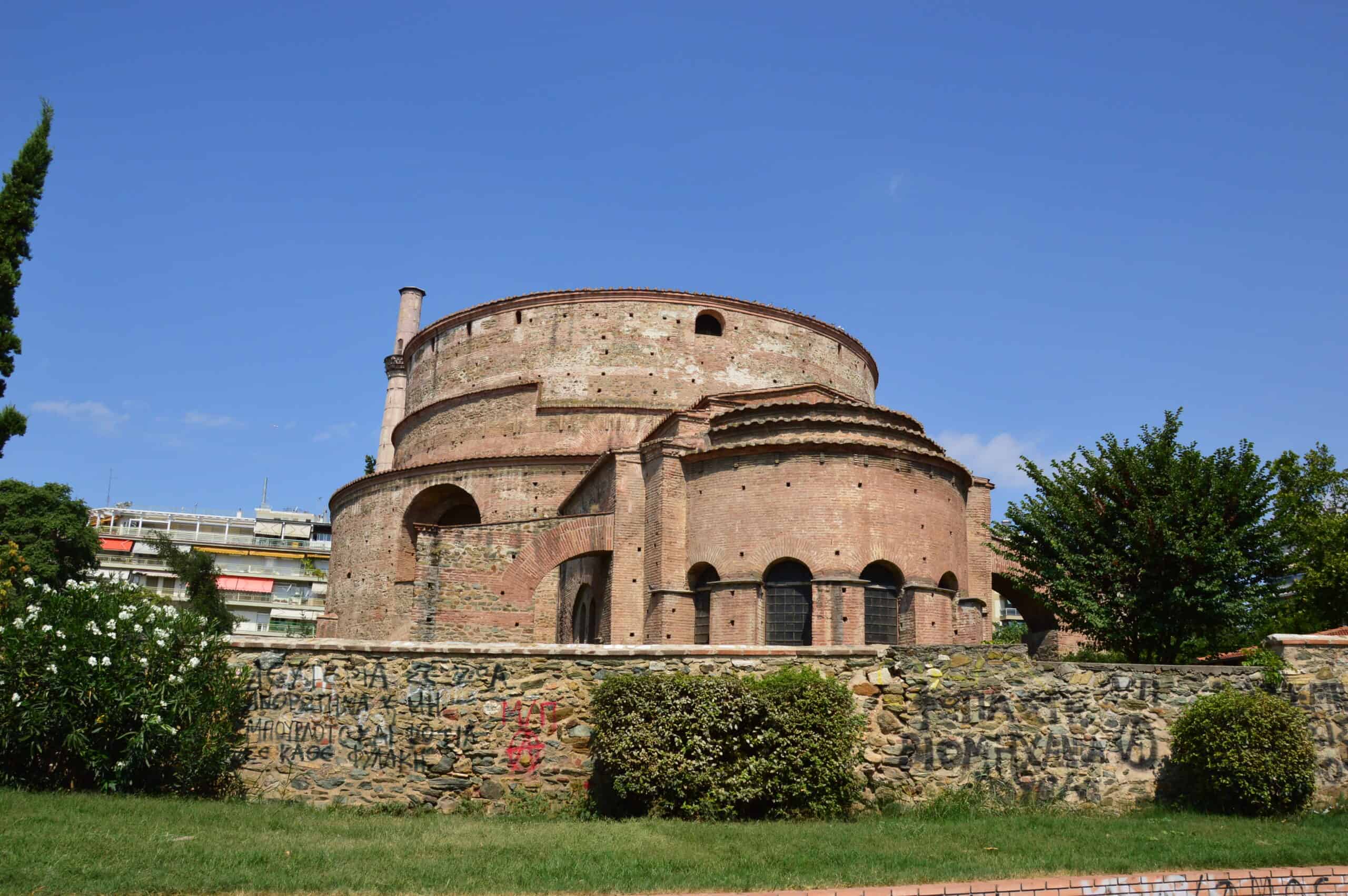
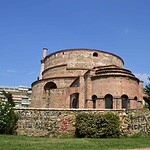
The Rotunda of Thessaloniki is another ancient building that did not begin as a church. Emperor Galerius had the massive circular structure built in the early fourth century, probably as part of his imperial complex. Its exact original purpose remains debated, but it was converted for Christian worship in late antiquity and decorated with extraordinary mosaics that UNESCO considers masterpieces of early Christian art.
The Rotunda later became a mosque during Ottoman rule, and its surviving minaret is a visible reminder of that chapter in its history. Through earthquakes, political upheaval, and changing religions, the Roman shell and portions of the early Christian mosaic decoration survived. Today, it is one of the most recognizable monuments in Thessaloniki and part of the city’s UNESCO-listed Paleochristian and Byzantine monuments.
Basilica of Santa Sabina
- Country: Italy
- Founded: 425
- Architectural Style: Early Christian Basilica
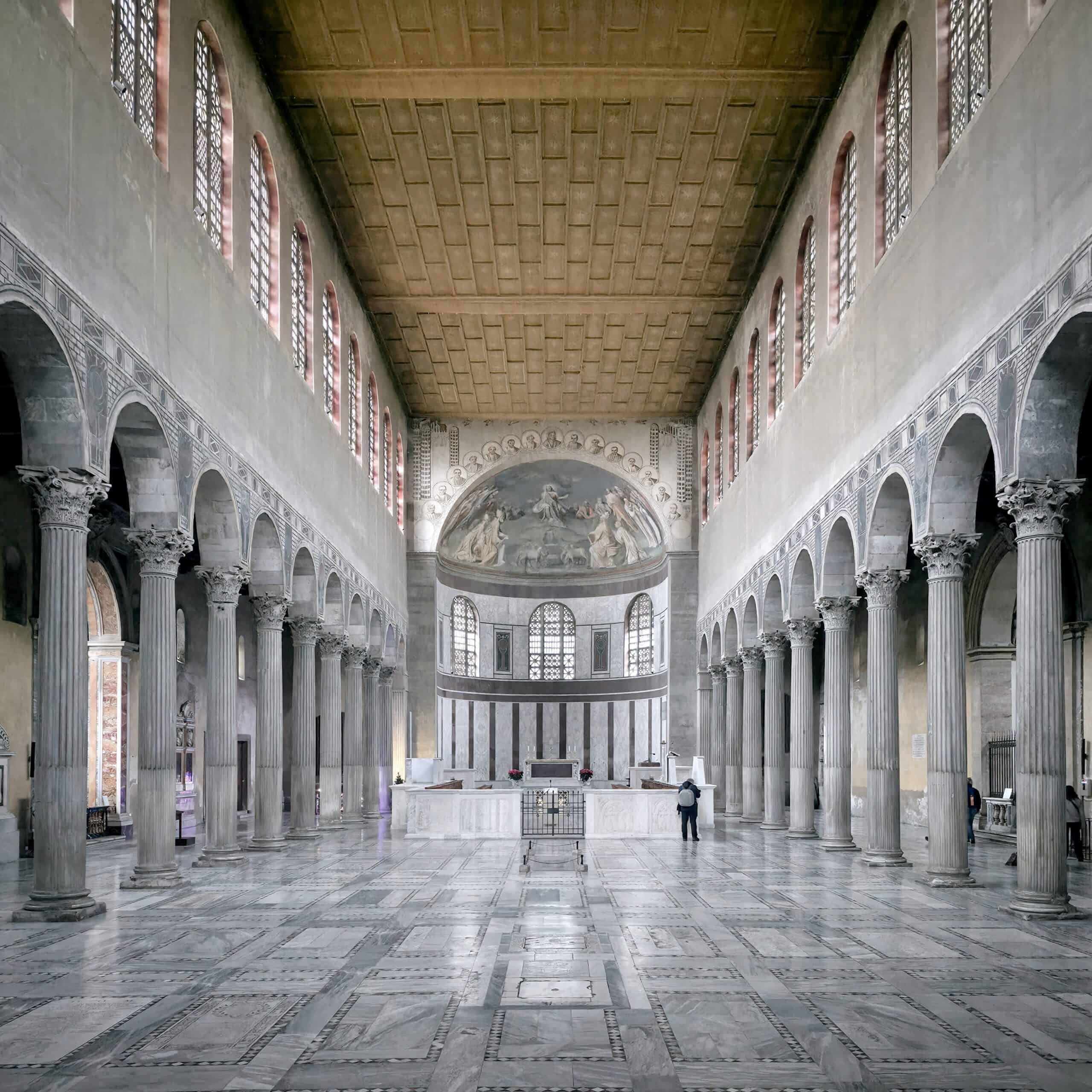
High on Rome’s Aventine Hill, Santa Sabina is one of the clearest places to see what an early Christian basilica was meant to look like. The church was founded in A.D. 425 by Peter of Illyria. Although later generations altered the building, major restorations in the early 20th century removed many Baroque additions and brought much of its simpler early form back into view.
The long nave, rows of ancient columns, high clerestory windows, and restrained interior make Santa Sabina feel very different from Rome’s more elaborate Baroque churches. Its fifth-century wooden entrance doors are especially famous. Their carved biblical scenes include one of the earliest surviving representations of the Crucifixion in Christian art.
Mausoleum of Galla Placidia
- Country: Italy
- Built: c. 425
- Architectural Style: Late Roman / Early Christian
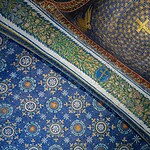
Despite the name everyone knows it by, the Mausoleum of Galla Placidia was probably not built as the empress’s tomb. The small fifth-century structure was connected to the Church of Santa Croce and may have functioned as an oratory or memorial chapel. Its exact original purpose is still debated, which is part of what makes the building so interesting.
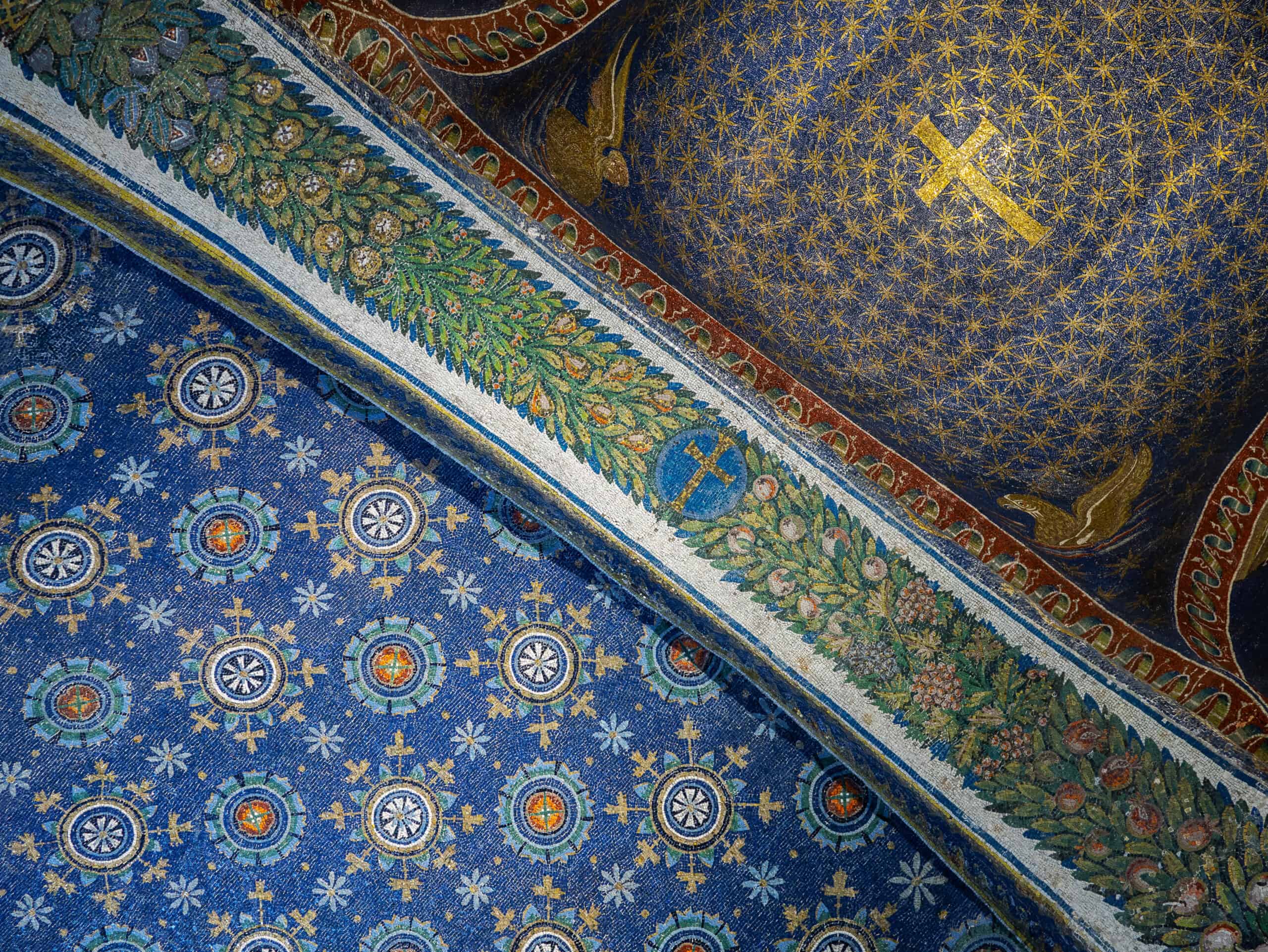
The plain brick exterior gives almost nothing away. Inside, deep blue vaults covered with golden stars, Christian symbols, and biblical scenes create one of the most famous mosaic interiors from late antiquity. Built around A.D. 425, the monument belongs to the period when Ravenna was the capital of the Western Roman Empire. It is now one of eight Early Christian monuments in Ravenna recognized together as a UNESCO World Heritage Site.
Basilica of San Lorenzo Maggiore
- Country: Italy
- Built: late 4th to early 5th century
- Architectural Style: Early Christian
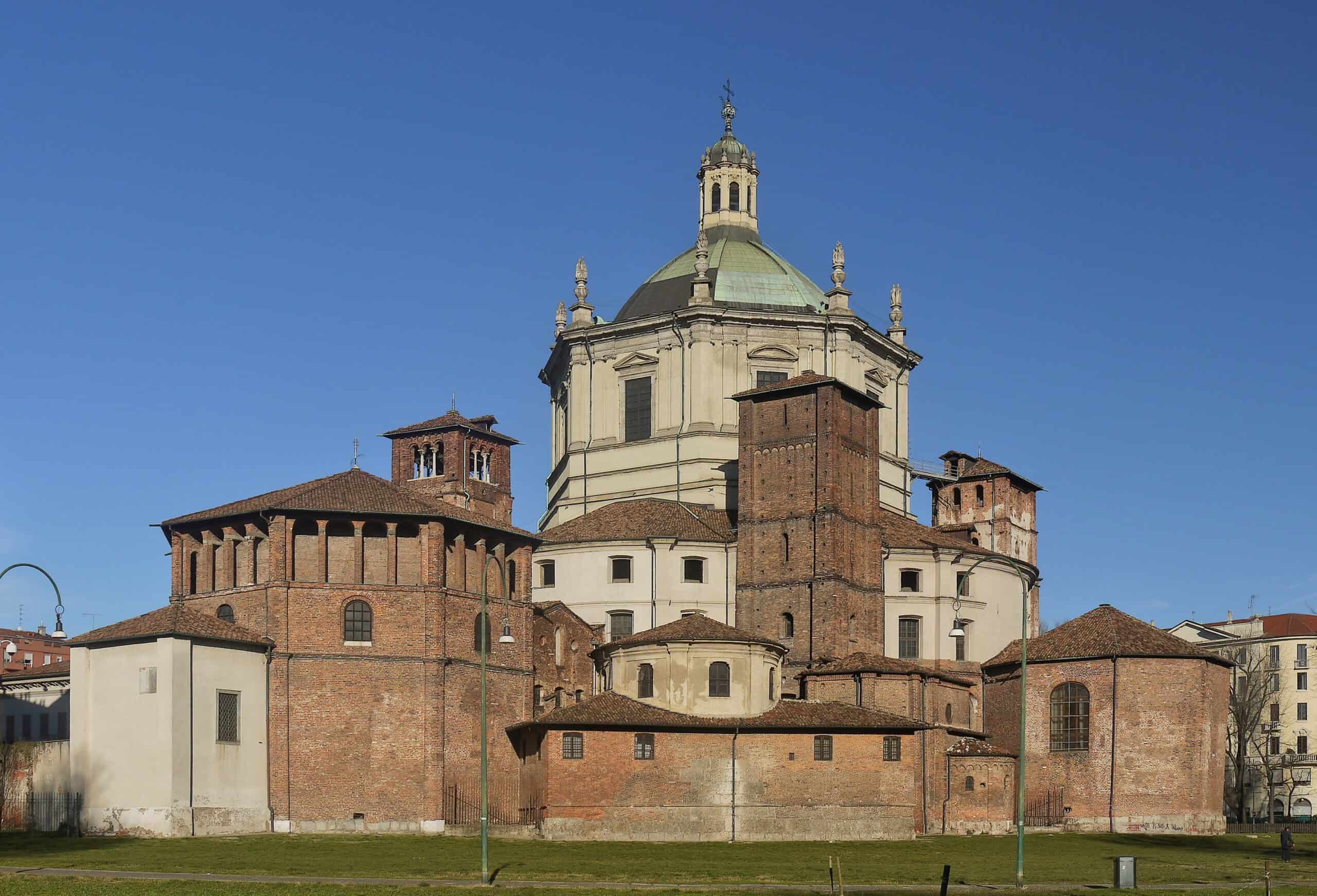
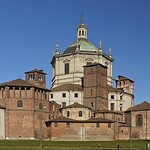
San Lorenzo Maggiore is one of Milan’s oldest churches, with origins in the late fourth or early fifth century when the city was still one of the major centers of the Roman Empire. Its centralized plan stands apart from the long rectangular basilicas that became common in early Christianity and shows just how strongly Roman imperial architecture influenced the first generations of monumental churches.
The basilica has changed considerably after centuries of damage, rebuilding, and structural problems, but important late antique elements remain. The Chapel of Sant’Aquilino preserves some of Milan’s oldest Christian mosaics. Just outside, the famous sixteen Columns of San Lorenzo are made from pieces of an older Roman building that were reused and assembled near the basilica, creating one of the most striking surviving reminders of ancient Milan.
Cathedral of Saint Domnius
- Country: Croatia
- Origins: early 4th-century Roman mausoleum; cathedral since the 7th century
- Architectural Style: Late Roman / Medieval Christian
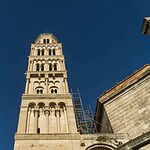
The Cathedral of Saint Domnius has one of the strangest origin stories on this list. The core of the building was not constructed for Christians at all. It was the early fourth-century mausoleum of Emperor Diocletian, the Roman ruler associated with one of the empire’s harshest persecutions of Christians.
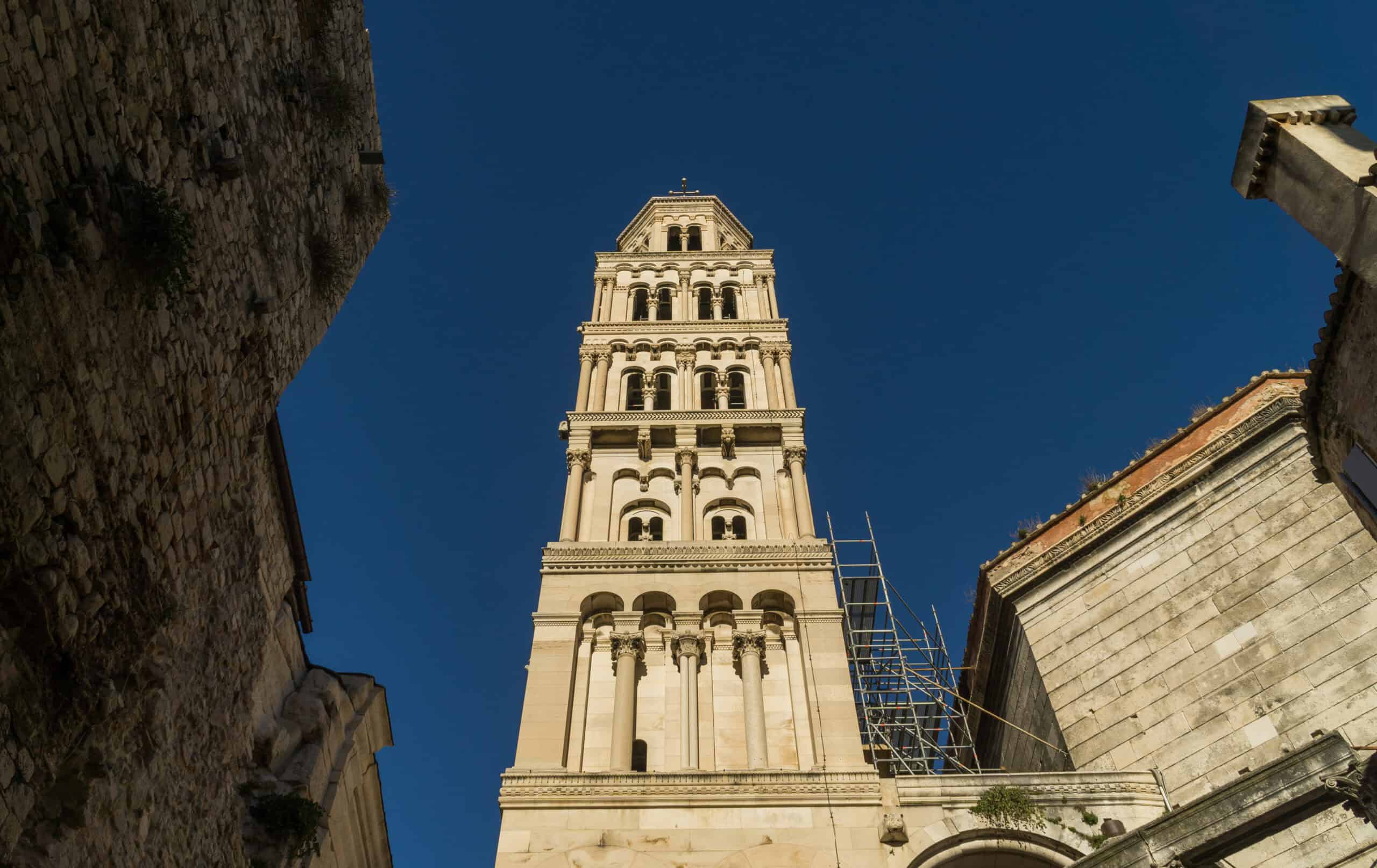
By the middle of the seventh century, the mausoleum had been converted into a cathedral dedicated to Saint Domnius, a bishop and martyr from nearby Salona. Split’s official tourism board describes it as a cathedral housed in one of the oldest buildings used for that purpose anywhere in Europe. Much of Diocletian’s original octagonal mausoleum survives inside the cathedral, while medieval additions, including the famous bell tower, reveal how the site kept changing long after the Roman Empire disappeared.
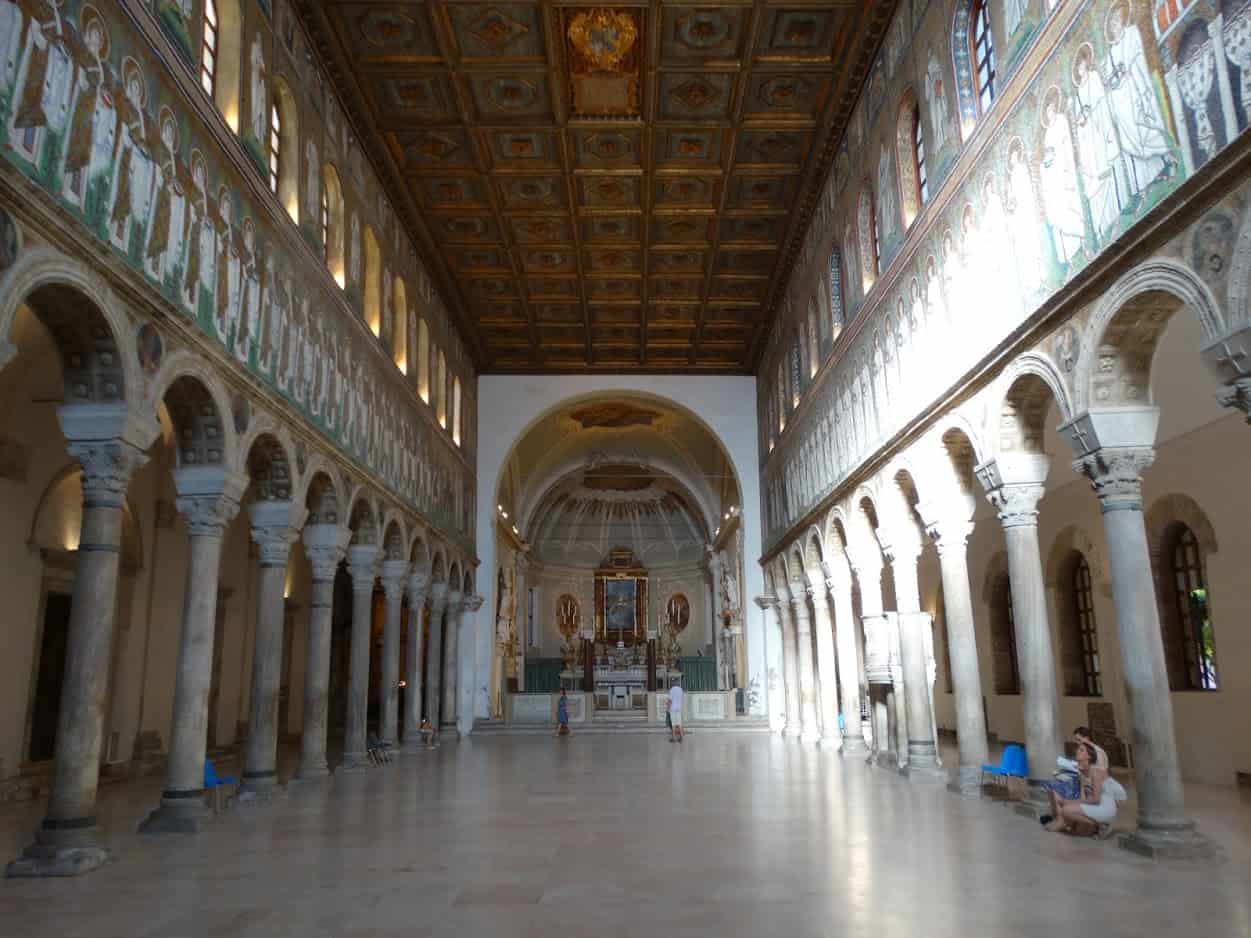
Basilica of Sant’Apollinare Nuovo
- Country: Italy
- Built: early 6th century, during Theodoric’s reign
- Architectural Style: Ostrogothic / Early Byzantine
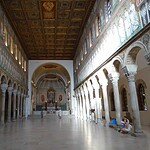
The Ostrogothic king Theodoric commissioned Sant’Apollinare Nuovo in the early sixth century as a palace church for Arian Christian worship. After Byzantine forces took Ravenna, the church was transferred to orthodox Christian use and rededicated to Saint Martin in A.D. 561. That change was not just religious. Parts of Theodoric’s original mosaic program were deliberately altered, with figures from his court removed or replaced.
Those changes are still visible if you know where to look. Along the nave, sixth-century mosaics show long processions of saints and martyrs, while traces of the earlier Ostrogothic decoration survive beside them. The result is a church where two competing Christian traditions can literally be read in the walls, making Sant’Apollinare Nuovo one of Ravenna’s most fascinating UNESCO-listed monuments.
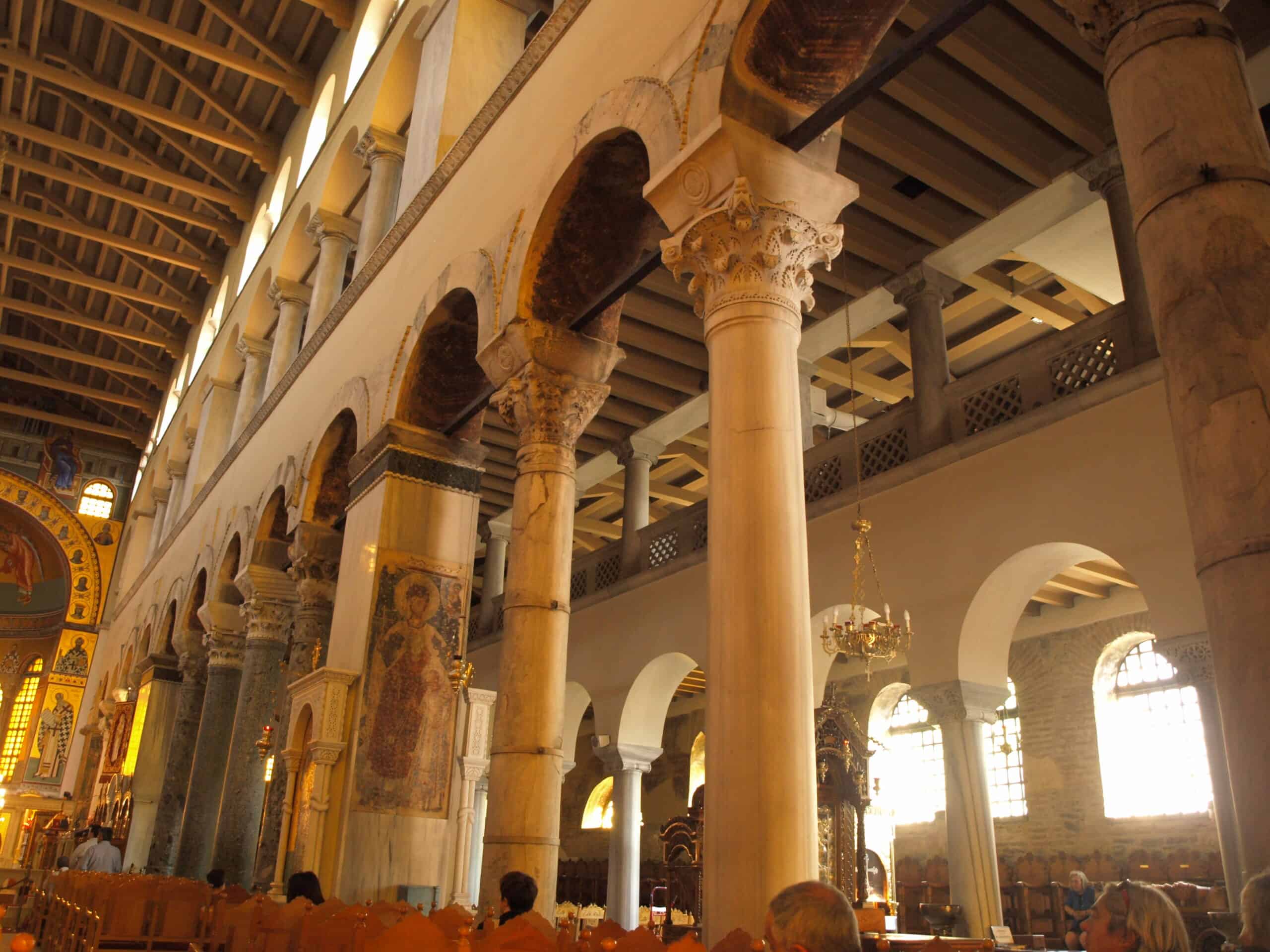
Basilica of Saint Demetrios
- Country: Greece
- Origins: 5th century; rebuilt in the 7th century and after the 1917 fire
- Architectural Style: Byzantine
Saint Demetrios is the great pilgrimage church of Thessaloniki and is tied to the traditional site of the city’s patron saint’s martyrdom. A large basilica was built here in the fifth century under an official named Leontios. That church burned in the early seventh century and was replaced by the larger five-aisled basilica that shaped the monument’s later form.
The building has had a difficult history. It became a mosque during Ottoman rule, returned to Christian use in the 20th century, and was badly damaged in Thessaloniki’s devastating fire of 1917. Restoration was completed in time for the church to reopen in 1949. Even after all of that, important early Christian and Byzantine mosaics survived, making Saint Demetrios one of the most significant monuments in UNESCO’s collection of Thessaloniki churches.
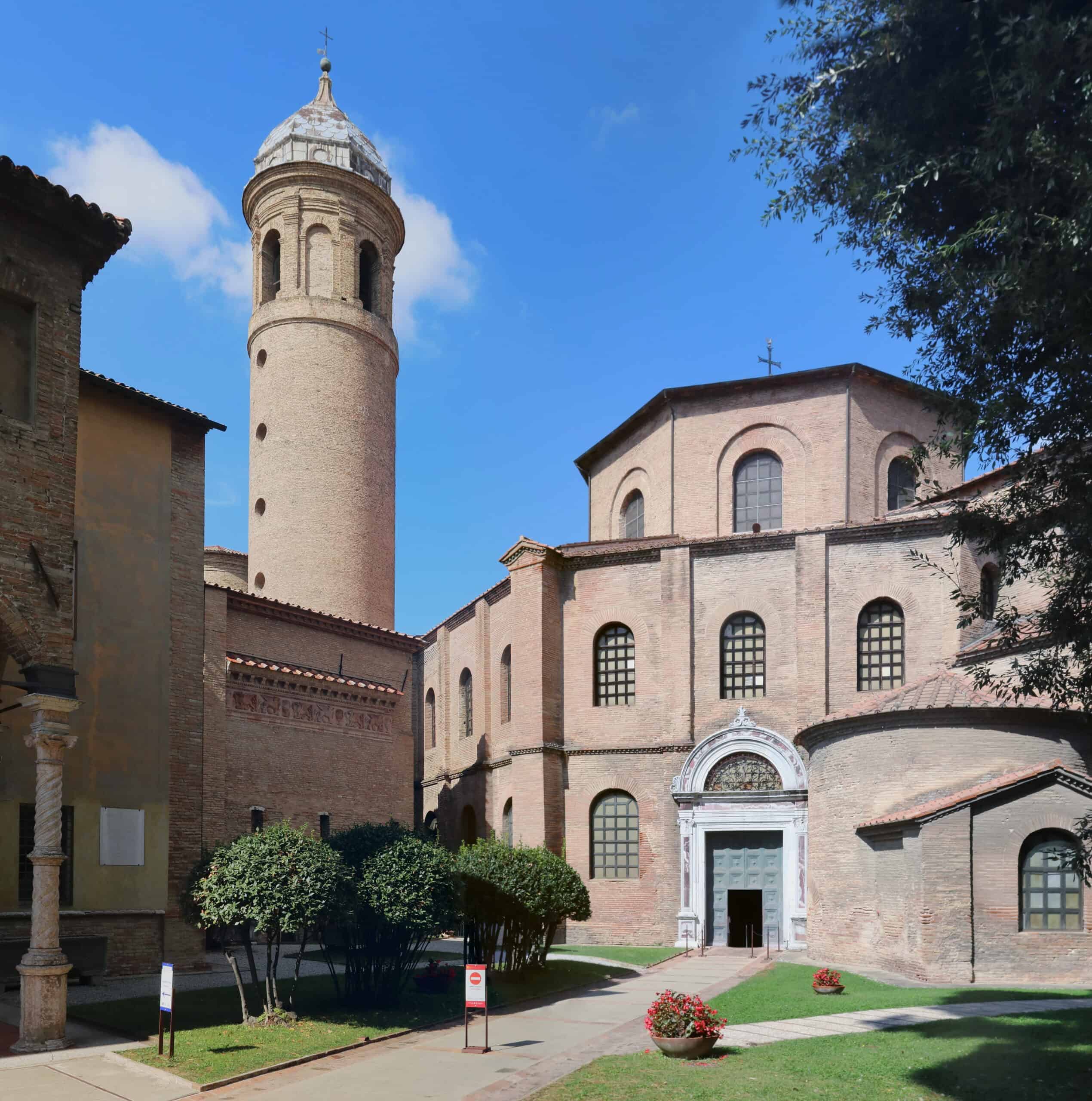
Basilica of San Vitale
- Country: Italy
- Built: c. 526–547
- Architectural Style: Byzantine
San Vitale is one of the places where Ravenna’s Roman, Ostrogothic, and Byzantine histories meet. Construction began under Bishop Ecclesius and the church was consecrated in A.D. 547 by Bishop Maximian, only a few years after Byzantine forces had taken Ravenna from the Ostrogoths. Its octagonal plan is very different from the long nave of a traditional basilica and reflects architectural ideas associated with the eastern Mediterranean.
The mosaics are the reason San Vitale became world famous. Emperor Justinian and Empress Theodora appear with members of their courts in two extraordinary panels that survive almost completely intact. UNESCO recognizes San Vitale as part of Ravenna’s group of eight Early Christian monuments, and it remains one of the best places in Europe to see sixth-century Byzantine art in its original architectural setting.
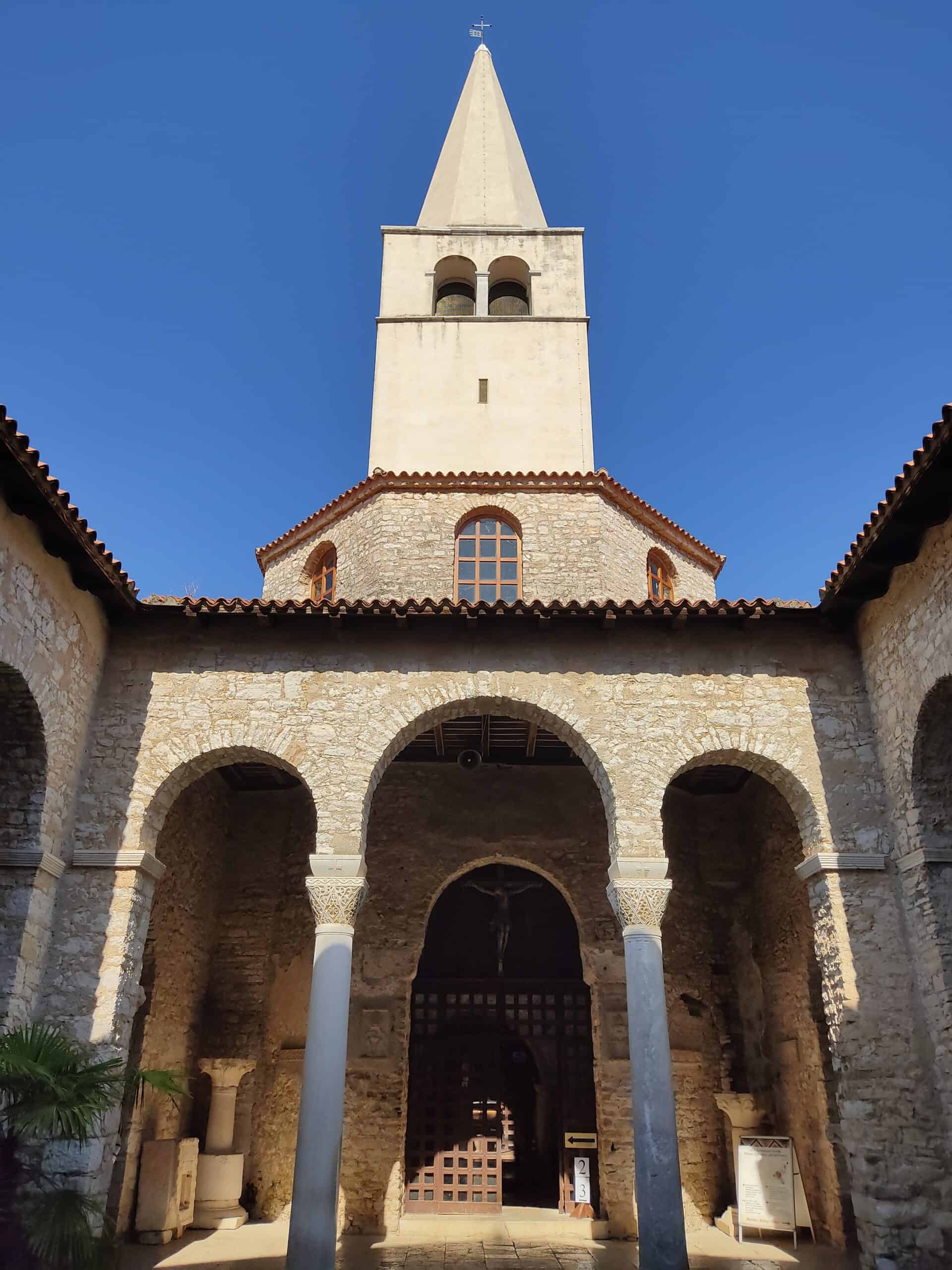
Euphrasian Basilica
- Country: Croatia
- Built: mid-6th century
- Architectural Style: Byzantine
The Euphrasian Basilica in Poreč sits on a Christian site that reaches back to the fourth century, but the church visitors see today was built in the middle of the sixth century by Bishop Euphrasius. UNESCO considers the surrounding episcopal complex one of the most complete surviving examples of its kind, with the basilica, atrium, baptistery, memorial chapel, and episcopal buildings preserving layers of early Christian history.
Inside the basilica, glittering mosaics cover the main apse with images of the Virgin Mary, Christ, saints, and Bishop Euphrasius himself. Classical Roman ideas and Byzantine design appear side by side throughout the complex. One detail worth separating from the ancient core is the bell tower, which was added centuries later. The heart of the site, however, remains one of the best-preserved sixth-century church complexes in Europe.
Basilica of Sant’Apollinare in Classe
- Country: Italy
- Completed: 549
- Architectural Style: Byzantine
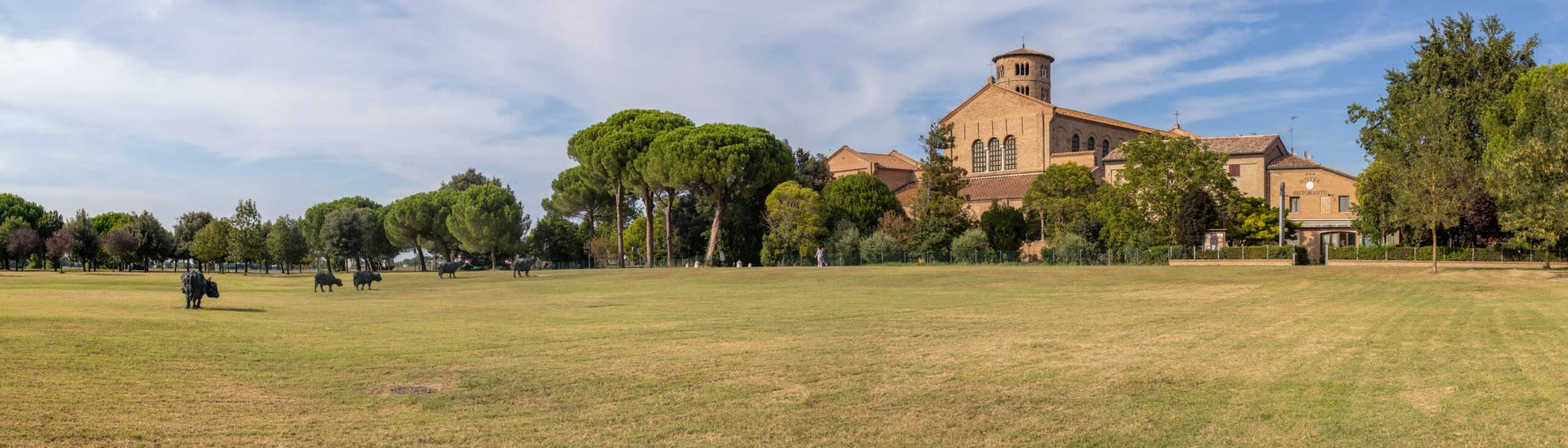
Just outside Ravenna, Sant’Apollinare in Classe was built near the ancient Roman port that once made the area one of the most important commercial and military centers on the Adriatic. Bishop Ursicinus commissioned the basilica, the banker Julianus Argentarius helped finance it, and Bishop Maximian consecrated it on May 9, A.D. 549.
The exterior is simple brick, but the apse inside is one of the great surviving works of early Christian mosaic art. Saint Apollinaris, traditionally regarded as Ravenna’s first bishop, stands in a green landscape beneath a jeweled cross surrounded by symbolic imagery. The church’s wide nave and marble columns have also retained much of their early character, giving visitors an unusually clear sense of a sixth-century basilica.
Basilica of Aquileia
- Country: Italy
- Origins: early 4th-century Christian complex; present basilica largely medieval
- Architectural Style: Early Christian / Romanesque
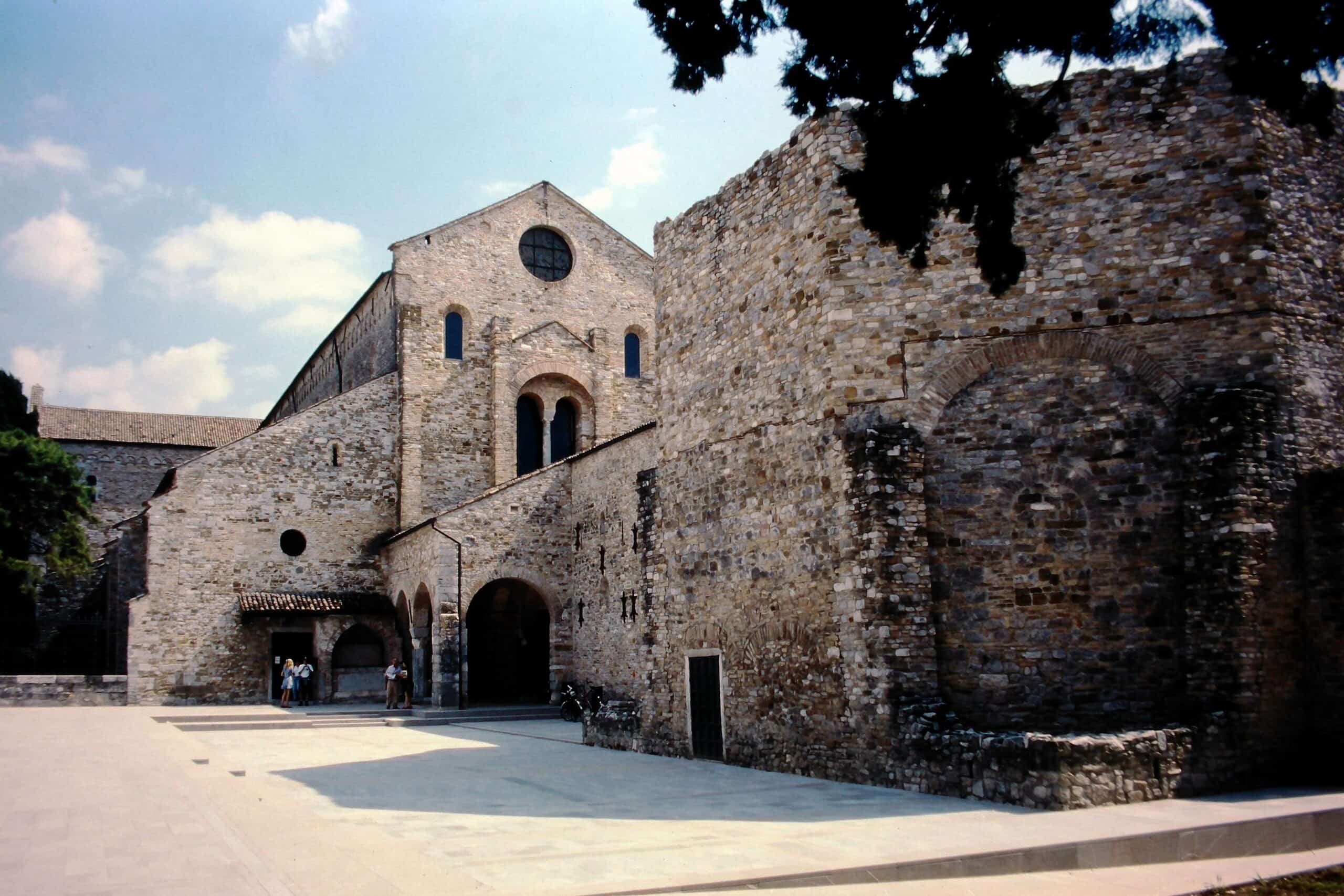
Aquileia is one of the most important early Christian sites in northern Italy, but the building above ground today should not be mistaken for an untouched fourth-century church. The first major Christian complex here was built in the early 300s under Bishop Theodore. Later rebuilding created the medieval basilica that now dominates the site, while much older remains survive beneath and inside it.
The star attraction is the enormous early fourth-century mosaic pavement, which covers roughly 8,000 square feet and is considered one of the great surviving works of early Christian art. Biblical subjects appear beside animals, marine creatures, and elaborate geometric designs. UNESCO notes that the basilica and its earlier remains played an important role in the spread of Christianity into central Europe, making Aquileia much more than simply an old church.
Church of Panagia Acheiropoietos
- Country: Greece
- Built: late 5th century
- Architectural Style: Early Byzantine
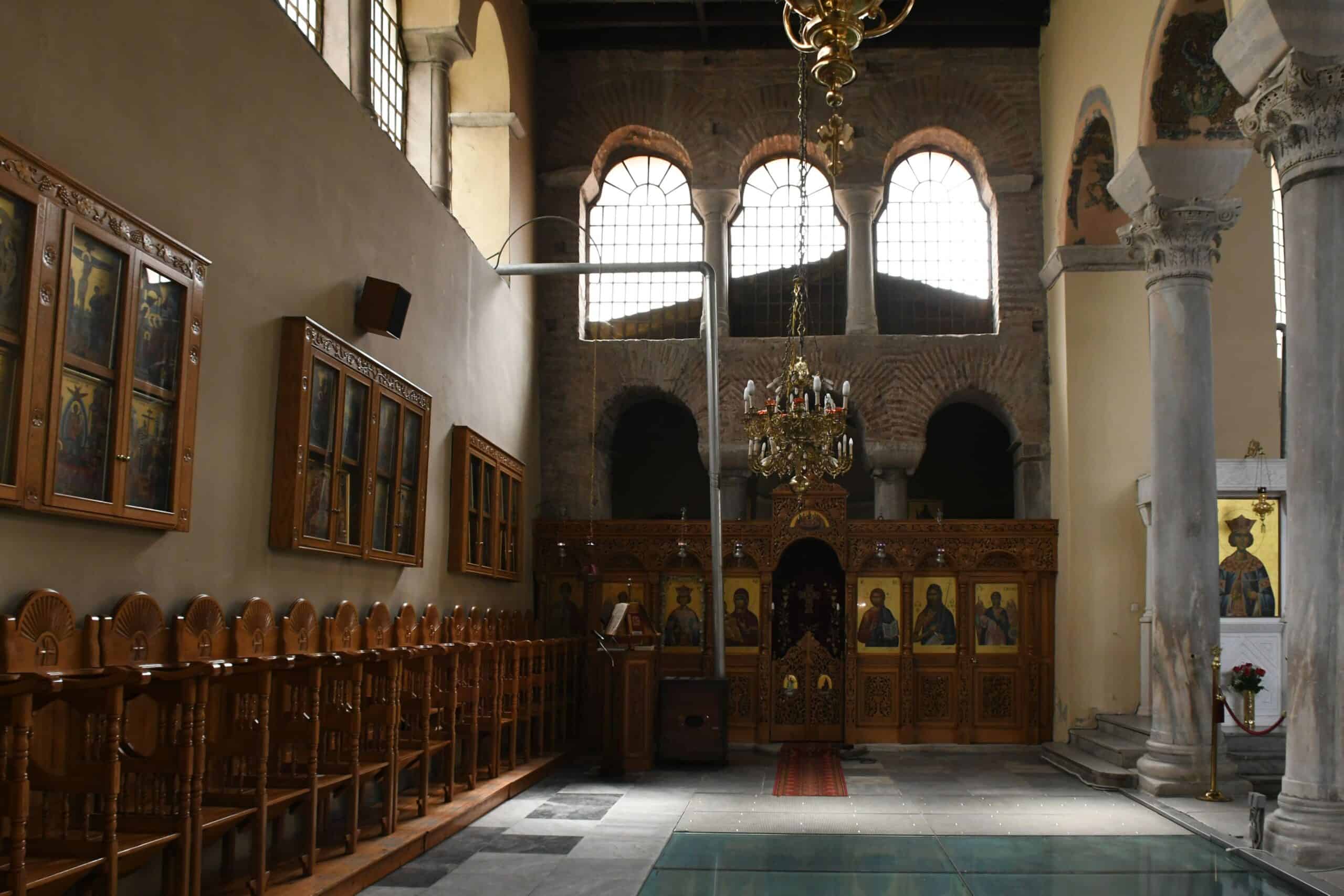
Panagia Acheiropoietos is one of Thessaloniki’s best-preserved early Byzantine basilicas. Greece’s Ministry of Culture dates the church to the late fifth century. It was built over part of a large Roman bath complex, and archaeological remains of those baths have been found beneath the church.
The three-aisled basilica still preserves marble columns, carved capitals, and other features that make its early design unusually easy to recognize. After the Ottoman conquest of Thessaloniki in 1430, Acheiropoietos became the first Christian church in the city to be converted into a mosque. It later returned to Christian worship after Ottoman rule ended. Today, it is part of Thessaloniki’s UNESCO-listed collection of Paleochristian and Byzantine monuments and remains one of the clearest surviving examples of a late fifth-century basilica.