








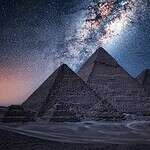
7 of the Largest Pyramids Still Standing in the World
Pyramids are some of the most recognizable structures in the world, defined by their sloping triangular sides that meet at a single point. While Egypt's massive pyramids are the most famous and were built as tombs for pharaohs, similar structures have been constructed in many other parts of the world, spanning different cultures and time periods.
Today, pyramids can be found across multiple continents, and not all of them are located where you might expect. In fact, Sudan has more pyramids still standing than any other country, though it is not home to the largest one. Here are some of the biggest pyramids still standing around the world.
1. Great Pyramid of Cholula
The Great Pyramid of Cholula in Puebla, Mexico, is the largest pyramid in the world by volume.
Cholula Pyramid is only (217 feet) tall, but its base is a gigantic 450 meters (1476 feet) long. Its total volume is 3.3 million m³ (166,538,400 squared feet), almost one million more than the Great Pyramid of Giza. Its massive proportions earned it a place in the Guinness World Records as the largest monument ever built.
It was built for the Aztec god Quetzalcoatl from the 3 century B.C.E. to the 9 century A.D. and called Tlachihualtepetl, which means "the made-by-hand mountain." Cholula is ancient Nahuatl for "place of refuge," and the pyramid is part of an archaeological area stretching 0.59 square miles.
Great Pyramid of Cholula (cont.)
It was a center for religious activity in prehispanic times, revered and built to greater extents in four main stages over the course of a thousand years. Six superimposed structures comprise the Great Pyramid of Cholula, which experts say accounts for the ethnic groups that ruled the area at the time.
If you want to see the largest pyramid in the world, you must travel to Cholula de Rivadavia, 63 miles southeast of Mexico City. Mounted police stand guard over it.
2. Transamerica Pyramid
Now, we switch gears to focus on the tallest modern pyramid: the Transamerica Pyramid.
It's a four-sided pyramid skyscraper on Montgomery Street, San Francisco, California. It's 260 meters (853 feet) tall with 48 stories and covered in crushed quartz, so it appears lighter than the surrounding buildings.
This modern pyramid, which is the largest of its kind, has 3,678 windows that pivot 360 degrees, and its base houses over 300 miles of steel rebar. The Transamerica company (which later moved to Baltimore, Maryland) built it in 1972 at a cost of $32 million. It's currently a tourist attraction under renovation.
3. Great Pyramid of Giza
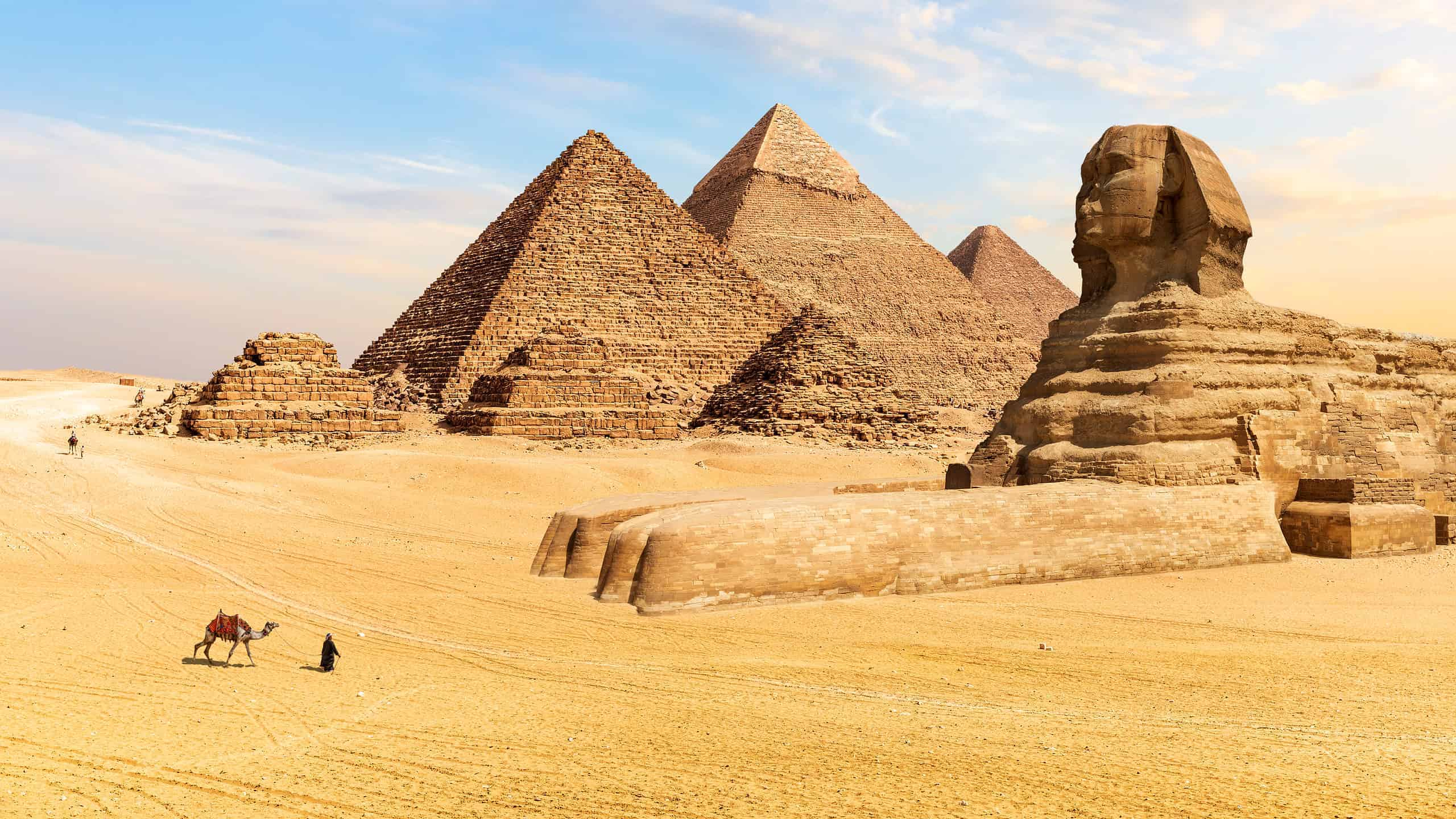
The Great Pyramid of Giza is the tallest ancient pyramid in the world and the last remaining of the Seven Wonders of the World.
Egypt's Giza has three famous ancient pyramids, but the Great Pyramid was built for Khufu. It's the biggest of the three and the tallest pyramid in the world at a breathtaking 138.5 meters tall. Originally, it reached 146.6 meters (480 feet) tall. It's shorter now because the outer-facing limestone blocks have fallen. What we can see today is the internal structure. Its base spans 230.3 meters.
The Great Pyramid of Giza (cont.)
Pharaoh Khufu built this epic pyramid in 2,600 BCE using 2.3 million large blocks. It was intended as his tomb.
Overall, it's 2.4 million cubic meters in volume, which, according to Guinness World Records, is the second-largest pyramid in the world by volume. Since 1979, UNESCO world heritage has protected the pyramids of Giza.
4. Pyramid of Khafre
The middle pyramid of Giza is only two meters shorter than its big brother, Khufu. Pharaoh Khafre built this large ancient Egyptian pyramid between 2558 and 2532 BC as his funerary tomb and monument.
It rises 136 meters (448 feet), and its base length is 215.5 meters (706 feet). Archaeologists have discovered it's sitting on 10 meters of bedrock! Its lofty bedrock base makes Khafre's tomb appear taller than the Great Pyramid, even though it's a little shorter.
The pyramid contains two-ton limestone blocks. Experts still debate how ancient people actually built large pyramids from such heavy materials. Some believe it was decades of slave labor, but new archaeological evidence suggests that paid manual laborers built them.
5. La Danta
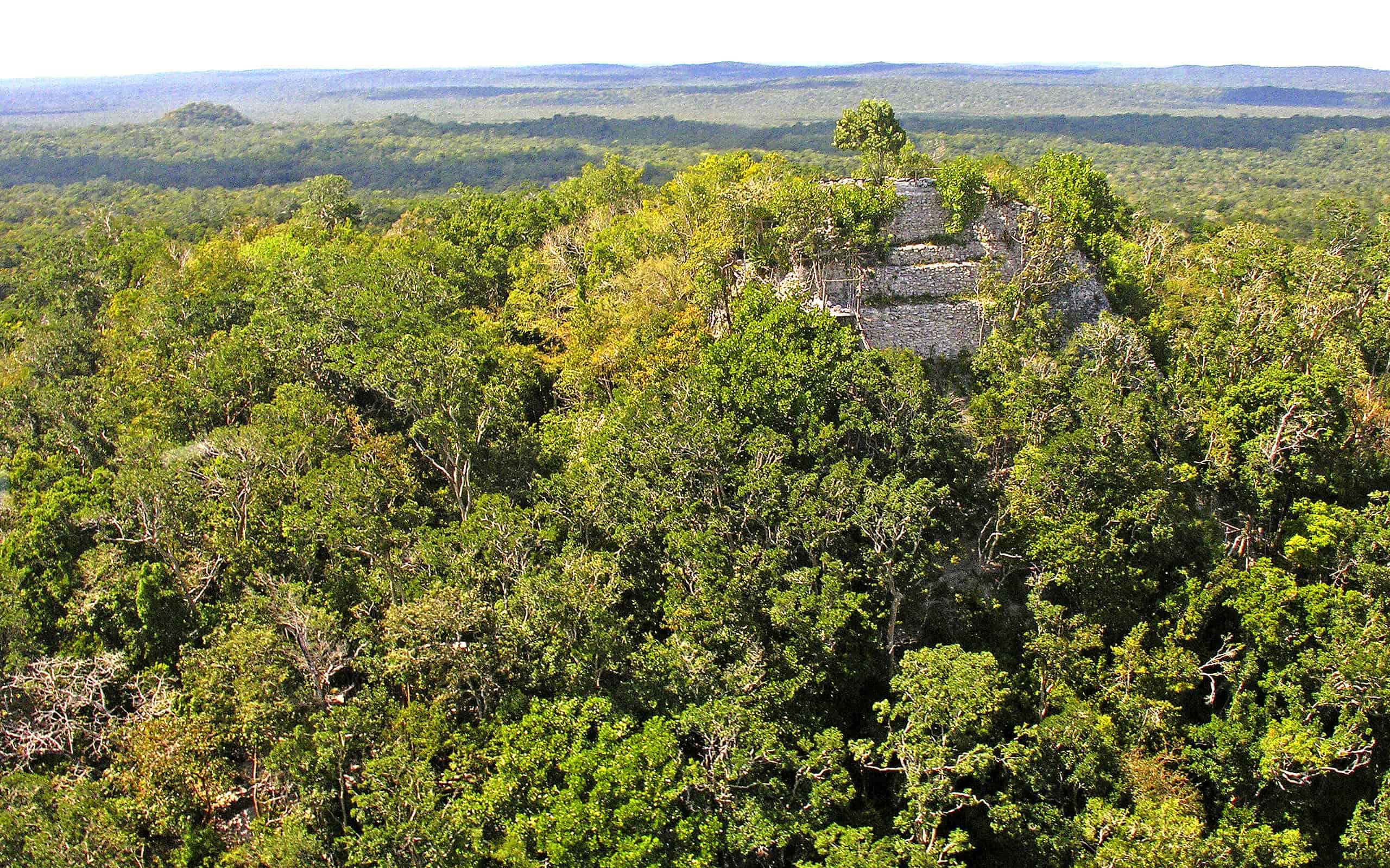
In El Petén's Guatemalan northern jungle sits La Danta, a 72-meter (236 feet) tall, colossal ancient pyramid and one of the largest pyramids in the world. Its volume is 2.8 million cubic meters, around the same size as the Great Pyramid of Giza.
It's part of El Mirador and the lost City of Maya, which thrived from 6 B.C.E. to 3 A.D. It was eventually abandoned in the 9 century. Today, its peak juts from the tree line, but vegetation almost entirely covers its structure.
La Danta (cont.)
Archaeologists still have much to discover, but they think the pyramid once had cut stones and stucco (a limestone plaster) depicting scenes from Mayan mythology.
Want to see this incredible pyramid in person? You'll have to fly in by helicopter from Flores, Guatemala, or hire a Carmelita village guide and hike there. It takes days through dense jungle, and there are plenty of venomous snakes to avoid. Perhaps Google Earth is a better idea!
6. The Bent Pyramid
The Bent Pyramid of Dahshur, Egypt, is 104 meters (341 feet) tall and has a colossal 189.5-meter (621 feet) base. Its volume is 1,237,040 cubic meters. Pharaoh Sneferu built it in approximately 2,600 B.C., and some of its outer casing, made of polished limestone blocks, is still intact.
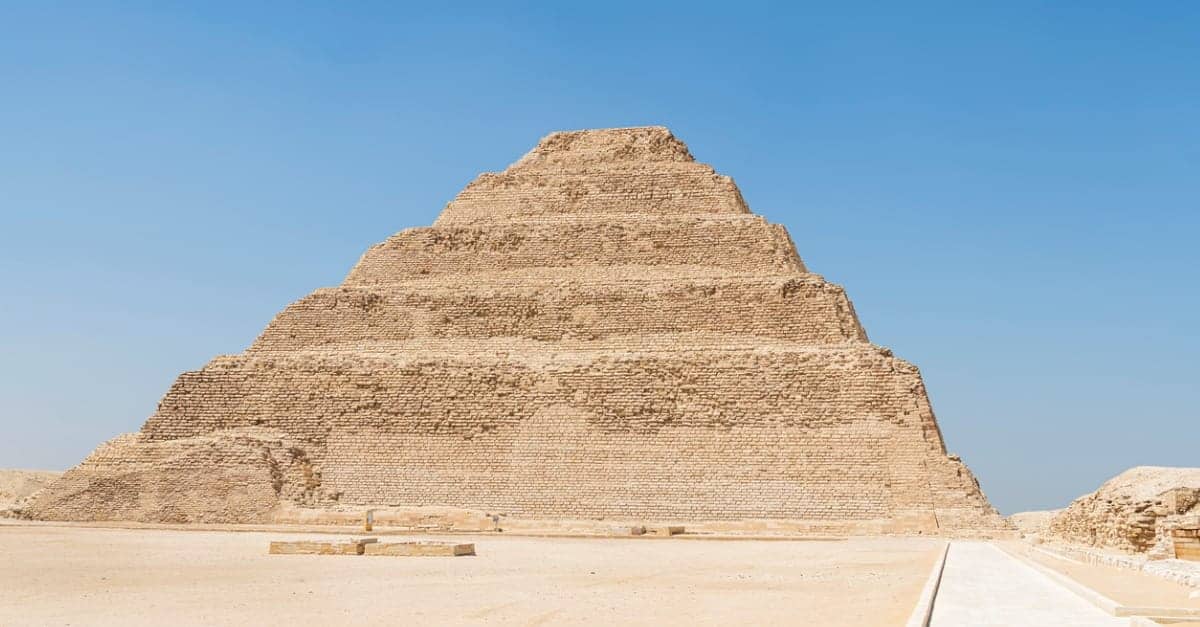
A quick glance will tell you how it got the name, but experts aren't sure why its sides lose steepness as they climb. Some suspect it partially collapsed during its building phase and was shored up. Others believe the Egyptians created it that way on purpose when they moved from stepped to smooth-sided pyramids.
The Bent Pyramid's official name is Southern Shining Pyramid, or Sneferu Shining, in the South. It's 24 miles (40 kilometers) south of Cairo, Egypt. It has been a popular tourist attraction since the 1960s. Visitors can enter the pyramid via a 79-meter tunnel and explore two internal chambers.
7. The Luxor
The second modern pyramid on our list is Las Vegas' Luxor Casino Hotel. It's a whopping 108 meters tall, has 30 floors, and 4,407 rooms. It is named after an Egyptian city that houses an ancient temple complex. Luxor means "The Palace" in Arabic. In terms of size, it's comparable to the Bent Pyramid of Dahshur.
The Luxor cost $290 million in 1991, and for 11 days, it was the tallest structure on the strip. It was shortly beaten by Treasure Island.
One of the Luxor's defining features is the Luxor Sky Beam, the strongest beam of light in the world. It sits at the hotel's apex and uses curved mirrors and 39 xenon lamps to create a 42.3 billion candelabra. On a clear night, aircraft spot the beam from over 275 miles away.
7 Largest Pyramids in the World: Height vs. Volume
Determining the largest pyramid in the world really depends on how we choose to measure these massive structures.
By volume, the largest pyramid is the Great Pyramid of Cholula in Mexico. It's a mind-bending 4.45 million cubic meters. That's 1.87 million cubic meters larger than the second largest by volume.
However, if we're measured by height (and including modern pyramids), the tallest pyramid in the world is the Transamerica Building. This lofty pyramid is a neck-bending 280 meters tall!
The tallest ancient pyramid is the Pyramid of Khufu, which is better known as the Great Pyramid of Giza, Egypt. It started out 146 meters tall but is currently 138 meters tall due to fallen blocks.