Andrew Clemente

westy48 / BY-SA 2.0

BrownGuacamole / BY-ND 2.0

chief_huddleston / BY 2.0

Chris Hunkeler / BY-SA 2.0

JeepersMedia / BY 2.0

tomasher / BY 2.0

JeepersMedia / BY 2.0
AtlasStudio / Shutterstock.com
VeeDunn / BY 2.0
JeepersMedia / BY 2.0



10 Major Fast-Food Lawsuits and Legal Battles, From Hot Coffee to E. Coli
Fast food is built around convenience. Order, eat, move on. Every so often, though, something goes wrong badly enough that the receipt is followed by a lawsuit, a government investigation, or both.
The cases below cover a surprisingly wide range of problems. There are catastrophic foodborne-illness outbreaks, workplace disputes, trademark fights, serious injuries, fraudulent claims, and one of the most misunderstood product-liability lawsuits in American history. Some ended with multimillion-dollar verdicts or settlements. Others became criminal cases instead.
24/7 Tempo reviewed court opinions and filings, federal and state government records, public-health investigations, and contemporary reporting to verify the facts behind these cases. Lawsuit allegations are identified as allegations unless a court, settlement, guilty plea, or government resolution established otherwise.
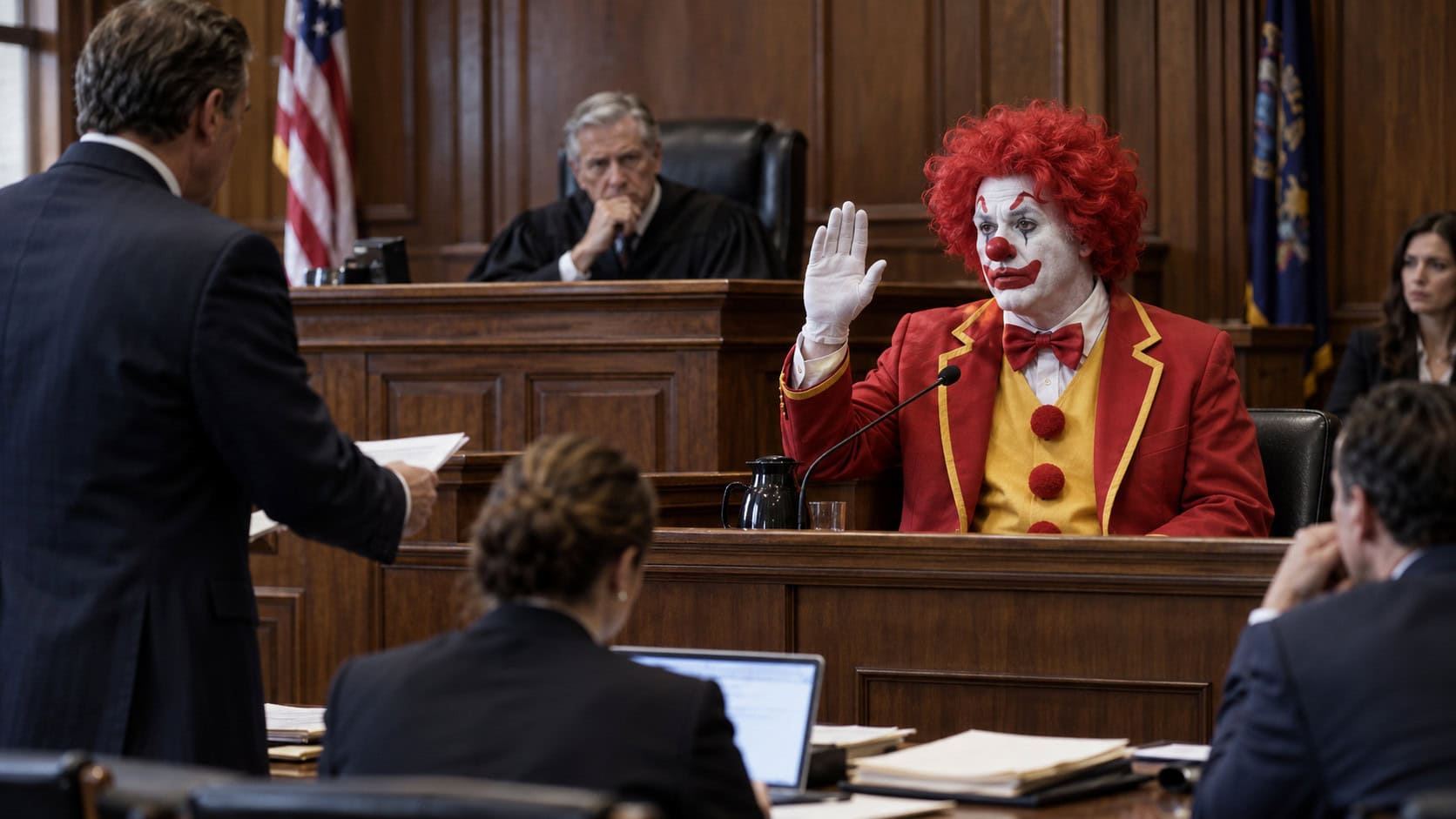
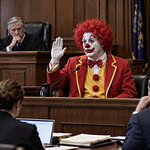
McDonald's Hot Coffee Lawsuit
The McDonald's hot coffee case is famous, but the version people remember is often missing some important details. On February 27, 1992, 79-year-old Stella Liebeck bought coffee from a McDonald's drive-thru in Albuquerque, New Mexico. Her grandson parked the car while she tried to remove the lid with the cup between her knees. The coffee spilled into her lap, causing severe third-degree burns that required hospitalization and skin grafts.
Liebeck initially sought roughly $20,000 from McDonald's to cover medical expenses and related costs. McDonald's offered $800, and the dispute eventually went to trial. In 1994, a jury found McDonald's 80% responsible and Liebeck 20% responsible. It awarded $200,000 in compensatory damages, reduced to $160,000 because of her share of fault, plus $2.7 million in punitive damages. The trial judge later reduced the punitive award to $480,000, and the parties ultimately reached a confidential settlement before the case was finally resolved.
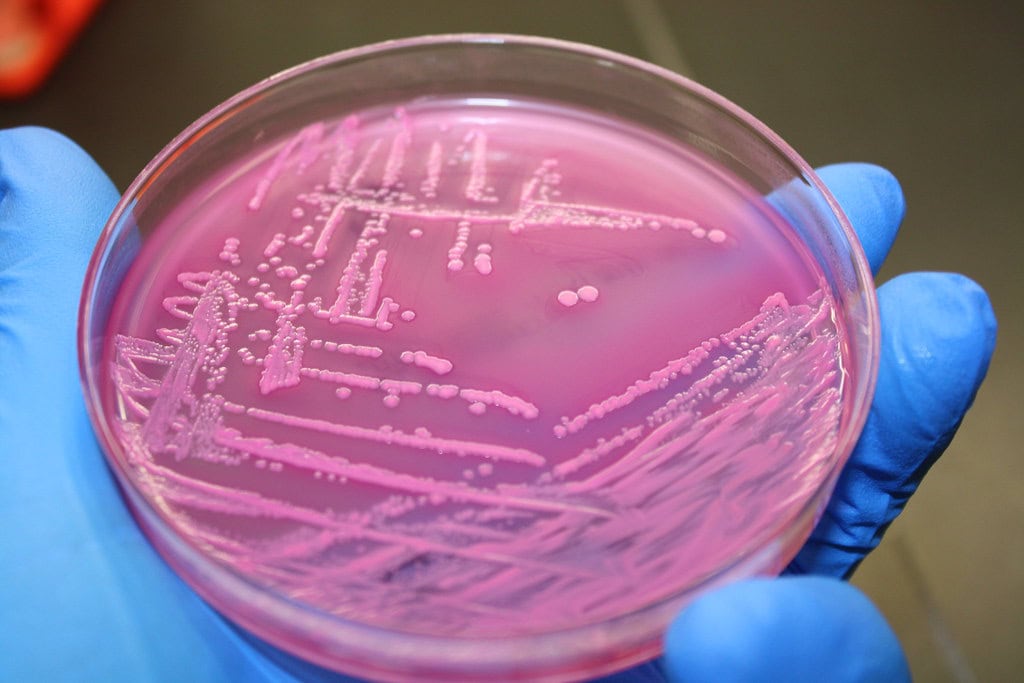
Jack in the Box E. coli Outbreak
One of the most consequential food-safety disasters in fast-food history unfolded in late 1992 and early 1993. An outbreak of E. coli O157:H7 was traced to undercooked hamburgers served by Jack in the Box restaurants in Washington, Idaho, California, and Nevada. Hundreds of people became ill and four children died.
The outbreak involved 73 restaurants and ultimately triggered a wave of litigation. Individual and class-action settlements handled in the aftermath totaled more than $50 million. One of the largest went to Brianne Kiner, who was 9 when she became critically ill after eating a contaminated hamburger. Her family reached a $15.6 million settlement in 1995. The outbreak also became a turning point for U.S. food-safety policy and helped accelerate tougher controls for ground beef and E. coli O157:H7.
Five Guys Wage-and-Hour Case
A 2017 federal lawsuit filed in California accused Five Guys Enterprises and Encore FGBF of several employment-law violations involving hourly workers. The claims included allegations that employees were not provided legally compliant meal and rest breaks, were not paid for all time worked or overtime, and received inaccurate wage statements. The case also included claims involving employment background-report disclosures.
After several years of litigation, a federal judge gave final approval in June 2023 to a $1.2 million class settlement covering qualifying California hourly employees who worked for the defendants during portions of the period from August 2013 through May 2019. The settlement resolved the claims without a trial determining that the companies had violated the law.
In-N-Out Vs. CaliBurger
In-N-Out takes its branding seriously. In September 2011, the California burger chain sued CaliBurger and its founders in federal court, alleging trademark infringement and counterfeiting. CaliBurger was preparing to expand overseas and had promoted menu items and restaurant designs that looked awfully familiar, including "Double-Double" burgers, "Animal Style" fries, and red-and-white decor.
The dispute ended in a confidential settlement in early 2012. The financial terms were not made public, but CaliBurger changed several menu names and elements of its presentation. The Double-Double became the Cali Double, Protein Style became LC Style, and Animal Style fries became Wild Style.
The Burger King Bathroom Fall
In July 2019, Richard Tulecki slipped and fell in the restroom of a Burger King franchise in Florida. Evidence presented at trial indicated that an employee had mopped the restroom about 30 to 45 minutes earlier and that Tulecki later recorded video showing how slippery the floor was. He suffered back injuries and underwent surgery. He later also suffered a perforated colon, although the connection between that complication and the fall became a major issue on appeal.
A jury awarded Tulecki $7,809,765 in damages in 2023, and the trial court entered a somewhat lower final judgment after applying setoffs. The story did not end there. In July 2024, Florida's Fourth District Court of Appeal upheld the liability portion of the case but reversed the damages judgment because of surprise expert testimony concerning the cause of the colon injury. The appeals court ordered a new trial on damages, meaning the original multimillion-dollar award was not the final word.
Wendy's and the Fake Finger Claim
This one never became a legitimate lawsuit against Wendy's. It became a criminal case against the customer. In March 2005, Anna Ayala claimed she had discovered part of a human finger in a bowl of chili at a Wendy's restaurant in San Jose, California. Investigators eventually determined that the finger had not come from Wendy's at all.
Ayala's husband, Jaime Plascencia, had obtained the severed fingertip from a coworker who lost it in a workplace accident. Ayala pleaded guilty in September 2005 to felony charges that included presenting a false insurance claim and attempted grand theft related to the Wendy's scheme. In January 2006, she was sentenced to nine years in prison. Plascencia also pleaded guilty and received a sentence of 12 years and four months for his role in the scheme and other criminal conduct.
Chipotle's $25 Million Food-Safety Case
Between 2015 and 2018, Chipotle was implicated in at least five foodborne-illness incidents that sickened more than 1,100 people. Federal prosecutors said several incidents were tied to employees failing to follow the company's own food-safety procedures, including rules requiring sick employees to stay away from food preparation.
One of the largest outbreaks happened at a restaurant in Powell, Ohio, in July 2018, where approximately 647 people reported becoming ill with Clostridium perfringens. In 2020, Chipotle agreed to pay a $25 million criminal fine and entered a three-year deferred prosecution agreement to resolve federal charges that it had served adulterated food. At the time, the Justice Department called it the largest fine ever imposed in a food-safety case.
The $800,000 Chicken McNugget Burn Case
A McDonald's burn case made headlines again decades after the famous coffee lawsuit. In 2019, 4-year-old Olivia Caraballo was eating Chicken McNuggets from a Happy Meal after her mother drove away from a McDonald's in Tamarac, Florida. One of the nuggets fell onto the child's leg and became trapped between her thigh and a seat belt, causing second-degree burns and leaving a scar.
In May 2023, a Broward County jury found McDonald's and franchise operator Upchurch Foods liable for failing to adequately warn about the risk posed by the hot food. A second jury then considered damages and awarded the girl $800,000 in July 2023, split evenly between past and future pain and suffering. Her family had sought $15 million.
McDonald's Quarter Pounder E. coli Lawsuits
In fall 2024, a multistate E. coli O157:H7 outbreak was linked to food served at McDonald's. By the time the Centers for Disease Control and Prevention declared the outbreak over in December, 104 illnesses had been reported across 14 states. Thirty-four people were hospitalized, four developed hemolytic uremic syndrome, and one older adult in Colorado died.
Investigators ultimately identified fresh slivered onions served at McDonald's as the likely source. Federal investigators said evidence did not point to the Quarter Pounder's beef patties. The outbreak led to multiple lawsuits, including individual personal-injury claims and a proposed federal class action filed against McDonald's in October 2024. The lawsuits were filed while the public-health investigation was still developing, so allegations against individual defendants should not be confused with a final finding of civil liability.
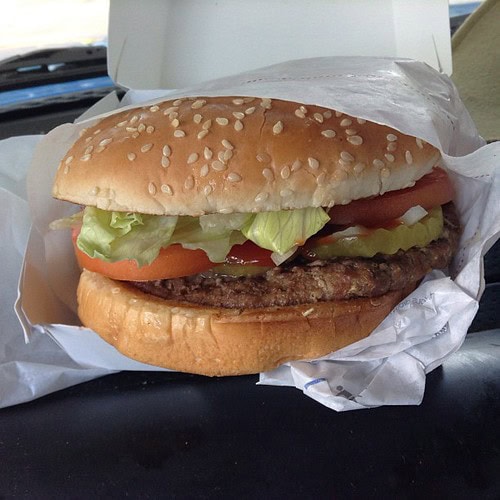
The Burger King Whopper Advertising Lawsuit
Sometimes the fight is not over what is in the burger but how big it looks on the menu board. In 2022, customers from several states sued Burger King, alleging that advertisements made Whoppers and other sandwiches appear substantially larger and more generously topped than the food customers actually received. Burger King disputed the claims.
The case survived multiple attempts to have major claims dismissed, but the plaintiffs hit a major roadblock in November 2025 when a federal judge refused to certify the proposed nationwide classes. The case was then dismissed with prejudice by agreement in January 2026. No class-wide settlement was created, and no court ultimately ruled that Burger King's advertisements were deceptive.