whattheschnell / Getty Images

Jacob Boomsma / Shutterstock.com

Albert Campbell / Shutterstock.com

Marek Masik/ Shutterstock

Jacob Boomsma / Shutterstock.com

Brent Coulter / Shutterstock

Lone Star Stock / Shutterstock.com

ventdusud/Shutterstock

307870214 / Shutterstock.com

Wirestock Creators / Shutterstock.com

Gerald Peplow / Shutterstock.com

Sean Xu / Shutterstock.com

Lucky-photographer / Shutterstock.com

pawel.gaul / E+ via Getty Images

Jamie Squire / Getty Images
SevenMaps / Shutterstock.com
mrdannynavarro / BY-SA 2.0
Jacob Boomsma / Shutterstock.com

Kevin Ruck / Shutterstock.com

f11photo / iStock via Getty Images

RomanPDX / Shutterstock.com
Ken Lund / BY-SA 2.0

milehightraveler / iStock via Getty Images
halbergman / E+ via Getty Images

Andrew Zarivny / Shutterstock.com
Getty Images / Getty Images News via Getty Images












25 U.S. Cities That Rank Among the Worst for Air Pollution
Bad air is not just a California problem, although California is still doing an impressive amount of the heavy lifting on this particular list. The American Lung Association's 2026 "State of the Air" report found that 152.3 million Americans, about 44% of the population, live in counties that received a failing grade for unhealthy ozone or particle pollution.
The report uses EPA monitoring data from 2022 through 2024 and looks at three different problems: ozone, short-term spikes in fine-particle pollution, and year-round fine-particle pollution. There is no official combined ranking, so the cities below should not be read as a literal No. 1 through No. 25 from the Lung Association. Instead, we prioritized metros that landed among the nation's 25 worst in multiple categories, along with a few major cities with especially poor results in one.
Bakersfield-Delano, California
It is difficult to find a metro with a worse all-around showing than Bakersfield. In the 2026 report, Bakersfield-Delano ranked No. 1 in the nation for year-round particle pollution, No. 3 for short-term particle pollution, and No. 3 for ozone. Bakersfield has now held the worst year-round particle ranking for seven consecutive reports. There is at least some movement in the right direction: its short-term particle problem improved enough that Fairbanks took over the No. 1 spot in that category. Still, ranking in the bottom three nationally on all three measures is about as rough as it gets.
Visalia, California
Visalia is another Central Valley metro that manages to rank near the very bottom no matter which pollution measure you look at. It finished No. 2 for ozone, No. 5 for short-term particle pollution, and tied for No. 5 for year-round particles. The good news is that the Lung Association says Visalia posted its best-ever year-round particle result in the 2026 report. The bad news is that its best result so far is still bad enough to leave the metro among the country's five worst for that pollutant.
Los Angeles-Long Beach, California
Los Angeles has made enormous progress since the days when thick smog could practically become part of the skyline, but it still owns one unwanted title. Los Angeles-Long Beach ranked No. 1 for ozone pollution in 2026, something it has done in 26 of the Lung Association's 27 annual reports. It also ranked No. 7 for both short-term and year-round particle pollution. Even with its year-round particle levels reaching their best result in the history of the report, Los Angeles remains one of the few major metros that shows up near the top of all three worst-pollution lists.
Fresno-Hanford-Corcoran, California
Fresno-Hanford-Corcoran joins Bakersfield, Visalia, and Los Angeles in the unfortunate club of metros appearing near the top of every major pollution category. It ranked No. 4 for year-round particle pollution, No. 5 for ozone, and No. 6 for short-term particles in the 2026 report. The metro did record its best-ever annual particle result, so the trend is not entirely negative. Unfortunately, improving from extremely polluted to slightly less extremely polluted still leaves Fresno near the front of this list.
Phoenix-Mesa, Arizona
Phoenix-Mesa lands on all three of the Lung Association's Worst 25 lists. Its biggest issue is ozone, where the metro ranked No. 4 nationally. It also finished No. 15 for year-round particle pollution and No. 17 for short-term particle pollution. Hot, sunny conditions are particularly favorable for ground-level ozone formation, and the Lung Association warns that hotter temperatures and a changing climate are making ozone pollution harder to control in places already struggling with it.
El Centro, California
El Centro is a new addition to this version and one of only a handful of metros appearing in the Worst 25 for all three measures. The Imperial Valley metro ranked No. 10 for ozone, No. 14 for short-term particle pollution, and No. 21 for year-round particles. That may not put El Centro at the very top of any one category, but showing up on all three lists is enough to make its overall air-quality picture hard to ignore.
San Jose-San Francisco-Oakland, California
The Bay Area is another metro that makes all three Worst 25 lists, though its rankings are not quite as extreme as Southern California or the San Joaquin Valley. San Jose-San Francisco-Oakland ranked No. 13 for year-round particle pollution, No. 14 for ozone, and No. 20 for short-term particle pollution. The Lung Association says the metro posted its best-ever year-round particle result in the 2026 report, but that improvement was still not enough to push it out of the nation's worst 25.
Eugene-Springfield, Oregon
Eugene-Springfield does not have the severe ozone problem found in many western metros, but particle pollution tells a very different story. The Oregon metro ranked No. 2 in the country for short-term particle pollution and No. 3 for year-round particle pollution. That combination puts Eugene among the clearest examples of why "bad air" cannot be reduced to smog alone. Wildfire smoke has become an increasingly important source of dangerous PM2.5 across western communities, and the Lung Association specifically points to wildfire disasters as one reason particle pollution remains stubbornly high nationwide.
Brownsville-Harlingen-Raymondville, Texas
Brownsville-Harlingen-Raymondville is one of the biggest movers in the new report, and not in the direction anyone wants. The South Texas metro jumped from No. 16 to No. 2 nationally for year-round particle pollution and ranked No. 4 for short-term particle pollution. The Lung Association called its annual PM2.5 result a new worst-ever reading for the metro. It does not appear among the 25 worst ozone metros, but the particle numbers alone are enough to make Brownsville one of the most notable additions to the 2026 list.
Fairbanks-College, Alaska
Fairbanks is a good example of just how different the three pollution problems can be. It ranked No. 1 in America for short-term particle pollution and tied for No. 9 for year-round particle pollution. At the same time, Fairbanks appears on the Lung Association's cleanest-cities list for ozone, with no monitored unhealthy ozone days during the study period. So no, Fairbanks does not have uniformly dirty air. Its problem is overwhelmingly particles, and on bad particle days it is now the worst-ranked metro in the country.
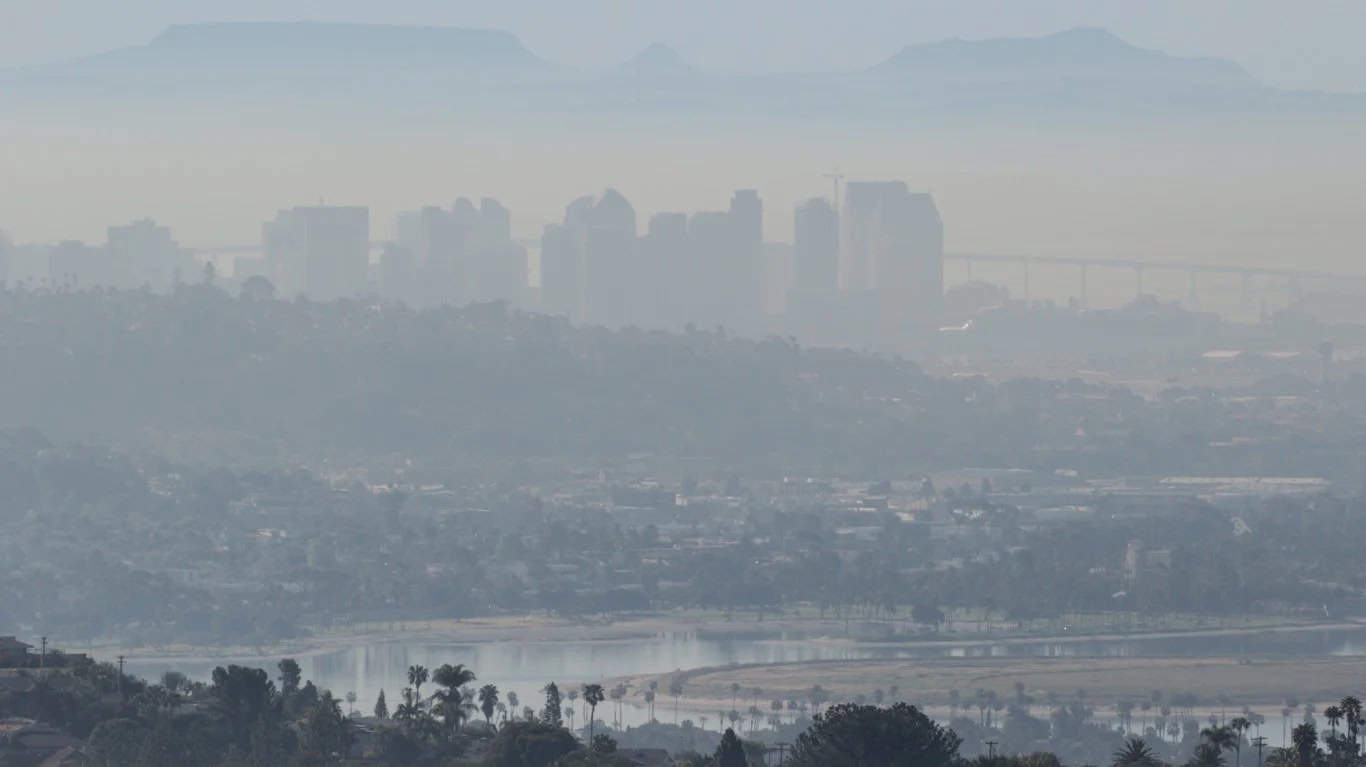
San Diego-Chula Vista-Carlsbad, California
San Diego posted one of the most dramatic changes in the entire 2026 report. San Diego-Chula Vista-Carlsbad jumped from No. 59 to a tie for No. 5 nationally for year-round particle pollution. It also ranked No. 7 for ozone. That puts a metro better known for beaches and mild weather among the nation's worst performers in two major pollution categories, a pretty striking change from the previous report.
Houston-Pasadena, Texas
Houston's current problem is a combination of ozone and chronic particle pollution. Houston-Pasadena ranked No. 6 nationally for ozone and No. 8 for year-round PM2.5. Its short-term particle ranking was much better at No. 89, meaning it did not make that Worst 25 list. Even so, finishing in the national top eight for two separate pollutants makes Houston one of the most consistently troubled large metros in the 2026 report.
Detroit-Warren-Ann Arbor, Michigan
Detroit-Warren-Ann Arbor remains one of the more prominent Midwestern metros on the particle-pollution lists. It tied for No. 11 in short-term particle pollution and ranked No. 9 for year-round particle pollution. Detroit does not make the current Worst 25 for ozone, which is an improvement over the kind of three-category showing seen in parts of California. Still, a top-10 annual particle ranking means the region's air-quality problem is hardly minor.
Indianapolis-Carmel-Muncie, Indiana
Indianapolis-Carmel-Muncie appears in the Worst 25 for both measures of particle pollution. The metro ranked No. 14 for short-term PM2.5 and No. 11 for year-round PM2.5. It does not rank among the 25 worst for ozone in the new report. That makes Indianapolis another place where the bigger concern is the tiny particles that can penetrate deep into the lungs rather than the more familiar image of summertime smog.
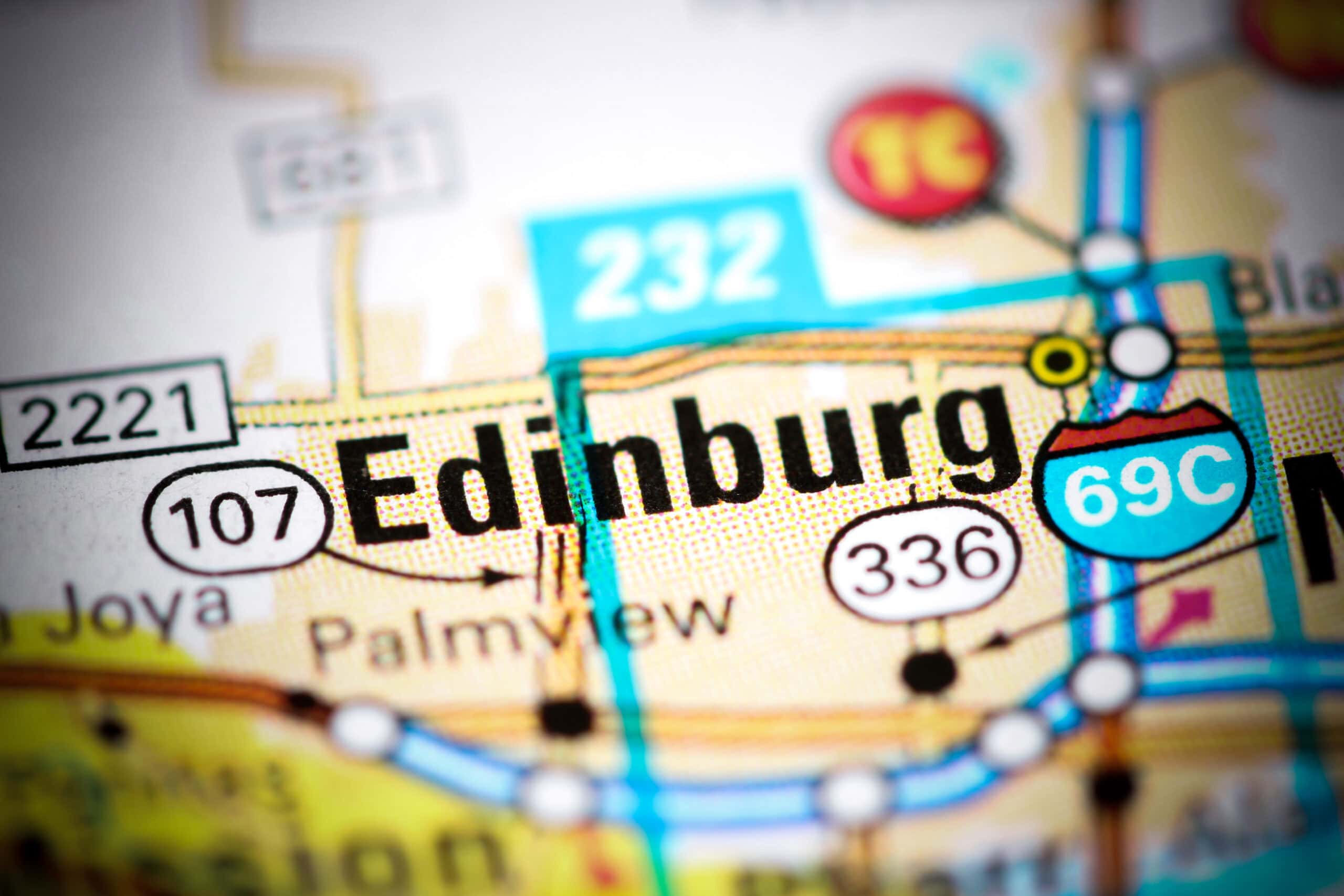
McAllen-Edinburg, Texas
McAllen-Edinburg has one of the stranger combinations in the report. It ranked No. 10 for short-term particle pollution and tied for No. 17 for year-round particle pollution, putting it comfortably on both Worst 25 particle lists. Yet it also appears among the country's cleanest metros for ozone, with no monitored unhealthy ozone days. That contrast is exactly why lumping every type of air pollution into one simple ranking can be misleading.
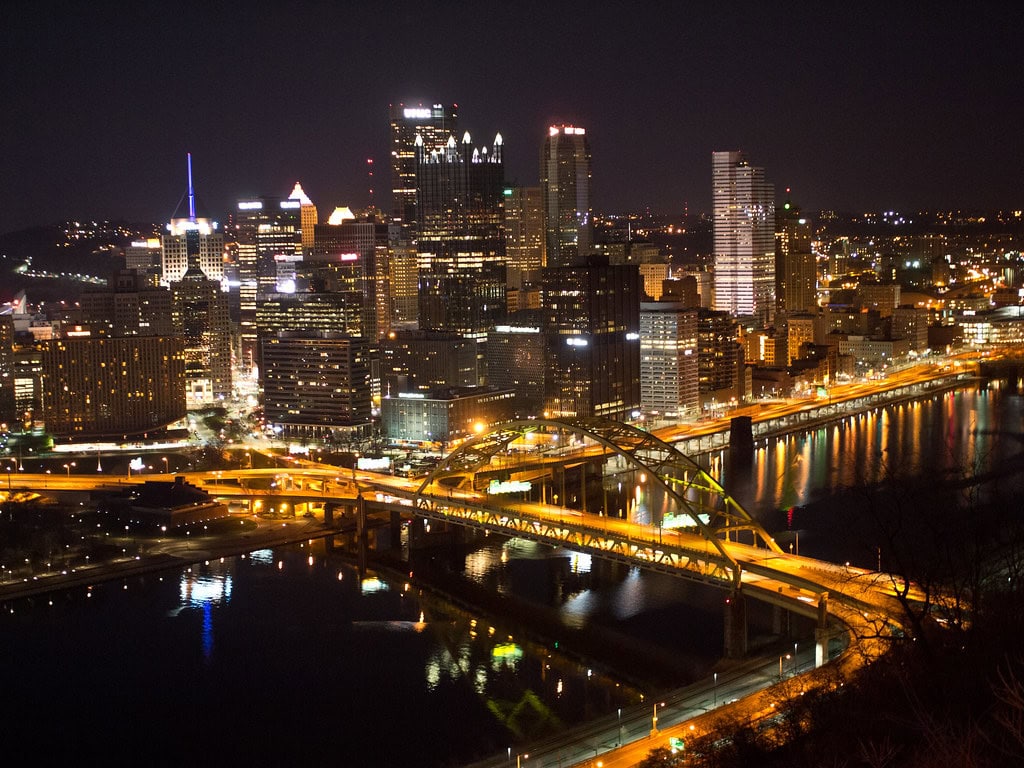
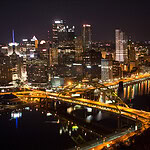
Pittsburgh-Weirton-Steubenville, Pennsylvania-Ohio-West Virginia
Pittsburgh and the surrounding tri-state metro remain among the country's notable particle-pollution trouble spots. Pittsburgh-Weirton-Steubenville tied for No. 11 for short-term particle pollution and ranked No. 16 for year-round particles. There is some encouraging movement here: the Lung Association says Pittsburgh posted its best-ever year-round particle result in the 2026 report. That is real progress, even if the metro still has plenty of room before disappearing from these lists altogether.
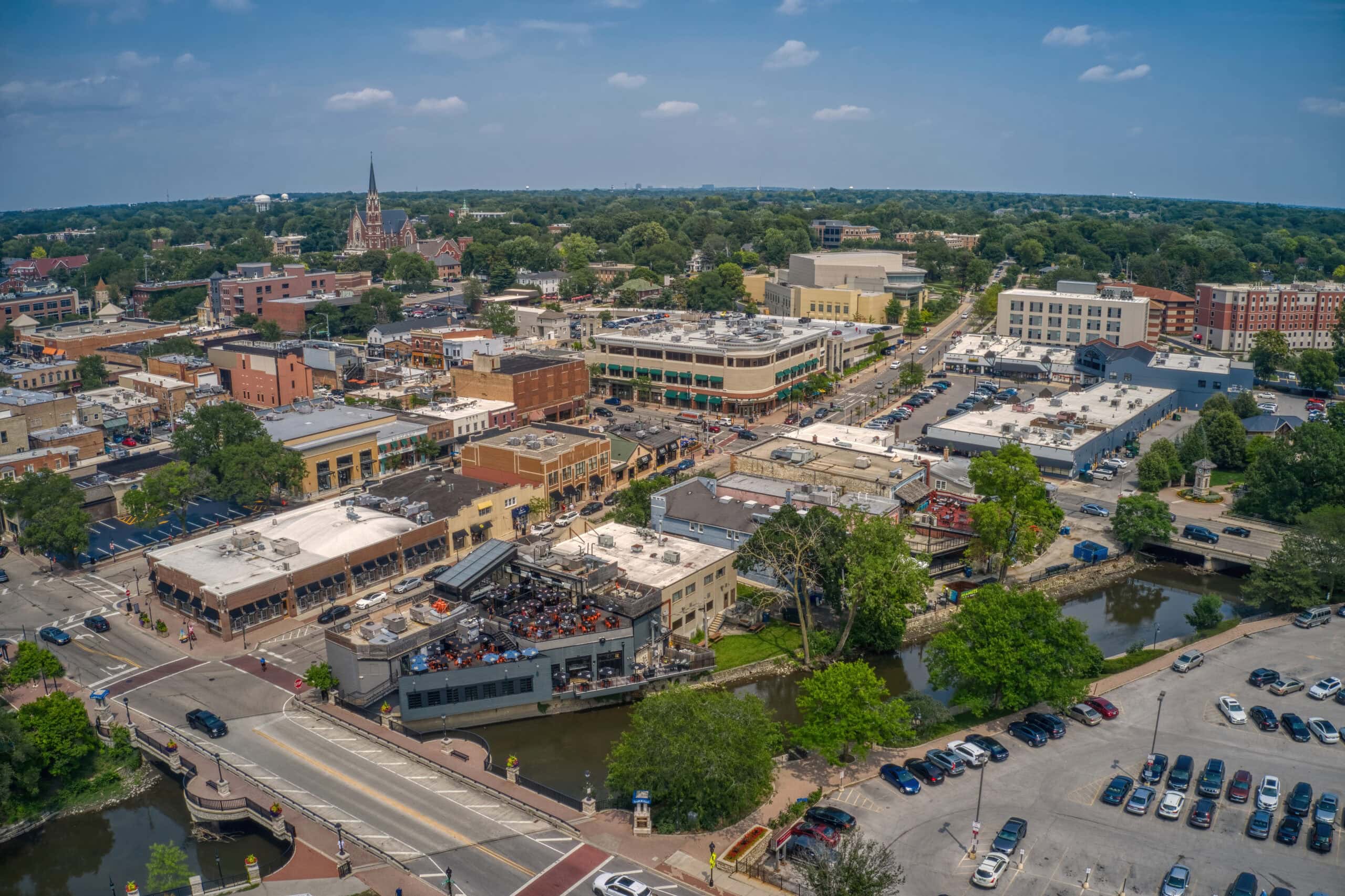
Chicago-Naperville, Illinois-Indiana-Wisconsin
Chicago-Naperville is one of the larger new additions to this version. The metro ranked No. 15 in the country for ozone and tied for No. 13 for year-round particle pollution. It did not crack the Worst 25 for short-term particles. Even so, ranking poorly for both chronic PM2.5 exposure and ozone puts nearly 10 million people inside a metro dealing with more than one major air-quality problem.
Dallas-Fort Worth, Texas-Oklahoma
Dallas-Fort Worth ranks most poorly for ozone, coming in No. 9 nationally. The sprawling metro also entered the Worst 25 for year-round particle pollution at No. 22, up from No. 30 in the previous report. It does not currently rank among the 25 worst for short-term particle spikes. With nearly 9 million people in the metro area, though, even a lower position on one of these lists represents a very large population breathing the same air.
Salt Lake City-Provo-Orem, Utah-Idaho
Salt Lake City-Provo-Orem improved in the latest report but remains on two national Worst 25 lists. The metro ranked No. 13 for ozone pollution and No. 22 for short-term particle pollution. Its year-round particle result did not place it among the 25 worst this time around. Anyone who has watched winter haze settle into the Wasatch Front already knows that Utah's geography can make air-quality episodes painfully visible, but the ozone ranking shows that the problem is not limited to winter inversions.
Medford-Grants Pass, Oregon
Medford-Grants Pass remains on both particle-pollution lists, although it sits closer to the bottom of the Worst 25 than Eugene. The southern Oregon metro ranked No. 16 for short-term particle pollution and tied for No. 23 for year-round pollution. It does not appear on the Worst 25 ozone list. As with much of the West, wildfire smoke can send particle levels sharply higher even in places that look pristine on an ordinary day.
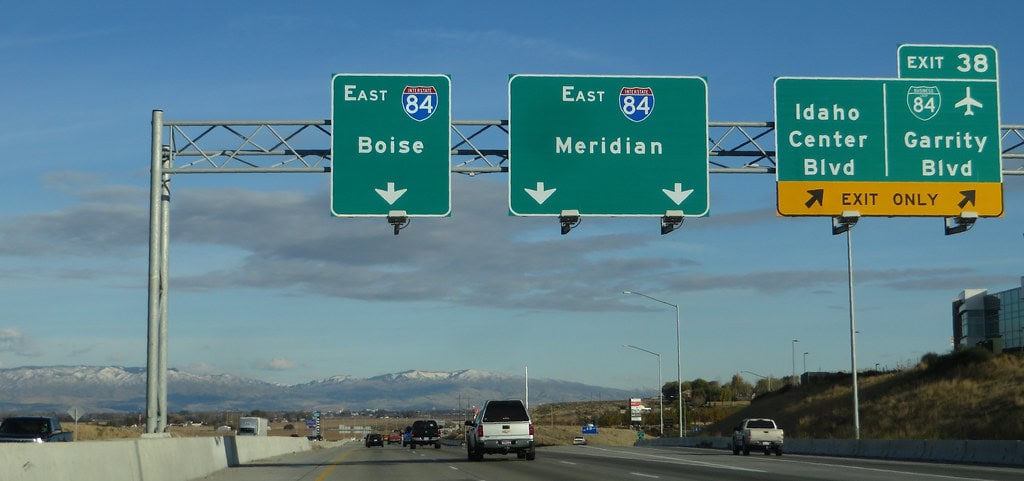
Boise City-Mountain Home-Ontario, Idaho-Oregon
Boise joins this update because it now appears on two of the Lung Association's Worst 25 lists. Boise City-Mountain Home-Ontario ranked No. 17 for short-term particle pollution and tied for No. 24 for ozone. It did not make the Worst 25 for year-round particles. That combination suggests a metro where episodes of unhealthy air remain a bigger issue than persistently high annual particle levels.
Denver-Aurora-Greeley, Colorado
Denver-Aurora-Greeley earns its place here almost entirely because of ozone. The Colorado metro ranked No. 8 in the country for ozone pollution, making it one of the worst metros outside California and Arizona for that pollutant. It does not appear among the current Worst 25 for either short-term or year-round particle pollution. That is still worth emphasizing: a city can have a serious air-quality problem without scoring badly across every pollutant the Lung Association tracks.
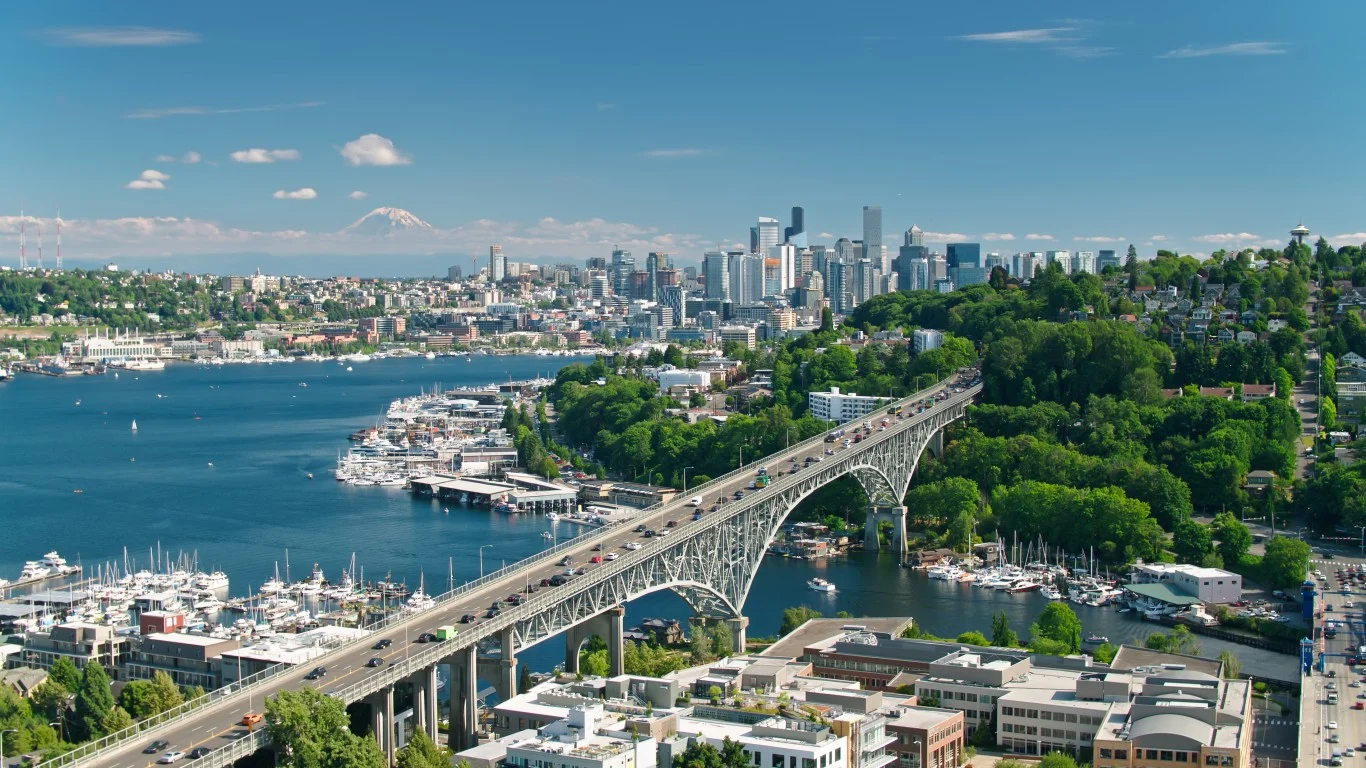
Seattle-Tacoma, Washington
Seattle-Tacoma's biggest problem in the latest report is short-term particle pollution. The metro ranked No. 8 nationally for dangerous PM2.5 spikes and received an F grade for that measure. It did not make the Worst 25 for ozone or year-round particles. That distinction matters because Seattle can enjoy plenty of perfectly good air for much of the year, only to see conditions deteriorate quickly when wildfire smoke reaches western Washington.
Las Vegas-Henderson, Nevada
Las Vegas-Henderson continues to struggle most with ozone. The metro ranked No. 11 nationally in the 2026 report, though it stayed outside the Worst 25 for both short-term and annual particle pollution. The combination of intense sunshine and heat makes ozone a persistent concern across the desert Southwest. So while Vegas does not have the broad pollution profile of Bakersfield or Los Angeles, its smog ranking is still difficult to overlook.
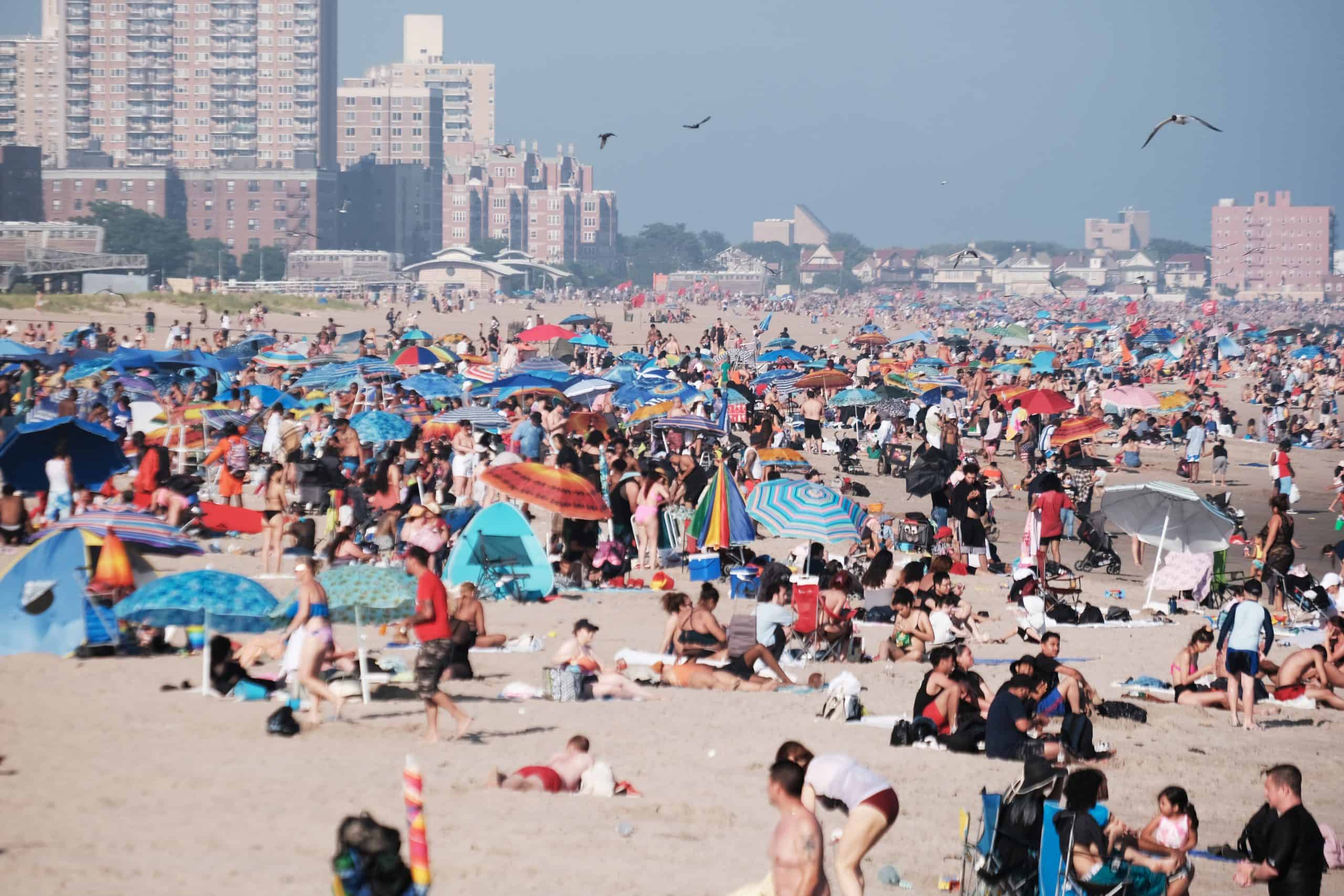
New York-Newark, New York-New Jersey-Connecticut-Pennsylvania
America's largest metro rounds out this version because ozone remains a significant problem. New York-Newark ranked No. 12 nationally for ozone pollution in the 2026 report. It did not place among the Worst 25 for either particle-pollution measure. That makes New York less broadly polluted than several western metros on this list, but a No. 12 ozone ranking across a region of more than 22 million people is still a sizable public-health issue.