
Brendan Smialowski / Getty Images News via Getty Images

PeterHermesFurian / iStock via Getty Images

Pikovit44 / iStock via Getty Images

2004 Getty Images / Getty Images News via Getty Images

PCH-Vector / iStock via Getty Images
chemical industry / Shutterstock.com

Rattankun Thongbun / iStock via Getty Images

Lokibaho / iStock via Getty Images
enviromantic / E+ via Getty Images

georgeclerk / iStock via Getty Images

Liudmila Chernetska / iStock via Getty Images

CentralITAlliance / iStock via Getty Images

AndreyPopov / iStock via Getty Images


12 Potentially Harmful Chemicals That May Be Hiding in Your Home
Most of us spend a lot of time thinking about what is outside our homes, from air pollution to contaminated water, while assuming the house itself is relatively safe. In most cases, that is reasonable. Still, plenty of everyday homes contain materials or products that can expose people to potentially harmful chemicals.
That does not mean every old floor tile, bottle of shampoo, or nonstick pan is quietly poisoning you. Exposure matters. The amount of a chemical, how it enters the body, how often you encounter it, and how long that exposure lasts can all affect the actual risk. Some chemicals are also much better understood than others.
To compile this list of potentially harmful chemicals that can be found in and around the home, 24/7 Tempo reviewed information from the Centers for Disease Control and Prevention, Environmental Protection Agency, Food and Drug Administration, Agency for Toxic Substances and Disease Registry, National Institute of Environmental Health Sciences, and other health and environmental authorities. Here is what these substances are, where you may encounter them, and what scientists currently know about their potential health effects.
This post was updated on September 14, 2026, to reflect additional information.
1. Lead
- Possible health risks: Learning, attention, behavior, and nervous system effects, especially in children
The federal government banned the sale of lead-based paint for residential use in 1978, but that did not make the paint already on millions of walls disappear. Older homes can still contain lead-based paint, and deteriorating paint or dust created during renovation can become an exposure hazard. In California, lead paint remains an important source of childhood lead poisoning. Lead can also turn up in certain water pipes, imported or older toys and jewelry, and other consumer products. The CDC says no safe blood lead level in children has been identified, and even relatively low exposure can affect learning and development.
2. Endocrine Disrupting Chemicals (EDCs)
- Possible health risks: Vary by chemical and exposure, with some EDCs linked to reproductive, developmental, metabolic, immune, and cancer-related effects
Endocrine-disrupting chemicals are not one single substance. They are a broad group of natural or human-made chemicals that can mimic, block, or interfere with the body’s hormones. Depending on the chemical, they may be found in some plastics, food packaging, cosmetics, toys, pesticides, carpets, and other everyday products.
The health effects also cannot be lumped together as though every EDC does the same thing. The National Institute of Environmental Health Sciences notes that different endocrine disruptors have been associated with problems involving reproduction, metabolism, immune function, development, and some cancers. Exposure during fetal development and childhood can be particularly important because hormones help regulate development at very low concentrations.
3. Per- and Polyfluoroalkyl Substances (PFAS)
- Possible health risks: Higher cholesterol, changes in liver enzymes, reduced antibody response to some vaccines, pregnancy-induced hypertension or preeclampsia, and increased risk of kidney or testicular cancer for certain PFAS
PFAS are a huge family of synthetic chemicals that have been used for decades because they resist water, oil, grease, and heat. They have been used in products ranging from stain-resistant carpets and water-resistant clothing to paints, cosmetics, firefighting foam, and some nonstick coatings. Exposure can also come from contaminated drinking water, food, soil, and household dust. The important distinction is that there are thousands of PFAS, and they have not all been studied equally.
PFAS were also historically used to grease-proof paper food packaging, including microwave popcorn bags. That particular source has changed. Manufacturers stopped selling PFAS-containing grease-proofing agents for U.S. paper food packaging, and the FDA subsequently ended the related authorizations. According to the Agency for Toxic Substances and Disease Registry, studies of certain well-studied PFAS have found associations with several health outcomes, including cholesterol increases, changes in liver enzymes, reduced vaccine antibody response, pregnancy-related hypertension, and kidney and testicular cancer.
4. Bisphenol-A (BPA) and Bisphenol-S (BPS)
- Possible health risks: Potential endocrine effects; evidence for specific human health outcomes varies by compound, dose, and type of exposure
BPA has long been used to make certain polycarbonate plastics and epoxy resins, including coatings used in some food and beverage cans. BPS is a related chemical that has sometimes been used as a substitute for BPA. Both have drawn attention because bisphenols can interact with hormone systems, although the evidence for particular health effects in humans is still being studied.
One outdated place to look for BPA is a newly manufactured baby bottle in the United States. FDA regulations have not provided for BPA-based polycarbonate resins in baby bottles and sippy cups since 2012, or BPA-based epoxy coatings in infant-formula packaging since 2013, after manufacturers abandoned those uses. BPA does remain authorized for some other food-contact applications, and federal researchers continue studying its potential endocrine and developmental effects.
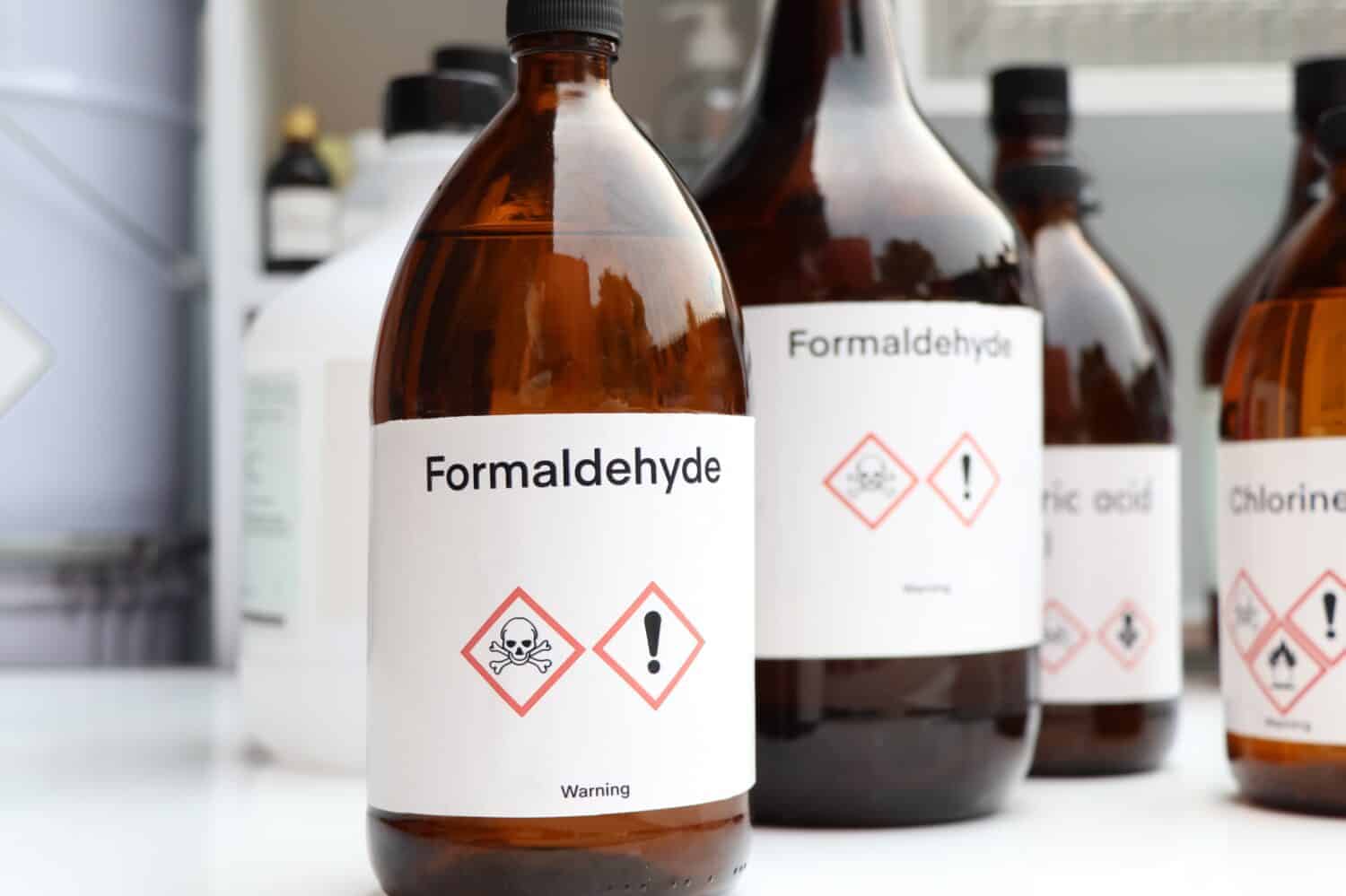
5. Formaldehyde
- Possible health risks: Eye, nose, and throat irritation, coughing or wheezing, allergic reactions, and cancer risk with sufficient long-term exposure
Formaldehyde is a colorless, strong-smelling gas used in manufacturing and released by a number of products and combustion sources. Inside homes, some of the most significant sources can be pressed-wood products made with formaldehyde-containing resins, including particleboard, medium-density fiberboard, cabinets, and furniture. Tobacco smoke, some paints and coatings, adhesives, and unvented fuel-burning appliances can contribute as well.
The Centers for Disease Control and Prevention provides guidance on formaldehyde exposure and its potential effects. At elevated concentrations, formaldehyde can irritate the eyes and respiratory tract and cause coughing or wheezing. Long-term exposure is also a cancer concern. New furniture and building materials can release formaldehyde into indoor air, with emissions generally declining as products age.
6. Perfluorinated Chemicals (PFCs)
- Possible health risks: Depend on the specific compound; this older term substantially overlaps with the PFAS family discussed above
This one needs a terminology warning. “PFCs,” when used to mean perfluorinated chemicals, is an older and sometimes confusing label that overlaps with the much broader PFAS category discussed above. It is not a completely separate class of household contaminants. The abbreviation can even mean perfluorocarbons in other scientific contexts, which is one reason PFAS has become the clearer term for the substances discussed here.
Certain PFAS have historically been used to give carpets, upholstery, clothing, paints, and other materials resistance to water, grease, or stains. Some products still may contain PFAS, although exposure to well-known compounds such as PFOA and PFOS from current consumer products is generally considered lower than exposure from contaminated drinking water in affected communities. In other words, the concern is real, but this entry describes another set of PFAS exposure sources rather than an entirely different chemical problem.
7. DEHP
- Possible health risks: Reproductive and developmental effects at sufficient exposure, with evidence of carcinogenicity in animal studies
DEHP, short for di(2-ethylhexyl) phthalate, is a plasticizer used to make some forms of PVC and other plastics softer and more flexible. Depending on the product and when it was manufactured, DEHP may be present in flexible vinyl goods such as flooring, hoses, shower curtains, footwear, and other plastic products. Some medical tubing and devices can contain DEHP as well.
Animal studies have shown reproductive, developmental, liver, and testicular effects at sufficiently high exposures, and older EPA assessments classified DEHP as a probable human carcinogen based largely on animal evidence. That does not mean ordinary contact with every flexible plastic product creates the same risk. In its 2025 TSCA risk evaluation, EPA identified unreasonable human-health risks for workers under several conditions of use but did not identify unreasonable risk to the general population or consumers for the conditions it evaluated.
8. Parabens
- Possible health risks: Weak estrogen-like activity has raised endocrine concerns, but FDA says current evidence does not show that parabens as used in cosmetics harm human health
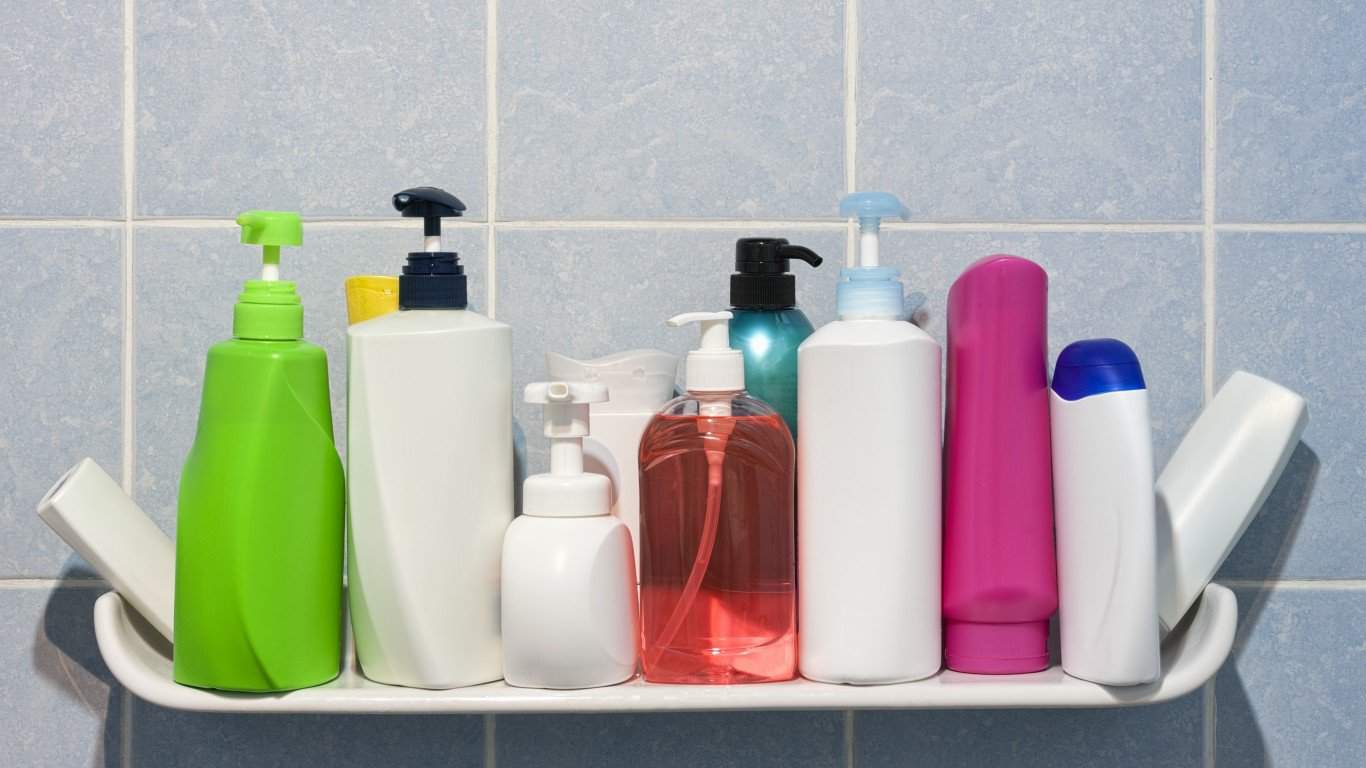
Parabens are preservatives commonly used to slow the growth of bacteria and mold in cosmetics and personal-care products. Methylparaben, propylparaben, butylparaben, and ethylparaben are among the types you may see on ingredient labels for products such as moisturizers, shampoos, conditioners, and makeup.
Parabens have received attention because some can show weak estrogen-like activity, which led to questions about endocrine effects and breast cancer. The evidence is not strong enough to say that normal cosmetic use causes those outcomes. The FDA says it continues to review the research but currently does not have information showing that parabens, as used in cosmetics, have an adverse effect on human health.
9. Asbestos
- Possible health risks: Asbestosis, lung cancer, mesothelioma, and other asbestos-related cancers and lung diseases
Asbestos is the name for a group of naturally occurring fibrous minerals that were widely used because of their strength and resistance to heat. They turned up in insulation, floor and ceiling tiles, roofing materials, pipe wrap, textured coatings, gaskets, and plenty of other products. According to the US Environmental Protection Agency, asbestos can still be present in older buildings even though many historical uses ended decades ago.
EPA finalized a rule in 2024 prohibiting ongoing uses of chrysotile asbestos, the only form then known to still be imported, processed, or distributed for use in the United States, with phase-out schedules that vary by use. That does not remove asbestos already sitting inside older homes. If suspected material is in good condition and will not be disturbed, EPA generally recommends leaving it alone. If you are planning renovations that could disturb old flooring, ceiling material, pipe insulation, or another suspect product, EPA recommends having it evaluated and, when appropriate, sampled by a trained and accredited asbestos professional. Damaging asbestos-containing material can release microscopic fibers into the air where they can be inhaled.
10. Polybrominated Diphenyl Ethers (PBDEs)
- Possible health risks: Neurobehavioral, developmental, thyroid, reproductive, and immune effects, with cancer concerns for some PBDE mixtures based largely on animal evidence
PBDEs are a group of brominated flame retardants that were used in products such as furniture foam, textiles, plastics, electronics, wire insulation, and vehicles. Production and use of major PBDE commercial mixtures have fallen sharply in the United States, but that does not make older couches, electronics, or building materials disappear. Because PBDEs are not chemically bound to the materials in which they were used, they can migrate out over time and accumulate in indoor dust.
EPA identifies neurobehavioral effects as a major human-health concern for PBDE exposure, while research has also examined effects involving thyroid hormones, reproduction, development, and the immune system. Some PBDE mixtures have produced cancer in laboratory animals. The risks depend on the specific PBDE, exposure level, and duration, which is why simply finding an older flame-retarded product in the house does not by itself establish a dangerous exposure.
11. Benzyl Benzoate
- Possible health risks: Skin and eye irritation; excessive exposure to concentrated topical treatments can cause more serious effects
Benzyl benzoate has several very different uses. It can serve as a fragrance ingredient or solvent in consumer products, and concentrated benzyl benzoate preparations are also used in some countries as topical treatments for scabies and, historically, lice. The World Health Organization includes benzyl benzoate among topical options for scabies, while U.S. treatment more commonly relies on medications such as permethrin or ivermectin.
Its risks depend heavily on the concentration and how it is being used. Benzyl benzoate can irritate the skin and eyes, and concentrated medical preparations should be used only as directed. Reported signs of excessive topical exposure include severe skin irritation and, in serious cases, symptoms such as jerking movements, difficulty urinating, or loss of consciousness. Products containing it should be stored and used according to their labels, particularly in homes with children.
12. Volatile Organic Compounds (VOCs)
- Possible health risks: Eye, nose, and throat irritation, headaches, dizziness, and, for some VOCs at sufficient exposure, damage to the liver, kidneys, or central nervous system and increased cancer risk
VOCs are not one chemical but a large group of organic compounds that readily evaporate into the air. Paints, varnishes, solvents, cleaning products, disinfectants, air fresheners, pesticides, adhesives, permanent markers, building materials, furnishings, and stored fuels can all release VOCs. The effects vary enormously from one compound to another, so a product being labeled “low VOC” does not automatically tell you everything about its potential toxicity.
Some building materials, upholstered furniture, and drapes can release VOCs into indoor air as well. The American Lung Association offers suggestions for reducing VOC exposure in the home. EPA likewise recommends source control, following product-label precautions, and increasing ventilation when using products that release VOCs. Short-term exposure to some VOCs can irritate the eyes and respiratory tract or cause headaches and dizziness, while certain compounds can produce more serious effects after sufficiently high or prolonged exposure.