
SolStock / Getty Images

Georgi Fadejev / Shutterstock.com

Louise Bourgeois Boursier, Achille Chereau, Public domain, via Wikimedia Commons

osde8info / BY-SA 2.0

Unknown sourceUnknown source, Public domain, via Wikimedia Commons

Gustaf Lundberg, Public domain, via Wikimedia Commons

Unknown authorUnknown author / BY-SA 4.0

New Africa / Shutterstock.com

Scanned by Phrood, first uploaded on de:WP, Public domain, via Wikimedia Commons

https://biodiversitylibrary.org/page/42981230, Public domain, via Wikimedia Commons

Richard James Lane, Public domain, via Wikimedia Commons

See page for author, Public domain, via Wikimedia Commons

See page for author, Public domain, via Wikimedia Commons

Schemboche, Public domain, via Wikimedia Commons

University of Chicago Photographic Archive, [apf1-00303], Special Collections Research Center, University of Chicago Library., Public domain, via Wikimedia Commons

See page for author, Public domain, via Wikimedia Commons

朝日新聞社, Public domain, via Wikimedia Commons
gurdonark / BY 2.0










Celebrating Hidden Women of Science Who Changed the World
Women's rights have come a long way all around the world, although there is still work to do. While men dominate science studies, that doesn't mean that women haven't made incredible findings. Many of these women were just too ahead of their time for us to appreciate.
Women have published papers in physics, astronomy, botany, zoology, and chemistry for hundreds of years. But you probably won't recognize their names.
To learn more about the hidden women of science who changed the world quietly, some even after they passed away, click through the slideshow. We've only listed 17, but there are hundreds, if not thousands, of similar stories. For this slideshow, 24/7 Tempo consulted historical sources and museum websites. We also chose to use lesser-known female scientists to make it more interesting.
Loredana Marcello
Women have been contributing to science for hundreds, if not thousands, of years. Starting our list is Loredana Marcello, an Italian woman born in 1518, who was a poet and studied botany. Not only did she study botany, but she also came up with recipes using plants and herbs against the plague. Unfortunately, a lot of her work was lost, but it was used after her death during the plague outbreak in Venice.
Louise Boursier
Louise Boursier was passionate about being a midwife and helping with childbirth. Born in 1563, she was a royal midwife who became the first woman in France to publish a medical text. She is also the first woman to write a book on childbirth practices. A few people she helped deliver were Louis XIII (1601), Christine of France (1607), and Henrietta Maria of France.
Maria Clara Eimmart
Not all astronomers from the 1600s were male. Maria Clara Eimmart was a female astronomer who made over 350 drawings of the phases of the moon in just five years (1693 - 1698). She did this by just using a telescope and her artistic skills. Eimmart was very lucky to learn these skills at a time when women weren't accepted in the field. Her father was Georg Christoph Eimmart, who established the first astronomical observatory in Nuremberg.
Laura Bassi
A woman receiving a PhD during the 1700s is almost unheard of. Laura Bassi did it, though, and became the first woman to be a member of the Bologna Academy of Sciences. This wasn't without backlash, as she soon after had to defend her thesis and findings, earning her PhD in the process. She was also the first female physics professor in the world, teaching at the University of Bologna.
Eva Ekeblad
Eva Ekeblad was a brilliant Swedish agriculturist and salon hostess. Although she has a long list of interests and discoveries, she's best known for being the first female member of the Royal Swedish Academy of Sciences. Her biggest scientific discoveries were figuring out how to make flour and alcohol from potatoes, reducing Sweden's risk of famine. Ekeblad was also known to wear potato flowers to promote the use of the plant. She also discouraged the use of arsenic in cosmetics for its dangers.
Nicole-Reine Lepaute
Also on our list is Nicole-Reine Lepaute, who's known for being a French astronomer and human computer. She was incredible at math to the point where she helped calculate the date of return for Halley's Comet with Alexis Clairaut and Jérôme Lalande. She also accurately predicted the 1764 solar eclipse.
Wang Zhenyi
A lot of astronomers who found important scientific findings were women, including Wang Zhenyi. She was a Chinese astronomer and Lady Historian from the Qing dynasty who contributed to poetry, astronomy, and mathematics. Her astronomical findings focused on eclipses. She's also known for creating a scientific exhibit to explain lunar eclipses using simple materials like a lamp, a mirror, and a table. A few things she published included "Explanation of Lunar Eclipses," "The Explanation of the Pythagorean Theorem and Trigonometry," "The Simple Principles of Calculation," and "Explanation of Lunar Eclipses."
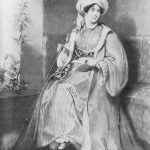
Lady Hester Stanhope
Woman explorers are fascinating. How do you just find archaeological remains and artifacts like nothing? Lady Hester Stanhope was one of the most famous travelers of her age. Born in 1776, she's known for using textual sources (medical Italian documents) to find and perform the first archaeological excavation in Palestine.
Marie-Anne Libert
Before we had cameras to take pictures of plants and computers to store them in the thousands, people had to record them physically. Marie-Anne Libert did this as one of the first women plant pathologists. She published works describing 400+ species of mosses, ferns, lichen, algae, and fungi from the Ardennes region. Libert also described the organism responsible for the "late blight" disease of the potato, helping identify it.
Anna Thynne
Science is more than just physics and botany. Anna Thynne was a British marine zoologist during the early to mid-1800s. Interestingly, before she got into marine science, she was passionate about geology. Her love of marine science was born when she saw a stony coral for the first time, surprised that the rock was full of life. In 1846, she built the first stable and sustained marine aquarium. She maintained the aquarium for three years with different corals and sponges.
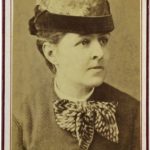
Ellen Smith Tupper
Beekeeping is an old profession, although it's weird to think about. Ellen Smith Tupper was one of the first successful female beekeepers and was regarded as a national expert, attending conventions like the North American Beekeepers Convention. She was also the first female editor of an entomological journal and taught beekeeping at the State Agricultural College of Iowa.
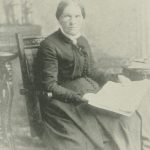
Josephine Silone Yates
Women in science have been underappreciated for centuries. It's even worse with people of color, which is why it's so impressive when someone can break through tough barriers. Josephine Silone Yates was one of these women. She was a professor, writer, public speaker, and activist with a long list of accomplishments, including being the first black woman to head a college science department. Some online sources also report she was the first black woman to hold a full professorship at any U.S. college or university.
Marianna Paulucci
Also on our list of hidden women of science is Marianna Paulucci from Italy. She was a naturalist with a focus and love for non-marine molluscs. During her life, she published nearly 40 works, but is especially known for publishing 32 malacological works with nearly 160 species.
Zonia Baber
Zonia Baber loved field work. She was a geographer and geologist who came up with unique teaching methods of geography. She believed and preached learning through discovery, not memorization. Baber co-founded the Geographic Society of Chicago and served as President. During her life, which she lived for 93 years, she was involved in society. Interestingly, she also designed a school desk specifically for teaching geography and other sciences.
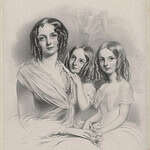
Emma Hutchinson
Sadly, some women's discoveries aren't known or appreciated until they are gone. This is the story of Emma Hutchinson, who published the book, "Entomology and Botany as Pursuits for Ladies." She was a lepidopterist with an impressive collection of over 20,000 butterflies and moths. Interestingly, her interest in butterflies and moths started later on in life when her son caught a swallow-tailed moth. She specifically studied their life cycle, rearing many different species for over 30 years. Thirty years after her death, her daughter donated her collection to the London Natural History Museum.
Chika Kuroda
Chika Kuroda was the first woman in Japan to receive a Bachelor of Science. Born in Saga, Kyushu, Kuroda began working as a teacher after graduating from the Women's Department of Saga Normal School. About a year later, she continued her studies at Rika Women's Higher Normal School. She loved studying and didn't give up, becoming one of the first women to attend university in Japan when Tohoku Imperial University started accepting women. Kuroda studied the Chemistry Department of the College of Science and grew interested in organic chemistry. For years, she studied natural pigment in things like eggplant skins, sea urchin spines, and Asiatic dayflowers.
Ynes Mexia
Lastly, there is Ynes Mexia, a Mexican-American botanist who not only discovered a new genus, Mexianthus (in the family Asteraceae)'. but also collected 145,000 plant specimens during her travels. If that isn't amazing enough, consider that Mexia only became involved with botany later in life (in her 50s). In the 13 years she collected plants, she found 500 new species.