Serial killers often share a troubling set of traits, including narcissism, manipulation, impulsivity, and a lack of empathy or remorse. Many also project a superficial charm. Some research suggests abnormalities in the amygdala, the part of the brain tied to emotional processing, may play a role in this behavior.
The FBI notes that motives for serial murder vary, but commonly include anger, thrill-seeking, attention, or financial gain. While individual motives differ, serial killers are universally disturbed, and they represent an extremely small fraction of the population.
Despite the horror of their crimes, some criminals become widely known and even glamorized. Figures like Al Capone, Ted Bundy, and Whitey Bulger became household names, while others, including the Zodiac Killer and the Son of Sam, were immortalized through books and films.
To identify the most notorious serial killers in U.S. history, 24/7 Tempo focused on criminals whose names are widely recognized by the public. Using polls, published lists, and biographical research, we examined their backgrounds, crimes, motives, and eventual sentencing. Unsolved cases were excluded, even when the crimes themselves were well known.
Jeffrey Dahmer

The most notorious criminal mind in the U.S. is Jeffrey Dahmer, who was born in Milwaukee, Wisconsin on May 21, 1960. Police arrested Dahmer in 1991, and his arrest and conviction prompted the public to widely criticize the police department for negligence as well as creating a surge of interest in serial murderers.
While many serial killers in the world claimed far more lives than Dahmer, his crimes were particularly gruesome, leading to his notoriety among criminals and other serial killers. His crimes were not simple murders but included cannibalism and necrophilia, which shocked the public.
Jeffrey Dahmer

Dahmer’s first murder took place in 1978 in Bath Township, Ohio, and he didn’t murder again until 1987. But it was this second murder that started what became a series of murders, that included 15 boys and young men. His victims were mostly poor African American, Latino, and Asian men.
After his arrest in 1991, Dahmer received 15 consecutive life sentences. A 16th life sentence was added to his term for the murder he committed in 1978. The horror of his acts made headlines and the Milwaukee police came under fire for negligence. It was argued that since Dahmer was active from 1978 until 1991 without being detected, the police negligently failed to properly investigate the disappearances of his victims.
It was also argued that the reason the police hadn’t investigated the disappearances was because the victims were homosexuals and primarily of racial minority groups, and law enforcement failed to prioritize the missing persons. An average of three people in Dahmer’s scope went missing every year during Dahmer’s most active years. Dahmer died in 1994 when a fellow inmate murdered him in a Wisconsin prison.
Ted Bundy

Some experts estimate that Bundy claimed the lives of hundreds of women during his active years as a serial killer, although he only officially confessed to 28 crimes. Bundy murdered young women in Washington State, Oregon, Colorado, Utah, and Florida between 1974 and 1978.
His trial was highly publicized and, like Jeffrey Dahmer, began a boom in interest in serial killers. Critics have widely argued that the public nature of his trial has turned him into a romantic figure as his case was the basis for several books and shows revolving around serial killing.
Ted Bundy
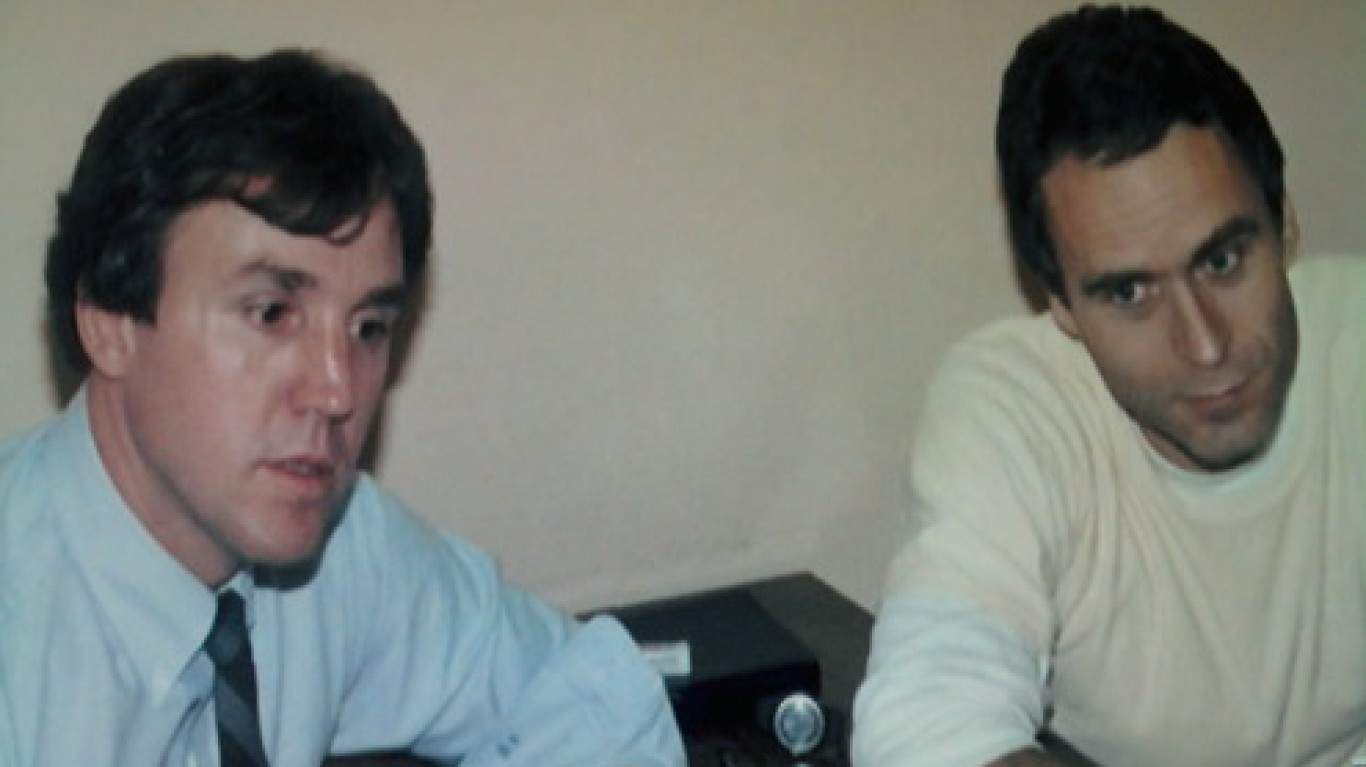
The victim of a tumultuous childhood, he had a strained relationship with his stepfather and was a shy child, Bundy was bullied by his peers. Because of his high intellect and charm, he had a successful college education and career. He even appears to have engaged in several relatively normal and healthy emotional relationships with women while at university.
Bundy went on to sexually assault and kill numerous women and girls during his active years. Following his escape from custody in 1977, he became something of a celebrity, in part fueled by his charisma and intelligence during his trial. He was sentenced to death for the murders of two college students in 1979, and again in 1980 for the rape and murder of a 12-year-old girl.
While in prison, not only did he assist police in other murder investigations, but he also admitted to the murder of eight additional women. He was executed via electric chair in Florida in 1989.
Charles Manson
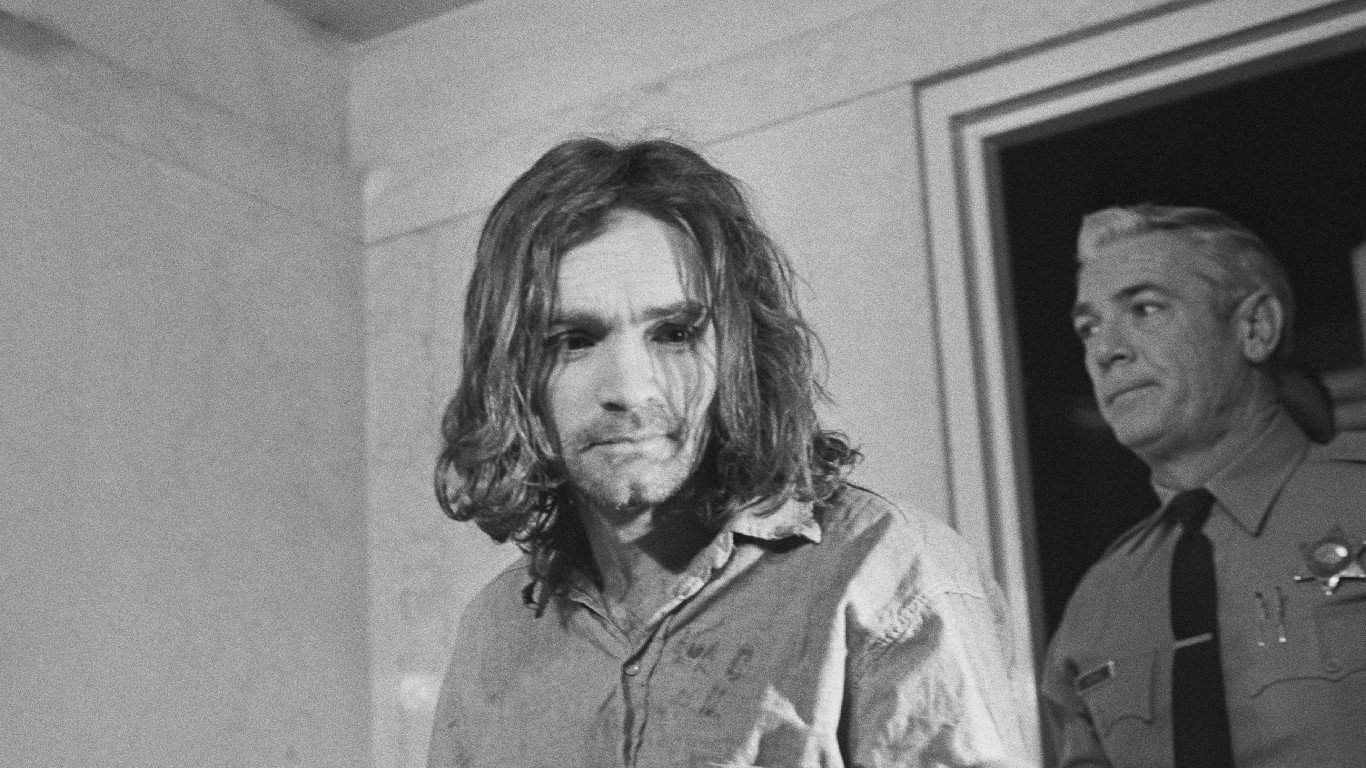
Charles Manson was an American criminal mastermind and cult leader whose followers committed several high-profile murders in the late 1960s. Dubbed “The Manson Family,” or simply “The Family,” their activities inspired the 1974 book Helter Skelter. A fanatic who preached of an apocalyptic war that would ravage the U.S. and leave “The Family” as the dominant political power in the country, Manson attracted young people to the group, who dedicated their lives to studying and implementing his fanatical teachings.
His teachings were largely based on science fiction, the occult, and fringe psychology, and although his beliefs were rather eccentric, he commanded his cult with an iron grip. In 1969 the cult turned to murder, gruesomely killing several people, including Sharon Tate, who was then eight months pregnant, on Manson’s orders.
Charles Manson

Born to a 16-year-old girl, Manson never knew his father and lost his mother when she was imprisoned for armed robbery. He spent most of his time in juvenile detention centers and prisons for crimes like larceny, armed robbery, burglary, and auto theft. When he was released from prison in 1967, he moved to San Francisco where a small but devoted group of bohemian youths gathered around him as a leader.
By 1968, the Family was in full swing as a communal religious cult. After his followers killed several people on his orders, they were arrested and tried, which gained national attention. It is believed that Manson didn’t personally kill anyone, and although he initially received a death sentence, the abolition of the death penalty in California changed his sentence to life in prison.
He was eligible for parole on several occasions but was denied at all his hearings. He died in prison of natural causes on November 19, 2017.
John Wayne Gacy

Gacy was known as a sociable man who performed as a clown at various events so when around 30 bodies were discovered in the vicinity of his home in Chicago, it shocked the community. Gacy’s home had a foul smell that had persisted for years but he had convinced the people who lived near him and even his wife that the smell came from moisture buildup.
However, the real source of the smell was the 29 bodies he had hidden in and around the home. Four more bodies turned up in the nearby river. During his trial, the defense attempted to plead insanity, with experts blaming his actions on his schizophrenia but the jury rejected the plea and sentenced him to death.
John Wayne Gacy

Born and raised in a blue-collar family, Gacy had a relatively ordinary childhood. But as he grew older, he exhibited a growing sadistic tendency, resulting in several run-ins with the law in the 1960s. After being convicted of sexually assaulting a young man in 1968, he was imprisoned in the Iowa State Men’s Reformatory.
After his release in 1970, he was arrested again for sexual assault while still on parole. These charges were eventually dropped, and after this incident, he became a successful independent contractor and moved to Chicago. In 1978, when Robert Piest was reported missing, police learned John Wayne Gacy was the last person to see him.
They executed a search warrant and discovered 29 bodies of boys and young men in and around his home, along with 4 more bodies in the river nearby. Gacy died by lethal injection in 1994.
Al Capone
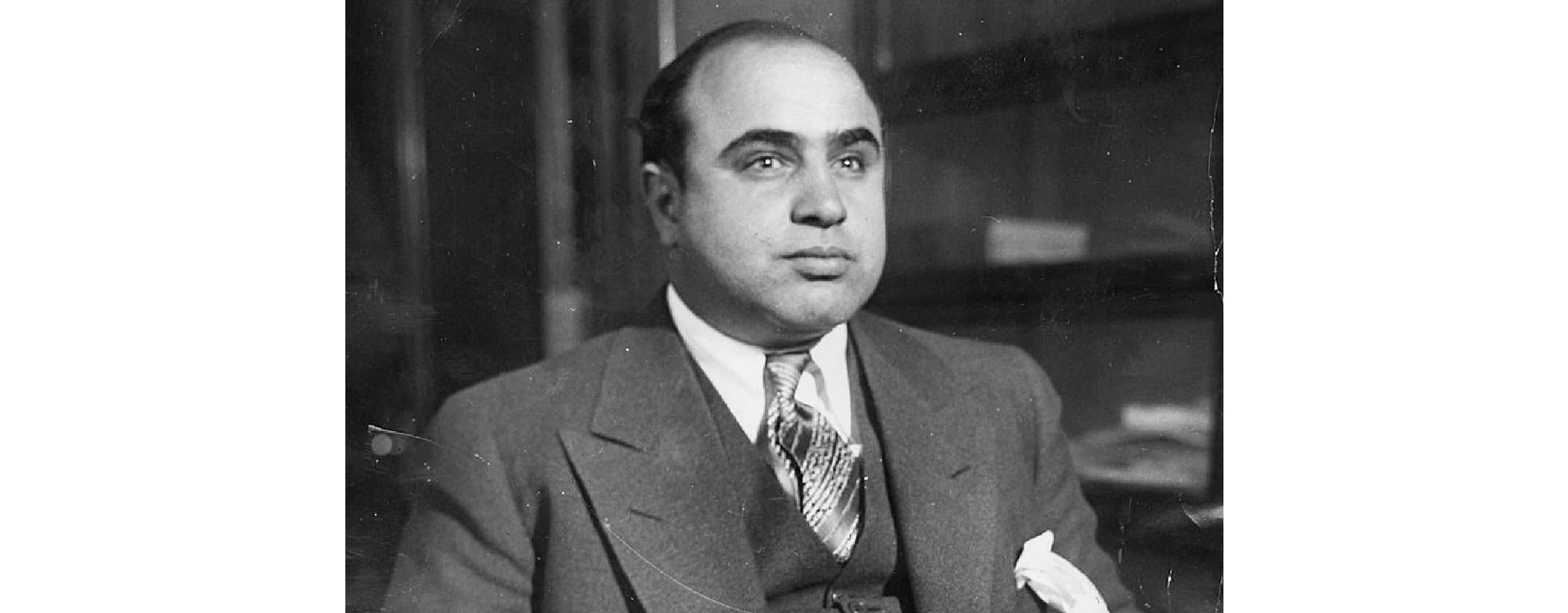
Alphonse “Al” Capone was a Prohibition-era gangster whose organizations dominated the underground scene in Chicago. Capone’s parents immigrated from Naples, Italy to Brooklyn, New York, United States in 1893. He was the fourth of nine children. After attacking a teacher at school, Capone dropped out of education at just 14 years old.
He proceeded to work odd jobs, such as a candy store clerk, bowling alley pin boy, laborer at an ammunition plant, and cutter in a book bindery. He had a scar on his left cheek from a violent altercation in his youth, when he made a crude comment about the sister of fellow delinquent Frank Gallucio, prompting Gallucio to slash him with a knife or razor.
After the incident, he gained the nickname “Scarface” from which the movie by the same name would take its inspiration.
Al Capone
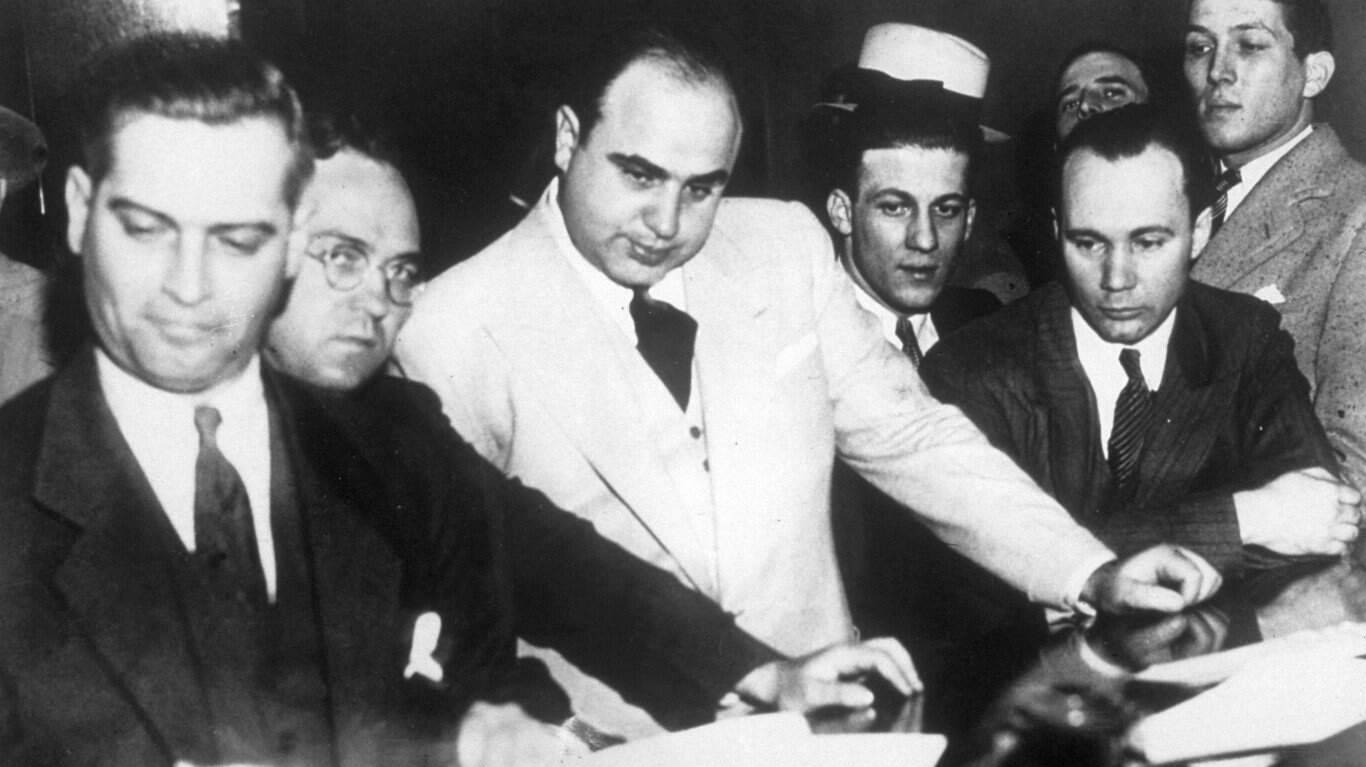
Capone was also involved with the South Brooklyn Rippers and Forty Thieves Juniors, groups of delinquents known for vandalism and petty crime, sometimes called “kid gangs.” He also joined the James Street Boys, where he met his mentor, Johnny Torrio. By 16, Capone had moved to the Five Points gang, where he served Francesco Ioele, better known as Frankie Yale.
Capone worked as a bartender in the Harvard Inn, Yale’s saloon and brothel, and was also involved in numerous murders, including the St. Valentine’s Day Massacre, where seven members of a rival gang were gunned down with machine guns in a garage. His notoriety and larger-than-life appearance attracted a lot of nationwide attention.
His actions and notoriety as an American criminal prompted a boom in interest in organized crime and the creation of the gangster film genre. He died of heart failure at the age of 48 on January 25, 1947.
Richard Ramirez
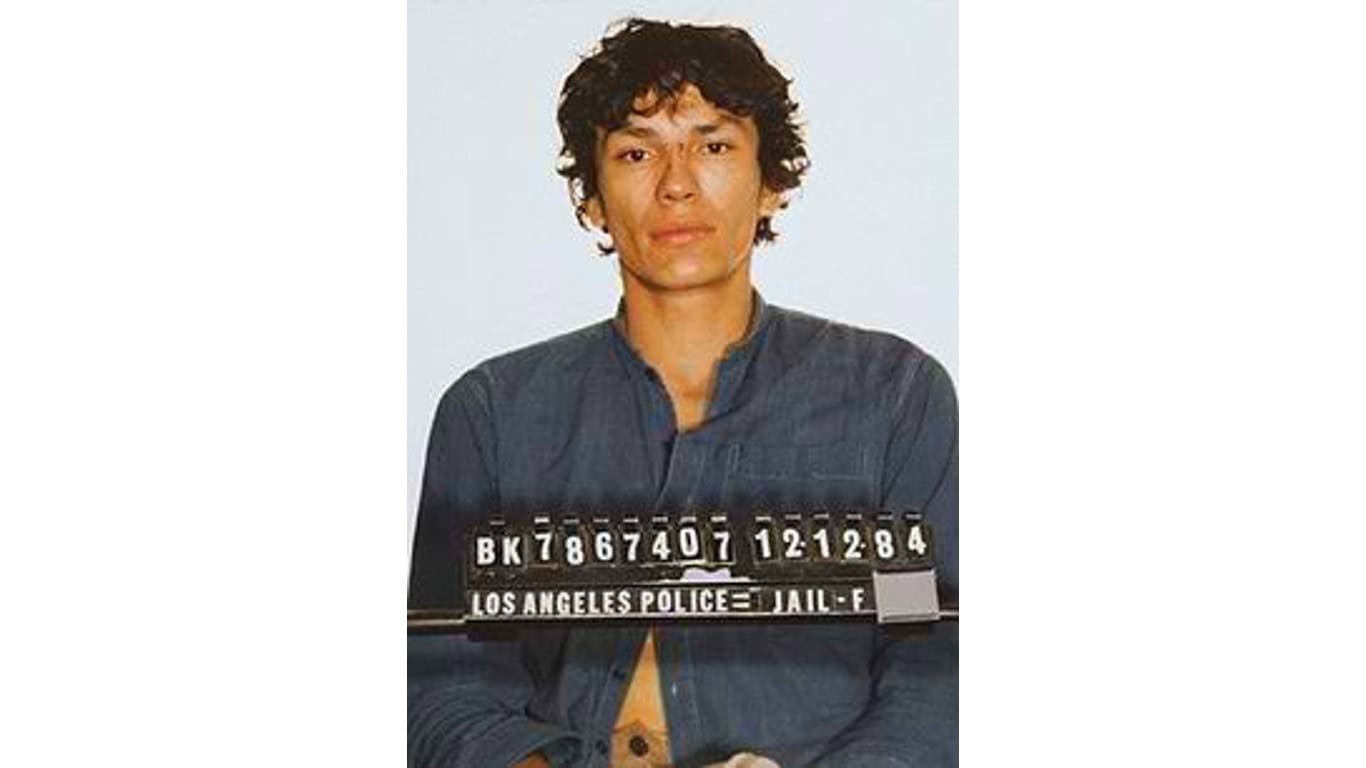
Ramirez operated in California from 1984 to 1985 and was eventually convicted of 13 murders and sentenced to death. He was a famous criminal, known as the “Night Stalker” during his active serial killing year. News of his crimes caused a boom in gun sales as people sought to protect themselves from the threat to their community.
He never expressed any type of guilt or remorse for his actions at any point during his trial or sentencing. After receiving his sentence, he stated, “Big deal. Death always went with the territory.” While Ramirez was convicted of killing 13 people, some of his victims survived the brutal beatings and sexual assaults. Before his execution could take place, he died of cancer in prison in 2013.
Richard Ramirez

Growing up in El Paso, Texas, according to reports, when he was 12 years old, his cousin showed him pictures of women that he claimed to have raped, tortured, and killed during his time serving in the Vietnam War. The next year, his cousin fatally shot his wife, a crime to which Ramirez bore witness.
It was at this time that Ramirez dropped out of high school and began breaking into people’s homes. He then moved to Los Angeles, where he was briefly jailed for auto theft. In June 1984, Ramirez graduated from breaking-and-entering to murder when he raped and murdered a 79-year-old widow.
While he was implicated in the 1984 murder of a nine-year-old girl, he was not charged with the crime. After his first murder, he waited eight months before striking again. He was primarily active in the Los Angeles area, and most of his murders occurred during home invasions, a habit he never freed himself of.
Bonnie and Clyde

Bonnie and Clyde were a legendary crime duo that specialized in robbery. After a 20-month prison sentence, Clyde Barrow partnered with Bonnie Parker before going on a 21-month crime spree that involved flamboyant altercations with the police. Due to the sensationalizing of their crimes by the media, Bonnie and Clyde gained widespread notoriety throughout the country.
The famed twosome worked alongside several others, including Clyde’s brother Buck, Buck’s wife, Blanche, W.D. Jones, and Ray Hamilton. The duo primarily operated in Texas, Oklahoma, Missouri, and New Mexico. Their takes never exceeded $1,500 (equivalent to almost $28,000 today) so they were not operating with small amounts of money.
Bonnie and Clyde
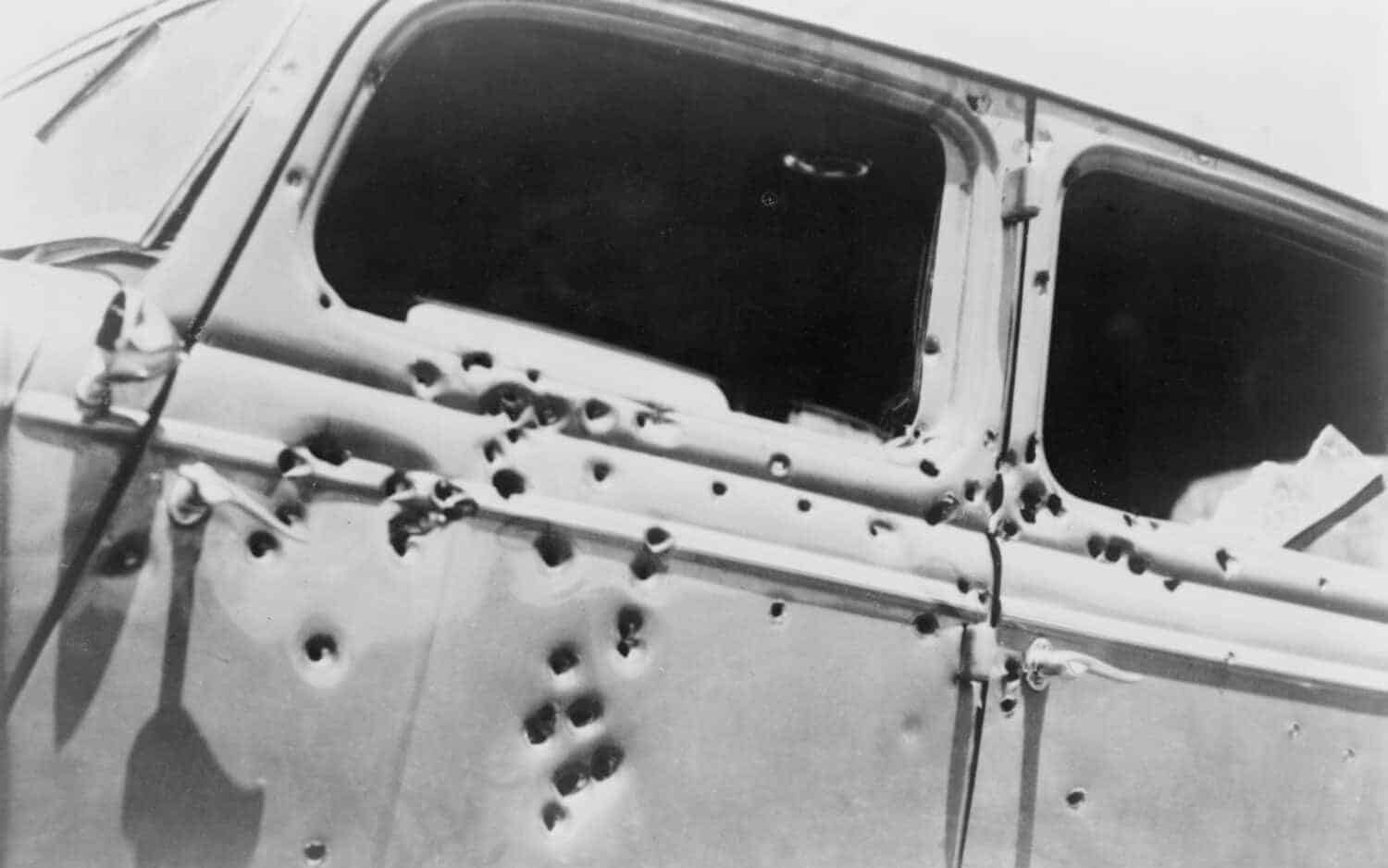
The search for Bonnie and Clyde began in December 1932 when the FBI recovered a stolen vehicle in Michigan. The vehicle had been transported across state lines from Oklahoma. A search of a second stolen vehicle in Oklahoma tied the stolen cars to Bonnie and Clyde through a prescription bottle filed for Clyde’s aunt.
The FBI issued a warrant for their arrest and began searching for them, leading to several shootouts with the police. The duo escaped capture on several occasions, most notably near Grand Prairie, Texas. They also helped five prisoners escape, killing two guards in the process, and also killed two police officers near Grapevine, Texas.
Five days later, they killed a constable in Miami, Oklahoma, and kidnapped a police chief. It was gang member Henry Methvin’s unintentional betrayal that eventually led to the capture of Bonnie and Clyde. The tip allowed the police to intercept them on a highway between Gibsland and Sailes, Louisiana. When they tried to flee, police opened fire and killed them.
Ed Gein

Ed Gein’s crimes inspired a wide breadth of horror media, including books and films, such as “Psycho,” “The Texas Chainsaw Massacre” and “The Silence of the Lambs.” Gein’s crimes were unusually gruesome, which played a big part in his notoriety, similar to the story of Jeffrey Dahmer. He is so famous that his house in Plainfield, Wisconsin is a tourist attraction for the otherwise quaint and quiet town.
Ed Gein
Gein’s childhood was quite difficult, with a raging alcoholic for a father and a mother who was extremely verbally abusive. Despite the abuse, he idolized his mother, causing him to be at odds with his older brother Henry, who often confronted her about her abusive behaviors. In 1944, Gein reported that his brother was missing to the police but when prompted he was able to lead investigators directly to the burned body.
Henry’s death was ultimately ruled an accident, although bruises were found on his head. It was in 1958 that the police once again found themselves at the Gein’s farm, long after the deaths of Ed Gein’s mother and father, leaving him the sole resident and functional hermit. Bernice Worden, a hardware shop owner, had been seen with Gein and subsequently went missing. Her butchered body was found on the property.
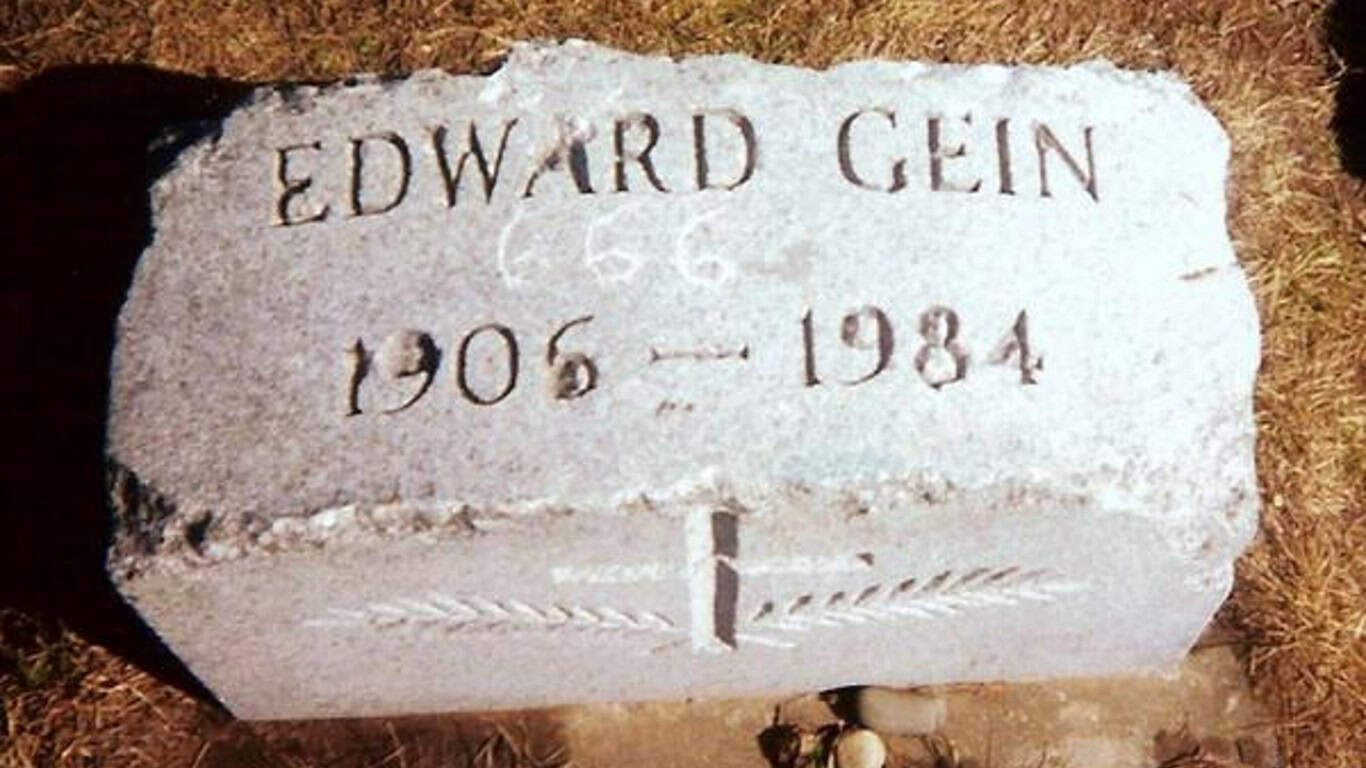
Police also found the head of Mary Hogan, who had gone missing three years prior. Gein was also found to have been systematically robbing graves. He had been collecting body parts from the cadavers and using them to make furniture, clothing, and masks. Gein was 77 when he died on July 26, 1984, at the Mendota Mental Health Institute due to lung cancer-induced respiratory failure.
Ted Kaczynski
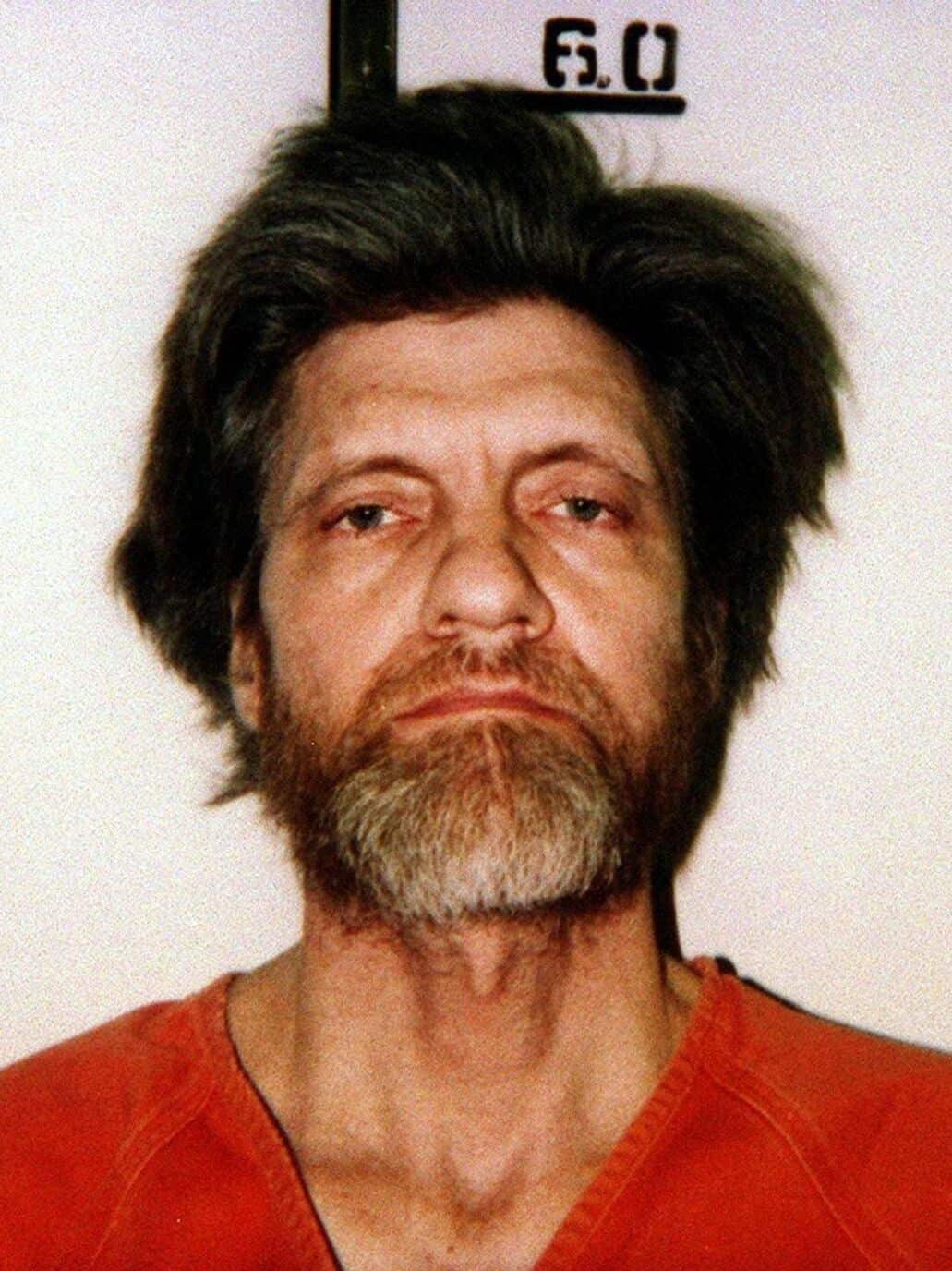
Better known as the Unabomber, Ted Kaczynski carried out a 17-year mail bomb campaign with the intent of bringing about a “revolution against the industrial system.” He is possibly the most famous American domestic terrorist, whose bombs ultimately killed three people and injured 23.
Kaczynski was highly intelligent, with an undergraduate degree from Harvard University, who then completed his graduate studies at the University of Michigan, earning a Ph.D. in Mathematics. He worked at the University of California Berkley as an assistant professor before beginning his reign of domestic terrorism.
Ted Kaczynski

During his time at Berkley, Kaczynski developed a marked disdain for technology and modern life. Following his departure from Berkley in 1969, he moved from city to city until he and his brother David bought a large property near Lincoln, Montana, where Kaczynski would spend most of his time for the next 24 years. It was here that he built and lived in a 10-foot×12-foot cabin with no electricity, heat, or running water.
Kaczynski occupied his time by reading books from the local public library and writing early versions of the manuscript that would one day be famously known as the Unabomber Manifesto. In 1978, he moved to the Chicago area to work at his brother’s factory. During this time, he began to deliver crude mail bombs to people he believed responsible for the destruction of nature.
Of the 16 bombs he ultimately delivered, 14 detonated, and 2 were defused. He was eventually caught after his manifesto was published in the New York Times. His brother recognized his writing and reported him. He was 81 when, due to late-stage rectal cancer, he took his life in prison on June 10, 2023.
Edmund Kemper
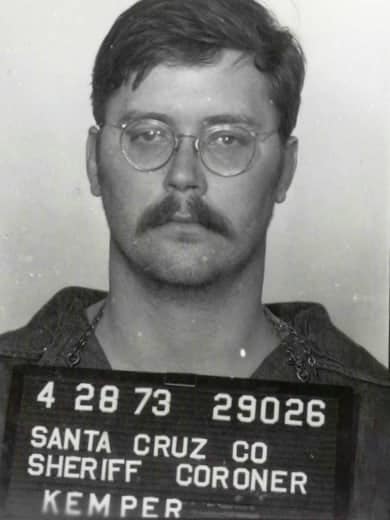
Although not as well-known as others listed here, Edmund Kemper is among the more disturbing serial killers. As a child, he primarily lived with his mother and two sisters. His mother was an alcoholic and he blamed much of his troubles on her critical and abusive behavior towards him.
Kemper had a dark fantasy world from a young age, cutting the heads off of his sisters’ dolls and coercing his sisters into playing a game he called “gas chamber” where they would blindfold him and lead him to a chair where he would pretend to writhe in agony until he “died.” He killed two cats, the first when he was 10, which he buried alive. The other he killed when he was 13, using a knife.
Edmund Kemper
As a teenager, his mother sent him to live with his grandparents, which is when he took an interest in firearms. Because he killed several animals, his grandparents took away his rifle, which is when Kemper then turned on them. He shot his grandmother in the kitchen after arguing with her. When his grandfather returned home, he went outside and shot him, too.
He turned himself in, claiming he killed his grandmother “to see what it felt like.” He claimed he killed his grandfather so that “he wouldn’t have to know his wife had been killed.” After being released from a psychiatric facility, he went to live with his mother against his doctor’s advice. Hit by a car and left unable to work, Kemper began acting on his desire to kill.
At first, he picked up female hitchhikers and let them go, but he eventually stopped releasing the women he picked up, killing them and dismembering the corpses. He turned himself in after killing his mother and her friend.
The image featured at the top of this post is ©Public Domain / Wikimedia Commons.