Billion Photos / Shutterstock.com

MRC Laboratory of Molecular Biology / BY-SA 4.0


domnitsky / Shutterstock.com

Public Domain / wikimedia Commons



Without Rosalind Franklin's incredible contributions, we wouldn't know nearly as much about DNA as we do today. Unfortunately, her life was cut short due to cancer, and although she was recognized for some of her achievements in viruses, she wasn't seen as the hero of DNA that she was.
Franklin was a feminist icon. During a time period when education for women wasn't pushed or prioritized, she ran forward, achieving an amazing career in science and research.
If she were still alive today, Franklin would've been 105 years old. To celebrate her birthday, let's learn more about this feminist icon, including her findings and why she's sometimes called the "wronged heroine."
Early Life
Rosalind Elsie Franklin was born on July 25, 1920, in Notting Hill, London, England, to Ellis Arthur Franklin and Muriel Frances Waley. Her family was affluent and had powerful connections. She had four siblings and was the second oldest.
Franklin was brilliant from a young age, and everyone around her knew it. At just six, she enrolled in Norland Place School. Five years later, she entered Lindores School for Young Ladies in Sussex.
Education
Rosalind Franklin had a vibrant education. She first studied chemistry at Newnham College in Cambridge. Because of her incredible work at the college, she was awarded a research fellowship. While in this fellowship, she worked under Ronald George Wreyford Norrish, who later won the Nobel Prize in Chemistry. Although she did okay at the fellowship, she thrived in her next adventure more.
Personal Life
Rosalind Franklin was a vibrant and interesting person, even when not including her education or accomplishments. She loved to travel and participated in trekking, a form of backpacking. One of her most astonishing trips was trekking the French Alps, where she slipped and nearly plummeted. She wasn't just adventurous, but also was friendly and bubbly. One of her old friends, William Ginoza, described her as 'sunny.'
Although born to Jewish parents, Franklin was agnostic, but followed a lot of her Jewish heritage traditions. She went to church and kept up with the language. Franklin was also a very compassionate person. During World War II, she was a London air raid warden.
Coal Findings
While working as an assistant research officer at the British Coal Utilisation Research Association (BCURA), she studied coal, specifically porosity of coal using helium. She published her research and findings, which helped classify and identify the effectiveness of coal as fuel, in her thesis, "The physical chemistry of solid organic colloids with special reference to coal." This well-written thesis landed her a PhD in 1945 from the University of Cambridge.
DNA Work
Five years after receiving her PhD from the University of Cambridge, she was awarded a fellowship at King's College London. This is where her most important work was done. While in this fellowship, she worked in the Medical Research Council's (MRC) Biophysics Unit, directed by John Randall. During her time at King's College London, she found key properties of DNA, which led to the discovery of the structure of DNA. She specifically worked on the X-ray diffraction images of DNA, leading to Photo 51 taken by Raymond Gosling, a postgraduate student.
Death
Franklin passed away young at 37 years old. In mid-1956, she struggled with a swollen stomach and a lot of discomfort. This prompted her to get checked, where doctors found two tumors. Despite this, she kept working, talking to friends, and living her life. She chose not to live with her family, particularly her mother, because she didn't want to feel or hear her grief. While undergoing treatment for her cancer, she and her team managed to publish seven papers in 1956. Even with treatment, the cancer continued to spread and come back. Franklin passed away on April 16, 1958.
The Double Helix Structure Was Found
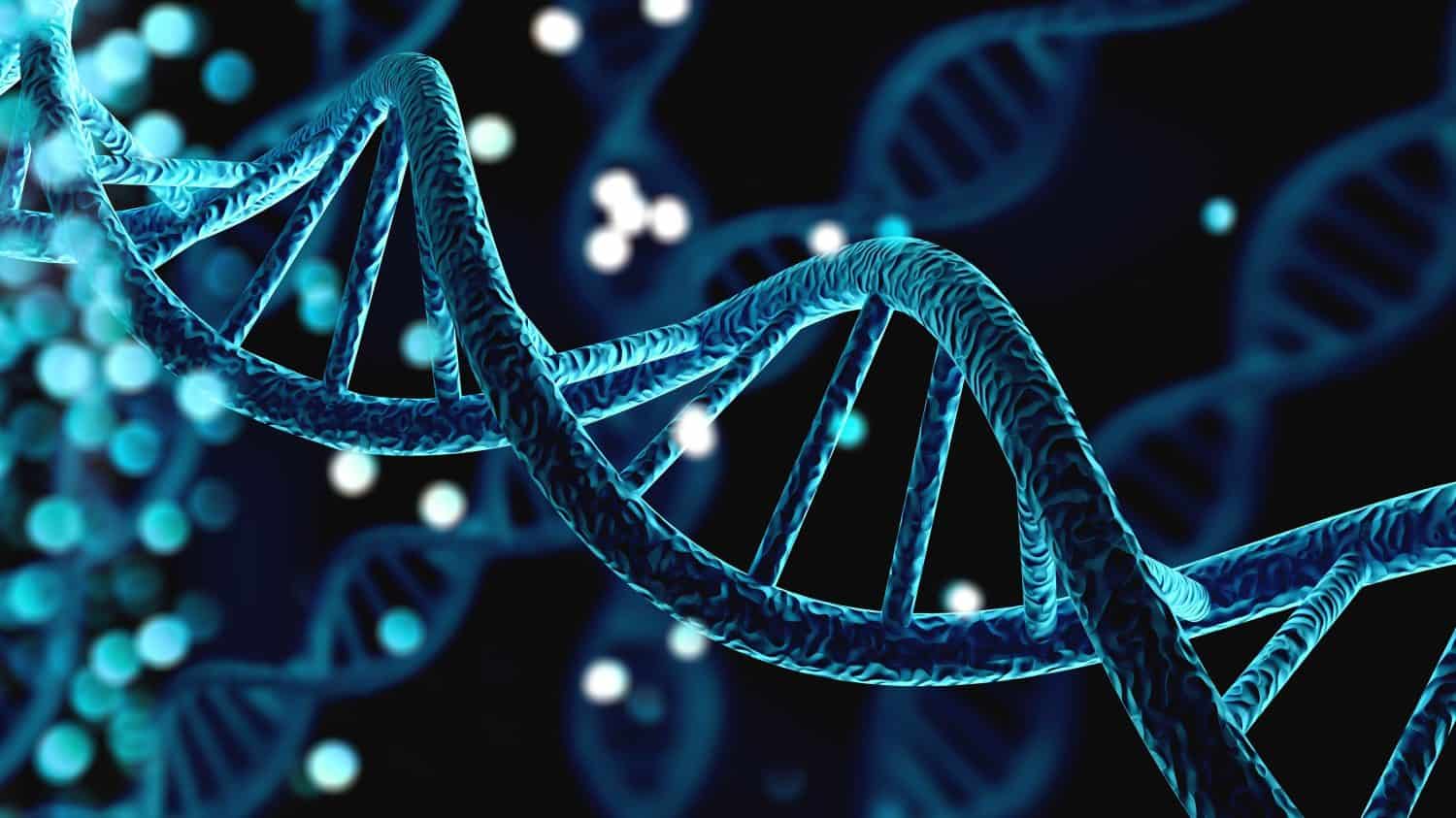
Technically, the people to discover and name DNA's structure as a double helix were James Watson and Francis Crick. In 1953, they published a paper of their findings titled "Nature." The paper did not give credit to Franklin, even though her findings were what helped them deduce the shape. For this discovery, they were awarded the 1962 Nobel Prize in Physiology or Medicine.
Nobel Prize
Although Franklin was not awarded a Nobel Prize, her work was crucial to proving the structure of DNA. Unfortunately, she never saw the day as she passed in 1958. Still, she was given many honors and awards posthumously.
Posthumous Recognition
- Iota Sigma Pi designated Franklin a National Honorary Member (1982)
- Rosalind Franklin Hall at King's College London
- Rosalind Franklin Building at Newnham College, Cambridge
- The Rosalind E. Franklin Award for women in cancer research
- Rosalind Franklin Prize and Tech Day (2016)
- The Rosalind Franklin Institute (2018)