
dima_sidelnikov / Getty Images

Oleg Senkov / Shutterstock.com

Ethan Miller / Getty Images

Alliance Images / Shutterstock.com
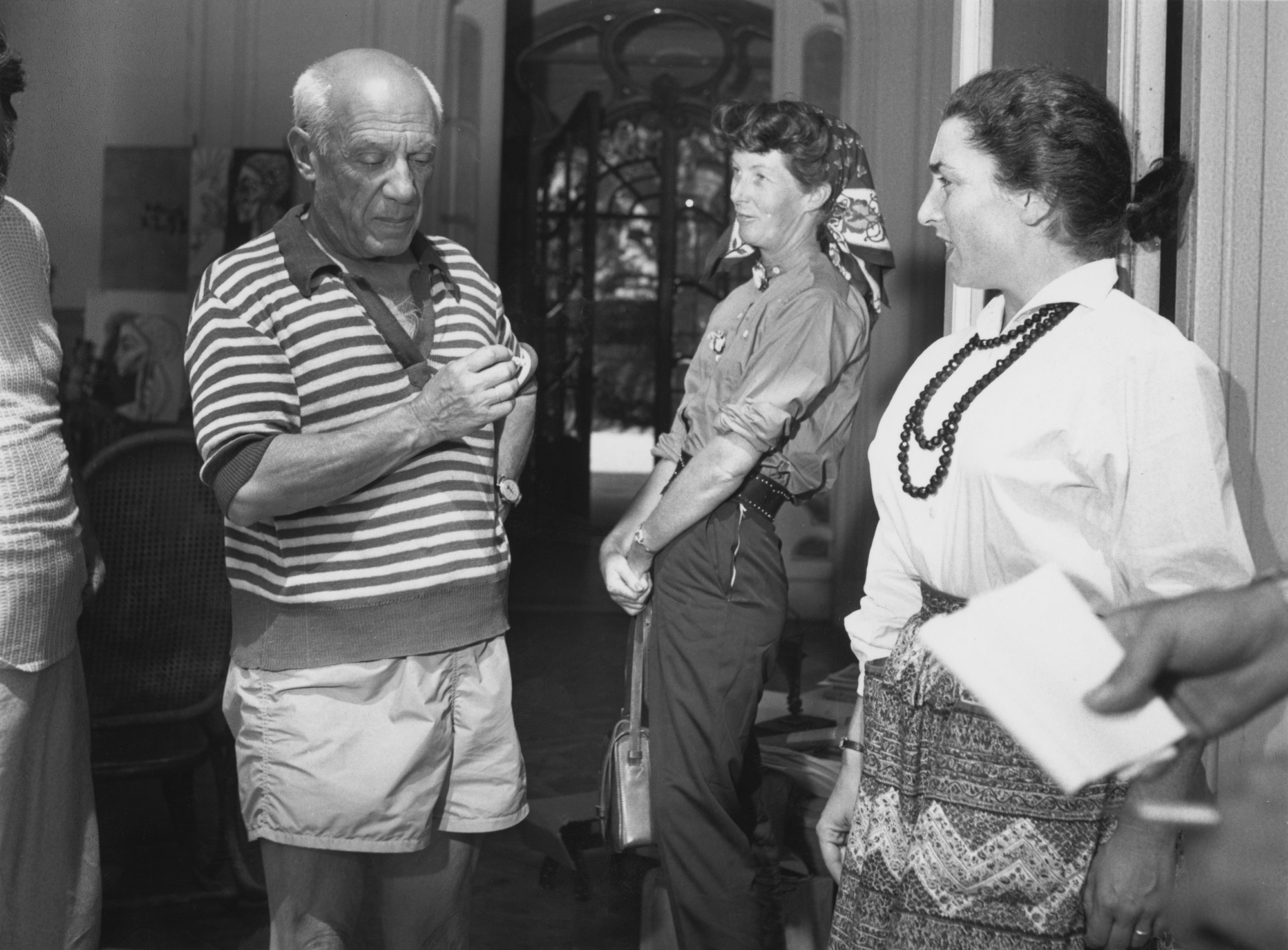
Stroud/Express/Hulton Archive/Getty Images

PuckishPhotos / Shutterstock.com

Prachaya Roekdeethaweesab / Shutterstock.com

mswini / Shutterstock.com

yuzu2020 / Shutterstock.com

Sjoerd Bezemer / Shutterstock.com

Everett Collection / Shutterstock.com


10 Child Prodigies Who Grew Up to Make History
Most people spend years, sometimes decades, working toward something they're truly great at. But every once in a while, someone comes along who seems to have a head start on the rest of the world. We're talking about children who compose music before they can properly read, solve mathematical problems that stump adults, or demonstrate artistic abilities that would take most people a lifetime to develop.
Of course, being a child prodigy doesn't guarantee a successful adulthood. Some struggle with expectations, while others eventually leave their childhood interests behind. But the 10 remarkable individuals on this list did something especially impressive. They carried their extraordinary talents into adulthood and left lasting marks on music, science, mathematics, art, literature, and philosophy. From household names to brilliant minds you might not recognize, their accomplishments are even more fascinating when you consider how young they were when it all began.
Wolfgang Amadeus Mozart
Most five-year-olds are just beginning to learn about music. Wolfgang Amadeus Mozart was already composing it. Born in Salzburg in 1756, Mozart showed extraordinary musical ability almost from the moment he began receiving instruction from his father, Leopold, a respected musician and teacher. By age five, he was composing short pieces, and at six, he was traveling through Europe performing for royalty alongside his older sister, Maria Anna. His ability to play complicated compositions and improvise at the keyboard astonished audiences who could hardly believe someone so young could possess such remarkable talent. But Mozart's childhood achievements were only the beginning.
As an adult, Mozart became one of the most influential composers in Western classical music, producing more than 600 compositions across an extraordinary range of genres. His works included operas such as The Marriage of Figaro, Don Giovanni, and The Magic Flute, along with symphonies, concertos, and chamber music that remain staples of concert performances around the world. His career wasn't always financially secure, and he died in 1791 at just 35 years old. Nevertheless, few composers have enjoyed such an enduring legacy. More than two centuries later, Mozart's music remains familiar even to people who have never attended a classical concert.
Stevie Wonder
Long before Stevie Wonder became one of the biggest names in music, he was a Detroit kid with an extraordinary ear for melody and rhythm. Born in 1950, Wonder lost his sight shortly after birth because of retinopathy of prematurity, a condition associated with premature birth. Despite that challenge, he developed an incredible musical ability, learning to play instruments including the piano, drums, and harmonica while still a young child. His talent eventually caught the attention of Ronnie White of the Miracles, who helped arrange an audition with Motown Records. Wonder signed with the label at just 11 years old, performing under the name Little Stevie Wonder.
Two years later, at age 13, his live recording of "Fingertips, Part 2" reached No. 1 on the Billboard Hot 100, making him the youngest solo performer to top the chart at the time. Unlike some childhood stars who struggle to transition into adult careers, Wonder only became more successful. His groundbreaking albums Innervisions, Fulfillingness' First Finale, and Songs in the Key of Life each won the Grammy Award for Album of the Year. Across his career, Wonder has collected 25 Grammy Awards, an Academy Award, and numerous other honors. From "Superstition" to "Isn't She Lovely," his music has influenced generations of performers and helped establish him as one of the defining artists of popular music.
Shakuntala Devi
Imagine being handed two enormous numbers and multiplying them together in your head faster than someone could finish entering them into a calculator. For Indian mathematical prodigy Shakuntala Devi, that kind of challenge was almost routine. Born in Bangalore in 1929, Devi demonstrated an unusual talent for mental arithmetic when she was just a small child. Her father, who worked as a circus performer, reportedly discovered her abilities while teaching her card tricks. Before long, she was performing mathematical demonstrations in front of audiences, astounding spectators with her ability to solve complicated calculations without writing anything down. Her extraordinary skill eventually earned her the nickname "Human Computer."
Her most famous achievement came on June 18, 1980, when she visited Imperial College London. There, she correctly multiplied two randomly selected 13-digit numbers in just 28 seconds, a feat recognized by Guinness World Records. Devi also demonstrated the ability to calculate complicated roots and identify days of the week for dates supplied by audiences. But numbers weren't her only interest. She wrote books about mathematics, puzzles, and astrology, and in 1977 published The World of Homosexuals, an unusually progressive examination of homosexuality in India at the time. She died in 2013 at age 83, leaving behind a remarkable legacy that extended well beyond her mathematical performances.
Pablo Picasso
Today, Pablo Picasso is remembered as one of the most influential artists of the 20th century, but his abilities were apparent long before he became famous. Born in Malaga, Spain, in 1881, Picasso grew up surrounded by art. His father was a painter and art instructor who recognized his son's unusual talent and began teaching him formal drawing techniques at a young age. Picasso was reportedly drawing before he could properly write, and by age seven, he was receiving structured instruction in painting and figure drawing. His progress was so rapid that he soon demonstrated skills far beyond those of most students his age.
When Picasso's family moved to Barcelona in 1895, his father arranged for him to take entrance examinations for advanced classes at the city's School of Fine Arts. Despite being just 13 years old, Picasso completed the examination process in a fraction of the usual time and was admitted. His early paintings demonstrated an extraordinary command of traditional techniques, but his greatest achievements came when he began breaking away from them. As an adult, Picasso helped pioneer Cubism alongside Georges Braque, challenging conventional ideas about perspective and representation. Works such as Les Demoiselles d'Avignon and Guernica transformed modern art. By the time of his death in 1973, he had created an enormous body of work and established a reputation that remains unmatched by most modern artists.
John von Neumann
Some children impress their parents by memorizing multiplication tables. John von Neumann reportedly entertained family guests by performing complex calculations in his head and memorizing information from telephone directories. Born in Budapest, Hungary, in 1903, von Neumann demonstrated extraordinary mathematical and language abilities from an early age. His intellectual gifts were so apparent that his family arranged advanced instruction to supplement his regular education. While still a teenager, he began making serious contributions to mathematics, including work involving set theory. By his early twenties, he had earned a doctorate in mathematics and completed studies in chemical engineering, establishing himself as one of Europe's most promising young scholars.
What makes von Neumann especially remarkable is just how many different fields benefited from his brilliance. His later work helped shape quantum mechanics, economics, computer science, and game theory. He contributed to the Manhattan Project during World War II and played a major role in the development of early electronic computing. The architecture commonly associated with his name became an important foundation for modern computers, while his work with economist Oskar Morgenstern helped establish game theory as a formal discipline. Von Neumann died in 1957 at age 53, but his influence remains embedded in technologies and scientific ideas that continue to shape everyday life. Few child prodigies have gone on to contribute so extensively to so many different fields.
Clara Schumann
Clara Schumann was performing in major European concert halls at an age when most children were still learning basic musical scales. Born Clara Wieck in Leipzig, Germany, in 1819, she was raised by a demanding father who believed she could become one of the world's great pianists. Friedrich Wieck supervised her education and musical training, developing an intensive routine that included piano practice, composition, and performance preparation. By age nine, Clara was appearing publicly, and by 11, she had made her formal solo concert debut at Leipzig's Gewandhaus. Her performances attracted considerable attention, and she soon began touring European cities as a celebrated young virtuoso.
Her success continued into adulthood, including a highly acclaimed series of performances in Vienna in 1837 and 1838. In 1840, just one day before her 21st birthday, she married composer Robert Schumann after a prolonged legal dispute over her father's opposition to the relationship. Despite the demands of raising a family and supporting her husband's career, Clara maintained her own identity as a pianist and composer. Following Robert's death in 1856, she continued performing internationally for decades and became an influential music educator. She also championed the works of Robert Schumann and Johannes Brahms, helping establish their lasting reputations. Today, she is remembered not simply as the wife of a famous composer, but as one of the most accomplished concert pianists of the 19th century.
Srinivasa Ramanujan
While most students need years of instruction to understand advanced mathematics, Srinivasa Ramanujan began exploring complicated mathematical ideas largely on his own. Born in southern India in 1887, Ramanujan displayed an exceptional talent for numbers while still in school. As a teenager, he became fascinated with advanced mathematics, particularly trigonometry and infinite series. By age 16, he had obtained a book containing thousands of mathematical formulas, which became an important foundation for his independent research. His obsession with mathematics came at a cost, however. He devoted so much attention to the subject that he neglected other coursework, eventually losing scholarships and struggling to complete formal college studies.
Despite having limited formal training, Ramanujan continued developing mathematical identities and theorems while working as a clerk in India. In 1913, he sent a letter containing examples of his research to British mathematician G. H. Hardy at the University of Cambridge. Hardy recognized his extraordinary talent and helped arrange for him to travel to England, where the two collaborated. During his short life, Ramanujan recorded nearly 3,900 mathematical results, many of which inspired further research in number theory, infinite series, and mathematical analysis. Some results were already known or later proved incorrect, but many others demonstrated extraordinary originality. Ramanujan became a Fellow of the Royal Society in 1918 and died just two years later at age 32. More than a century after his death, mathematicians continue studying the ideas he left behind.
Arthur Rimbaud
Arthur Rimbaud accomplished something that few writers could ever imagine. He produced some of the most influential poetry of the 19th century before essentially abandoning literature while still a young man. Born in Charleville, France, in 1854, Rimbaud displayed remarkable academic abilities as a child, particularly in language and literature. By his mid-teens, he was writing sophisticated poetry that caught the attention of teachers and established literary figures. At 16, he was already experimenting with poetic forms and themes that challenged traditional French literature. His talents were undeniable, but so was his rebellious personality, which increasingly brought him into conflict with authority and conventional expectations.
In 1871, Rimbaud traveled to Paris and became involved with fellow poet Paul Verlaine. Their turbulent relationship included extensive travel, substance use, and a violent confrontation in 1873 during which Verlaine shot Rimbaud in the wrist. Despite the chaos surrounding his personal life, Rimbaud produced groundbreaking works including A Season in Hell and the poems later collected as Illuminations. Then, before reaching his twenties, he largely stopped writing poetry. He spent much of his remaining life traveling and working abroad, including years in what is now Ethiopia. Rimbaud died in 1891 at age 37, but his brief literary career profoundly influenced Symbolism, Surrealism, and modern poetry. Few writers have accomplished so much in such a short creative period.
Blaise Pascal
Blaise Pascal was making important mathematical discoveries at an age when most teenagers were still working through basic geometry. Born in Clermont-Ferrand, France, in 1623, Pascal was educated primarily by his father, who recognized his son's unusual intellectual abilities. According to longstanding accounts of his childhood, Pascal became fascinated with geometry despite his father's attempts to delay his formal mathematical education. By age 16, he had written an important treatise on conic sections, demonstrating an understanding of mathematics well beyond what would normally be expected of someone so young. But his talents weren't limited to theoretical problems. He was also determined to find practical applications for what he knew.
As a teenager, Pascal began developing a mechanical calculating machine to help his father perform laborious arithmetic associated with tax administration. The invention, commonly known as the Pascaline, could perform addition and subtraction and became an important milestone in the history of mechanical computing. As an adult, Pascal made significant contributions to probability theory, geometry, and the study of atmospheric pressure and fluids. He also became an influential religious philosopher, producing works such as Provincial Letters and the posthumously published Pensées. Pascal died in 1662 at just 39 years old, but his name remains familiar in mathematics, philosophy, and science. The pascal, the SI unit of pressure, is named in his honor.
John Stuart Mill
John Stuart Mill's childhood probably looked very different from anything most parents would consider normal. Born in London in 1806, Mill was raised by his father, James Mill, a philosopher and economist who designed an unusually demanding educational program for his son. At just three years old, John Stuart began learning Ancient Greek. By eight, he had read numerous classical works in their original language and was studying Latin, mathematics, and history. His father believed that rigorous education could produce an exceptional intellectual, and Mill's accomplishments certainly seemed to support that idea. Unfortunately, the pressure associated with such an intense upbringing would eventually take a toll on his emotional well-being.
In his early twenties, Mill experienced a serious period of depression and began questioning the purpose of the education and ambitions that had shaped his life. He later described how literature, particularly the poetry of William Wordsworth, helped him reconnect with his emotions and develop a broader understanding of personal happiness. As an adult, Mill became one of the most important political philosophers of the 19th century. His influential books included On Liberty, Utilitarianism, and The Subjection of Women. He advocated freedom of expression, individual rights, representative government, and greater equality for women at a time when many of these ideas faced significant resistance. Mill died in 1873, leaving behind a legacy that continues to influence modern political philosophy and debates about personal freedom.