Wikipedia / Creative Commons

MarkMImage / Shutterstock.com

Pixel-Shot / Shutterstock.com
2006 Getty Images / Archive Photos via Getty Images
PeopleImages.com - Yuri A / Shutterstock.com

fizkes / Shutterstock.com

New Africa / Shutterstock.com
2003 Getty Images / Hulton Archive via Getty Images

New Africa / Shutterstock.com

Lunnica / Shutterstock.com

2024 Getty Images / Getty Images News via Getty Images


10 Remarkable Child Prodigies Who Died Tragically Young
A child prodigy is generally understood as someone who reaches something close to an adult professional level in a demanding field before adolescence. That kind of precocity usually reflects a mix of unusual ability, focused practice, opportunity, and support. It does not guarantee an easy childhood or a successful adult life.
So what happens when remarkable talent develops in an unhealthy or simply unforgiving environment?
Several of the gifted children on this list grew up under intense pressure from adults who treated their ability as a project to manage. Others had room to follow their interests. In either case, talent offered no protection from poverty, illness, exploitation, violence, or mental distress.
To assemble this list, 24/7 Tempo reviewed institutional archives, court reporting, biographies, and contemporary news accounts. The people below all showed unusual promise early in life, but their stories ended in disappearance, illness, violence, or suicide.
Ervin Nyiregyházi
Born in Budapest in 1903, Ervin Nyiregyházi grew up surrounded by music. His father, Ignác, was a tenor in the chorus of the Royal Hungarian Opera, and his mother was an amateur pianist. His father reported that Ervin could reproduce tunes before age 2 and began composing around the same time. He gave his first public concert at 6 and was studied for years by psychologist Géza Révész. After Ignác died, Ervin's mother took control of his career and pushed him toward the standard piano repertoire, while he preferred operatic and orchestral music.
Nyiregyházi made his Carnegie Hall debut on Oct. 18, 1920, at 17. Critics agreed that his technique and musical memory were formidable, though some objected to his highly personal interpretations. Composer Arnold Schoenberg later described him as exceptionally gifted. In 1925, Nyiregyházi sued his concert manager, R. E. Johnston, arguing that he had been treated as an inferior artist when assigned accompanying work. He lost the case and soon found engagements harder to come by.
His childhood had been comfortable, but much of his adult life was not. He endured long spells of poverty and sometimes slept in subway stations. He married ten times. Accounts of his first marriage say his wife attacked him with a knife before their bitter, public divorce.
Nyiregyházi moved to Los Angeles in 1928 and found studio work playing piano reductions of film scores and serving as a hand double. A small San Francisco recital in 1973 led to a brief rediscovery, grants, recordings, and new performances. He declined an invitation to return to Carnegie Hall in 1978. Nyiregyházi died of colon cancer in Los Angeles in 1987 at age 84.
Barbara Newhall Follett
Barbara Newhall Follett was born in 1914 to literary editor and critic Wilson Follett and children's writer Helen Thomas Follett. Educated at home, she began writing poems and stories as a small child and built an elaborate imaginary country called Farksolia. At 8, she started a novel about a girl named Eepersip as a birthday present for her mother.
The original manuscript was destroyed in a house fire, so Follett rewrote it. With help from her father, who worked for Alfred A. Knopf, The House Without Windows was published in 1927, when she was 12, and drew enthusiastic reviews. Her second book, The Voyage of the Norman D., grew out of a voyage she took aboard a coastal lumber schooner and was published in 1928 to another warm reception.
In 1928, her father left the family for another woman, a severe blow to Barbara and her mother. Money grew tight as the Great Depression took hold. By 16, Follett was working as a secretary in New York. She continued to write, but the other novels and travel accounts she completed did not find publishers.
Follett met Nickerson Rogers in 1931, and the two married in July 1934 after traveling together in the United States and Europe. Their marriage later deteriorated. Her letters show that she was unhappy by 1937 and believed Rogers was unfaithful; by 1939, he had asked for a divorce. They nevertheless remained together in Brookline, Massachusetts.
On Dec. 7, 1939, according to Rogers, the couple argued and Follett left their apartment with about $30 and a notebook. She was never reliably seen again. Rogers reported her missing to Brookline police two weeks later and did not request a wider bulletin until April 1940. No body was conclusively identified, no evidence established what happened to her, and her fate remains unknown.
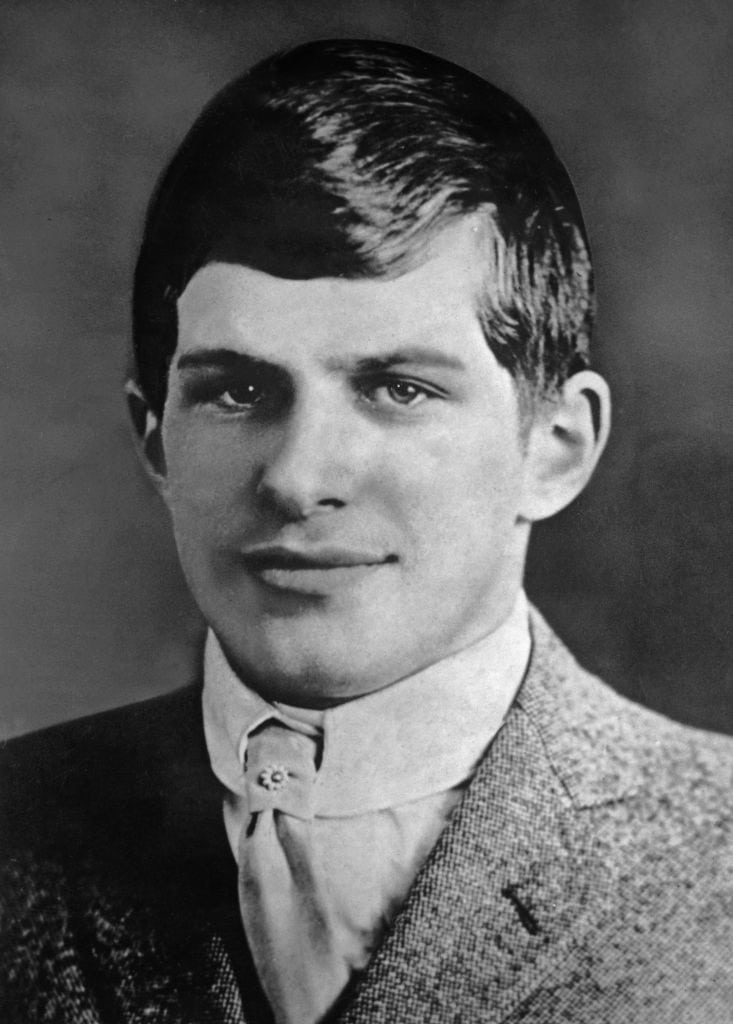
William James Sidis
William James Sidis was raised by parents with unusually ambitious ideas about education. His father, Boris Sidis, was a psychologist, and his mother, Sarah, was a physician. Family accounts and contemporary newspapers credited William with reading before age 2, learning several languages, and inventing one of his own, though the most precise versions of those childhood stories are difficult to verify independently. The public record is extraordinary enough: in 1909, at 11, he became the youngest person then admitted to Harvard College.
During his first year at Harvard, Sidis delivered a two-hour lecture on four-dimensional bodies to the university's mathematics club. He graduated in 1914 at 16. The following year, at 17, he became a mathematics teaching assistant at the William Marsh Rice Institute, now Rice University. He disliked teaching students older than he was and left after about a year.
Sidis entered Harvard Law School in 1916 but withdrew in 1919 without taking a degree. That May, police arrested him during a socialist May Day demonstration in Boston. He was convicted and sentenced to 18 months in prison, but he did not serve that term. Before his appeal was heard, his parents arranged with prosecutors for him to be sent to their sanatorium in New Hampshire, where Sidis later said he was held against his will.
Sidis spent much of his later life trying to stay out of the spotlight. He took clerical jobs, moved to New York, and became estranged from his parents, but he never stopped writing. Under his own name and several pseudonyms, he published works on cosmology, Indigenous history, transportation systems, and other subjects. He died of a cerebral hemorrhage in 1944 at age 46. The tidy story that he simply “burned out” misses the point: he remained intellectually active, just determined to do it on his own terms.
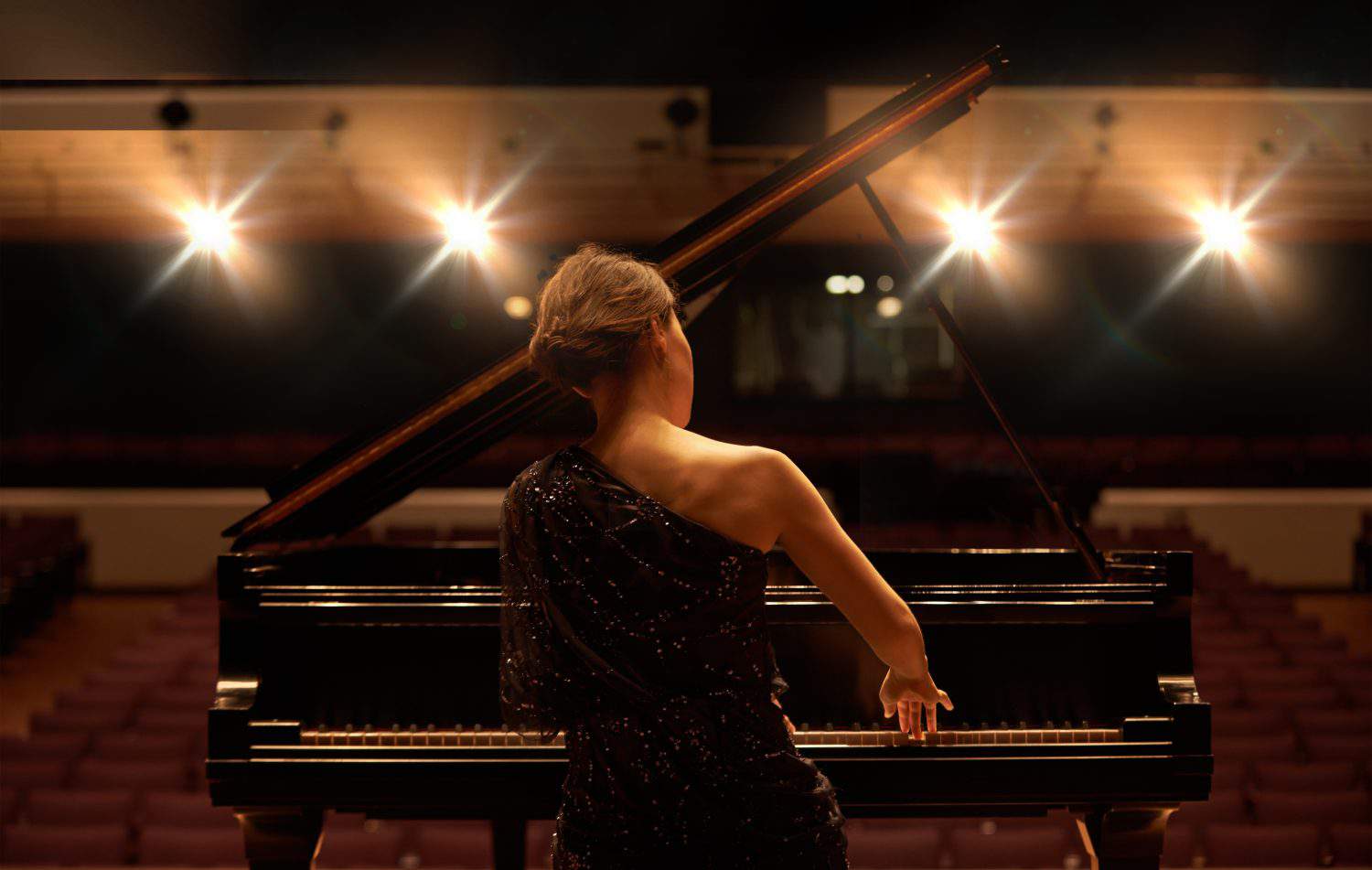
Natalia Strelchenko
Natalia Strelchenko made her first concert appearance at 12 with the State Academic Symphony Orchestra of Leningrad. She studied at the St. Petersburg State Conservatory and the Norwegian Academy of Music in Oslo. From 2006 to 2011, she conducted an artistic research project at the Norwegian academy and completed its fellowship program in artistic research, a predecessor to its current Ph.D. program. She also taught historical piano methods at Leeds College of Music.
Performing under her own name and as Natalia Strelle, she built an international career that included appearances at Wigmore Hall, Carnegie Hall, and major venues across Europe. She recorded the complete piano works of Norwegian composer Agathe Backer-Grøndahl and those of Thomas Tellefsen. Strelchenko also served as artistic director of the Menestrelles International Chamber Music Academy in Paris and taught at the conservatory in Belfort, France.
Strelchenko married double bassist John Martin in 2013, and they lived in Manchester, United Kingdom. Martin, who also acted as her manager, became jealous and controlling as her career flourished. Evidence at his later trial showed a pattern of violence and coercion.
Martin had previously throttled Strelchenko, strangled her in a car, threatened to kill her, and forced her to have an abortion, according to testimony reported from the trial. By August 2015, she was planning to leave him and return to a teaching post in Belfort. On Aug. 30, their second wedding anniversary, Martin attacked her at their Manchester home. She died from multiple head and neck injuries.
A jury at Manchester Crown Court found Martin guilty of murder in March 2016. The judge imposed the mandatory life sentence and ordered him to serve at least 17 years before he could be considered for parole.
Hildegart Rodríguez Carballeira
Hildegart Rodríguez Carballeira's childhood was planned before she was born. Her mother, Aurora Rodríguez Carballeira, was a socialist, feminist, and eugenicist who set out to create what she imagined would be an ideal “woman of the future.” Aurora chose Hildegart's father for that project and then raised her daughter alone under relentless supervision.
Hildegart reportedly learned to read at 2 and to type before 4. By 10, she could speak German, French, and English, and at 11 she was giving public talks on feminism and sexuality. She entered the law school at Madrid's Central University, now the Complutense University of Madrid, at 13 and earned her law degree at 17. She could not legally practice because of her age, so she continued studying philosophy and medicine and taught courses in the university's School of Philosophy.
Hildegart became a prolific writer and activist in Spain's sexual-reform movement. She helped organize the Spanish League for Sexual Reform and served as its secretary. Her international circle included sexologist Havelock Ellis, birth-control advocate Margaret Sanger, and writer H.G. Wells, all while Aurora tried to control her work and personal life.
On June 9, 1933, Aurora shot Hildegart four times as the 18-year-old slept. Contemporary correspondence indicates that Hildegart planned to leave home, but stories about a lover or a particular escape plan remain unproven. A court convicted Aurora of murder in May 1934 and sentenced her to 26 years, eight months, and one day in prison.
Aurora defended the killing in chilling terms. Asked why she had murdered her daughter, she said, “The sculptor, after discovering the slightest imperfection in his work, destroys it.”
Sergey Reznichenko
Sergey Reznichenko was a gifted student from Melitopol, Ukraine. His mother, a trained teacher, taught him to speak and read at nearly the same time, according to contemporary reporting. He skipped two grades and became known nationally at 13 after reaching the final round of the Russian-Ukrainian television quiz show The Smartest.
Reznichenko excelled in mathematics and physics, competed in academic Olympiads, and studied biology through a youth science academy. He finished school at 15 and entered the economics faculty at Zaporizhzhia National University, making him several years younger than most of his classmates.
Reports published after his death described a childhood built around accelerated study and high expectations. At university, Reznichenko initially made friends and continued appearing on The Smartest, but classmates and administrators said he later became withdrawn and fell behind in his coursework. He was 18 and in his fourth year when he died.
During the winter break, most students left the dormitory. In the early hours of Feb. 1, 2011, Reznichenko jumped from an eighth-floor window. Police said he had previously spoken about suicide and reincarnation, but no single motive was established. A message found in his room read simply, “I am God.”
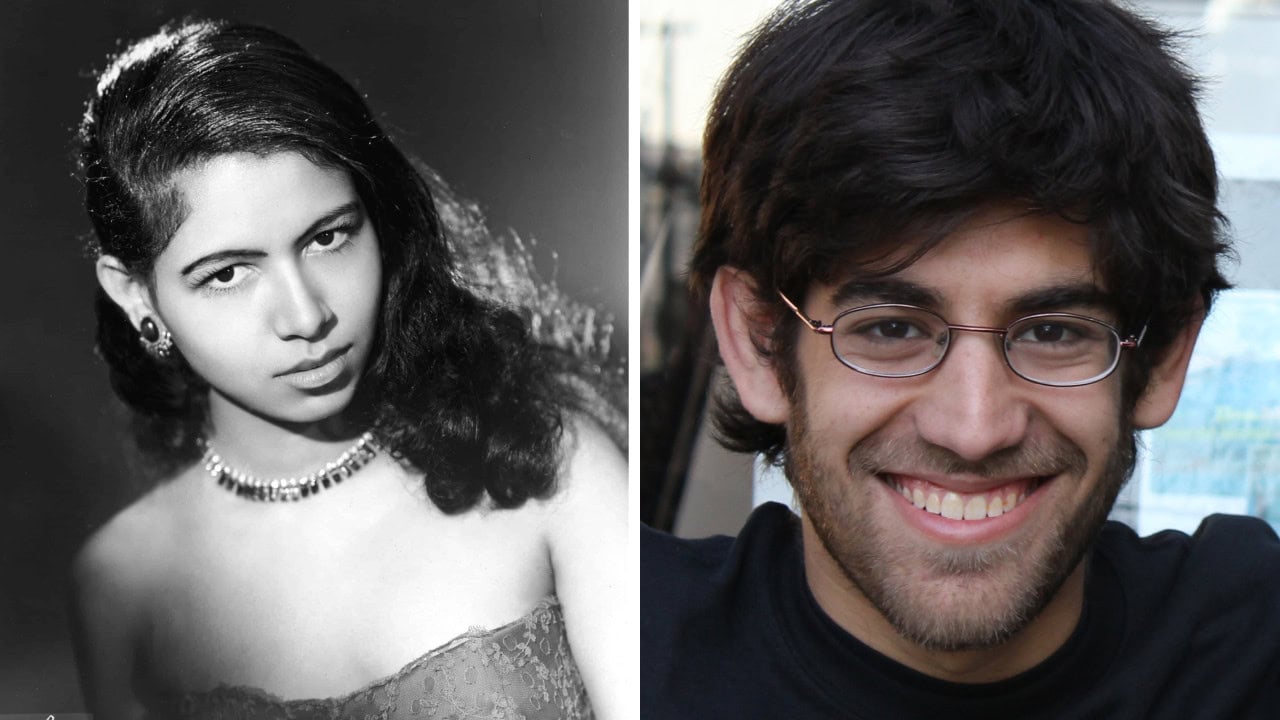
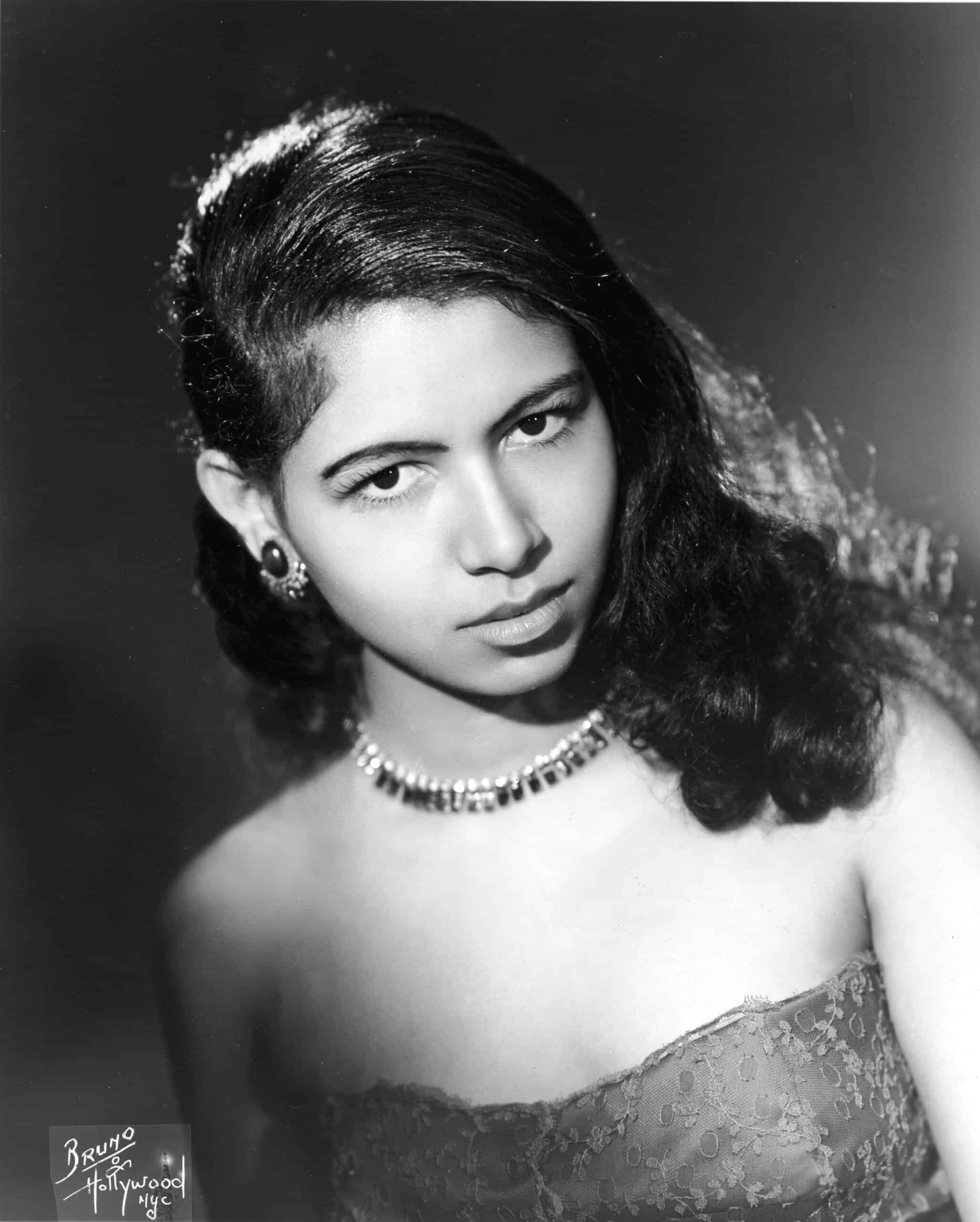
Philippa Schuyler
Philippa Schuyler was born in Harlem in 1931 to George Schuyler, a prominent Black journalist, and Josephine Cogdell Schuyler, a white Texan from a wealthy ranching and banking family. Her parents believed that interracial marriage could produce unusually gifted children and treated Philippa's upbringing as proof of the idea. Josephine followed a raw-food regimen before Philippa's birth and imposed a tightly controlled diet on her daughter. Newspapers reported that Philippa knew the alphabet at 19 months and could read and write by 2. By 4, she was composing music and performing in public.
At 8, Schuyler performed at the New York World's Fair. Over the next several years, she won eight consecutive prizes connected with the New York Philharmonic's Young People's Concerts before organizers stopped letting her compete. As a teenager, she appeared with major orchestras and performed for large audiences around the United States.
Her private life was far less polished. As a teenager, Schuyler read scrapbooks in which her parents described her as a racial and educational experiment. She had been kept isolated from other children and was regularly whipped by her mother. As an adult, she also ran into the racism and sexism of the American concert business, and she built much of her career by touring Europe, Latin America, Africa, and Asia.
Schuyler eventually devoted more of her time to writing and foreign reporting. She published several nonfiction books and worked as a correspondent for multiple outlets, including assignments under United Press accreditation. She never married and struggled openly in her private writings with race, identity, and the expectations her parents had placed on her. In 1966, she traveled to South Vietnam to perform for troops and returned in 1967 as a war correspondent.
On May 9, 1967, Schuyler boarded a U.S. Army helicopter carrying Catholic schoolchildren from Huế to safety near Da Nang. The aircraft crashed into Da Nang Bay. Schuyler survived the initial impact but could not swim and drowned at 35.
Brandenn Bremmer
Brandenn Bremmer taught himself to read at about 18 months and began playing the piano at 3, according to his family. Homeschooled in rural Nebraska, he completed high school at 10 through the University of Nebraska-Lincoln's independent-study program. At 11, he began taking piano lessons and independent-study classes at Colorado State University.
Bremmer studied music and composition and released an album of his own piano pieces, Elements. In early 2005, he enrolled in a biology class at Mid-Plains Community College and told his family he hoped to become an anesthesiologist. He was also preparing the artwork for a second album.
In March 2005, Bremmer died at 14 from what authorities described as an apparently self-inflicted gunshot wound. He left no note, and the investigation found no explanation for his death. His mother said he had shown no signs of depression and that the family had not pushed him into his studies. He still made time for cartoons, video games, swimming, and friends—an unusual student living an otherwise recognizable teenage life. His death remained unexplained.
Edmund Thomas Clint
Edmund Thomas Clint was born in Kochi, India, on May 19, 1976. His parents, M. T. Joseph and Chinnamma Joseph, named their only son after actor and director Clint Eastwood. They noticed his fascination with drawing while he was still a baby. A family friend and artist named Mohan encouraged him and gave him an early painting kit.
Clint drew constantly, first with chalk and crayons and later with pencils, pens, charcoal, and watercolors. His subjects ranged from animals and landscapes to the temple festivals and traditional art forms of Kerala. His technical control and powers of observation quickly moved beyond the usual childhood scribbles.
Clint lived with a serious kidney disorder from about age 2, but he kept working through long periods of illness. At 5, he won a major painting competition that drew thousands of entrants, many of them much older. His work soon attracted attention across Kerala.
In a life of just 2,522 days, Clint produced more than 25,000 drawings and paintings. He died of kidney failure on April 15, 1983, a little more than a month before his seventh birthday. Books, documentaries, and feature films have since told his story, and Kerala's tourism department created an international children's painting competition in his memory.
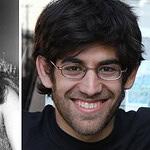
Aaron Swartz
Aaron Swartz grew up in a computer-literate household and began building things for the web while most kids his age were still figuring out homework. At 13, he won an ArsDigita Prize for The Info Network, a collaborative online encyclopedia. At 14, he co-authored the RSS 1.0 specification, an important standard for web feeds.
Swartz enrolled at Stanford University in 2004 but left after his first year to join Y Combinator's inaugural Summer Founders Program. His startup, Infogami, merged with Reddit in late 2005, making Swartz an equal owner of the combined company. He contributed to Reddit's development until early 2007.
After leaving Reddit, Swartz poured more of his energy into open access and political organizing. In 2010, he became a fellow at Harvard University's Edmond J. Safra Center for Ethics, where he studied institutional corruption. That year, he also co-founded Demand Progress, an advocacy group focused on civil liberties, government reform, and an open internet.
Swartz was arrested in January 2011 after connecting a laptop to MIT's network and using it to download millions of academic articles from JSTOR. An initial Massachusetts breaking-and-entering charge was later dismissed, but federal prosecutors pursued the case. A 2012 superseding indictment charged him with two counts of wire fraud and 11 violations of the Computer Fraud and Abuse Act. The scale and severity of the prosecution drew substantial criticism from legal scholars, technologists, and civil-liberties advocates.
Plea negotiations included proposals that would have required Swartz to plead guilty to a felony and could have capped his prison time at three to six months, but no agreement was reached. On Jan. 11, 2013, before the case went to trial, Swartz took his life in his Brooklyn apartment at 26. His death prompted congressional scrutiny of the prosecution and new efforts to reform the Computer Fraud and Abuse Act. It also made him an enduring symbol of the fight for open access to information.