Child prodigies have always fascinated people. There is something almost unreal about watching a child play music, write, paint, calculate, or absorb information at a level most adults never reach. Some go on to build long, successful careers. For others, however, extraordinary ability arrives alongside pressures and circumstances they are nowhere near old enough to control.
The people on this list were celebrated for what they could do at remarkably young ages, but talent did not insulate them from exploitation, family conflict, prejudice, financial trouble, illness, violence, or tragedy. In several cases, the adults around them placed enormous expectations on children who still needed room to be children. In others, the tragedy had little to do with their gifts at all. Their stories are very different, but each is a reminder that exceptional ability and an easy life are two very different things.
To compile this list of child prodigies whose lives took tragic turns, 24/7 Tempo reviewed historical archives, institutional biographies, government records, and contemporary reporting. Earlier research included reporting from HuffPost, NPR, and Russia Today. Biographical claims were cross-checked against university collections, government sources, institutional records, and contemporary news reports wherever possible.
This post was updated Sept. 18, 2026 to reflect additional information and further fact-checking.
Ervin Nyiregyházi

Hungarian pianist Ervin Nyiregyházi was born in Budapest in 1903 into a musical family. His father, Ignácz, sang in the chorus of the Royal Opera, and Ervin’s abilities appeared so early that psychologist Géza Révész spent years studying him as a child. Family accounts collected by Révész described a boy who could reproduce melodies before he was 2 and began creating music while still very young. By 6, he was performing publicly. His father encouraged his musical interests, but after his father’s early death, Nyiregyházi’s relationship with his mother became increasingly strained. She closely managed his career and cultivated his image as a child prodigy long into his teenage years. At 17, he broke away and came to the United States, making his Carnegie Hall debut in 1920.

Nyiregyházi’s playing divided critics, but even musicians who disagreed with his interpretations recognized his remarkable abilities. Composer Arnold Schoenberg heard him in Los Angeles in 1935 and wrote admiringly about the extraordinary expressive power of his playing. By then, however, Nyiregyházi’s concert career had largely unraveled. He had sued his manager in the 1920s over the handling of his career and lost, after which major engagements became increasingly difficult to secure. He moved to Los Angeles in 1928 and worked in film studios, including as a piano hand double. He spent long periods in poverty and obscurity, married repeatedly, and sometimes lacked stable housing. A rediscovery in the 1970s brought new recordings and attention late in life, but never the career once predicted for him. Nyiregyházi died in 1987 at age 84 after suffering from colon cancer.
Barbara Newhall Follett

Barbara Newhall Follett grew up surrounded by books. Her father, Wilson Follett, was an editor and literary critic, while her mother, Helen, oversaw much of Barbara’s education at home. Barbara began creating stories, poems, and an elaborate imaginary world while still a small child. At 8, she began the manuscript that became “The House Without Windows.” An early version was destroyed in a fire, so she wrote the book again. Alfred A. Knopf published it in 1927, when Follett was 12, and reviewers were astonished that such a sophisticated novel had come from a child. Her second book, “The Voyage of the Norman D.,” grew out of a real voyage aboard a coastal schooner and appeared in 1928, when she was 14.

Her early success did not continue on the same trajectory. Follett’s father left the family for another woman around the time her second book appeared, a rupture that deeply affected her. As the Great Depression took hold, she worked secretarial jobs while continuing to write manuscripts that did not find publishers. She married Nickerson Rogers in 1934, but by the late 1930s the marriage was troubled, and Follett believed Rogers had been unfaithful. On Dec. 7, 1939, after the couple argued at their Brookline, Massachusetts, apartment, the 25-year-old Follett walked out with about $30 and disappeared. Rogers waited roughly two weeks before reporting her missing. No confirmed trace of her was ever found. Her body has never been identified, and neither the circumstances nor the date of her death have been established.
William James Sidis
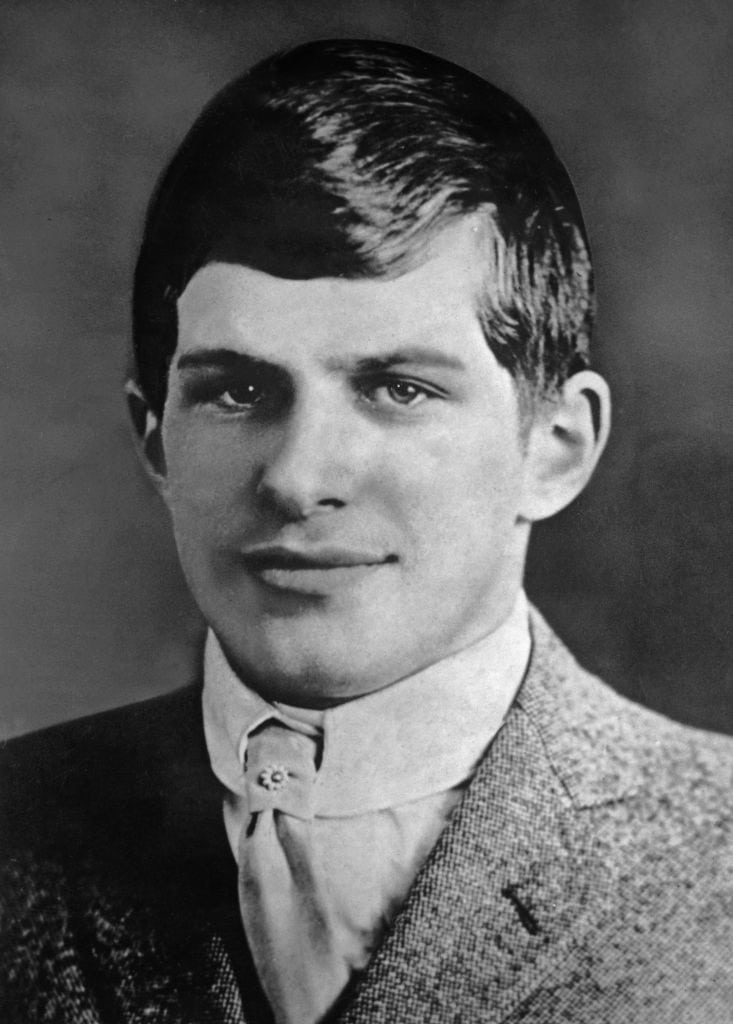
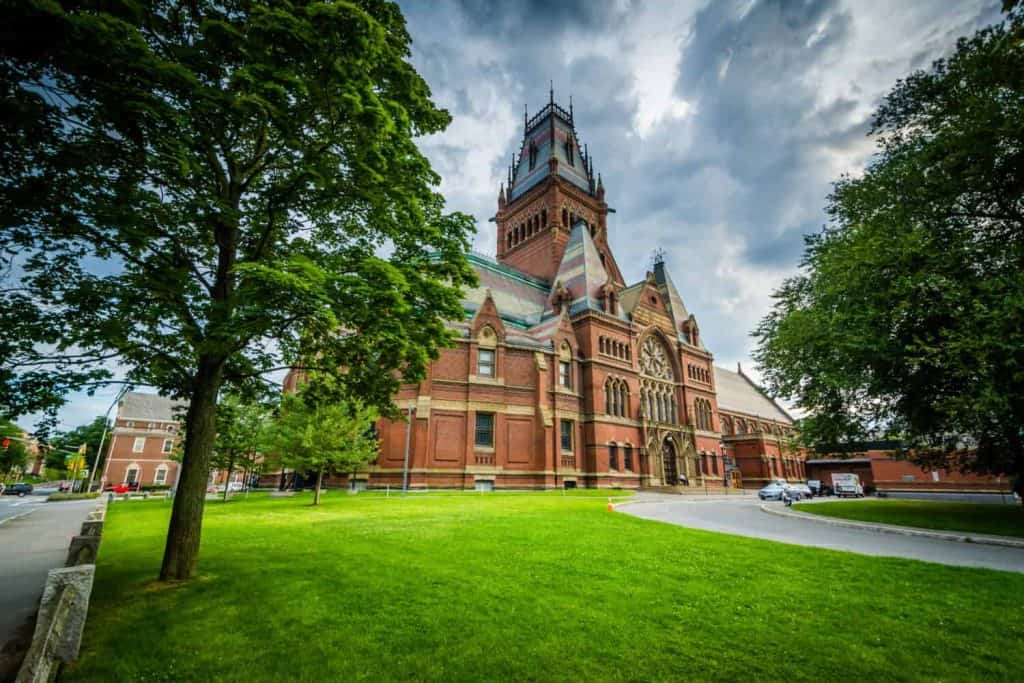
William James Sidis became one of America’s most famous examples of childhood intellectual precocity. Born in 1898 to highly educated immigrant parents, he grew up under an unusually intense educational program. Contemporary accounts credited him with reading The New York Times at 18 months and learning several languages while still a small child. By 11, Sidis had entered Harvard University. His mathematical ability quickly attracted national attention, and while still a student he delivered a lecture on four-dimensional geometry to a Harvard mathematics group. Sidis graduated in 1914 at 16. He then became a mathematics teaching assistant at the William Marsh Rice Institute, now Rice University, but the experience went badly, in part because some of his students were older than he was. He returned to Massachusetts and later attended Harvard Law School without completing the degree.
Sidis increasingly wanted a private life, but the attention that had followed him since childhood never completely disappeared. In 1919, he was arrested after participating in a socialist May Day demonstration in Boston and was convicted and sentenced to 18 months. He did not simply serve that sentence as is sometimes reported. While the case was under appeal, his parents reached an arrangement that placed him at their therapeutic institute in New Hampshire, where Sidis later said he was held against his will. He eventually became estranged from his parents and settled in New York, taking low-profile clerical jobs while privately writing about mathematics, history, cosmology, transportation systems, and other subjects under his own name and pseudonyms. Sidis died from a cerebral hemorrhage in 1944 at age 46. His life became a lasting example of the costs that can accompany relentless publicity and expectations placed on an unusually gifted child.
Natalia Strelchenko

Natalia Strelchenko, also known professionally as Natalia Strelle, was a Russian-born Norwegian concert pianist whose abilities emerged early. She gave her first major concert at 12 with the Leningrad Symphony Orchestra and later studied at the St. Petersburg State Conservatory and the Norwegian Academy of Music in Oslo. Strelchenko built a serious academic career alongside her performing work. She served as a research fellow at the Norwegian Academy of Music from 2007 to 2010, spent time as an artist in residence at Leeds College of Music, and completed a doctorate focused on historical piano technique. Her career eventually took her to major international venues, including London’s Wigmore Hall and Carnegie Hall in New York, and colleagues remembered her as an unusually driven and technically accomplished musician.

Strelchenko’s life ended violently in Manchester, England. She was married to double bassist John Martin, who also worked as her manager. Evidence presented during his later murder trial described an increasingly controlling and abusive relationship, including previous assaults. On Aug. 30, 2015, the couple’s second wedding anniversary, Strelchenko suffered a sustained attack at their home. She was taken to a hospital but died from severe head and neck injuries at age 38. Martin denied murdering her, but a jury convicted him in March 2016. A judge sentenced him to life in prison with a minimum term of 17 years, describing the killing as a brutal and unprovoked attack. Strelchenko’s death cut short a career that had moved from childhood prodigy to international performance, research, recording, and teaching.
Hildegart Rodríguez Carballeira

Few prodigies had an upbringing as deliberately engineered as Hildegart Rodríguez Carballeira. Born in Madrid in 1914, she had been conceived by her mother, Aurora Rodríguez Carballeira, as part of an explicitly eugenic project intended to produce what Aurora imagined as a model “woman of the future.” Hildegart’s intellectual development was extraordinary even without the mythology that later grew around her. Spain’s Ministry of Culture records that she could write by age 3 and speak six languages by 8. She completed her law studies at the University of Madrid while still a teenager and became deeply involved in politics, feminism, birth control, sexual education, and the European sexual-reform movement. She joined the Socialist Party while very young and later moved toward federal republican politics.

By 17, Hildegart had become secretary of the Spanish League for Sexual Reform and was publishing extensively on subjects that were still highly controversial in early-1930s Spain. She corresponded with international figures including Havelock Ellis, Margaret Sanger, and H.G. Wells. At the same time, her growing independence brought her into conflict with the mother who had controlled nearly every part of her life. On June 9, 1933, while Hildegart slept, Aurora shot her four times and killed her. Hildegart was only 18. Aurora admitted the killing and was convicted, receiving a 26-year prison sentence. She remained unrepentant. A dramatic comparison between Aurora and a sculptor destroying an imperfect creation has been repeated in later retellings, although the exact wording is less securely documented than the events surrounding the murder and trial.
Sergey Reznichenko

Sergey Reznichenko became known to television audiences as one of the unusually young competitors on the Russian-language intellectual quiz show “The Smartest.” Accounts of his childhood describe a boy who learned rapidly, skipped grades, had an exceptional memory, and developed interests ranging from literature to mathematics and science. He appeared in several episodes of the television competition and reached a final in 2006. His academic progress was just as accelerated. Reznichenko finished school years ahead of the usual schedule and entered the economics faculty at Zaporizhzhya National University in Ukraine when he was 15. That achievement put him in classrooms and a dormitory with students several years older than he was, creating a very different environment from the tightly structured childhood that had preceded it.

Later reporting described Reznichenko struggling as his university years continued. His academic performance declined, and contemporary reports mentioned financial problems and unresolved coursework. Retrospective accounts have proposed other personal pressures as well, but there is not enough evidence to reduce his death to one simple cause. In the early hours of Feb. 1, 2011, the 18-year-old died after jumping from an eighth-floor window of his university dormitory in Zaporizhzhia. Investigators treated the death as a suicide. A short note found afterward contained the words “I am God.” The more sensational claims later made about Reznichenko’s mental state, religious beliefs, or home life are much less firmly documented than his television appearances, early university admission, academic difficulties, and death.
Philippa Schuyler
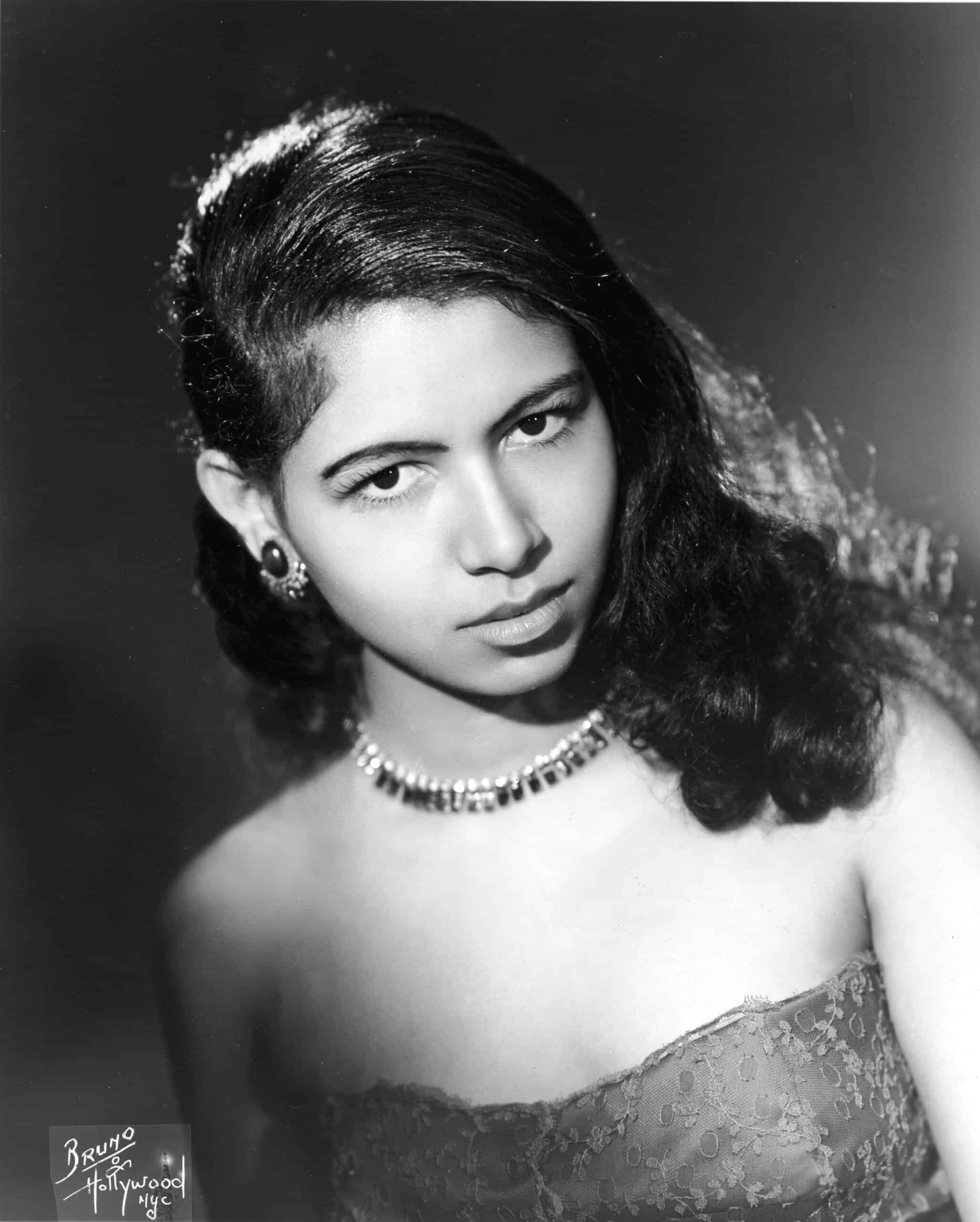
Philippa Duke Schuyler was born in Harlem in 1931 to journalist George Schuyler and Josephine Cogdell Schuyler, a white Texan. Her parents had unconventional ideas about child development and race, and Josephine closely controlled Philippa’s education and diet while arguing that careful training and raw foods could help produce exceptional ability. Whatever the explanation her parents preferred, Philippa’s musical gifts were real. Syracuse University’s archive of her papers notes that newspapers were reporting on her spelling ability when she was 2 and that she was giving public piano recitals and radio performances by 4. She was soon composing as well. By childhood she was winning music competitions, and in 1940 the New York World’s Fair held a “Philippa Schuyler Day” in her honor. As a teenager, she performed with major orchestras and developed an international career.
Adulthood was far more complicated. Schuyler became frustrated by racism in the United States and by the expectations that had surrounded her since childhood, and much of her adult performing career took place overseas. She also moved into writing and journalism, covering political upheaval and conflict while publishing books drawn from her travels. In 1967, she was in South Vietnam working as a correspondent for the Manchester Union Leader and also performing for American troops. On May 9, she boarded a U.S. Army helicopter carrying Vietnamese children from the Hue area toward Da Nang. The helicopter crashed into Da Nang Bay shortly before reaching its destination. Other passengers were rescued, but Schuyler drowned after the crash. She was 35. Her death ended a life that had already moved through several careers before many people reach the midpoint of one.
Brandenn Bremmer
Brandenn Bremmer moved through school at a pace that would be difficult for most adults to imagine. The Nebraska boy taught himself to read at about 18 months and began playing piano at 3. Home-schooled, he began high-school-level work at 6 and finished the University of Nebraska-Lincoln’s independent-study high school program at 10, becoming its youngest graduate at the time. At 11, he began taking independent-study music courses and later private piano instruction through Colorado State University. Music became more than another subject for him. Bremmer composed his own material, performed in competitions and concerts, and in 2004 released an album of original piano pieces called “Elements.” Despite the attention surrounding his intellect, people who knew him also described a teenager who liked ordinary things such as video games, cartoons, fishing, and Harry Potter.

By early 2005, Bremmer had begun taking biology at Mid-Plains Community College and was talking seriously about eventually becoming an anesthesiologist. He was also working on another album. On March 15, 2005, however, his parents returned to their rural Nebraska home and found the 14-year-old dead from a self-inflicted gunshot wound. Authorities investigated the death as an apparent suicide and reported no evidence of foul play. Bremmer left no suicide note, and his family and teachers said they had not noticed clear warning signs beforehand. That makes confident explanations for why he died impossible. A contemporary profile emphasized the same unsettling contrast: Bremmer had extraordinary academic and musical abilities, but in many everyday respects appeared to be an ordinary, engaged teenager whose death stunned the people around him.
Edmund Thomas Clint

Edmund Thomas Clint lived for less than seven years, but his artistic output was staggering. Born in Kochi, Kerala, India, in 1976, Clint began drawing constantly as a small child and worked with whatever materials were available to him. Pencil, crayons, ballpoint pens, charcoal, and watercolors all became part of his routine. Many of his pictures drew on the natural world and on the religious festivals, temple traditions, animals, and everyday scenes he saw around Kerala. His work quickly became more sophisticated than anyone expected from a child his age. Clint was diagnosed with a serious kidney disease at about 3, yet he continued to draw and paint through years of treatment. Rather than producing only the simple figures expected of a preschooler, he developed dense compositions filled with movement, observation, and surprisingly confident use of line and color.
Some retellings inflate Clint’s output to 30,000 works, but Kerala government sources and a published biography put the figure at more than 25,000 paintings and drawings. Even that number is difficult to wrap your head around for a child who lived only 2,522 days. Clint died from kidney failure on April 15, 1983, one month before his seventh birthday. His work survived him and became part of his home state’s cultural memory. Kerala Tourism later created the Clint Memorial International Children’s Painting Competition in his honor, and government educational materials continue to introduce students to his art. Clint never had the opportunity to find out what kind of adult artist he would become. What he left instead was an enormous childhood archive created under circumstances that would have stopped many adults from working at all.
Aaron Swartz

Aaron Swartz was programming before most children had reached middle school. Born in 1986, he began building websites while still young and, at 13, won the ArsDigita Prize for a collaborative, user-generated encyclopedia project called The Info Network. At 14, he participated in the working group that developed the RSS 1.0 web-syndication specification. His interests soon expanded beyond programming into copyright, open access, politics, and the structure of the internet itself. Swartz entered Stanford University as a teenager but left after his first year. In 2005, he joined the first Y Combinator batch with a startup called Infogami. That project later merged with Reddit, bringing Swartz onto Reddit’s small early development team. He subsequently devoted much of his work to open-information projects and activism, including co-founding Demand Progress and becoming a research fellow at Harvard’s Edmond J. Safra Center for Ethics.
Swartz’s final years became dominated by a federal criminal case. In January 2011, MIT police and a U.S. Secret Service agent arrested him after he had connected a laptop to MIT’s network and systematically downloaded millions of journal articles from JSTOR. A 2012 superseding federal indictment charged him with 13 felony counts, including two counts of wire fraud and 11 counts under the Computer Fraud and Abuse Act. His lawyers and federal prosecutors discussed several plea agreements, some of which would have required a felony plea and several months of incarceration. Swartz died by suicide in his Brooklyn apartment on Jan. 11, 2013, at age 26, before the case went to trial. His death prompted intense public debate over computer-crime law and prosecutorial discretion, and members of Congress formally questioned the Justice Department about the charges and plea negotiations. The legal debate continues, but assigning a single cause to Swartz’s death goes beyond what the evidence can establish.
Thomas Chatterton
Thomas Chatterton’s life ended more than two centuries before the term “child prodigy” became common, but few literary figures fit it more clearly. Born in Bristol, England, in 1752 after his father’s death, Chatterton developed an intense interest in old manuscripts, medieval history, and poetry while still a boy. Before he was 12, he was writing poems that he presented as the work of a fictional 15th-century Bristol priest named Thomas Rowley. The language, invented history, and forged medieval presentation were elaborate enough to fool some adult readers. Chatterton was publishing other work while still in his early teens and eventually moved to London at 17, hoping to support himself through political journalism, poetry, and satire. His extraordinary literary output was real even if the supposed medieval origins of his best-known early poems were not.

Chatterton died in a London attic in August 1770 when he was only 17. Arsenic poisoning was identified as the cause, and the official inquest treated his death as suicide. That interpretation helped turn Chatterton into a symbol of the neglected young genius and later fascinated Romantic writers including Wordsworth, Shelley, Keats, and Coleridge. The exact circumstances, however, are not completely settled. Research from the University of Bristol has argued that the arsenic overdose may have been accidental rather than intentional, challenging the traditional story that he killed himself because of poverty and literary rejection. Whatever the explanation, Chatterton had produced a body of work before adulthood that influenced writers for generations, then died before he reached his 18th birthday.
Nika Turbina
Nika Turbina became internationally known for poetry she began producing before she was old enough to write it down herself. Born in Yalta in 1974, Turbina reportedly began dictating poems to her mother around age 4. Her work appeared in a national newspaper when she was 7, and her first collection was published in Moscow when she was 8 with an introduction by the prominent Soviet poet Yevgeny Yevtushenko. Translations soon carried her work outside the Soviet Union. An English-language edition, “First Draft,” collected poems she had written between roughly ages 5 and 8, and contemporary reviewers treated her not simply as a novelty but as a genuinely unusual poetic voice. At a 1985 international poetry festival in Venice, she received a Golden Lion award, adding to the remarkable level of attention surrounding her before she had reached adolescence.

The transition out of childhood fame was much harder. Turbina continued writing and later studied and worked intermittently in acting, radio, television, and film, but the intense international attention of her early years faded. Accounts of her adulthood describe an increasingly unsettled life, and by her 20s she was largely out of the public eye that had once surrounded her. On May 11, 2002, Turbina died at age 27 after falling from a fifth-floor window in Moscow. Reports and later biographies have differed over whether the fall was an accident or an act of suicide, so the circumstances should not be stated more conclusively than the surviving evidence allows. What is certain is that the child once introduced to the world as an eight-year-old poet did not live to see 30, leaving behind work that continues to be published and translated decades later.