Vintage History
Vintage History
Vintage History
Vintage History
Vintage History
Vintage History
Vintage History
Vintage History
Vintage History
Vintage History
Vintage History
Wikimedia / Public Domain
Vintage History
12 Historic Photos and the Stories Behind Them
A great photograph can capture a moment in history, but it doesn't always tell the whole story. Sometimes the most interesting details are the ones you wouldn't notice at first glance. A famous skyscraper lunch was arranged for publicity, a portrait of Soviet leaders was heavily retouched, and an ordinary-looking street scene captured the moments before one of the most recognizable acts of defiance in modern history.
These 12 historical photographs take us from the early 20th century through some of the biggest moments in politics, war, sports, and space exploration. Some document events that changed the world, while others offer a fascinating look at everyday life during extraordinary times. Here's what was happening when the cameras clicked, along with the stories behind the images.
The Skyscraper Lunch That Was a Publicity Stunt
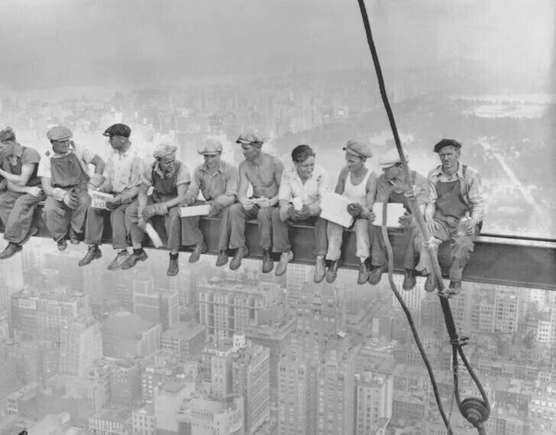
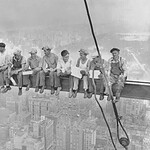
Eleven ironworkers eating lunch on a beam high above Manhattan is one of history's most famous construction photos. Shot during construction of Rockefeller Center in 1932, the scene wasn't a random lunch break; it was part of a planned publicity shoot. The height was real, although researchers believe there may have been a floor or platform below the frame. Even knowing that, the dangling legs are enough to make your stomach drop.
Inside the Situation Room During the Bin Laden Raid
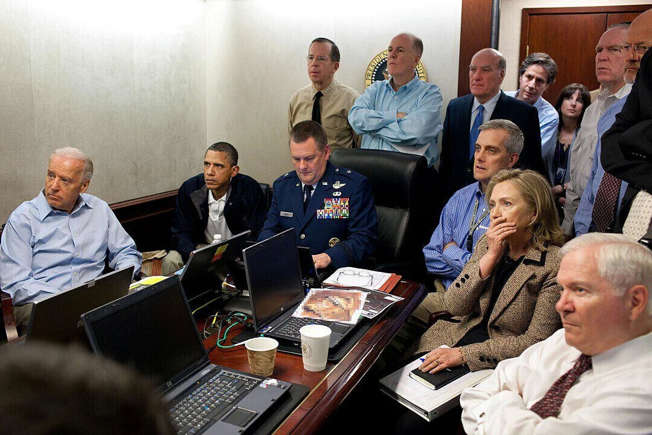
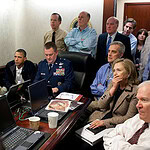
On May 1, 2011, America's national security leadership crowded into a White House conference room as U.S. forces carried out a raid in Abbottabad, Pakistan. White House photographer Pete Souza captured the tension as officials received updates during the mission that killed Osama bin Laden. There's plenty to take in, but one detail is especially easy to miss: a classified document on the table was obscured before the photograph was released. It's a rare public look inside a highly sensitive operation.
When a Tank Became Part of Prohibition Enforcement
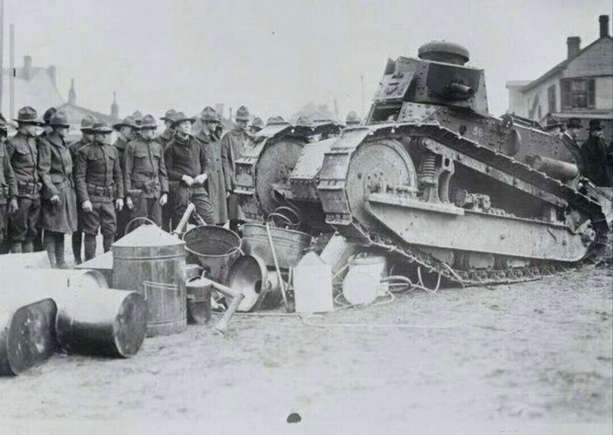
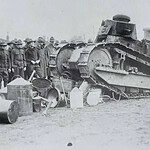
An early tank, a heap of metal containers, and a line of uniformed onlookers make for one strange scene. During Prohibition, authorities sometimes turned the destruction of seized alcohol-making equipment into a public spectacle. Surviving newsreel footage from 1920 even shows an Army tank crushing kegs and vats in the street. The exact provenance of this particular photograph hasn't been confirmed, so it's best not to attach a specific city or date to it without an original archive caption.
The Lesser-Known View of the Tank Man Confrontation
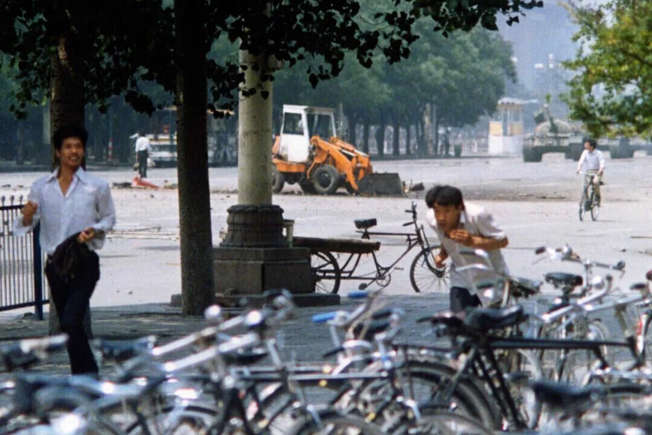
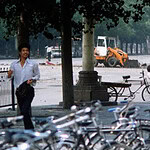
Most people know the famous photograph of a lone protester facing a column of tanks in Beijing on June 5, 1989. This ground-level photograph, taken by Associated Press reporter Terril Jones shortly before that confrontation, shows people scattering and bicycles crowding the foreground. The protester is barely visible in the distance, waiting for the approaching tanks. Jones didn't realize he'd captured part of the historic scene until he examined his pictures weeks later.
The 1988 Dunk That Became Basketball History
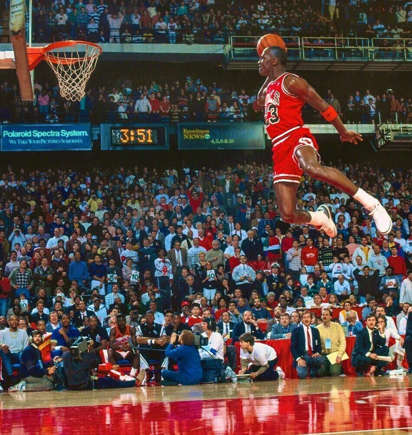
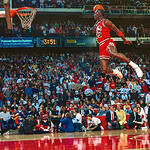
The 1988 NBA Slam Dunk Contest in Chicago gave basketball one of its most memorable images. Michael Jordan faced Dominique Wilkins in a close competition and won with the now-famous free-throw-line dunk in front of his hometown crowd. From this angle, the leap almost looks effortless, although the timing and athleticism were anything but ordinary. Decades later, it's still one of the first images that comes to mind when people think of the slam dunk contest.
The First Spacewalk Without a Safety Tether
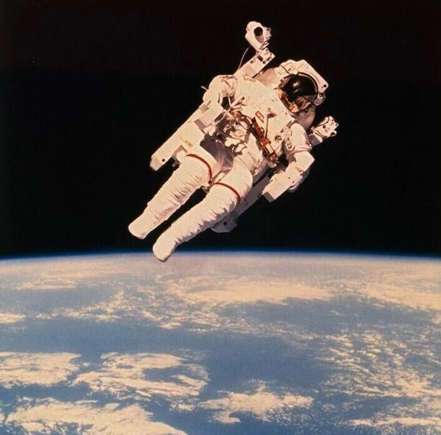
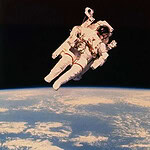
In February 1984, NASA astronaut Bruce McCandless II ventured away from the space shuttle Challenger without a tether connecting him to the spacecraft. Instead, he used a nitrogen-powered backpack called the Manned Maneuvering Unit to move and steer himself. The photograph made a major technical breakthrough look almost unreal: one person floating above the vast curve of Earth. It was the first time an astronaut had maneuvered freely in space without being physically attached to a spacecraft.
The Soviet Portrait That Was Heavily Retouched
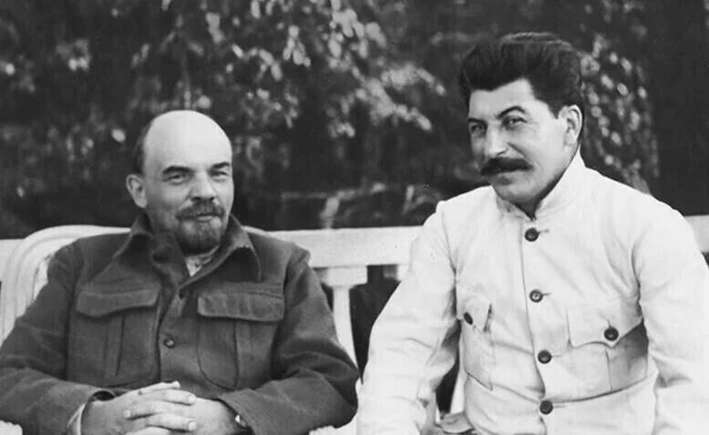
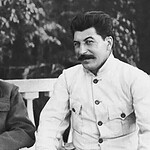
This apparently relaxed portrait of Soviet leaders Vladimir Lenin and Joseph Stalin is associated with a meeting at Gorki in 1922, but the widely reproduced version wasn't left untouched. The Metropolitan Museum of Art notes that retouchers altered Stalin's complexion, arm, and apparent stature, helping him look more commanding beside Lenin. The friendly image also hid a difficult political relationship: Lenin later criticized Stalin's behavior and recommended his removal as party general secretary. Political image manipulation was around long before Photoshop.
What $1.34 Bought in a Wartime Grocery Comparison
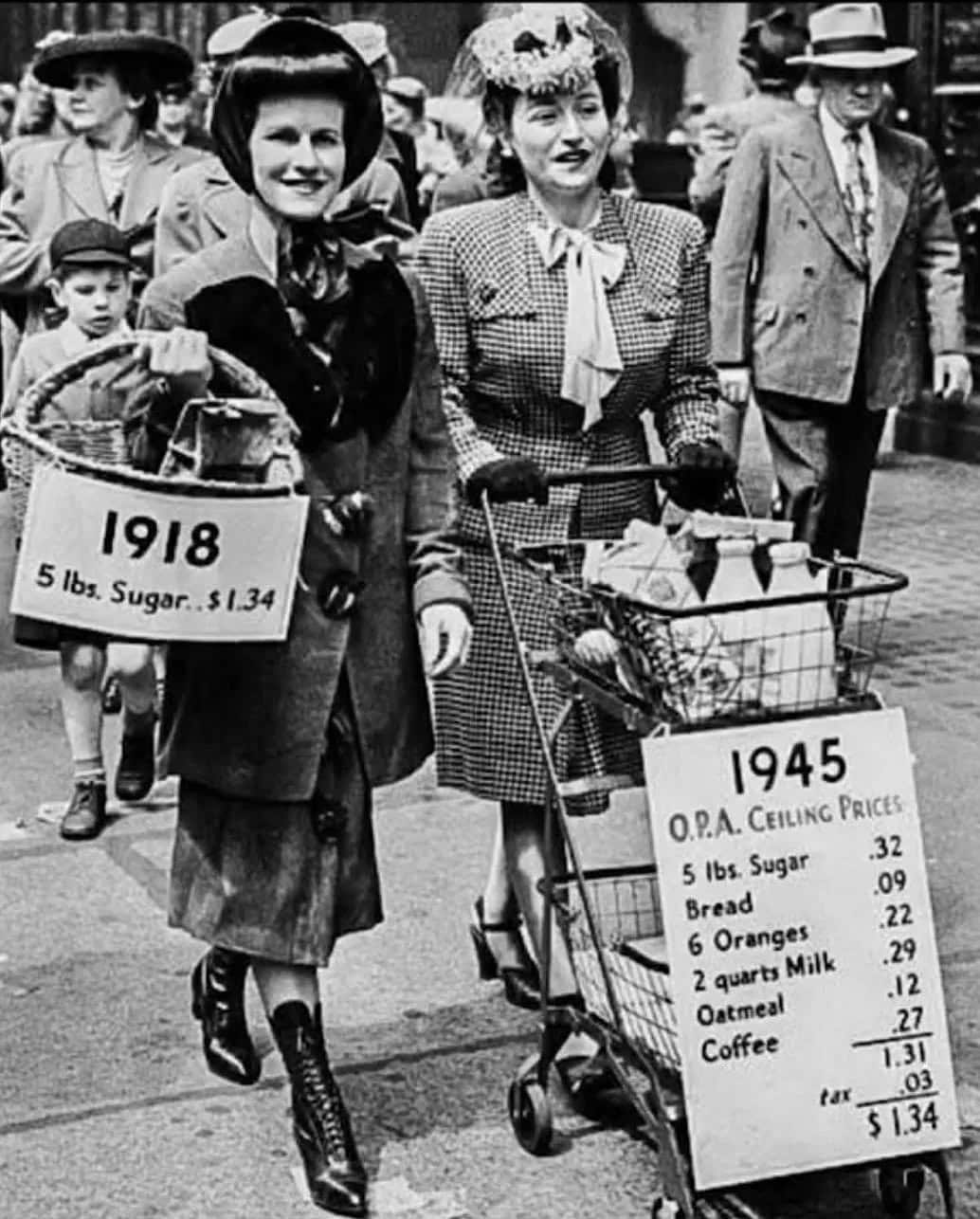
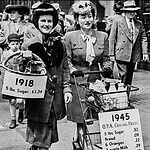
This 1945 photograph uses a side-by-side display to make a point about food prices. The sign on the left claims that five pounds of sugar cost $1.34 in 1918, while the one on the right shows a basket of staples, including sugar, bread, milk, and coffee, totaling the same amount under 1945 price ceilings. The display reflects the era's emphasis on wartime price controls, not a universal price list for every American grocery store. It's a reminder that the argument over what groceries should cost is hardly new.
Chinatown Celebrates the End of World War II
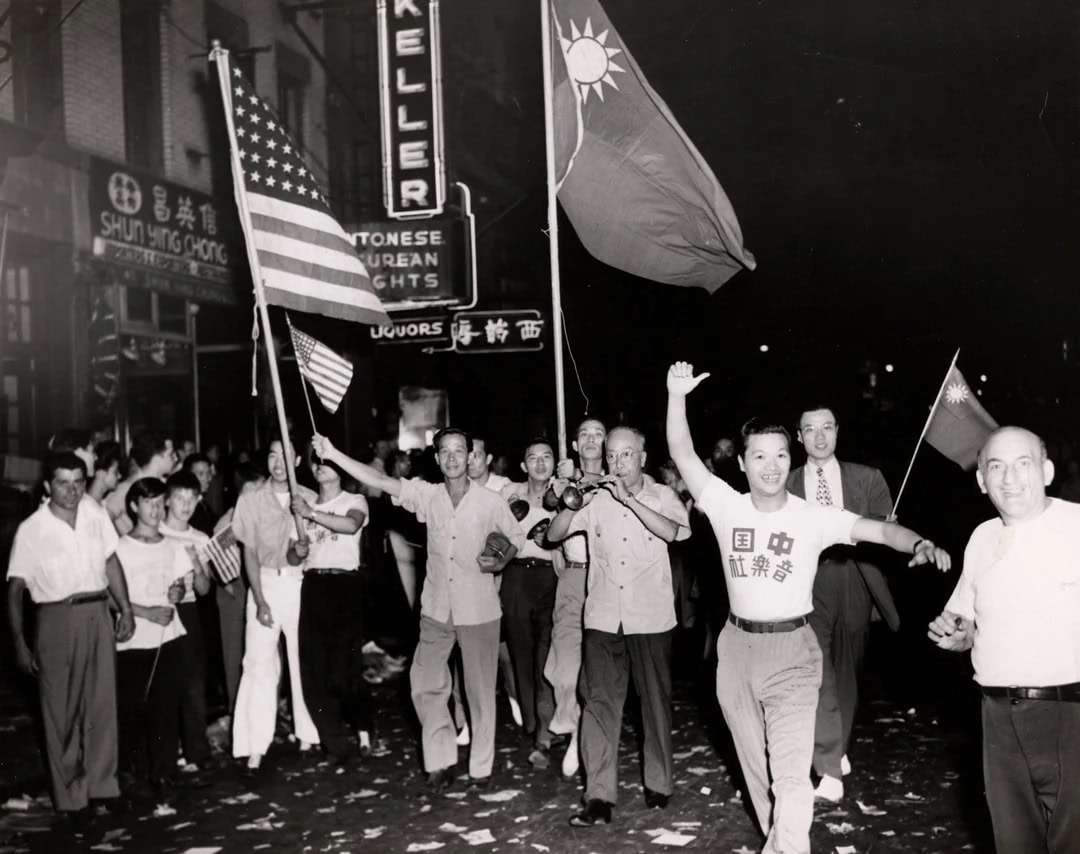
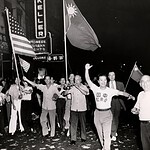
When news of Japan's surrender arrived in August 1945, New York City's Chinatown joined the celebrations. In this photograph credited to street photographer Weegee, people carry American and Republic of China flags through the neighborhood. The victory had particular significance for Chinese American families: China had endured years of war with Japan before the United States entered the conflict. The scene captures the relief of a community celebrating the end of a long and devastating war.
The Headline That Announced Hitler's Death
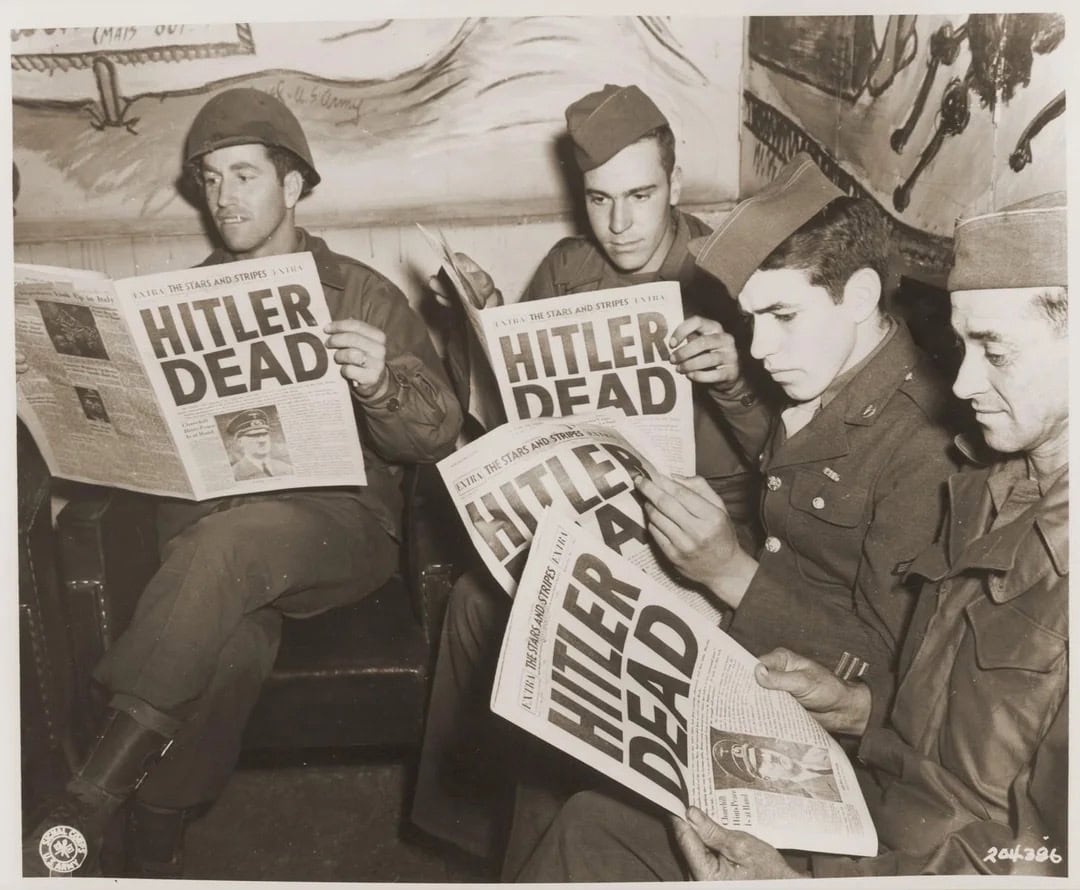
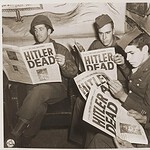
On May 2, 1945, American soldiers in Paris read an extra edition of The Stars and Stripes with two enormous words on the front page: 'HITLER DEAD.' The Nazi dictator had died by suicide in Berlin on April 30 as Germany's military position collapsed. The photograph captures the moment the news reached men serving far from home, with the end of the war in Europe finally in sight. Germany's surrender followed days later, and Victory in Europe Day was celebrated on May 8.
When the V-J Day Celebration Finally Caught Up
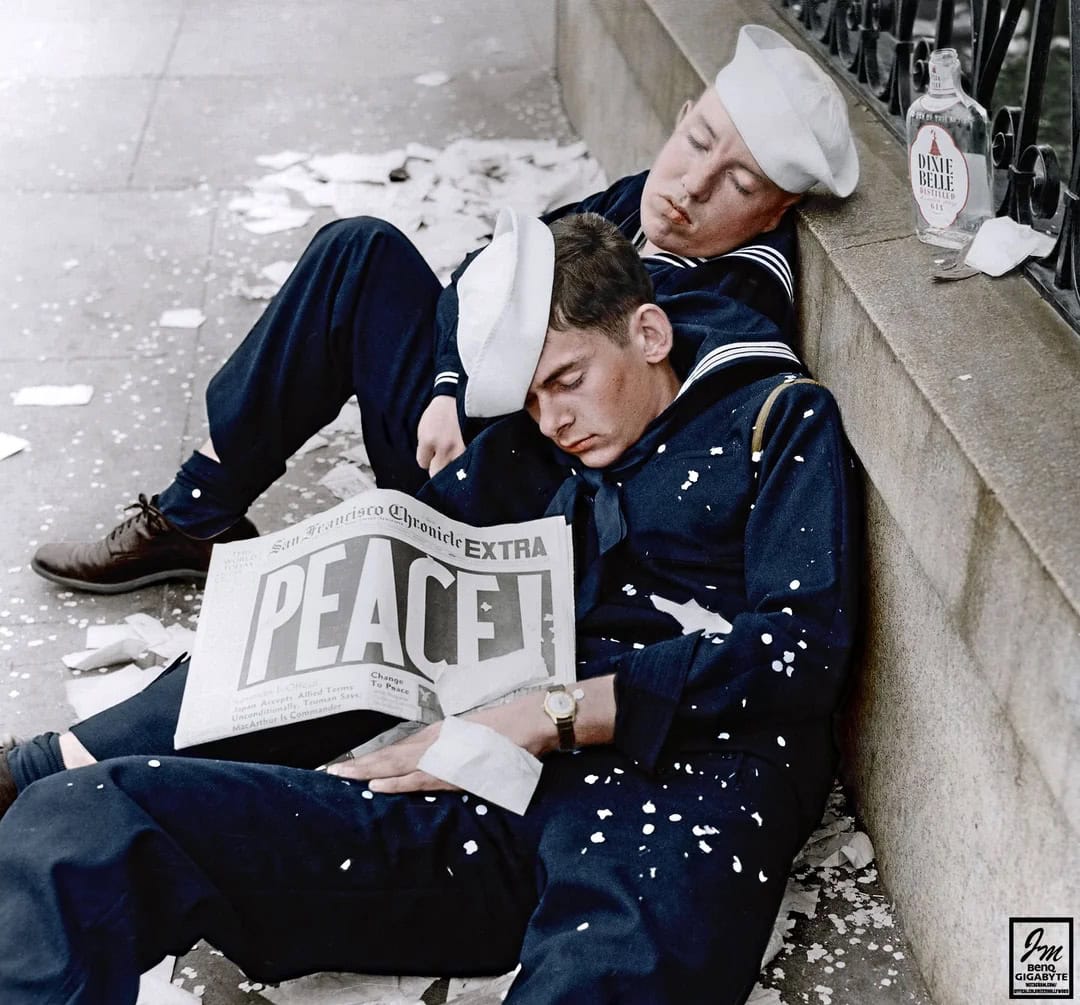
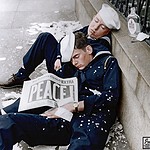
The newspaper announces 'PEACE!' but these two U.S. Navy sailors in San Francisco have clearly reached the end of their celebrating. Photographed during the festivities after Japan's surrender in August 1945, they're asleep on a sidewalk beside a gin bottle, with a copy of the San Francisco Chronicle still in hand. It's an unusually candid look at an extraordinary moment. The larger citywide celebration was not entirely carefree, however; the crowds and disorder also led to serious violence.
Denmark Celebrates the End of Nazi Occupation
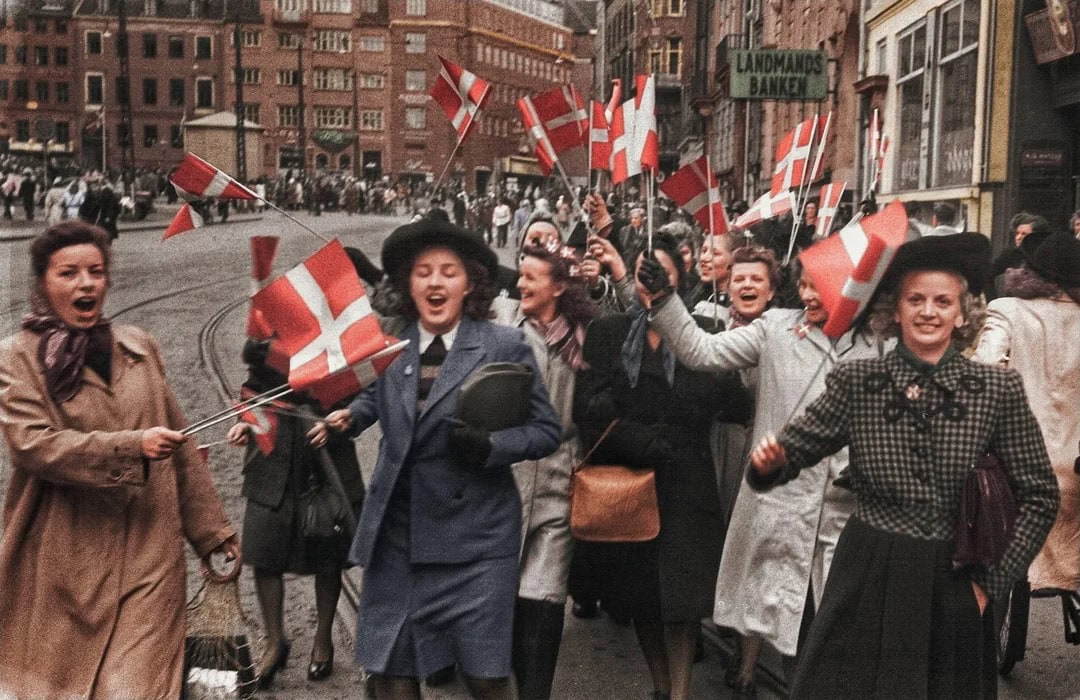
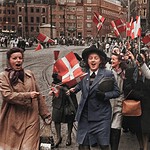
Danish flags fill the streets in scenes associated with the country's liberation in May 1945, after five years of German occupation. News of the German surrender was announced over the BBC on the evening of May 4, sending people out to celebrate, and flags appeared across the country the following day. The joy was real, even if the end of the war was more complicated in places such as the island of Bornholm. It's a striking glimpse of what the return of freedom meant to people who had lived through the occupation.