Daily Express/Archive Photos/Getty Images
Hulton Archive/Getty Images
Eileen Darby/Graphic House/Archive Photos/Getty Images
Hulton Archive/Getty Images
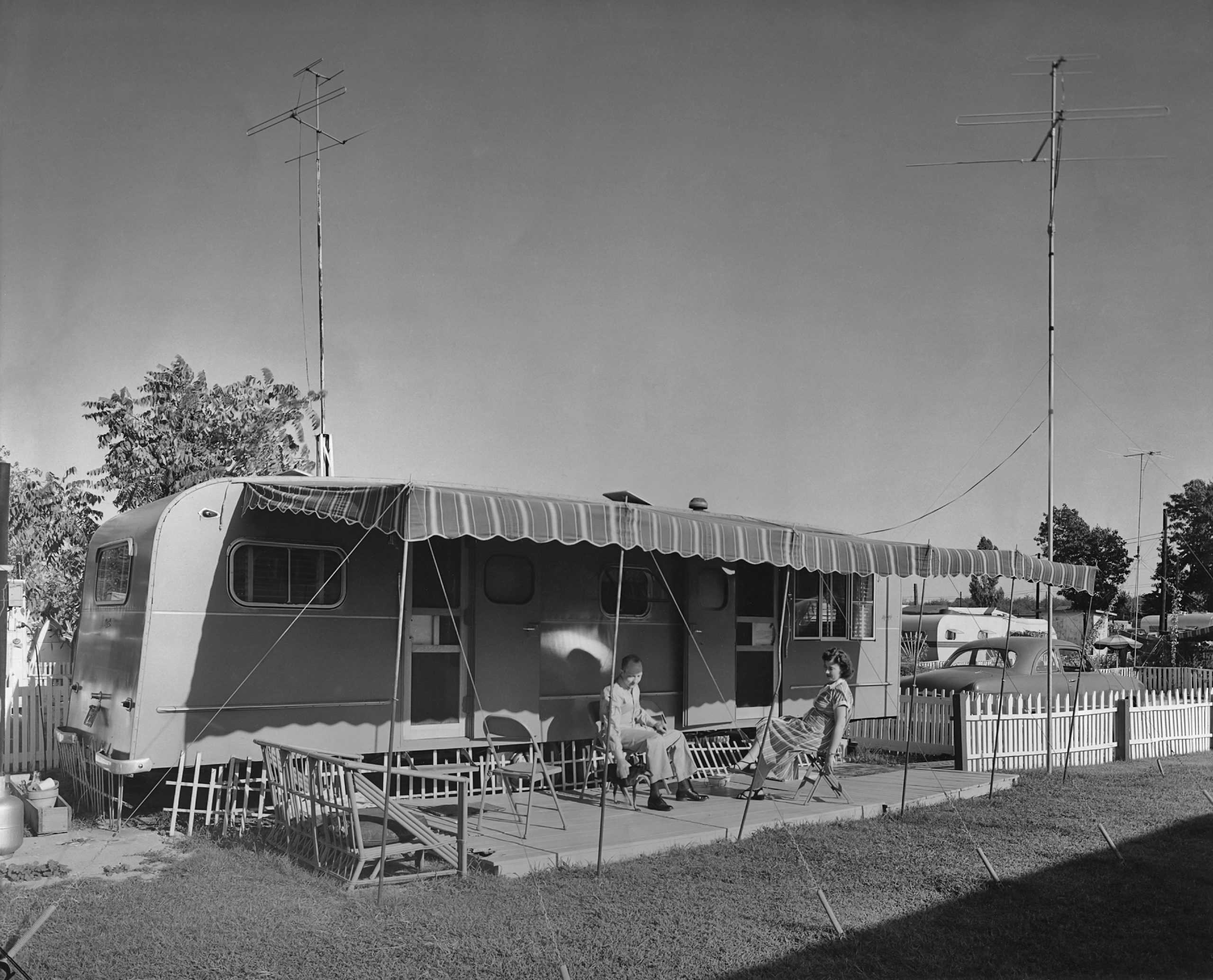
Photo by Archive Photos/Getty Images
MPI/Getty Images
Fred Hamilton/Archive Photos/Getty Images
Archive Photos/Getty Images
Keystone/Getty Images
Harry Benson/Express/Getty Images
Charles Marden Fitch/FPG/Archive Photos/Getty Images
FPG/Hulton Archive/Getty Images
Pictorial Parade/Archive Photos/Getty Images
(Photo by Hulton Archive/Getty Images)
Archive Photos/Getty Images
Kent Gavin/Keystone/Hulton Archive/Getty Images
Fox Photos/Getty Images
Pictorial Parade/Archive Photos/Getty Images
Keystone/Getty Images
Archive Photos/Getty Images
Keystone/Hulton Archive/Getty Images
Daily Express/Archive Photos/Getty Images
William Lovelace/Express/Getty Images
Archive Photos/Getty Images
Orlando/Three Lions/Hulton Archive/Getty Images
Susan Schiff Faludi/Three Lions/Getty Images
FPG/Getty Images
Peter Keegan/Keystone/Getty Images
Archive Photos/Getty Images
Archive Photos/Getty Images




29 Vintage Photos That Make the 1960s Feel Like Another World
The 1960s are easy to reduce to a few familiar images: hippies, miniskirts, muscle cars, Beatlemania, and the space race. Everyday life was much harder to summarize. The decade stretched from quiet family living rooms to massive music festivals, changing workplaces, crowded city streets, and a culture being reshaped at remarkable speed.
No collection of photographs can show what life was like for everyone, but old images can capture details that history books often miss. Clothes, cars, kitchens, offices, vacations, hobbies, and even a simple lunch in the park can reveal just how familiar and strangely distant the era now feels.
These 29 vintage photos offer snapshots of that world. Some show traditions that barely changed. Others capture scenes, technology, and social expectations that now look like they came from another lifetime.
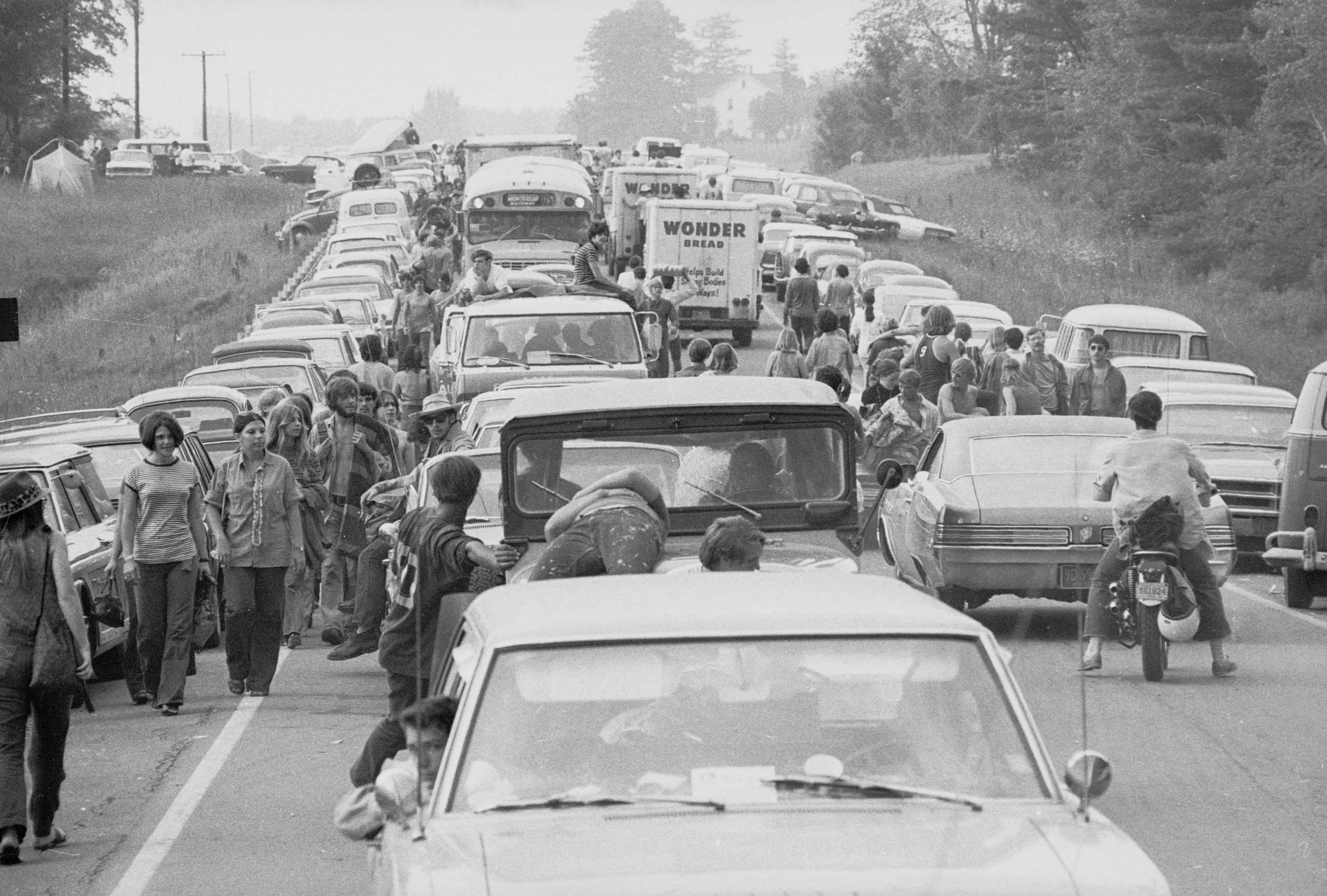
Woodstock Traffic Became Part of the Legend
Woodstock was supposed to be three days of music in August 1969, but getting hundreds of thousands of people into rural Bethel, New York, created a spectacle of its own. Roads became badly congested, forcing many concertgoers to abandon vehicles and continue toward the festival on foot. The traffic was so disruptive that it even affected performers trying to reach the site. Images like this one became almost as closely associated with Woodstock as the stage itself.
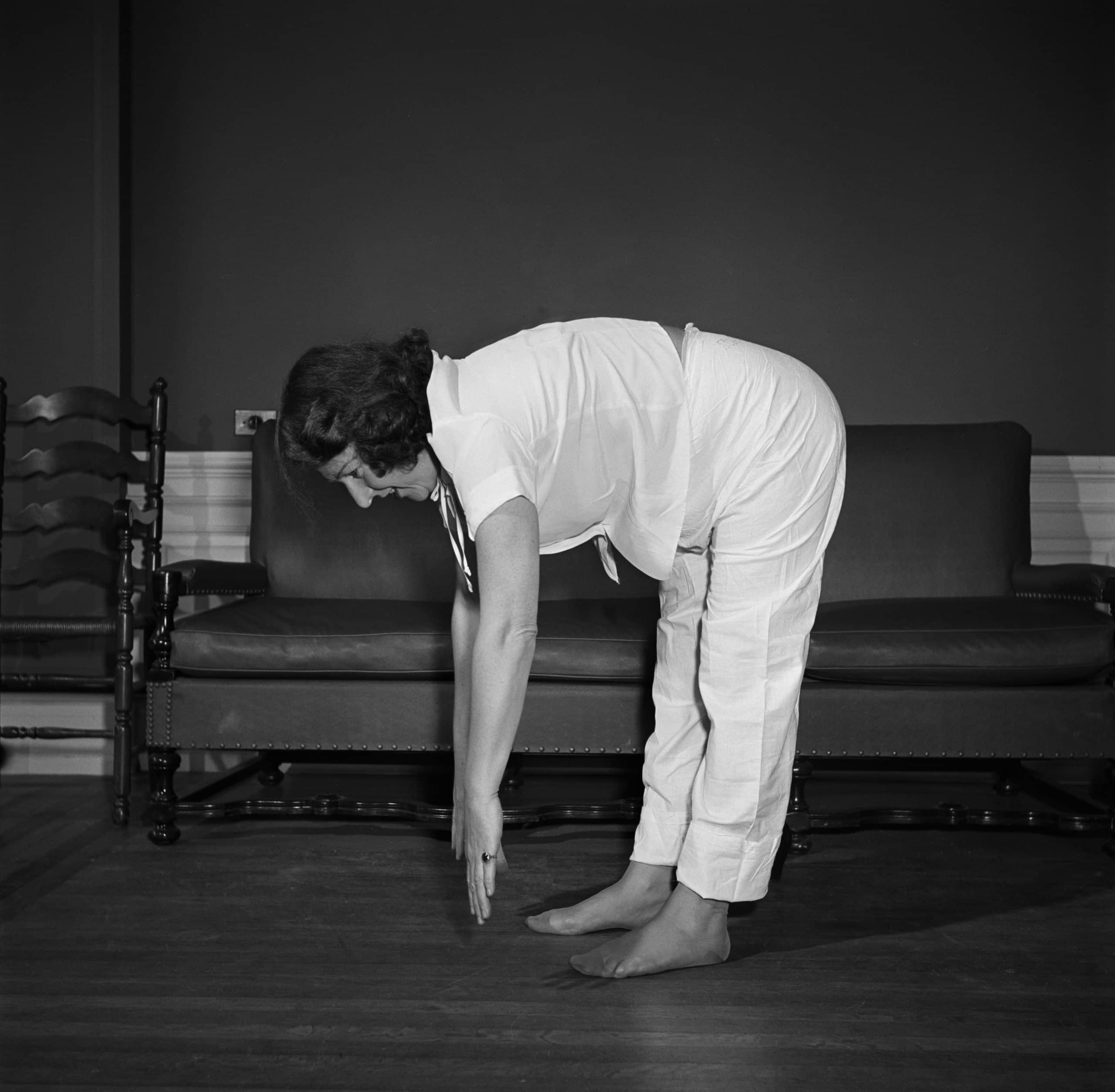
A Living Room Workout in 1965
Fitness does not require much equipment in this circa-1965 photograph. A woman performs a simple stretch barefoot in her living room, wearing clothing that looks considerably more formal than today's leggings and athletic gear. Home exercise certainly existed long before streaming workouts, connected treadmills, and fitness apps. What has changed most may be the enormous industry that has since grown around something that could once be as simple as touching your toes beside the sofa.
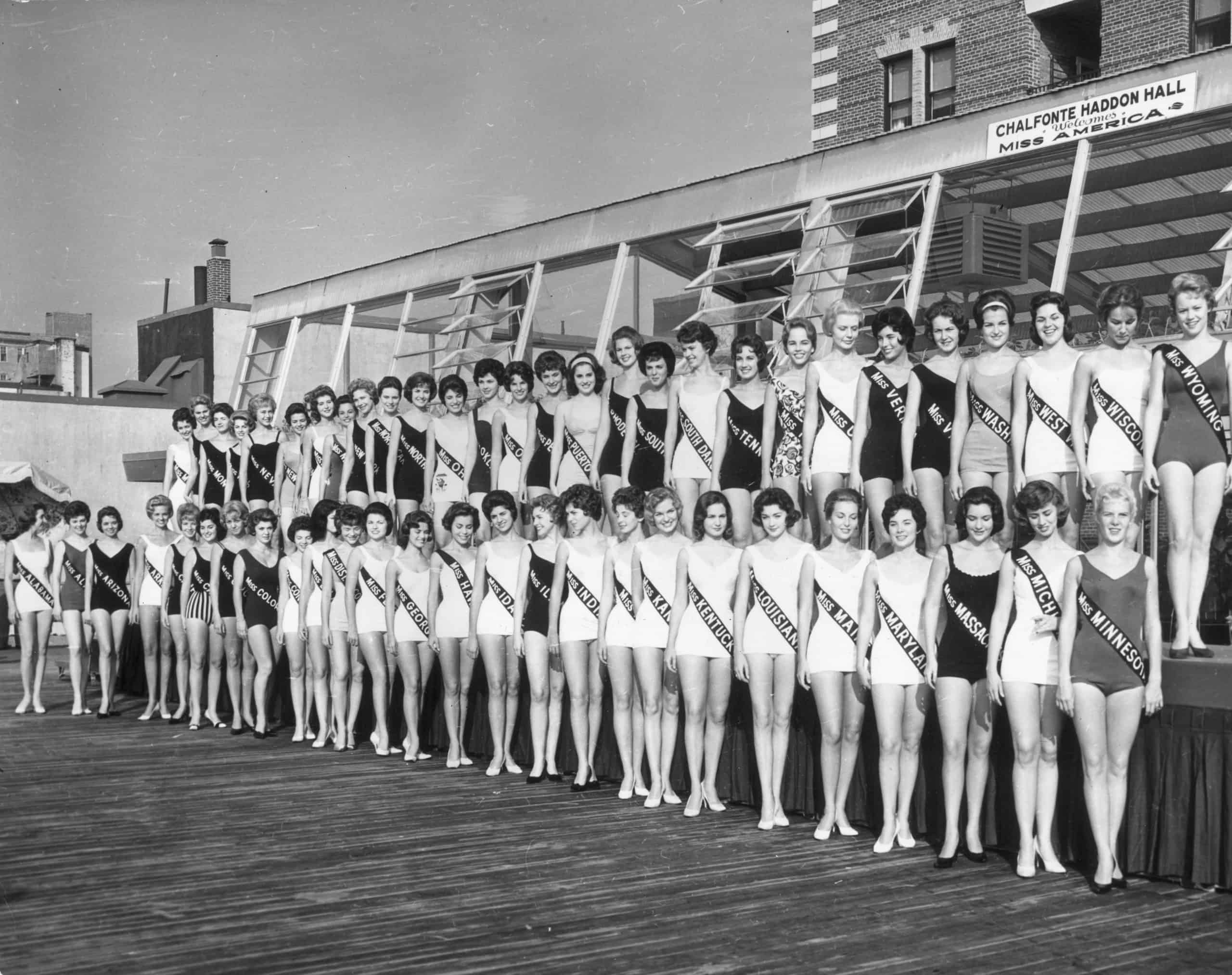
Fifty Contestants on the Atlantic City Boardwalk
This circa-1962 image shows the 50 Miss America contestants posing in swimsuits and sashes on the Atlantic City boardwalk. Pageants were a major part of popular culture, but the remarkably uniform lineup also reflects the much narrower standards of representation seen in prominent American pageants at the time. Hairstyles, swimsuits, and beauty ideals have all changed considerably since this photograph was taken.
Mobile Home Living Was Growing Fast
A couple relaxes outside a mobile home around 1960 in a scene that captures a growing part of the American housing market. Census records already counted hundreds of thousands of trailers being used as homes at the beginning of the decade, and the category expanded rapidly during the 1960s. Designs, terminology, and construction standards have evolved, but manufactured housing remains an important source of housing across the United States.
Television Had Already Taken Over the Living Room
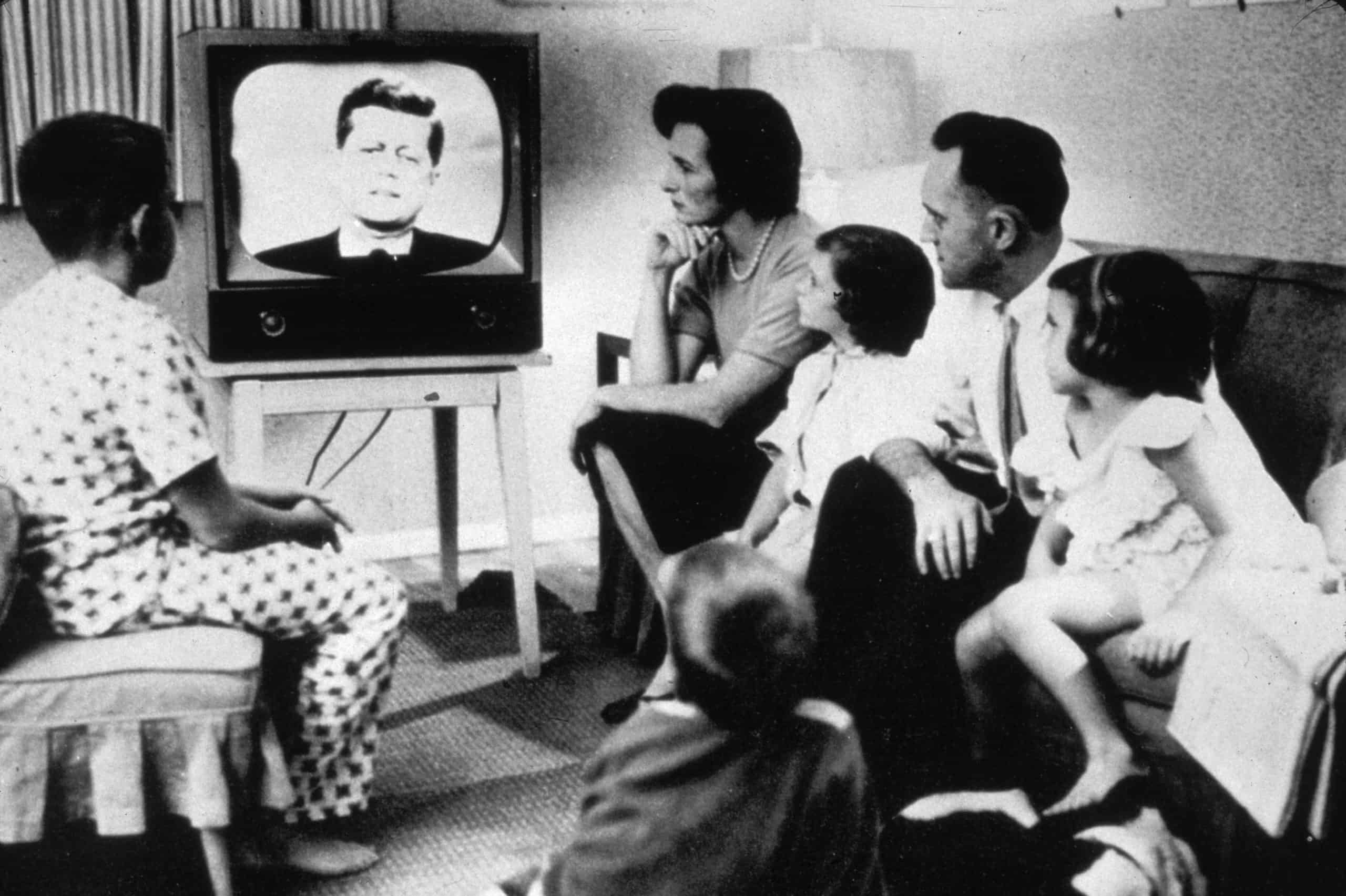
This family was photographed watching President John F. Kennedy on television around 1962. TV was no longer a rare novelty by then. Roughly 65% of American households already had a television by 1960, and ownership continued rising quickly. What looks unusual today is the arrangement: one relatively small set commanding the attention of an entire room rather than multiple televisions, phones, tablets, and laptops competing for everyone's attention.
A Working-Class Block on Chicago's South Side
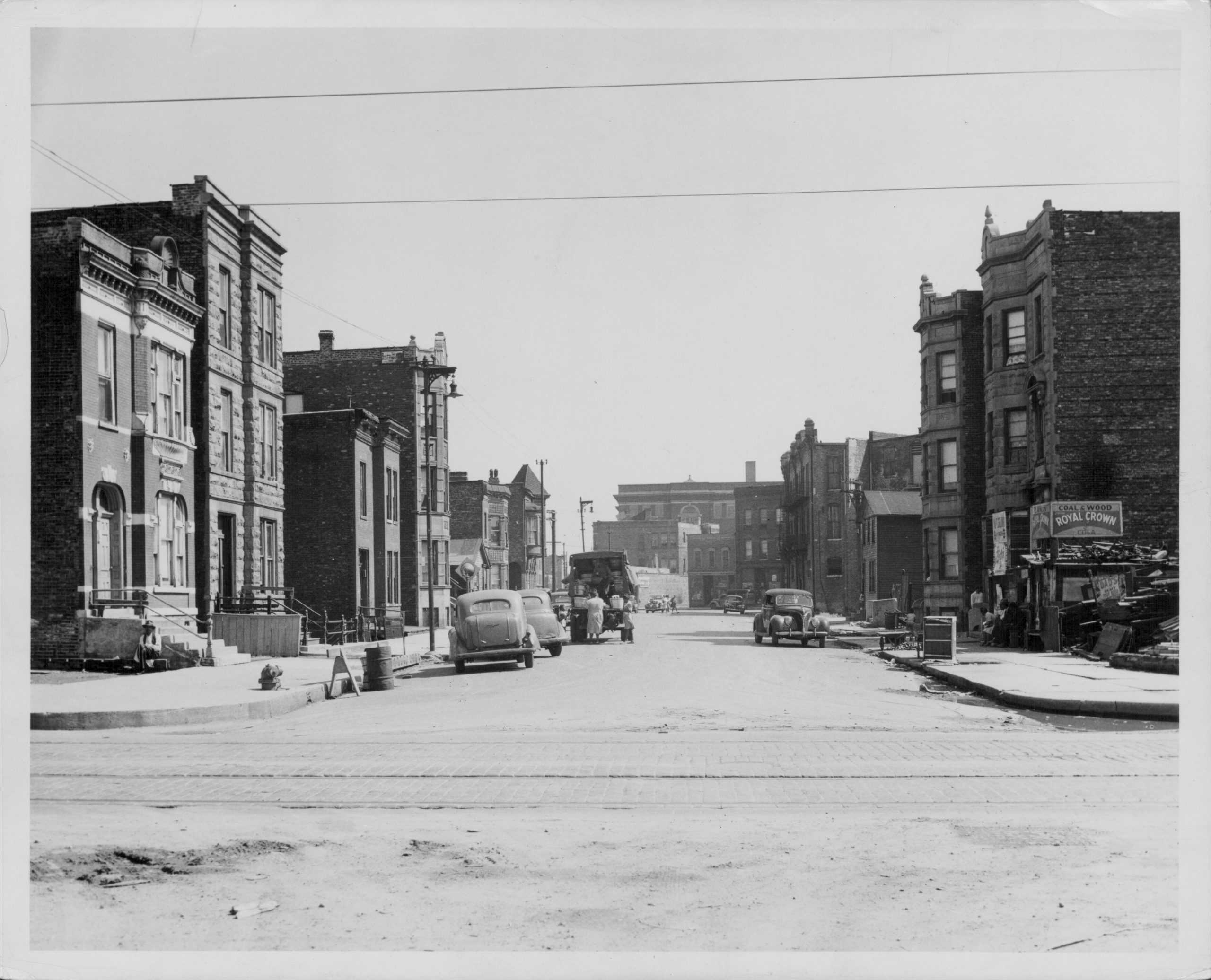
This archival photograph captures a working-class street on Chicago's South Side during the mid-20th century. It is only one neighborhood scene, not a portrait of the entire South Side, but it offers a street-level look at the brick housing and urban landscape of the era. The decade also unfolded against deep residential segregation and major battles over housing and civil rights in Chicago, making ordinary neighborhood photographs part of a much larger story.
Hula Hoops Were Still Everywhere
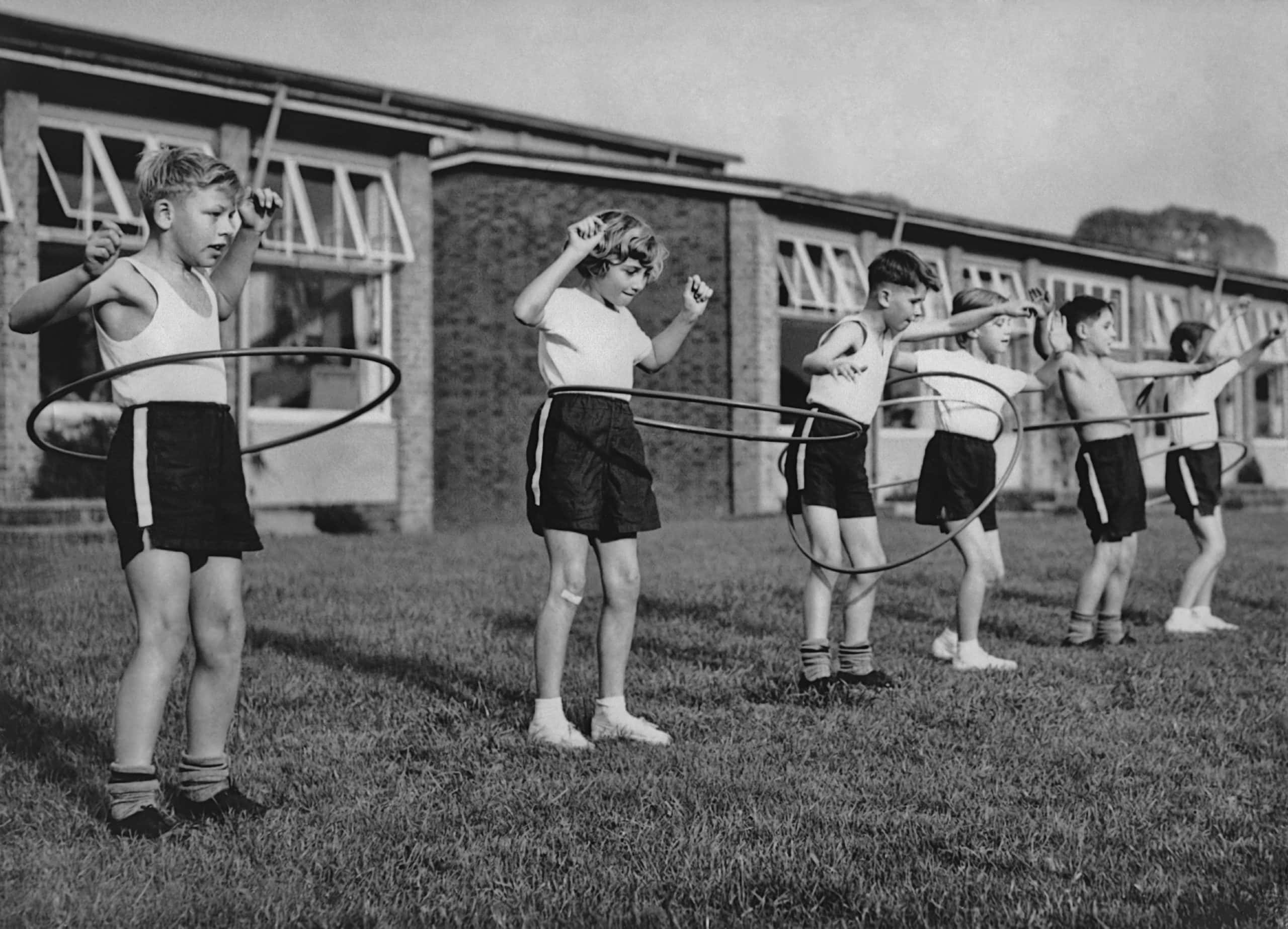
A group of children puts their skills to the test with one of the era's simplest toys. Wham-O introduced its plastic Hula Hoop in 1958, and an estimated 25 million were sold within only four months. The initial craze began just before the 1960s, but the toy remained a familiar part of the decade and was successfully relaunched in updated form a few years later. Sometimes all it took to keep a group entertained was a plastic hoop and enough room to spin.
Disneyland Was Already Drawing Huge Crowds
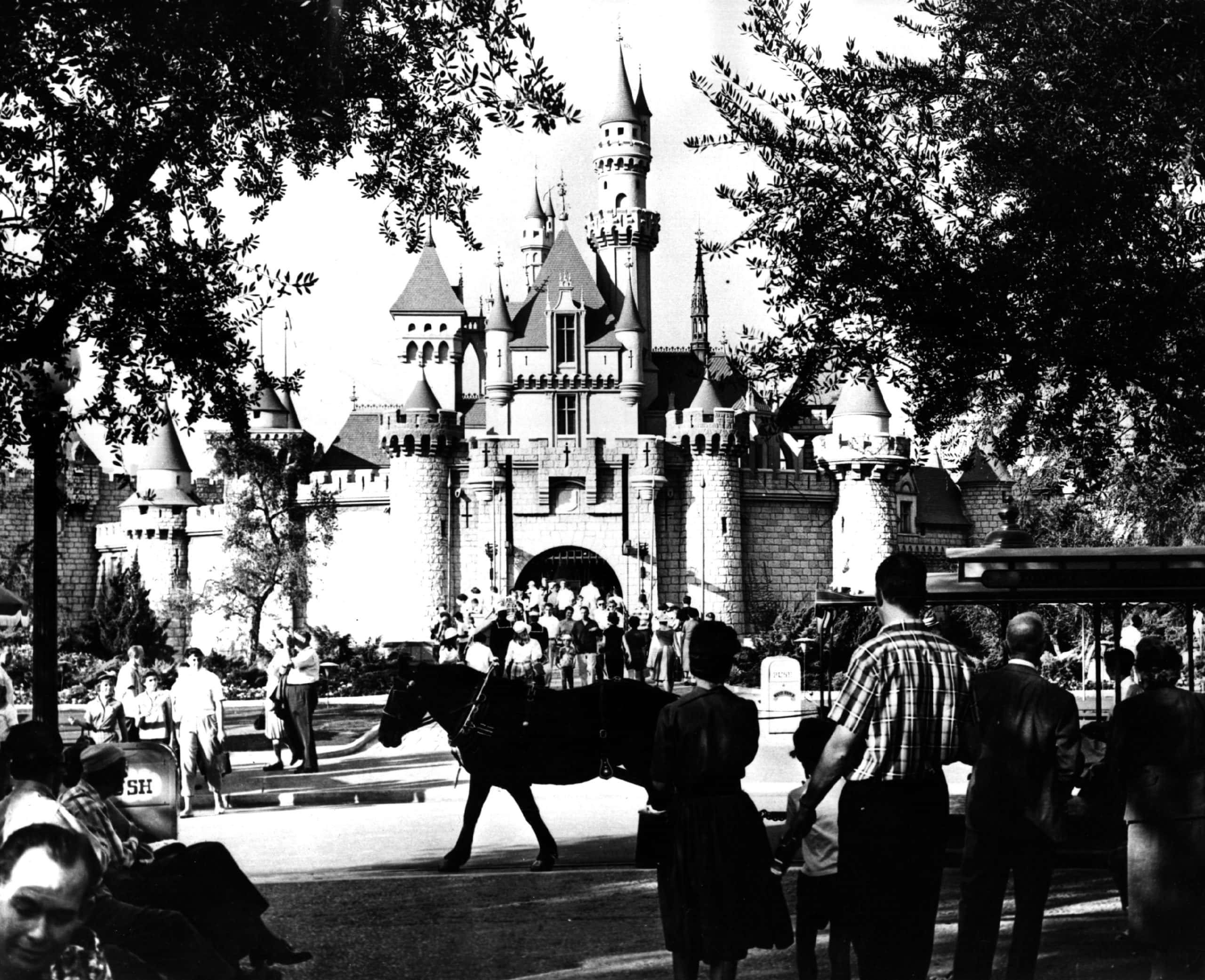
Tourists gather near Sleeping Beauty Castle around 1960, only about five years after Disneyland opened. The park had already become a major attraction. Disneyland welcomed its 25 millionth visitor in 1961 and its 50 millionth in 1965. The decade would bring major additions and new technology, but the basic sight of families gathering in front of the castle is one of the few scenes in this gallery that would look perfectly normal more than 60 years later.
Domestic Work Shows a Harder Side of the Decade
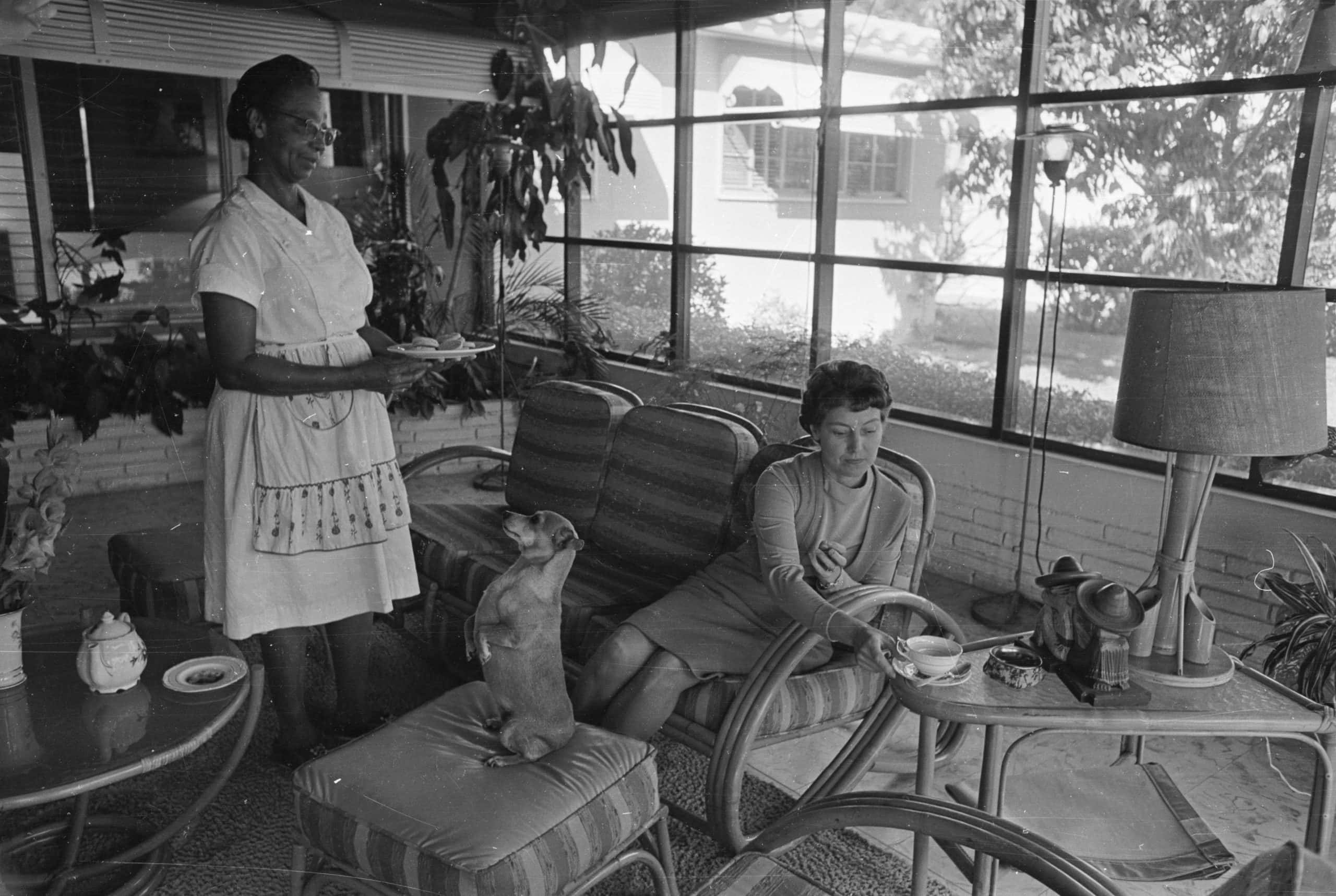
This 1966 photograph shows a Black domestic worker serving a woman in a home in the American South. Paid domestic work provided employment for generations of women, particularly women of color, but it was also frequently low-paid, undervalued, and shaped by racial and gender inequality. The image is an important reminder that everyday life in the 1960s looked very different depending on which side of an economic and social divide someone occupied.
A Summer Crowd at the Bronx Riviera
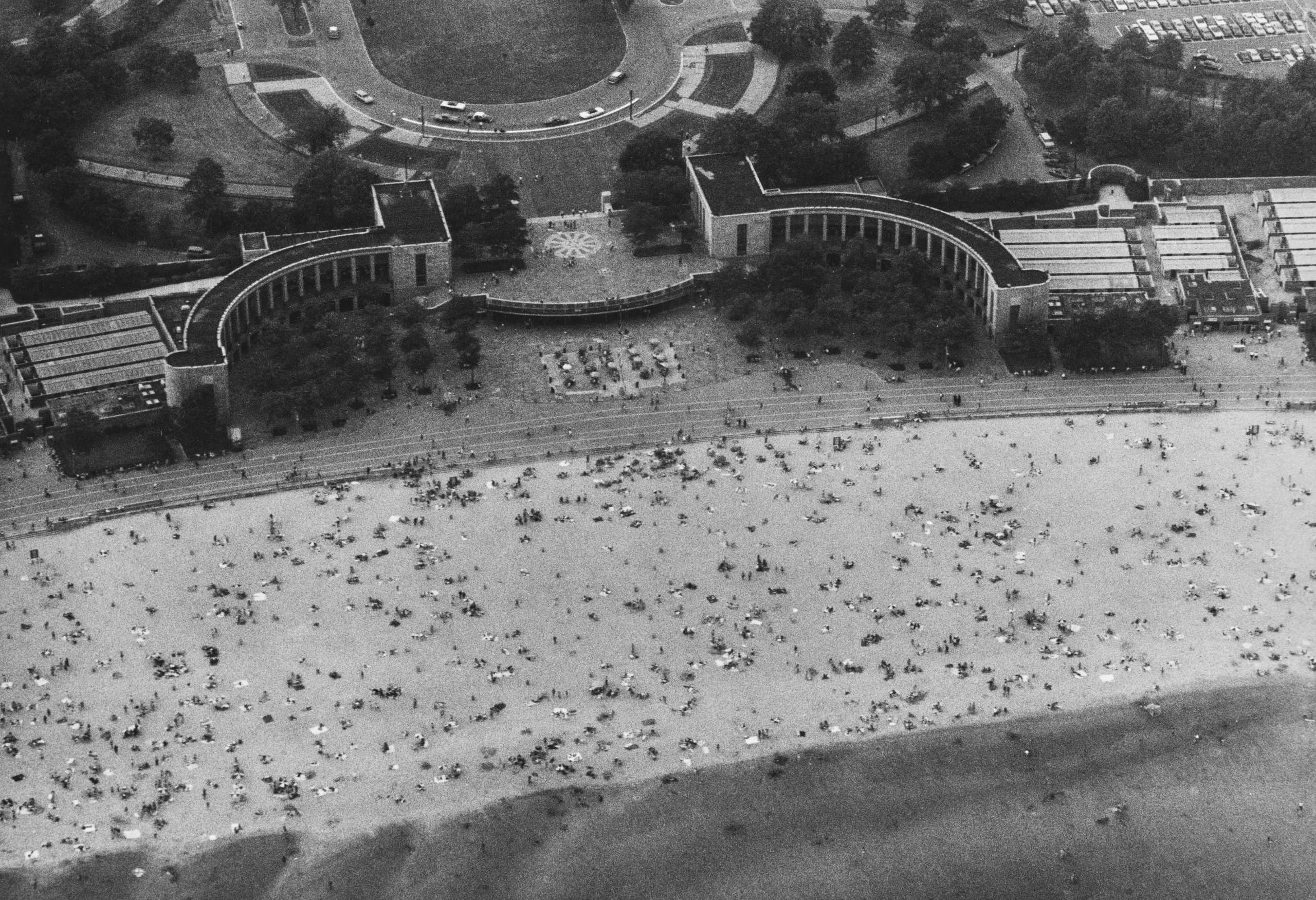
Orchard Beach is packed with visitors in this image from around 1965. Created in the 1930s and promoted as the "Riviera of New York," Orchard Beach remains the Bronx's only public beach. Its broad shoreline and distinctive pavilion made it one of the borough's major warm-weather gathering spots. Take away the swimsuits and hairstyles, and the enormous crowd seeking relief from a hot New York summer would not look terribly unusual today.
A Comic Book and a Quiet Corner in Harlem
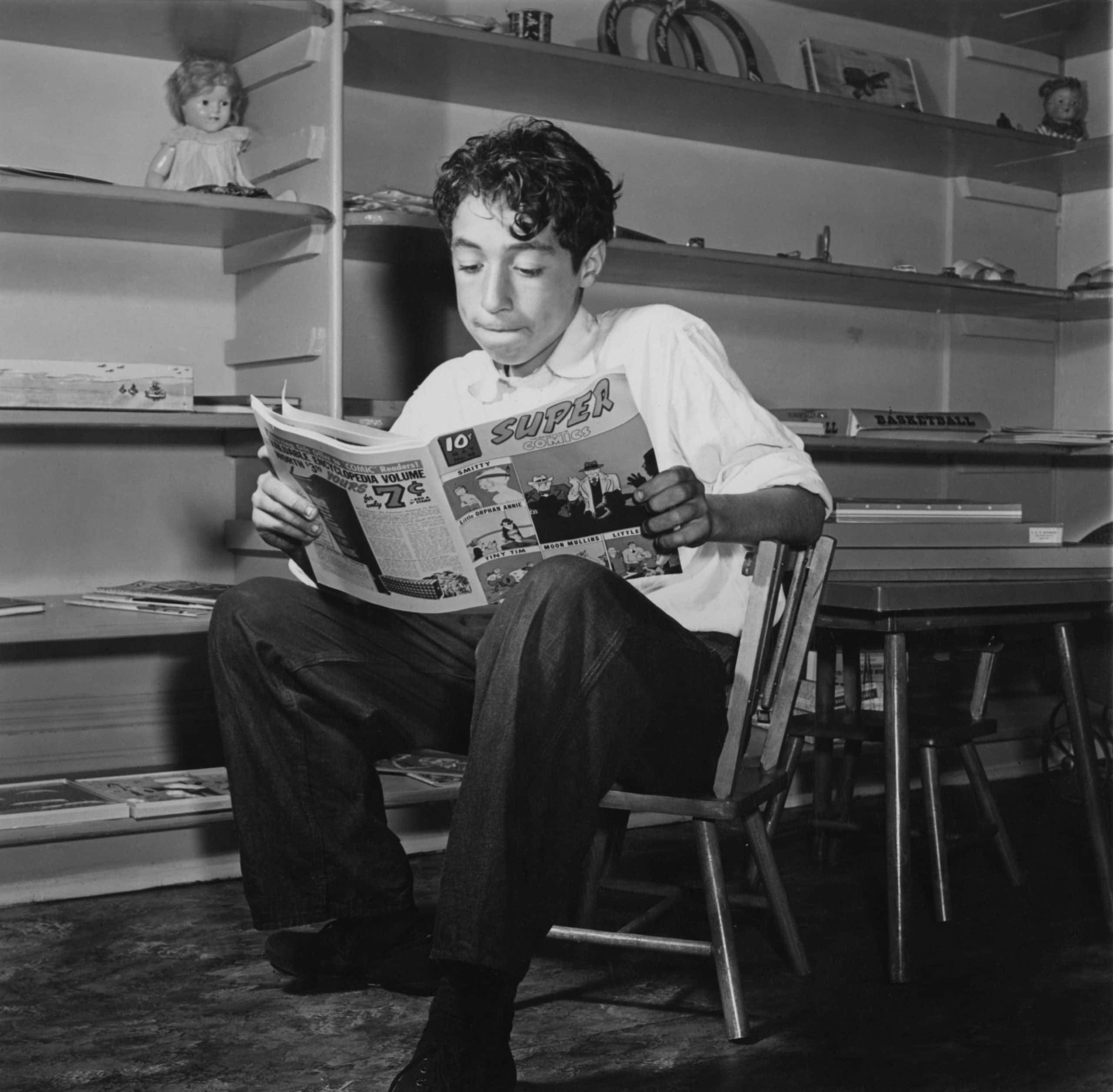
Ernest Woods reads a copy of Super Comics at a toy library in Harlem around 1960. There is nothing dramatic happening here, which is exactly what makes the photograph interesting. It captures an ordinary childhood moment built around a printed comic and a community space for toys and reading. Technology has transformed children's entertainment, but disappearing into a story for a while is not nearly as different as the devices used to do it.
New York Traffic Was Nothing New
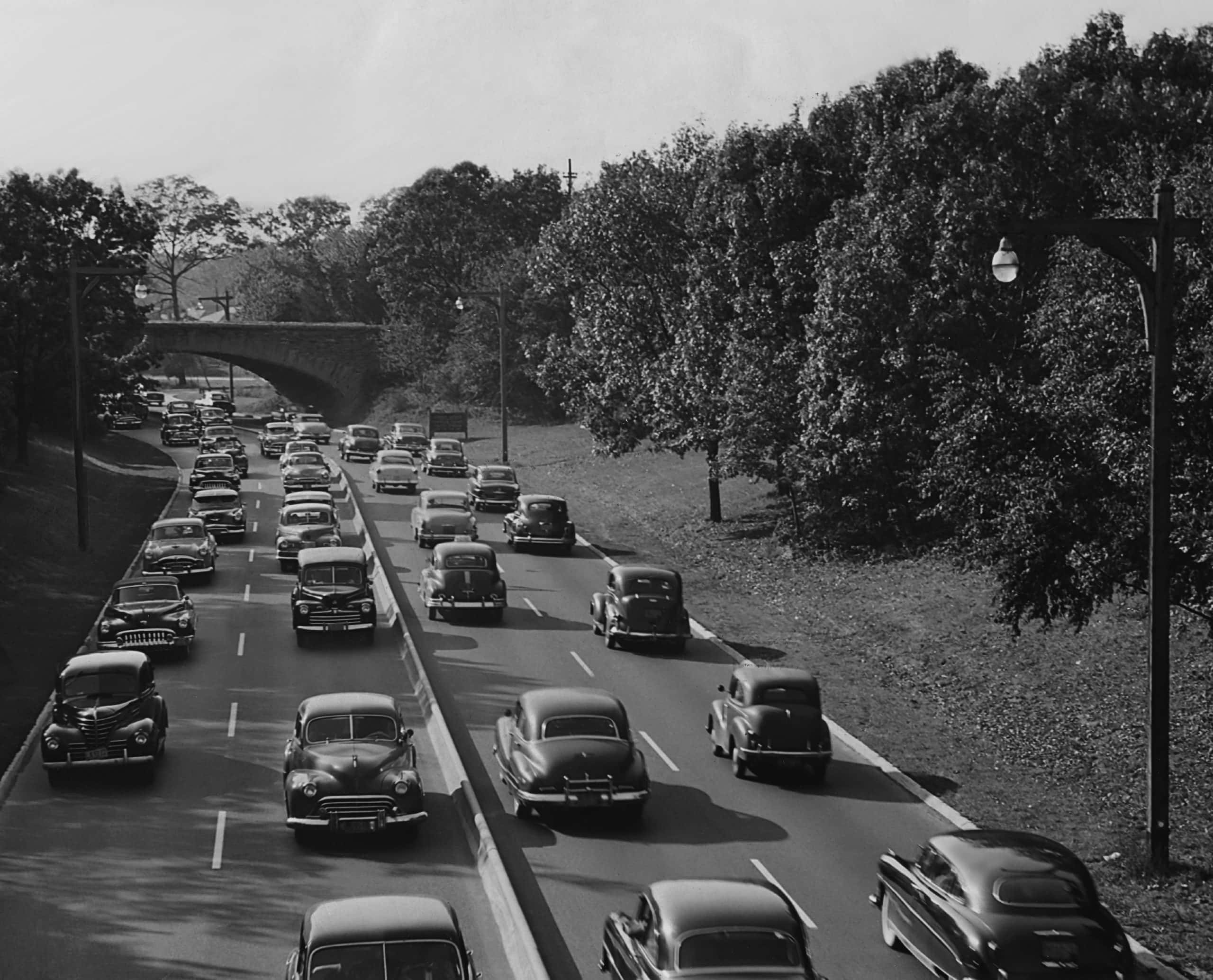
Rows of cars fill the Southern State Parkway near Exit 28 in Nassau County around 1960. The fins, chrome, and body styles immediately date the photograph, but the underlying situation certainly does not. Long before navigation apps and real-time traffic alerts, commuters were already packing major suburban highways. If there is one comforting lesson in this picture, it may be that complaining about New York traffic has a very long history.
School Breakfast Was a New Federal Push
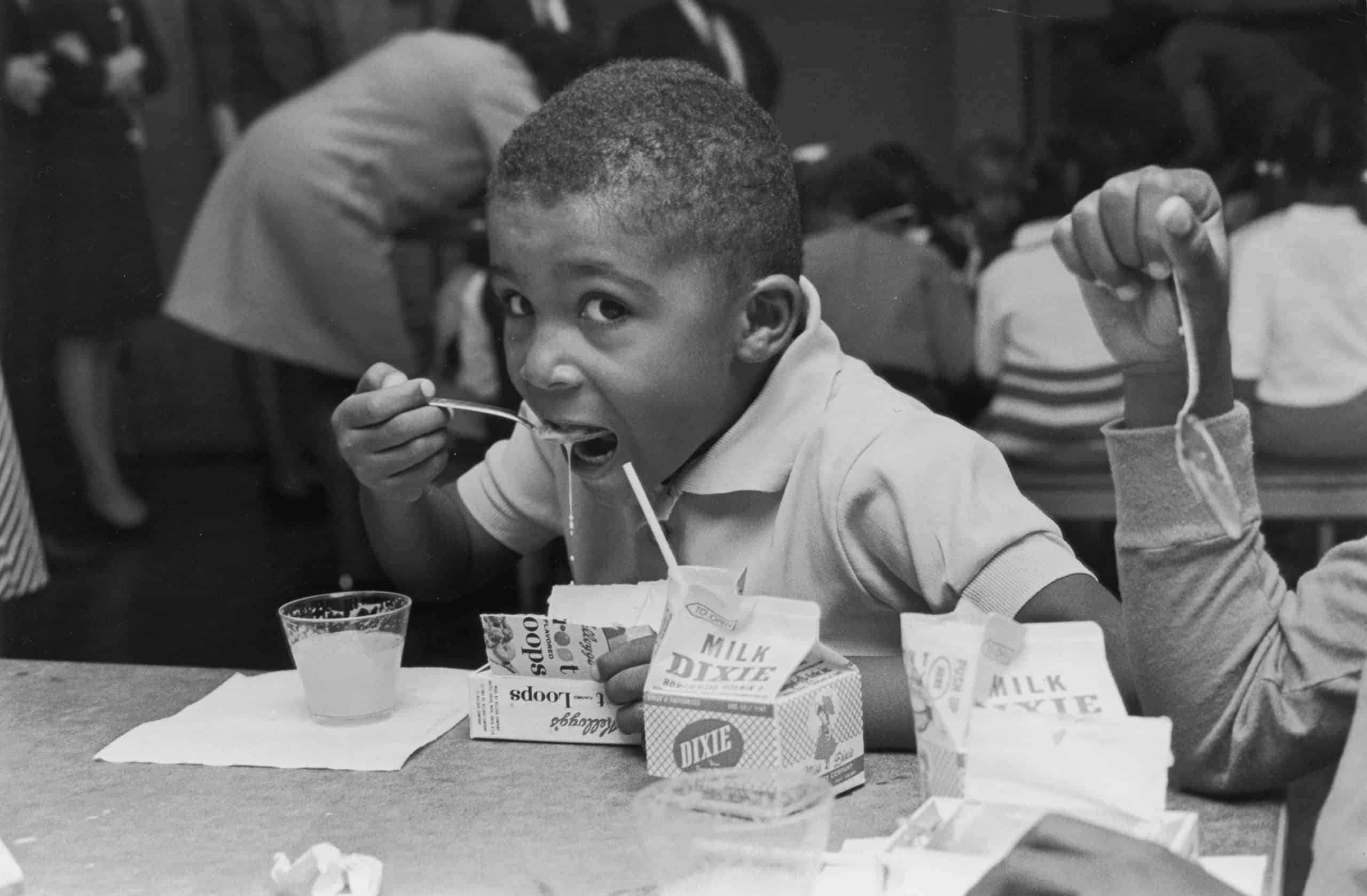
A student eats cereal, juice, and milk in a Gary, Indiana, school cafeteria in November 1968. The timing matters. The federal School Breakfast Program had been authorized under the Child Nutrition Act of 1966, making school breakfast a relatively new federal initiative during the final years of the decade. The trays and tiny cereal packaging may look dated, but the basic goal of making sure students can eat before class remains very familiar.
Summer Camp Still Looked Familiar
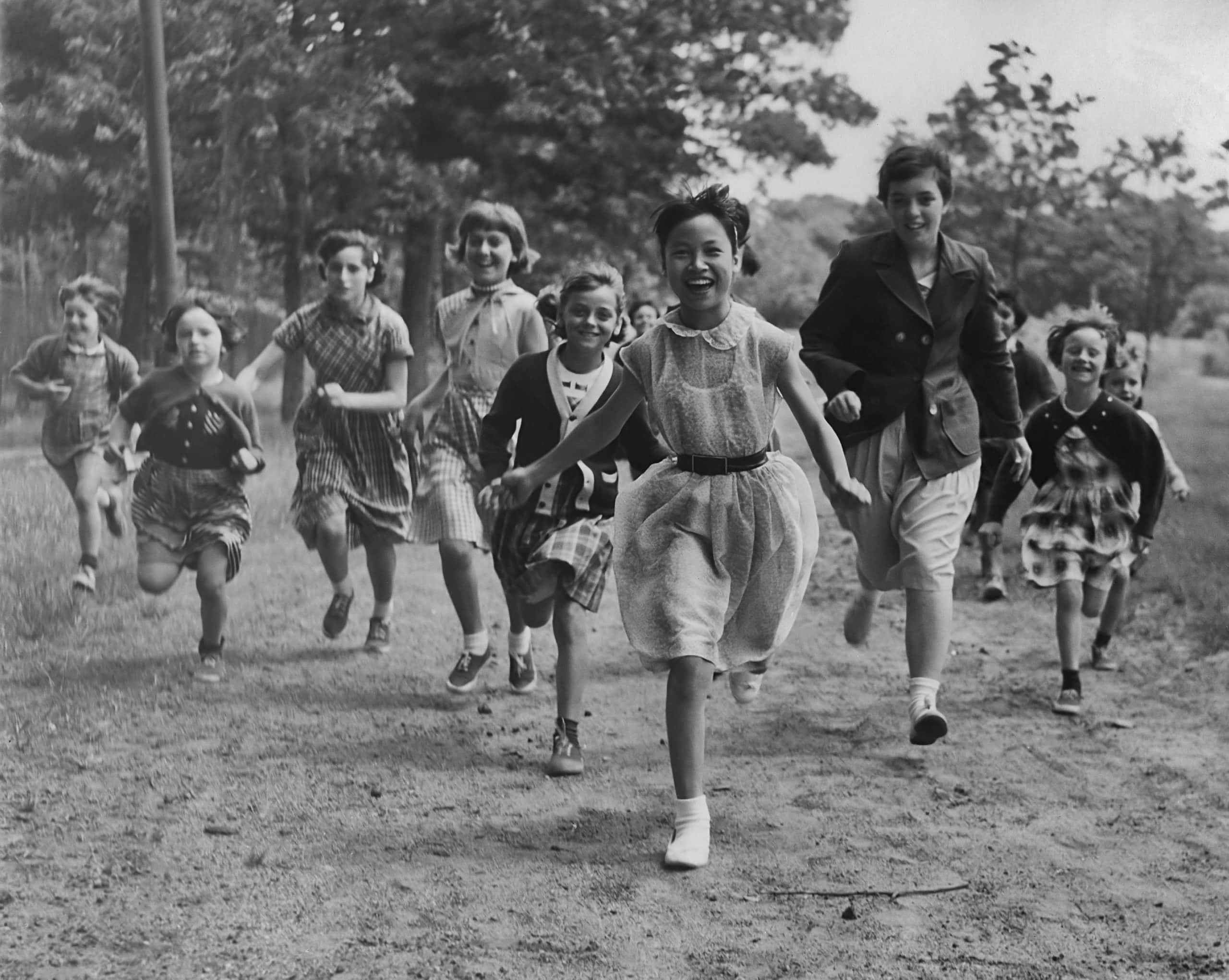
A group of girls races across the grass at a day camp in a scene that barely needs an explanation. Hairstyles and clothing immediately place the picture in another era, but children running outside with friends is about as timeless as a photograph can get. Not everything about the 1960s has to be treated as completely foreign. Sometimes an old picture is most interesting because of how little the basic experience has changed.
Casino Night in Barnet, England
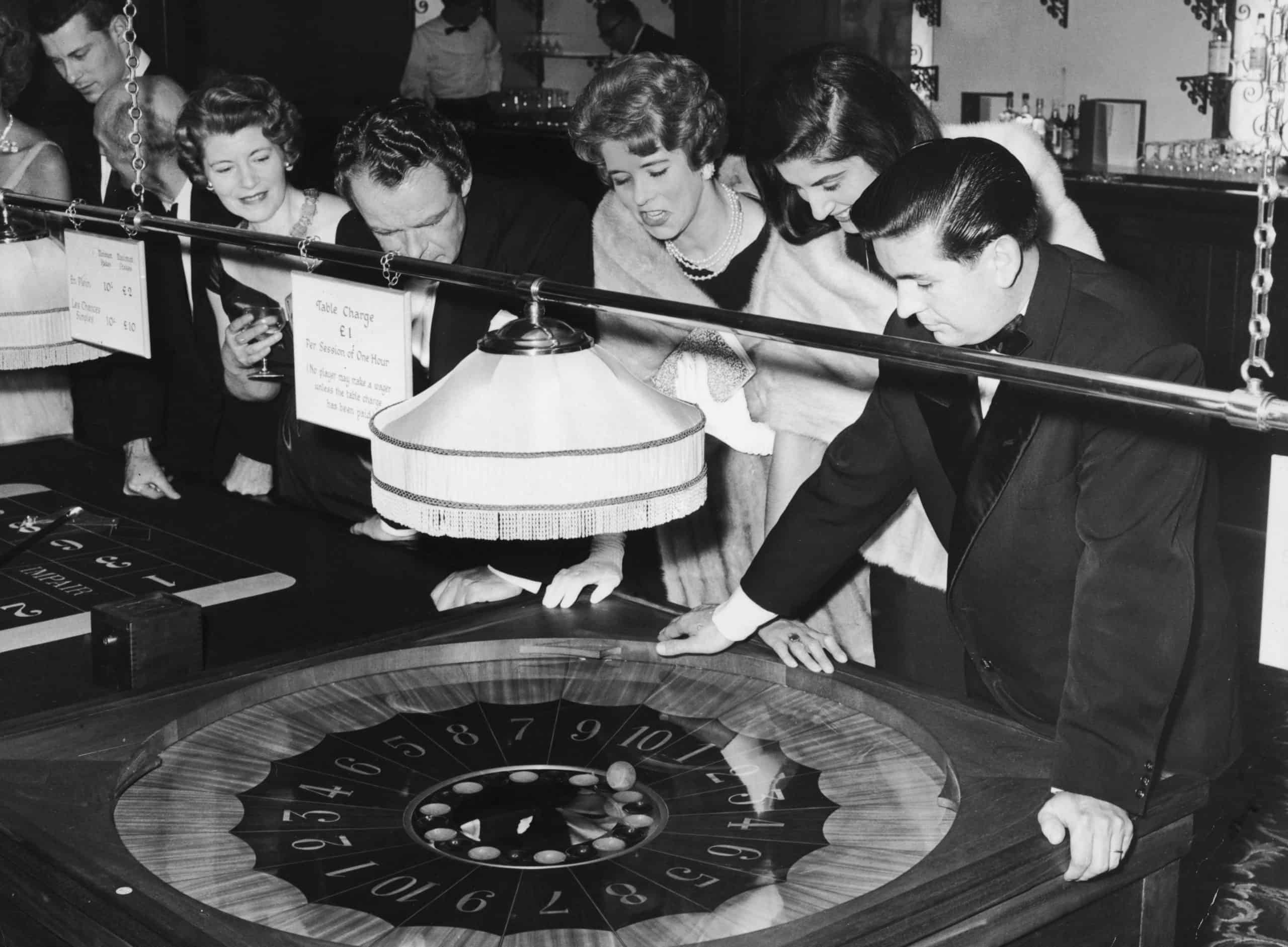
This photograph from October 1962 shows guests gathered around a game of La Boule at a newly opened private club in Barnet, England. The clothes, crowded gaming table, and formal atmosphere capture the adult nightlife that helped give the decade its glamorous "swinging" reputation. It is also a useful reminder that the 1960s were not simply backyard barbecues and family television. For some, the decade meant dressed-up evenings, private clubs, and casino tables.
Beach Tents Before the Modern Cabana
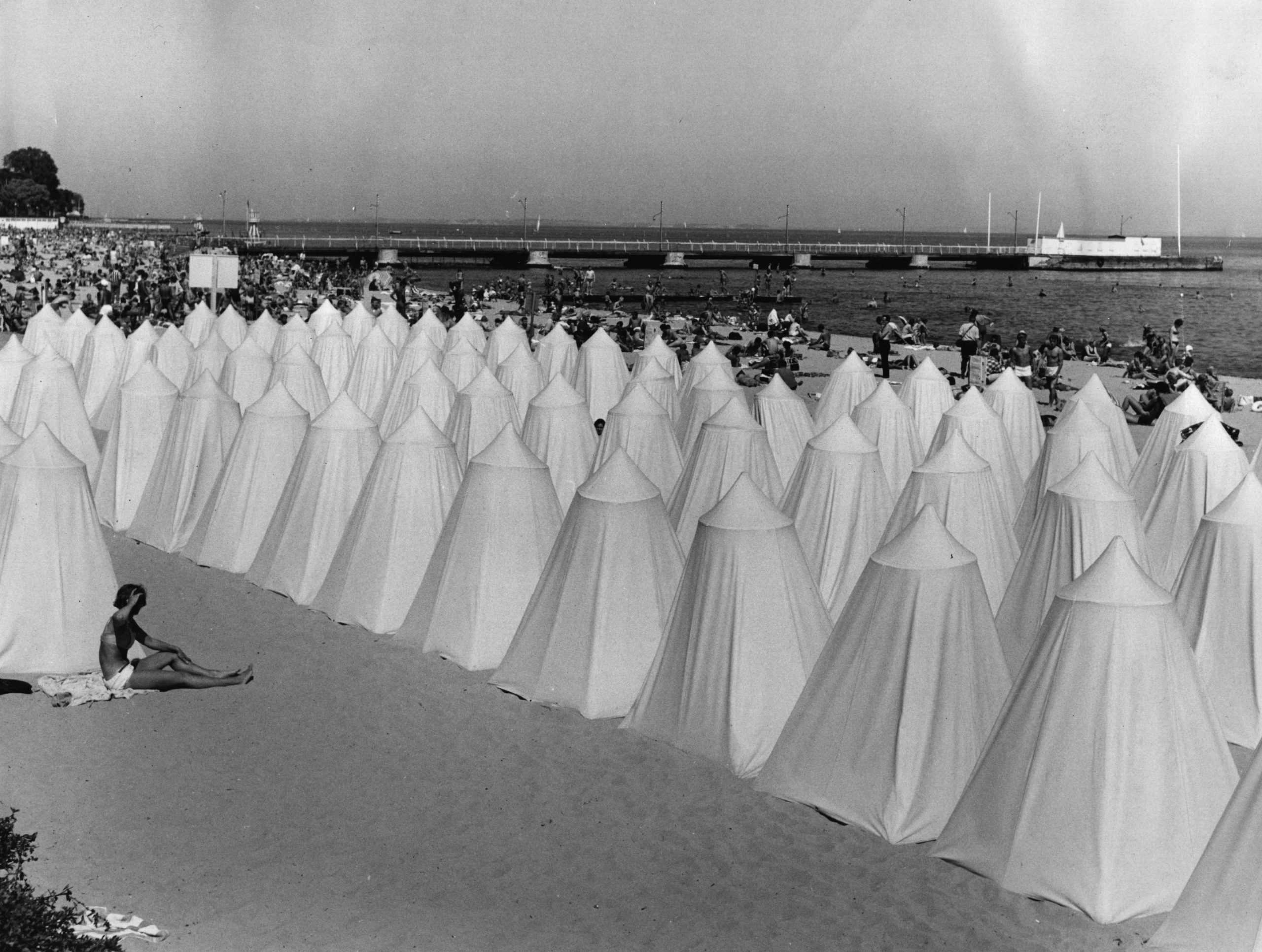
Rows of small tents line Bellevue Beach in this archival scene. Beachgoers still spend plenty of money and effort trying to create a patch of shade, but the equipment has changed. Modern pop-up canopies, umbrellas, and rental cabanas accomplish much the same thing with lighter materials and more room. The photograph proves that the desire to enjoy the beach without baking in direct sunlight is definitely not a modern invention.
Flight Attendant Training Was Very Different
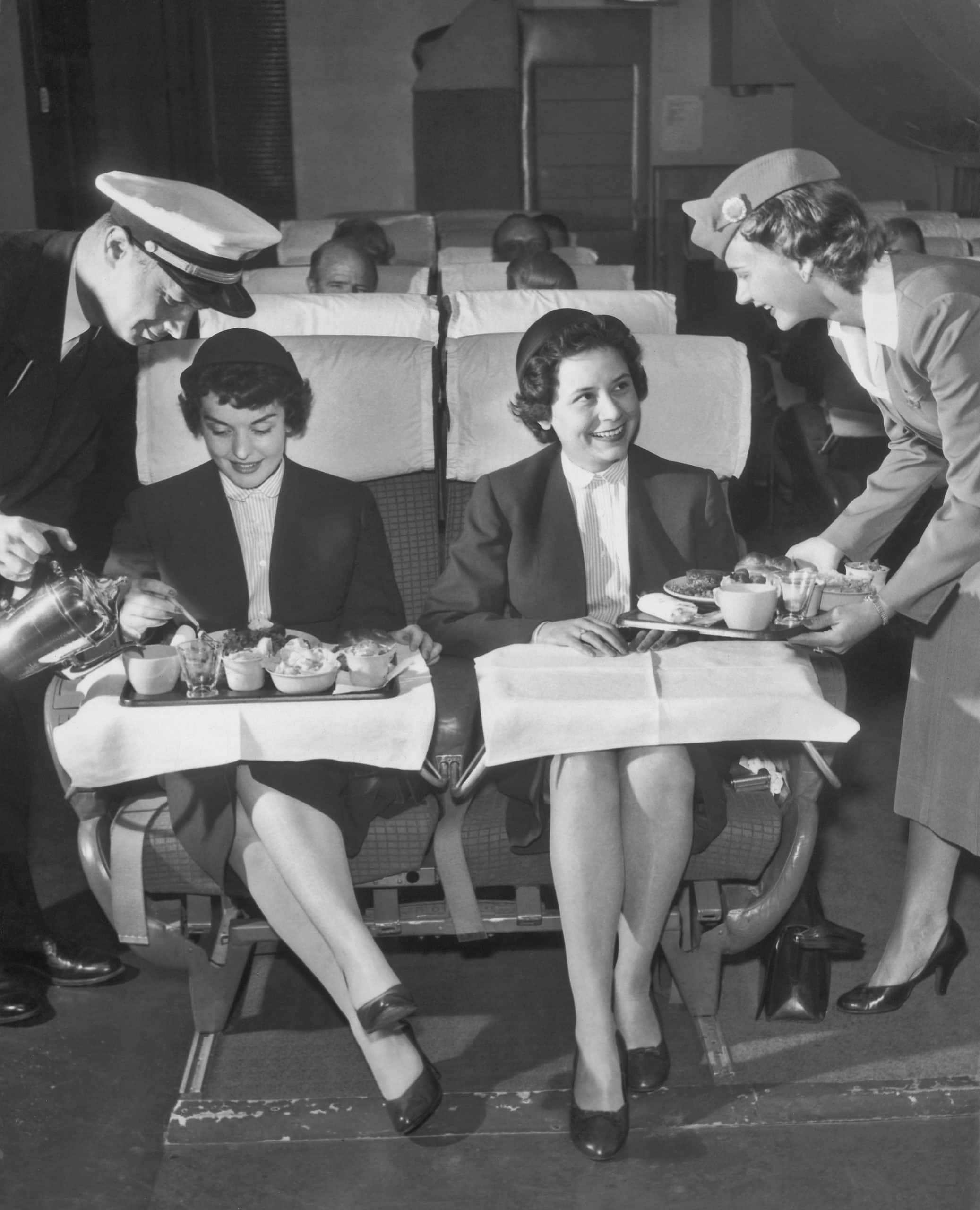
This circa-1960 image comes from Pan American World Airways' stewardess school on Long Island, where airline employees practiced passenger service. Flight attendants were then commonly called stewardesses, and the profession was overwhelmingly female. Airlines also imposed rules involving age, appearance, and marriage that women successfully challenged during the civil rights era. The polished meal service shown here belonged to an airline culture that was glamorous on the surface but considerably more restrictive for the people working in it.
An Ice-Fishing Crowd Covers the Lake
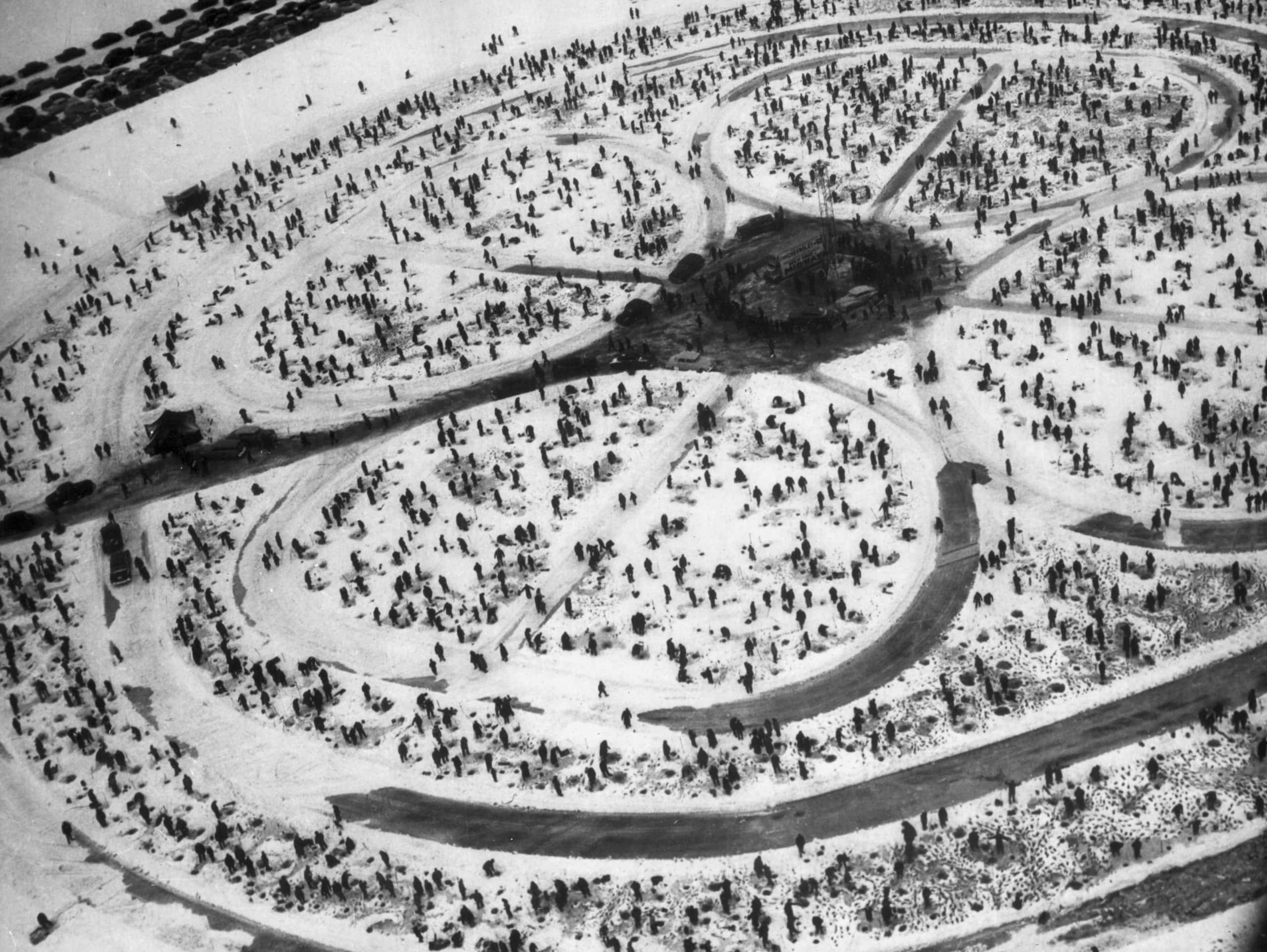
At first glance, the dark dots covering this frozen landscape barely look like people. The photograph actually shows a massive gathering of ice-fishing enthusiasts. Large winter fishing events are not unique to the 1960s and still take place in cold-weather regions, but seeing a frozen lake covered with competitors makes for an incredible time capsule. No sweeping claims about people spending more time outside are needed. The picture is impressive enough on its own.
Before the Office Had a Computer on Every Desk
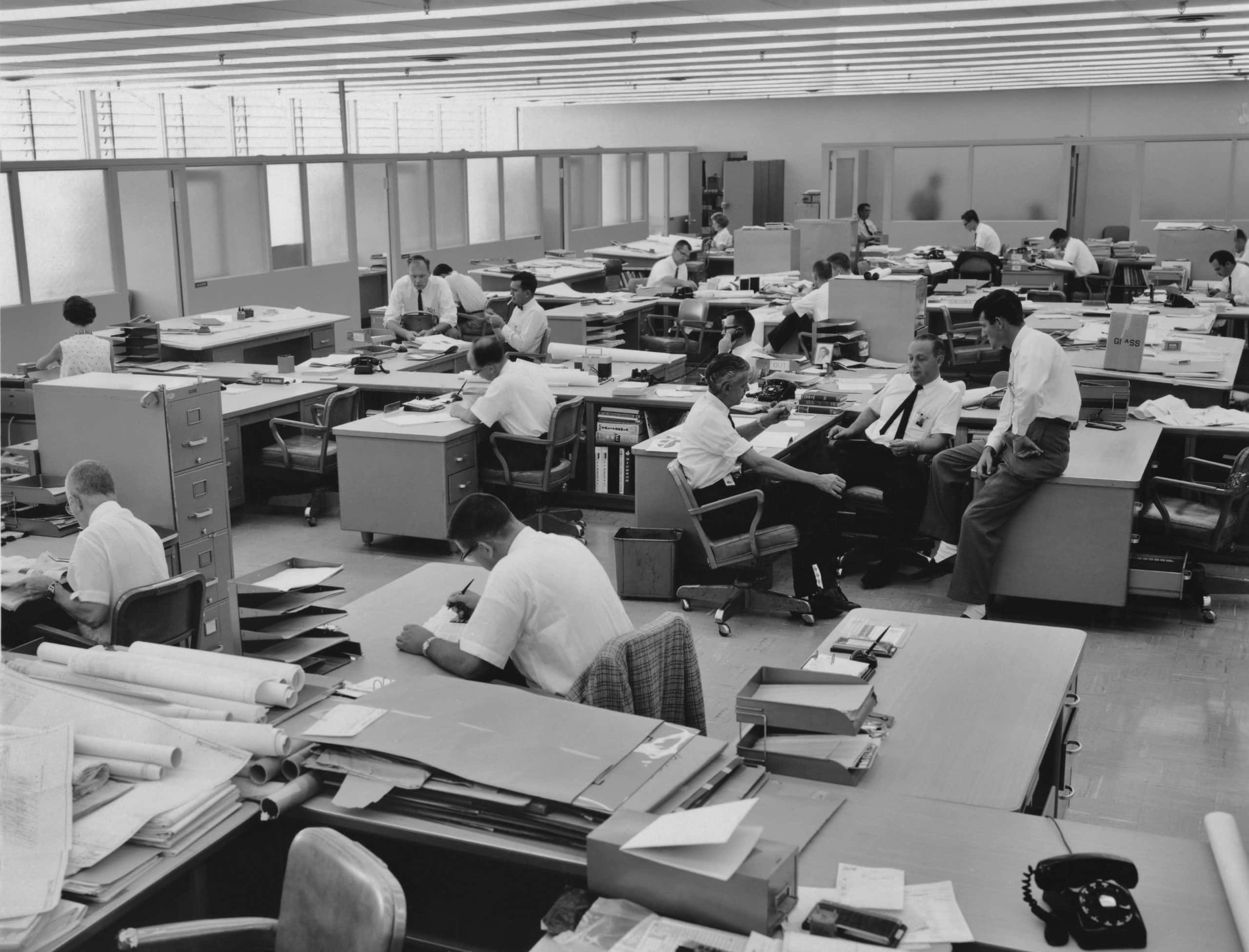
This 1960s office is recognizable enough to feel familiar until you notice what is missing. There are no desktop computers, monitors, or smartphones. Paper files, telephones, typewriters, and face-to-face conversations handled jobs now dominated by software and email. Business clothing was generally more formal as well. The work itself may have involved familiar deadlines and paperwork, but the tools used to get through the day belonged to an entirely different office culture.
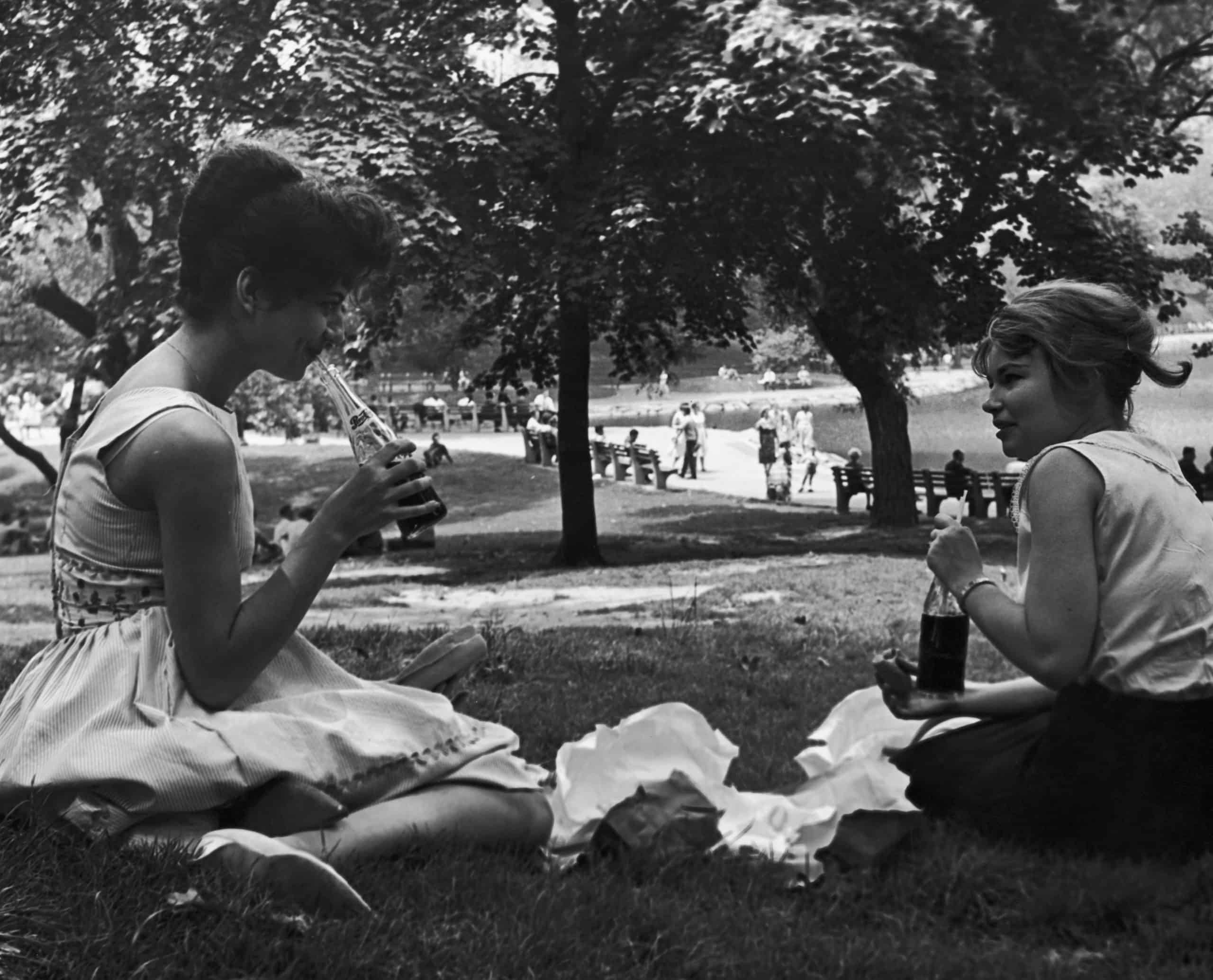
Lunch in Central Park, 1961
Two women stop for lunch in Central Park in July 1961. The glass bottles, clothing, and hairstyles date the photograph, but otherwise there is almost nothing unusual about the scene. New Yorkers still escape into the park to eat, talk, read, and get away from the surrounding streets. Of all the images in this collection, this may be one of the easiest to imagine recreating today, just with different shoes and probably a phone sitting somewhere on the blanket.
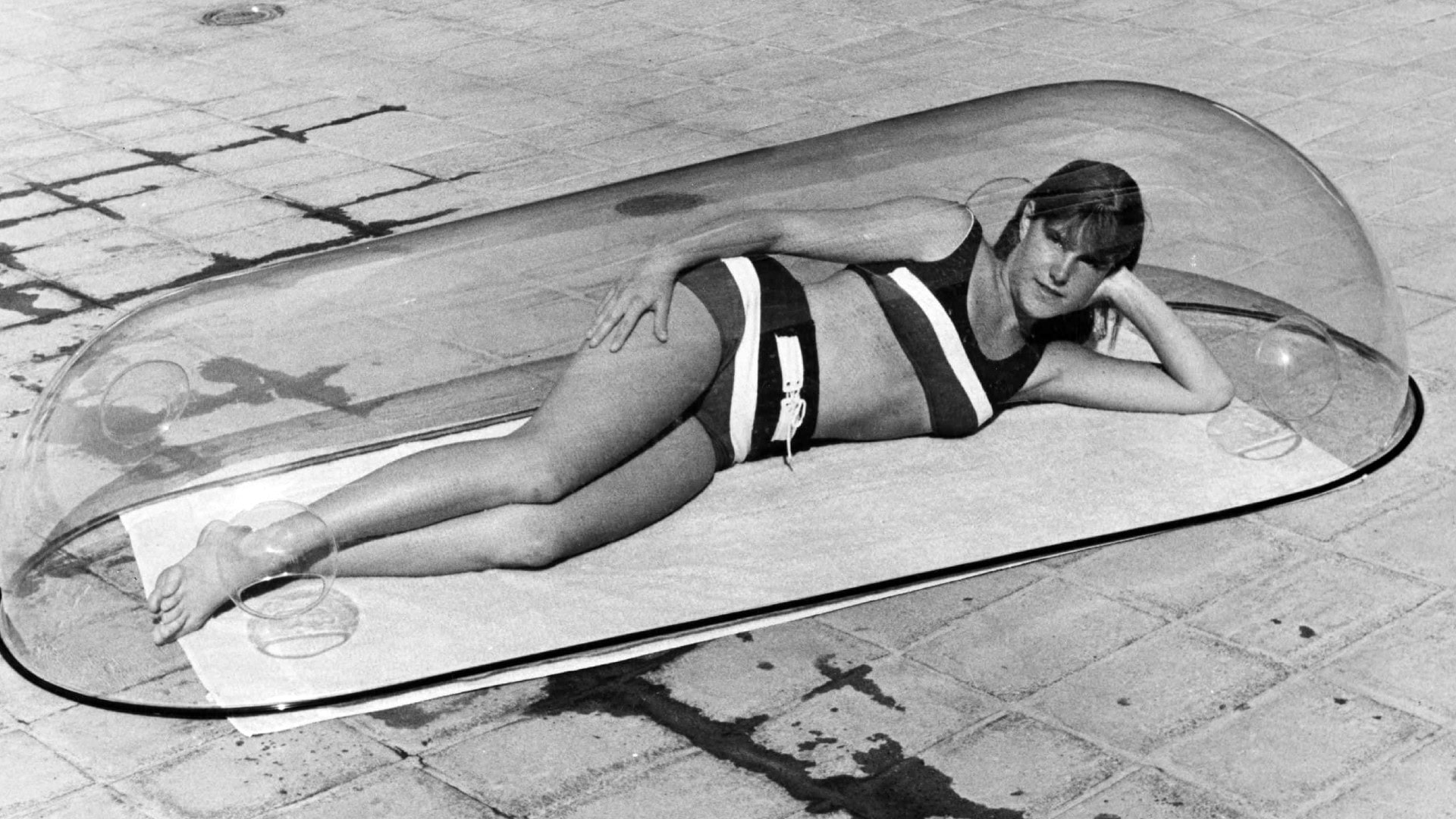
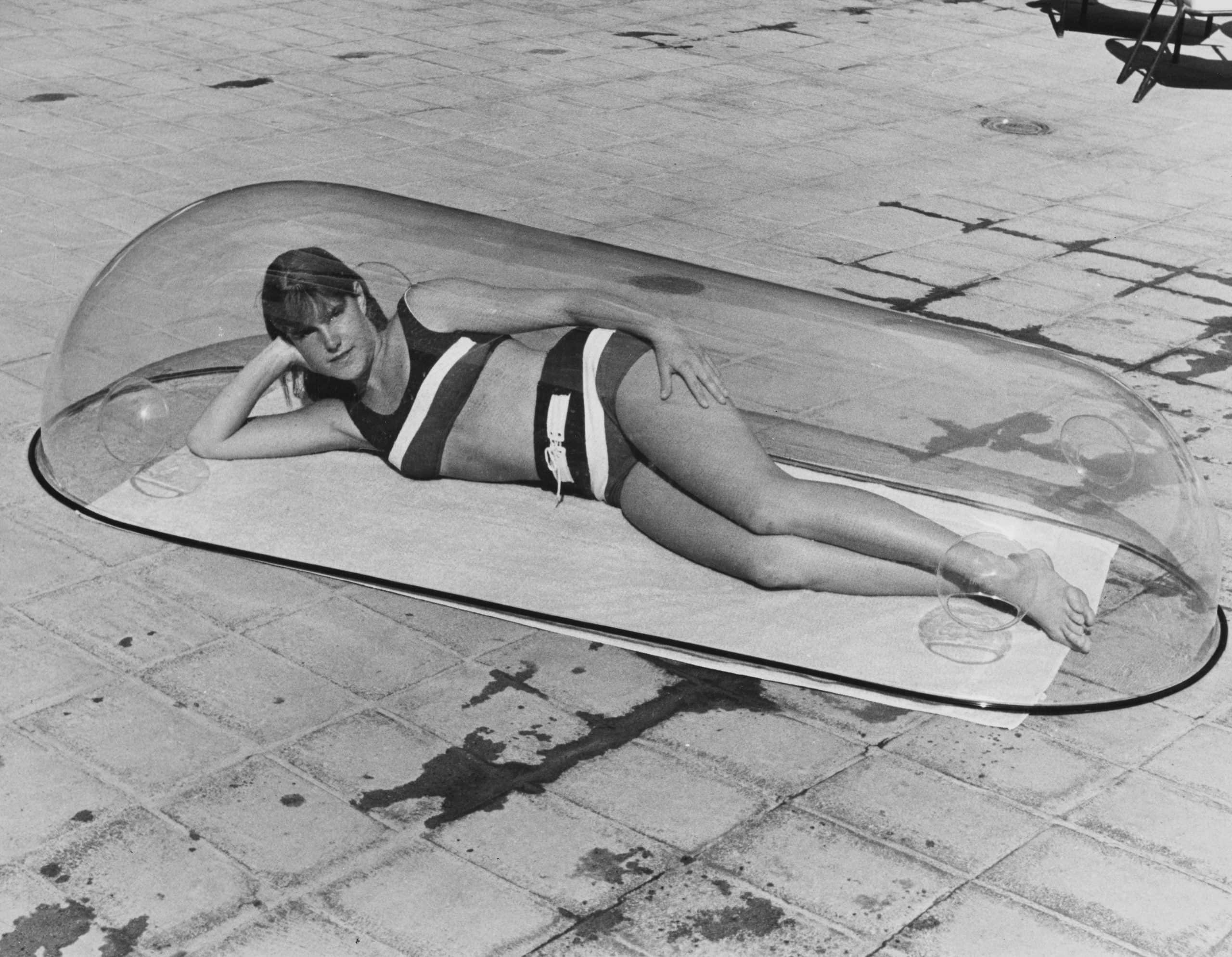
The Sunbathing Capsule Was Peak 1960s Futurism
This one really does look like something from a retro science-fiction movie. Photographed in 1963, the Fabor sunbathing capsule measured about seven feet long and three feet wide, with ventilators providing airflow. It was designed to let ultraviolet rays reach the person inside while offering protection from wind and other outside elements. The contraption never became standard beach equipment, but few photographs capture the wonderfully strange, futuristic product design of the era quite as well.
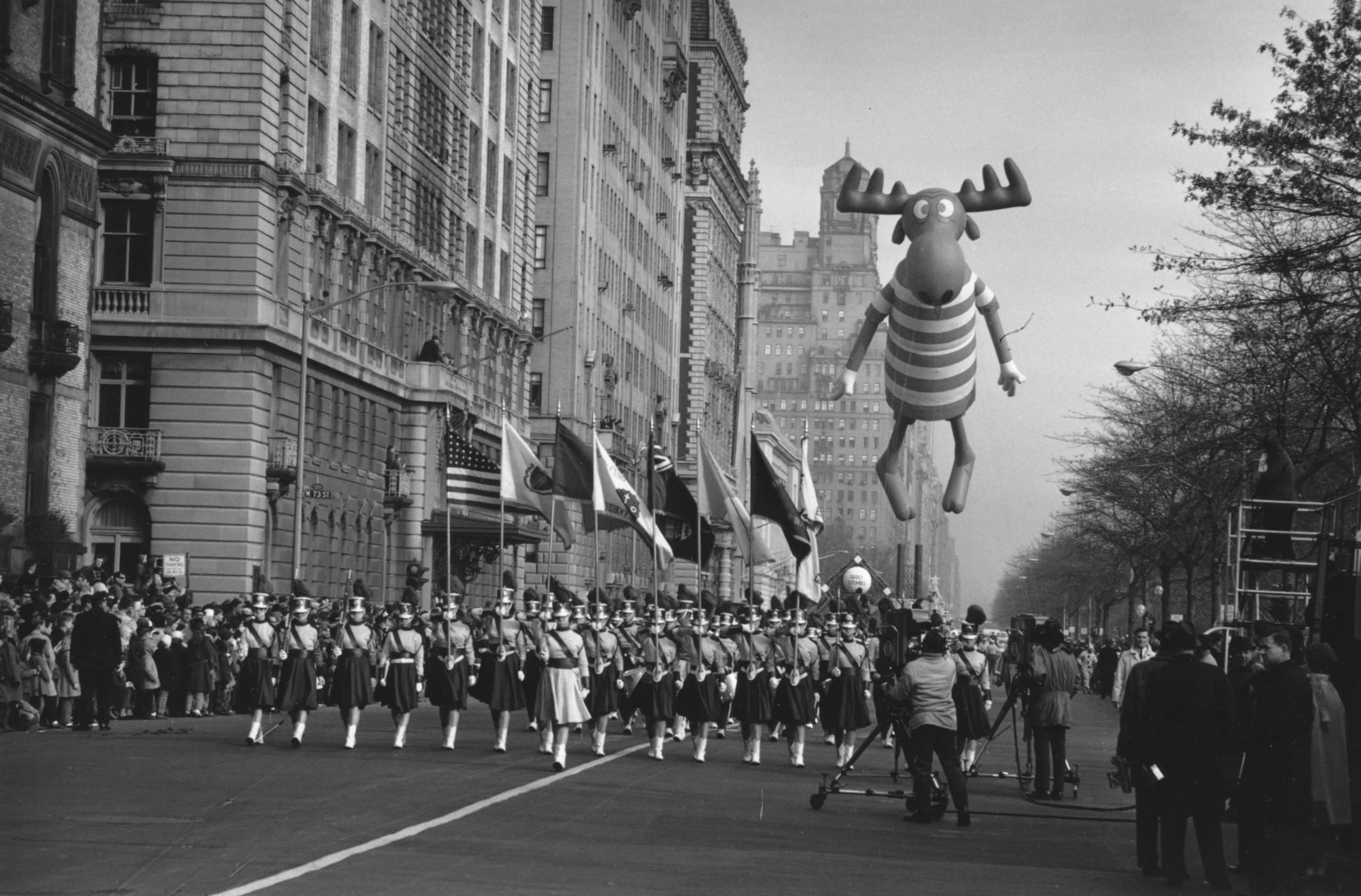
Thanksgiving in New York Was Already a Spectacle
A marching band moves through New York during a Thanksgiving parade in the early 1960s. Long before today's enormous television production, holiday parades already combined bands, floats, performers, and packed city streets. The details have become bigger and more elaborate over the decades, but the basic formula is instantly recognizable. Even without modern screens, sponsorship displays, and social media coverage, New Yorkers clearly knew how to turn Thanksgiving morning into an event.
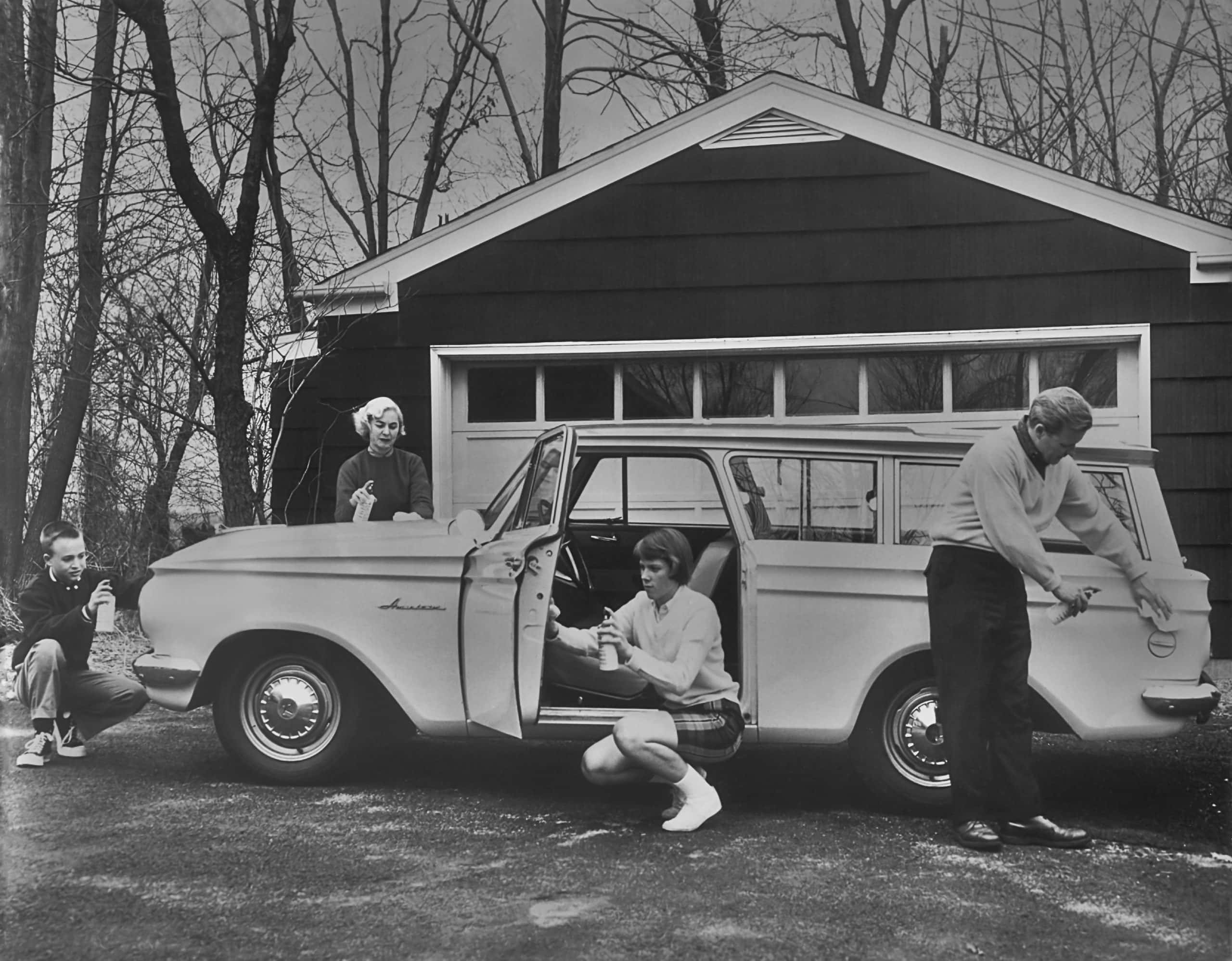
Washing the Family Car Became a Group Project
A family of four tackles a driveway car wash together in this image from around the 1960s. The big automobile, suburban garage, bucket, and garden hose make the scene look like a carefully assembled piece of mid-century advertising, even if it was simply an everyday moment. Automatic car washes were already around, but plenty of families still handled the job at home. The technology involved here has barely changed: water, soap, towels, and whoever can be convinced to help.
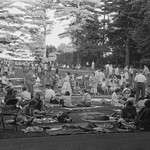
Tanglewood Turned Classical Music Into a Picnic
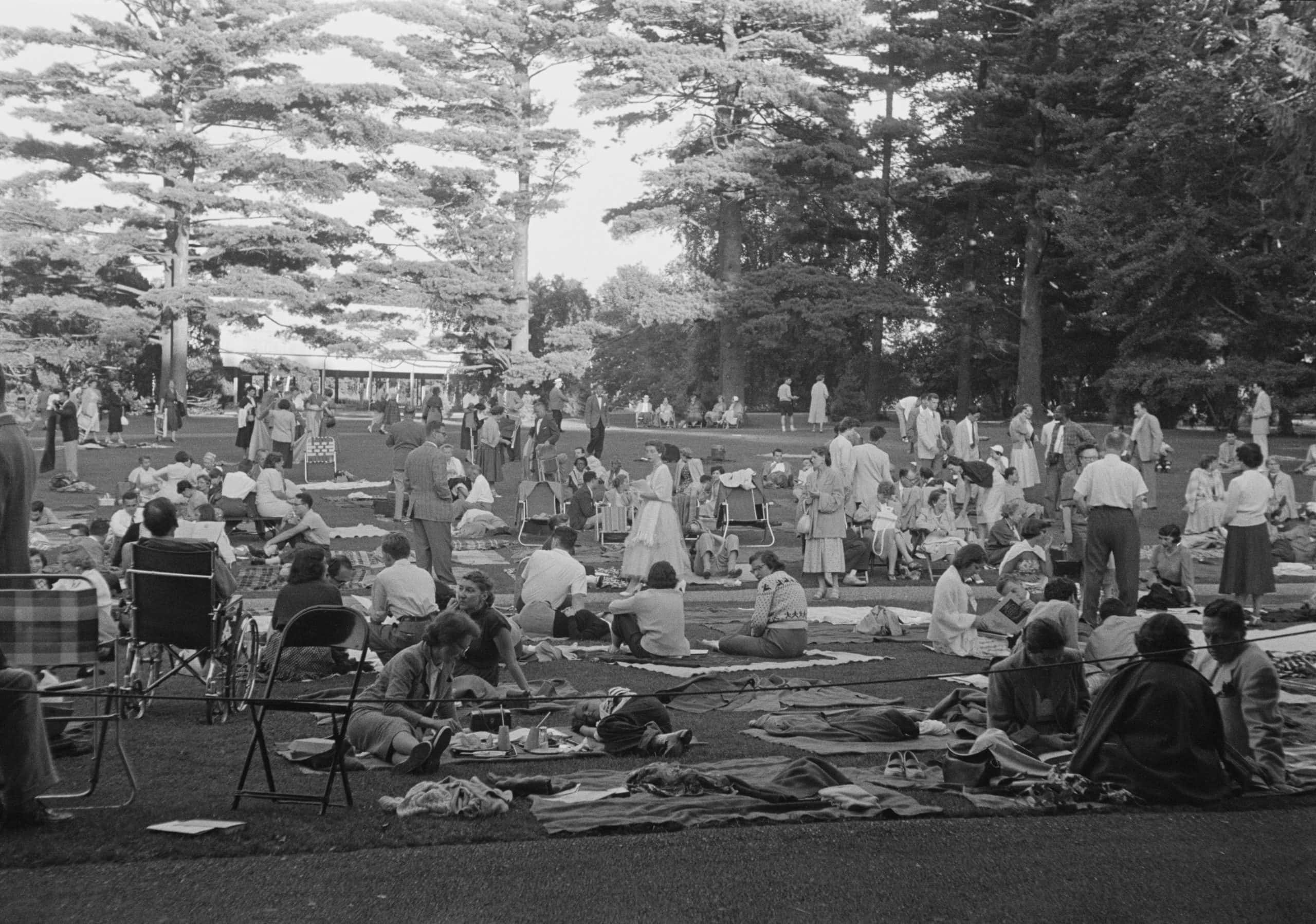
Music fans relax on the grounds of Tanglewood near Lenox, Massachusetts, around 1960 while listening to the Boston Symphony Orchestra. Tanglewood had already been the orchestra's summer home for decades, and its lawn helped turn formal classical performances into something audiences could experience outdoors with a picnic. That tradition survives today. The clothes and blankets may have changed, but sitting under the summer sky while an orchestra plays remains one of the rare experiences connecting the 1960s directly to the present.
Laundry Day at a New York Hotel
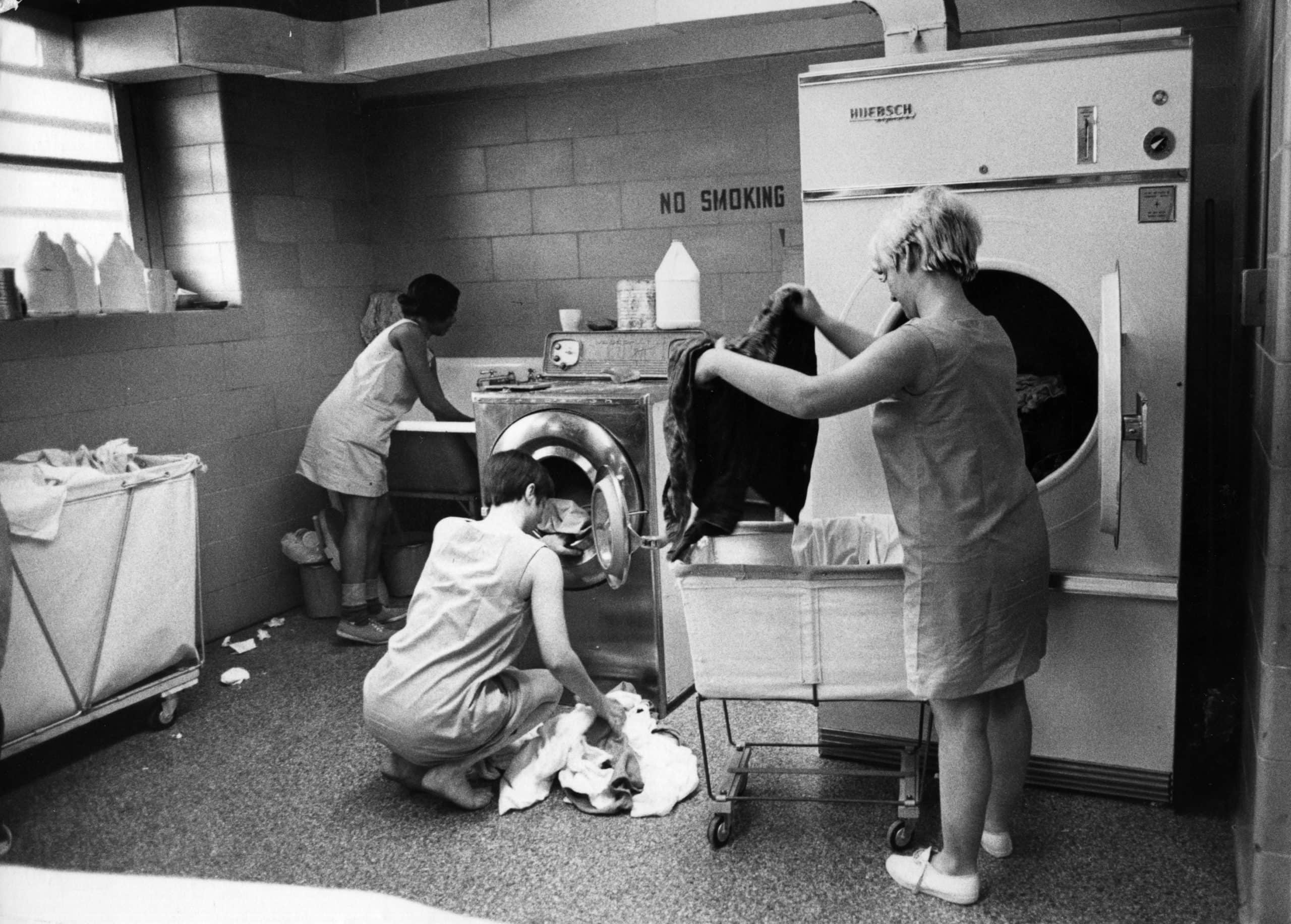
This circa-1965 photograph shows women handling laundry inside a New York hotel. Washing machines were hardly new by the 1960s, but access to laundry equipment varied considerably between homes, apartments, hotels, and commercial facilities. The machines look older, but the rows of front-loading doors are surprisingly recognizable. Anyone who has spent an afternoon feeding quarters into machines or waiting on a dryer can probably relate to this scene better than they would like.
Model Airplanes Were Serious Business
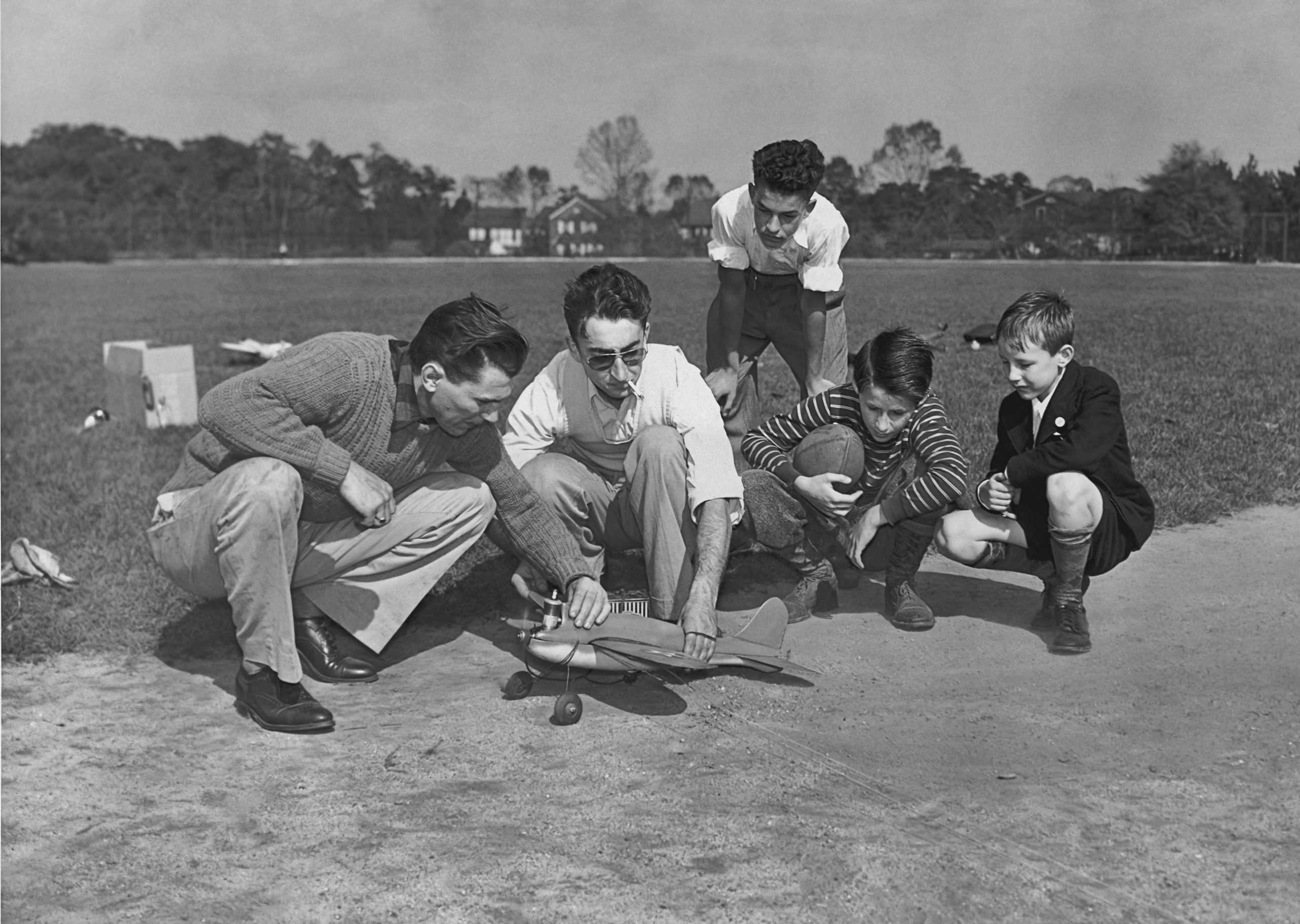
A group of enthusiasts inspects a tethered model aircraft around 1960. Long before consumer drones made remote-controlled flying machines commonplace, model aviation offered hobbyists a way to build, tune, and fly miniature aircraft themselves. The clothing may seem surprisingly formal for an afternoon in a field, but the concentration is instantly recognizable to anyone who has ever spent far too much time getting a hobby project exactly right.
Fifth Avenue on St. Patrick's Day, 1960
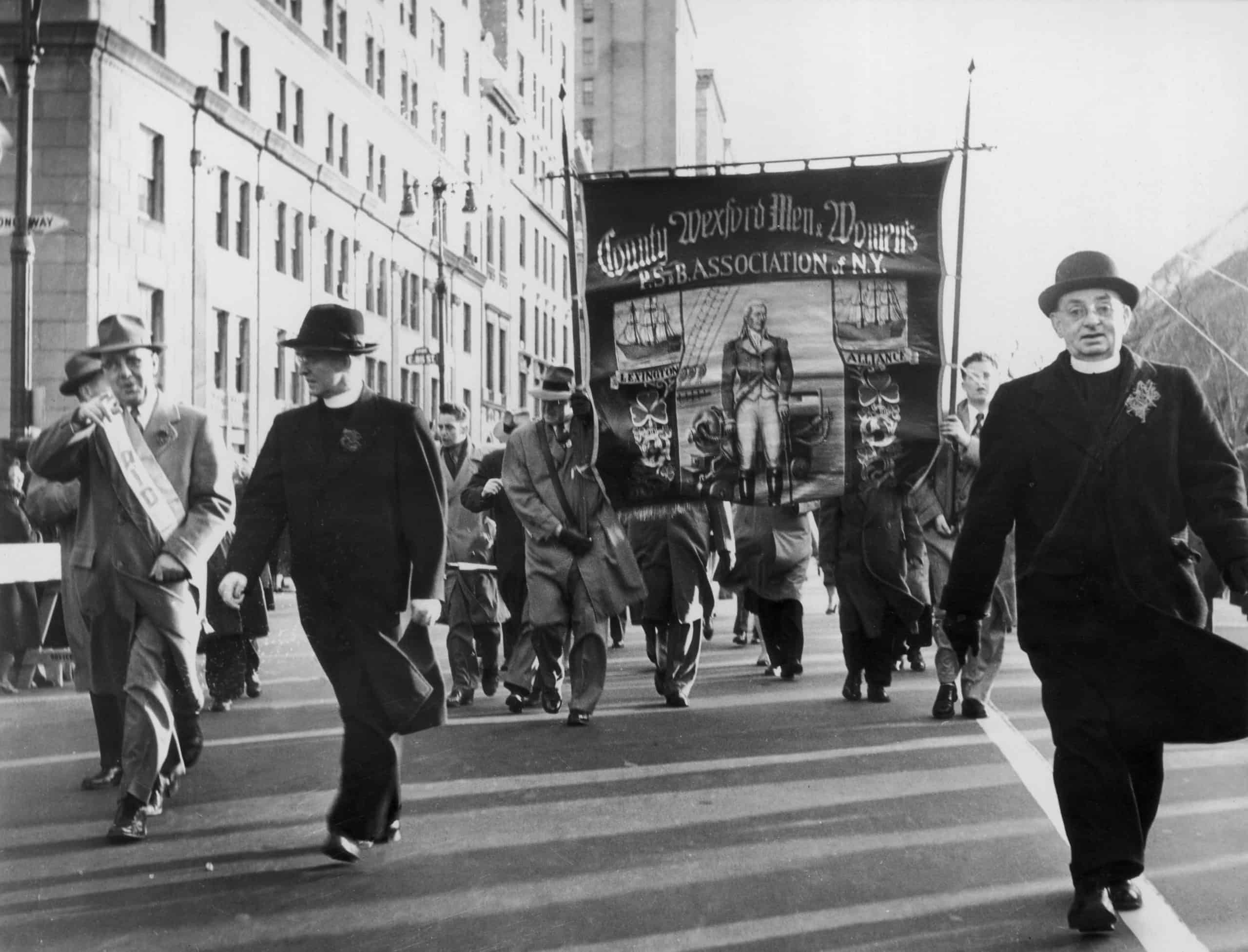
Marchers from County Wexford make their way along Fifth Avenue during New York City's 1960 St. Patrick's Day Parade. The city's celebration was already centuries old by this point, with the tradition dating back to the colonial era. Bagpipes, marching groups, spectators, and Fifth Avenue remain central to the event today. Change the clothes and update the automobiles in the background, and much of this scene would still be recognizable during a modern March 17 in Manhattan.
The Picture-Perfect 1960s Kitchen
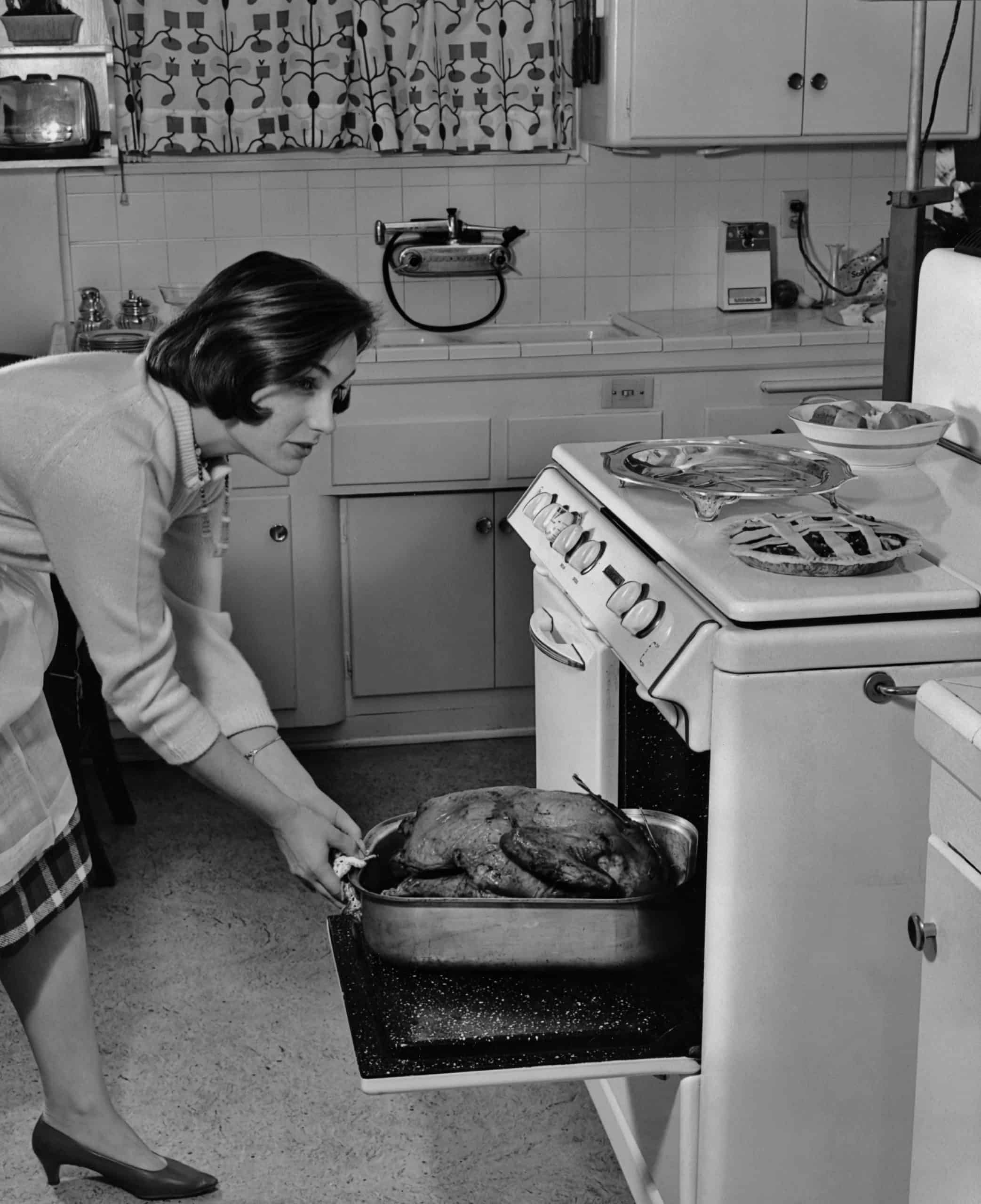
A woman checks a turkey in the oven in this staged-looking slice of 1960s domestic life. Rather than assuming who cooked dinner in every household, the photo is more interesting for what it shows about the era's idealized image of homemaking. The dress, cabinetry, cookware, and appliances immediately date the kitchen, while the enormous roast in the oven could still anchor a family holiday meal today. Some parts of dinner have changed far less than the room around them.
Cars Were Part of Teen Social Life
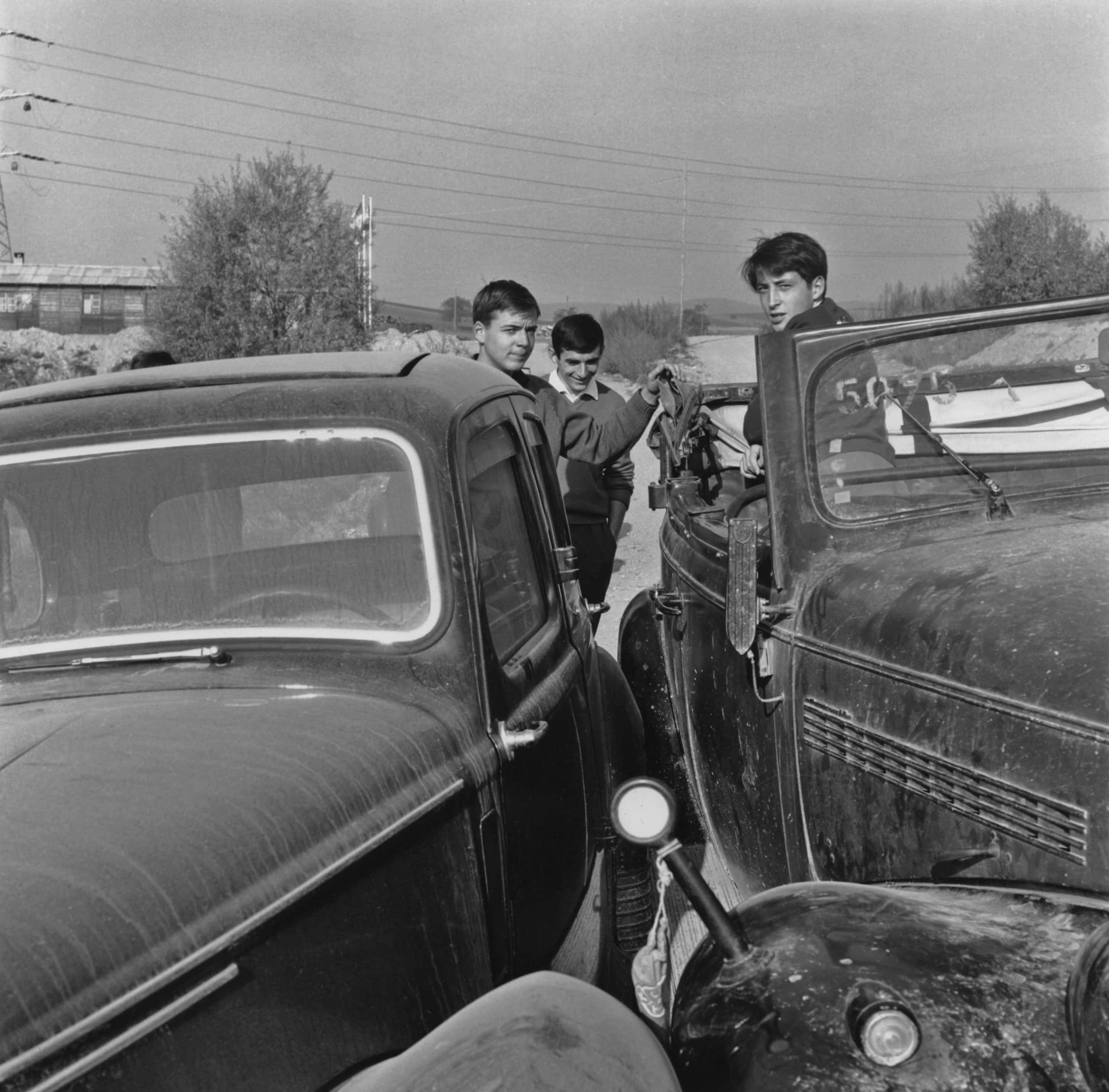
A group of teenagers gathers in and around cars in this photograph from about 1960. Cars played a major role in postwar youth culture, providing transportation but also a place to meet friends, listen to music, and gain a little independence. The vehicles themselves are unmistakably vintage, yet the social dynamic is not. Teenagers finding somewhere to park and hang out with friends may be one of the more durable traditions of the American automobile age.