Youtube

Pixelvario / Shutterstock

Public Domain / Wikimedia Commons

Public Domain / Wikimedia Commons

cineuno / iStock via Getty Images

national_museum_of_the_us_navy / Flickr

Three Lions / Hulton Archive via Getty Images

HaizhanZheng / E+ via Getty Images

Public Domain / Wikimedia Commons

michael clarke stuff / Wikimedia Commons

swilmor / iStock via Getty Images

Nikolay Tsuguliev / iStock via Getty Images

Keystone / Hulton Archive via Getty Images

Public Domain / Wikimedia Commons

Martin D Brown / iStock Editorial via Getty Images

Photos.com / PHOTOS.com>> / Getty Images Plus

annaswe / iStock via Getty Images

142575440@N02 / Flickr

Public Domain / Wikimedia Commons

Public Domain / Wikimedia Commons

cassowaryprods / Flickr

adoc-photos / Corbis Historical via Getty Images

chrisdorney / iStock Editorial via Getty Images

Hulton Archive / Getty Images

Bettmann / Getty Images

Keystone / Hulton Archive via Getty Images

KGrif / iStock Editorial via Getty Images


26 WWII Operations So Daring They Sound Made Up
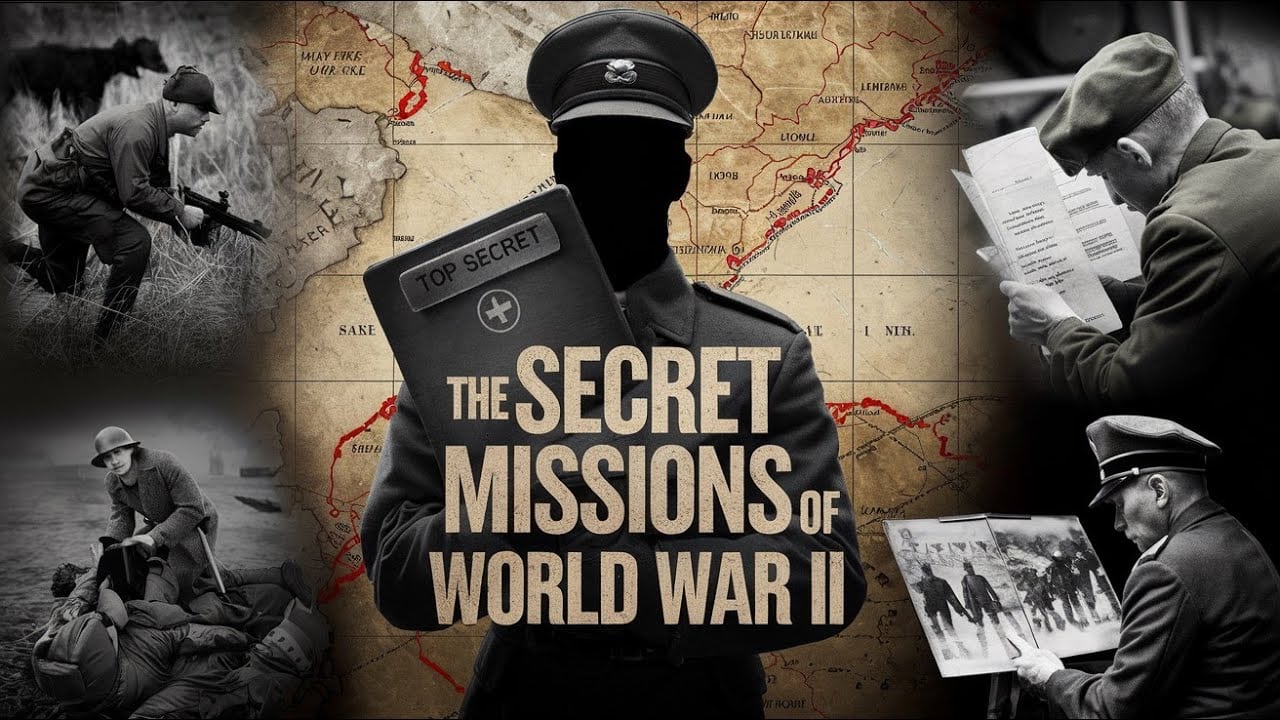
World War II produced plenty of operations that sound as if they were written for a spy thriller. Intelligence officers planted fake invasion plans on a corpse. Commandos paddled canoes into an enemy-held port. German troops dressed as Americans and deliberately sent U.S. units in the wrong direction. British radio operators even broke onto Luftwaffe frequencies and pretended to be German ground controllers.
Calling all of these "undercover missions" is a little too narrow. Some were espionage operations or deception plans. Others were raids, sabotage missions, rescue attempts, assassination plots, and surprise attacks whose planning depended on secrecy. Some changed the course of a campaign. Others failed spectacularly. At least one famous assassination plot may never have existed in the form later described.
What they share is audacity. These are 26 World War II operations, raids, and plots that still sound almost impossible more than eight decades later.
Salon Kitty: The Nazi Spy Brothel
The original slide calls this "Operation Kitty," but the better-known name is Salon Kitty. Beginning around 1939, Nazi security officials reportedly turned an upscale Berlin brothel into a listening post, wiring rooms and using selected women to draw information from diplomats, officers, and other influential guests. The basic espionage story is well established, but decades of retellings have mixed documented facts with legend, so some of the more sensational claims deserve caution. What is not in much doubt is the premise: Nazi intelligence realized that people sometimes say far more in private than they ever would in an office.
Pearl Harbor: A Surprise Attack Planned in Secret
Pearl Harbor was not an undercover mission in the usual sense, but it absolutely belongs in a broader look at secret plans and surprise operations. On December 7, 1941, Japanese carrier aircraft struck Pearl Harbor and other military targets on Oahu after months of closely guarded planning. U.S. forces received warning signs that morning, including a submarine contact and a radar sighting, but neither led to a full alert before the attack began. The strike achieved tactical surprise, badly damaged the Pacific Fleet, and pushed the United States directly into World War II.
Operation Postmaster: A Raid in Neutral Territory
Operation Postmaster sounds more like a spy novel than a real wartime mission. On January 14, 1942, a small British force tied to the Special Operations Executive raided the harbor at Santa Isabel on Fernando Po, then part of neutral Spanish Guinea. The raiders seized the Italian merchant ship Duchessa d'Aosta along with two smaller Axis vessels and towed them out to sea. The original version places the action in Spain and frames the ships mainly as U-boat support vessels. The more accurate story is even stranger: Britain carried out a covert seizure inside a neutral Spanish colony and tried to make the whole thing look like an encounter at sea.
Operation Biting: Stealing Germany's Radar Secrets
By early 1942, German radar was making life increasingly dangerous for Allied aircraft, so Britain decided to steal part of the system. On the night of February 27 to 28, British paratroopers dropped near Bruneval on the French coast, attacked a German radar site, and brought along a radar specialist to remove key components from a Würzburg set. The force then withdrew by sea with the captured equipment and technicians' notes. It was a compact raid with an unusually specific goal: get close enough to enemy technology to physically take it apart, bring the important pieces home, and figure out how to beat it.
The Doolittle Raid: Bombing Japan From a Carrier
The Doolittle Raid was one of the boldest American operations of 1942. Sixteen U.S. Army Air Forces B-25 bombers launched from the aircraft carrier USS Hornet on April 18, striking targets in Tokyo and other Japanese cities before continuing toward China. The task force had been spotted earlier than expected, forcing the bombers to launch farther from Japan than planned. Material damage was limited, but the psychological effect was enormous. The raid proved that the Japanese home islands could be hit and helped restore American morale just months after Pearl Harbor.
Operation Anthropoid: The Assassination of Reinhard Heydrich
On May 27, 1942, Czechoslovak agents Jozef Gabcik and Jan Kubis attacked Reinhard Heydrich, one of Nazi Germany's most powerful officials, as his car passed through Prague. Heydrich was badly wounded and died on June 4. The mission succeeded in killing its target, but the aftermath was horrific. Nazi authorities launched sweeping reprisals, including the destruction of Lidice and the murder or deportation of its residents. Operation Anthropoid remains one of the war's most famous resistance missions because it combined extraordinary courage with a devastating human cost.
Operation Pastorius: Nazi Saboteurs Land in America
In June 1942, eight German saboteurs arrived by U-boat in two groups, one landing on Long Island and the other near Ponte Vedra Beach, Florida. Their mission was to attack American industrial and transportation targets using explosives. It fell apart almost immediately. George Dasch, the leader of the Long Island group, decided to betray the operation and went to the FBI, eventually revealing the identities and plans of the others. All eight were captured before carrying out the sabotage. Six were later executed, while Dasch and Ernest Burger received prison sentences.
Operation Jubilee: The Dieppe Raid Goes Badly Wrong
Operation Jubilee was a major Allied raid on the French port of Dieppe on August 19, 1942. The force was led largely by Canadians, with British commandos and a small number of U.S. Army Rangers also taking part. The plan called for a quick assault, destruction of military targets, intelligence gathering, and withdrawal. Instead, the attackers ran into prepared defenses, difficult terrain, and heavy fire. More than half of the landing force was killed, wounded, or captured. Dieppe became a painful example of how quickly a complicated amphibious operation could unravel when surprise, firepower, and beach access failed to line up.
Operation Frankton: Canoes Against a German-Held Port
In December 1942, ten Royal Marines set out from a submarine in five small canoes and began paddling toward the heavily defended port of Bordeaux. They traveled at night, hid by day, and fought cold, tides, patrols, and exhaustion. Only four men reached the harbor, where they attached limpet mines to enemy shipping. The explosions damaged six ships. Of the ten men who launched, only Major Herbert Hasler and Marine Bill Sparks ultimately made it back to Britain. The rest were killed, captured, or died during the mission.
The Olterra: A Secret Torpedo Base Hidden in Plain Sight
One of the most unusual Axis operations came from an Italian merchant ship sitting in Spanish waters near Gibraltar. The Olterra had been interned at Algeciras, but Italian naval personnel secretly converted part of the ship into a base for manned torpedoes and combat swimmers. From there, raiders slipped into Gibraltar Bay to attack Allied shipping. British official naval history credits Olterra-based forces with repeated assaults that sank or damaged multiple merchant ships. It was essentially a covert naval base hidden inside a vessel the enemy could see across the water.
Operation Gunnerside: Sabotaging Nazi Heavy Water
Operation Gunnerside is often simplified into the story of commandos blowing up "material used in atomic bombs." Heavy water itself was not a bomb ingredient. Its importance was that it could serve as a moderator in a nuclear reactor, which is why Allied planners feared Germany's access to large-scale production in occupied Norway. In February 1943, Norwegian commandos infiltrated the Vemork plant and destroyed key heavy-water production equipment without firing a shot. Germany later repaired the facility, but the raid became one of the best-known sabotage missions of the war.
Operation Mincemeat: The Dead Man Who Fooled Hitler's Forces
Operation Mincemeat remains almost impossible to describe without sounding fictional. In April 1943, British intelligence placed false invasion documents on the body of a dead man dressed as a Royal Marines officer and released the body off the Spanish coast. The papers were designed to convince Germany that the Allies planned to invade Greece and Sardinia rather than Sicily. German intelligence took the bait, helping pull attention and forces away from the real target. When Allied troops landed in Sicily that July, the deception had done exactly what planners hoped.
Operation Vengeance: Codebreakers Put Yamamoto in the Crosshairs
American codebreakers handed U.S. planners an extraordinary opportunity in April 1943 when they decrypted a Japanese message containing Admiral Isoroku Yamamoto's travel schedule. Yamamoto, commander in chief of Japan's Combined Fleet and a central architect of the Pearl Harbor attack, was expected to fly near Bougainville on April 18. U.S. Army Air Forces P-38 fighters flew a long, carefully timed interception route and found his formation almost exactly where expected. Yamamoto's bomber was shot down, killing him and everyone aboard. The mission depended on intelligence remaining so secret that the Americans had to avoid revealing they were reading Japanese naval communications.
Operation Chastise: The Famous Dambusters Raid
On the night of May 16 to 17, 1943, nineteen specially modified Lancaster bombers from Britain's 617 Squadron attacked major dams in Germany using Barnes Wallis' spinning "bouncing bomb." The Möhne and Eder dams were breached, while the Sorpe was damaged but remained standing. The raid became an enormous morale story in Britain, but it came at a steep price. Eight Lancasters were lost and 53 airmen were killed. The flooding also killed civilians and forced laborers, and German repairs restored much of the disrupted production faster than Allied planners had hoped.
Operation Eiche: The Mountaintop Rescue of Mussolini
After Benito Mussolini was removed from power in July 1943, the new Italian government moved him between secret detention sites before holding him at the Campo Imperatore hotel high on the Gran Sasso massif. On September 12, German paratroopers and SS commandos arrived in gliders and seized the hotel in a lightning raid. Mussolini was flown out shortly afterward. Otto Skorzeny became the most famous face associated with the operation, although German airborne officer Harald Mors played a major role in planning and commanding the broader rescue. Mussolini had been held by Italian authorities, not Allied captors, as the original version states.
Operation Source: Midget Submarines Go After Tirpitz
The German battleship Tirpitz tied down major Allied naval resources simply by existing in Norwegian waters. In September 1943, Britain tried something unusually small against something enormous. X-class midget submarines were towed toward northern Norway and then slipped through defenses surrounding German warships. On September 22, X-craft crews placed explosive charges beneath Tirpitz. The blasts badly damaged the battleship and forced months of repairs. Several X-craft were lost, and surviving crews were captured, but the mission achieved the main objective of taking Tirpitz out of action for a significant stretch.
Operation Corona: British Radio Operators Hijack Luftwaffe Orders
The original piece dates Operation Corona to 1940 through 1943, but the better-supported timeline begins in October 1943. During RAF bomber raids, German-speaking British operators broke onto Luftwaffe radio frequencies and impersonated German ground controllers. Their goal was beautifully simple: issue false directions, countermand real orders, and confuse night-fighter crews trying to intercept British bombers. Many of the operators were refugees from Nazi Germany, including Jewish refugees whose native accents made the deception convincing. When the Germans switched to female controllers, the RAF answered with German-speaking women of its own.
Operation Long Jump: The Assassination Plot Historians Still Debate
Operation Long Jump is usually described as a Nazi plot to kill Franklin D. Roosevelt, Winston Churchill, and Joseph Stalin during the Tehran Conference in late 1943. Soviet intelligence said it had uncovered and stopped the plan. The problem is that the historical record is murky. British and American officials expressed doubts, later Soviet accounts changed over time, and Otto Skorzeny denied that an active assassination mission ever existed. There may have been German interest in such a plot, but presenting Long Jump as a clearly documented operation goes too far. The uncertainty is actually what makes the story so fascinating.
Operation Bodyguard: The Giant Lie Protecting D-Day
Operation Bodyguard was not one trick. It was the umbrella for a huge Allied deception campaign designed to hide when and where the invasion of Western Europe would come. False radio traffic, double agents, dummy equipment, invented military formations, and misleading intelligence all helped sell the idea that major attacks might fall somewhere other than Normandy. The deception spread German attention across a huge stretch of coastline and helped delay reinforcement of the real invasion beaches. By D-Day, deception had become a weapon every bit as carefully planned as ships, aircraft, and artillery.
The Kreipe Operation: Kidnapping a German General on Crete
On the night of April 26, 1944, British SOE officers Patrick Leigh Fermor and W. Stanley Moss, working with Cretan resistance fighters, stopped the car of German Major General Heinrich Kreipe while disguised as German military police. They kidnapped him, drove through German checkpoints, abandoned the vehicle, and then moved across the mountains of occupied Crete while German forces searched for them. On May 14, a British motor launch carried Kreipe and his captors to Egypt. The operation was spectacularly daring, although later assessments have generally found that its strategic military impact was limited.
Operation Fortitude South: Patton's Army That Barely Existed
Fortitude South was one of the most successful pieces of the wider D-Day deception effort. The Allies created the impression that General George S. Patton commanded a huge invasion force in southeastern England preparing to strike the Pas-de-Calais, the shortest route across the English Channel. Fake formations, controlled double agents, radio traffic, and dummy equipment helped make the story believable. Even after Allied troops landed in Normandy on June 6, German leaders remained worried that Normandy was a diversion and that the main blow was still coming farther north. That hesitation helped keep German forces away from the real battlefield.
Operation Valkyrie: The Bomb That Nearly Killed Hitler
On July 20, 1944, Colonel Claus von Stauffenberg carried a bomb in a briefcase into a meeting at Hitler's Wolf's Lair headquarters. The larger conspiracy planned to use Germany's Reserve Army and an existing emergency plan called Operation Valkyrie to seize control of the government after Hitler's death. The bomb exploded, killing four people, but Hitler survived. The coup quickly collapsed, and Stauffenberg and several fellow conspirators were executed that night. The failed plot was followed by a much wider Nazi crackdown that killed thousands of suspected opponents.
Operation Zeppelin: The Failed Plot to Kill Stalin
Operation Zeppelin was a broader German intelligence program that recruited Soviet prisoners and defectors for espionage and sabotage behind Soviet lines. Its most famous mission came in September 1944, when agents Pyotr Tavrin and Lidia Shilova were sent toward Moscow with false documents, weapons, and equipment for an apparent attempt on Stalin or other senior Soviet leaders. Their aircraft was forced down near Smolensk, and the pair were arrested before they could reach Moscow. Details differ across sources, but unlike the disputed Long Jump story, Soviet records provide a much more concrete trail for the Tavrin mission.
Operation Greif: German Commandos Disguised as Americans
At the start of the Battle of the Bulge in December 1944, Germany sent English-speaking commandos behind Allied lines wearing U.S. uniforms and using captured American equipment. The teams changed road signs, issued false directions, cut communications, and spread confusion. Their numbers were small, but rumors quickly made the threat seem much larger than it really was. American troops began questioning one another about baseball, state capitals, and other supposedly foolproof tests of identity. Operation Greif failed to capture the key Meuse River bridges, but as a psychological operation it created chaos far beyond the size of the force involved.
The Great Raid: More Than 500 Prisoners Rescued
On January 30, 1945, U.S. Army Rangers, Alamo Scouts, and Filipino guerrillas struck the Japanese prison camp at Cabanatuan in the Philippines. The rescuers moved deep behind enemy lines, coordinated with local resistance forces, and attacked a camp holding hundreds of sick and starving Allied prisoners. The raid freed 511 prisoners, according to the U.S. Army's 80th-anniversary commemoration. It succeeded with remarkable speed and coordination, and the rescued men were moved back toward Allied lines, many riding in carts because they were too weak to walk. It remains one of the most celebrated prisoner-rescue operations of the war.
Operation Cherry Blossoms at Night: Japan's Planned Plague Attack
This plan was real, but the original timeline needs fixing. Operation Cherry Blossoms at Night was finalized in March 1945 for a proposed September attack, not a March strike on San Diego. The plan called for Japanese I-400-class submarines to carry aircraft across the Pacific and launch a biological attack against Southern California using plague-infected fleas developed through Unit 731's horrific warfare program. The operation was never carried out. Japan surrendered in August, before the planned September 22 attack date, and the necessary submarine force was not fully ready anyway. Few entries on this list better show how extreme the final months of the war had become.