
Everett Collection/Shutterstock.com

PeopleImages/Shutterstock.com

Max kegfire/Shutterstock.com
Everett Collection/Shutterstock.com

Cecil W. Stoughton / Public domain
Hulton Archive / Hulton Archive via Getty Images

Everett Collection/Shutterstock.com

Rawpixel.com/Shutterstock.com

voy ager/Shutterstock.com

Samuel Scott / CC BY-SA 3.0

nyker/Shutterstock.com





10 Famous Quotes That Are Often Misunderstood
Famous quotes have a way of taking on lives of their own. We hear them in history class, see them in movies, and watch them turn up on everything from political speeches to coffee mugs. After enough repetition, it's easy to assume we know who said them, what they meant, and exactly how the words were delivered.
But the real stories are often messier. Some familiar lines were shortened into something punchier. Others were remembered decades after the fact, borrowed from older ideas, or attached to people who never said them. And a few are perfectly genuine quotes that have simply lost the circumstances that made them meaningful.
For this 24/7 Tempo slideshow, we're revisiting 10 famous quotations and the history behind them. These aren't all outright fakes, and that's part of the point. Sometimes the wording is disputed, sometimes the attribution is wrong, and sometimes the quote is accurate but the popular explanation misses what was really going on.
“Nice Guys Finish Last” — Leo Durocher
You have probably heard this one used as advice about dating, business, or life in general. But when baseball manager Leo Durocher made the remark famous in 1946, he was talking about a particular team, not giving the world a rule for success. Durocher, then managing the Brooklyn Dodgers, was commenting on the rival New York Giants and their well-liked manager, Mel Ott. A contemporary newspaper account quoted him saying the nice guys were over there in seventh place. Sportswriters gradually turned that specific jab into the sharper, more memorable “Nice guys finish last.” Durocher later complained that the popular version misrepresented his point, although he eventually leaned into it by using the phrase as the title of his 1975 autobiography. A baseball insult had become a philosophy without the context that originally made it funny.
“Well-Behaved Women Seldom Make History” — Laurel Thatcher Ulrich
You can find this quote on everything from coffee mugs to graduation cards, usually presented as encouragement to break the rules. It is also frequently credited to Eleanor Roosevelt or Marilyn Monroe. Neither wrote it. Historian Laurel Thatcher Ulrich used the line in a 1976 scholarly article about women in colonial New England. Her point was that women who lived relatively ordinary lives were often missing from the historical record, while those who challenged expectations were more likely to be remembered. In other words, she was questioning what historians chose to document, not telling everyone to go make trouble. Ulrich later embraced the discussion surrounding the phrase and even used it as the title of a book. The modern inspirational reading isn't necessarily wrong, but it is quite different from the observation that started it.
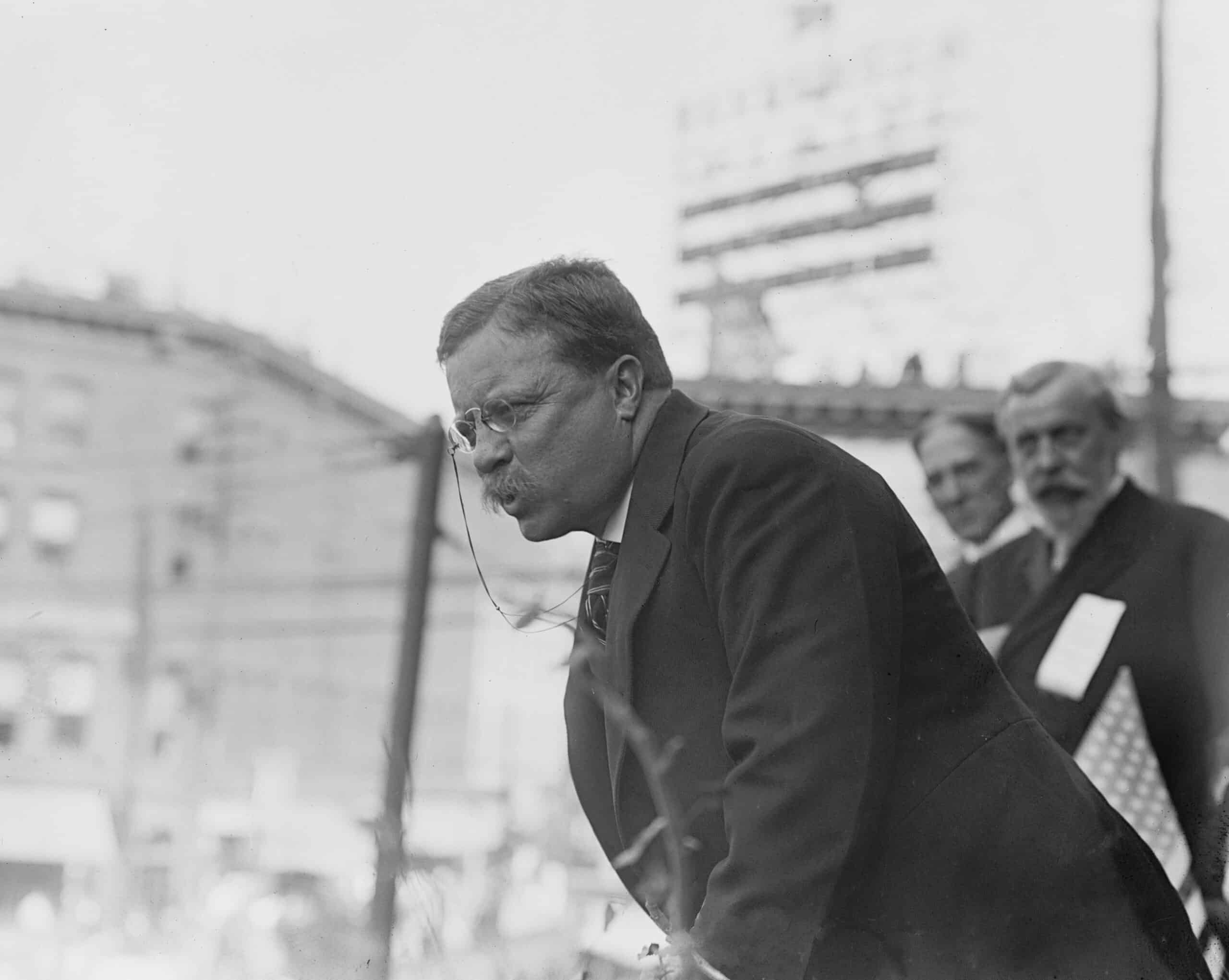
“Speak Softly and Carry a Big Stick” — Theodore Roosevelt
This line has become shorthand for Theodore Roosevelt's muscular approach to foreign policy. But he was using it before he became president. In a January 26, 1900, letter, Roosevelt called it a West African proverb and used it while discussing political maneuvering. Later, he applied the idea to international relations: avoid needless bluster, but have the strength to back up what you say. The interesting part is where the saying came from. Researchers have not established a reliable earlier West African source, though that does not prove Roosevelt invented it. The original attribution remains uncertain. What is clear is that Roosevelt genuinely used the phrase, and its message wasn't simply to intimidate people. Speaking softly mattered every bit as much as carrying the stick.
“Ask Not What Your Country Can Do for You” — John F. Kennedy
John F. Kennedy absolutely delivered this line during his January 20, 1961, inaugural address. The misconception is that the thought appeared out of nowhere that morning. Similar calls to put public service ahead of personal gain had circulated for years, including a 1918 speech by Vice President Thomas R. Marshall that contrasted what citizens could do for their country with what their country could do for them. Kennedy also expressed comparable ideas in earlier speeches, and he and adviser Ted Sorensen worked closely on the inaugural address. That doesn't establish that Kennedy copied anyone's wording. Rather, it shows how he gave an older civic-minded idea a concise, unforgettable form. The actual speech was also broader than one catchy sentence, calling for cooperation and sacrifice during a dangerous stretch of the Cold War.
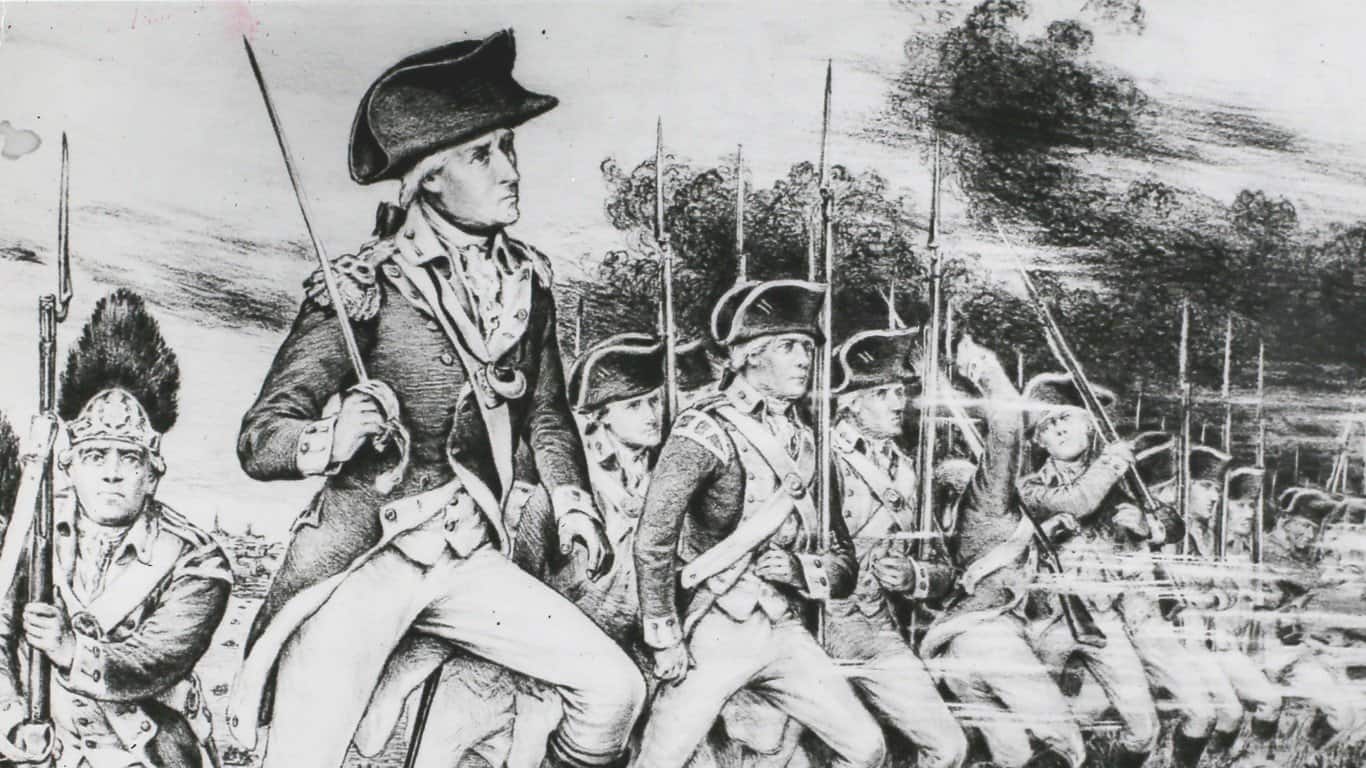
“Don’t Fire Until You See the Whites of Their Eyes” — Bunker Hill
It's one of the best-known lines from the American Revolution: colonial soldiers patiently waiting as the British advance, then firing at the last possible moment. The Battle of Bunker Hill took place on June 17, 1775, with much of the fighting actually centered on nearby Breed's Hill. The defenders really were short of ammunition, and officers urged them to hold their fire until their shots would count. What historians cannot confidently establish is whether anyone used the exact “whites of their eyes” wording. The line has been credited to several officers, especially William Prescott and Israel Putnam, and may be a later embellishment. The British eventually won the battle, though they suffered heavy losses. The practical lesson about conserving ammunition is well supported; the perfectly worded battlefield command is less certain.
“Give Me Liberty, or Give Me Death!” — Patrick Henry
Patrick Henry delivered a powerful speech to Virginia delegates on March 23, 1775, urging them to prepare for possible armed conflict with Britain. The problem for anyone trying to quote it word for word is that no contemporary transcript survives. The familiar speech was reconstructed by William Wirt for an 1817 biography, more than 40 years after Henry spoke, using recollections from people who had attended. That means the polished version found in textbooks cannot be treated as a verbatim recording. But it would be going too far to declare the famous closing line a complete invention. Historians disagree about the speech's exact wording, and some consider the “liberty or death” ending likely genuine. Henry's argument and its importance are real; certainty about every dramatic sentence is another matter.
“I Shall Return” — Douglas MacArthur
General Douglas MacArthur's promise was real, but the familiar photograph of his return leaves out a lot of the story. After Japanese forces invaded the Philippines, President Franklin D. Roosevelt ordered MacArthur to leave his threatened position and travel to Australia. In March 1942, MacArthur publicly declared that he would return, turning a military withdrawal into a pledge that resonated across the Pacific. He did come back, landing on Leyte in October 1944 as Allied forces launched a major operation to retake the Philippines. But that dramatic arrival was not the end of the campaign. American and Filipino forces continued fighting into 1945, and civilians endured enormous suffering during the occupation and liberation. The famous words were not a fabrication; the simplified story that one man's return meant an immediate victory is what needs more context.
“Those Who Give Up Essential Liberty” — Benjamin Franklin
Benjamin Franklin's warning about sacrificing essential liberty for temporary safety is regularly quoted in arguments about privacy, surveillance, and government power. Those modern debates may give it new relevance, but the original dispute was more specific. In 1755, Franklin is widely credited with helping draft a Pennsylvania Assembly response to its colonial governor during a fight over funding frontier defense. The Assembly wanted to tax the Penn family's property; the governor resisted, and the Penns offered money without accepting the legislature's authority to tax their land. Franklin was defending the Assembly's power to govern and raise money rather than surrender that authority for a short-term payment. So the sentence wasn't originally a general claim that every security measure threatens personal freedom. It came from a political fight about taxation, public defense, and representative government.
“I Have Not Yet Begun to Fight” — John Paul Jones
The battle behind this famous line was real, and so was John Paul Jones's refusal to surrender. On September 23, 1779, his badly damaged Bonhomme Richard fought the British warship HMS Serapis off the English coast. Jones pressed on, ultimately capturing the British ship even though his own vessel sank afterward. The uncertainty involves his precise words. The U.S. Navy traces the familiar quotation to a later recollection by Jones's first lieutenant, Richard Dale, rather than a transcript made during the fighting. Other accounts give different versions of Jones's defiant response. So historians have good reason to credit the event and the sentiment while being cautious about treating the polished sentence as something recorded in the moment. His actions were dramatic enough without knowing exactly how he phrased them.
“Of the People, by the People, for the People” — Abraham Lincoln
Abraham Lincoln made this phrase famous in the Gettysburg Address on November 19, 1863, but he wasn't the first writer to express the idea in those terms. Abolitionist minister Theodore Parker had described democracy using closely related wording years earlier, and other American political figures had made similar arguments about government deriving power from the people. Historians have identified Parker's work among material associated with Lincoln, making a connection plausible. That doesn't mean Lincoln's speech was simply borrowed. At Gettysburg, he tied the idea of popular government to the deaths of Civil War soldiers, the nation's founding promises, and what he called the unfinished work ahead. Detached from the rest of the address, the phrase can sound like a timeless slogan. In context, it was an urgent argument about whether American democracy could survive the war.