Matthew Eisman / Getty Images Entertainment via Getty Images

Yahoo Inc / BY 2.0

Ian Gavan / Getty Images Entertainment via Getty Images

Michael Ochs Archives / Michael Ochs Archives via Getty Images

Frederick M. Brown / Getty Images
Hulton Archive / Hulton Archive via Getty Images

Christian Bertrand / Shutterstock.com

Courtesy of CBS
Matthew Eisman / Getty Images Entertainment via Getty Images

Kevin Winter / Getty Images Entertainment via Getty Images

Hulton Archive / Getty Images



10 Musicians Who Were Sued Over Their Own Songs
Some of the biggest hits in music history have also sparked some pretty expensive arguments. A familiar melody, a recognizable bassline, or a few chords that sound a little too much like an older song can lead to accusations of copyright infringement. Sometimes those disagreements end up in court. Other times, the artists and their publishers work something out before a lawsuit is ever filed.
And we're not talking about obscure songs nobody remembers. Everyone from Led Zeppelin and George Harrison to Ed Sheeran and Coldplay has dealt with accusations that one of their hits borrowed too heavily from someone else's work. Some artists lost their cases, others won, and a few settled their differences quietly. Here are 10 famous copyright disputes, the songs involved, and how things ultimately played out.
Coldplay: "Viva La Vida"
Coldplay's 2008 hit "Viva La Vida" became an international success, but guitarist Joe Satriani believed the band had borrowed portions of his 2004 instrumental "If I Could Fly." He filed a copyright infringement lawsuit in December 2008, alleging that the similarities went beyond coincidence. Coldplay denied copying the composition, maintaining that any resemblance was unintentional. The dispute never reached a jury. In September 2009, a federal judge dismissed the case with prejudice after both parties agreed to end the litigation. Reports indicated that an agreement had been reached, although the financial terms were never publicly disclosed. Importantly, the dismissal wasn't a court finding that Coldplay had copied Satriani's music. The band continued performing "Viva La Vida," which remains one of its most recognizable songs.
Ed Sheeran: "Thinking Out Loud"
Ed Sheeran faced a lengthy copyright battle over his 2014 hit "Thinking Out Loud," which was accused of borrowing elements from Marvin Gaye's 1973 classic "Let's Get It On." The lawsuit wasn't brought by Gaye himself, who died in 1984, but by heirs of Ed Townsend, who co-wrote the original song with Gaye. The plaintiffs argued that the songs shared protected musical elements, including aspects of their chord progressions and rhythms. In May 2023, a federal jury found that Sheeran had not infringed the copyright. Another case involving a company that owned a portion of the older song's royalty interests was dismissed, and that dismissal was upheld by a federal appeals court in November 2024. The appellate court concluded that the musical elements at issue were too commonplace to support the infringement claim. Sheeran emerged from the high-profile legal battles without being found liable for copying the song.
Led Zeppelin: "Stairway to Heaven"
Few rock songs are as recognizable as Led Zeppelin's "Stairway to Heaven," but its opening guitar passage became the centerpiece of a major copyright dispute. The estate of Randy Wolfe, better known as Randy California of the band Spirit, alleged that Led Zeppelin had copied elements of Spirit's instrumental "Taurus," which was released before "Stairway to Heaven." The lawsuit focused on similarities between the musical compositions and whether members of Led Zeppelin had access to the earlier work. A jury ruled in Led Zeppelin's favor in 2016, although subsequent appeals kept the case alive. In March 2020, the Ninth Circuit Court of Appeals upheld the judgment in favor of the band, concluding that the jury's verdict should stand. The result was a major victory for Led Zeppelin and an important decision concerning how copyright protection applies to common musical elements.
Robin Thicke and Pharrell Williams: "Blurred Lines"
Robin Thicke and Pharrell Williams scored one of the biggest hits of 2013 with "Blurred Lines," but the song's resemblance to Marvin Gaye's 1977 hit "Got to Give It Up" resulted in one of the most closely watched music copyright battles in recent history. Members of Gaye's family claimed that the newer recording infringed the copyright of the earlier composition. Unlike several other disputes on this list, this one ended with a significant victory for the copyright holders. A federal jury found infringement in 2015, and the case continued through years of appeals and adjustments to the damages. The final judgment included approximately $5.3 million in damages, along with an ongoing royalty equal to 50% of specified songwriter and publishing revenue from "Blurred Lines." The case became particularly controversial because of questions about where musical influence ends and copyright infringement begins.
The Beach Boys: "Surfin' U.S.A."
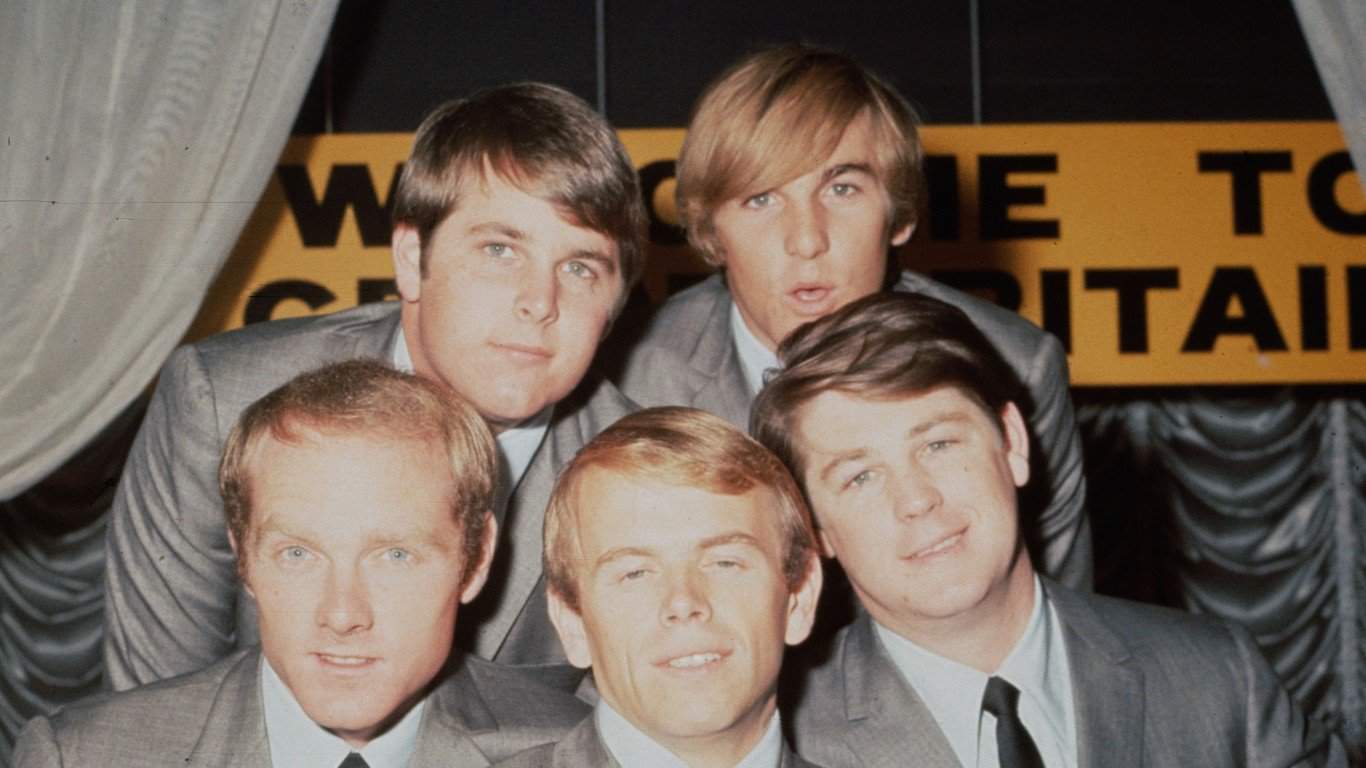
The Beach Boys helped define the sound of California surf culture with their 1963 hit "Surfin' U.S.A.," but its melody had a familiar source. The song was closely based on Chuck Berry's 1958 recording "Sweet Little Sixteen," with Brian Wilson writing new lyrics centered on surfing destinations instead of the places mentioned in Berry's original. Berry's representatives recognized the similarities and threatened legal action over the use of the music. Rather than fight the matter in court, the parties reached an arrangement that resulted in Berry receiving songwriting credit and associated rights. Early releases had credited Wilson, but subsequent credits recognized Berry's composition. The dispute remains one of rock music's best-known examples of a hit song borrowing heavily from an earlier recording. It also demonstrates that copyright disagreements don't always require a courtroom battle to change who receives credit and royalties.
Lana Del Rey: "Get Free"
Lana Del Rey found herself in a public copyright disagreement with Radiohead over her 2017 song "Get Free," which drew comparisons to the band's 1990s hit "Creep." In January 2018, Del Rey publicly claimed that Radiohead was suing her and demanding the publishing rights to her song. However, Radiohead's music publisher, Warner/Chappell, disputed that account. The publisher confirmed that discussions had taken place over similarities between the compositions but explicitly stated that no lawsuit had been filed and denied demanding 100% of the publishing rights. A few months later, Del Rey told an audience in Brazil that the dispute was over. The details of any final agreement were not publicly confirmed, and there was no reported court ruling finding that she had infringed Radiohead's copyright. It's a good example of how a copyright disagreement can become headline news without producing an actual lawsuit.
George Harrison: "My Sweet Lord"
Former Beatle George Harrison experienced one of the most famous music copyright cases of the 1970s after releasing his solo hit "My Sweet Lord." The song's melody resembled "He's So Fine," a 1963 hit recorded by the Chiffons and written by Ronald Mack. Bright Tunes Music, which owned the earlier composition's copyright, filed suit against Harrison in 1971. In 1976, a federal judge determined that Harrison had infringed the copyright through what became widely known as subconscious plagiarism. In other words, the court found infringement without concluding that Harrison had deliberately set out to steal the melody. The damages dispute continued for years, becoming entangled in litigation involving Harrison's former manager Allen Klein and his company ABKCO. Although substantial damages were initially calculated, the eventual financial and rights arrangements were far more complicated than a simple fine. Harrison remained liable for copyright infringement, making the case an enduring example of how unintentional copying can still have legal consequences.
Vanilla Ice: "Ice Ice Baby"
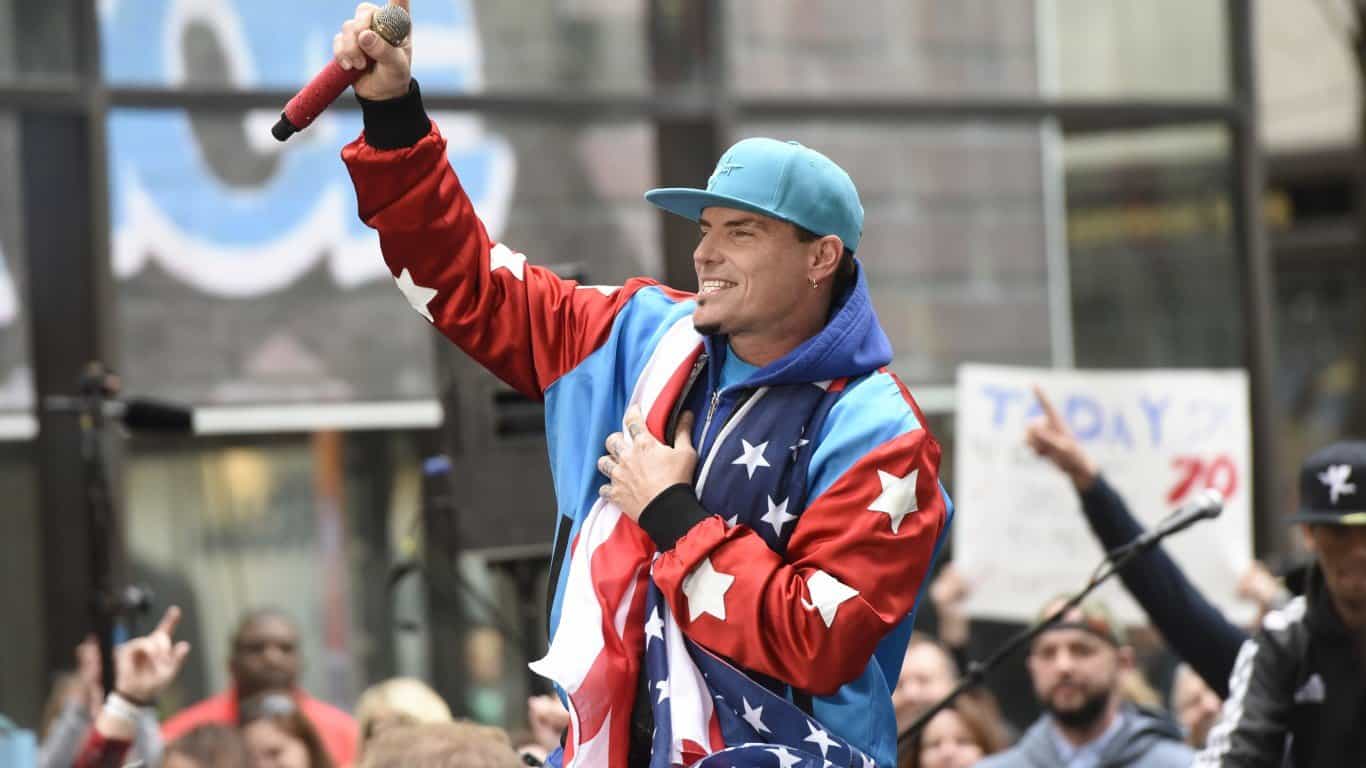
Vanilla Ice's 1990 breakthrough hit "Ice Ice Baby" featured a bassline that listeners immediately connected to Queen and David Bowie's 1981 collaboration "Under Pressure." The resemblance wasn't accidental in the usual sense: the rapper's recording used the recognizable bassline from the earlier song without initially providing the appropriate songwriting credits or authorization. Vanilla Ice famously tried to distinguish the two basslines by pointing to a slight rhythmic difference, an explanation that became part of the controversy surrounding the hit. Representatives of the original songwriters challenged the unauthorized use, and the parties eventually reached a private agreement. Queen and David Bowie received songwriting credits and associated rights, but the matter was resolved without a filed copyright lawsuit. The exact financial terms were not publicly disclosed. The controversy remains a familiar example of why sampling someone else's music generally requires proper permission and credit.
Sam Smith: "Stay With Me"
Sam Smith's 2014 hit "Stay With Me" drew attention for similarities between its chorus and the melody of Tom Petty's 1989 song "I Won't Back Down," which Petty co-wrote with Jeff Lynne. Publishers representing the earlier composition approached Smith's representatives, and the two sides quickly reached an agreement. Petty and Lynne were subsequently added to the songwriting credits for "Stay With Me" and received a share of the royalties, widely reported as 12.5% combined. Despite stories suggesting otherwise, Petty made it clear that the disagreement never resulted in a lawsuit and that filing one hadn't been his intention. He described the similarities as a musical accident and expressed no hard feelings toward Smith. The agreement allowed everyone to move forward without a lengthy legal battle, making this one of the more amicable resolutions among high-profile music copyright disputes.
Johnny Cash: "Folsom Prison Blues"
Johnny Cash's "Folsom Prison Blues" became one of the defining songs of his career, but portions of it owed a significant debt to an earlier composition. Gordon Jenkins had written "Crescent City Blues," which was recorded by Beverly Mahr and released in the 1950s. Cash's song, first recorded in 1955, borrowed recognizable elements of its melody and lyrics. The similarities attracted greater attention after Cash's live performance at Folsom Prison became a major success in 1968. Jenkins subsequently brought a copyright infringement claim, arguing that Cash had used material from his earlier work without permission. The dispute was resolved outside court, with Cash reportedly paying Jenkins $75,000. Despite the settlement, "Folsom Prison Blues" remained one of Cash's signature recordings and a cornerstone of his musical legacy. The case illustrates that even an established hit can face legal challenges years after its original release.