During the 1990s, quotes made their way into pop culture and everyday life through repeated trips to the movie theater and secondhand VHS tapes. Before the modern-day internet, there wasn’t really any way you could trim or cut a certain clip and share it instantly. If a line became popular, it was because people repeated it.
Three decades later, many of those lines didn’t vanish. They’re everywhere, from arguments with coworkers to online memes posted by people who have never even seen the movie they are from. These are 15 scenes from 90s movies that are still quoted everywhere, and the reasons they refuse to fade.
Home Alone (1990): “Keep the Change, Ya Filthy Animal”
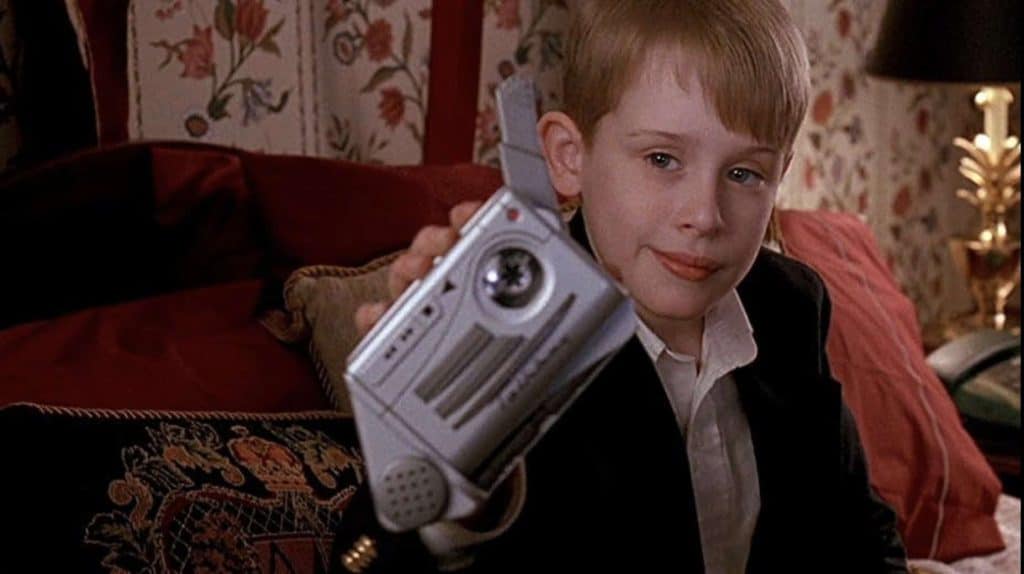
While Kevin McCallister is busy fighting off two inept burglars in Home Alone, he first uses an unlikely weapon before the elaborate booby traps ever come into play. When a pizza delivery man arrives at the house, Kevin plays a scene from the fictional gangster movie shown on his television and lets one threatening line do all the work for him.
That line comes from the made-up film Angels with Filthy Souls, created specifically for Home Alone. It was so memorable that it quickly took on a life of its own, becoming a familiar phrase for cheating someone out of something, ending a tense exchange, or turning an otherwise minor transaction into a dramatic gangster-style confrontation.
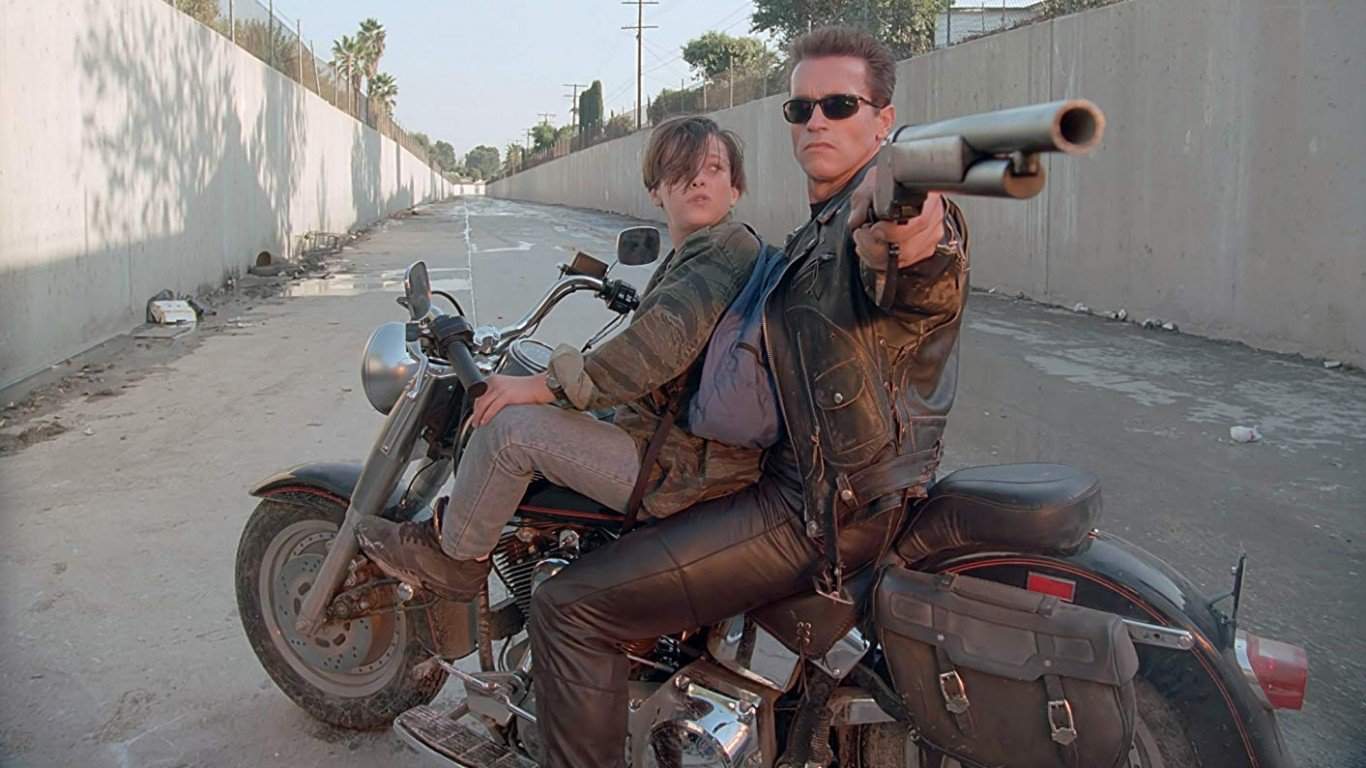
Terminator 2: Judgment Day (1991): “Hasta la Vista, Baby”
The reprogrammed T-800 delivers that famous line in Terminator 2: Judgment Day just before using a grenade launcher on the shape-shifting T-1000. It lands as both a threat and a joke, which is exactly why the moment stuck with audiences. Schwarzenegger’s flat, matter-of-fact delivery and unmistakable accent turned the four-word phrase into one of the most recognizable lines in action-movie history.
The quote existed before the film, but Terminator 2 made it forever synonymous with getting rid of someone or something for good. Since then, it has been used far beyond action scenes, often appearing ironically in breakup texts, layoff jokes, sports trash talk, and everyday situations where someone wants to make a dramatic exit or final point.
The Silence of the Lambs (1991): The Fava Beans and Chianti Line
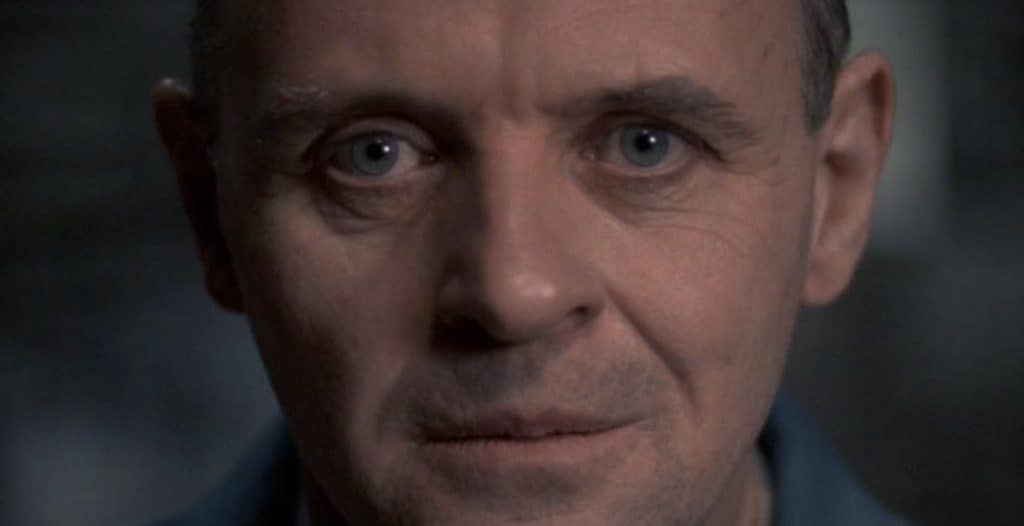
Hannibal Lecter spends a lot of time with FBI trainee Clarice Starling in his cage surrounded by reinforced glass. His demeanor is polite and collected to the point of being particularly unnerving. The chilling effect of his saying that he ate a human liver with some fava beans and a nice Chianti comes from such a brutal claim being paired with that same demeanor.
Anthony Hopkins appears in the film for only a small portion of its runtime, and this particular dialogue is what made many moviegoers say it was enough to win him an Academy Award for his performance. The line is particularly effective since Lecter delivers it in the way another person would talk about a good restaurant booking, complete with a small satisfied hiss at the end of it.
Some decades later, this line has remained one of the go-to examples of unsettling calm as well as a great excuse for an impression. People have used it in wine pairings and dinner party jokes, all of which involve an impersonation of the original delivery of the line with the characteristic hiss, even by people who have never sat through the movie itself.
A Few Good Men (1992): “You Can’t Handle the Truth!”
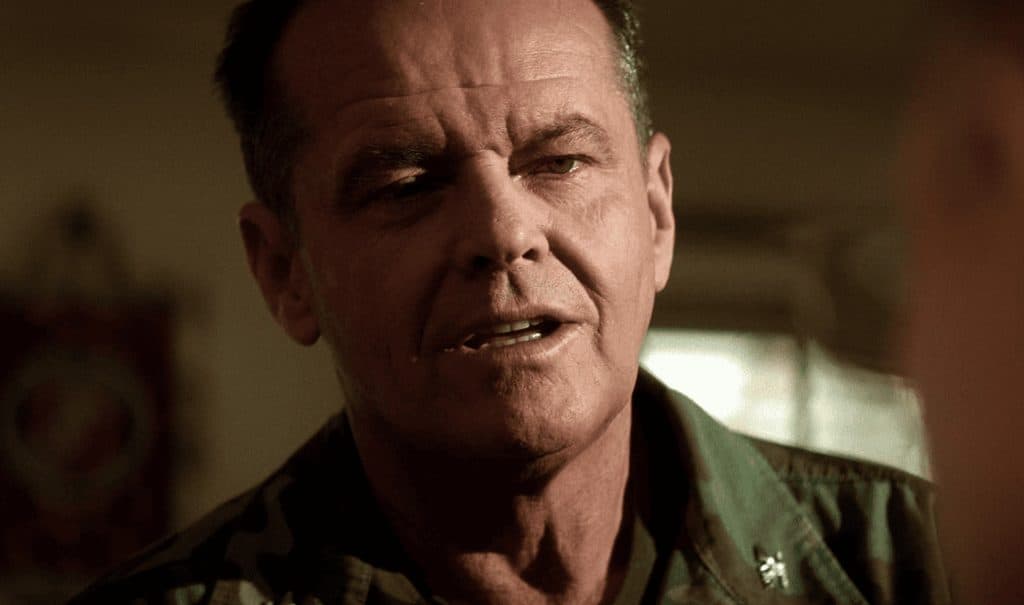
In this unforgettable courtroom scene from A Few Good Men, Jack Nicholson’s Colonel Jessup repeatedly goads Tom Cruise’s Lieutenant Kaffee, dismissing his questions and daring him to keep pushing. Kaffee finally corners him into revealing the truth about what happened during the “Code Red” order. Jessup’s response is less an answer than a complete collapse into rage, and Nicholson plays the moment as the breaking point for a character whose arrogance has convinced him that his actions are beyond judgment.
The line has since become one of the most frequently parodied quotes in cinematic history, appearing in political debates, comedy sketches, television shows, and everyday arguments. Anyone who raises their voice when asked a question they would rather avoid may hear this line thrown back at them, usually as a joke about becoming overly dramatic under pressure.
Wayne’s World (1992): “We’re Not Worthy”
Rather than shaking hands with their idol, Alice Cooper, Wayne and Garth kneel before him and bow, intoning the line in what can only be described as exaggerated devotion. It was a joke about fandom taken to its most literal extreme.
In fact, the act of kneeling became just as much of a part of popular culture as the catchphrase itself. Even decades down the road, people will perform the knee bend and chant in the presence of celebrities, after watching an amazing sports highlight, or even seeing anything that feels a little too impressive for a normal reaction.
Jurassic Park (1993): “Hold Onto Your Butts”
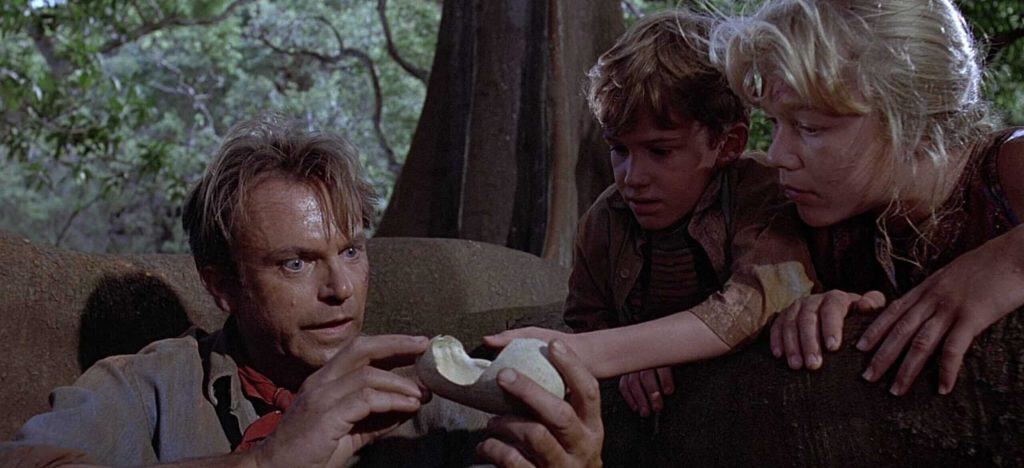
Jurassic Park handed out more quotable lines than almost any other movie of the decade, but one in particular never left. It comes later in the film, when Chief Engineer Ray Arnold tries to restart Jurassic Park’s shutdown systems. He tells everyone in the control room to prepare for what is coming soon, and indeed, shortly afterwards, the fences break, and the dinosaurs run free.
This line became a generic phrase used anytime something was about to go wrong, a humorous caution before a chaotic situation ensues that has outlasted every sequel the franchise produced.
Forrest Gump (1994): “Life Is Like a Box of Chocolates”
The opening scene finds Forrest on a bench telling of his mother’s wisdom, that you never know what you’re gonna get out of life. The metaphor is clear and stated with Tom Hanks’ soft, slow drawl, setting the stage for all that will follow.
This quote is now one of the most repeated metaphors in American speech, from commencement addresses and sports commentary to everyday small talk about unpredictability of all kinds. Very few quotes from any movie have transcended their context like this one.
Dumb and Dumber (1994): “So You’re Telling Me There’s a Chance”
Lloyd Christmas asks Mary Swanson point blank about the chances of their ever becoming a couple, and she says one in a million. Instead of hearing rejection, Lloyd hears a number he can work with, and his hopeful reinterpretation of terrible odds became the joke’s entire punchline.
This phrase is commonly used even outside of the film by people who consider themselves underdogs or gamblers, or anyone trying to squeeze optimism out of a situation that clearly does not call for it.
Clueless (1995): “As If!”
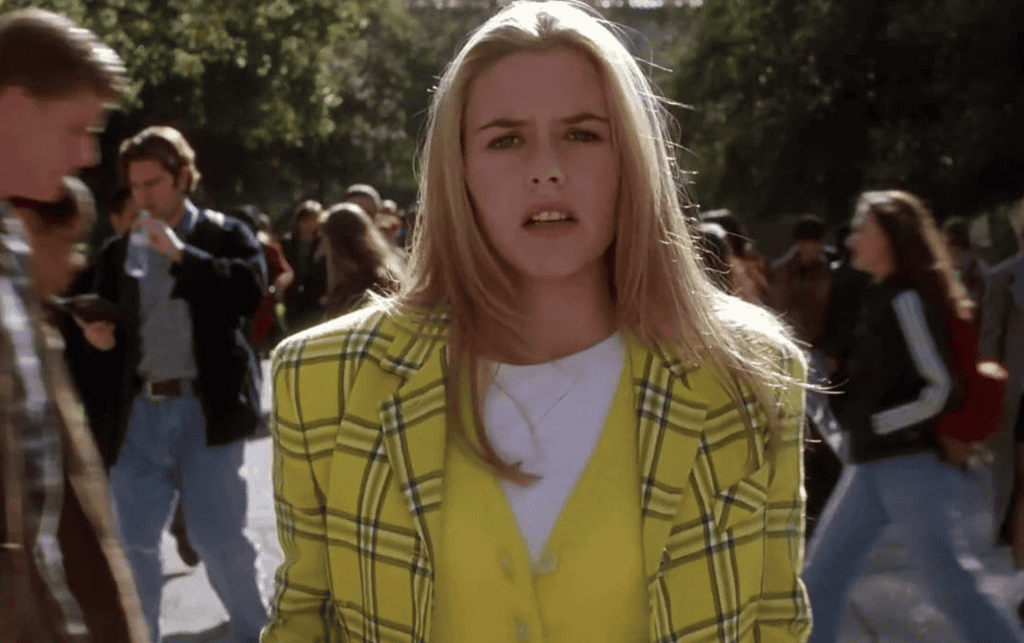
In Clueless, Cher Horowitz says the word “as if” constantly to express her dismissive attitude toward anything she finds beneath her, and without needing more than two words for it. Her breezy and easy way of saying it, thanks to Alicia Silverstone, made it much funnier than any angrier response would have done.
But Clueless didn’t just leave a single good line behind; it popularized an entire dialect of mid-90s American teen slang, from “whatever” to “full-on Monet,” that went from movie theaters straight into real American high schools within a few months after it was released. Few movies have had such a direct effect on how people talk.
The “as if” line lasted longer than the rest of the slang in Clueless. It’s still used nowadays, sometimes with a sly nod towards Clueless’ origin point, to dismiss a suggestion without needing to actually refute it.
The Usual Suspects (1995): “The Greatest Trick the Devil Ever Pulled”
The line is delivered by Verbal Kint, a character portrayed by Kevin Spacey, during his interrogation when he says that the most cunning trickery pulled off by the devil was persuading people that he did not exist. This statement appears to be a throwaway piece of philosophy at that moment, but by the end of the movie, it reads as Kint quietly admiring his own deception.
Nowadays, the line is used to refer to any successful camouflaging, whether the topic is corporate fraud or just someone getting away with something nobody suspected.
Jerry Maguire (1996): “Show Me the Money!”
Tom Cruise plays Jerry, who tries to salvage what is left of his professional relationship with his last client, football player Rod Tidwell, by calling him on the phone. Tidwell forces Jerry to shout the phrase over and over on the phone before he agrees to continue the association with him, turning a business negotiation into a full performance.
“Show me the money” has become an iconic catchphrase for demanding payment or even acknowledgment, and it is still being shouted in offices and sports arenas whenever people need to make sure they will be paid.
Independence Day (1996): The President’s Speech
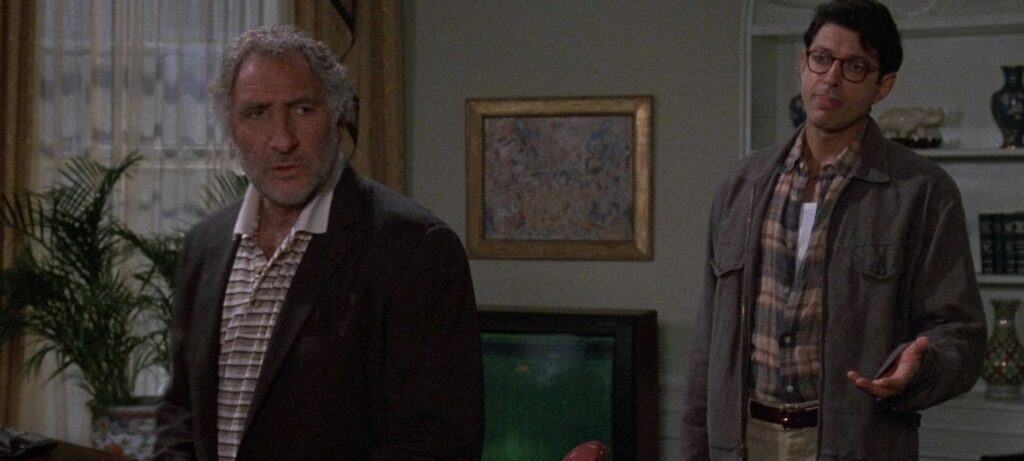
As the planet is under attack and the last few pilots are gearing up for one final counterstrike, President Thomas Whitmore, portrayed by Bill Pullman, gets on top of his jeep and gives an inspirational speech before the mission is launched. He informs the fighters that history may remember this day as the moment the world declared, “We will not go quietly into the night!”
This was quite a long speech, packed with cheesy elements and made for maximum swelling music. It worked exactly as intended: audiences left theaters reciting it as if it were a historical speech, and this is what Bill Pullman is remembered for. Decades later, he reprised the iconic speech in a Super Bowl ad and a vaccination promotion clip.
Almost three decades have passed, but the speech is still being quoted whenever there is a need for some over-the-top motivation. There’s no shortage of memes around this one either.
Titanic (1997): “I’m the King of the World!”
Jack Dawson, portrayed by Leonardo DiCaprio, stands at the bow of the ship with both arms spread wide open and shouts the line towards the open air of the sea in a scene full of pure, uncomplicated joy, which precedes the rest of the sad movie. It is a small line carrying huge emotional weight for the entire movie.
The line became so associated with the film that even director James Cameron himself uttered the same line while accepting the Oscar award for Best Director. Tourists and cruise passengers often pose in a similar manner, with their arms spread wide and their chins raised high, usually with someone standing behind them to take the photo.
Good Will Hunting (1997): “It’s Not Your Fault”
Robin Williams’ therapist character, Sean Maguire, keeps repeating this statement to Matt Damon’s character Will Hunting over and over again during one of the film’s most emotional scenes, finally succeeding in getting through all his defensive barriers and making him break down. The repetition is the point. Williams plays it with patience instead of pressure, letting the line work its magic on its own.
This scene has since become a reference point for real conversations about grief and self-blame, and the quote itself can be heard whenever someone wants to express that kind of quiet, persistent reassurance.
The Matrix (1999): “I Know Kung Fu”
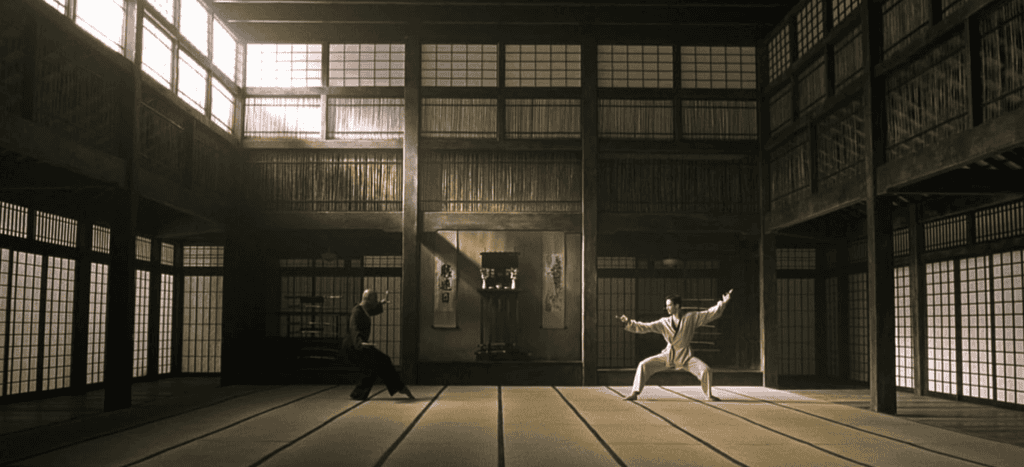
With Neo getting an entire library of martial arts skills stored in his brain, Morpheus asks him how he feels about that. Neo takes a moment to think about the process he underwent and responds with four of the flattest, most understated words in the entire movie. Keanu Reeves’ delivery, more surprised than boastful, is precisely why that line became famous.
There were so many quotes in The Matrix, from taking the red and blue pills to the famous line about there being no spoon, but this quote became the most flexible of all of them. This line is used when joking about any skill learned quickly, and it has been adapted countless times, swapped out for whatever niche talent someone wants to brag about picking up overnight.