
For a long stretch of European history, the law occasionally treated animals as if they could be criminals. Pigs accused of killing children could end up before local authorities, while church courts were asked to deal with insects and other pests destroying crops. The records may sound like something invented for a comedy sketch, but some of these proceedings left behind actual court documents and expense receipts.
That does not mean every story about an animal on trial is true. Later writers embellished certain cases, some supposed trials are better understood as public punishments, and a few famous examples belong to folklore rather than history. The distinction matters, particularly when an account has been repeated for hundreds of years.
The cases below include documented legal proceedings, disputed historical accounts, and a few well-known incidents that never involved a courtroom at all. Much of the traditional literature comes from E. P. Evans’ 1906 book, “The Criminal Prosecution and Capital Punishment of Animals,” which is now freely available through Project Gutenberg. More recent historians have revisited the records and, in some instances, reached different conclusions.
The Reported Egg-Laying Rooster of Basel (1474)
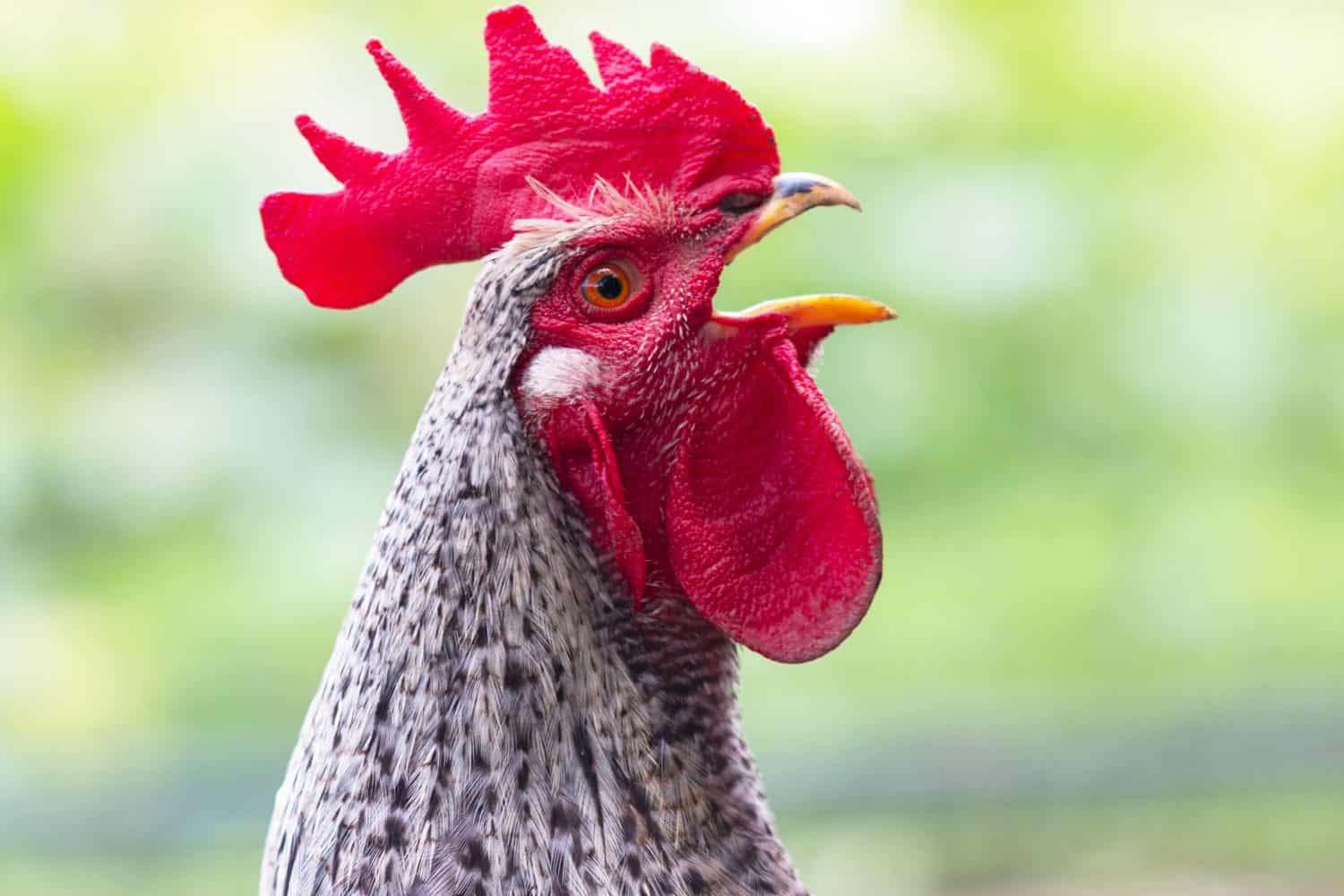
An old story from Basel, Switzerland, says a rooster produced an egg in 1474 and met a grim end because people feared it might hatch a basilisk, a dangerous creature from European folklore. Later retellings describe a full criminal trial, with the bird condemned for doing something unnatural. It’s the sort of account that has made animal trials famous.
There is an important catch. A contemporary Basel diary does describe a bird identified as a rooster, an egg, and an executioner, but it does not document a courtroom trial or a judicial verdict. The more elaborate legal details come from later accounts. So the incident belongs in the history of animal punishment, but the claim that a rooster was formally tried and convicted is less secure than it sounds.
Katya the Bear’s Years at a Kazakhstan Prison (2004–2019)
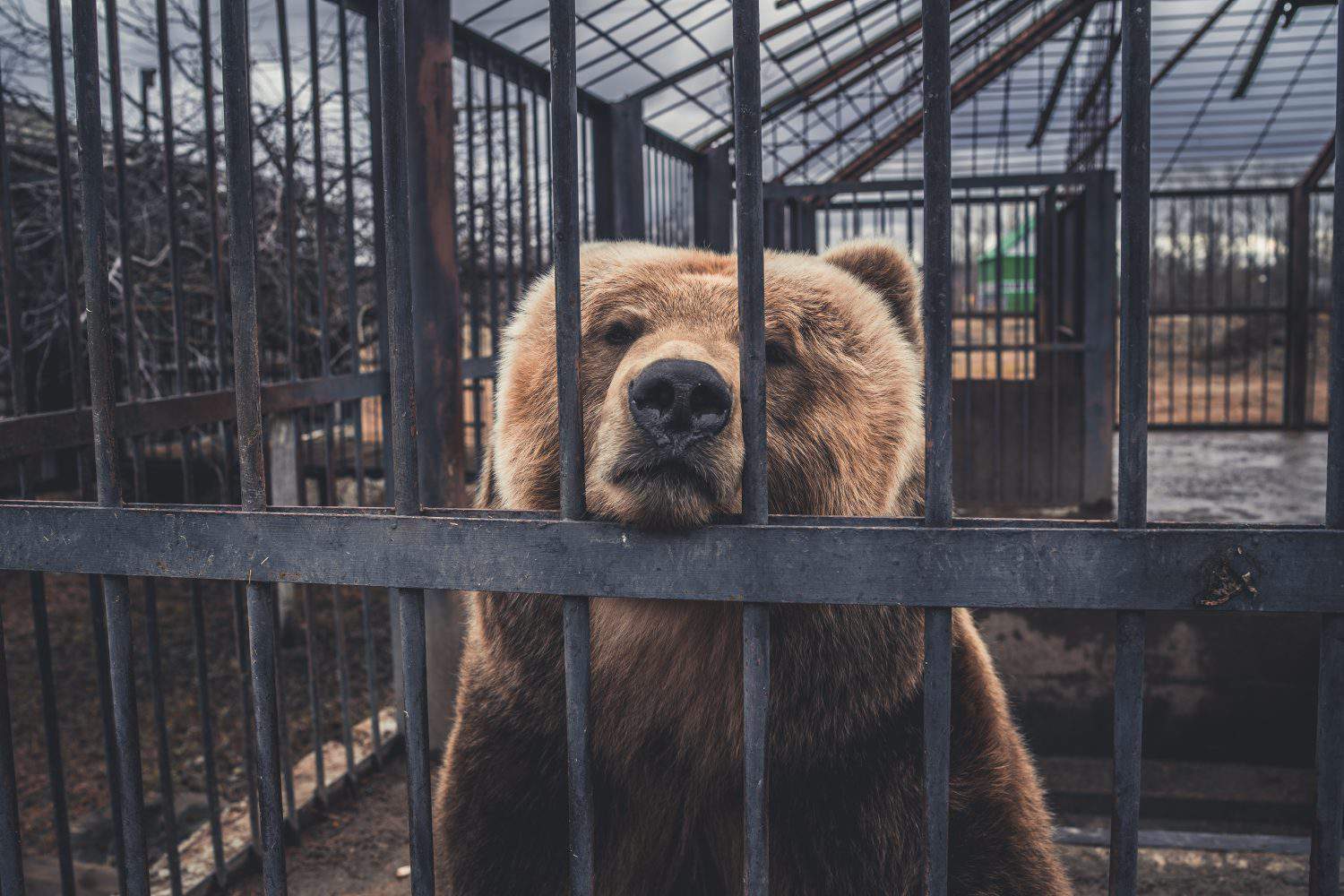
Katya, also called Ekaterina, spent roughly 15 years on the grounds of a high-security prison in Kazakhstan. That much is real. What is not supported is the popular claim that she was tried, convicted, and given a 15-year prison sentence for attacking people. According to a contemporary Kazakh report, a circus owner left the bear as collateral and never returned for her. With other facilities unwilling to take her, she remained at the prison.
Prisoners helped care for Katya in a specially built enclosure, reportedly complete with a pool. In June 2019, she was transferred to a small zoological facility in the Petropavlovsk area, where she could adjust to a different environment. It’s an unusual story, certainly, but calling her a convicted criminal turns a complicated animal-welfare case into something it wasn’t.
The Hartlepool Monkey and the French Spy Legend

According to a famous story from Hartlepool, England, a monkey washed ashore during the Napoleonic Wars wearing a French military uniform. Suspicious locals supposedly decided the animal must be a French spy, staged a trial, and hanged it when it failed to answer their questions. If that sounds a little too convenient, there’s a reason.
Historians have found no reliable contemporary record showing that this happened. Similar monkey-hanging tales circulated in other British coastal communities, suggesting folklore rather than a documented prosecution. Still, the legend became a lasting part of Hartlepool’s identity. The nickname “monkey hangers” survives, even if the unfortunate monkey’s supposed trial remains unproven.
Jacques Ferron and the Donkey’s Acquittal (1750)
A court case reported from Vanvres, near Paris, in 1750 involved a man named Jacques Ferron, who was prosecuted for sexually abusing a female donkey. Under the legal assumptions of the day, animals involved in such offenses could also face punishment. In this account, however, the donkey was treated as the victim rather than a willing participant.
Local residents and a parish priest reportedly vouched for the animal’s character, and the court accepted the view that she had not acted of her own free will. The donkey was spared, while Ferron was sentenced to death. The details survive largely through historical legal writing, including Evans’ compilation, but later scholarship has examined the story as an example of how courts distinguished blame from victimhood, even in a legal system that sometimes put animals on trial.
The Great Cat Massacre in Paris (1730s)

This episode wasn’t an official criminal trial. It was a cruel mock proceeding staged by apprentices working in a Paris printing shop during the 1730s. Frustrated by long hours, poor treatment, and the comfortable life enjoyed by their employer’s pets, workers took out their anger on neighborhood cats and then staged a grotesque parody of a courtroom.
Historian Robert Darnton explored the episode in his book “The Great Cat Massacre,” drawing on a worker’s recollections written years after the events. The account is disturbing, and its details cannot all be checked independently. What makes it historically revealing isn’t a supposed legal ruling against cats, but how the workers used a mock trial to express resentment toward their employer and the social order around them.
A Church Proceeding Against Slugs in Autun (1480s)

In the 1480s, according to accounts collected by Evans, church authorities around Autun, France, confronted slugs that were damaging land associated with the Church. Rather than simply treating the animals as an agricultural nuisance, the response reportedly included religious processions and an order that the slugs leave or face a spiritual curse.
The episode reflects a broader practice in which church officials were asked to intervene against crop-destroying pests. Some proceedings appointed advocates for the animals and framed their presence as a question of religious and legal authority. The exact wording and procedure of the Autun slug story, however, should be treated cautiously because it is known mainly through later historical accounts. And no, a pronouncement from a bishop did not literally make slugs cease to be “God’s creatures.”
The Vineyard Weevils of Saint-Julien (1545 and 1587)
Here is a remarkable addition with a more substantial legal paper trail. In Saint-Julien, in what is now southeastern France, residents complained about insects damaging their vineyards. Accounts describe an earlier proceeding in the 1540s, followed by a renewed legal dispute in 1587 when the pests returned.
The conversation eventually turned to a proposed compromise: the villagers would set aside land where the insects could live without destroying the vines. Lawyers argued over whether the designated area actually offered enough food and suitable habitat. Surviving descriptions of the case do not establish a clear final outcome. Even so, the idea of negotiating territory with vineyard pests tells us quite a bit about how seriously some communities approached these proceedings.
Three Sows Accused of Killing a Boy (1379)
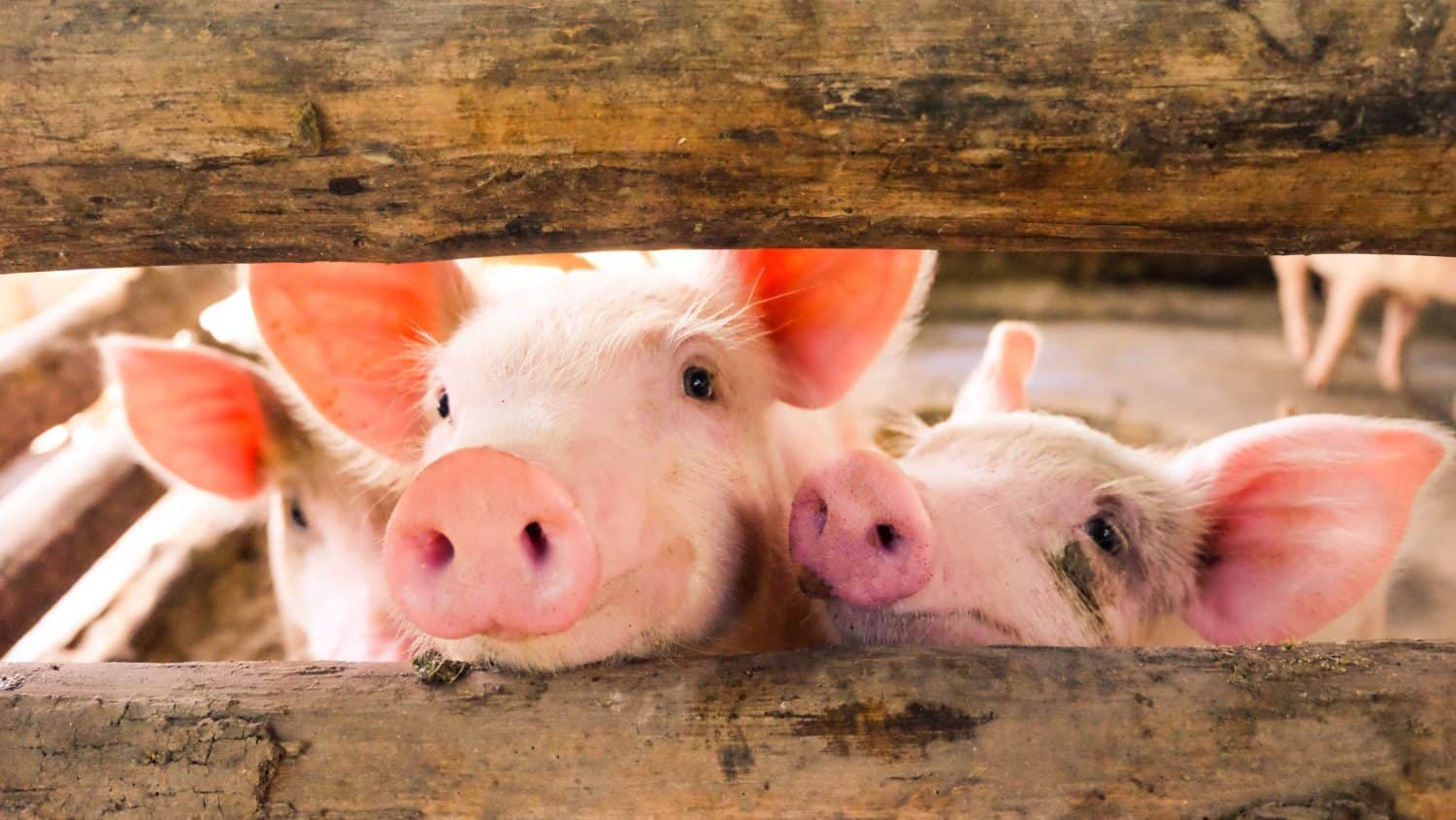
In September 1379, three sows attacked a young swineherd, Perrinot Muet, near Saint-Marcel-lez-Jussey in Burgundy. He died of his injuries. According to a ducal pardon preserved in historical collections, the three animals were condemned, and two nearby herds were treated as accomplices because they had gathered during the attack.
That created an awkward problem for the people who owned the pigs. Losing two entire herds would be an expensive way to settle the matter, so a local prior petitioned Philip the Bold, Duke of Burgundy, to spare the other animals. The duke granted the request. This case has an unusually useful documentary trail, though it still makes little sense to modern readers to assign criminal intent to animals merely for being present.
The Early Pig-Execution Account From Fontenay-aux-Roses (1266)
One of the earliest cases regularly cited in histories of European animal prosecutions concerns a pig killed at Fontenay-aux-Roses, near Paris, in 1266. E. P. Evans wrote that the pig was publicly burned after killing a child, and later writers have repeated the story as an early example of a formal animal trial.
The trouble is that the surviving evidence is not as clear about courtroom procedure as those retellings imply. The reported punishment should not automatically be treated as proof that the pig had a defense, a trial, and a verdict. It’s better to regard the incident as an early account of punishment involving an animal, while recognizing that the finer legal details are uncertain.
A Pig Held in Prison for 146 Days (1349)
Not every important animal-court record describes a dramatic public execution. Historian Lesley Bates MacGregor identifies an expense receipt from Pont-de-l’Arche in Normandy dating to 1349. It documents the cost of keeping a pig in prison for 146 days after the animal was accused of eating a child.
The record lists a daily charge and a total bill, making this an unusually concrete glimpse of how officials handled accused animals. It doesn’t explain everything that happened to the pig afterward, and we shouldn’t invent an ending. But the receipt makes the broader point: animal prosecutions were not always just stories told long after the fact. Sometimes somebody actually had to pay for the jailer’s feed bill.
Mary the Elephant’s Public Killing (1916)

In September 1916, Mary, an elephant traveling with the Sparks circus, killed a handler in Kingsport, Tennessee. Public anger grew quickly. Circus owner John Sparks arranged for Mary to be killed, and on September 13 she was hanged from a railroad crane in nearby Erwin. The Tennessee Encyclopedia records the event and the crowd that gathered to watch.
Mary was not tried by a court or convicted of murder. This was a public killing carried out after a fatal incident, and some of the colorful details that have accumulated around the story are difficult to verify. Her inclusion here shows how an animal could be treated as morally responsible for a human death even in the 20th century, without anything resembling a fair legal process.
The Sow Executed at Falaise (1386)
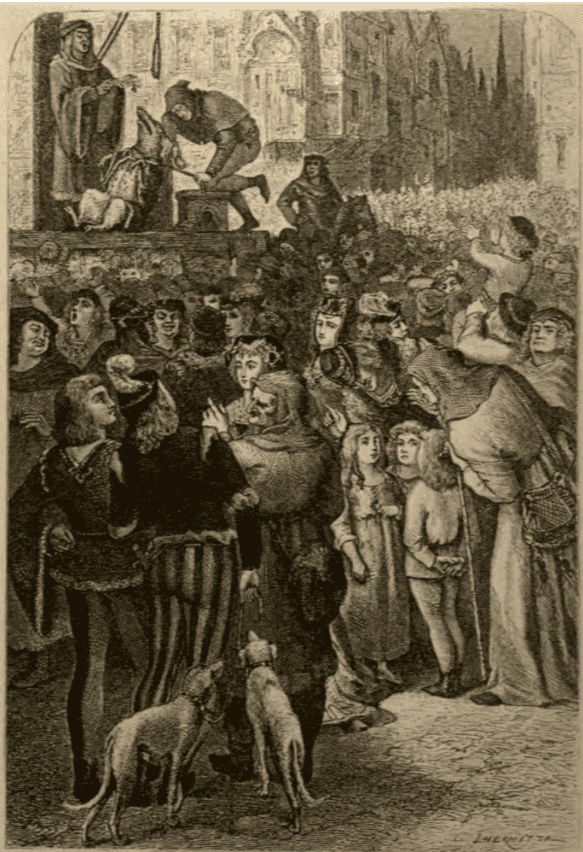
In 1386, a sow in Falaise, France, was condemned after fatally attacking a child. Later historical accounts describe the animal being injured in the head and forelegs before being hanged, in an apparent attempt to make the punishment correspond to the child’s injuries. This is one of the better-known medieval animal cases, with details about the proceedings and execution recorded in legal histories.
The episode is sometimes accompanied by an illustration of a pig dressed like a person at its execution. Readers should know that commonly circulated artwork is a later reconstruction, not a photograph or a surviving contemporary image. Whatever the artistic embellishments, the story captures an unsettling feature of the period: courts sometimes applied familiar ideas of crime and punishment to animals that could not possibly understand them.
The Sow and Six Piglets of Savigny (1457)
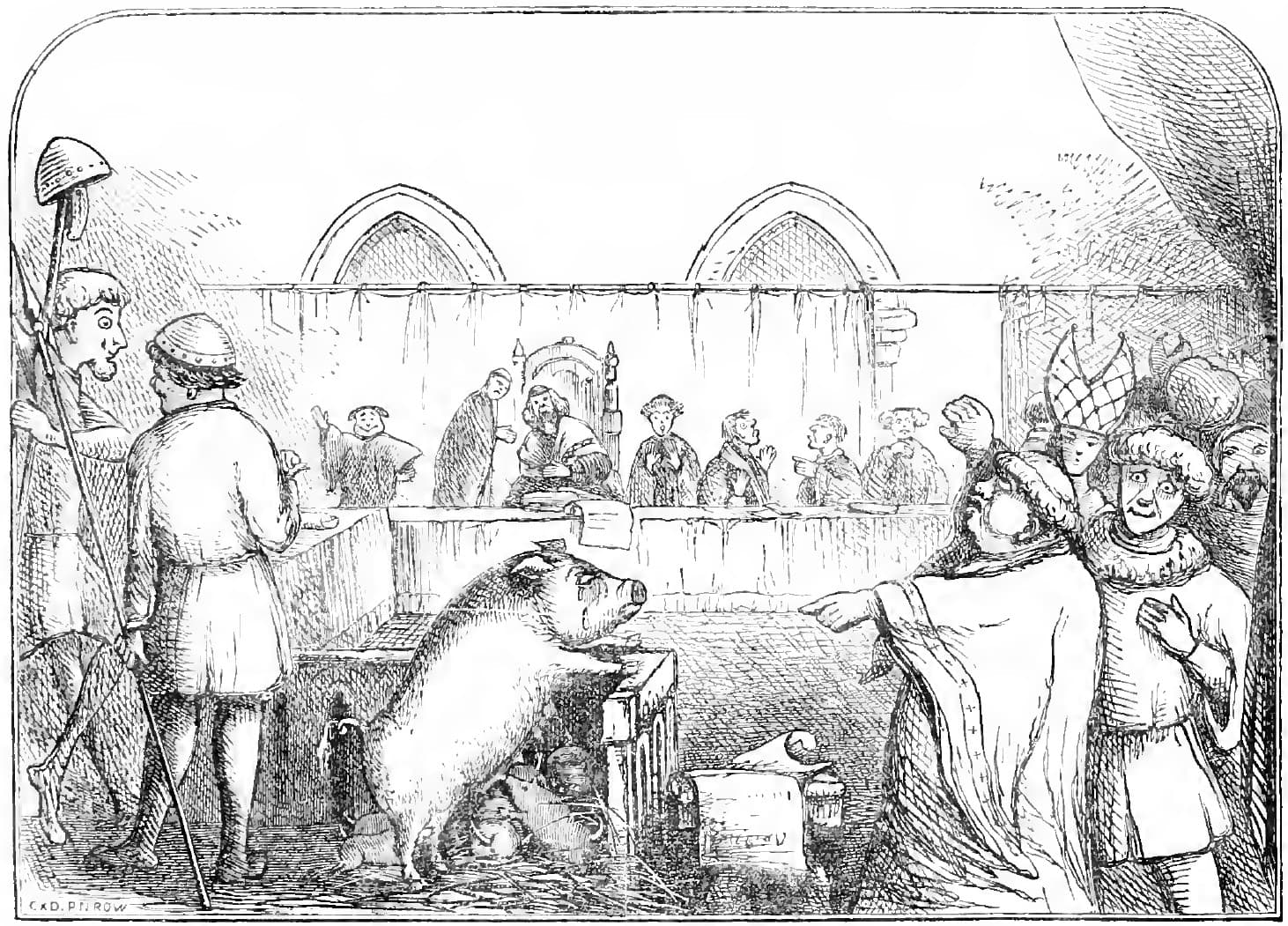
A particularly well-documented case took place in Savigny, Burgundy, in January 1457. A sow and her six piglets were detained after the death of a five-year-old boy named Jehan Martin. Court records describe formal testimony, a hearing, and a judgment against the adult animal.
The sow was condemned to death, but the evidence against the piglets was less clear. Although they had reportedly been found near the child, the court could not establish that they had participated in the fatal attack, and it allowed them to be released under conditions. The surviving transcript is one of the strongest examples of authorities attempting to distinguish between an animal they considered the principal offender and others whose involvement had not been proved.
What These Cases Tell Us
Animal trials were never all one thing. Some were ordinary criminal proceedings stretched into strange territory, with judges, witnesses, and bills from jailers. Others were religious responses to crop damage. Still others were spectacles, local traditions, or stories whose most memorable details appeared long after the supposed events.
The strongest historical records show that people really did use legal procedures to deal with animals. The weaker stories remind us not to mistake a memorable anecdote for a documented trial. Either way, the history says as much about human ideas of justice, responsibility, and control as it does about the animals themselves.