Andrew Clemente

Chinnapong / iStock Editorial via Getty Images

Ridofranz / Getty Images

2010 Getty Images / Getty Images News via Getty Images

Neuiiza / Shutterstock.com

Techa Tungateja / Getty Images

felixmizioznikov / Getty Images
andresr / Getty Images
AdrianHancu / iStock Editorial via Getty Images
Bence Bezeredy / iStock Editorial via Getty Images

401(K) 2013 / BY-SA 2.0

claudio.arnese / E+ via Getty Images

Studio Romantic / Shutterstock.com

Shutterstock ID: 1077839504, Photographer: Gorodenkoff

luchschenF / Shutterstock.com

skynesher / Getty Images

Jetlinerimages / Getty Images

Ground Picture / Shutterstock

somboon kaeoboonsong / iStock via Getty Images

antoniodiaz / Shutterstock.com
Around the World Photos / Shutterstock.com
Jackie Niam / Shutterstock.com

Andrey_Popov / Shutterstock.com
yusuf_demirci / Shutterstock.com












23 Ways the Government Can Access Your Data Without Asking You
Privacy concerns often get flattened into a simple idea: the government can see everything you do. The reality is more complicated. In a 2019 Pew Research Center survey, 63% of U.S. adults said they did not think it was possible to go through daily life without the government collecting data about them. Nearly as many, 62%, said the same about private companies.
Government agencies do hold a tremendous amount of information directly, including tax records, benefit records, travel information, federal student aid data, and other administrative records. Law enforcement can also seek information held by private companies. But there is no single rule that covers all of it. Depending on the information and the circumstances, investigators may need a warrant, subpoena, court order, another form of legal process, or the person's consent. Public information and some commercially available data can follow different rules.
That distinction matters. A public social media post is not legally equivalent to the contents of a private email. A Medicare claim is not the same thing as a license plate photographed on a public road. And just because a company collects a particular piece of information does not automatically mean a government agency can obtain it whenever it wants.
Technology and privacy law are also moving targets. Several major rules and court decisions have changed since this article was first published, while newer surveillance tools have become much more common.
1. Social Media Posts
Public social media is one of the easiest categories for investigators to see for a fairly obvious reason: it is public. Immigration and Customs Enforcement, for example, says its law enforcement offices may collect publicly available posts, messages, photographs, documents, and geolocation information from social media and other open-source websites during authorized investigations.
Private messages are another matter. Federal law generally restricts providers of public electronic communication services from voluntarily giving the government stored communications or customer records, although there are exceptions for situations such as consent and emergencies involving danger of death or serious physical injury. Investigators can also compel certain records through warrants, subpoenas, or court orders when the applicable legal requirements are met.
2. Email and Cloud-Stored Messages
Emails and other communications stored with online providers are largely governed by the Stored Communications Act. The type of legal process required depends on whether investigators want the contents of a communication or information about the account. Warrants, subpoenas, and court orders all have roles under the law, depending on what is being sought.
Foreign intelligence surveillance is a separate issue. Section 702 of the Foreign Intelligence Surveillance Act previously allowed the government to target non-U.S. persons reasonably believed to be outside the United States for foreign intelligence purposes without obtaining an individualized warrant for each target. Americans could not be intentionally targeted under Section 702, although their communications could be incidentally collected when they communicated with a target. Section 702 and the rest of FISA Title VII were repealed on June 12, 2026, after Congress did not extend them again. Transition rules allow previously issued orders, authorizations, and directives to continue until they expire.
3. Browsing and Search History
Your browser, search engine, websites, apps, internet provider, and advertising companies can each see different pieces of your online activity. A Federal Trade Commission study of six major internet service providers found that some associated subscriber information with browsing history, app usage, location, and other behavioral information.
There is no single government database containing everyone's complete browsing history. Investigators instead have to determine who holds the information and what legal authority allows them to obtain it. It is also worth clearing up a common misconception about the FCC's 2016 broadband privacy rules. Congress overturned those rules in 2017 before they took effect, but that did not eliminate every federal or state privacy or consumer-protection rule governing internet companies.
4. Cellphone Location Data
Phones can create location records in several different ways. Cell towers generate location-related records as phones connect to a network, while apps and account services may collect much more precise GPS or Wi-Fi-based information. Those distinctions matter legally.
In 2018, the Supreme Court ruled in Carpenter v. United States that obtaining historical cell-site location information can amount to a Fourth Amendment search. The Court went further in June 2026 in Chatrie v. United States, holding that law enforcement conducted a search when it obtained a user's Google Location History through a geofence process, even though the request covered only a two-hour period. The Court sent the case back to a lower court to decide whether that particular warrant satisfied probable-cause and particularity requirements.
Google has since moved Location History storage to users' devices and told the Supreme Court it can no longer respond to geofence warrants seeking that data. Other sources of location information still exist, including wireless carriers, apps, data brokers, toll systems, and license plate readers. The fact that the U.S. government operates the GPS satellite system does not give it automatic access to the real-time location of every GPS-enabled phone or car.
5. Charitable Donations
The IRS can receive information related to charitable giving, but claiming a deduction does not automatically create a federal line-by-line database of every organization you supported. Taxpayers generally report totals for qualifying charitable contributions and keep receipts and other supporting documentation themselves.
Charitable organizations have their own reporting requirements. Section 501(c)(3) organizations and Section 527 political organizations may have to report qualifying contributor names and addresses to the IRS on Schedule B. For most ordinary charities, those donor names and addresses are not publicly disclosed. Private foundations and certain political organizations have different public-disclosure rules.
6. Drone and Aerial Surveillance
Drones are now part of the surveillance toolbox used by some federal, state, and local law enforcement agencies. They can be deployed for searches, border operations, disaster response, tactical missions, and criminal investigations. The Government Accountability Office reported in 2024 that Department of Homeland Security law enforcement components were using more than 20 types of monitoring technology in public spaces, including drones and pole-mounted cameras.
That does not create a blanket rule that anything a police drone can see is automatically fair game without a warrant. Fourth Amendment questions can depend on where surveillance occurs, how long it lasts, the capabilities of the technology, whether it intrudes on an area where someone has a reasonable expectation of privacy, and applicable state law. Looking at an exposed backyard from public airspace and using sophisticated technology to peer into a home are not legally equivalent situations.
7. Credit Reports and Debt Records
Credit reporting companies can hold a detailed financial picture that includes credit accounts, balances, payment history, inquiries, and other information. They cannot, however, simply sell a person's complete credit report to anyone who is willing to pay for it.
The Fair Credit Reporting Act limits access to legally recognized purposes. Government authorities can receive credit reports in certain circumstances, including determining eligibility for some government benefits or licenses, complying with a court order or grand-jury subpoena, and enforcing certain child-support obligations. The basic rule is that whoever requests a credit report needs a permissible purpose under the law.
8. Online Purchase History
Online shopping can leave records with retailers, payment companies, delivery services, loyalty programs, advertising networks, and other businesses. Depending on the service, those records might include what was purchased, when it was purchased, how it was paid for, and where it was delivered.
Those records can become relevant to an investigation, but there is no universal rule giving federal agencies instant access to every purchase made by an American. The legal process depends on the company, the type of record, the investigation, and the law that applies. Investigators may use subpoenas, warrants, court orders, or other lawful demands, while narrower exceptions can apply in situations such as emergencies or consent.
9. Video and Streaming Activity
Streaming services can retain information about accounts and viewing or listening activity. Video records actually have a specific federal privacy law behind them. The Video Privacy Protection Act generally restricts disclosure of personally identifiable information showing which videos a person requested or obtained.
The law does permit disclosure to law enforcement under specified circumstances, including pursuant to a warrant, grand-jury subpoena, or qualifying court order. Music-listening history does not have an identical federal statute built around it, but that does not make a Spotify or other streaming account an open government record. Access depends on the service, the records being requested, and applicable law.
10. Wage Garnishment and Debt Collection Records
A wage garnishment necessarily creates records somewhere. An employer needs to know how much to withhold and where the money goes, while a court or government agency may also maintain records connected with the debt.
The Department of Labor describes garnishment as a legal or equitable procedure requiring earnings to be withheld to pay a debt. Many garnishments result from court proceedings, but not all do. Tax levies and some federal administrative garnishments, for example, can follow different procedures. That means it is inaccurate to say every garnishment automatically becomes a public court record or appears on every credit report. Where the information exists and who can access it depends on the type of debt and the proceeding involved.
11. Tattoos and Other Identifying Marks
Tattoos, scars, and other distinctive features have long been useful for identifying people in criminal investigations. The FBI's Next Generation Identification system includes text-based searching for scars, marks, and tattoos, and modern FBI biometric submission standards include fields for recording them.
That is different from saying the FBI has automatically cataloged the body art of every American. Tattoo information can enter law enforcement systems when it is documented through arrests, corrections records, criminal investigations, biometric submissions, or other authorized law enforcement processes. Someone with no such interaction should not assume federal agents secretly have a photograph of every tattoo they have ever received.
12. Federal Student Loan Records
If you receive federal student aid, the Department of Education can hold far more information than simply the balance of your loan. The National Student Loan Data System tracks federal aid information and receives enrollment reporting from participating schools.
The system includes campus and program-level enrollment information used to determine whether a borrower remains in school and when a loan should move toward repayment. Schools participating in federal Title IV programs are required to report this information. That does not make NSLDS a universal database of every private student loan or every debt a student might have, but for federal student aid recipients it can contain a substantial education and loan history.
13. Education and Enrollment Records
Attending a public school does not mean every class, textbook, paper, or online tutorial is automatically sitting in a federal database. Student education records are generally protected by the Family Educational Rights and Privacy Act, better known as FERPA.
FERPA usually requires consent before personally identifiable education records are disclosed, but it contains exceptions. Schools can disclose qualifying information without consent for purposes such as administering financial aid, conducting certain audits or evaluations, responding to defined health or safety emergencies, and complying with a judicial order or lawfully issued subpoena. Federal student-aid systems can also receive required program and enrollment information, but that is not the same thing as giving federal officials a complete transcript of everything a student has read or studied.
14. Medical and Prescription Records
There is no single federal file containing every American's complete medical history. Government agencies can, however, hold medical information when they administer programs that involve a person's health care or benefits. CMS maintains Medicare claims information, state Medicaid programs maintain their own records, and the Social Security Administration obtains medical evidence when evaluating disability claims.
States also operate prescription drug monitoring programs that electronically track controlled-substance prescriptions. HIPAA does not make health information completely untouchable, but neither does it give law enforcement unrestricted access. Covered health providers may disclose protected information for law enforcement purposes only under specified circumstances, including qualifying warrants, court orders, subpoenas, legally authorized administrative requests, required reports, and certain emergencies.
15. Books, Highlights, and E-Reader Activity
A paper book does not report how far you made it before falling asleep. An internet-connected e-reader can create considerably more information. Amazon's current Kindle documentation says its Sync feature, which is enabled by default, automatically backs up reading position, notes, and highlights to Amazon's servers so they can be synchronized across devices.
That does not mean government agencies routinely receive a list of what Kindle users read or highlight. Cloud-stored account information can be sought through applicable legal process, with the requirements depending on the type of record. Library records have their own confidentiality protections, but those rules vary by state and library system rather than operating under one identical nationwide standard.
16. Travel History
The federal government directly receives substantial information about international air travel. Airlines operating flights to, from, or through the United States are required to provide U.S. Customs and Border Protection with Passenger Name Record information to the extent that the information was collected by the airline's reservation system.
CBP also maintains other records connected with entry into and departure from the United States. Domestic travel can create different records with airlines, reservation services, toll systems, rental-car companies, hotels, and other businesses. Those records are not all automatically sent to one government database, but they may be obtainable through the legal processes that apply to the company and investigation involved. Driving can leave another increasingly common trail as well: automatic license plate reader records.
17. Remote Access to Computers and Devices
Federal investigators can sometimes remotely search computers, but that is a much narrower claim than saying the FBI or NSA can casually switch on anyone's laptop camera. Federal criminal procedure specifically provides for remote-access search warrants in qualifying circumstances involving electronic storage or electronically stored information.
The FBI has also used court-authorized remote investigative tools in criminal cases. During its investigation of the Playpen child-exploitation site, for example, a Network Investigative Technique caused computers accessing the site to transmit identifying information to investigators. Older disclosures about intelligence tools capable of accessing webcams showed that such technology existed, but they are not evidence that federal agencies have blanket, warrantless access to every consumer laptop camera today.
18. Firearms Transaction and Trace Records
The United States does not have a general federal registry listing every privately owned firearm. The Bureau of Alcohol, Tobacco, Firearms and Explosives instead operates the National Tracing Center, the country's only crime-gun tracing facility.
ATF says the center is authorized to trace firearms only for law enforcement agencies involved in bona fide criminal investigations. A trace generally follows a firearm from its manufacturer or importer through wholesalers and licensed dealers toward its first retail purchaser. ATF also receives certain records from firearms dealers that go out of business, along with specified multiple-sale and lost or stolen firearm reports. The agency explicitly states that eTrace, its electronic tracing system, is not a firearms registry or a repository of all firearm sales information.
19. Phone Records and Call Metadata
The contents of a phone call and the records surrounding that call are legally different things. In a federal criminal investigation, intercepting the contents of calls under the federal wiretap statute generally requires a judge to make several findings, including probable cause that specified criminal activity is involved and that relevant communications will be intercepted.
Other tools operate under different standards. A pen-register or trap-and-trace order can collect dialing, routing, addressing, or signaling information rather than the content of a conversation, and federal law allows such an order when the government certifies that the information is relevant to an ongoing criminal investigation. Stored carrier records can involve still other legal processes. The NSA's former bulk telephone-metadata program revealed by Edward Snowden is an important piece of surveillance history, but it should not be described as the system currently collecting everyone's phone records in 2026.
20. Automatic License Plate Readers and Flock Cameras
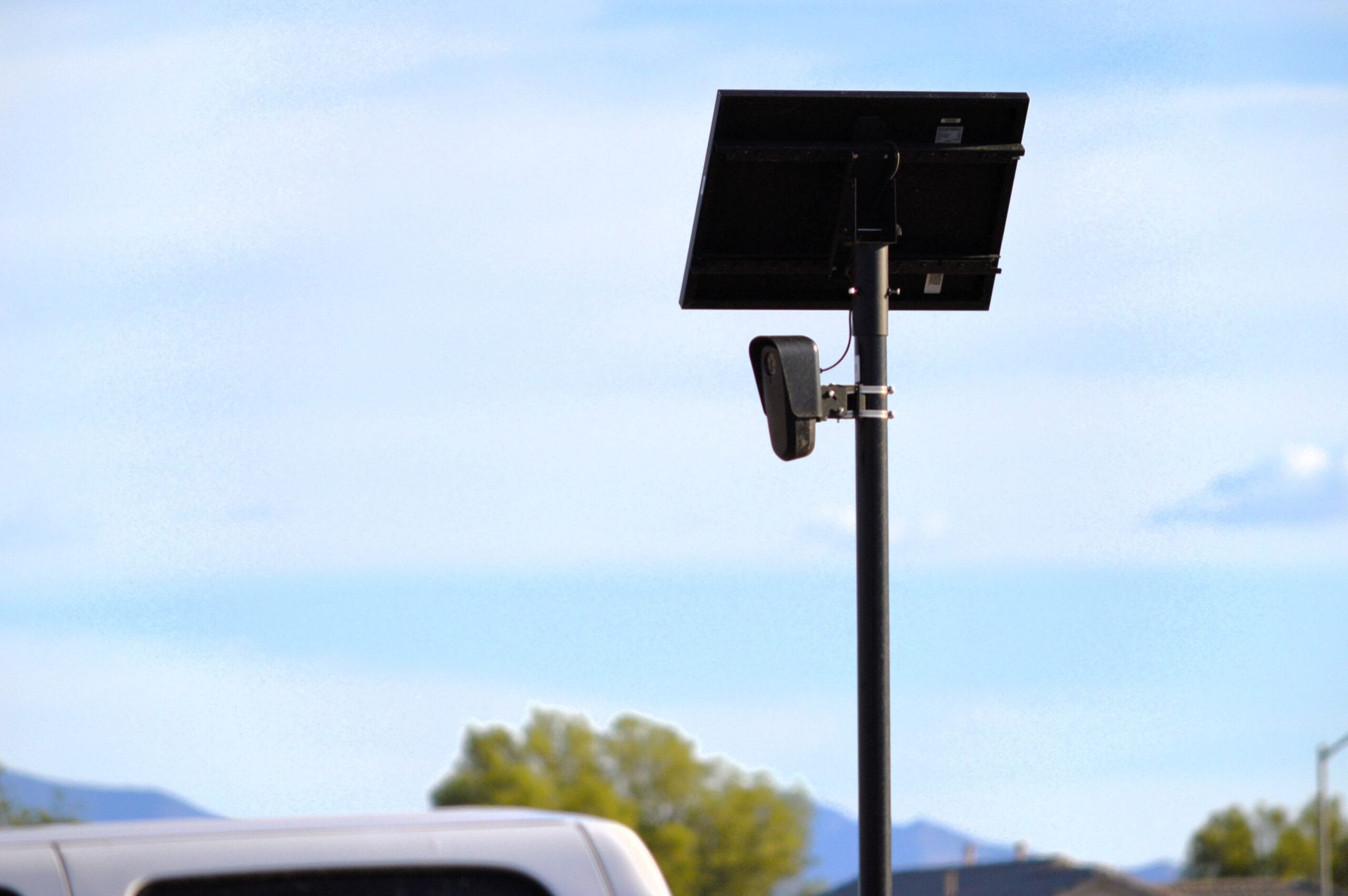
Automatic license plate readers have become one of the more visible additions to modern policing. Systems mounted along roads or on police vehicles photograph passing vehicles and turn those images into searchable records. Flock Safety's current license plate reader policy says its system can record a license plate image, vehicle image, vehicle characteristics such as color and make, the plate number and state, the date and time, and the location of the camera.
Police agencies can use license plate readers to generate real-time alerts when a vehicle matches an authorized hot list and to search previously captured records during an investigation. Flock's current default retention period for license plate reader data is seven days, although the company says a customer's law or policy may require a different period. State rules and individual agency policies can also affect access, retention, and sharing.
One important limitation tends to disappear in discussions about these cameras: a license plate hit shows that a vehicle was photographed at a particular place and time. By itself, it does not establish who was driving the vehicle.
21. Facial Recognition Searches
Facial recognition is another technology that has moved from science fiction into actual investigations. The Government Accountability Office reported that seven selected Department of Justice and Department of Homeland Security law enforcement agencies used nongovernment facial recognition services to support criminal investigations between October 2019 and March 2022. Agencies with available data reported roughly 60,000 searches during periods when they did not yet have training requirements in place, which prompted GAO recommendations concerning training and civil-liberties protections.
The FBI also operates facial recognition capabilities of its own. Importantly, the Bureau says a facial-recognition result is an investigative lead, not a positive identification. Candidate images must be reviewed and investigators are expected to develop additional evidence rather than treating a computer-generated match as proof that two faces belong to the same person.
22. Commercial Data Broker Records
Not every government data request begins with a warrant sent to Google, a phone carrier, or another company you recognize. A large commercial market exists for information collected and aggregated from phones, apps, websites, connected devices, advertising systems, and other sources. Some government agencies and intelligence components can acquire commercially available information through that market, subject to the legal authorities and policies governing their activities.
The Office of the Director of National Intelligence now has a formal policy framework governing how U.S. intelligence agencies access and use commercially available information, including particularly sensitive datasets. Recent Federal Trade Commission enforcement actions show just how detailed commercial datasets can become. In a case involving Gravy Analytics and Venntel, the FTC alleged that the companies collected and sold precise mobile-device location data without adequate consent, including information associated with visits to sensitive places such as health facilities and houses of worship.
Commercial availability does not mean every possible government use is automatically lawful. The constitutional, statutory, and agency-policy limits can depend on the data involved, how it was obtained, which agency is using it, and what the agency does with it.
23. Forensic Genetic Genealogy
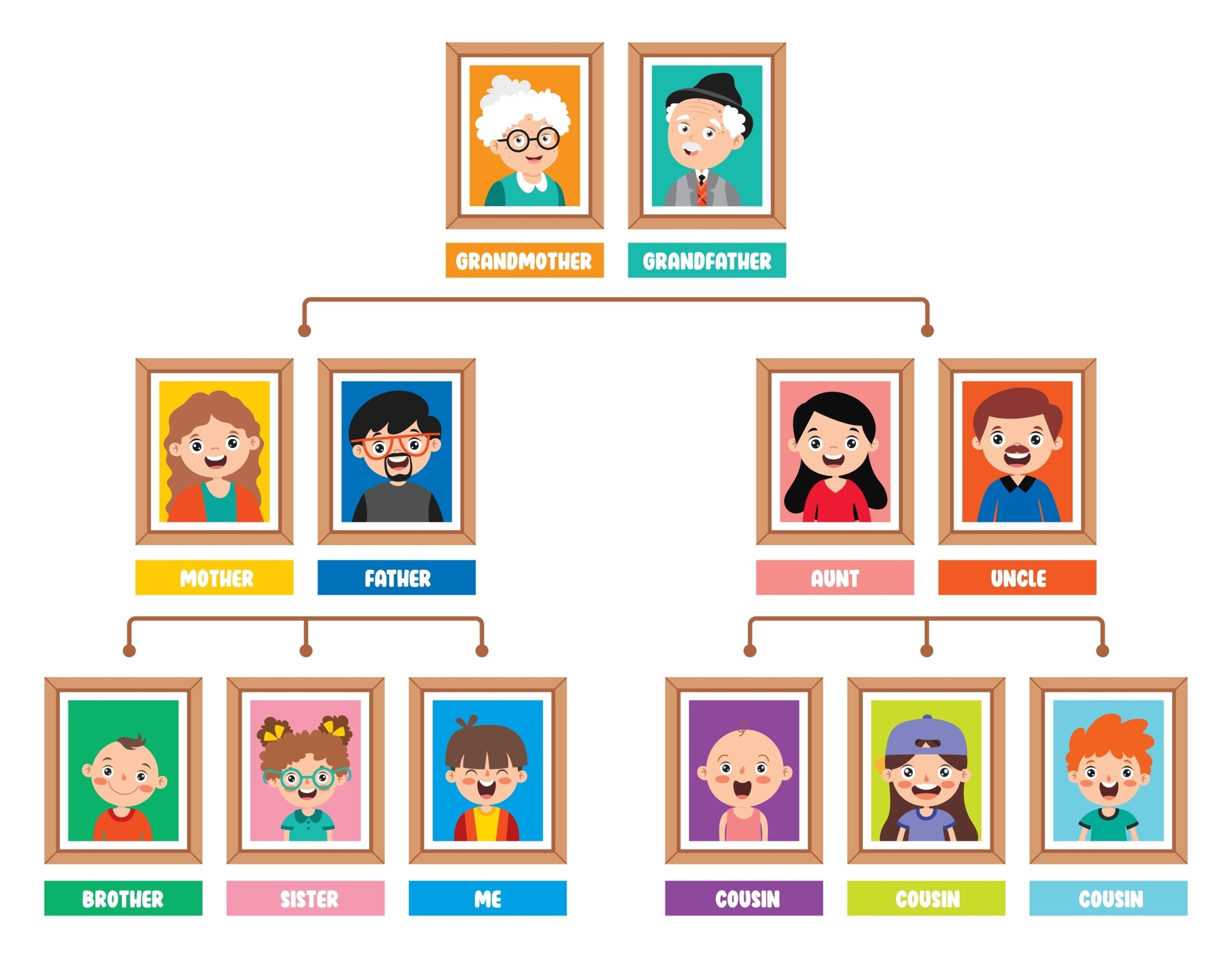
DNA left at a crime scene can sometimes reveal more than whether it matches a person already in a criminal DNA database. Forensic genetic genealogy combines DNA analysis with genealogy research to generate possible relatives and build family trees that may lead investigators toward an unknown suspect or help identify human remains.
The Justice Department's published policy allows the technique in qualifying cases and lays out privacy and investigative requirements for agencies using DOJ resources. It is generally intended as a tool for serious unsolved crimes or unidentified remains after ordinary forensic database searches and reasonable investigative leads have failed.
This does not mean police automatically receive the DNA profile of everyone who takes a consumer ancestry test. Investigators can search genealogy databases or services that permit the relevant form of law enforcement access. The resulting family-tree research is an investigative lead, not proof that a particular relative committed a crime. Investigators still need to confirm an identity through conventional evidence and, where appropriate, direct DNA comparison.