
More than 70 million adults in the United States report having a disability.
Disability support does not come from one unified public system. Benefits, services, healthcare coverage, and civil-rights protections are administered through different programs with different rules.
These 10 points examine some of the most consequential challenges facing people with disabilities, including benefit delays, healthcare barriers, employment disparities, and inconsistent accessibility.
Disability affects more than one in four American adults, although individual experiences, conditions, and support needs vary enormously. In the United States, assistance and protection come from several different sources. These include Social Security Disability Insurance, Supplemental Security Income, qualifying healthcare programs, state and local services, and civil-rights laws such as the Americans with Disabilities Act.
These programs and protections provide essential support to millions of people, but substantial gaps remain. People with disabilities continue to encounter barriers involving healthcare, employment, transportation, physical and digital accessibility, and financial security. Those applying for federal disability benefits may also face complicated eligibility requirements, extensive documentation demands, and lengthy decisions or appeals.
The Americans with Disabilities Act prohibits discrimination and is intended to provide people with disabilities with equal opportunities in employment, government services, public accommodations, transportation, and other parts of everyday life. However, legal protections do not always produce equal access in practice. Enforcement challenges, inaccessible facilities and technology, workplace barriers, and uneven access to services can still affect people’s independence and quality of life.
For this piece, we reviewed statistics and guidance from federal agencies, health organizations, and disability advocacy groups. We compared published data with legal standards and reported lived experiences to understand how disability policies operate in practice. The resulting 10 points examine healthcare outcomes, employment, financial stability, benefit processing times, accessibility, and some of the changes disabled Americans and advocates say would improve existing systems.
The Criteria for Disability Benefits Traps Disabled People in America in Poverty

To qualify for disability benefits in America, you must be deemed unable to engage in substantial gainful activity (SGA). People can sometimes work while receiving disability benefits, but the rules are strict and vary between SSI and SSDI. SSI recipients can work, but their benefits are reduced under SSI income-counting rules, and there is no SSDI-style Trial Work Period. In contrast, SSDI recipients must make less than the monthly SGA limit to continue receiving their benefits.
Unfortunately, the amount paid for disability benefits isn’t enough to live on in most circumstances. The maximum monthly payment for SSI is $994 for an individual or $1,491 for a couple. In many parts of the U.S., SSI alone does not cover average market rent, meaning a couple receiving the maximum payment of SSI cannot even afford the median rent on a studio apartment.
Additionally, SSI has a very low resource limit, generally $2,000 for an individual and $3,000 for a couple in countable assets. This condition makes it effectively impossible for disabled people to save money for anything at all. Countable assets include stocks, bonds, land, cash, mutual funds, life insurance, personal property, and vehicles. Because many financial assets count toward SSI resource limits, SSI rules make it very difficult to build savings or investments outside exempt accounts.
There are ways to legally retain some amount of assets without losing your eligibility, such as an ABLE savings account. Programs such as ABLE accounts can help some disabled people save, but eligibility rules limit who can use them. So, some disabled people don’t qualify for the right to save their own money.
It Is Federally Legal to Pay Certain Disabled People Less Than the Minimum Wage
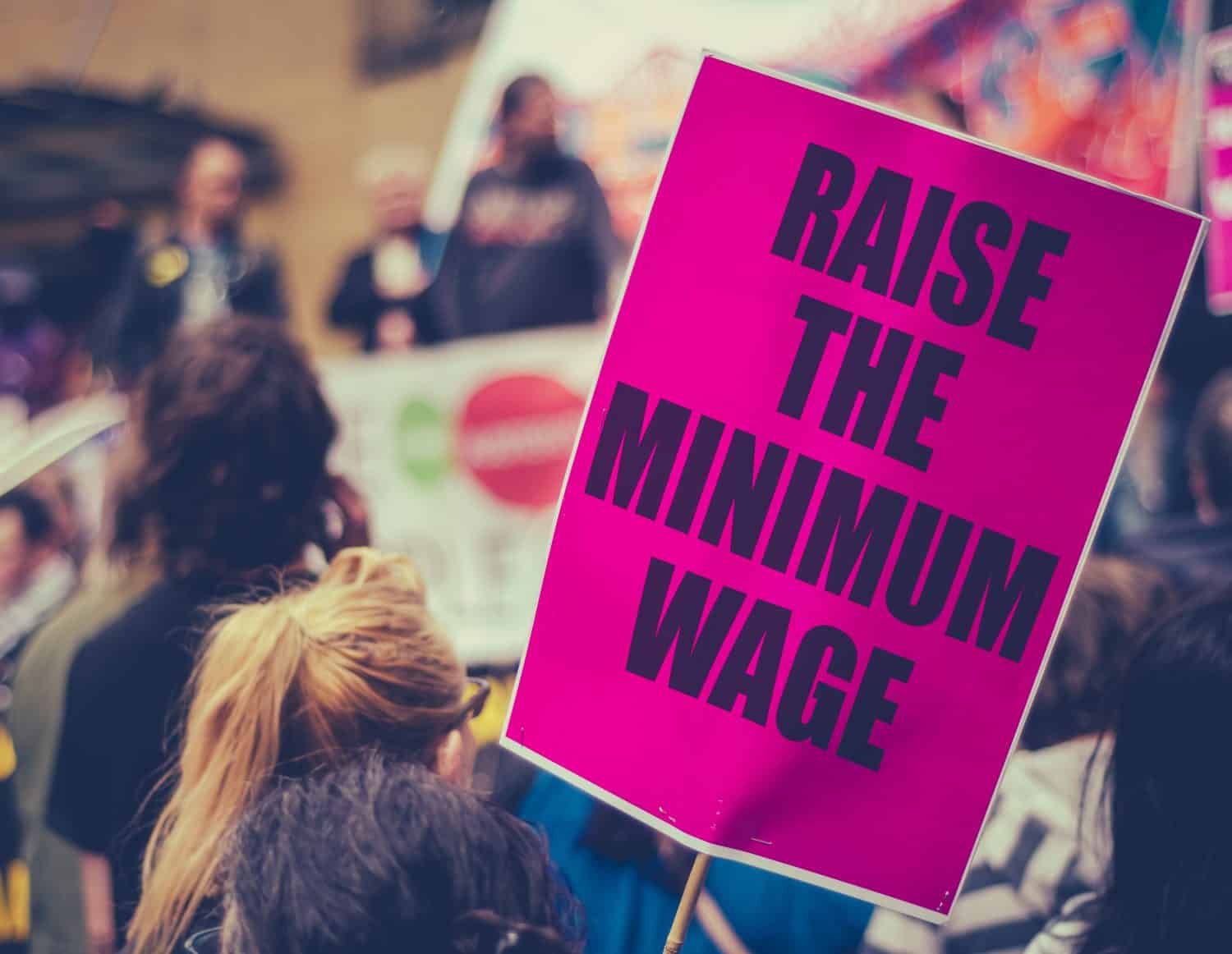
There is a legal exemption that declares disabled people as a group of people who fall into a work category of “subminimum wage work.” The law was passed in 1938 and allows businesses to pay disabled people less than minimum wage. Workers in 14(c) programs have often been paid far below minimum wage, though exact averages vary by year and source. Supporters of the program have argued it can provide work opportunities or transition pathways, while critics say it often traps workers in segregated, low-paid settings. However, statistically speaking very few of the people employed at a subminimum wage rate ever actually break free of that cycle.
Disability advocates have long been pushing for this law to be abolished because it traps disabled people in exploitative job programs that refuse to pay them enough to afford even small creature comforts that the average person doesn’t have to think twice about. NPR interviewed a worker in one of these programs from Rhode Island, Jerry D’Agostino, who remembers that his first paycheck netted him just $12.
People working in these subminimum wage jobs are historically not offered the same protections and opportunities as their able-bodied counterparts. Many of them work in “sheltered workshops” where the company sequesters disabled workers away from the able-bodied ones. Workers within these confines rarely escape. Typically, they end up being used for cheap labor until they can no longer work and must retire.
There Are Two Different Disability Benefit Programs in America

When someone says they receive disability benefits in the United States of America, there are two primary programs they could be receiving benefits from: SSDI and SSI. Social Security Disability Insurance (SSDI) is generally for people who have worked and paid enough into Social Security before becoming disabled. Supplemental Security Income (SSI) is what you receive if you did not work long enough (or at all) to be eligible for SSDI.
SSI is an extremely limited income. The maximum payment for an SSI recipient is under $1,000. Most SSI recipients do not receive the maximum amount allotted. Even if they did receive the maximum amount, they wouldn’t meet 100% of the federal poverty level. The maximum income for an SSI recipient is not enough to afford rent in most towns.
How much you receive in SSDI is based on how much you made at your job before you became disabled. While the income is still limited, it is nowhere near as limited as SSI limits. However, SSDI recipients younger than 65 typically make less than 100% of the federal poverty level. The earned income limit is higher for SSDI recipients as well. Under SSI rules, the first $20 of most income and the first $65 of earned income are generally excluded before benefits are reduced.
Disability Discrimination Laws Are Hard to Enforce
While the Americans with Disabilities Act (ADA) was signed into law more than 30 years ago, it aimed to address the inequities that disabled people face. However, its enforcement is limited for many reasons. It also doesn’t address some core inequities faced by disabled people, some of which are life-threatening. ADA enforcement can be uneven, and many people face significant barriers to pursuing complaints or litigation.
There is no such thing as “harmless” bigotry, but it is worth noting the difference between a case of discrimination that leads to inconvenience versus one that leads to death. Cases of discrimination against disabled people can take many forms. Some examples of disability discrimination include attempting to deny access to a public space to a service dog handler, refusing to provide reasonable accommodations to a disabled employee or targeted violence against a disabled person.
Disability discrimination cases often hinge on whether the plaintiff can show disability status, qualification, requested accommodation, or discriminatory treatment under the relevant law. In some cases, such as attempting to refuse access to a service dog handler, the discrimination is easily provable. However, in cases such as a disabled person suspecting they were not hired or fired simply because they were disabled, it may be difficult to prove that the defendant acted solely due to the plaintiff’s disability.
Due to the United States defaulting to “at will” employment, the company doesn’t have to provide a reason for the firing of an employee. Thus, proving that a firing or refusal to hire violated disability law can be difficult in America.
Disabled People Are Much Less Likely to Be Employed Even If They Can Work

Being disabled doesn’t mean you can’t work. However, the rate of unemployment for disabled people in America is significantly higher than the able-bodied population. People with disabilities make up a large share of the U.S. population. Despite being a large portion of the population, disabled people are significantly less likely to be employed than their able-bodied counterparts.
Many disabled people would be able to work as long as reasonable accommodations are provided by their workplaces. For instance, a person with chronic pain may be able to work if they are provided with a chair that they can sit in while working. However, many employers simply refuse to hire workers who are honest about their disability status. You don’t have to give a reason why you didn’t hire someone. “We preferred a different candidate” is reason enough, legally speaking. So, many disabled people never even make it to the interview stage if they disclose their disability in the application.
People with disabilities remain significantly less likely to be employed than people without disabilities. Only around 24.5% of disabled people are in the workforce, while 67.6% of able-bodied people are working. This disparity reflects a mix of factors, including discrimination, inaccessible workplaces, health limitations, transportation barriers, and inadequate accommodations. Many disabled people are able and willing to work.
Disabled People May Not Be Able to Marry the People They Love

One thing people often don’t understand is how disability affects your ability to access the world in the same way that able-bodied people can, particularly in the realm of marriage. Now, there isn’t an actual law that prevents disabled people from marrying someone if they’re legally able to enter that contract. However, if you receive SSI rather than SSDI, the SSA counts your spouse’s income as your own. Therefore, if your spouse makes any money at all, you may no longer be eligible for disability benefits. Marriage can reduce or eliminate SSI for some recipients because the Social Security Administration may count part of a spouse’s income and resources.
Many inter-abled couples rely on the income from their disabled spouse’s benefits. However, legally marrying would cause them to lose that income entirely. Thus, many of these couples opt not to get married at all. Not being able to get married precludes these couples from many legal benefits and protections that able-bodied couples enjoy. Unmarried couples may lack some of the legal protections and default rights that come with marriage, unless they complete legal planning documents.
Additionally, disabled people who get married might no longer be eligible for their own healthcare if they are unable to work. Many disabled people rely on public healthcare, also known as Medicaid. Marriage can also affect Medicaid eligibility for some disabled people, depending on income, state rules, and the type of Medicaid they receive. They would no longer be eligible for public healthcare with their spouse’s income factored in. In some cases, this can make their healthcare costs unmanageable. Private healthcare may refuse to cover their necessary procedures and medications.
Financial and healthcare dependence can increase vulnerability to abuse for some disabled people. Since they are reliant on their spouse for income and healthcare, disabled spouses can’t leave an abusive partner.
Medicaid and Medicare Windows for Disability-Related Aids Can Be Needlessly Restrictive

Medicaid and Medicare also have immensely restrictive windows for how often you can get certain procedures done. In some cases, these windows are published and accessible. However, many patients find out a procedure is no longer covered for them when they’re at the doctor to receive it.
This issue is not exclusive to Medicaid and Medicare. However, when we’re talking about people with preexisting conditions that heavily impact their quality of life—and can even be life-threatening if not monitored and treated correctly—the need for access to certain procedures and medical equipment is crucial.
For instance, wheelchair replacement and repair rules can be restrictive, and coverage often depends on medical necessity, documentation, and payer policy. However, for people who use their wheelchairs every day, this can be unreasonably restrictive as the period doesn’t keep up with the amount of wear and tear on their current chair. If someone needs their chair to go to work, they might be left with a chair that’s falling apart and beyond repair towards the end of their waiting period.
Original Medicare generally does not cover routine eyeglasses, though there are limited exceptions (such as certain lenses after cataract surgery) and some Medicare Advantage plans offer vision benefits. So, if you need glasses to function in society, you may have to pay for them out of pocket. You may get some eye care costs covered if you have additional coverage through a Medicare Advantage plan. Even with a Medicare Advantage plan, you may still have to pay out of pocket for eyeglasses, which can remain expensive.
Disability Approval Rates are Relatively Low, Especially at the Initial Application Stage.

Hundreds of thousands to millions of people apply for disability benefits each year, depending on how applications are counted. Of that amount, some applications are denied for non-medical or technical reasons before reaching a full medical determination. These cases are known as “technical denials”. In these situations, the applicant failed to meet a technical criterion for the American disability system, such as not having had a job for a long enough period, not having a job recently enough, or not being covered by Social Security.
A minority of initial disability applications are approved, and many applicants must appeal. The remaining 62% are given the option to appeal the initial denial within 60 days of receiving their case’s decision. Many denied applicants do not appeal, while others continue through reconsideration and hearing stages. At this point in the application, the average case has been open for 1 year, 1 month, and 13 days. That means these people have likely been out of work for over a year with no income while waiting for their appeal decision.
Only 15% of first appeals are approved. At this stage, 20% of applicants will not appeal further. However, 77% of cases denied on the first appeal will be appealed again. We are now 2 years, 1 month, and 20 days into the application process on average. So, that’s over two years without an income. The case will be heard by an administrative law judge. This hearing results in around 51% of appeals being approved.
After factoring in every person who applied and did not receive benefits (including technical denials), only about 30% of disability cases are granted benefits.
Around 10,000 People Die Every Year While Waiting for Disability Approval

It can take years to hear back on your disability case. The average wait time from start to finish on a disability case is around 372 days, just over a year. However, in some places, the wait time can eclipse 800 days. As a result, around 10,000 people who are waiting to hear about their disability cases die from their disabling illness every year.
Disability cases are more than just the cash benefits. Disabled people also need to navigate the public healthcare system—which can also refuse to serve them. With no healthcare and no income, some people die because they are unable to treat the illness that caused them to apply for disability in the first place. Others may die from complications related to untreated illness or from poor living conditions worsened by a lack of income and healthcare.
Many disabled people need specialized healthcare just to get by daily. They can’t wait two years without healthcare and income to address their pertinent health issues. Thus, many disabled people do not make it to the part of their lives where their disability is recognized by the public systems that are meant to take care of them. People with serious physical ailments often die without ever receiving treatments that could have prolonged their lives because they cannot afford to access them and the disability systems in America were not prompt enough to save their lives.
Around 8,000 People File Bankruptcy Every Year While Waiting for Disability Approval

Of those who do not die from their illnesses during the disability application process, around 8,000 of those people will declare bankruptcy during the disability process. Since disability impairs a person’s ability to work and earn an income, many disabled people end up insolvent, as they’re living off of credit cards, loans, and charity. When all of this inevitably catches up to them as they’re still waiting for their case to be heard, they’re forced to declare bankruptcy.
Bankruptcy can severely limit a person’s financial options moving forward for almost a decade. Even if the person is approved for benefits, the bankruptcy will stay on their record. It will damage their ability to improve their life. They will be largely incapable of being approved for any sort of financing. So, they won’t be able to get a car or own a home until the bankruptcy is off their record.
This ultimately means that many disabled people have few financial options, perpetuating the cycle of poverty for them. It limits where they’re able to live. They likely can’t own a car, which may be necessary to access necessities such as grocery stores. They’ll also be unable to own things like land, which are huge factors for building generational wealth.
Disabled people are often disenfranchised by the lack of financial safety nets for people who suddenly become disabled. Even those who were born with disabilities must go through years of waiting. Their cases may never be recognized by the systems designed to catch them. Those without familial support systems often slip through the cracks and suffer heavily and needlessly.