Courtesy of Twentieth Century Fox

Mr.choppers, CC BY-SA 3.0

Courtesy of Twentieth Century Fox

2019 Getty Images / Getty Images Entertainment via Getty Images

Public Domain / Wikimedia Commons

Courtesy of Warner Bros.

Courtesy of Twentieth Century Fox

Courtesy of Metro-Goldwyn-Mayer

Jörg Behrens, CC BY-SA 3.0

Courtesy of Metro-Goldwyn-Mayer (MGM)

Courtesy of Warner Bros.
Courtesy of Twentieth Century Fox

Courtesy of Paramount Pictures

Public domain, via Wikimedia Commons

Courtesy of Metro-Goldwyn-Mayer (MGM)

Courtesy of Metro-Goldwyn-Mayer

Courtesy of Paramount Pictures

DancingPhilosopher / BY-SA 3.0

jboylan67 / BY 2.0

© Peterson Auto Museum


19 Hollywood Props and Memorabilia Sold at Auction
Hollywood memorabilia can turn ordinary production equipment into valuable collectibles. A movie costume, a battered prop, or a car built for a publicity tour may be worth far more decades later than anyone expected. The strongest auction results usually involve objects with a recognizable connection to a film, clear documentation, and relatively few surviving examples.
These 19 auction sales range from classic Hollywood costumes to Star Wars props, James Bond vehicles, an Academy Award, and even a car built for television. They are notable examples, not a complete ranking of every high-priced sale. Along the way, the stories show why it matters whether an object appeared on screen, was made for promotion, or was assembled later from genuine production parts.
Prices below are the amounts reported by auction houses or other reliable sale records, generally including the buyer's premium when available. They are historical sale prices, not inflation-adjusted estimates. One British sale is also shown in pounds, with an approximate U.S. dollar equivalent from the time.
James Bond's Aston Martin DB5
A gadget-equipped 1965 Aston Martin DB5 associated with James Bond sold for $6,385,000 at RM Sotheby's in August 2019. Here's an important distinction: this particular car was commissioned for publicity surrounding Thunderball (1965); it was not the original screen-used DB5 from Goldfinger (1964). The promotional car carried familiar Bond-style equipment and had been carefully restored with working gadgets. Its sale shows how a vehicle can attract major interest through its franchise history even when it was used for promotion rather than filming.
Marilyn Monroe's Red-Sequined Dress
Marilyn Monroe's red showgirl gown from Gentlemen Prefer Blondes (1953) brought $1,476,000 at a Profiles in History auction in June 2011. Designed by William Travilla, the costume featured thousands of hand-sewn sequins and a feathered hat. Monroe wore it during the opening number, 'Two Little Girls from Little Rock,' alongside Jane Russell. The gown came from Debbie Reynolds' renowned collection of Hollywood costumes. Some accounts list the $1.2 million winning bid, but the higher figure reflects the auction's reported total with fees.
An R2-D2 Unit Built From Film Components
A full-size R2-D2 unit assembled from original Star Wars production components sold for $2.76 million at Profiles in History in June 2017. The parts came from multiple films, including the original trilogy and later prequels. That means the lot was not a single, untouched robot that appeared exactly as sold in one particular scene. Production teams routinely reused, repaired, and modified droid components between movies. For collectors, the value lay in those authentic film-used pieces and their connection to one of the franchise's most recognizable characters.
Marilyn Monroe's White Subway Dress
The pleated white dress Marilyn Monroe wore in The Seven Year Itch (1955) is inseparable from the movie's subway-grate scene. Costume designer William Travilla created the outfit, which later became a centerpiece of actress Debbie Reynolds' memorabilia collection. When it went to auction in June 2011, the winning bid was $4.6 million. The final amount, including the buyer's premium, was $5.52 million. That distinction matters when comparing the sale with other memorabilia records, which often quote prices inclusive of fees.
The Maltese Falcon Statuette
One of the lead statuettes made for The Maltese Falcon (1941) sold for $4,085,000 at Bonhams in November 2013. The bird is the object everyone is chasing in John Huston's film noir, making the prop more than background decoration. At about 12 inches tall and roughly 45 pounds, this example was made to look convincingly substantial when handled on camera. The price reflected its documented screen history and the fact that a surviving hero prop from such a famous movie rarely comes onto the open market.
Costumes From The Sound of Music
A collection of costumes from The Sound of Music (1965) sold for $1.3 million through Profiles in History in July 2013. The group included outfits associated with Julie Andrews' Maria and the von Trapp children, including a complete set of seven children's uniforms. Rather than one famous hat or dress, this sale brought together several recognizable pieces of the film's wardrobe. The costumes were a reminder that collectors sometimes pay a premium for a coordinated group with a clear connection to an enduring musical.
Dorothy's Ruby Slippers
A pair of ruby slippers worn by Judy Garland in The Wizard of Oz (1939) sold for $32.5 million at Heritage Auctions in December 2024, including the buyer's premium. The winning bid alone was $28 million. This was the pair stolen from the Judy Garland Museum in Minnesota in 2005 and recovered by the FBI in 2018. Several pairs were made for the film, and this was one of the surviving screen-used examples. The sale established an extraordinary benchmark for movie memorabilia, far beyond its pre-auction estimate.
Wet Nellie, the James Bond Submarine
The submersible Lotus Esprit known as 'Wet Nellie' from The Spy Who Loved Me (1977) sold for GBP 616,000, roughly $967,000 at the time, at an RM Auctions sale in London in 2013. The remarkable prop helped create the sequence in which Bond's sports car drives into the water and transforms into a submarine. It was actually a purpose-built underwater vehicle, not a normal road car that could switch modes. Its unusual engineering and unmistakable place in the film helped make it a valuable piece of Bond history.
Dorothy's Blue-and-White Gingham Dress
Another piece of The Wizard of Oz (1939) history reached seven figures when a blue-and-white gingham dress worn by Judy Garland sold for $1,565,000 at Bonhams in November 2015. The costume included the familiar pinafore and a cream-colored blouse, with Garland's name marked inside. While the ruby slippers usually get more attention, Dorothy's dress is just as central to the character's look. Its documented connection to the production helped make it one of the most notable costume sales of its time.
The Piano From Casablanca
The piano associated with Sam in Casablanca (1942) sold for approximately $3.4 million at Bonhams in November 2014. The small upright instrument, with 58 keys rather than a standard piano's 88, appeared at Rick's Cafe Americain, where Dooley Wilson's character plays 'As Time Goes By.' It also served a practical role in the story: the letters of transit were hidden inside it. Unlike a large set piece, the piano is a compact object whose value comes from its unmistakable place in one of Hollywood's best-known films.
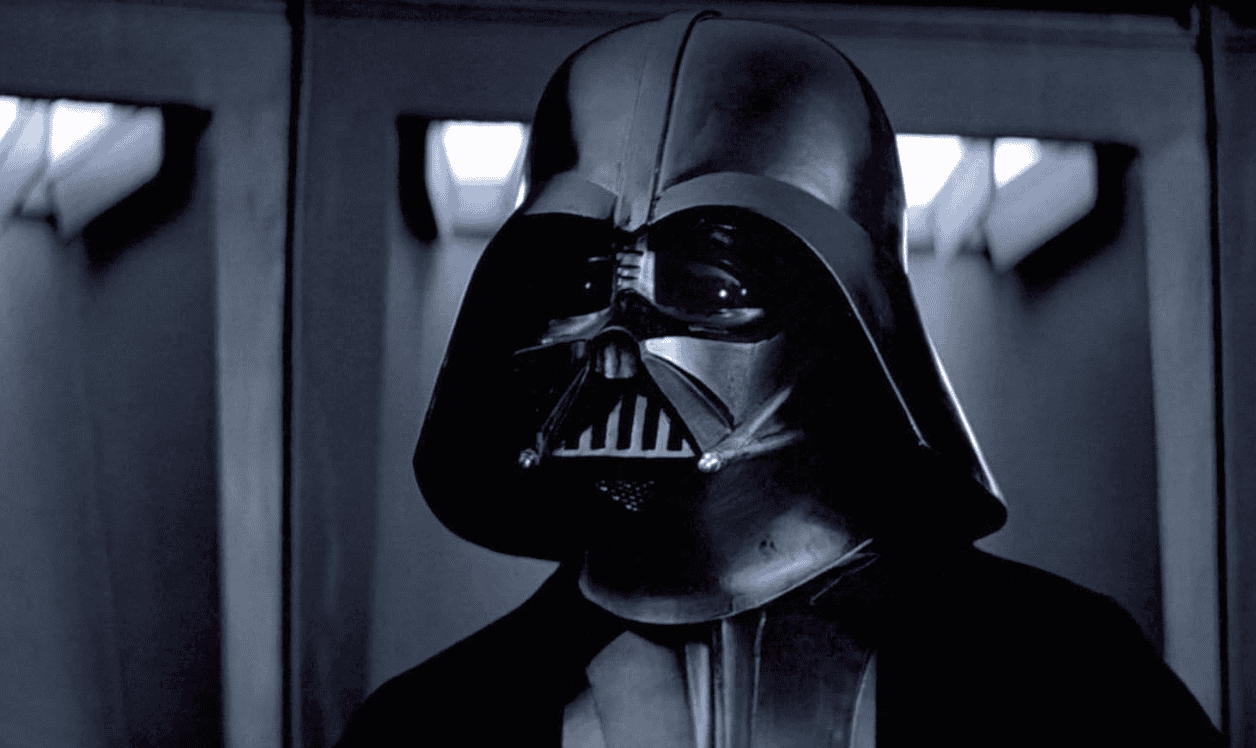
Darth Vader's Helmet and Mask
A helmet and face mask worn by David Prowse as Darth Vader in Star Wars: The Empire Strikes Back (1980) brought $1,125,000 at a Profiles in History auction in September 2019. Made largely of fiberglass, the costume pieces helped create the character's instantly recognizable silhouette. The auction description identified the set as screen-used and included details of the original interior padding and fittings. This was a specific surviving production costume, not simply a replica of the familiar black helmet.
Audrey Hepburn's Breakfast at Tiffany's Dress
A black Givenchy dress made for Breakfast at Tiffany's (1961) sold for $923,187 at Christie's in London in December 2006. It was one of three versions created for the film and closely associated with Audrey Hepburn's appearance as Holly Golightly. Givenchy had donated the dress to the founders of the charity City of Joy Aid, which benefited from the auction. Christie's described it as a dress made for the movie; that is more precise than assuming this particular example can be conclusively matched to a shot of Hepburn wearing it.
The Cowardly Lion Costume
A costume worn by Bert Lahr as the Cowardly Lion in The Wizard of Oz (1939) sold for $3,077,000 at Bonhams in November 2014. The elaborate outfit included a sculpted likeness of Lahr's face and was made using real lion fur, a practice that would be viewed very differently today. Its survival is notable because costumes were built for the demands of a production, not necessarily long-term preservation. The sale placed another recognizable piece of the 1939 film among Hollywood's major memorabilia transactions.
Gone With the Wind Best Picture Oscar
The Academy Award presented to producer David O. Selznick for Gone with the Wind (1939) sold for $1,542,000 at Sotheby's in June 1999. The Oscar recognized the film's Best Picture win at the 1940 Academy Awards. Singer Michael Jackson purchased the statuette, reportedly bidding by telephone. This item differs from the other entries because it was an award presented for a movie, not an object seen on screen. Still, its provenance and association with an influential Hollywood production made it a notable auction result.
Robby the Robot From Forbidden Planet
Robby the Robot from Forbidden Planet (1956, not 1965) sold for $5,375,000 at Bonhams in November 2017. The lot was more than the seven-foot robot itself: it included accessories such as an alternate head, control equipment, and Robby's motorized vehicle. Built for MGM's science-fiction film, the character went on to appear in other productions, including television. At the time of the sale, the price set a record for a film prop, though later auctions have surpassed it.
Indiana Jones' Fedora
A fedora used for Indiana Jones and the Temple of Doom (1984) sold for $630,000 at Propstore in August 2024. The hat was worn by Harrison Ford and stunt performer Dean Ferrandini, whose collection provided its provenance. The auction house matched distinctive details in the felt and ribbon to film footage and production photographs. The sale should not be confused with other Indiana Jones hats, including examples associated with Raiders of the Lost Ark. Different films and individual props have produced different prices at auction.
Luke Skywalker's Lightsaber
A lightsaber used by Mark Hamill during Luke Skywalker's duel with Darth Vader in The Empire Strikes Back (1980) sold for $3.75 million at Heritage Auctions in July 2026. The prop was offered with a practical severed-hand effects rig made for the Cloud City sequence. That is a much newer sale than the $450,000 paid for a different Luke Skywalker lightsaber in 2017. Both figures are genuine auction results, but they refer to separate pieces of memorabilia; the 2026 sale is the more significant update for this article.
Han Solo's Blaster
A blaster used by Harrison Ford as Han Solo in the original Star Wars (1977) sold for $1,057,500 at Rock Island Auction Company in August 2022. The prop was an original production-used example of Solo's DL-44-style blaster and was identified as the sole surviving example of three used in filming. An entirely different blaster from Return of the Jedi (1983) had sold for $550,000 in 2018. The two sales should not be combined or treated as though they describe the same prop.
The Original 1966 Batmobile
The original Batmobile created for the Batman television series that debuted in 1966 sold for $4.62 million, including fees, at Barrett-Jackson in January 2013. Customizer George Barris built the television car from a 1955 Lincoln Futura concept vehicle, giving it the bold fins, gadgets, and distinctive styling associated with Adam West's Batman. This was a TV vehicle rather than a prop from a feature film, and it was not the Batmobile driven in the 1989 movie. That distinction is especially important when choosing the slide's image.