Flywheel Publishing
Bytmonas/ via Getty Images
ElenaR/ Shutterstock
Public Domain / Wikimedia Commons
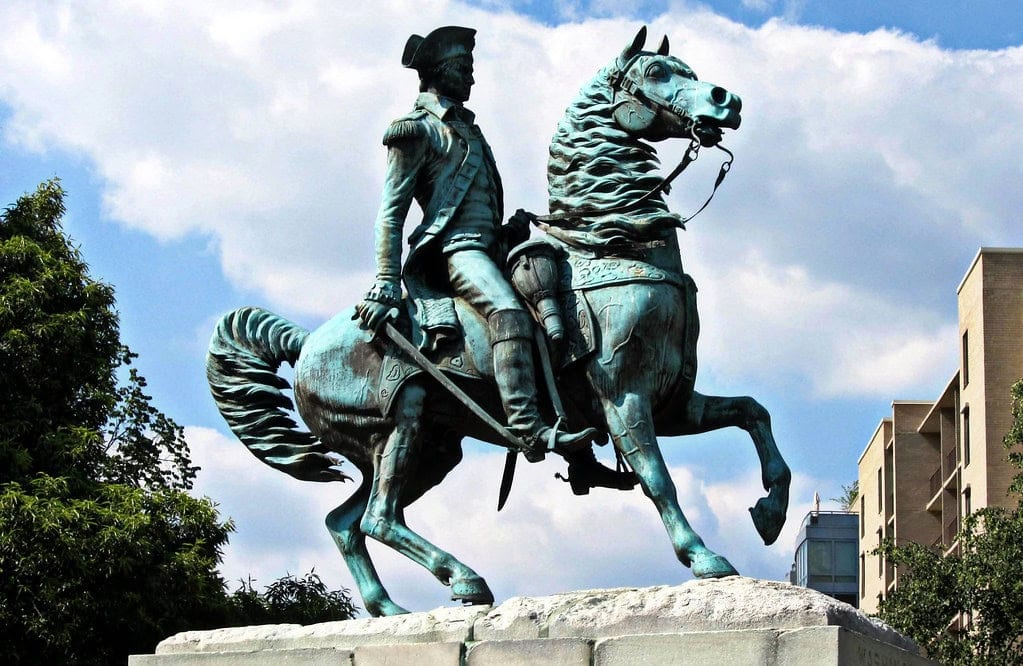
"George Washington" by NCinDC is licensed under BY-ND 2.0.

LightField Studios/Shutterstock.com
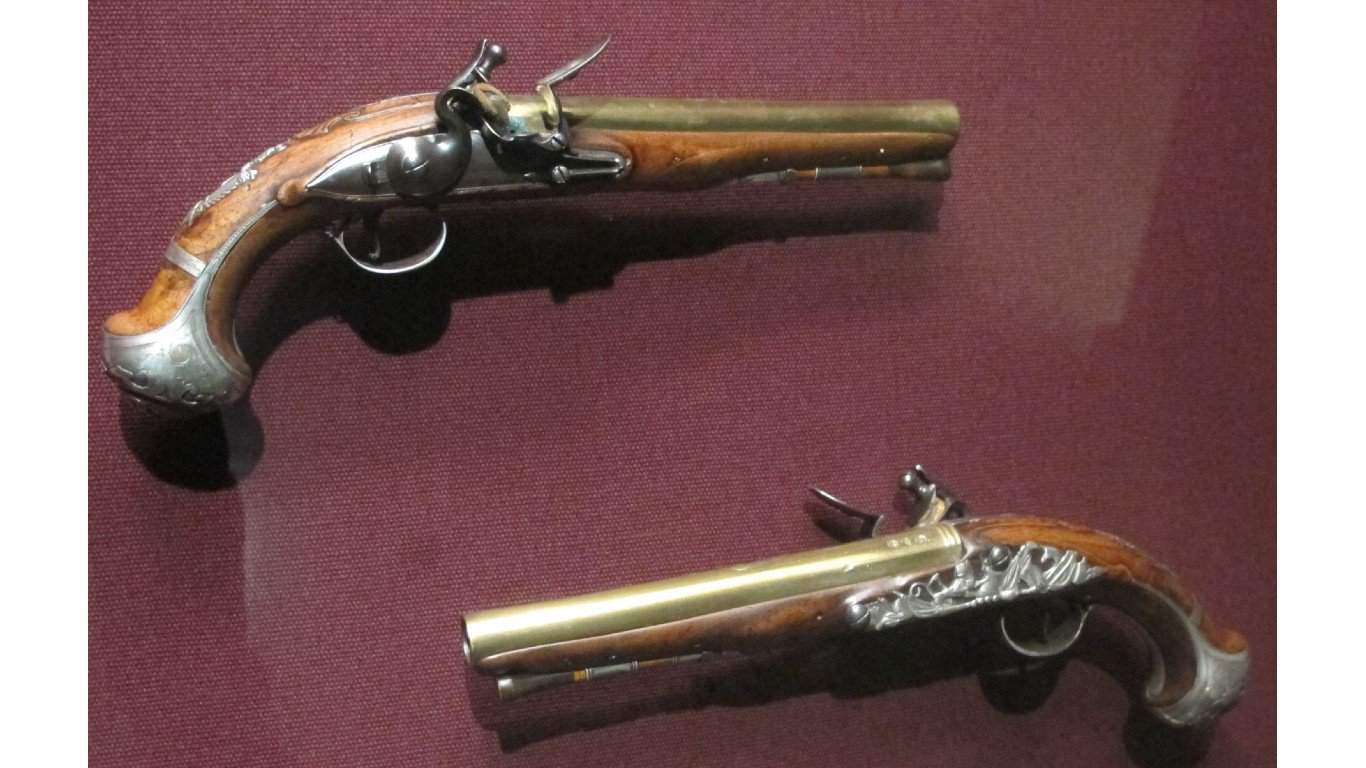
Courtesy of West Point Museum via Facebook
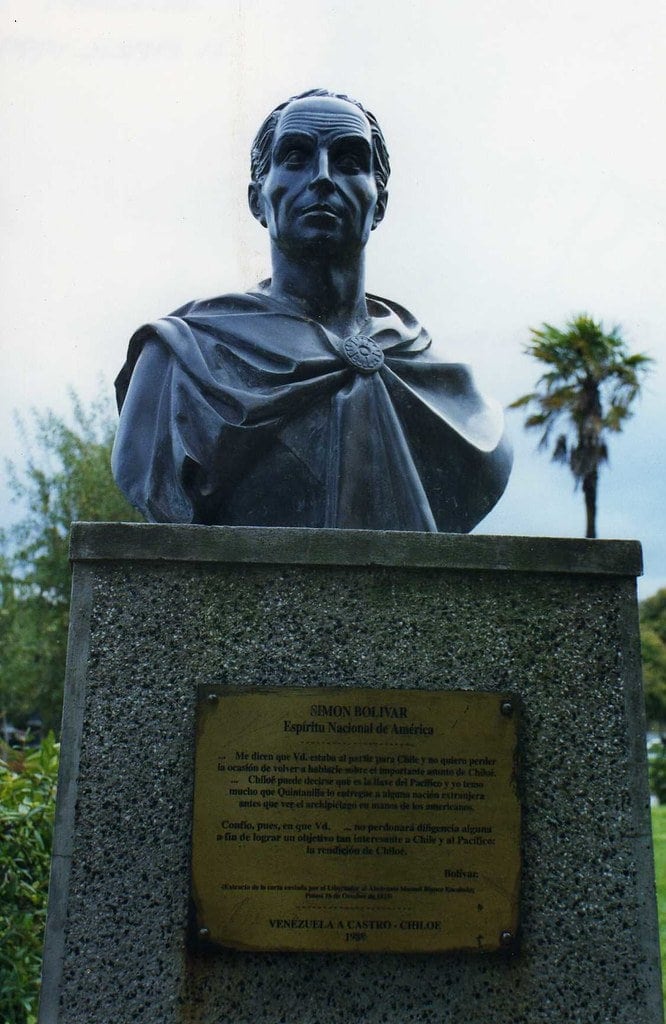
"Simon Bolivar in Castro, Chiloe" by wallygrom is licensed under BY-SA 2.0.
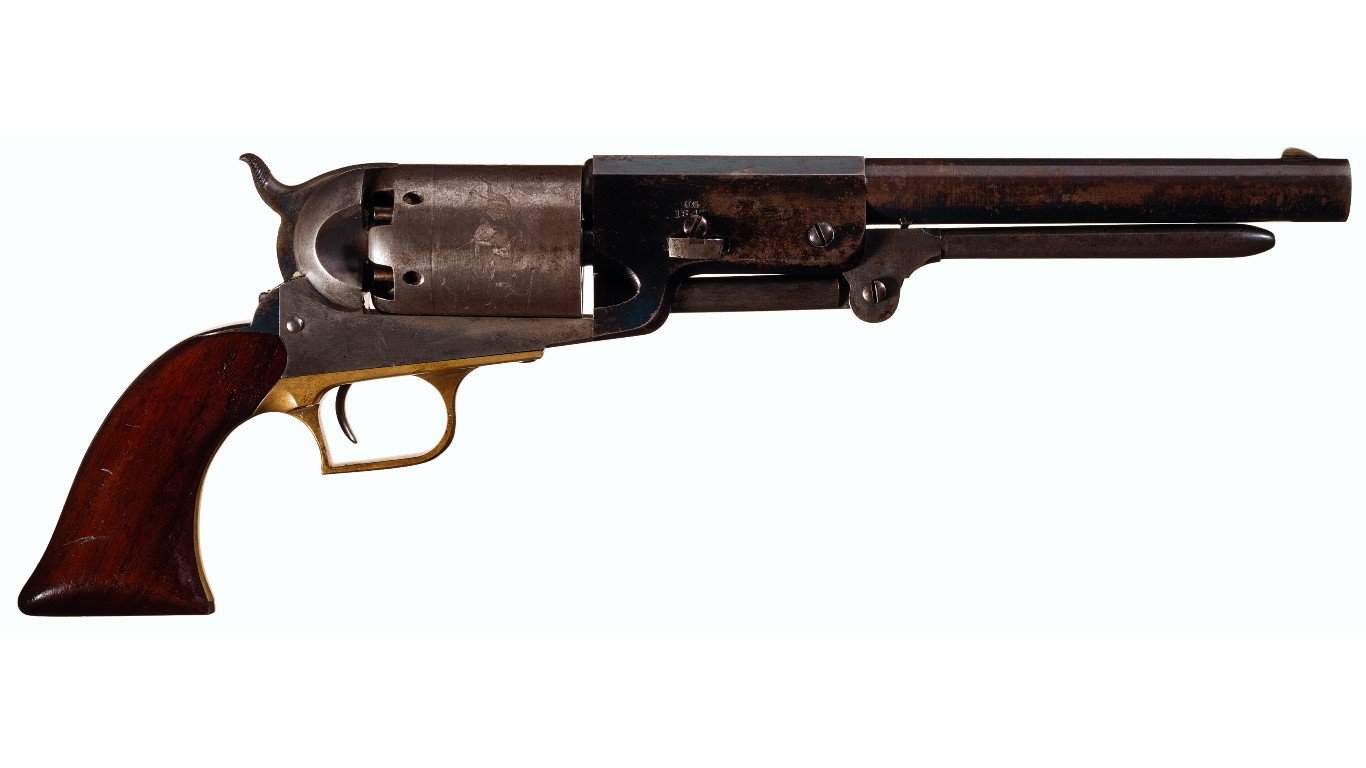
Courtesy of Rock Island Auction Company
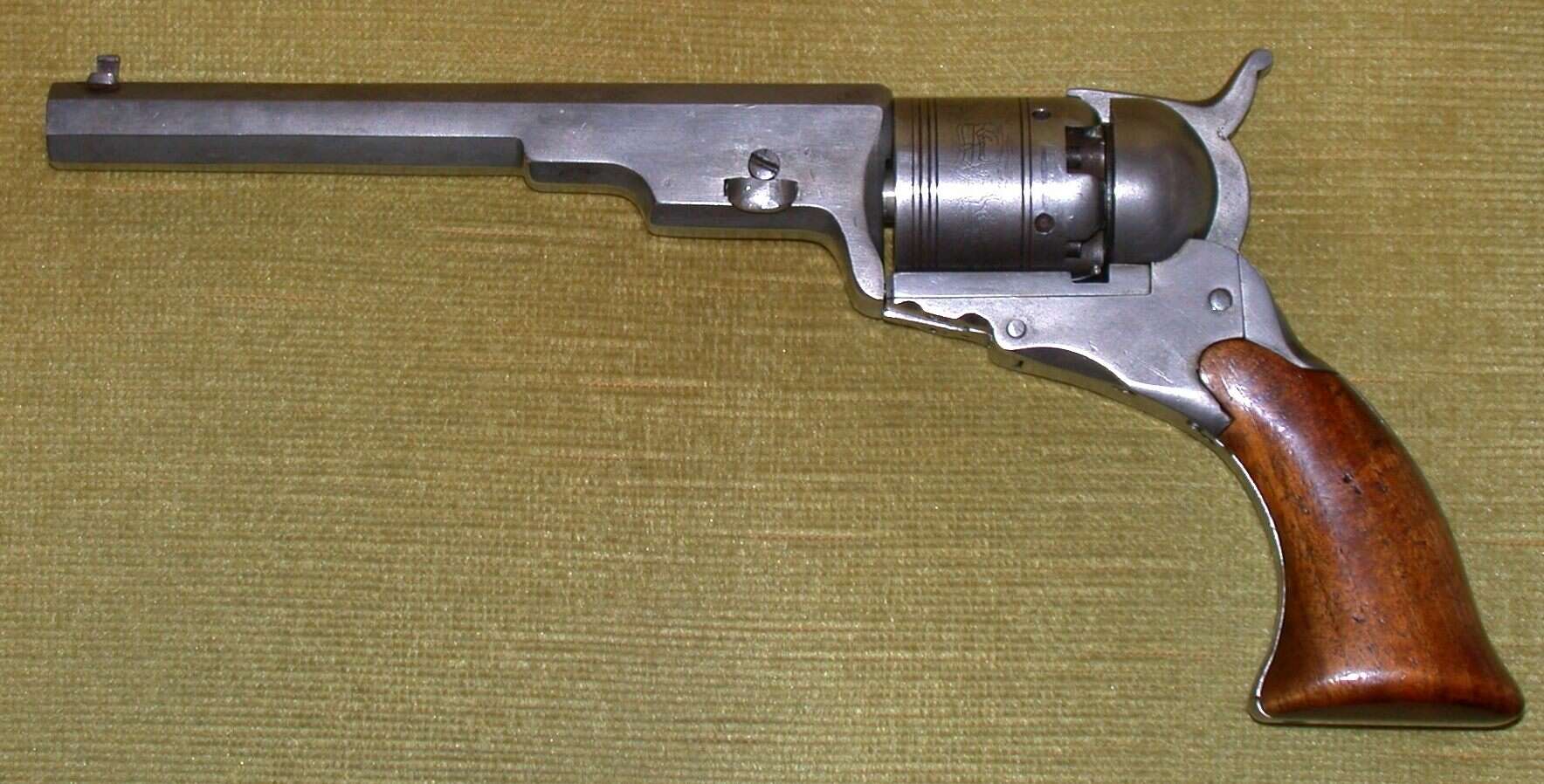
"Colt Paterson No 5" by Hmaag is licensed under BY-SA 3.0.
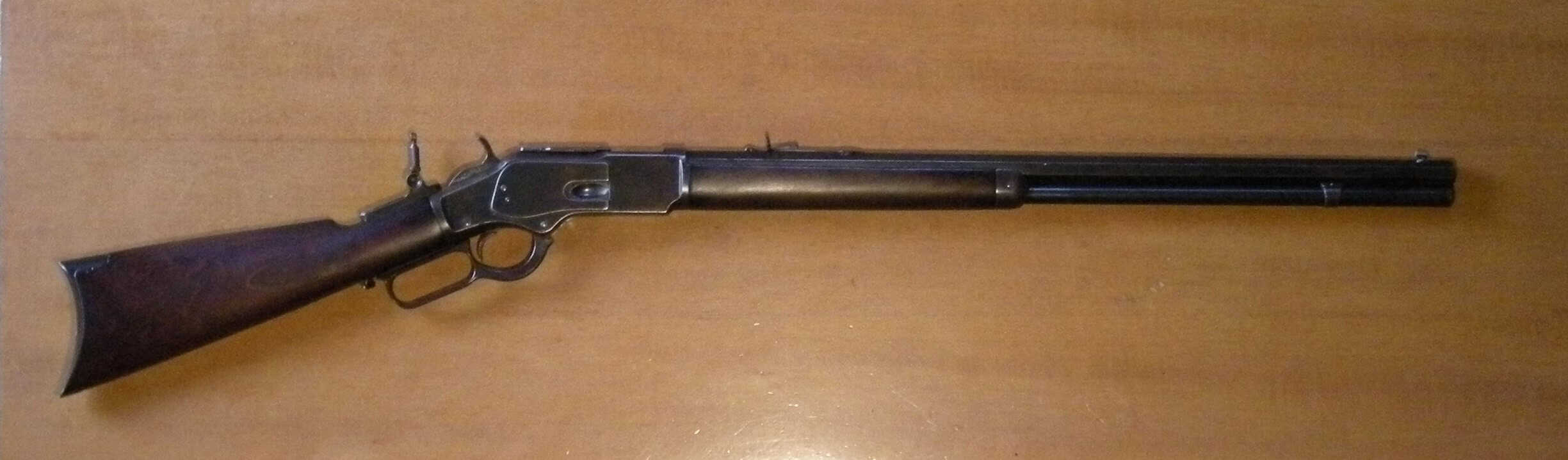
"Winchester Model 1873" by Hmaag is licensed under BY-SA 4.0.
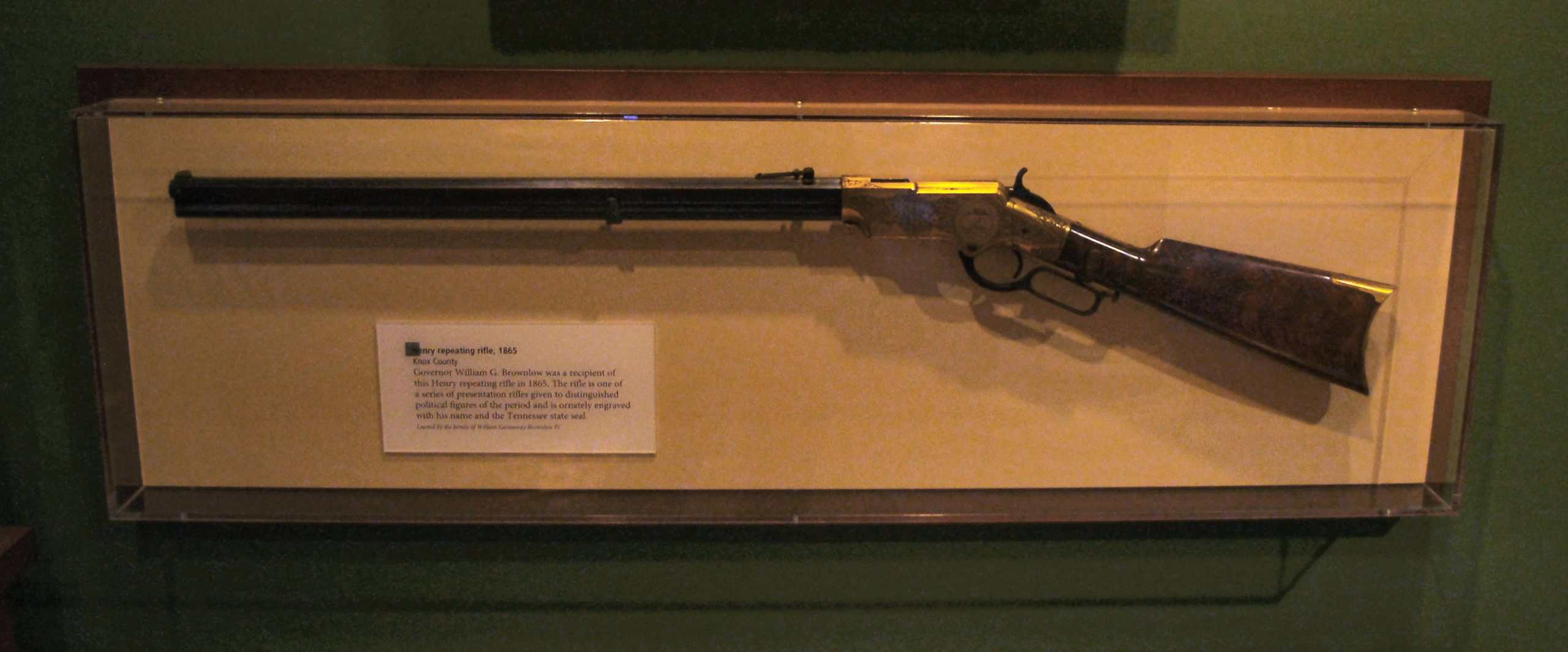
"File:Parson-brownlow-henry-rifle-tn1.jpg" by Brian Stansberry (photographer) is licensed under BY 3.0.
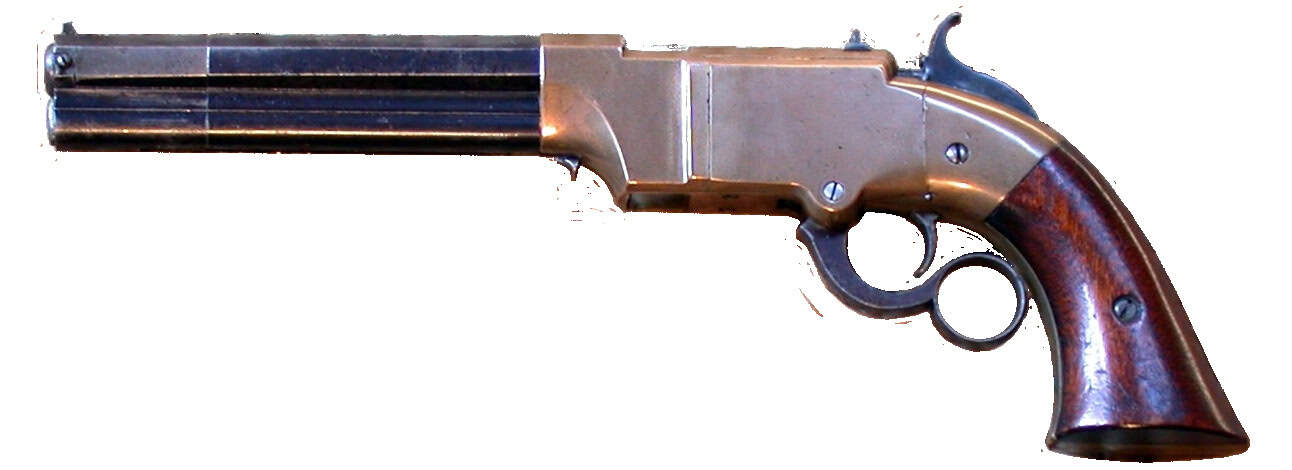
Petter Bøckman / Wikimedia Commons
Courtesy of Rock Island Auction Company
Public Domain / Wikimedia Commons
Samuel Colt / CC0
Big James / Wikimedia Commons
zim286 / iStock via Getty Images
"Mauser C96 M1916 Red 4" by M62 is licensed under BY-SA 3.0.
"Colt M1911 (6971799429) noBG" by Askild Antonsen is licensed under BY-SA 3.0.
"M1 Garand rifle USA noBg" by Armémuseum (The Swedish Army Museum) is licensed under BY-SA 4.0.
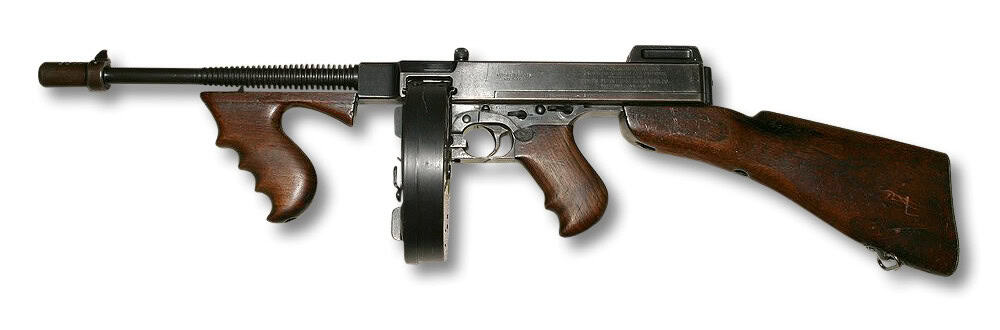
"Thompson submachine gun noBG" by National Park Service is licensed under BY-SA 3.0.
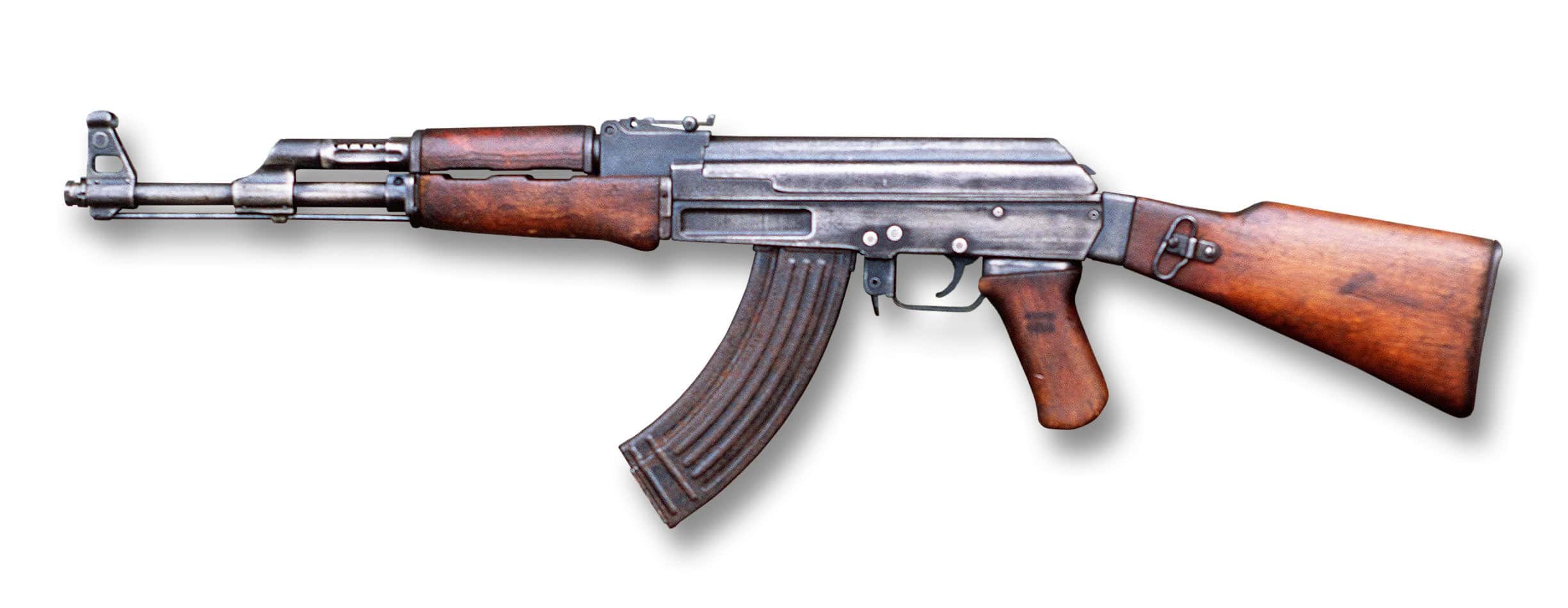
"AK-47 type II noBG" by User:Nemo5576 is licensed under BY-SA 4.0.
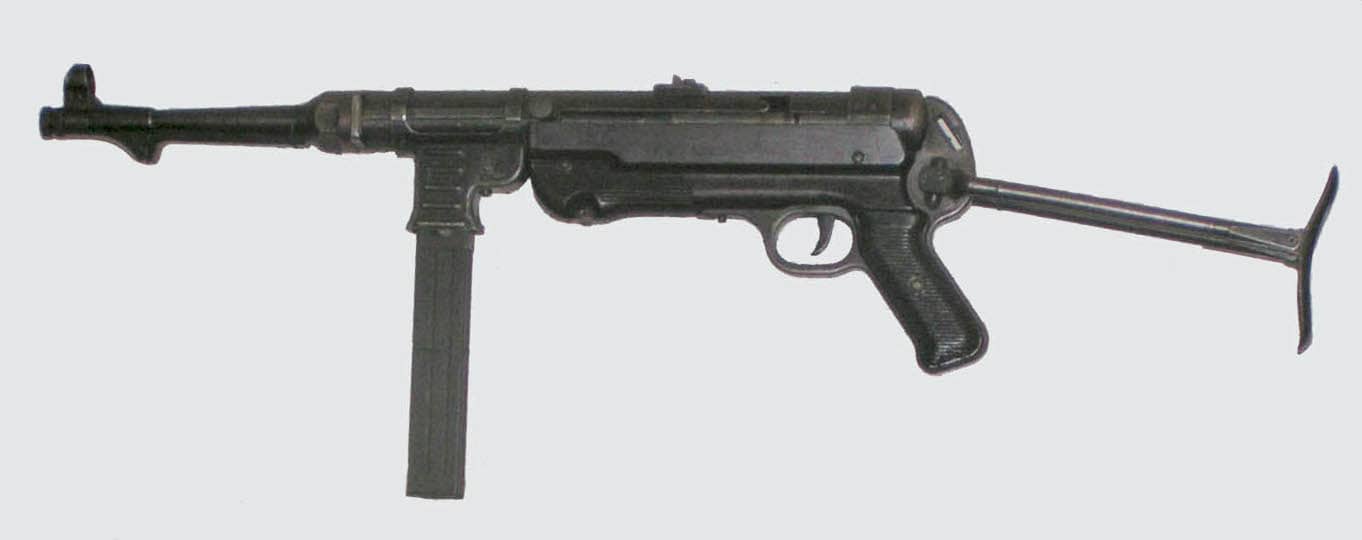
"Maschinenpistole MP40" by User:Stefan Kühn Überarbeitung: user:Steschke is licensed under BY-SA 3.0.
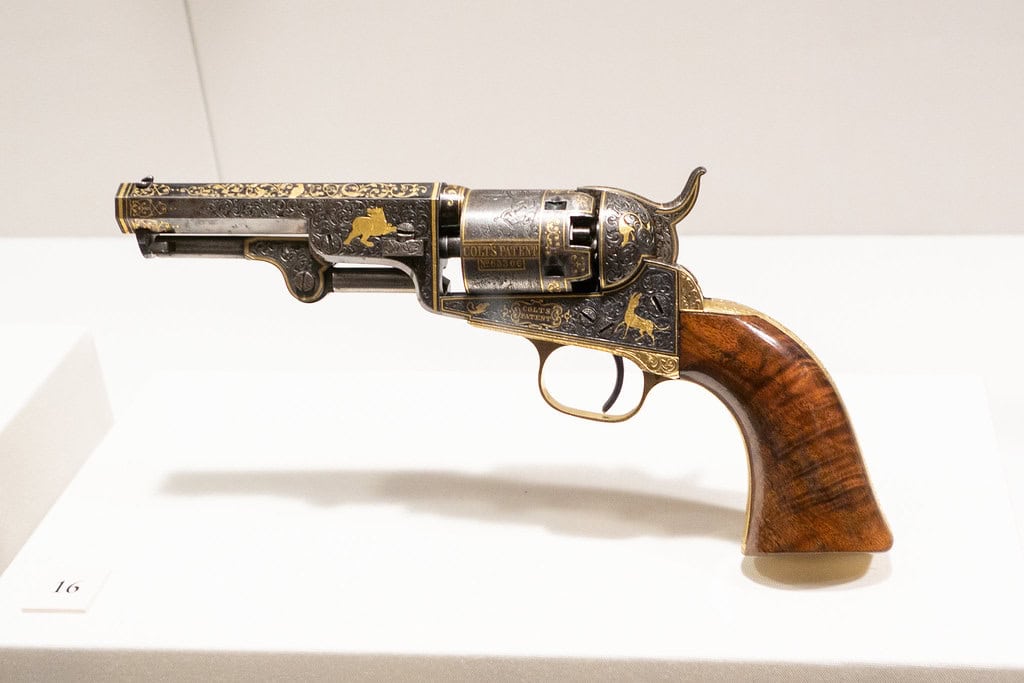
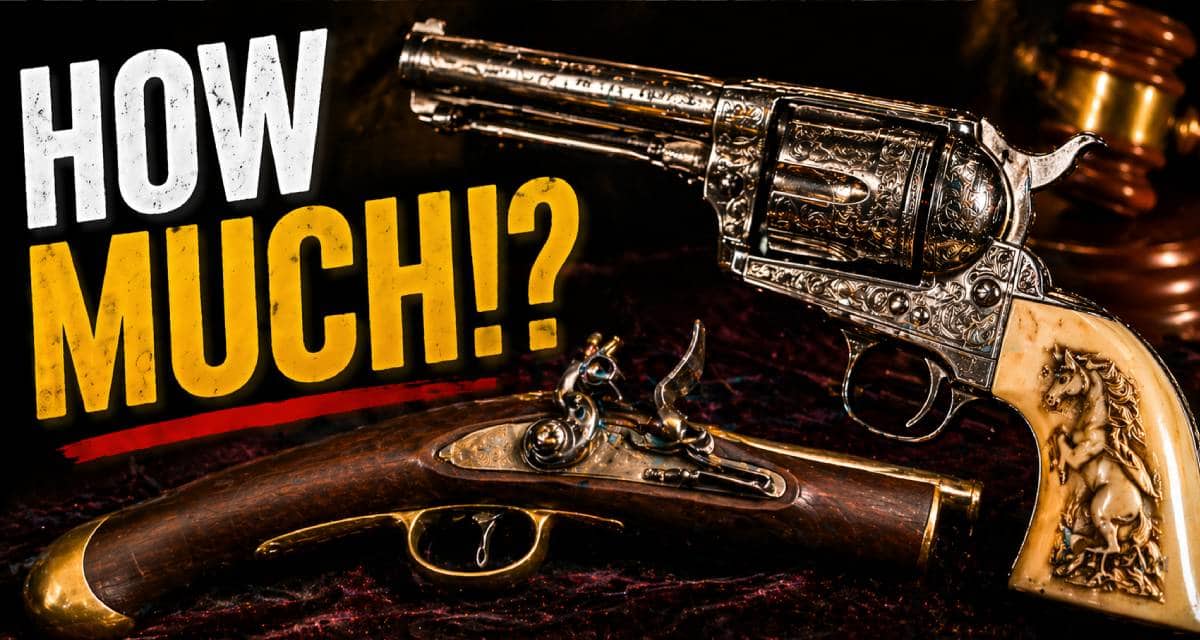
"Engraved Colt revolver" by quinet is licensed under BY 2.0.
Public Domain / Wikimedia Commons



20 Historic Firearms That Became Coveted Collector Pieces
Some historic firearms sell for ordinary antique-gun money. Others reach six or even seven figures because the object itself is only part of the story. Provenance, rarity, condition, factory configuration, craftsmanship, and a documented connection to a major person or event can push one example into an entirely different market from another firearm of the same basic model.
For this list, 24/7 Tempo reviewed museum records and auction archives from sources including the Smithsonian's National Museum of American History, the U.S. Army, Christie's, and Rock Island Auction Company. Where a reliable public sale could be verified, the price below refers to that specific firearm or a clearly identified comparable example. It should not be read as a blanket value for every firearm of the same model.
That distinction matters. A standard military pistol and a nearly identical-looking example with ironclad presidential provenance can live in completely different price universes. Original condition, factory engraving, accessories, serial number, documentation, and ownership history can all move the needle. These 20 firearms show just how much history can change what collectors are willing to pay.
When Firearms Become Artifacts
A historic firearm can become valuable for reasons that have very little to do with its usefulness as a weapon. A documented connection to a president, military leader, famous owner, major conflict, or technological turning point can turn an otherwise familiar model into a museum-level artifact. That is why collectors pay so much attention to paperwork, serial numbers, inscriptions, factory records, and ownership history. With the best pieces, the metal and wood matter, but the documented story is often what separates a collectible from a cultural artifact.
What Actually Makes a Firearm Valuable
Age alone does not make a firearm valuable. Collectors look at rarity, originality, condition, factory configuration, engraving, matching parts, accessories, and provenance. A common model in average condition may be worth a fraction of an exceptional example with factory documentation or a famous owner. Auction prices can also swing sharply from one specimen to another, which is why the record-setting prices in this list apply to specific firearms, not every gun that happens to share the same model name.
The Power of Provenance
Provenance can completely change the market for a historic firearm. A well-documented chain of ownership linking a gun to George Washington, Theodore Roosevelt, Wild Bill Hickok, or another major historical figure can matter more than the model's ordinary scarcity. The key word is documented. Letters, factory records, photographs, museum files, inscriptions, and an unbroken ownership history can support a claim that collectors are willing to pay for. A colorful story without evidence does not carry the same weight.
Innovation and Turning Points in History
Some firearms attract collectors because they mark a genuine change in technology. Early revolvers, lever-action repeaters, and the first commercially successful self-loading pistols helped push firearm design from single-shot and manually loaded systems toward faster repeating actions. That does not mean every early design was commercially successful or mechanically perfect. In fact, some were awkward dead ends. But surviving examples can still be important because they show exactly how the technology evolved.
From Battlefield to Auction Block
The highest auction prices usually belong to outliers: exceptional condition, rare factory features, famous ownership, or unusually strong documentation. In 2026 alone, a cased Colt No. 5 Texas Paterson sold for $1.41 million, while Henry rifle serial No. 1, presented to Secretary of War Edwin Stanton, reached $5.875 million. Those results show what the top end of the market can look like, but they should not be treated as price guides for ordinary examples. In historic arms collecting, details are everything.
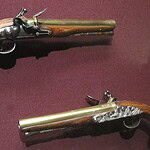
George Washington’s Saddle Pistols
- Type: Pair of flintlock pistols
- Year Introduced or Era: Revolutionary War; presented in 1778
- Historical Association: George Washington
- What Makes It Valuable: Documented presidential provenance
- Rarity Level: Unique documented pair
- Notable Sale Price or Comparable Result: A separate Lafayette-Washington pair sold for $1.98M in 2002
- Unique Feature or Story: Gift from Thomas Turner delivered at Valley Forge
- Collector Appeal: Presidential and Revolutionary War history
The pistols pictured here are the pair preserved by the West Point Museum. Thomas Turner sent them to George Washington in 1778, and they were delivered while Washington's army was at Valley Forge. U.S. Army research traces a remarkably strong chain of ownership before the pair reached West Point in 1953. They have not been sold on the modern market, so assigning them a current dollar value would be guesswork. As a comparison, a different pair of saddle pistols given to Washington by the Marquis de Lafayette sold at Christie's in 2002 for $1.98 million.
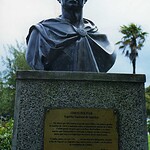
Simón Bolívar Flintlock Pistols
- Type: Pair of flintlock pistols
- Year Introduced or Era: Early 19th century
- Historical Association: Simón Bolívar
- What Makes It Valuable: Provenance and Boutet craftsmanship
- Rarity Level: Extremely rare documented Bolívar arms
- Notable Sale Price or Comparable Result: $1.69M for a documented Boutet pair in 2004
- Unique Feature or Story: Owned and used by Bolívar during the independence era
- Collector Appeal: Latin American history and luxury arms
Firearms with documented ties to Simón Bolívar are exceptionally scarce. In 2004, Christie's sold a cased pair of pistols by celebrated Versailles gunmaker Nicolas-Noël Boutet for $1.69 million. Christie's documented the pair as having been owned and used by Bolívar during the South American wars for independence before Manuela Sáenz presented them on his behalf to Ricardo Illingworth in 1830. The combination of Bolívar provenance, survival as a matched cased pair, and Boutet's craftsmanship puts them in a completely different category from an ordinary period flintlock.
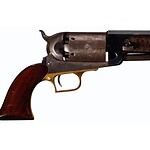
Colt Walker Revolver
- Type: Percussion revolver
- Year Introduced or Era: 1847
- Historical Association: Samuel Colt and Capt. Samuel Walker
- What Makes It Valuable: Rarity, early Colt history, and provenance
- Rarity Level: Extremely rare original examples
- Notable Sale Price or Comparable Result: $1.84M for the Danish Sea Captain Walker in 2018
- Unique Feature or Story: Only known original cased civilian Walker with its original Colt bill of sale
- Collector Appeal: Landmark early Colt revolver
The Colt Walker emerged in 1847 from the collaboration between Samuel Colt and Capt. Samuel Walker, a Texas Ranger and U.S. Army officer. Original Walkers were produced in very small numbers, and surviving examples sit near the top of the American arms market. The so-called Danish Sea Captain Civilian Walker sold for $1.84 million at Rock Island Auction Company in 2018. Its price was driven by far more than the model name: Rock Island describes it as the only known original cased civilian Walker accompanied by an original bill of sale from Samuel Colt.
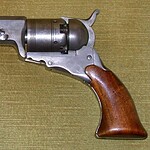
Colt Paterson Revolver
- Type: Percussion revolver
- Year Introduced or Era: Patented in 1835-1836; produced in Paterson from 1836
- Historical Association: Samuel Colt and early repeating handguns
- What Makes It Valuable: Early Colt history, rarity, and configuration
- Rarity Level: Exceptional cased examples are extremely rare
- Notable Sale Price or Comparable Result: $1.41M for a cased No. 5 Texas Paterson in May 2026
- Unique Feature or Story: Among the earliest production Colt revolvers
- Collector Appeal: Foundational Colt design
Samuel Colt patented his revolving-firearm system in 1835 and 1836, and his first factory in Paterson, New Jersey, produced revolvers from 1836 into the early 1840s. That makes the Paterson the starting point for the Colt revolver story. Values vary enormously by model, configuration, condition, and accessories, but truly elite examples can reach seven figures. In May 2026, a cased Colt No. 5 Texas Paterson set a record at Rock Island Auction Company when it sold for $1.41 million.
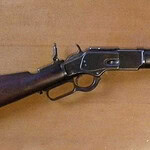
Winchester Model 1873
- Type: Lever-action rifle
- Year Introduced or Era: 1873
- Historical Association: American frontier
- What Makes It Valuable: Rare factory configurations and provenance
- Rarity Level: Common model overall; elite variants are extremely rare
- Notable Sale Price or Comparable Result: $763,750 for a One of One Hundred Model 1873 in 2022
- Unique Feature or Story: Often nicknamed the “Gun That Won the West”
- Collector Appeal: Western Americana and Winchester collecting
The Winchester Model 1873 became one of the defining rifles of the American frontier and later picked up the enduring nickname “The Gun That Won the West.” The model itself is not uniformly rare, so value depends heavily on configuration, condition, factory features, and provenance. A remarkable “One of One Hundred” Model 1873, identified by Rock Island as the last of that special group produced and accompanied by a documented Amazon expedition history, sold for $763,750 in 2022. That is the kind of exceptional example that sits far above the ordinary Model 1873 market.
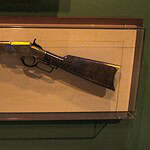
Henry Rifle
- Type: Lever-action repeating rifle
- Year Introduced or Era: Model 1860; Civil War era
- Historical Association: New Haven Arms Company and the Civil War
- What Makes It Valuable: Innovation, scarcity, and provenance
- Rarity Level: Elite early and presentation examples are extremely rare
- Notable Sale Price or Comparable Result: $5.875M for serial No. 1 in June 2026
- Unique Feature or Story: Serial No. 1 was presented to Secretary of War Edwin Stanton
- Collector Appeal: Civil War history and the Winchester lineage
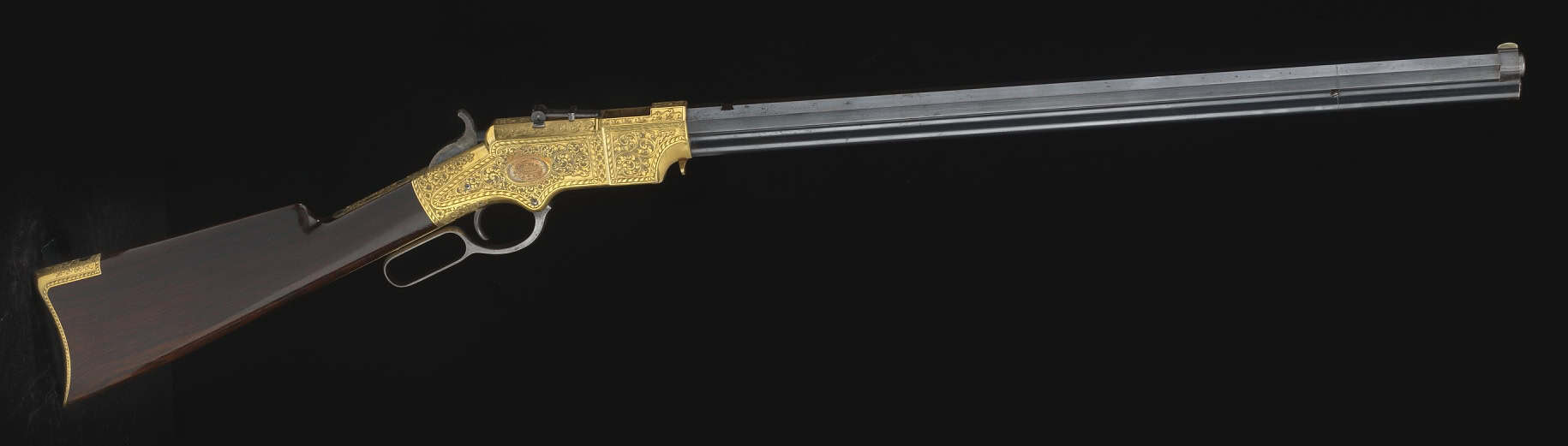
The Henry Model 1860 was a major step in the development of practical lever-action repeating rifles and became the immediate forerunner of the Winchester line. The Smithsonian says roughly 14,000 Henry rifles were made from 1860 to 1866, with only about 1,731 purchased by the U.S. Ordnance Department during the Civil War. At the absolute top of the market sits serial No. 1, the first production Henry, which had been presented to Secretary of War Edwin Stanton. It sold for $5.875 million in June 2026, setting a record for a long gun at auction.
Volcanic Repeating Pistol
- Type: Lever-action repeating pistol
- Year Introduced or Era: 1850s
- Historical Association: Smith & Wesson, Volcanic Repeating Arms, and New Haven Arms
- What Makes It Valuable: Early repeating-firearm development
- Rarity Level: Scarce, especially in high condition or engraved form
- Notable Sale Price or Comparable Result: $44,063 for a factory-engraved No. 2 Navy pistol in 2024
- Unique Feature or Story: A technological ancestor of the Henry and Winchester systems
- Collector Appeal: Early repeating-firearm history
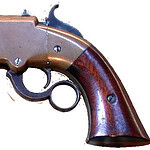
The Volcanic repeating pistol is important less because it conquered the market and more because of what came after it. The lever-action system passed through Smith & Wesson and the Volcanic companies before evolving into the New Haven Arms designs that led to the Henry rifle and, eventually, Winchester. Surviving Volcanic pistols vary widely in value depending on maker, configuration, finish, and engraving. A factory-engraved New Haven Arms Co. No. 2 Navy pistol sold for $44,063 at Rock Island in December 2024.
Theodore Roosevelt’s Colt Single Action Army
- Type: Revolver
- Year Introduced or Era: Model introduced in 1873; this revolver ordered in 1912
- Historical Association: Theodore Roosevelt
- What Makes It Valuable: Presidential provenance and factory engraving
- Rarity Level: Unique documented presentation revolver
- Notable Sale Price or Comparable Result: $1,466,250 in December 2020
- Unique Feature or Story: Ordered as a gift around Roosevelt’s 54th birthday
- Collector Appeal: Presidential history and deluxe Colt craftsmanship
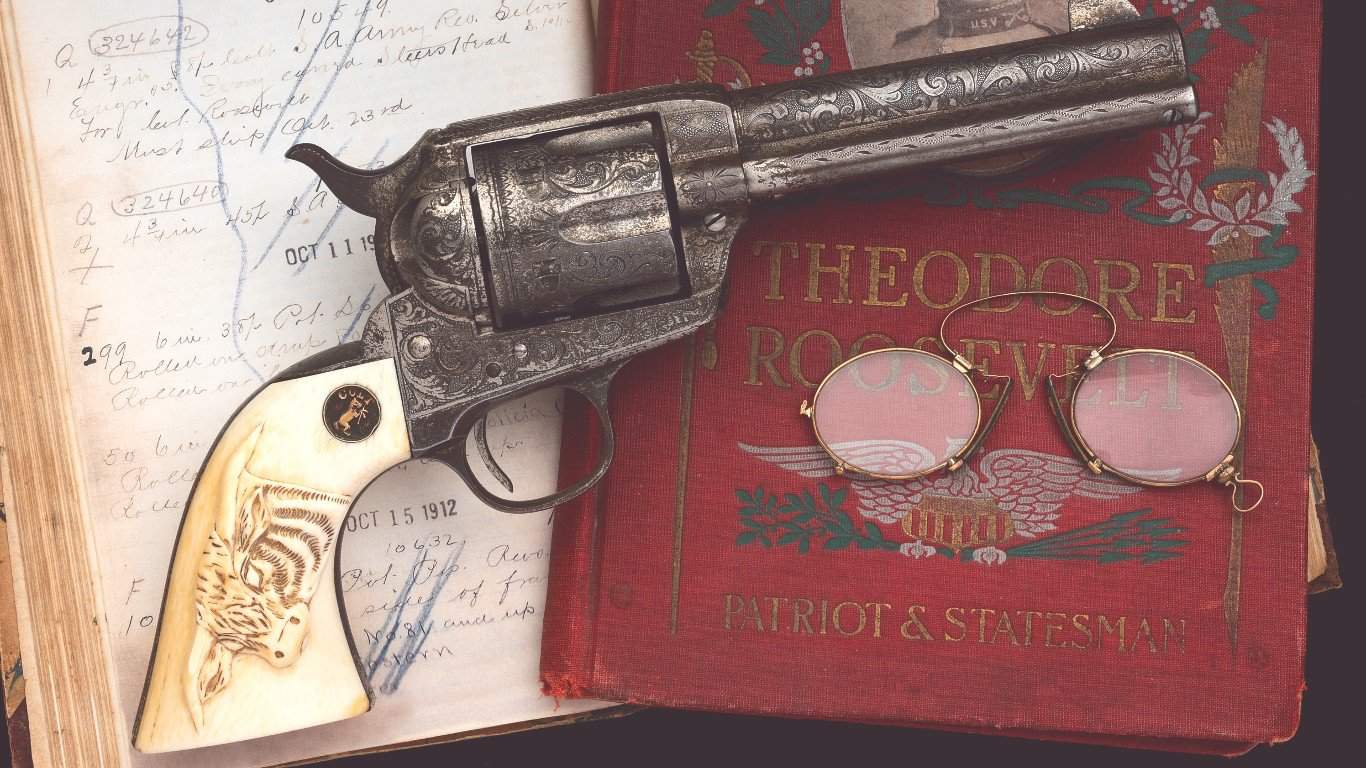
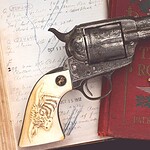
This is what provenance can do to a famous production model. Theodore Roosevelt's silver-plated Colt Single Action Army was ordered as a gift in October 1912, around his 54th birthday and during his Bull Moose presidential campaign. The revolver features extensive factory engraving by Colt master engraver Cuno Helfricht, and documentation places it in Roosevelt's possession. When Rock Island sold it in December 2020, the revolver brought $1,466,250. Its value comes from the combination of presidential ownership, documentation, embellishment, and a model already deeply associated with the American West.
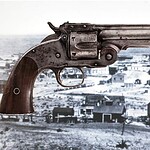
Smith & Wesson Schofield
- Type: Top-break revolver
- Year Introduced or Era: 1870s
- Historical Association: Major George W. Schofield and the U.S. military
- What Makes It Valuable: Scarcity, condition, and provenance
- Rarity Level: Premium documented examples are scarce
- Notable Sale Price or Comparable Result: $152,750 for a Jesse James-attributed example in 2022
- Unique Feature or Story: Top-break action allowed rapid extraction and reloading
- Collector Appeal: U.S. military and Old West history
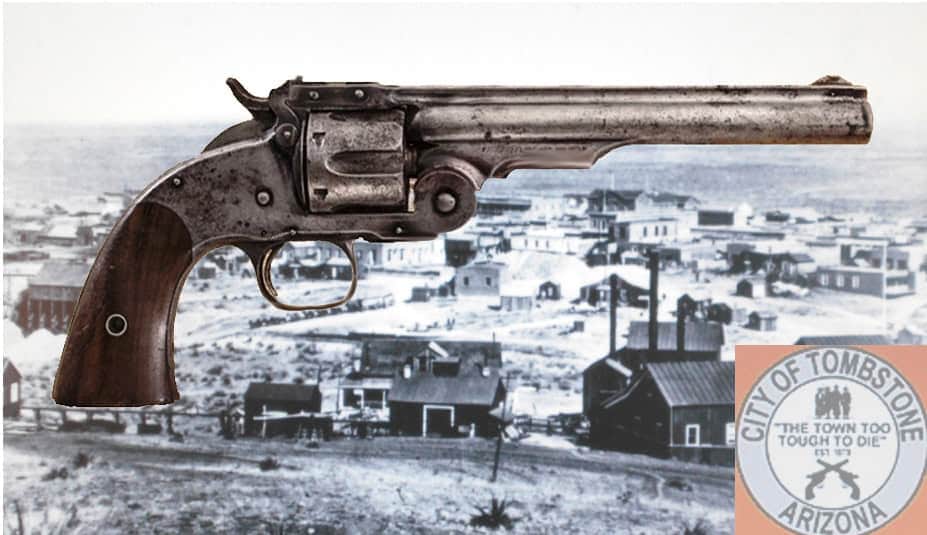
The Schofield was a military-oriented variation of Smith & Wesson's Model 3, incorporating changes developed by Major George W. Schofield. Its top-break action automatically extracted spent cases when opened, an appealing feature for mounted use. Most Schofields are nowhere near six-figure guns, but provenance can change that quickly. A First Model Schofield with a holster and an attribution to Jesse James sold for $152,750 at Rock Island in December 2022, showing how a documented historical association can dominate the price.
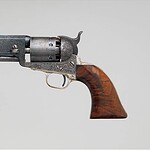
Colt 1851 Navy
- Type: Percussion revolver
- Year Introduced or Era: 1850s
- Historical Association: Civil War and the American West
- What Makes It Valuable: Condition, engraving, and provenance
- Rarity Level: The model is not inherently rare; elite documented examples are
- Notable Sale Price or Comparable Result: $616,875 for a Wild Bill Hickok-attributed example in 2022
- Unique Feature or Story: One of Colt's best-known mid-19th-century revolvers
- Collector Appeal: Civil War, frontier, and Colt history
The Colt 1851 Navy was produced in large numbers, so simply owning one does not put a collector in record-auction territory. The exceptional money goes to exceptional guns. In 2022, Rock Island sold a factory-engraved 1851 Navy attributed to Wild Bill Hickok for $616,875. Its mate remains in the Cody Firearms Museum, according to the auction house. That sale is a useful reminder that the model establishes the baseline, but condition, factory features, and a credible connection to a major historical figure can completely rewrite the value.
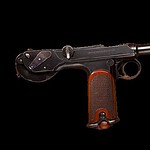
Borchardt C-93
- Type: Semi-automatic pistol
- Year Introduced or Era: 1893
- Historical Association: Hugo Borchardt and early self-loading pistol development
- What Makes It Valuable: Technological significance and scarcity
- Rarity Level: Scarce
- Notable Sale Price or Comparable Result: $47,000 for a Ludwig Loewe Model 1893 example in 2023
- Unique Feature or Story: One of the first self-loading pistols produced in meaningful numbers
- Collector Appeal: Early semi-automatic handgun history
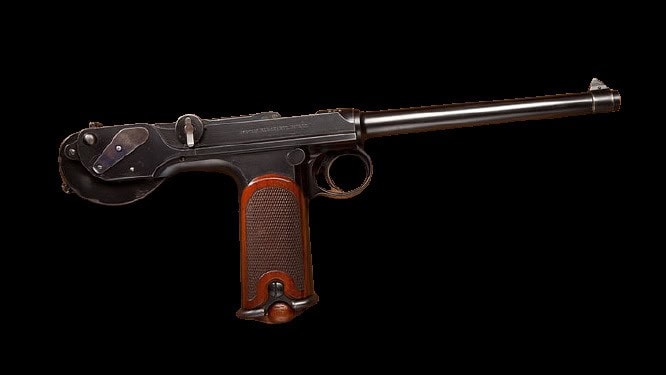
The Borchardt C-93 looks strange because designers were still figuring out what a practical self-loading pistol should look like. Hugo Borchardt's 1893 design was the first autoloading pistol to achieve a notable production run and became an important step toward Georg Luger's later pistol. Scarcity, originality, and accessories can make a major difference in price. A Ludwig Loewe Model 1893 Borchardt brought $47,000 at Rock Island's December 2023 Premier Auction, a strong result for an early and historically important self-loader.
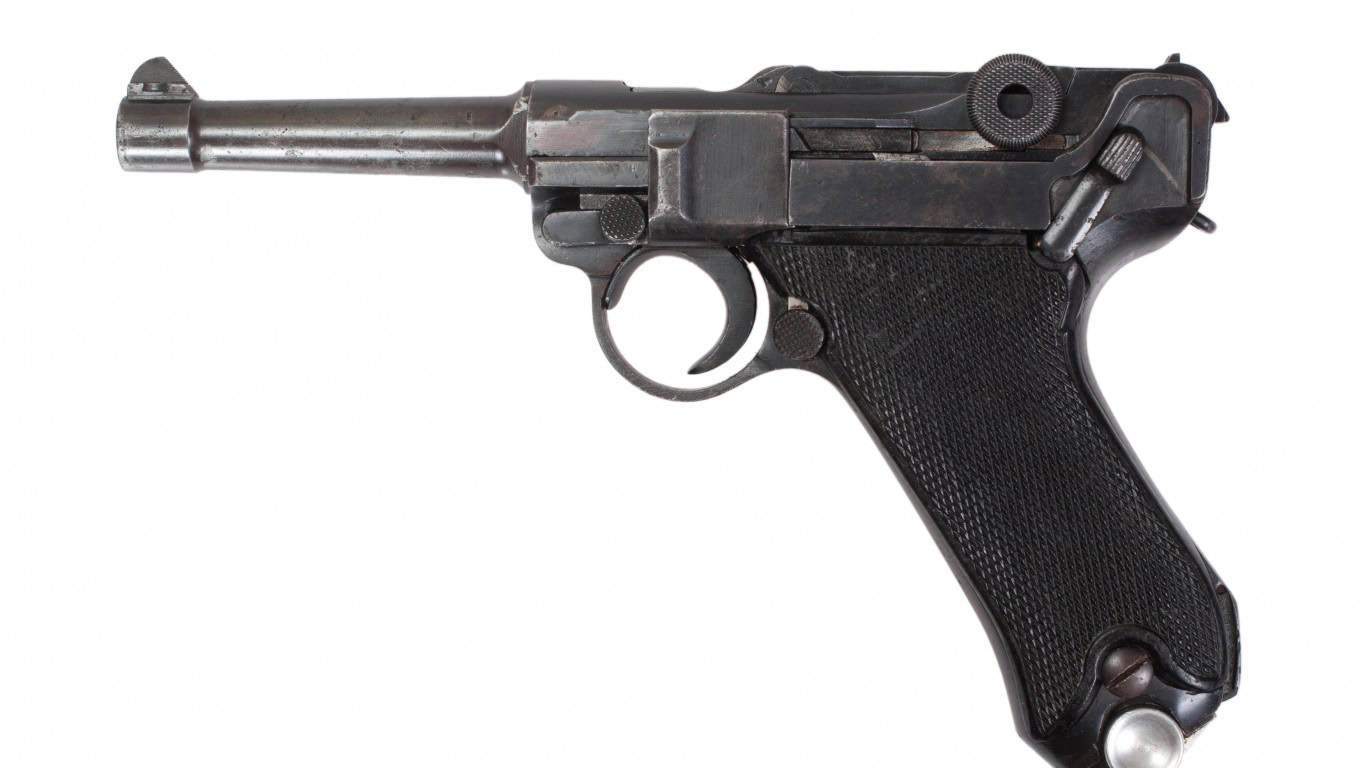
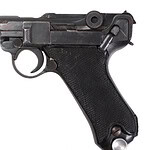
Luger P08
- Type: Semi-automatic pistol
- Year Introduced or Era: Adopted by the German Army in 1908
- Historical Association: German military in World War I and World War II
- What Makes It Valuable: Rare variants, condition, embellishment, and provenance
- Rarity Level: Standard examples survive in numbers; exceptional variants are rare
- Notable Sale Price or Comparable Result: $440,625 for a platinum-plated presentation Luger in August 2026
- Unique Feature or Story: Distinctive toggle-lock action
- Collector Appeal: Military history and rare Luger variations
The Luger P08 is instantly recognizable, but that does not mean every Luger is a six-figure collectible. The German Army adopted the P08 in 1908, and large numbers of Lugers survive from the first half of the 20th century. The extraordinary prices belong to extraordinary variants. In August 2026, a platinum-plated presentation Luger sold for $440,625 at Rock Island. That kind of result reflects rarity, embellishment, condition, and provenance rather than the normal value of a standard military P08.
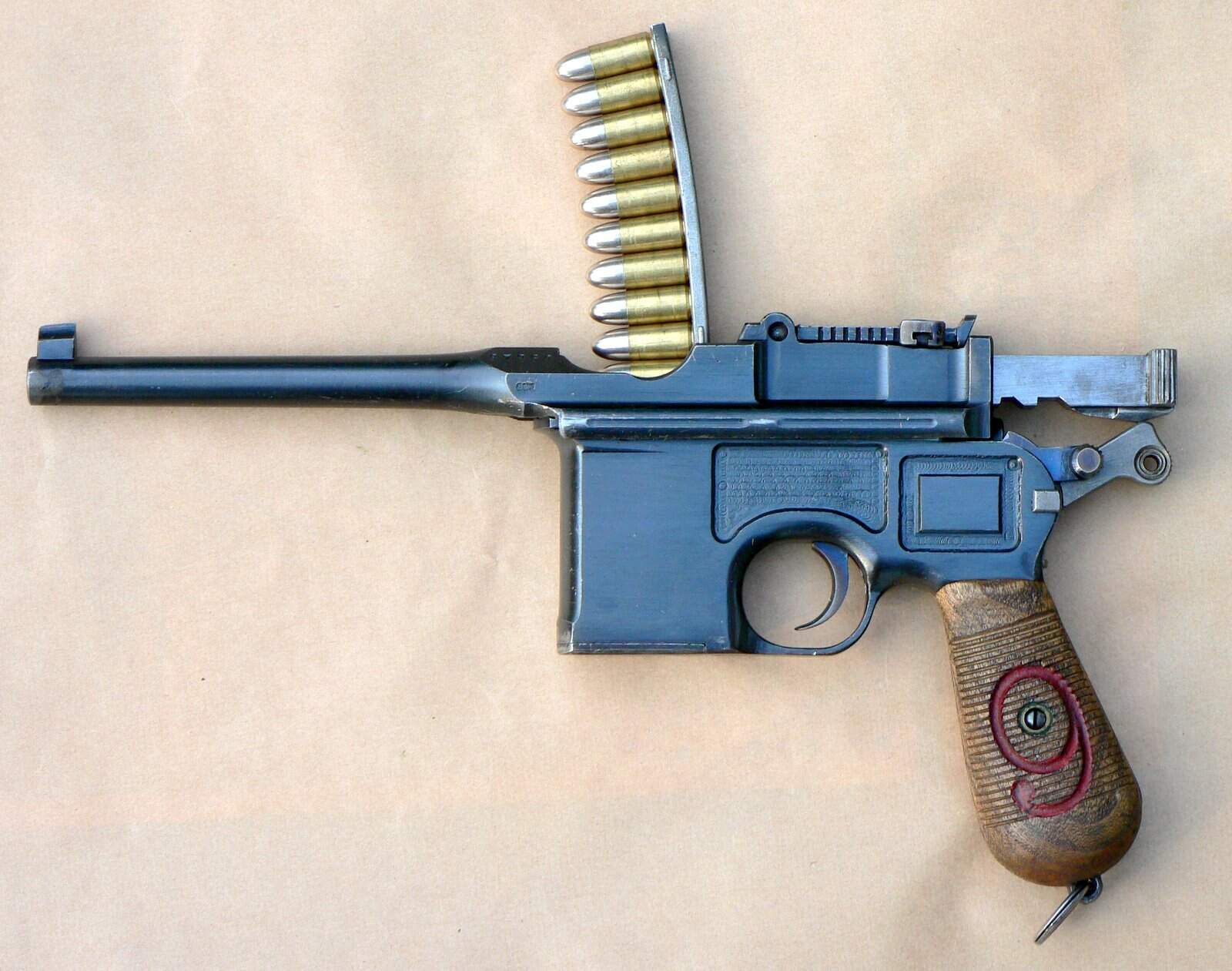
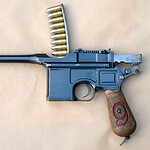
Mauser C96
- Type: Semi-automatic pistol
- Year Introduced or Era: Production began in 1896
- Historical Association: Early commercial and military self-loading pistol use
- What Makes It Valuable: Rare configurations, condition, and engraving
- Rarity Level: Special variants are scarce; the model itself was produced in quantity
- Notable Sale Price or Comparable Result: $17,250 for an engraved example at Rock Island
- Unique Feature or Story: Distinctive “broomhandle” grip and early self-loading design
- Collector Appeal: Early semi-automatic pistol history
The Mauser C96 earned the nickname “broomhandle” from its unmistakable grip and became one of the most recognizable early semi-automatic pistols. Production began in 1896, and the design found commercial success along with limited military purchases around the world. Collector prices vary enormously by configuration and provenance. Rock Island reported $17,250 for an engraved C96 in one of its sporting and collector auctions. Movie-prop versions built from C96 pistols have sold for far more, but that value comes from film provenance, not from the underlying Mauser alone.
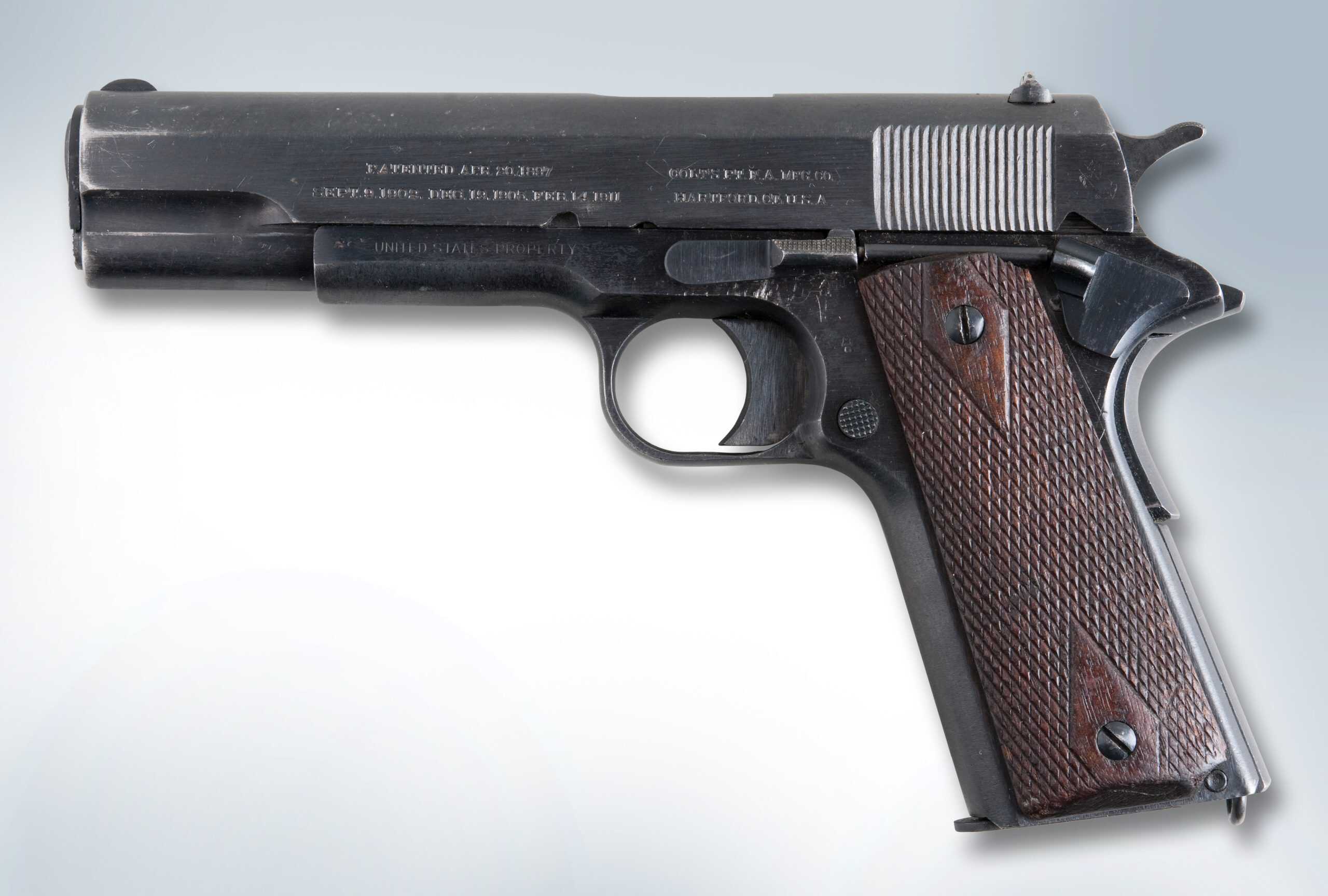
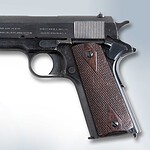
Historic M1911 and M1911A1 Pistols
- Type: Semi-automatic pistol
- Year Introduced or Era: U.S. military adoption in 1911
- Historical Association: U.S. military
- What Makes It Valuable: Rare makers, condition, prototypes, and provenance
- Rarity Level: Varies widely; only 500 Singer M1911A1 pistols were produced
- Notable Sale Price or Comparable Result: $414,000 for the finest-known Singer M1911A1 in 2017
- Unique Feature or Story: Decades of U.S. military service
- Collector Appeal: U.S. military handgun history
The M1911 served the U.S. military for decades, but ordinary service pistols and the rarest variants occupy very different markets. The clearest example is Singer. The sewing-machine manufacturer produced just 500 M1911A1 pistols for the U.S. government in 1940, making surviving examples especially desirable. Rock Island sold what it described as the finest-known Singer M1911A1 for $414,000 in 2017. That record is about scarcity and condition within the 1911 family, not a typical price for a standard Colt military pistol.
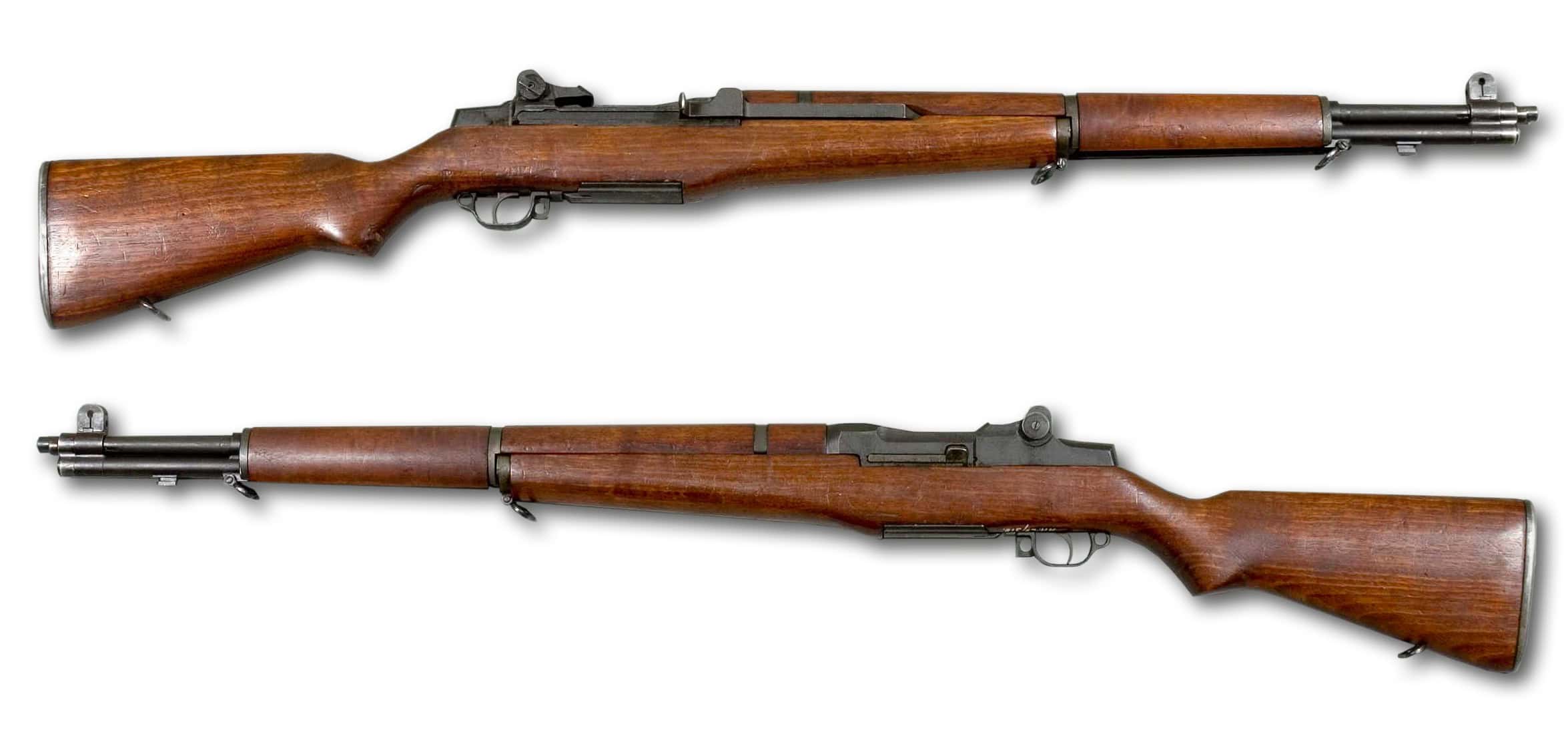
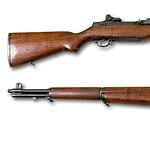
Historic M1 Garand Rifles
- Type: Semi-automatic rifle
- Year Introduced or Era: Adopted by the U.S. Army in 1936
- Historical Association: U.S. military, World War II, and Korea
- What Makes It Valuable: Provenance, rarity, and exceptional condition
- Rarity Level: Standard rifles are common relative to unique presentation examples
- Notable Sale Price or Comparable Result: $287,500 for John Garand's presentation rifle in 2018
- Unique Feature or Story: Serial No. 1,000,000 was presented to inventor John C. Garand
- Collector Appeal: U.S. military and World War II history
Millions of M1 Garands were produced, so the model by itself is not what creates a six-figure price. Provenance does. In 2018, Rock Island sold the one-millionth M1 Garand, a presentation rifle given to the design's inventor, John C. Garand, for $287,500. The rifle came with its presentation case and Garand archive, turning a familiar U.S. service rifle into a unique historical artifact. For ordinary M1s, condition, manufacturer, production details, and documented service history are what separate one collectible from another.
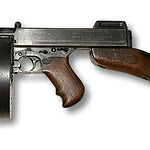
Thompson Submachine Gun
- Type: Submachine gun
- Year Introduced or Era: Commercial production began in the early 1920s
- Historical Association: Prohibition era and World War II
- What Makes It Valuable: Early Colt production, condition, legal transferability, and provenance
- Rarity Level: Premium transferable prewar examples are scarce
- Notable Sale Price or Comparable Result: $117,500 for a Colt Model 1921/1928 Navy Overstamp in May 2026
- Unique Feature or Story: The sold example was the last known Thompson transferred out of Colt
- Collector Appeal: Military, law-enforcement, and Prohibition-era history
The Thompson built two very different reputations: one through gangsters and law enforcement during Prohibition, and another through military service in World War II. Early Colt-made examples are especially desirable, and legal transferability in the United States adds another layer to the collector market. In May 2026, a Colt Model 1921/1928 Navy Overstamp Thompson sold for $117,500. Rock Island said it was the last known Thompson transferred out of Colt and had remained with essentially one owner outside the factory, making it anything but an ordinary “Tommy Gun.”
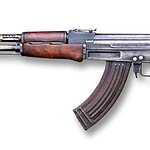
AK-47 Type II
- Type: Selective-fire rifle
- Year Introduced or Era: Early Cold War; Type II production began in the early 1950s
- Historical Association: Soviet Union
- What Makes It Valuable: Early production, rarity, legal status, and provenance
- Rarity Level: Original early Soviet examples are extremely scarce in the U.S. collector market
- Notable Sale Price or Comparable Result: $210,000 for a documented transferable Chinese Type 56/AK-47 in 2025
- Unique Feature or Story: Early milled-receiver development of the Kalashnikov system
- Collector Appeal: Cold War and global military history
The Type II AK-47 was an early milled-receiver version of the Soviet Kalashnikov rifle that followed the first stamped-receiver production guns. Original Soviet Type II rifles are exceptionally difficult to price from public U.S. auction data because directly comparable sales are scarce. A useful AK-pattern comparison came in December 2025, when a transferable Chinese Type 56/AK-47 with documented Vietnam War provenance sold for $210,000 at Rock Island. With automatic firearms, legal transferability and provenance can matter as much as the basic model.
MP40
- Type: Submachine gun
- Year Introduced or Era: 1940; World War II
- Historical Association: German military
- What Makes It Valuable: Originality, condition, legal transferability, and provenance
- Rarity Level: Transferable original examples are scarce in the United States
- Notable Sale Price or Comparable Result: $24,000 for a transferable 1941 Steyr MP40 in 2023
- Unique Feature or Story: Compact folding-stock submachine gun closely associated with German forces
- Collector Appeal: World War II military history
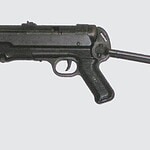
The MP40 became one of the most recognizable German firearms of World War II. Original examples are collectible, particularly in the United States when they are legally transferable machine guns. Morphy Auctions sold a transferable Steyr-made MP40 dated 1941 for $24,000 in September 2023. Condition, matching parts, wartime documentation, maker, and legal status can all move the number substantially, which is why a verified auction result is more useful than assigning a broad value to every MP40.
Engraved Colt Revolvers
- Type: Revolver
- Year Introduced or Era: 19th century
- Historical Association: American fine arms and presentation firearms
- What Makes It Valuable: Master engraving, condition, rarity, and provenance
- Rarity Level: Top-tier documented examples can be unique
- Notable Sale Price or Comparable Result: $1,667,500 for the Millikin Dragoon in 2019
- Unique Feature or Story: Gustave Young master engraving and documented Civil War history
- Collector Appeal: Fine art, Colt history, and American craftsmanship
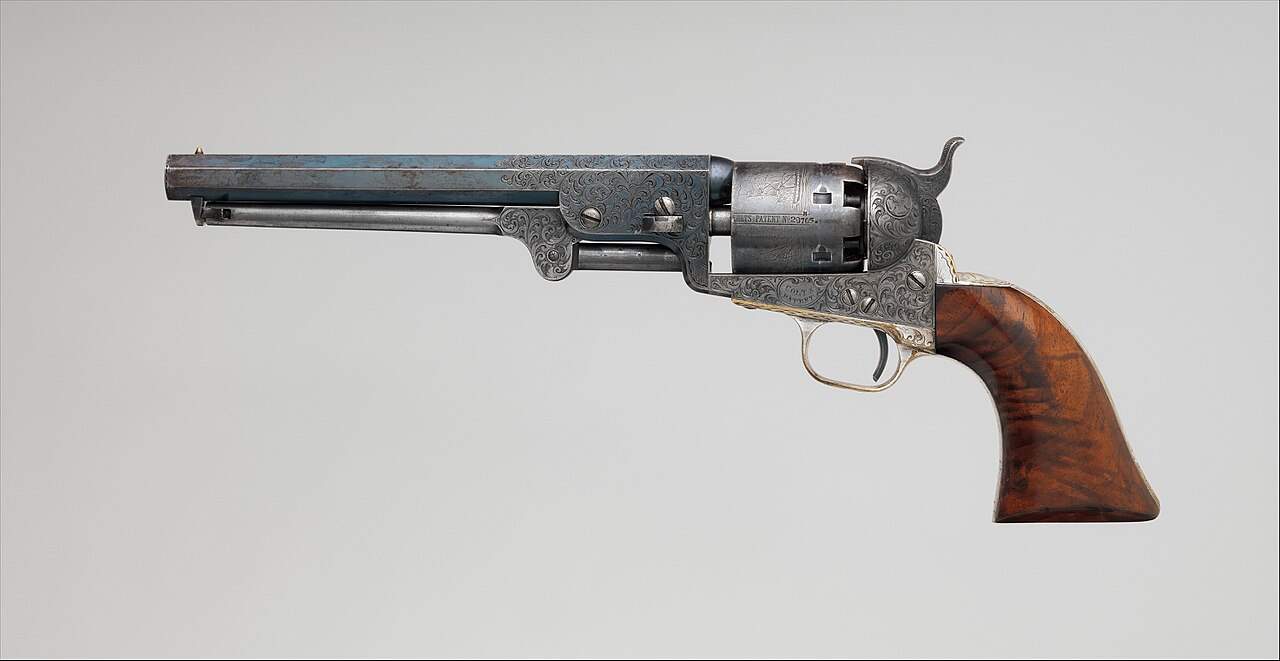
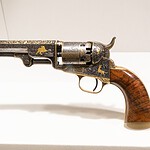
Engraving can add value, but the seven-figure Colts are not simply ordinary revolvers with decoration scratched into the metal. The best examples combine recognized master engravers, rare factory configuration, exceptional condition, and major provenance. The Millikin Dragoon is the standout example. The Gustave Young-engraved Colt Third Model Dragoon carried a long collector pedigree and documented Civil War history before selling for $1,667,500 at Rock Island in May 2019. At that level, collectors are buying craftsmanship and history at the same time.
Abraham Lincoln’s Henry Presentation Rifle
- Type: Lever-action repeating rifle
- Year Introduced or Era: 1862
- Historical Association: Abraham Lincoln
- What Makes It Valuable: Presidential provenance, presentation engraving, and historical importance
- Rarity Level: Unique museum artifact
- Notable Sale Price or Comparable Result: Not publicly sold; held by the Smithsonian
- Unique Feature or Story: Serial No. 6 with gold mounting inscribed for Lincoln
- Collector Appeal: Presidential, Civil War, and Henry rifle history
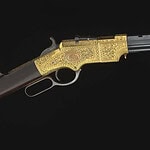
This Smithsonian-held Henry rifle is one of the great Civil War-era presentation firearms. Serial No. 6 was made in 1862 and presented to Abraham Lincoln by the New Haven Arms Company. The rifle has engraved gold mounting marked “Lincoln/ President/U.S.A.” and was presented in an effort to win support for military purchases of the Henry system. Because it remains in the National Museum of American History rather than circulating on the private market, there is no verified modern sale price to attach to it. Its value is historical rather than something a public auction has tested.