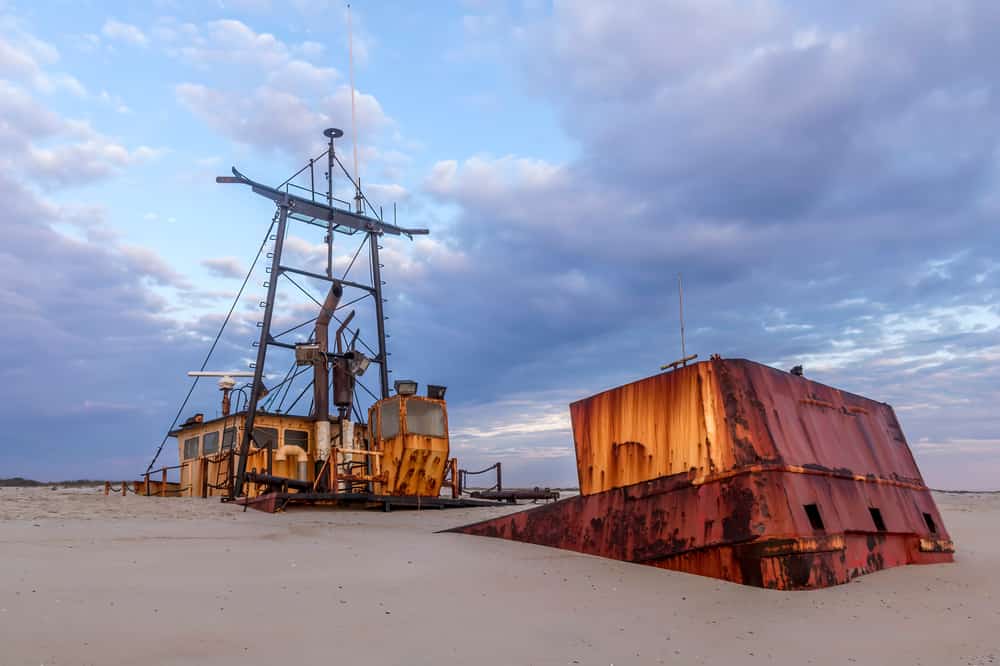
There is a reason North Carolina's Outer Banks earned the nickname "Graveyard of the Atlantic." Nearly 2,000 ships are estimated to have wrecked along this stretch of coast, victims of storms, shifting sandbars, shallow shoals, poor visibility, war, navigation mistakes, and a coastline that simply refuses to stay put.
Most of those ships have disappeared beneath sand and water, but not all of them. Some wrecks can still be spotted from the beach, while others sit in surprisingly shallow water close to shore. Just remember that the Atlantic makes the rules here. A wreck visible one season can be covered by sand the next.
The Oriental, Better Known as the Boiler Wreck
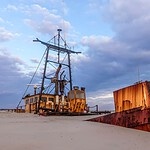
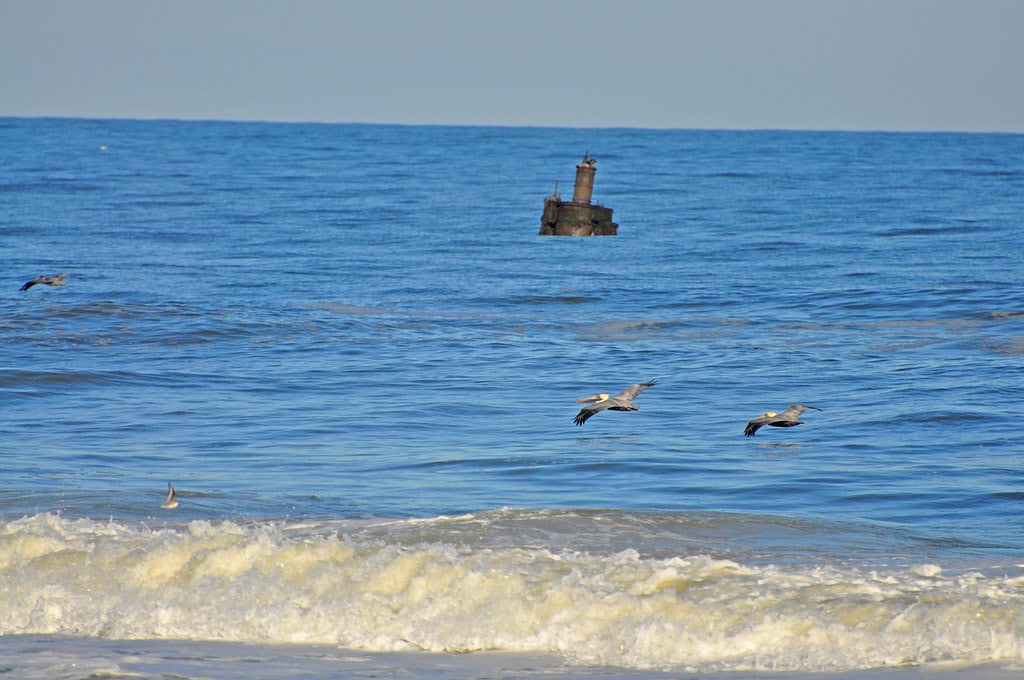
If you want an Outer Banks shipwreck you can actually spot without imagining what is buried beneath the waves, start with the Oriental. The iron-hulled steamship was being used as a U.S. Army transport when it ran aground off Pea Island on May 16, 1862. Efforts to lighten the ship by throwing cargo overboard failed, although the people aboard were able to get off safely. Today, part of its steam engine still protrudes above the water offshore from the Pea Island area. Locals call it the Boiler Wreck, although the piece sticking from the Atlantic is actually part of the engine rather than the boiler itself. It is one of the easiest recognizable wreck sites along the Outer Banks, assuming the surf cooperates.
USS Huron
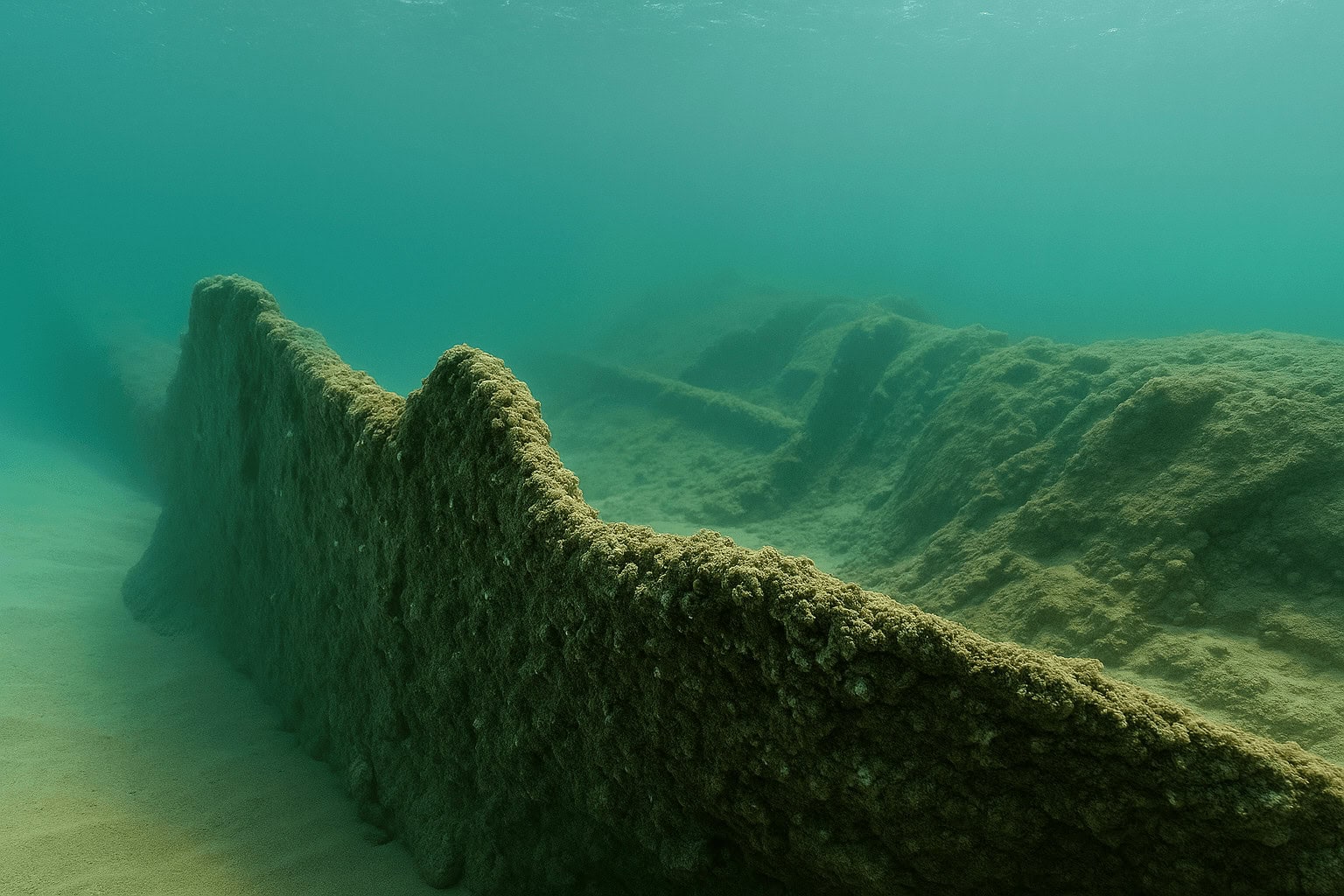
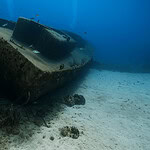
The wreck of the USS Huron comes with one of the darkest stories on this list. The U.S. Navy ship left Hampton Roads for Havana in November 1877 and sailed close to the North Carolina coast to avoid fighting the Gulf Stream. Rough seas, dense fog, and difficult navigation proved disastrous. The Huron ran aground near Nags Head early on Nov. 24. Thirty-six sailors managed to reach shore, but 98 men died. The tragedy helped push Congress to expand the nation's lifesaving network along dangerous stretches of coastline. Today, the wreck rests in roughly 20 feet of water a short distance offshore and became North Carolina's first Historic Shipwreck Preserve in 1991. In clear conditions, divers and snorkelers can still explore the remains.
The Triangle Wrecks
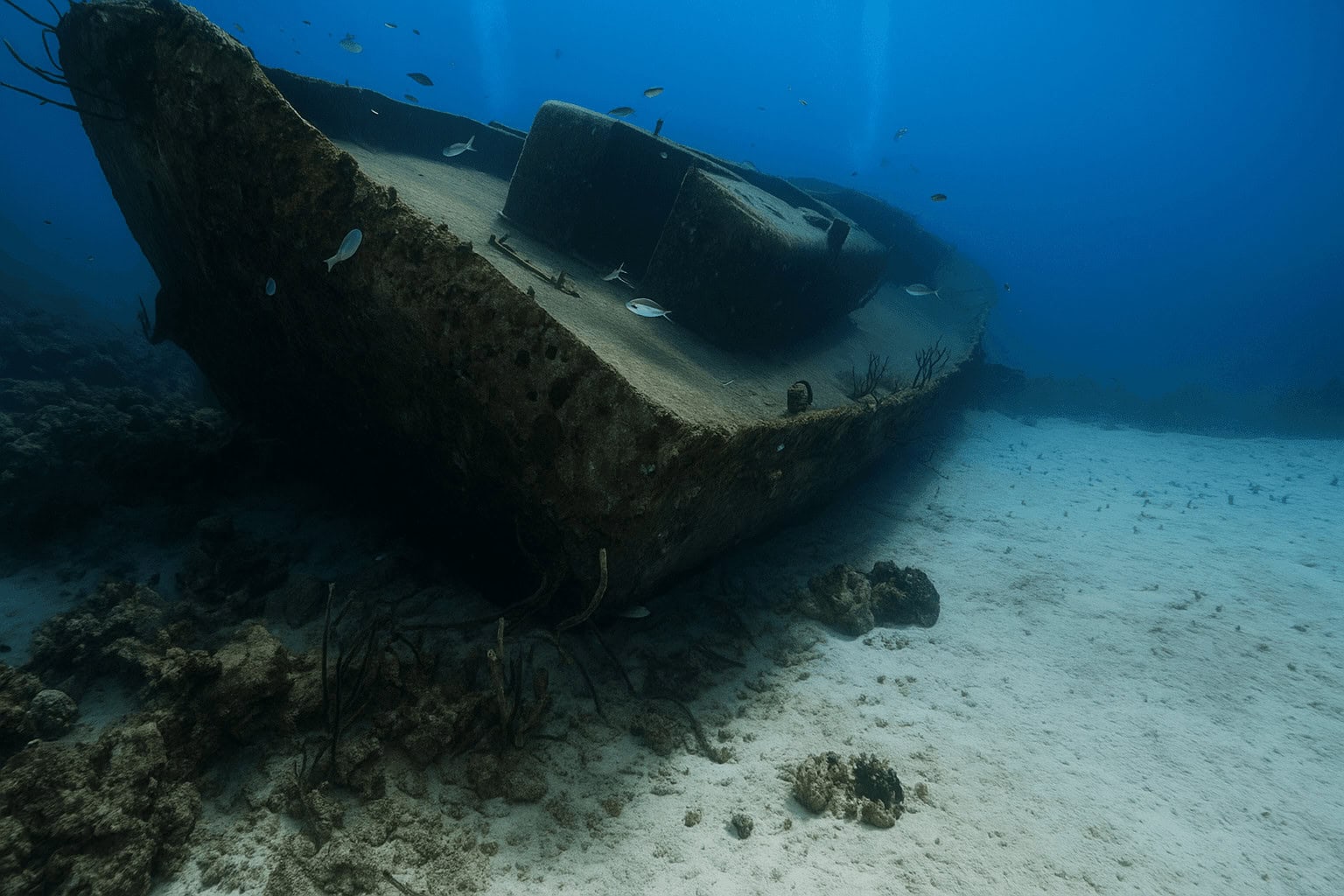
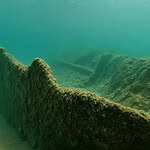
This wreck site is really two shipwrecks for the price of one. In December 1927, the tanker Kyzickes was carrying crude oil toward Spain when a storm drove it ashore near what is now Kill Devil Hills. Then, in 1929, the freighter Carl Gerhard managed to run aground at almost exactly the same location. It struck the remains of the Kyzickes and cut through the earlier wreck. The tangled remains eventually took on a rough triangular shape, giving the site its modern name. Pieces of both ships are scattered roughly 100 to 250 yards offshore in about 15 to 20 feet of water, making the Triangle Wrecks one of the best-known shallow-water wreck sites on the Outer Banks.
The Pocahontas, or Maybe the Richmond
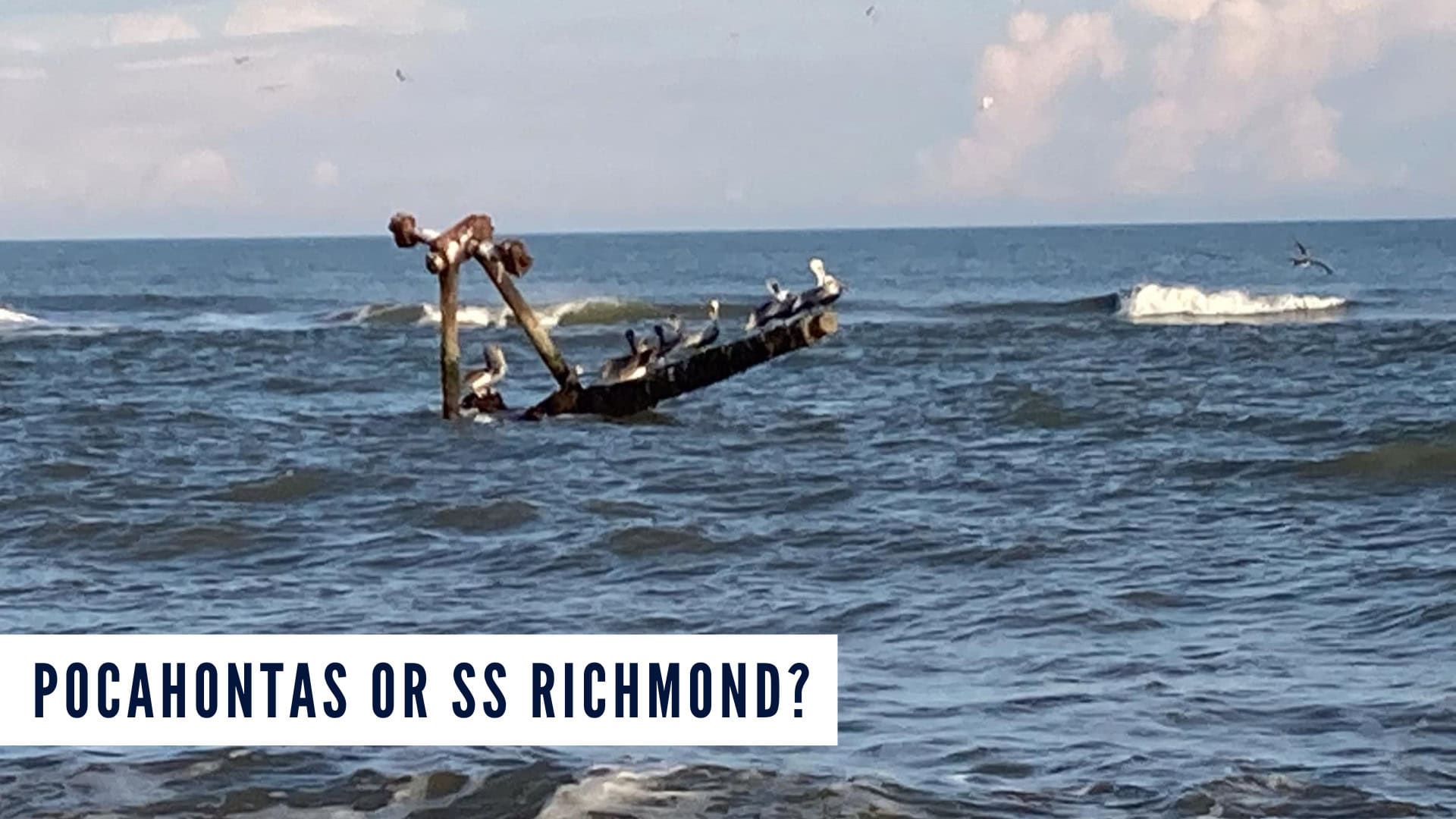
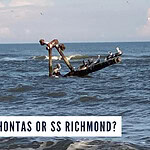
One of the Outer Banks' most visible Civil War-era wrecks also comes with an unresolved identity problem. A paddle-wheel shaft still rises from the water off Salvo, only a short distance from shore. The wreck has traditionally been identified as the side-wheel steamer Pocahontas, which was lost during the Burnside Expedition in 1862 while transporting men, horses, and supplies toward the North Carolina coast. You will also see the wreck identified as the Richmond. Maritime researchers have not conclusively settled which vessel the remains belong to, so the safest description is the presumed Pocahontas or Richmond wreck. Whatever its exact name, the exposed shaft makes it considerably easier to spot than most of the ships claimed by these waters.
The Winks Wreck
The Winks Wreck adds a little mystery to the list because nobody has definitively proved which ship it is. The remains sit off Kitty Hawk near Milepost 2, roughly 120 yards offshore in about 15 to 20 feet of water. One long-running theory identifies the wreck as the British steamer Mountaineer, but that identification remains unconfirmed. The site's nickname comes from the nearby Winks store rather than the ship itself. Because the wreck is relatively small and rests below the surface, finding it depends heavily on water clarity, tides, and shifting sand. That uncertainty is part of the fun. You can visit a known wreck site while the vessel's actual identity remains an open question.
Margaret A. Spencer
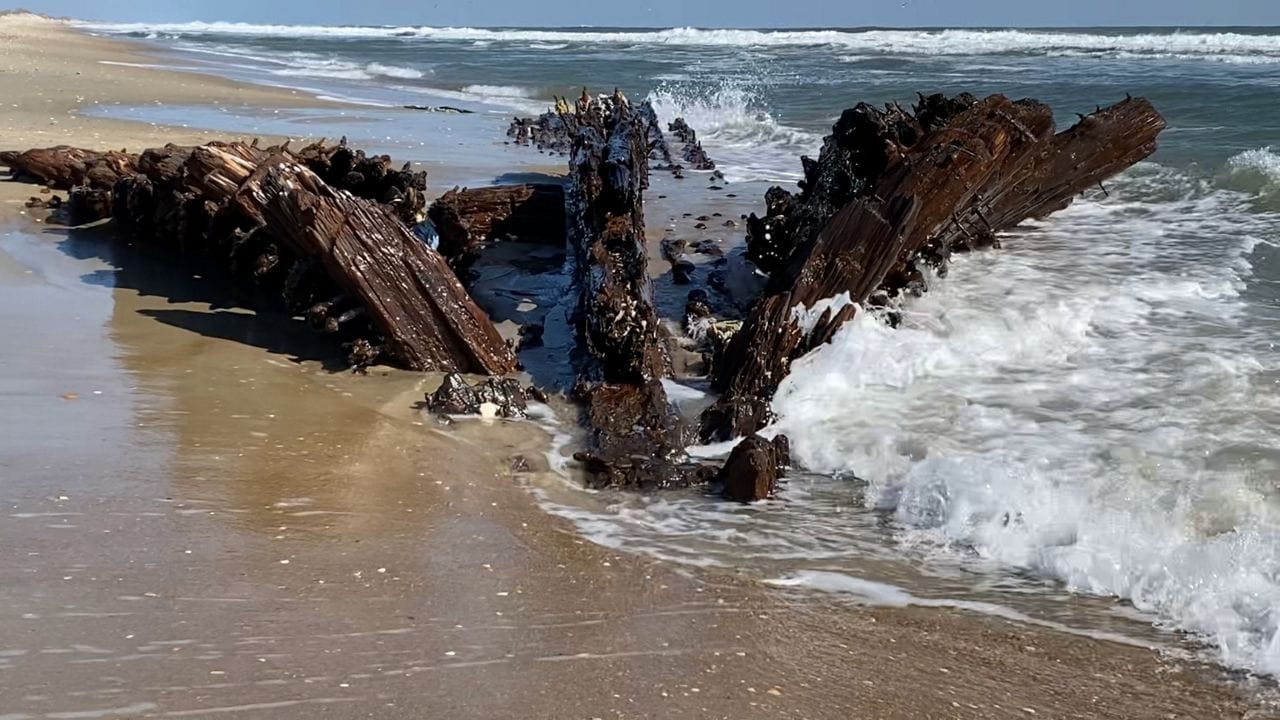
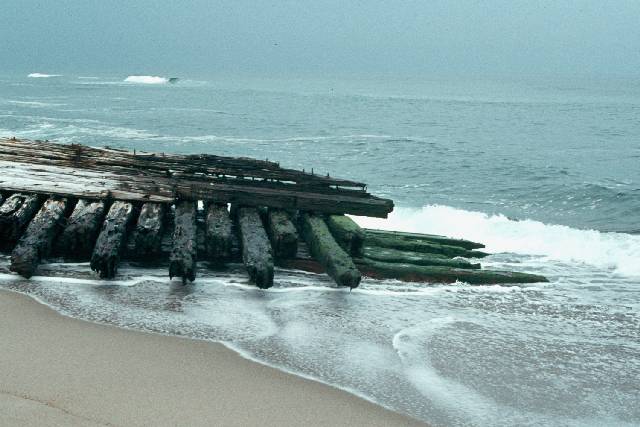
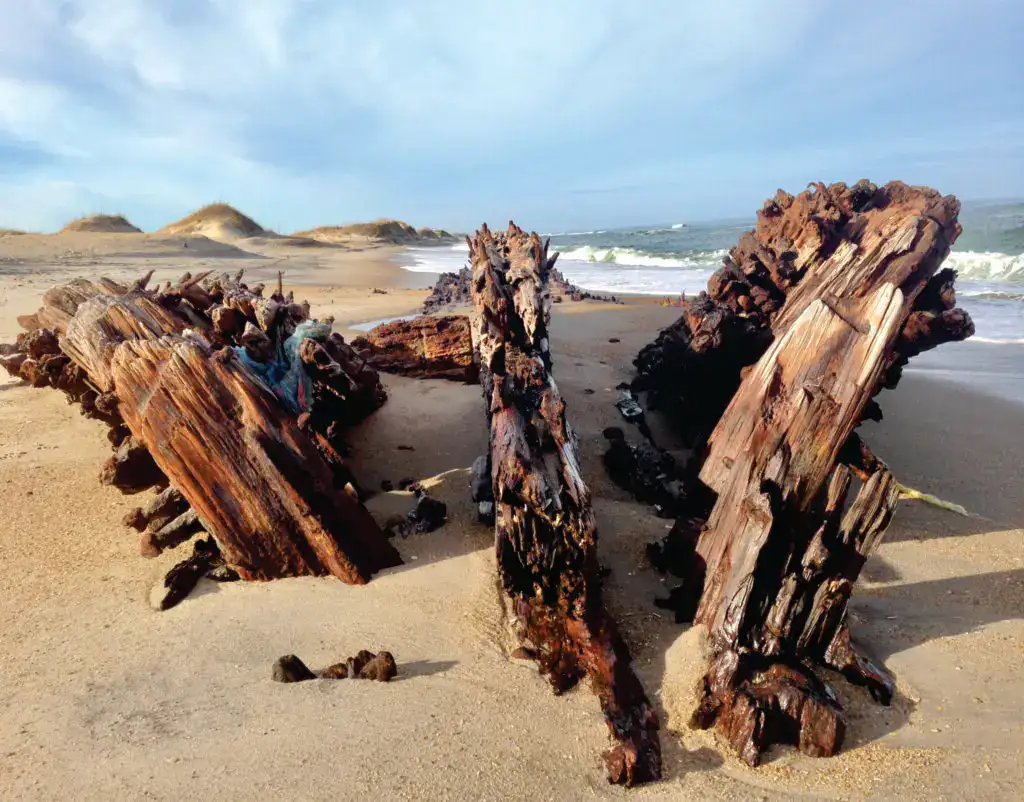
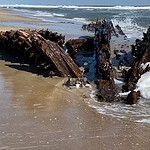
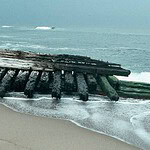
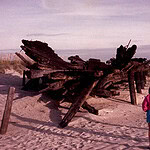
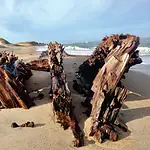
The Atlantic sometimes buries a wreck for years and then abruptly gives it back. The four-masted schooner Margaret A. Spencer was lost on May 18, 1925, and its overturned wooden remains still lie along the Pea Island shoreline north of Rodanthe. Older Outer Banks guides sometimes listed the vessel's wreck date as unknown, but maritime research has since tied it to the 1925 loss. Unlike the steel remains permanently poking from the water at some other sites, the Margaret A. Spencer can appear and disappear as storms and beach erosion move enormous amounts of sand. When exposed, its weathered timbers provide one of the clearest reminders that the shipwreck history here is literally built into the beach.
Laura A. Barnes
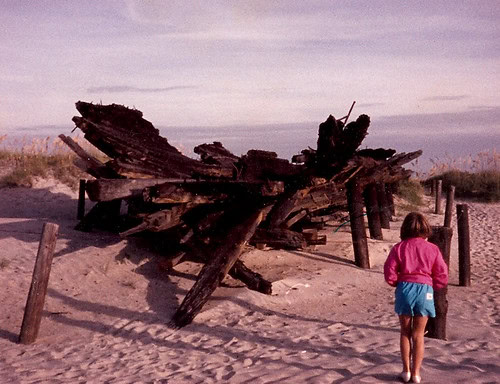
The four-masted schooner Laura A. Barnes was driven onto Bodie Island during bad weather on June 1, 1921. The crew survived, but the ship never returned to sea. Over the years, fittings were removed and some of its timbers were repurposed, while the lower portion of the hull became embedded in the beach. Remains of the wreck have been visible near the Coquina Beach area as erosion and storms uncover portions of the old wooden structure. Do not expect a movie-perfect ship sitting upright in the sand. What survives looks more like the exposed skeleton of a vessel, which arguably makes it even more interesting when the beach reveals it.
G.A. Kohler
The four-masted schooner G.A. Kohler met the Outer Banks the hard way on Aug. 23, 1933, when a hurricane drove it ashore on Hatteras Island south of Salvo. The wreck remained stranded on the beach for years before time, storms, scavenging, and the shifting shoreline reduced the once-impressive vessel to scattered remains. Parts of the wreck can still emerge from the sand when erosion works in visitors' favor. That means finding the Kohler is never guaranteed, but that is true of many Outer Banks wrecks. The same constantly moving sand that helped make this coastline so dangerous to sailors is still deciding which pieces of its maritime history visitors get to see.