Bizarre Creations Archive

PeopleImages.com - Yuri A / Shutterstock.com

R4vi / BY-SA 2.0
aomas / Shutterstock.com
DSMTphoto / Shutterstock.com
Kellis / Shutterstock.com

Julia_Sudnitskaya / iStock via Getty Images
Lazy_Bear / iStock via Getty Images

Oksana Mizina/Shutterstock.com

Irina Burakova / Shutterstock.com

hahatango / BY 2.0
Billion Photos / Shutterstock.com
Jeong-Seon / Shutterstock.com

namtipStudio / Shutterstock.com

Santeri Viinamäki / BY-SA 4.0

.hj barraza / BY-SA 2.0
GUNDAM_Ai / Shutterstock.com










15 Bizarre Japanese Inventions That Almost Make Sense
Have you ever heard the term chindōgu? The Japanese word combines terms meaning “strange” or “curious” and “tool” or “device.” It describes inventions that solve real, everyday problems in ways that are so awkward, excessive, or impractical that they become almost useless. Kenji Kawakami developed the concept while working as an editor for the Japanese home-shopping magazine Tsūhan Seikatsu, commonly translated as “Mail Order Life,” where he began filling pages with deliberately impractical prototypes that were not for sale. In 1995, Kawakami's creations reached a wider English-speaking audience with 101 Unuseless Japanese Inventions: The Art of Chindogu, written by Kawakami, translated with additional text by Dan Papia, and edited by Hugh Fearnley-Whittingstall.
Chindogu became especially well known internationally during the 1990s, but the idea has never completely disappeared. Designers, students, and makers still use the concept as an exercise in creative problem-solving. For this slideshow, we consulted the International Society of Chindogu and published sources documenting Kawakami's work. Click through for 15 bizarre chindogu inventions that come tantalizingly close to being useful. Note: The images used for the slideshows are just general images. Not all images depict the invention discussed.
The Ten Tenets of Chindogu
Not every ridiculous invention qualifies as chindogu. Kawakami and the International Chindogu Society laid out 10 rules/tenets that define the idea:
- A chindogu cannot be for real use. It should be almost completely useless in practice.
- A chindogu must actually exist. An idea or sketch alone doesn't count.
- Every chindogu should have a spirit of anarchy, breaking free from the assumption that everything must be useful.
- Chindogu are tools for everyday life, built around ordinary problems people can understand.
- Chindogu are not for sale. Turning one into a commercial product goes against the philosophy.
- Humor cannot be the sole reason for creating one. The comedy should come from an overly elaborate attempt to solve a real problem.
- Chindogu are not propaganda and should not be created to advance a political or ideological message.
- Chindogu are never taboo. Vulgar, cruel, or offensive concepts fall outside the rules.
- Chindogu cannot be patented. The ideas are supposed to remain available for others to use and recreate.
- Chindogu are without prejudice.
Selfie Stick
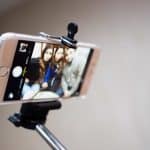
The selfie stick is an unusual case because something very similar appeared in Kawakami's 1995 collection of “unuseless” inventions, but the basic idea already existed as a real camera accessory. Minolta engineers Hiroshi Ueda and Yujiro Mima filed a U.S. patent application in 1984 for a telescopic extender designed to hold a compact camera, and the patent was granted in 1985. Either way, modern selfie sticks are unquestionably commercial products, so under chindogu's own rules, the familiar version sold today doesn't qualify.
Umbrella Tie
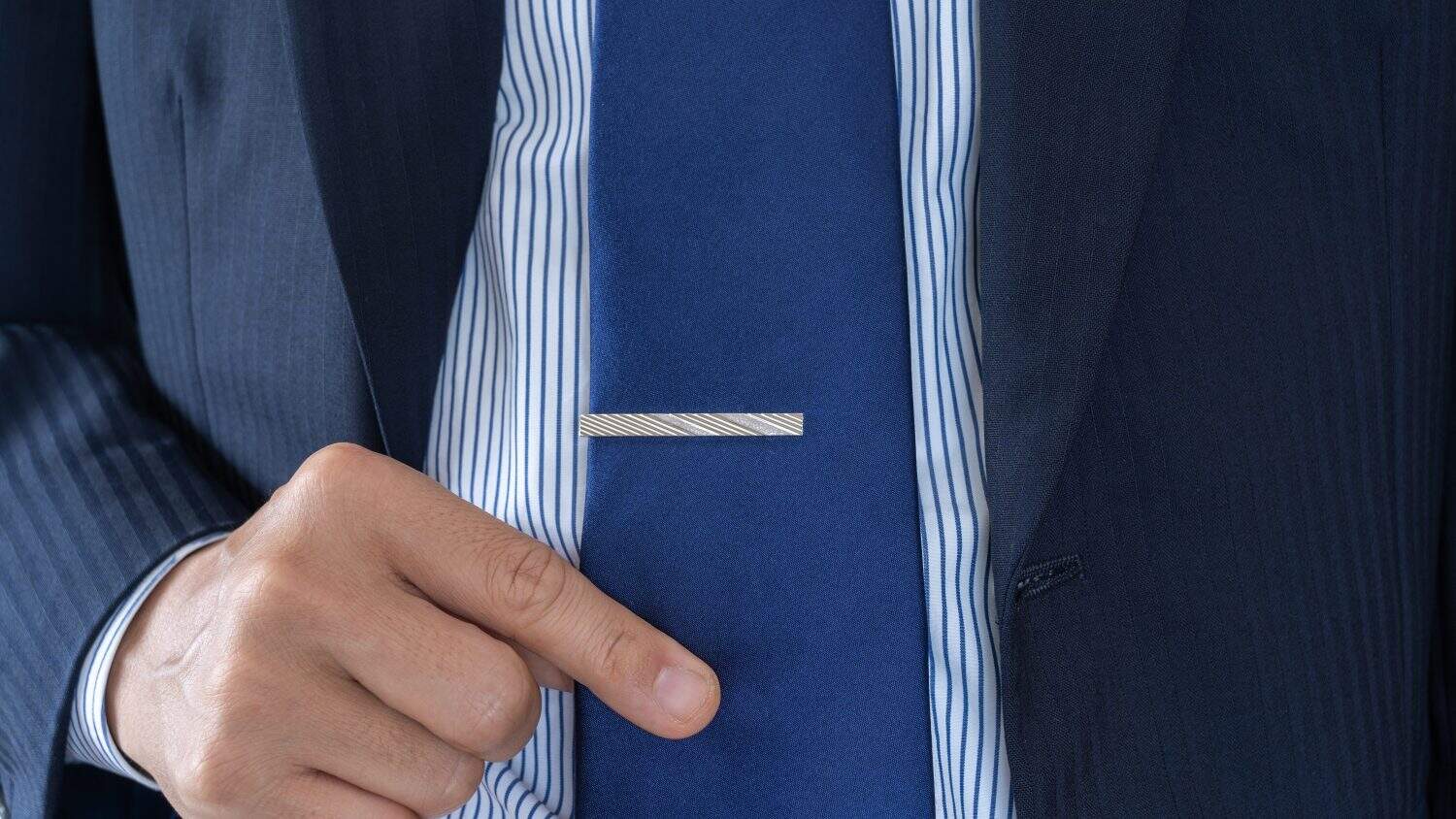
A surprising number of classic chindogu designs involve umbrellas, and the Umbrella Tie is one of the better examples. The idea combines a necktie with an umbrella so a commuter can bring rain protection without carrying a separate umbrella around all day. It technically addresses the problem. Whether you want an umbrella hanging from your neck is another question entirely.
Baby Mop Onesie
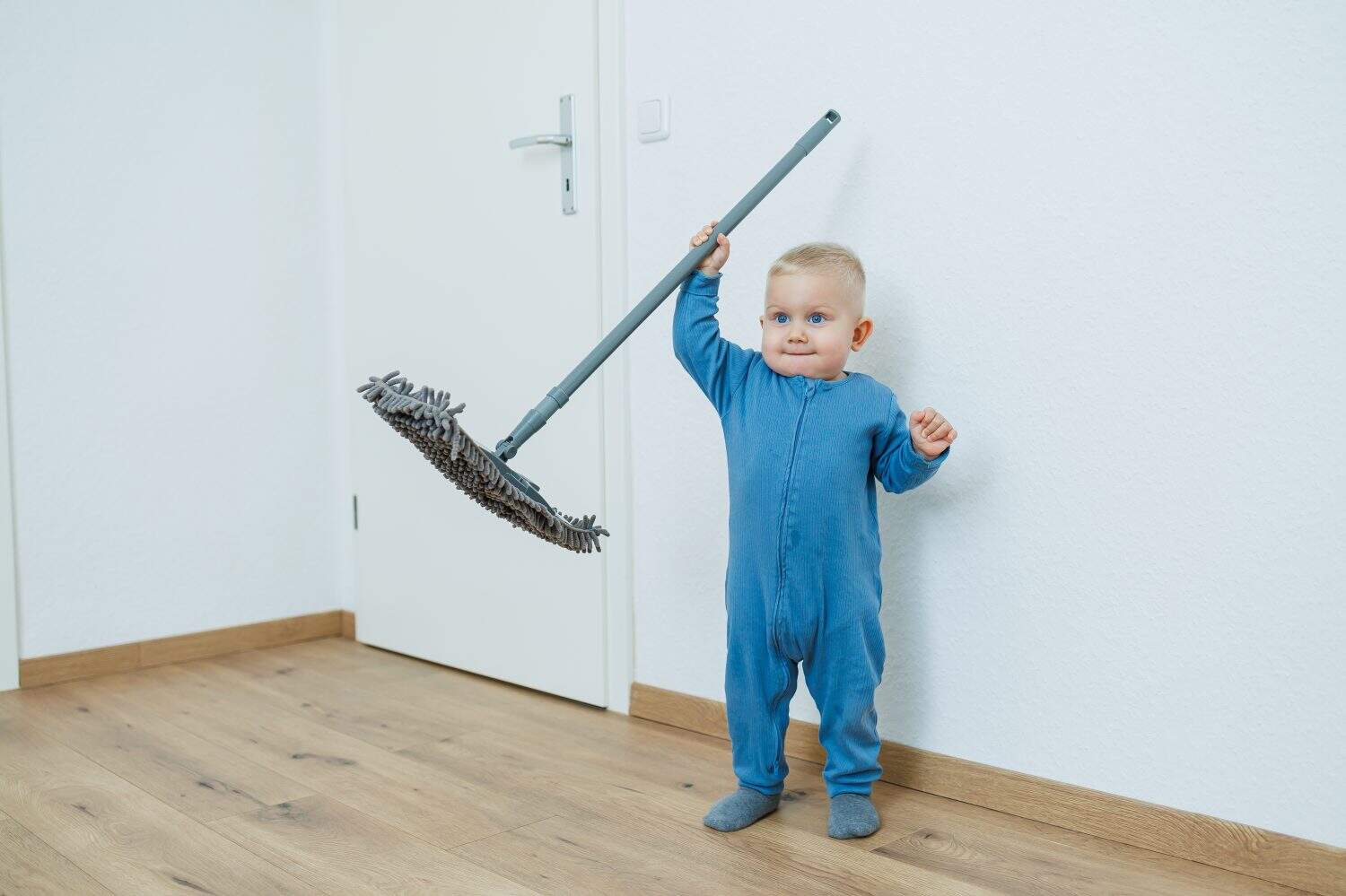
The Baby Mop is one of the best-known chindogu designs. Mop material is attached to a baby's outfit so the floor gets wiped as the child crawls around. It is a perfect example of the idea: the invention technically works, but turning your crawling baby into a household cleaning attachment is not exactly the breakthrough most parents were waiting for. Commercial versions were later produced, but those products no longer meet chindogu's “not for sale” rule.
Butter Stick
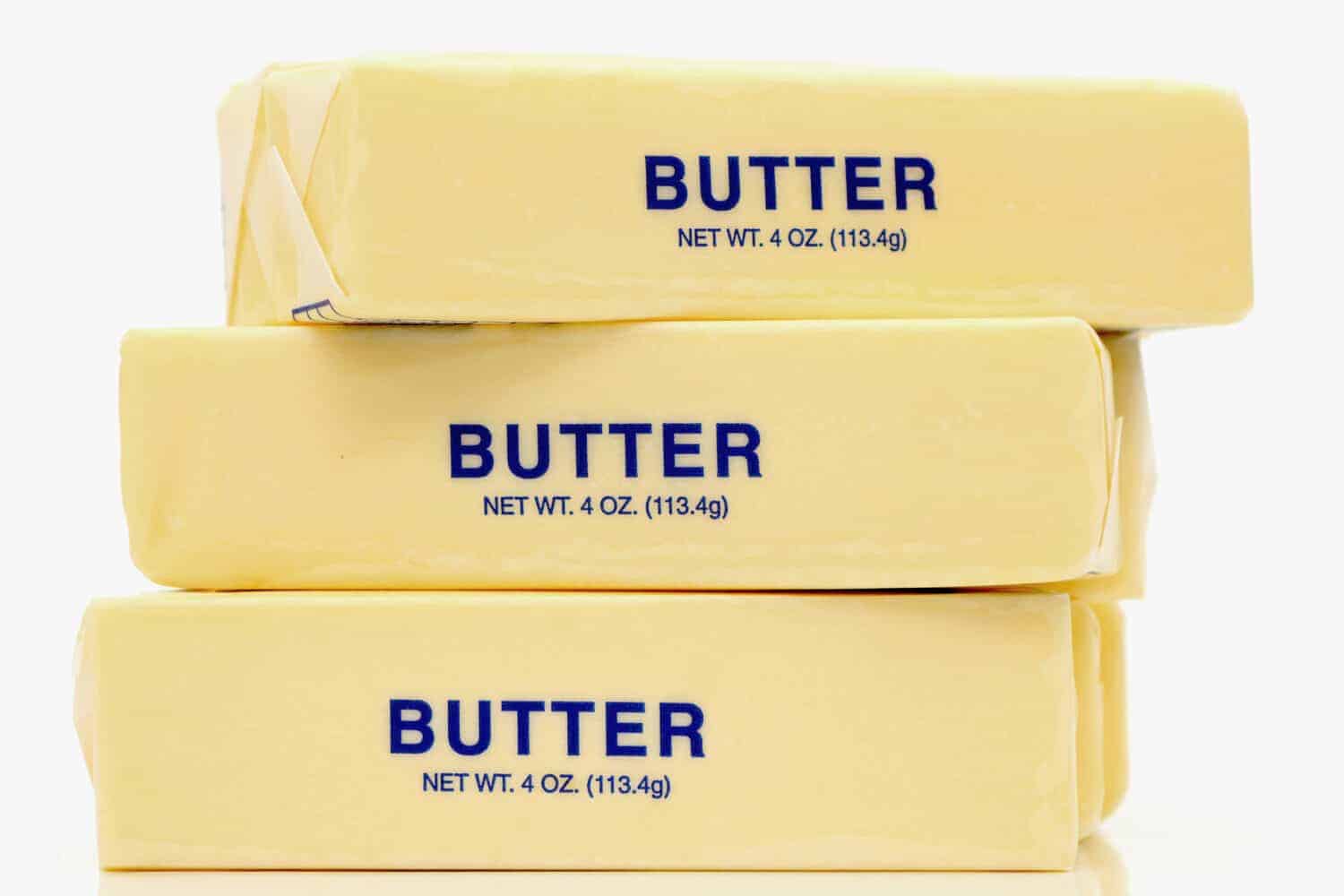
Ignore the regular sticks of butter in the picture. The chindogu version puts butter inside a twist-up tube that works much like a glue stick. Instead of grabbing a knife, you expose the butter and rub it directly across your toast. Of all the inventions on this list, this one gets dangerously close to sounding genuinely convenient, which almost defeats the purpose.
Extended Umbrella
A regular umbrella protects your head and shoulders but often leaves the rest of you at the mercy of sideways rain. The chindogu solution is essentially a full-body rain protector: an umbrella with a long transparent plastic covering that hangs down around the user. You stay considerably drier, but you also walk around inside what looks suspiciously like a portable shower curtain.
Toilet Paper Hat
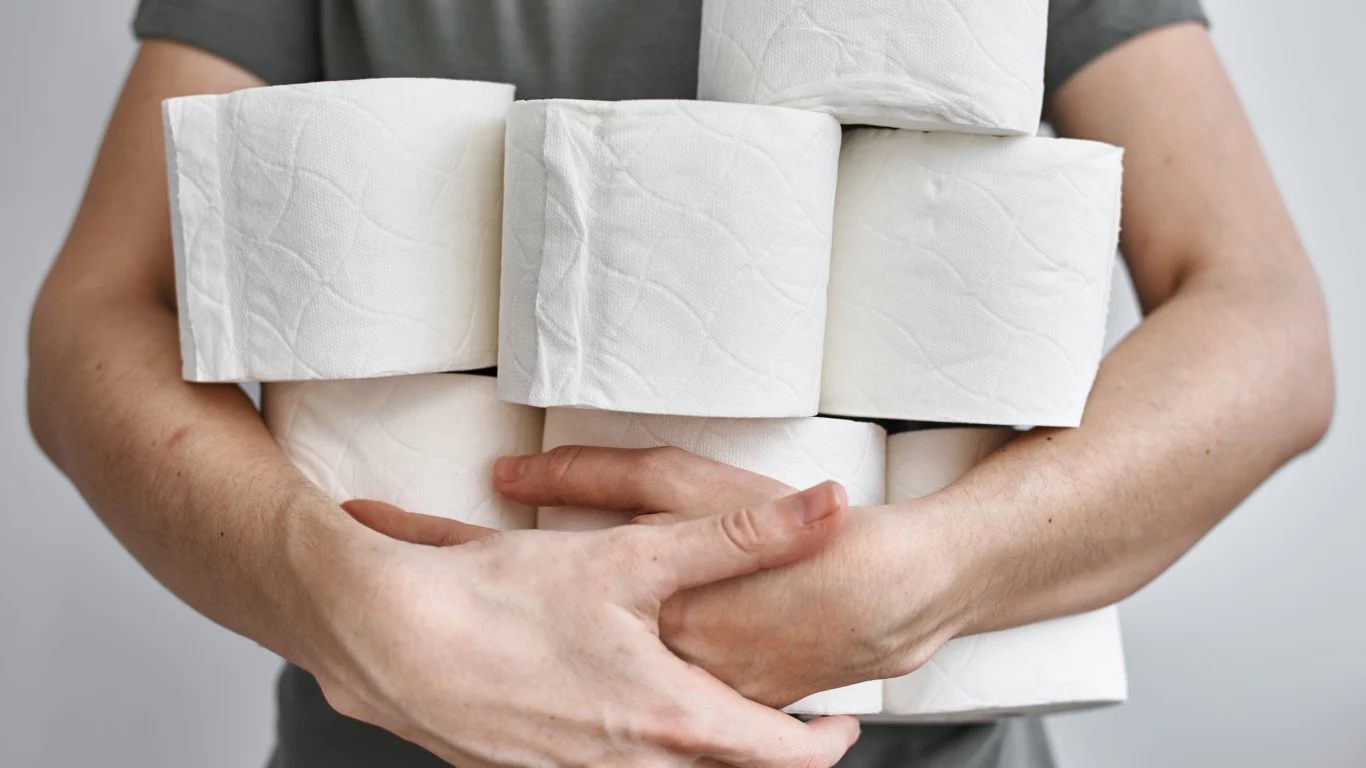
Anyone with a bad cold or seasonal allergies understands the constant search for another tissue. Chindogu answered with the Hay Fever Headset, sometimes described as an all-day tissue dispenser: a roll of tissue or toilet paper mounted directly on a hat so a fresh piece is always within reach. Convenient? Technically. Subtle? Absolutely not.
Noodle Cooler
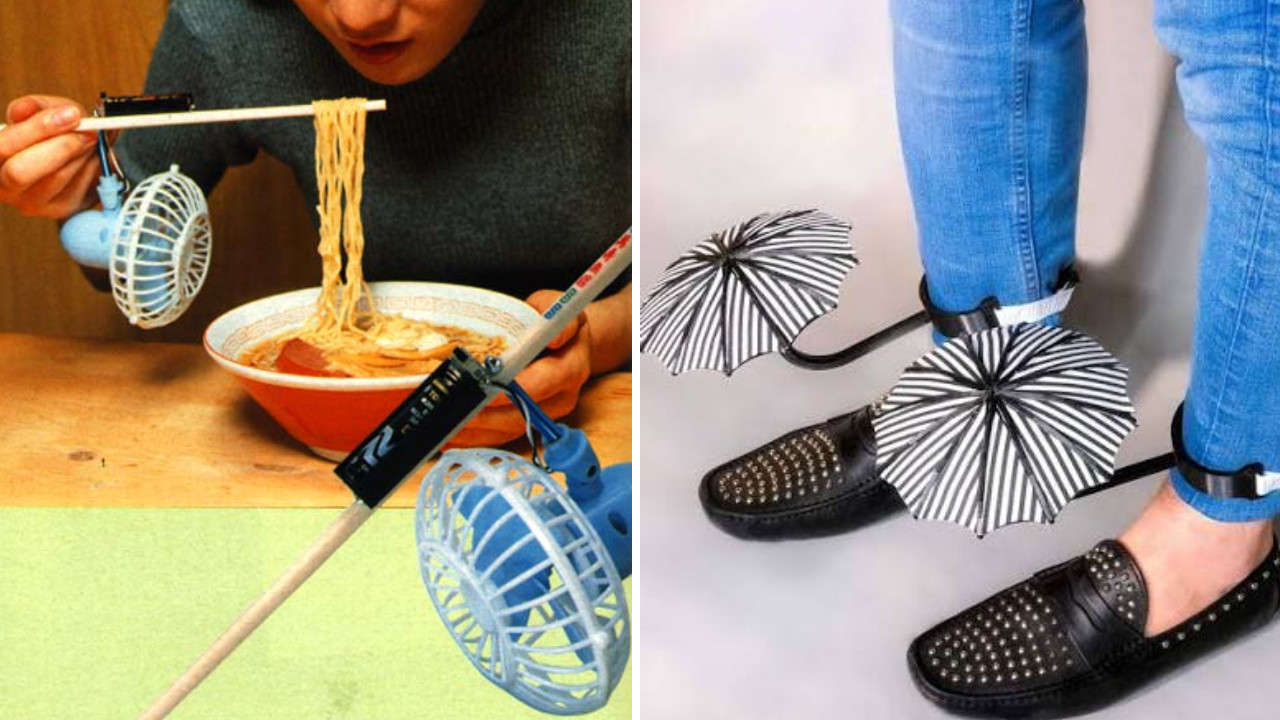
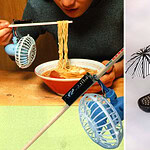
Hot noodles present a very small problem, which naturally calls for a disproportionately elaborate solution. The Noodle Cooler attaches a small electric fan to a pair of chopsticks. As you lift ramen or udon toward your mouth, the fan blows across the noodles to cool them. Waiting a few seconds would accomplish roughly the same thing, but where is the chindogu spirit in that?
Shoe Umbrellas
If the full-body umbrella still isn't enough protection, chindogu has your shoes covered too. Shoe Umbrellas attach tiny umbrellas to the front of your footwear in an attempt to shield your feet from rain. They are a classic Kawakami-era example and appeared in 101 Unuseless Japanese Inventions. They might protect part of your shoes, although stepping around your personal fleet of miniature umbrellas introduces a fairly obvious new problem.
Head Support for Commuters
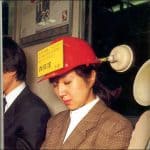
The Subway Sleeper is designed for commuters who want to doze off without slumping onto the person next to them. The classic version uses a hard hat fitted with a suction-cup or plunger-like attachment that braces the wearer's head against the train wall or window. Some versions also include a sign showing the rider's stop so another passenger can wake them. It solves the sleeping problem, provided you are willing to explain the apparatus on your head.
360 Degree Camera Hat
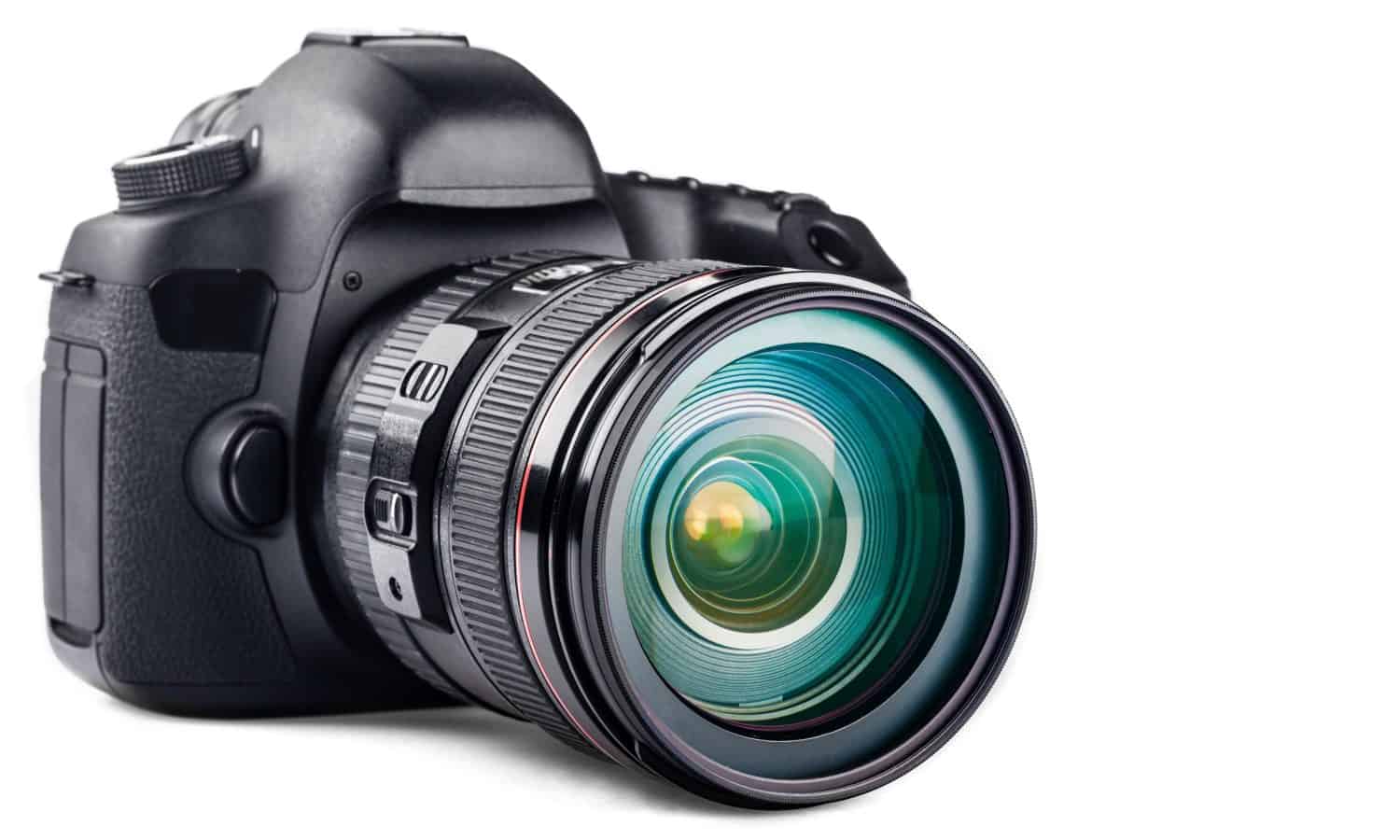
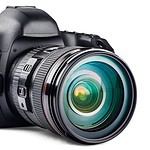
This one predates the tiny 360-degree cameras we have today. The chindogu Panorama Camera used multiple cameras positioned around a person's head to photograph the scene in every direction. The resulting pictures could then be arranged into a panorama. Modern technology eventually found a much easier way to do this, which only makes the original contraption look more gloriously overengineered.
Onion Chopping Glasses
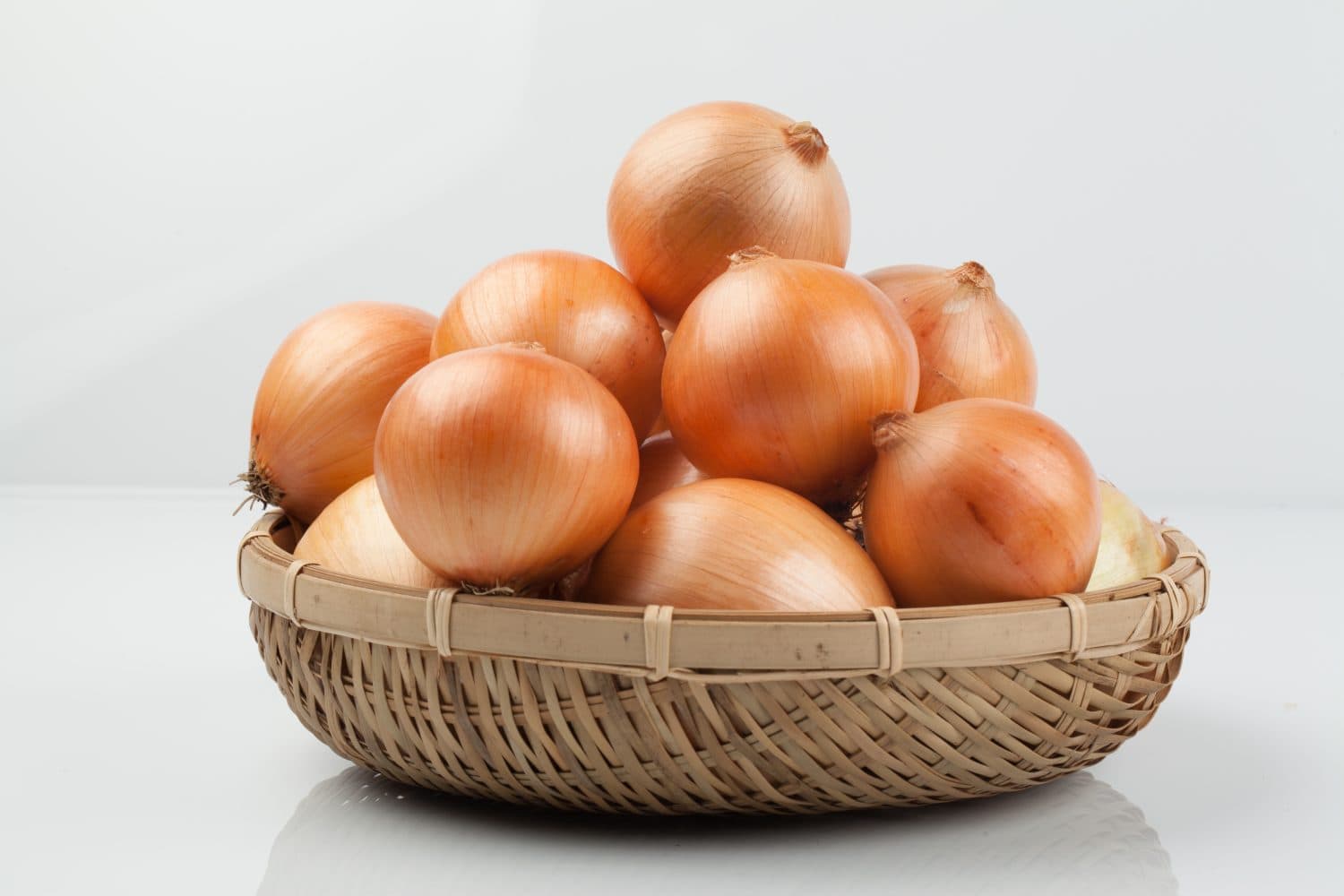
Cutting onions can irritate your eyes as volatile compounds released from damaged onion cells reach them. The chindogu answer was not simply a pair of goggles. Onion Chopping Glasses add small fans near the lenses to blow the irritating vapors away from the wearer's eyes. It is absurdly elaborate for chopping an onion, but you can at least see the logic.
Back Scratcher’s T-Shirt
Anyone who has ever asked someone else to scratch an itch knows the routine: left, right, higher, no, too high. The Back Scratcher's T-Shirt replaces those directions with a numbered grid printed across the back. A matching handheld chart lets the wearer identify the exact square that needs attention. It is ridiculous, but also annoyingly well thought out.
Shoe Broom and Dustpan
Why bend down to sweep up a tiny mess when your feet are already on the floor? The Shoe Broom and Dustpan attach a miniature broom to one foot and a dustpan to the other. You can sweep debris as you walk, at least until you reach the part where you somehow have to empty a dustpan attached to your shoe. That second problem is exactly what makes it chindogu.
Zen Litter Box
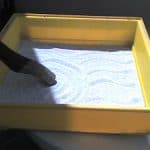
The Zen Kitty Litter Box has been cited as another example of chindogu's peculiar approach to everyday life. The concept combines the maintenance of a cat's litter box with the carefully raked sand associated with a miniature Zen garden. Cleaning a litter box is not normally anyone's idea of meditation, but somebody apparently decided the two activities were close enough.
The Sock Closet
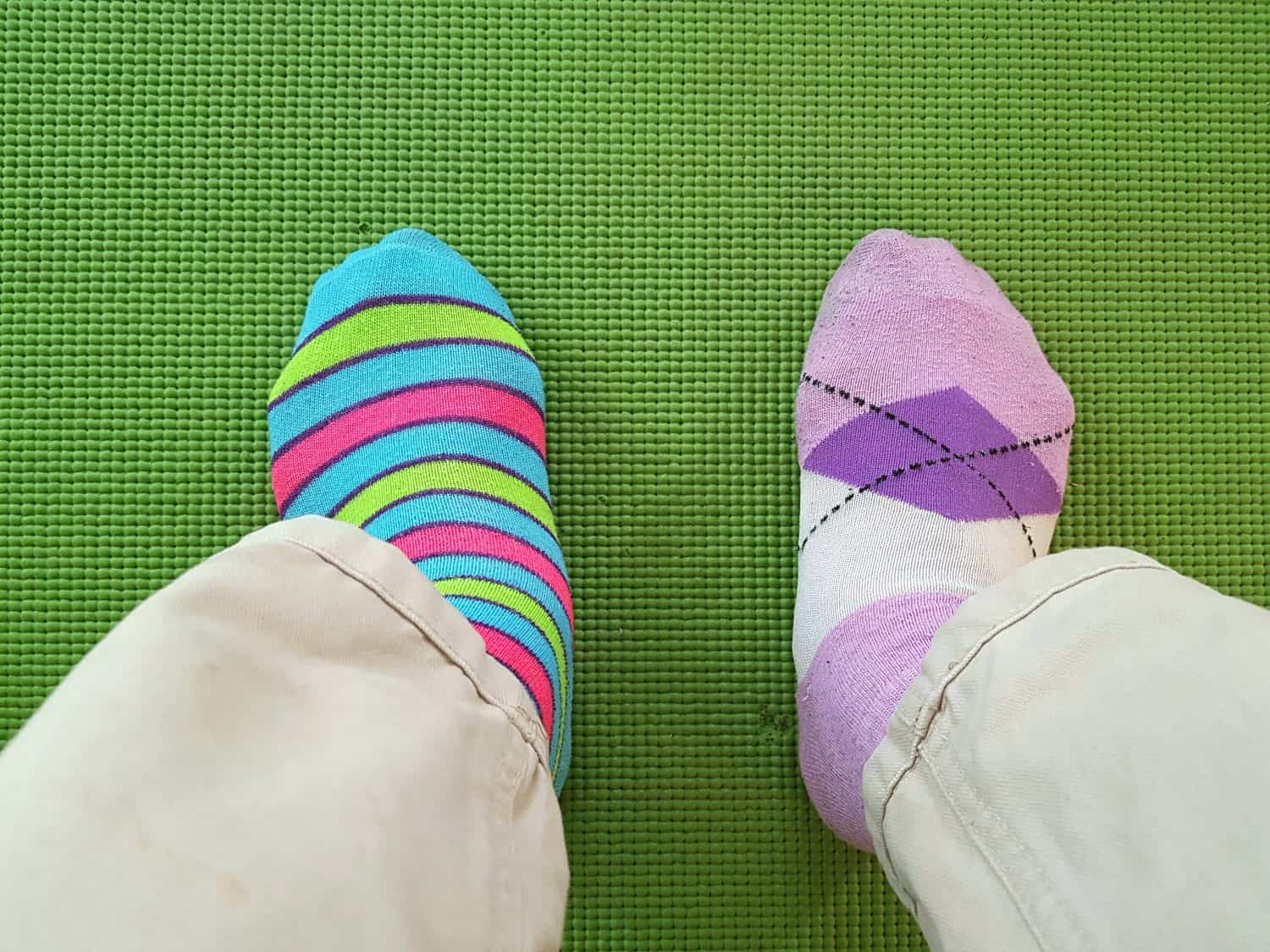
Last but not least is the Sock Closet, an actual chindogu concept built around the apparently serious problem of sock organization. It is exactly what the name suggests: a miniature closet designed specifically for hanging and storing socks. It may make matching pairs easier, but giving your socks their own tiny wardrobe is the sort of excessive solution this entire art form was built for.