
Digital audio has made high-quality listening almost ridiculously convenient. A smartphone can now stream or play lossless music, something that would have sounded like science fiction during the cassette era. For decades, though, listeners bounced between formats as records, 8-tracks, cassettes, CDs, MiniDiscs, and other technologies competed for attention. The compact cassette earned its place because it was portable, recordable, easy to share, and relatively inexpensive.
For serious listeners, the format also came with real limitations. Analog cassette tape has an audible noise floor, familiar tape hiss, and can suffer from wow, flutter, azimuth errors, and limited headroom compared with later digital formats. That gave manufacturers plenty of room to experiment. Better magnetic formulations, more rigid shells, improved tape guides, and increasingly elaborate decks all promised to squeeze a little more performance out of a format that moved tape at just 1 7/8 inches per second.
That produced some wonderfully strange products. A few were legitimate engineering solutions. Others leaned much harder on premium materials, dramatic packaging, or the promise that one more tweak could make a cassette behave like something it was not. Audiophile marketing did not begin with expensive cables and headphone amps. The cassette era was already very good at selling people on the last few percentage points of performance. Here are some of the weirdest examples.
Metal-Chassis Tapes
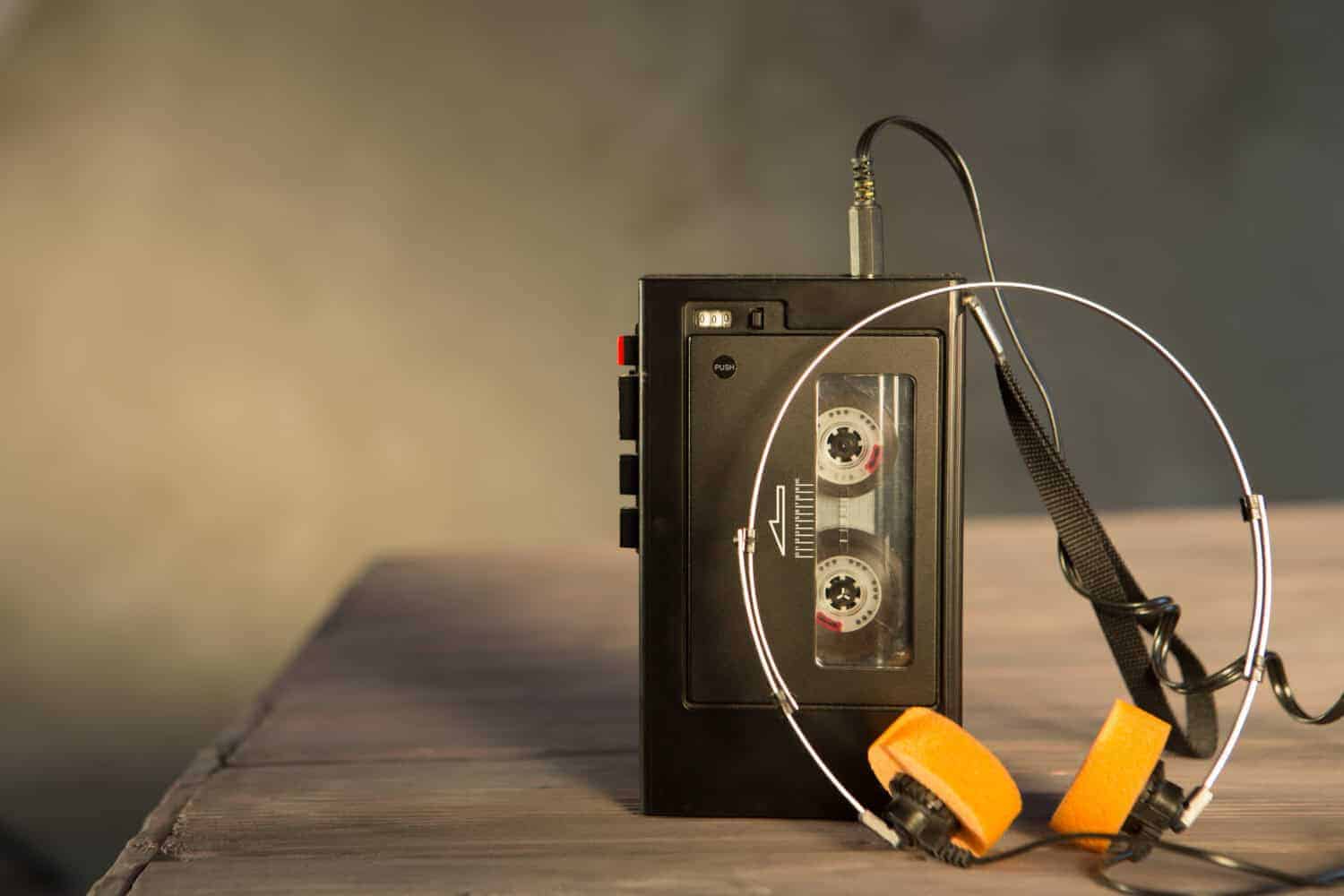
A compact cassette is a surprisingly mechanical little object. Two hubs, rollers, guides, a pressure pad, and a very thin strip of magnetic tape all have to behave while the deck pulls that tape past the heads. Shell rigidity and tape alignment matter because small transport errors can contribute to wow, flutter, skew, and high-frequency losses. Most everyday cassettes used plastic shells, but premium manufacturers eventually started treating the shell itself as part of the audio engineering.
Sony took that idea about as far as anyone with its Metal Master line and, later, the Super Metal Master introduced in the early 1990s. The Super Metal Master used a dense ceramic-composite shell and precision tape-guide components instead of an ordinary lightweight plastic body. It was unusually heavy and rigid for a cassette, with the shell designed to reduce unwanted vibration and keep the tape path stable. Sony even sold it in a substantial aluminum protective case, because apparently a normal cassette box was not dramatic enough.
The engineering was not fake. Contemporary testing of premium cassettes specifically treated shell resonance, rigidity, and tape guidance as measurable design concerns, and Sony paired the elaborate shell with high-end Type IV metal tape. What the shell could not do was erase the basic limits of the compact-cassette format. This was still analog tape running at cassette speed. The Super Metal Master was an impressive attempt to perfect the format, but it was also an expensive way to chase increasingly small gains.
Reel-to-Reel Illusions

Open-reel tape had a basic mechanical advantage over the compact cassette: speed. A standard compact cassette runs at 1 7/8 inches per second, while open-reel recordings commonly used speeds such as 7 1/2 or 15 inches per second. TEAC decided to borrow the look of those larger machines for something much smaller. In 1984, the company introduced its unusual O’Casse system in Japan, built around miniature removable reels that fit into a cassette-size carrier.
The visual trick was fantastic. Instead of hiding the tape pack behind the usual cassette shell, TEAC let users handle and see tiny reel-style assemblies that looked like a shrunken open-reel setup. Different tape formulations were offered, including normal, high-bias, and metal versions. Once loaded into a deck, however, O’Casse still operated within the compact-cassette format. Those tiny reels did not suddenly make the tape travel at professional reel-to-reel speeds.
That is what makes O’Casse such a perfect artifact of the era. The removable reels were clever and visually memorable, but they did not turn a compact cassette into an open-reel master recorder. TEAC was selling a different user experience as much as a different tape. The system remained a niche product and never displaced the ordinary cassette shell. Today, surviving O’Casse sets are better known as collector curiosities than as the format that finally solved cassette audio.
Digital Cassettes
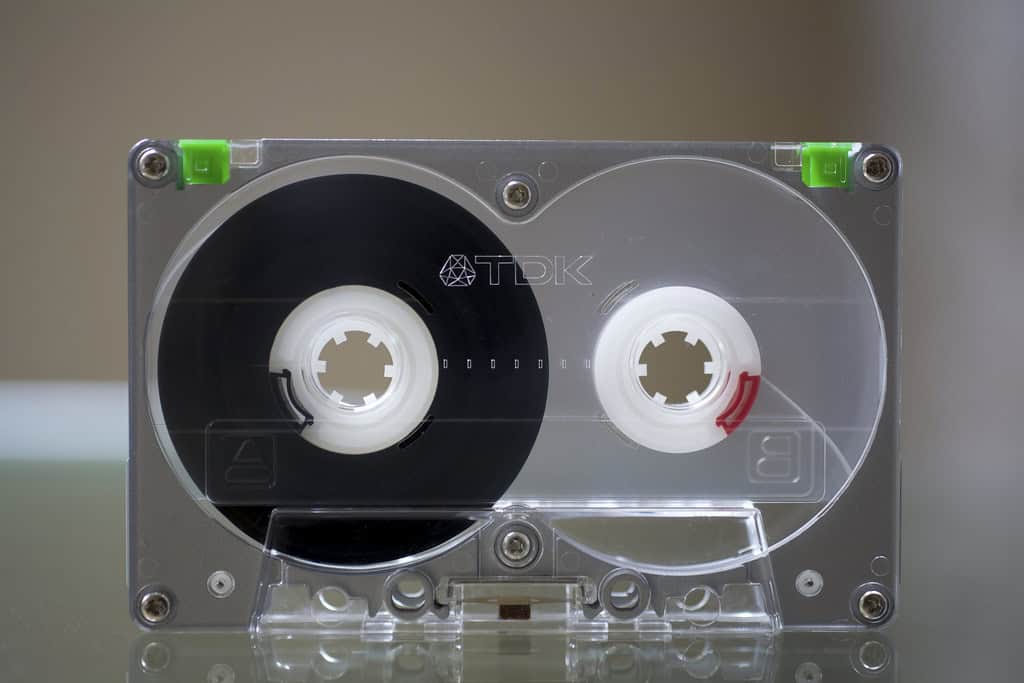
By the 1990s, cassette manufacturers were selling into a market increasingly dominated by the compact disc. CDs offered low background noise, random track access, and consistent digital playback, so blank-tape makers began tying their products directly to the CD era. TDK, for example, sold CDing-branded Type I, Type II, and Type IV cassettes in the 1990s. The message was obvious: your source might be digital, but you could still record it onto tape.
One important correction to the timeline is that Type IV metal tape was not invented as a 1990s response to CDs. Metal-particle compact cassettes arrived in 1979 and were standardized as IEC Type IV. Instead of the oxide-based formulations used in earlier tape types, Type IV used metal particles and could handle higher recording levels with strong high-frequency performance and wide dynamic range. It was real technology, not just the word “digital” printed on a wrapper.
There was a catch. Recording properly onto Type IV tape required a deck designed for the higher metal-tape bias and recording levels. Many later decks could detect the extra notches in a Type IV shell and switch settings automatically, while others required the user to select the tape type. Playback was less restrictive because Type IV used the same 70-microsecond playback equalization as Type II. In other words, the expensive tape mattered most when the recorder could actually take advantage of it.
Gold Coating

Gold also found its way into the high-end cassette world, although the best-documented examples are in the hardware rather than in some magical gold recording layer. Nakamichi’s 1000ZXL Limited, introduced in 1981, was a $6,000 halo cassette deck with a gold-finished front panel and gold plating on selected internal parts and connections. Some of that had a practical purpose because gold resists corrosion and makes sense on electrical contacts. Some of it was very clearly about making an already outrageous machine look even more outrageous.
What gold did not do was transform the magnetic recording medium. Compact cassette tape stores audio by magnetizing ferromagnetic particles in the tape coating. The materials that actually changed cassette performance were things such as ferric oxide, cobalt-modified formulations, chromium dioxide, and eventually metal particles. Gold plating on a connector or shield could serve an electrical or corrosion-resistance role, but putting a luxury finish around the cassette ecosystem was not a substitute for better magnetic tape or a better transport.
That distinction matters because tape hiss is primarily tied to the analog recording medium and its signal-to-noise limitations, not simply to whether a deck has enough gold inside it. High-end decks attacked noise and distortion with better heads, transports, calibration, and noise-reduction systems. Gold could be useful in the right place, but it was also perfect luxury branding. On a $6,000 cassette deck with a rosewood cabinet, subtlety was clearly not the assignment.
Pressure Pad Solutions
Most standard compact cassettes use a small felt pressure pad mounted behind the tape on a spring. Its job is simple: keep the tape in reliable contact with the record and playback head. On a conventional transport, that little pad is part of what makes the system work. It can also introduce its own problems, however, including uneven pressure, tape skew, scrape flutter, and additional head wear if the transport is not controlling the tape well.
Nakamichi’s answer was not a special dual-chamber cassette shell. It was the deck itself. On many of the company’s dual-capstan transports, a pressure-pad lifter physically moved the cassette’s pad away from the head. The transport then controlled tape tension and head contact without relying on that spring-loaded piece of felt. The famous Nakamichi Dragon, introduced in 1982, used this approach along with a dual-capstan transport and automatic playback azimuth correction.
This is one case where calling the idea a gimmick sells the engineering short. Nakamichi specifically identified the pressure pad as a source of scrape flutter, modulation noise, and tape skew, and its tightly controlled dual-capstan transports were designed to work without it. Whether the improvement justified the cost was a separate question, especially for someone listening in a noisy car. But the pressure-pad lifter was not decorative audiophile theater. It was a real mechanical solution to a real limitation in cassette transport design.
Conclusion
By the middle of the 1990s, the cassette was clearly losing ground in the United States. RIAA shipment data show cassette albums falling from about 442 million units in 1990 to roughly 273 million in 1995, while CD albums rose from about 287 million to 723 million over the same span. Sony’s MiniDisc also reached the market in 1992, giving listeners another recordable option with digital audio and quick track access. The cassette did not disappear overnight, but the direction of travel was obvious.
Looking back, the strangest part is how much physical engineering manufacturers could squeeze into such a small format. There was no software update coming to fix tape alignment or increase magnetic output. Better performance meant changing the chemistry, shell, guides, heads, motors, capstans, or calibration system. Sometimes that produced a genuine breakthrough. Sometimes it produced a very expensive object that mostly looked incredible sitting next to the stereo.
That is why these products are still fascinating. The cassette era produced a strange overlap between serious engineering and serious marketing, and the line between the two was not always obvious. Ceramic shells, metal-particle tape, miniature reels, gold-plated hardware, and pressure-pad lifters all existed, but they did not all solve problems to the same degree. What they share is a very analog kind of ambition: if the format had a weakness, somebody was willing to redesign a physical piece of it and see what happened.