IMDB
Nomad_Soul/Shutterstock.com

rvbox/iStock.com

PeopleImages.com - Yuri A/Shutterstock.com

David BISE/Shutterstock.com
Everett Collection/Shutterstock.com

Bumble Dee/Shutterstock.com

Cunaplus_M.Faba/ via Getty Images

TimmyTimTim/Shutterstock.com

LightField Studios/Shutterstock.com

Alex Linch/Shutterstock.com

Andrejs Marcenko/Shutterstock.com

Rommel Canlas/Shutterstock.com












12 Great Movies Based on True Stories You Probably Missed
When people see the “based on a true story” label, they tend to ignore it. Its use has become so liberal that it’s hard to take seriously. The movies that are truly faithful to reality are often the ones where you already know the outcome before you have even pressed play.
There’s a third, stranger category. Although it’s rare, it exists. These are movies inspired by events so unbelievable that filmmakers sometimes had to tone them down to make them feel realistic. Today, we’re looking at movies that fall into or come close to this particular category. Some slipped by without the audience they deserved. Others you may have seen without fully understanding the events that inspired them or the questions surrounding those accounts. Either way, these twelve examples show that reality can be stranger than fiction.
The Old Man & the Gun (2018)
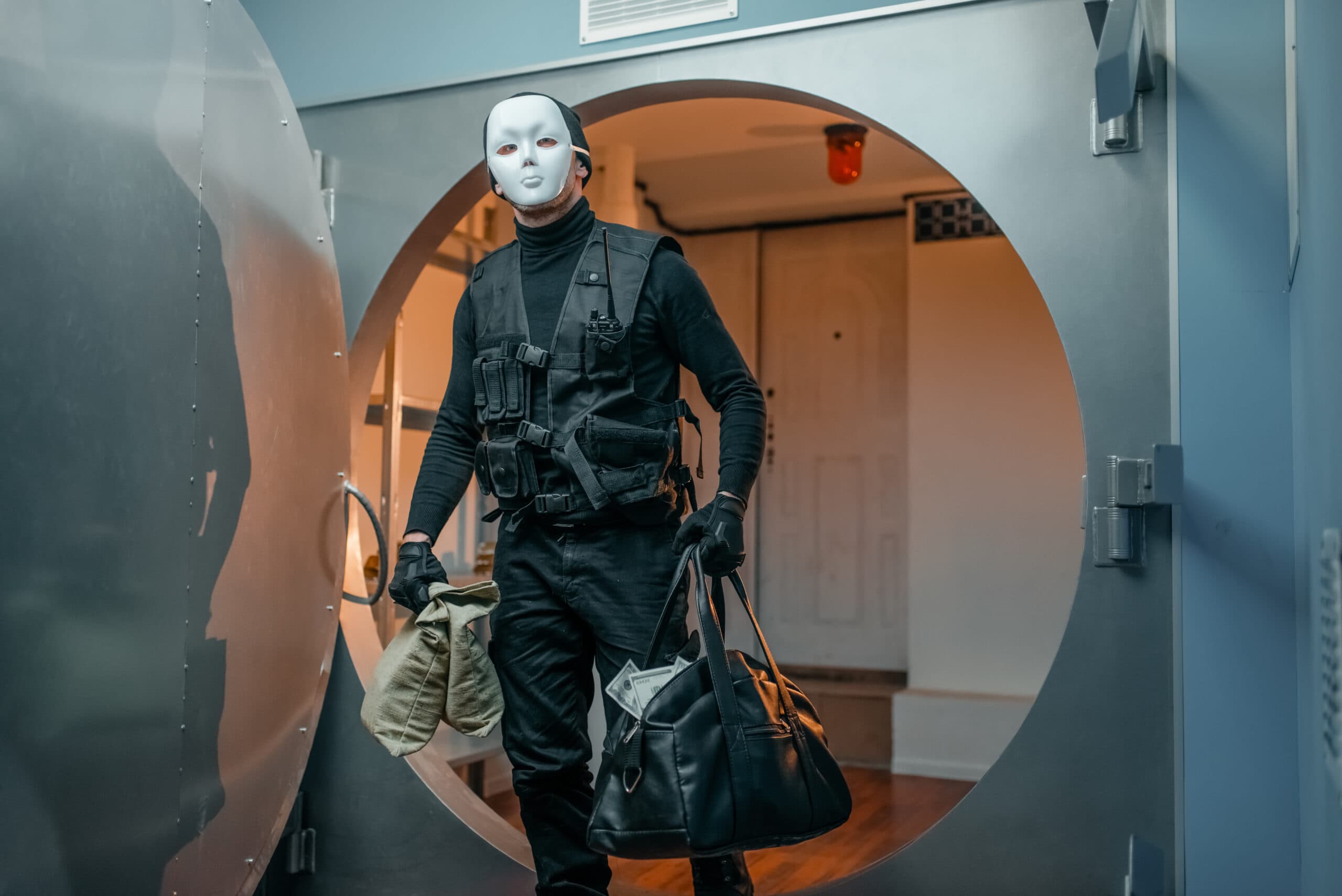
Forrest Tucker escaped from San Quentin State Prison at the age of 59 after building a kayak with scrap lumber, Formica, plastic, tape, and bolts. He painted one side of it and dressed his crew in sailor hats and sweatshirts bearing the Marin Yacht Club logo. Tucker and two other inmates paddled away in broad daylight. When a guard spotted them after the kayak was swamped, he even asked if they needed help.
As a fugitive, Tucker went right back to robbing banks. He remained on the run until 1983, when federal agents arrested him after a shootout. He was released in 1993, but resumed robbing banks and was arrested again at the age of 78.
David Grann wrote a profile of Tucker in the New Yorker in 2003, which became the basis for the film. Robert Redford plays him with a loose, unhurried ease that suits the story perfectly. Tucker’s story is such a mixture of luck, stubbornness, consistency, and misdirected determination that it’s hard to believe the movie was based on a true story.
Munich (2005)
Following the murder of eleven members of Israel’s Olympic team by the Palestinian militant group Black September in 1972, the Israeli government authorized a Mossad assassination campaign. Often called Operation Wrath of God, it targeted Palestinians Israel accused of involvement in the massacre or ties to Black September, although some targets had little or no direct connection to the attack. George Jonas described a version of the operation in his controversial 1984 book “Vengeance,” which became the basis for Steven Spielberg’s film.
Spielberg’s movie was released in 2005 and received five Academy Award nominations, but it still isn’t mentioned as often as many of his biggest films. It’s unsettling, to say the least, but it holds up better than its reputation suggests. Eric Bana and Daniel Craig are both excellent.
Changeling (2008)
In 1928, Christine Collins’s nine-year-old son, Walter, went missing in Los Angeles. Months later, the LAPD returned a boy to Collins, but she said he wasn’t her son. After trying to accept him for three weeks, she brought him back to the police. Captain J.J. Jones then had her confined to a psychiatric ward. While Collins was hospitalized, the boy admitted he was a 12-year-old runaway named Arthur Hutchins, who had posed as Walter because he wanted to go to Hollywood.
Clint Eastwood directed the film based on this story. Angelina Jolie, who plays Collins, delivers one of her better performances to date. The investigation later intersected with the Wineville Chicken Coop Murders, and Walter may have been among the victims, although his fate was never established. That makes the case even more unsettling. Public outrage over the LAPD’s treatment of Collins led to official hearings and a lengthy court battle.
The Walk (2015)
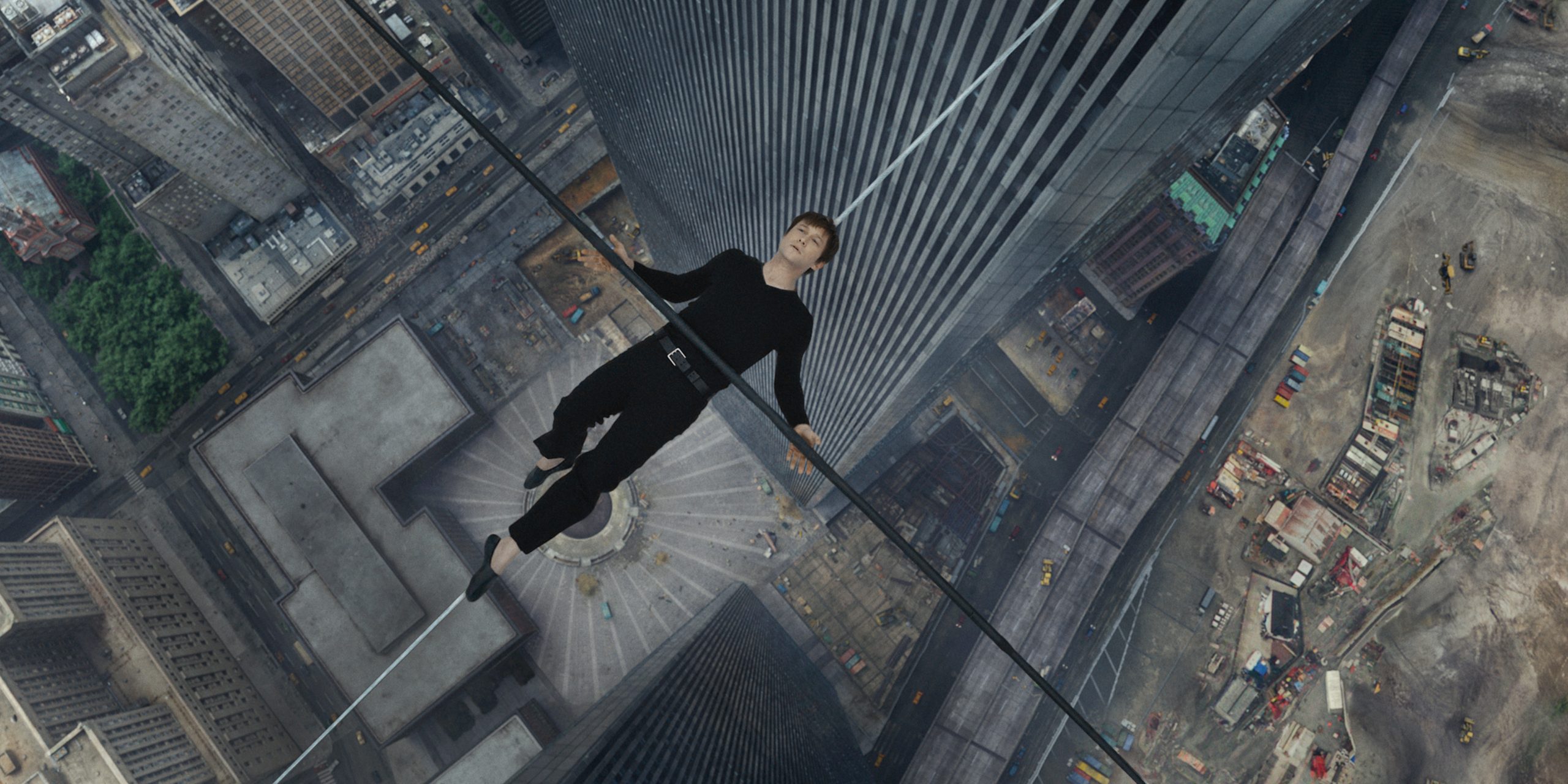
On August 7, 1974, French wire walker Philippe Petit crossed between the two towers of the World Trade Center using a cable he and his crew had rigged illegally the night before. The performance lasted for about 45 minutes, during which Petit made eight crossings. He even lay on the cable and knelt to salute the crowd below him. Police and Port Authority officers waited on the rooftops, trying to persuade him to come off the wire.
Robert Zemeckis made a film about the planning and execution of the stunt, starring Joseph Gordon-Levitt as Petit. Those who know the story know it from Man on Wire, the 2008 documentary. The Walk is the dramatic retelling that most people missed.
BlacKkKlansman (2018)
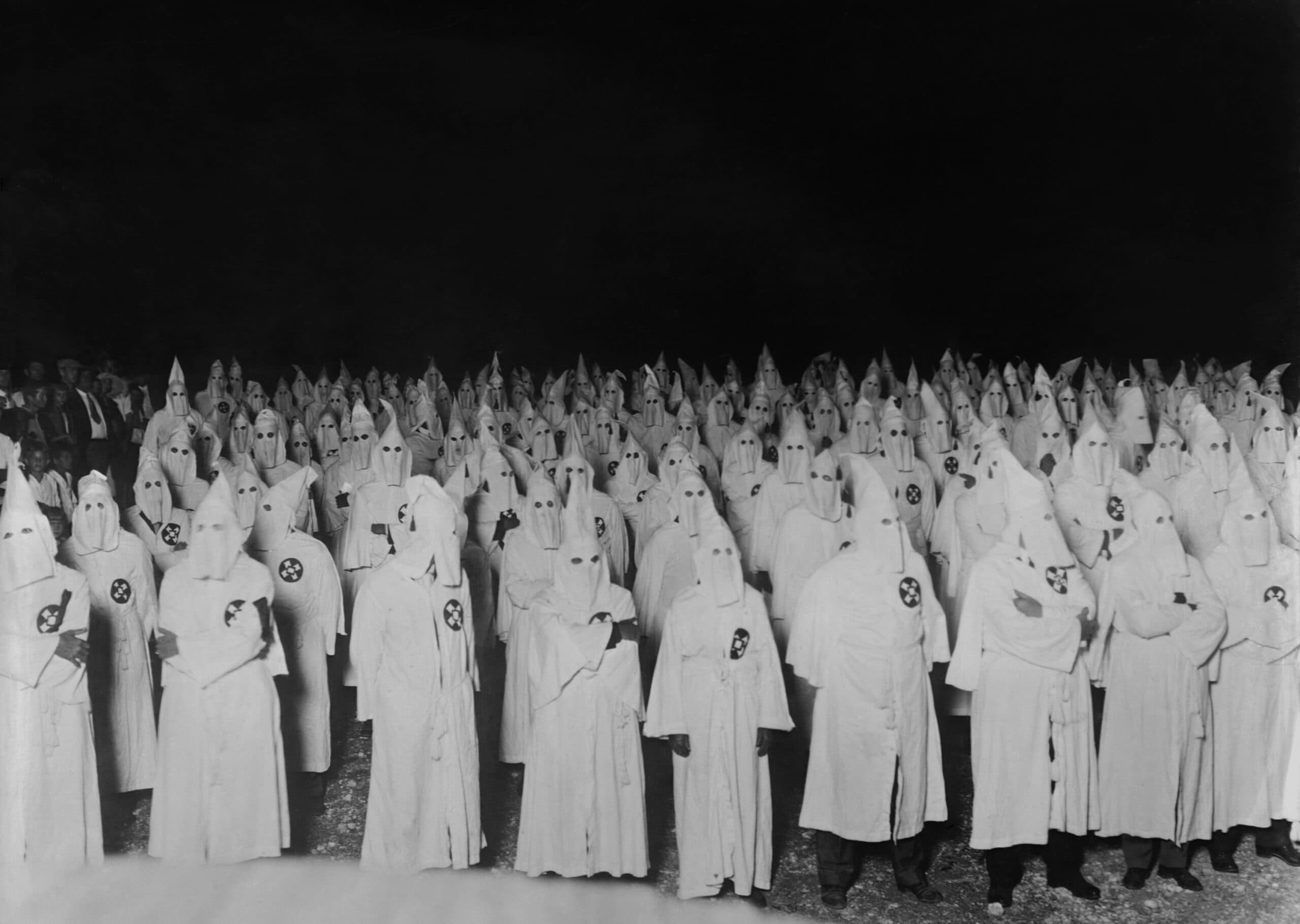
Ron Stallworth became the first Black detective at the Colorado Springs Police Department in 1975. Three years later, he answered a newspaper advertisement for KKK membership and successfully infiltrated the organization through phone conversations. A white detective played his role during in-person meetings.
David Duke spoke with Stallworth on the phone so often that, when the Klan leader visited Colorado Springs in 1979, Stallworth was assigned to serve as his police bodyguard. He spent the visit surrounded by Klan members who never recognized him as the man Duke had been speaking with for months.
Stallworth kept his laminated KKK membership card and has displayed it in interviews. The whole affair serves as a perfect example of how a clever individual can defeat an organization built on hatred and paranoia with nothing more than a house phone and some patience. Stallworth detailed the events in his 2014 memoir Black Klansman. Spike Lee directed the 2018 film adaptation.
The Devil’s Double (2011)
Latif Yahia was an Iraqi soldier who claimed that he served as a double for Uday Hussein, Saddam’s oldest son, from 1987 to 1991. Uday had a well-documented reputation for extreme violence. Yahia wrote about his alleged experiences after fleeing Iraq.
Dominic Cooper plays both men, which seems like a cheap trick on paper but makes perfect sense once you see it play out. Yahia’s central claim remains heavily disputed. Several former members of Uday’s inner circle said Yahia was never his double, and journalists have found no independent evidence proving that the arrangement existed. The film is based on Yahia’s account, not a settled historical record.
Papillon (1973)
In 1969, Henri Charrière published an account of his imprisonment in French Guiana. According to his story, he attempted several escapes before finally succeeding in 1941 by floating away on bags filled with coconuts. French records and later research contradicted many of his details, and some episodes may have been borrowed from other prisoners.
The 1973 film adaptation features Steve McQueen and Dustin Hoffman, and it plays out in such spectacular fashion that many viewers assumed it was fiction. The French Guiana penal colony it depicts was real, although Charrière was never held on Devil’s Island itself. The penal system officially closed in 1953.
Compliance (2012)
Between 1994 and 2004, someone claiming to be a police officer called fast-food restaurant managers across the United States and convinced them to detain and strip-search employees. More than 70 such calls were reported in 30 states, often involving accusations that an employee had stolen something.
The most widely reported case took place at a Kentucky McDonald’s in 2004, where an 18-year-old employee endured three and a half hours of humiliation and abuse because of a phone call. She sued McDonald’s, and a jury awarded her $1.1 million in compensatory damages and $5 million in punitive damages.
A suspect was identified, tried, and acquitted. Craig Zobel’s film dramatizes that incident, which makes it truly hard to watch since nothing in it is implausible.
The Stanford Prison Experiment (2015)
In August 1971, Stanford psychologist Philip Zimbardo recruited 24 male college students for a make-believe prison setting, splitting them into two groups. One group played guards while the other served as prisoners. The experiment was designed to last for two weeks, but it ended after just six days as conditions deteriorated and participants showed serious distress.
Kyle Patrick Alvarez directed the 2015 film with Ezra Miller and Billy Crudup. Zimbardo’s account of the events has been challenged by later researchers. Archival evidence shows that experimenters encouraged some guards to act tough, undermining the claim that their behavior emerged spontaneously from their assigned roles. It doesn’t make the movie any less hard to watch, though.
The Courier (2020)
In 1960, Oleg Penkovsky, a colonel in Soviet military intelligence, offered to share secrets with the West. MI6 and the CIA needed a courier who wouldn’t draw attention. They chose Greville Wynne, a British businessman with no intelligence background, and sent him to Moscow under the cover of an ordinary sales trip.
Penkovsky’s intelligence helped Kennedy’s advisers assess Soviet missile capabilities and identify installations during the Cuban Missile Crisis. Wynne was arrested during a business trip to Budapest in 1962, taken to Moscow, and released in a spy swap in 1964. Most people have never heard of him. Benedict Cumberbatch plays Wynne in the 2020 film, where the visits to Moscow and the precarious act of maintaining a cover as an untrained civilian take a heavy toll on him.
A Hijacking (2012)
Beginning in 2007, several Danish-linked cargo ships were seized by Somali pirates, and the months-long ransom negotiations gave director Tobias Lindholm the idea for this story. A Hijacking is fictional rather than a direct retelling of one case, but it was filmed aboard the MV Rozen, a real ship hijacked in 2007. Some sailors who had lived through that ordeal also appeared in the movie.
Lindholm drew on documented accounts of real hijackings and how they were resolved. The movie was released in 2012, one year before Captain Phillips, but did not get nearly as much attention. Captain Phillips stays close to its captain and crew. A Hijacking splits its focus between the hostages and the corporate side of the negotiations, showing how deliberate delays and professional strategy can shape a crew’s fate.
California Schemin’ (2026)
Gavin Bain and Billy Boyd were two aspiring rappers from the Dundee area who struggled to break into the British music industry in the early 2000s. After being mocked and dismissed because of their accents, they came up with new ones. They re-recorded their songs with American accents, fabricated a California backstory, faked ties to Eminem, and rebranded themselves as Silibil N’ Brains.
It worked. They gained recognition in London, signed a record deal, received a sizable advance, and appeared on MTV before the whole thing fell apart. California Schemin’ currently holds a 96% score on Rotten Tomatoes and dramatizes the duo’s story. It’s directed by James McAvoy, who also plays a supporting role. The film has already screened at festivals and opened in the United Kingdom, but it is scheduled to reach U.S. theaters on October 16, 2026.