Tom Pennington / Getty Images
MAGA.com
gustavofrazao/iStock via Getty Images
cbowns / BY-SA 2.0

Michael Vadon / BY-SA 2.0

Pete Marovich / Getty Images News via Getty Images

CarlosJRoman / BY 2.0
dee karen / Shutterstock.com
Nomad Pixel / Shutterstock.com
CNBC
sommart sombutwanitkul / Shutterstock.com

PeopleImages / Shutterstock.com

PeopleImages / Shutterstock.com

teerayuth oanwong / Shutterstock.com

2016 Getty Images / Getty Images News via Getty Images
smspsy/ Shutterstock












Trump Says AI Data Centers Are a Gold Mine. Ohio Isn't So Sure
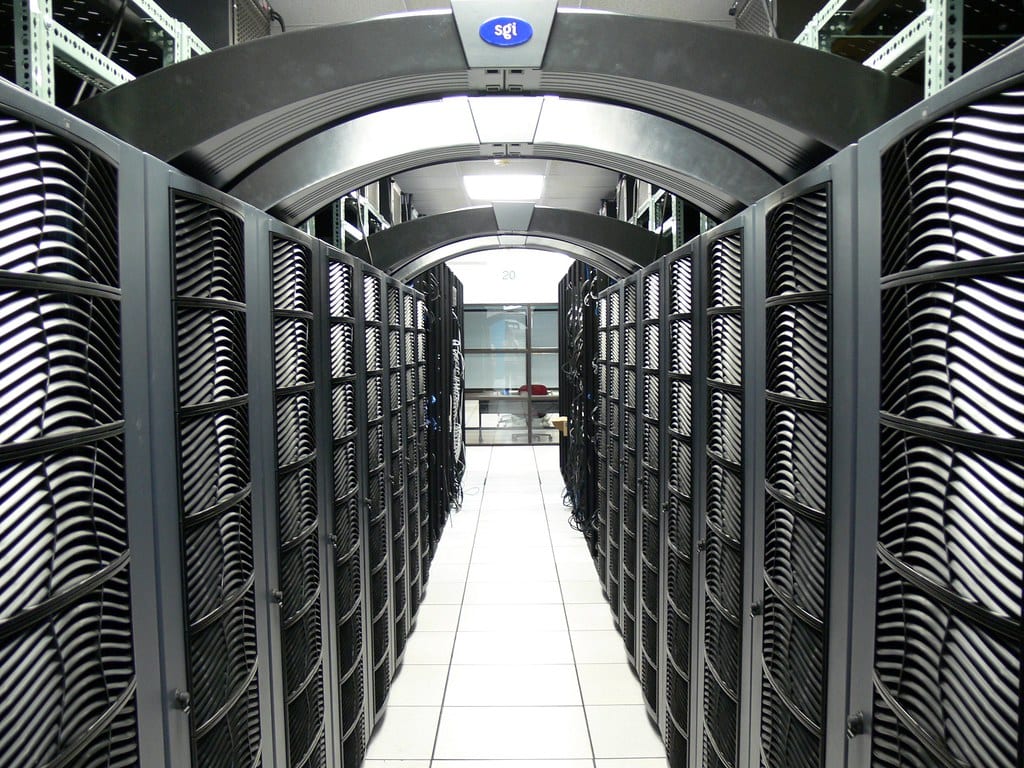
Data centers used to be the kind of buildings most people never thought about. Then artificial intelligence exploded. Now the enormous facilities packed with computer servers are becoming a major issue in communities across the country.
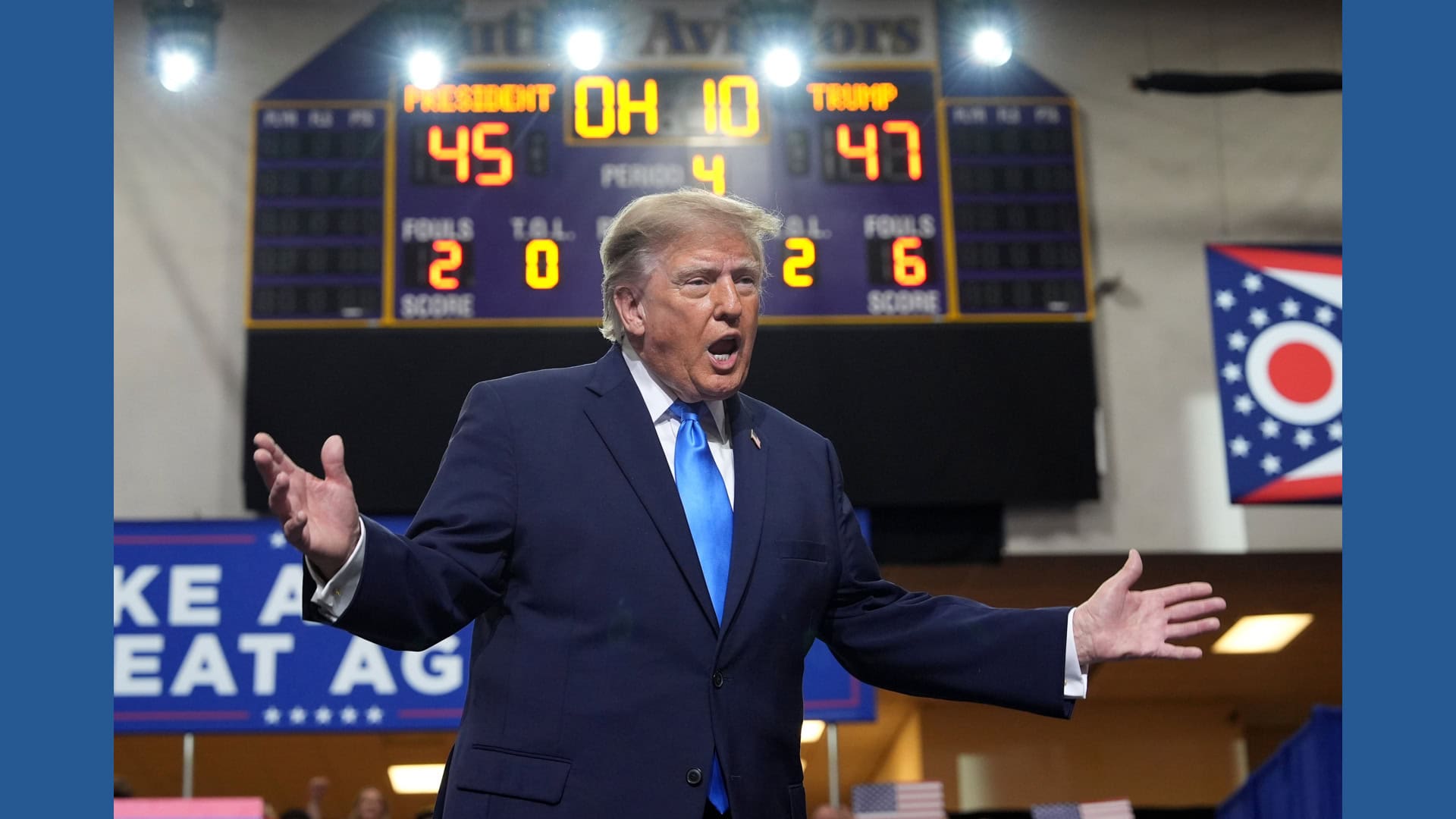
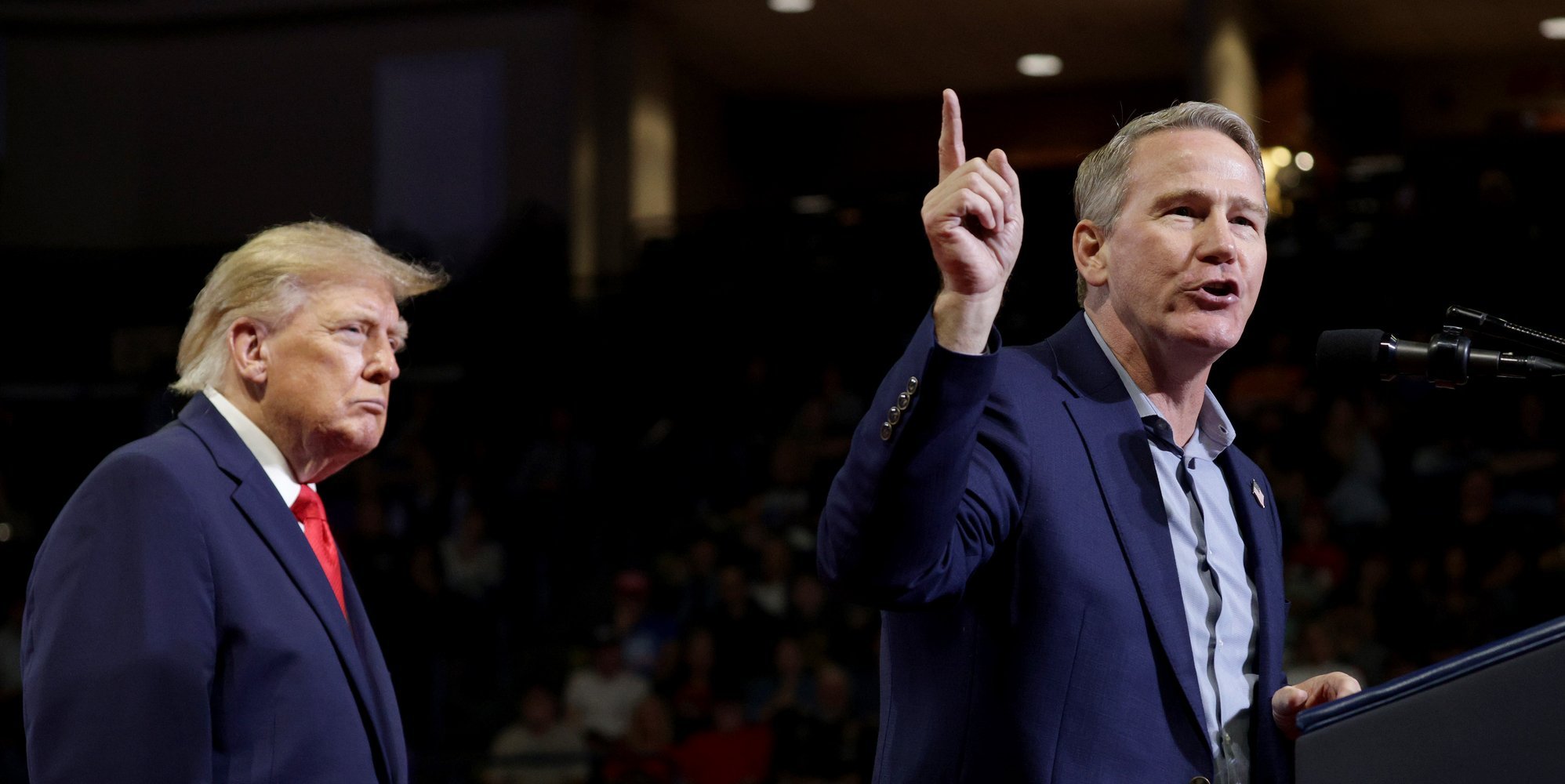
President Donald Trump got a surprisingly clear reminder of that during an Oct. 3 rally in Vandalia, Ohio. His supporters had been loudly responding to much of his speech, but the mood changed when Trump started defending data-center development.
Trump argued that Ohio stands to make huge amounts of money from the industry and warned that rejecting new projects could push investment elsewhere, including China. According to the Associated Press, the crowd's response was "far more muted" than it had been during other parts of the rally.
Why would a room full of Trump supporters suddenly get quiet? The answer has less to do with computers than with electricity bills, farmland, tax breaks, jobs, and the enormous amount of power these facilities require.
The Crowd Got Quiet When Trump Mentioned Data Centers
The change in the room came when Trump defended the rapid expansion of data centers in Ohio. "Look, there's so much money to be made for Ohio," he told the crowd. "You can't just turn them off. They'll go to China." The Associated Press reported that the audience, which had reacted enthusiastically to other parts of his speech, was far quieter during those remarks. For an issue that barely registered in national politics a few years ago, that reaction was hard to miss.
Why Trump Was Campaigning in Ohio
Trump was in Vandalia campaigning for Republican Sen. Jon Husted, who was appointed to the Senate seat previously held by Vice President JD Vance. Husted is now trying to keep the seat in the 2026 election. His Democratic opponent is former Sen. Sherrod Brown, who lost his previous Senate seat to Republican Bernie Moreno in 2024. That has turned Ohio into a closely watched race, and data centers have unexpectedly become part of the campaign.
Data Centers Are Suddenly a Campaign Issue
For years, data centers were mostly discussed by technology companies, utility officials, and local planning boards. That has changed quickly. Ohio residents are now raising questions about electricity demand, water use, farmland, noise, tax incentives, and whether the long-term jobs created by these facilities justify their enormous footprint. Brown has made those concerns part of his case against Husted, while Republicans have acknowledged that the issue could become a political headache.
Trump's Argument Is Simple: Look at the Money
Trump sees data centers as an economic opportunity that states should be competing to attract. His argument is that technology companies are prepared to spend billions building AI infrastructure, and communities that reject those projects risk watching the money go somewhere else. When New York moved to halt new hyperscale AI data centers for a year, Trump described the facilities as "Money Machines" and "LIQUID GOLD" for the states willing to host them.
Trump Has Called Data Centers the "Golden Goose"
By late August, Trump was warning communities not to "kill the Golden Goose" by fighting new data-center projects. He also connected the issue to America's competition with China. The basic idea is that technology companies have options. If building in one state becomes too expensive or difficult, they can look elsewhere for land, electricity, tax incentives, and permits. Trump argues that the United States should make sure as much of that investment as possible stays here.
Ohio Has Already Attracted Billions of Dollars
The amount of money involved is not small. When Ohio Gov. Mike DeWine announced a pause on new data-center tax-exemption requests in May 2026, his office said companies that had already received state tax benefits reported $27.2 billion in capital investment during 2025. That money goes into far more than server racks. Major projects require land, buildings, cooling systems, electrical equipment, networking hardware, construction crews, and new connections to the power grid.
Ohio Still Put New Data-Center Tax Breaks on Hold
Despite that investment, Ohio decided it wanted another look at the incentives used to attract these projects. DeWine directed the Ohio Tax Credit Authority to pause consideration of new data-center tax exemptions while lawmakers study the industry's impact. Ohio has offered qualifying data centers sales and use tax exemptions on equipment since 2011. The pause does not prevent companies from building new facilities, but it shows how quickly attitudes toward subsidizing them have changed.
The Biggest Worry Is the Power Grid
A modern data center can consume an extraordinary amount of electricity. The largest facilities can use power on a scale normally associated with a small city, and connecting them may require new substations, transmission lines, power generation, and other upgrades. Ohio's Office of the Consumers' Counsel has warned that ordinary utility customers should not be stuck paying for infrastructure built primarily to serve enormous commercial users. That concern has pushed electricity costs to the center of the debate.
Husted Says the Biggest Power Users Should Pay Their Own Way
Husted has responded by backing legislation aimed at making extremely large electricity customers cover the additional grid costs created by their projects. A similar measure passed the House overwhelmingly in September, although Husted's Senate effort failed to reach the 60 votes needed to advance. His message is that Ohio can welcome data-center investment without asking families and small businesses to subsidize the electricity infrastructure those facilities require.
Brown Says Husted Helped Create the Problem
Brown is attacking the issue from the other direction. He argues that Husted helped attract technology companies and data centers to Ohio while serving in state government, only to become concerned about costs after the industry grew much larger. Husted says his current proposal would protect ratepayers while allowing the state to keep attracting major investment. Their disagreement boils down to a question being asked in communities across the country: who gets the benefits from the AI boom, and who gets stuck with the bill?
Building Data Centers Can Create Plenty of Jobs
One argument in favor of large data centers is the burst of economic activity that comes with building them. Major projects can employ hundreds or even thousands of construction workers and create demand for electricians, engineers, equipment operators, concrete crews, and other skilled trades. Suppliers and nearby businesses can also benefit while billions of dollars worth of buildings, electrical systems, cooling equipment, and computer hardware are installed.
The Long-Term Job Numbers Tell a Different Story
Once a data center is finished, it does not need nearly as many people to keep it running. A 2026 Colorado legislative research report estimated roughly 43 permanent workers for every 100 megawatts of data-center capacity. Those positions can include engineers, technicians, managers, security workers, and maintenance staff, and many can pay well. Still, that is a relatively small long-term workforce compared with the enormous amount of money invested and electricity consumed by a large facility.
AI Is Driving a Massive Building Boom
The fight in Ohio is part of something much bigger. Spending tied to AI data centers, computer hardware, and networking equipment has surged as companies race to build enough computing capacity for increasingly powerful artificial-intelligence systems. Research using federal economic data estimated that this combined spending reached roughly 1.4% of U.S. gross domestic product in the first quarter of 2026, about double its share from a year earlier. That helps explain why states are eager to attract projects even as communities question their costs.
Trump Says China Could Benefit if America Pulls Back
Trump has also framed the debate as part of America's competition with China over artificial intelligence. His warning that projects could "go to China" simplifies a much more complicated global industry, but the broader point is that AI depends on physical infrastructure. Companies need computer chips, electricity, transmission capacity, networking equipment, and enormous buildings to house it all. The administration's position is that the United States should build that infrastructure rapidly while trying to keep ordinary electricity customers from carrying too much of the cost.
The Real Fight Is Over Who Benefits and Who Pays
That quiet moment at Trump's Ohio rally captured the tension better than any policy paper could. Data centers can bring billions of dollars in investment, construction work, tax revenue, and infrastructure spending. They can also demand enormous amounts of electricity and land while creating fewer permanent jobs than many people might expect. Ohio voters are now weighing those trade-offs in a Senate race, but the same argument is starting to play out anywhere the AI boom comes looking for somewhere to build.