Air Force Research Laboratory / Public domain
PanuShot / Shutterstock.com

Pero Lope/Shutterstock.com
"Nuclear Missile Silo" by jurvetson is licensed under BY 2.0.
"Landmine in ground, Cambodia" by kyle simourd is licensed under BY 2.0.
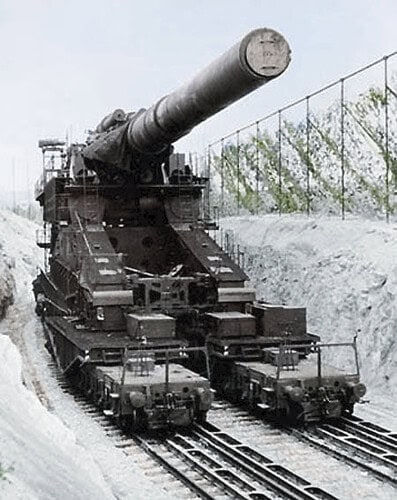
"Schwerer Gustav" by Cassowary Colorizations is licensed under BY 2.0.
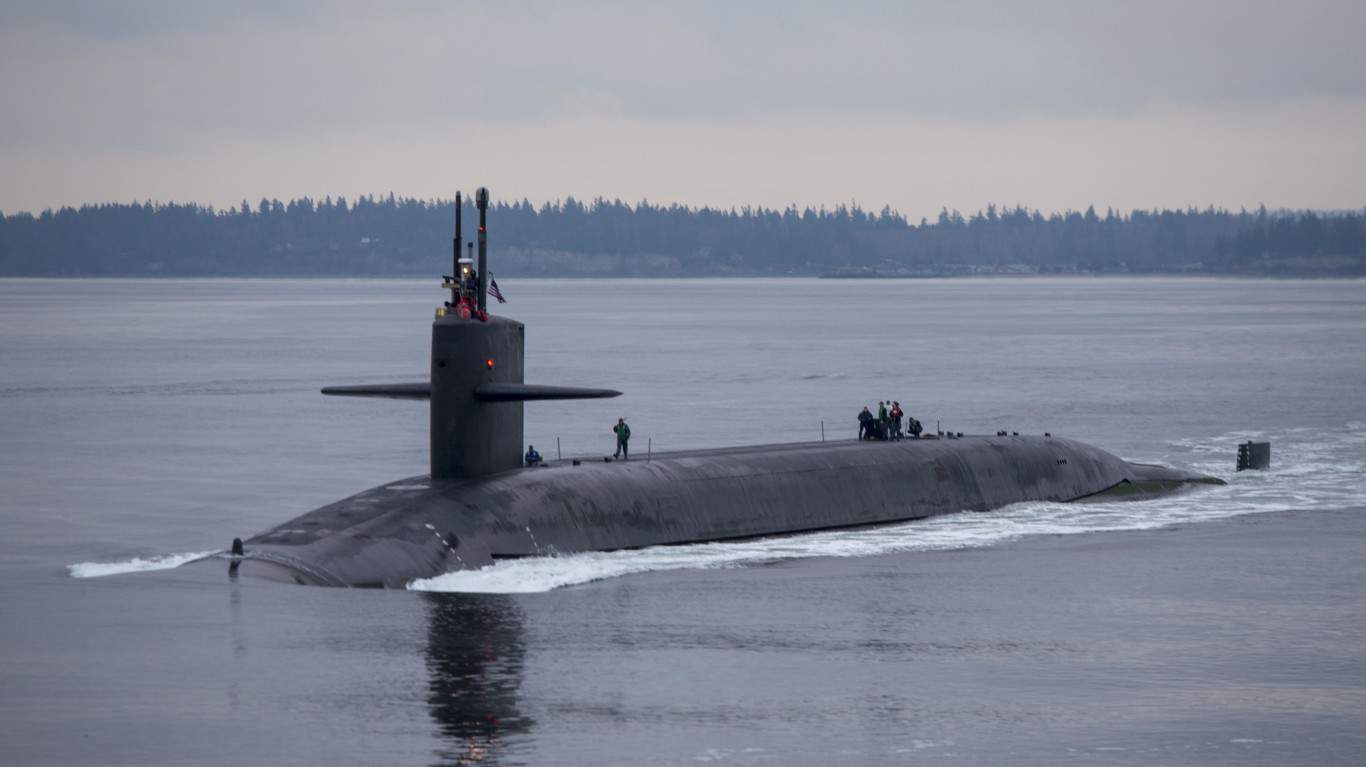
usnavy / Flickr
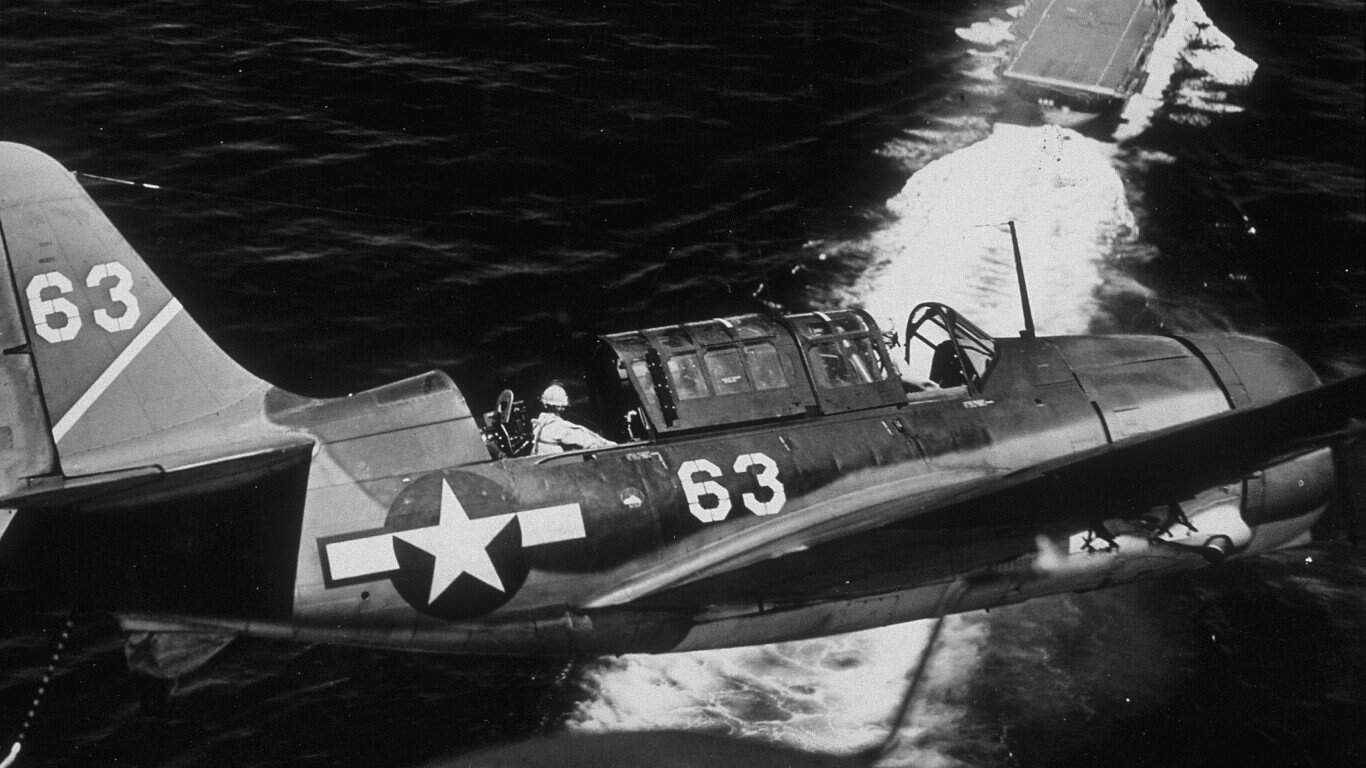
MPI / Archive Photos via Getty Images
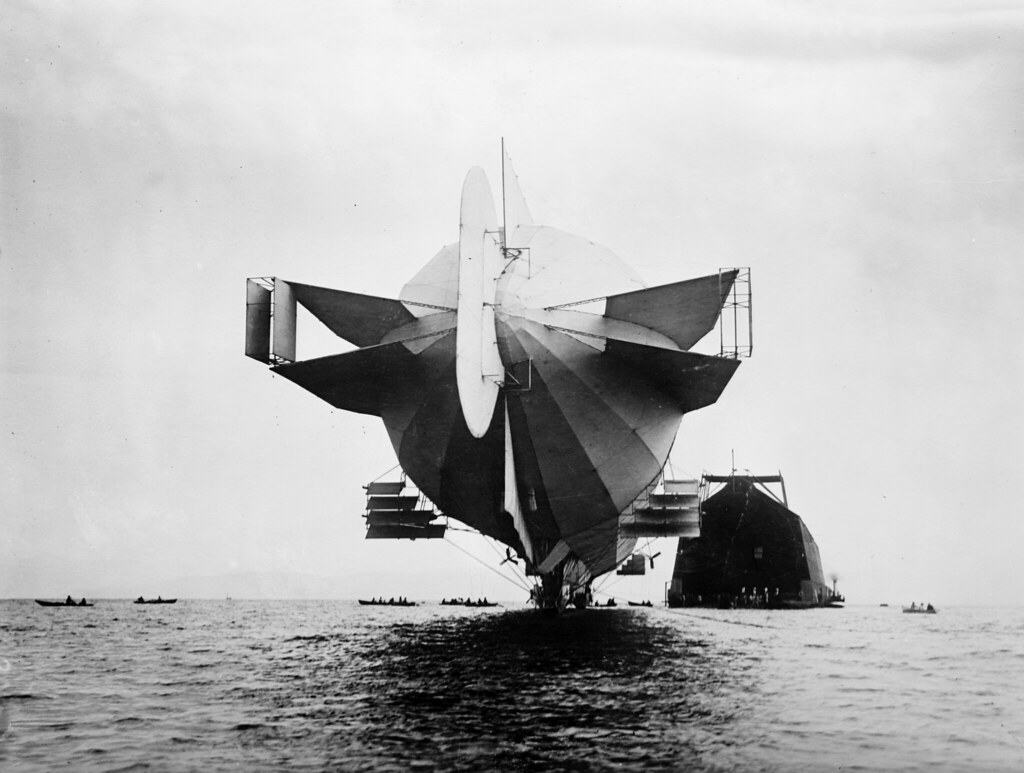
"Stern of Zeppelin LZ-4 airship, 1908" by trialsanderrors is licensed under BY 2.0.
Bundesarchiv, Bild 146-1989-039-16A / CC BY-SA 3.0



8 Wild Military Projects That Sound Like Science Fiction
Military history is full of weapons that sound as if somebody skipped a few steps between a sketchbook and a science-fiction movie. Giant orbital mirrors, nuclear-powered cruise missiles, atomic land mines, aircraft carriers made from ice. Governments really did spend time and money exploring all of them.
Not every project on this list was purely theoretical. Some reached the prototype stage, a few were actually built, and a couple even entered military service before the idea behind them was abandoned. What they have in common is ambition. These were attempts to solve enormous military problems with technology that was expensive, impractical, dangerous, ahead of its time, or some combination of all four.
What These Projects Tell Us
The strangest part of these projects is how differently they ended. The Sun Gun never had a realistic path to construction. Project Pluto proved its engine could work. Habakkuk reached large-scale testing. The T-15 reshaped the original design of a Soviet nuclear submarine before being dropped. Schwerer Gustav actually fired in combat, while Akron and Macon spent years proving that flying aircraft carriers were technically possible.
That is what makes experimental military history so interesting. The dividing line between an absurd idea and a real weapon is not always where you expect it to be. Sometimes a project disappears after a few sketches. Sometimes engineers get all the way to a working prototype before discovering that the simpler solution was better all along.
The Sun Gun: A Giant Mirror in Space
The Sonnengewehr, or Sun Gun, was one of the stranger weapon concepts associated with wartime Germany. Its roots actually predated World War II. Rocket pioneer Hermann Oberth had discussed using a large space-based mirror in the late 1920s, and German researchers later explored a far more destructive version of the idea.
After the war, Allied technical-intelligence officials reported that scientists at the German Army research center at Hillersleben had considered placing an enormous reflector thousands of miles above Earth. The proposed mirror would focus sunlight onto the surface below. German researchers claimed a sufficiently large version might generate enough heat to burn a large area or even boil water on an enormous scale.
There was one rather significant problem: Germany was nowhere close to being able to build it. The plan required an orbital station, a reflector measured in kilometers, reliable spaceflight, precision guidance, and an understanding of orbital operations decades beyond anything available during the war. The German scientists questioned after the war reportedly estimated that such a system could still be 50 to 100 years away. The Sun Gun never became more than an extraordinarily ambitious concept.
Project Pluto: A Nuclear-Powered Cruise Missile
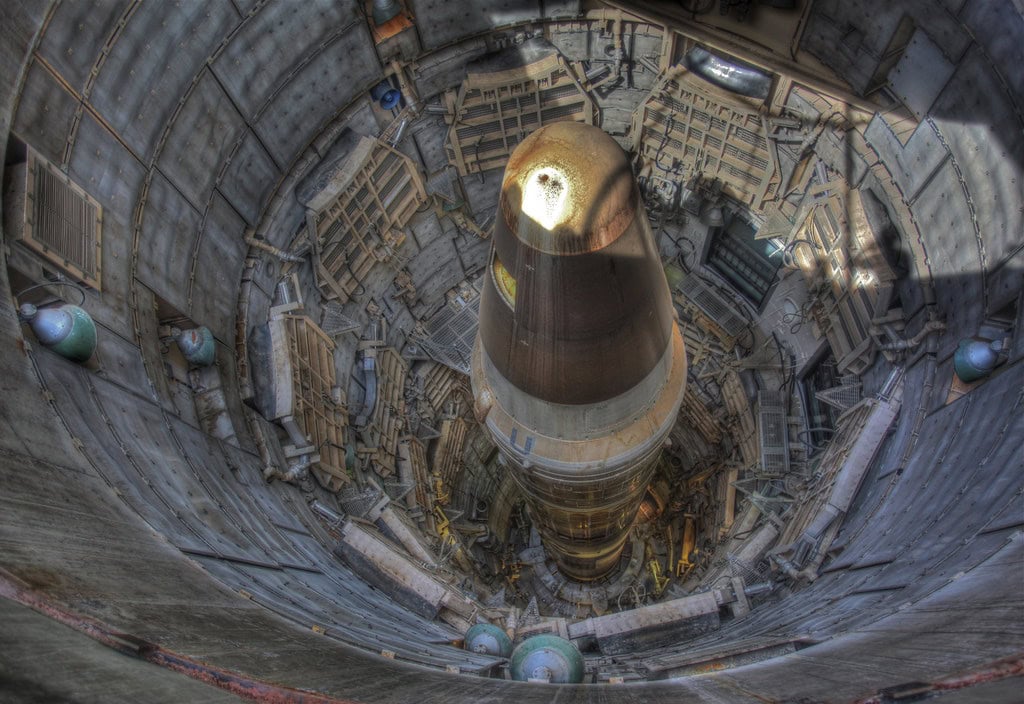
The early Cold War produced some weapons concepts that make ordinary nuclear missiles look almost restrained. Project Pluto began in 1957 as a U.S. effort to develop a nuclear ramjet engine capable of powering a low-flying supersonic cruise missile for many hours.
The missile concept associated with Pluto became known as SLAM, short for Supersonic Low Altitude Missile. Instead of relying on conventional fuel for its entire flight, air would pass through an onboard nuclear reactor, heat up, and rush out the back to provide thrust. The proposed missile could fly long distances at low altitude while carrying nuclear weapons to multiple targets.
Unlike plenty of Cold War ideas that never left paper, the nuclear engine actually worked on the ground. Lawrence Livermore built the Tory II-A experimental reactor and successfully tested it at the Nevada Test Site in 1961. The more advanced Tory II-C followed and successfully operated in 1964 at roughly 500 megawatts of power.
The reactor was open-cycle, so radioactive material in its exhaust and the consequences of operating such a missile were serious concerns. But the common description of Pluto as a missile deliberately designed to circle enemy territory for months spraying radiation over everything is an exaggeration. Livermore described the intended endurance in terms of many hours, not months.
Project Pluto ended in 1964. The technology had worked well enough to prove that a nuclear ramjet was possible, but the military never committed to turning it into an operational weapon. By then, ballistic missiles offered a far simpler way to deliver nuclear warheads across intercontinental distances without building a flying nuclear reactor that had to survive an entire mission at low altitude.
Blue Peacock: Britain's Nuclear Land Mine
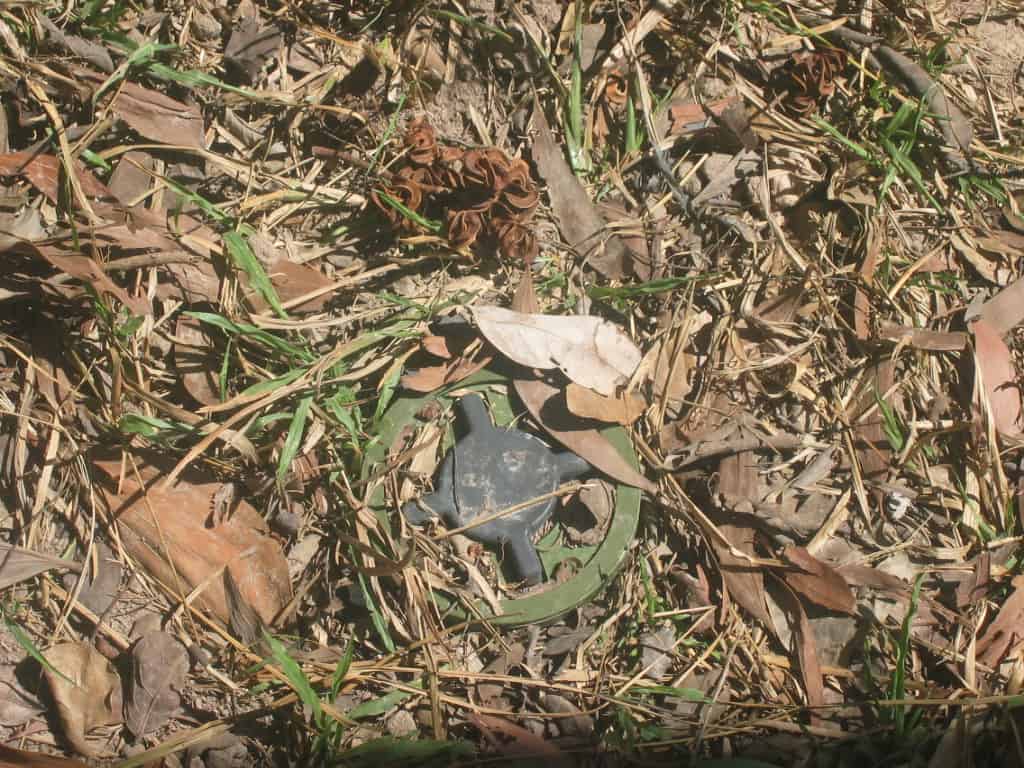
If Soviet forces had pushed into Western Europe during the 1950s, Britain considered an extraordinary way to slow them down: bury nuclear weapons in West Germany and detonate them in the path of the advance.
The project was called Blue Peacock. Developed during the 1950s, the weapon was essentially a massive atomic demolition charge designed to be buried or submerged in the North German Plain. Each weapon carried a roughly 10-kiloton nuclear warhead and could be detonated remotely, by a timer, or under certain anti-tampering conditions.
The British Army went far enough to order 10 Blue Peacocks in 1957. The problem was fairly obvious even by Cold War standards. Britain was proposing to contaminate allied territory with nuclear fallout in order to deny that same territory to an invading army. The political and environmental consequences helped bring the project to an end in 1958.
Then there were the chickens. Engineers worried that components inside a buried weapon might become too cold during a German winter. A 1957 proposal suggested putting live chickens inside the casing with enough food and water to survive for roughly a week. Their body heat could help keep the equipment warm. It sounds exactly like an April Fool's joke, which became especially awkward when the documents were publicized on April 1, 2004. It was real, although the chicken heater remained a proposal rather than an operational feature.
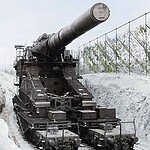
Schwerer Gustav: The 1,350-Ton Railway Gun
Unlike most of the projects here, Schwerer Gustav was not simply dreamed up and abandoned. Nazi Germany actually built the enormous 80-centimeter railway gun, hauled it across Europe, assembled it in the field, and fired it in combat.
Krupp developed the weapon to attack extraordinarily heavy fortifications. Fully assembled, it weighed roughly 1,350 metric tons and required two parallel railway tracks to support it. Its largest armor-piercing shells weighed about seven tons. Despite all that machinery, its maximum range was measured in tens of miles, not hundreds.
The gun was used during the 1942 siege of Sevastopol in Crimea, where it fired fewer than 50 combat rounds. That alone required a huge logistical operation involving special railway construction, support trains, hundreds of crew members, and thousands of additional personnel involved in preparing and protecting the firing position.
That was the fundamental problem with the weapon. Schwerer Gustav could hit heavily fortified targets, but deploying it took weeks and consumed enormous resources for a gun that was difficult to move and vulnerable whenever Germany did not completely control the surrounding area. By 1945, German forces destroyed the weapon rather than allow advancing Allied troops to capture it intact.
Schwerer Gustav was therefore less a secret weapon that never happened than a demonstration of what happens when a military project actually gets built despite nearly every practical argument against it.
T-15: The Soviet Union's Giant Nuclear Torpedo
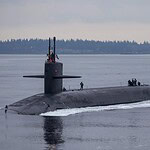
Early in the Cold War, Soviet planners considered giving their first nuclear-powered submarine one truly enormous weapon. The T-15 was a nuclear-armed torpedo intended for attacks on major naval bases, ports, and other coastal targets.
The proposed torpedo was roughly 1.55 meters in diameter, about 24 meters long, and around 40 tons. That made it so large that the original Project 627 submarine design could carry only one T-15, along with a pair of conventional torpedo tubes for self-defense. The torpedo's range was only around 40 kilometers, meaning a submarine would have to get dangerously close to an enemy coast before firing it.
The T-15 is often described online as a weapon specifically designed to create a gigantic radioactive tsunami. The historical record is less tidy. Soviet accounts clearly describe a thermonuclear torpedo for destroying coastal targets and naval bases through an underwater nuclear explosion, but the tsunami narrative is frequently mixed together with physicist Andrei Sakharov's later thoughts about a separate high-yield torpedo concept.
Soviet naval experts ultimately rejected the T-15 arrangement. Its enormous size severely limited the submarine's normal combat usefulness, while its short range made the attack extremely risky. By the mid-1950s, Project 627 was redesigned around conventional-size 533-millimeter torpedo tubes, which could also accommodate the smaller nuclear-capable T-5 weapon under development.
Project Habakkuk: An Aircraft Carrier Made of Ice
During the Battle of the Atlantic, Allied convoys faced a dangerous stretch of ocean that land-based patrol aircraft could not reliably cover. British planners responded with one of the war's strangest engineering ideas: build an enormous floating airfield largely from frozen material.
Project Habakkuk centered on pykrete, a mixture of ice reinforced with wood pulp. Compared with ordinary ice, the material was stronger and slower to melt. In theory, a massive pykrete vessel could provide an aircraft base in the middle of the Atlantic without consuming the same amount of conventional shipbuilding material as a steel carrier.
The idea was taken seriously. Canada became heavily involved in the research, and a roughly 1,000-ton refrigerated test structure was built on Patricia Lake in Alberta to study construction, insulation, and cooling. Researchers also tested the properties of pykrete itself. The project advanced well beyond someone simply drawing an ice carrier on a napkin.
The engineering requirements eventually caught up with the idea. A full-size vessel would still need extensive insulation, refrigeration equipment, piping, steel, and enormous investment. At the same time, radar improved, escort carriers became more available, new bases opened, and longer-range aircraft helped close the mid-Atlantic air gap that Habakkuk had been intended to solve.
The project was abandoned before a full-size ship could be built. The strange part is that the ice was not really the fatal flaw. The bigger problem was that by the time engineers worked out how much infrastructure would be required to keep the thing frozen, more conventional technology was already solving the original problem.
USS Akron and Macon: Flying Aircraft Carriers That Really Existed
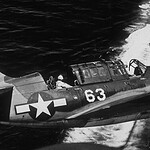
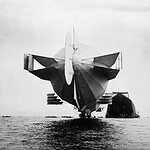
The flying aircraft carrier is another idea that sounds much more fictional than it really was. The U.S. Navy did not merely test the concept between the world wars. It commissioned two enormous rigid airships designed to carry and recover airplanes while airborne.
USS Akron and its sister ship USS Macon carried small Curtiss F9C Sparrowhawk aircraft inside internal hangars. Pilots launched from and returned to the airships using a retractable trapeze system. Akron demonstrated airborne recovery of aircraft in 1932, while Macon later used its aircraft during fleet scouting exercises in the Pacific.
The system worked, which makes the end of the program more interesting. The weak link was not necessarily the airplane-handling mechanism. It was the enormous rigid airships themselves. Akron was lost in a storm off New Jersey in April 1933, killing 73 people. Macon was lost off California in February 1935 after structural damage during bad weather. Two crew members died.
After the loss of both ships, the Navy's experiment with rigid flying aircraft carriers was effectively finished. Conventional aircraft continued getting faster and longer-legged, while surface carriers proved far more practical. For a brief period in the 1930s, though, the United States genuinely had aircraft carriers floating through the sky.
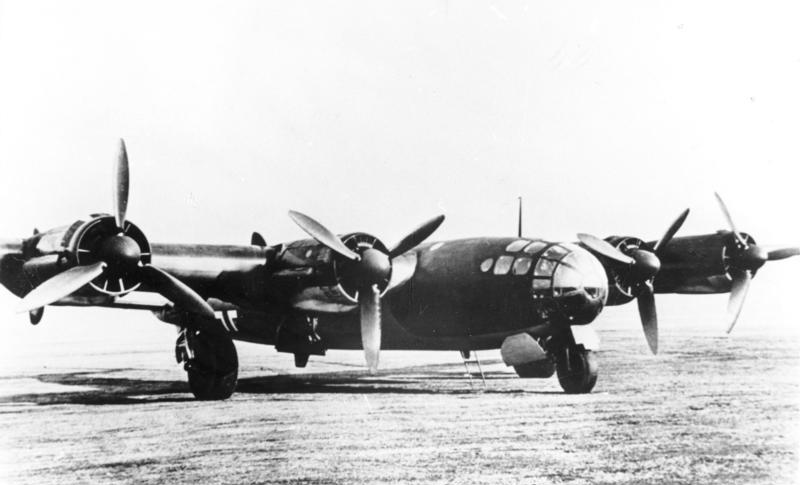
Amerika Bomber: Germany's Plan to Reach the United States
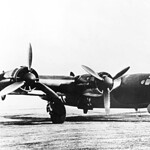
Nazi Germany's Amerika Bomber program was exactly what the name suggests: an effort to develop a bomber with enough range to strike targets in the United States from Europe.
The idea was not simply a desperate proposal dreamed up during Germany's final months. German work on extremely long-range bombers had begun earlier, and the Luftwaffe formalized requirements for an aircraft capable of reaching the United States during the war. Several manufacturers explored designs, including Messerschmitt, Junkers, Focke-Wulf, and Heinkel.
At least one of those airplanes went far beyond the drawing board. The Messerschmitt Me 264 prototype made its first flight on Dec. 23, 1942. Junkers also developed the six-engine Ju 390, another very long-range aircraft associated with the program. Neither type became an operational transatlantic bomber.
Building an aircraft that could fly thousands of miles across the Atlantic, carry a useful bomb load, survive enemy defenses, and then return to Europe was an enormous engineering challenge. Germany was also increasingly short of fuel, materials, manufacturing capacity, and aircraft-production time as the war continued. Fighters and other weapons needed for the immediate defense of Germany took priority.
The Amerika Bomber therefore came much closer to reality than the phrase "paper project" suggests, but it never produced a combat-ready aircraft capable of routinely bombing the continental United States. The Me 264 remains the clearest evidence of how seriously Germany explored the idea: a prototype actually flew, but the strategic concept never became an operational weapon.