
Senior Airman Keith James, Public domain, via Wikimedia Commons

U.S. Navy photo by Mass Communication Specialist 2nd Class Jackson Adkins, Public domain, via Wikimedia Commons
telegraham / E+ via Getty Images

Public Domain / Wikimedia Commons

U.S. Air Force File Photo., Public domain, via Wikimedia Commons

U.S. Navy photo by General Dynamics Electric Boat, Public domain, via Wikimedia Commons

US Air Force / Ministerie van Defensie, CC0, via Wikimedia Commons

Staff Sgt. Gabriela Garcia, Public domain, via Wikimedia Commons

BGarf / Shutterstock.com

United States Air Force Master Sgt. Bob Jennings, Public domain, via Wikimedia Commons

U.S. Navy photo by Journalist 2nd Class Patrick Reilly, Public domain, via Wikimedia Commons

US Navy, Public domain, via Wikimedia Commons

Staff Sgt. Nicole Dykstra, Public domain, via Wikimedia Commons

Trevor Cokley, Public domain, via Wikimedia Commons

U.S. Army photo by Capt. Jesse Paulsboe, Public domain, via Wikimedia Commons

John Kowalski, Public domain, via Wikimedia Commons

U.S. Navy photo by Clark Pierce, Public domain, via Wikimedia Commons

U.S. Air Force Master Sgt. Michael Jackson, Public domain, via Wikimedia Commons

U.S. Navy photo, Public domain, via Wikimedia Commons

U.S. Department of Defense Current Photos, Public domain, via Wikimedia Commons

Petty Officer 2nd Class Jackson Adkins, Public domain, via Wikimedia Commons

Airman 1st Class Zachary Foster, Public domain, via Wikimedia Commons

Public domain, via Wikimedia Commons

Balon Greyjoy, CC0, via Wikimedia Commons




23 Military Machines With Jaw-Dropping Price Tags
How much does it cost to build a fighter jet that can evade radar, a submarine that can stay hidden beneath the ocean, or an aircraft carrier large enough to operate an entire fleet of planes? In some cases, the answer is billions of dollars. Modern military technology is incredibly sophisticated, but developing, building, and maintaining that equipment comes with an equally impressive price tag.
The United States spends hundreds of billions of dollars annually on national defense, with a significant portion supporting weapons, aircraft, ships, vehicles, and technological development. Some military machines cost more than a luxury skyscraper, while others represent decades of research and engineering. And the purchase price is often only the beginning. Fuel, maintenance, upgrades, training, and replacement parts can add substantially to the lifetime cost.
To explore some of the military's most expensive and technologically advanced equipment, 24/7 Tempo reviewed publicly available information from the U.S. Department of Defense, Government Accountability Office, military service branches, congressional research reports, and defense manufacturers. These 23 examples include aircraft, warships, submarines, helicopters, missiles, and specialized systems used by the United States and other countries.
Prices are provided where reasonably reliable public figures are available. Because military contracts frequently include research, equipment, support, and maintenance, individual unit prices are not always directly comparable. Historical estimates are identified, and some systems have no reliable publicly disclosed standalone cost. The list is presented in no particular order.
Gerald R. Ford-Class Aircraft Carrier
Type: Nuclear-powered aircraft carrier
Manufacturer: Huntington Ingalls Industries, Newport News Shipbuilding
Cost: Approximately $13.3 billion for the USS Gerald R. Ford
Imagine an enormous floating airport capable of carrying dozens of military aircraft and thousands of personnel across the world's oceans. That's essentially what the Gerald R. Ford-class aircraft carrier is. Measuring approximately 1,092 feet long and displacing around 100,000 tons, these nuclear-powered ships are among the largest warships ever built. Their advanced technology includes electromagnetic aircraft launch systems, improved radar, and redesigned flight deck operations intended to support more efficient aircraft launches and recoveries.
That technology doesn't come cheap. According to the Congressional Research Service, the first ship in the class, USS Gerald R. Ford, had a final procurement cost of approximately $13.3 billion. That figure doesn't include all the research and development expenses associated with the larger program. Additional Ford-class carriers are being built or planned, making this one of the Navy's most expensive long-term investments.
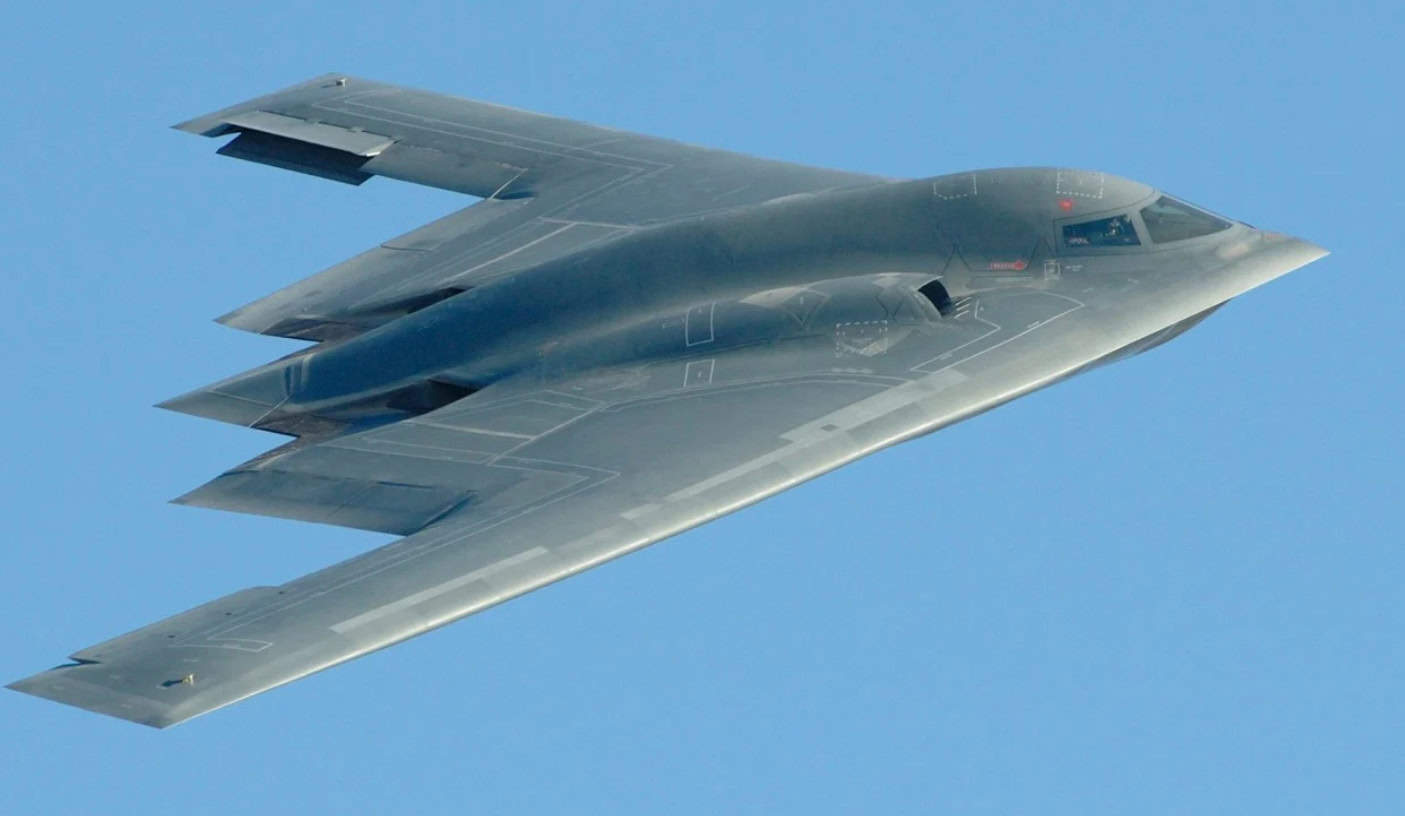
B-2 Spirit
Type: Stealth strategic bomber
Manufacturer: Northrop Grumman
Cost: Approximately $1.157 billion per aircraft in 1998 dollars
With its distinctive flying-wing design, the B-2 Spirit looks like something from a science fiction movie. First introduced during the 1990s, the bomber was developed to penetrate sophisticated enemy air defenses while carrying conventional or nuclear weapons. Its unusual shape, specialized materials, and other design features reduce the aircraft's visibility to certain detection systems, making it much harder to track than a conventional bomber.
The B-2 has a wingspan of approximately 172 feet, a two-person crew, and the ability to fly intercontinental missions with aerial refueling. According to the U.S. Air Force, its unit cost was approximately $1.157 billion in fiscal 1998 dollars. That historical estimate shouldn't be mistaken for the cost of building one today. With an extremely limited production run and demanding maintenance requirements, the B-2 remains one of the most expensive military aircraft ever fielded.
V-22 Osprey
Type: Tiltrotor military aircraft
Manufacturers: Bell Textron and Boeing
Cost: Roughly $100 million or more in historical procurement estimates, depending on variant and accounting method
Is it a helicopter or an airplane? The V-22 Osprey is a little of both. Its large rotors can point upward for vertical takeoffs and landings, then rotate forward to allow the aircraft to fly more like a conventional airplane. This unusual design gives the Osprey capabilities that would otherwise require different types of aircraft. It can transport military personnel and equipment over considerable distances without needing a traditional runway.
Developed jointly by Bell and Boeing, the Osprey has served with the Marine Corps, Navy, and Air Force. However, its advanced technology has also brought significant engineering and safety challenges. Following several fatal accidents, the aircraft faced groundings and operational restrictions. A 2026 Government Accountability Office review found that additional action was needed to address safety risks and improve information sharing across military operators. The Osprey remains an unusual example of both military innovation and the difficulty of making complex new technology consistently reliable.
Air Force One
Type: Presidential transport aircraft
Manufacturer: Boeing
Cost: Original replacement contract of approximately $3.9 billion for two VC-25B aircraft
Air Force One is more than a luxurious airplane. It's a flying presidential headquarters equipped with specialized communications, security systems, and facilities designed to allow the president to conduct official business while traveling. Technically, the name Air Force One is the radio call sign used by any Air Force aircraft carrying the president, although most people associate it with the specially modified Boeing 747 aircraft traditionally used for presidential travel.
The longtime presidential fleet consists of two specially modified VC-25A aircraft, while a costly replacement effort has been underway. In 2018, the Air Force awarded Boeing a $3.9 billion contract to develop and deliver two new VC-25B presidential aircraft, although the program subsequently experienced delays and additional expenses. A separate interim aircraft was also delivered for commissioning in 2026. Unlike an ordinary commercial airliner, these aircraft must support specialized communications, protection, and government operations, helping explain why the final price is so extraordinary.
Virginia-Class Submarine
Type: Nuclear-powered attack submarine
Manufacturers: General Dynamics Electric Boat and Huntington Ingalls Industries
Cost: Approximately $5 billion per submarine under FY2026 procurement estimates
Some of the military's most sophisticated machines are designed to spend most of their time hidden beneath the ocean. Virginia-class submarines are nuclear-powered attack vessels built for missions including intelligence gathering, surveillance, anti-submarine warfare, and strikes against targets on land. Their advanced sonar equipment and quieting technologies help crews locate potential threats while reducing the chances of being detected themselves.
Newer versions of the Virginia class can incorporate a Virginia Payload Module, which significantly increases the number of Tomahawk cruise missiles a submarine can carry. That additional capability comes at a steep price. According to the Congressional Research Service, Virginia-class boats equipped with the module have an estimated procurement cost of approximately $5 billion each under the Navy's fiscal 2026 budget submission, assuming a two-boat annual procurement rate. Costs have also risen as shipyards struggle with production schedules and growing backlogs.
F-35 Lightning II
Type: Fifth-generation multirole fighter
Manufacturer: Lockheed Martin
Cost: Approximately $92 million for an F-35A in the latest reported production lots
The F-35 Lightning II is one of the most ambitious military aircraft programs ever undertaken. Designed to combine stealth, advanced sensors, and sophisticated communications into a single fighter platform, the aircraft can conduct air-to-air combat, attack ground targets, and share battlefield information with friendly forces. Three primary versions serve different needs: the conventional F-35A, the short-takeoff and vertical-landing F-35B, and the aircraft-carrier-capable F-35C.
Although the original source cited a price of $122 million per aircraft, modern costs vary significantly by version and production lot. Estimates reported in September 2026 place the base price of an F-35A at approximately $92 million for production Lots 18 and 19, with the other variants costing more. The overall program's expenses extend far beyond the price of individual jets, incorporating development, software, upgrades, training, and long-term maintenance. These costs have made the F-35 one of the most closely scrutinized defense acquisitions in American history.
CH-53K King Stallion
Type: Heavy-lift military helicopter
Manufacturer: Sikorsky, a Lockheed Martin company
Cost: Up to $10.9 billion for a 2025 production agreement covering as many as 99 helicopters
The CH-53K King Stallion is a helicopter built to perform the kind of heavy lifting that would overwhelm many other aircraft. Developed for the Marine Corps, it can transport troops, supplies, vehicles, and large loads in challenging operating conditions. Three powerful engines, enormous rotor blades, and modern flight controls allow the helicopter to move heavy equipment between ships and shore or into locations that lack conventional airfields.
The King Stallion is also an expensive piece of machinery. In September 2025, the Navy announced a five-year production contract with Sikorsky valued at up to approximately $10.9 billion for a maximum of 99 helicopters. That contract value should not be mistaken for an all-inclusive, identical price for each aircraft. The program has also continued to secure separate engine and support contracts, including a $1.4 billion agreement announced in January 2026. For the military, the attraction is the ability to move exceptionally heavy equipment quickly without relying entirely on ground transportation.
Chengdu J-20 Mighty Dragon
Type: Fifth-generation stealth fighter
Manufacturer: Chengdu Aerospace Corporation
Cost: No independently verified public unit price
Military aviation technology isn't limited to the United States. China's Chengdu J-20, commonly known as the Mighty Dragon, is a twin-engine stealth fighter developed for the People's Liberation Army Air Force. Its distinctive angular design, internal weapons bays, and advanced onboard electronics are intended to help the aircraft operate in contested airspace while reducing radar detection.
The J-20 has become an important symbol of China's expanding military aviation capabilities. However, many details surrounding its production costs and operational performance are difficult to verify independently. Although published estimates sometimes place its unit price at more than $100 million, those figures should not be treated as confirmed. Claims about its exact maximum speed, climbing performance, and weapons configuration also vary among public sources. What is clear is that developing a modern stealth fighter requires substantial investment in engines, materials, sensors, software, and manufacturing infrastructure.
C-17 Globemaster III
Type: Military transport aircraft
Manufacturer: Boeing, originally developed by McDonnell Douglas
Cost: $202.3 million per aircraft in fiscal 1998 dollars
When the military needs to move enormous quantities of equipment around the world, the C-17 Globemaster III is one of the aircraft capable of handling the job. This massive transport plane can carry as many as 102 troops or transport up to approximately 170,900 pounds of cargo, depending on the mission. Its cargo compartment can accommodate oversized military vehicles, equipment, and humanitarian relief supplies.
One of the C-17's most impressive features is its ability to operate from relatively short or austere runways, allowing it to deliver supplies closer to areas where they're needed. The Air Force lists a unit cost of $202.3 million in fiscal 1998 dollars, making this a historical accounting figure rather than a current production price. The last C-17 was produced in 2015, but existing aircraft continue to support military transport and humanitarian operations around the world.
Arleigh Burke-Class Destroyer
Type: Guided-missile destroyer
Manufacturers: Bath Iron Works and Ingalls Shipbuilding
Cost: Approximately $2.7 billion per newer ship under FY2026 estimates
Aircraft carriers might attract more attention, but the destroyers accompanying them perform some of the fleet's most important defensive and offensive missions. Arleigh Burke-class destroyers are heavily armed warships equipped to respond to threats from aircraft, missiles, submarines, and enemy vessels. Their weapons can include Tomahawk cruise missiles, defensive interceptors, torpedoes, and naval guns.
The class has evolved considerably since its first ship entered service in 1991. Newer Flight III destroyers incorporate significantly improved radar systems and other upgrades designed to handle modern threats. Those improvements have also driven up construction costs. Congressional estimates place newer Arleigh Burke-class ships at approximately $2.7 billion each when purchased at a rate of two per year. The continued construction of these vessels reflects their central role in the Navy's long-term plans, even as their individual price tags grow.
E-2D Advanced Hawkeye
Type: Airborne early warning and command aircraft
Manufacturer: Northrop Grumman
Cost: A 2014 contract totaled approximately $3.64 billion for 25 aircraft
Not every expensive military aircraft is designed to drop bombs or shoot down enemy fighters. The E-2D Advanced Hawkeye is effectively a flying command center, using powerful radar and communications equipment to monitor large areas of airspace. Its most recognizable feature is the circular radar dome mounted above the fuselage, which gives the aircraft an unmistakable appearance.
Operating from aircraft carriers, the Hawkeye helps detect approaching aircraft and missiles while coordinating information with ships and other military units. The Navy awarded Northrop Grumman a $3.643 billion multiyear contract in 2014 covering 25 E-2D aircraft, although dividing that total by the number of planes does not necessarily produce a complete modern unit price. The military continues improving the aircraft's capabilities, including an advanced precision landing system supported by a contract announced in 2026. Its greatest value lies in giving commanders more information and additional time to respond to threats.
Mine-Resistant Ambush Protected Vehicle
Type: Armored military vehicle
Manufacturers: Multiple contractors, including Oshkosh Defense
Cost: Varies widely by model and configuration, from hundreds of thousands to more than $1 million
Military vehicles don't have to cost billions to incorporate potentially lifesaving technology. Mine-Resistant Ambush Protected vehicles, commonly known as MRAPs, were developed to help protect troops from roadside bombs, mines, and ambushes. Many feature a V-shaped hull designed to redirect some of the force from explosions away from the passenger compartment, along with reinforced armor and other protective equipment.
MRAPs became particularly important during American military operations in Iraq and Afghanistan, where improvised explosive devices posed a serious threat to personnel traveling by road. Different models were produced by multiple manufacturers, including the Oshkosh M-ATV. Although their protective designs can significantly improve survivability, these vehicles are not completely explosion-proof or bulletproof. Their prices also vary considerably depending on size, armor, electronics, and specialized equipment. Large-scale purchases made the broader MRAP effort a substantial military investment, even though individual vehicles cost far less than aircraft or warships.
F-22 Raptor
Type: Fifth-generation stealth fighter
Manufacturers: Lockheed Martin and Boeing
Cost: $143 million per aircraft in the Air Force's published unit-cost figure
The F-22 Raptor was designed to give American pilots a major advantage in air-to-air combat. Combining stealth technology, exceptional maneuverability, advanced radar, and powerful engines, the fighter can perform high-speed missions while reducing its exposure to enemy detection systems. One particularly impressive feature is its ability to cruise at supersonic speeds without continuously relying on fuel-hungry afterburners.
The Raptor entered operational service in 2005, but its production run was relatively short. Manufacturing ended after the military decided to stop buying new aircraft, leaving the Air Force to maintain and modernize the existing fleet. The Air Force lists a unit cost of approximately $143 million, although broader calculations incorporating research and development can produce much higher figures. The F-22 remains an important part of America's air-combat capabilities, but the expense of developing and maintaining such an advanced aircraft illustrates the financial challenges surrounding cutting-edge military technology.
AH-64E Apache
Type: Attack helicopter
Manufacturer: Boeing
Cost: Varies by contract, particularly between newly built and remanufactured helicopters
Few helicopters are as recognizable as the Apache. Developed to support ground forces and attack armored targets, the AH-64 has become one of the most familiar aircraft in modern military aviation. The upgraded AH-64E version incorporates improved electronics, communications, and targeting systems, allowing crews to operate in demanding environments and coordinate more effectively with other military units.
The Apache carries a 30-millimeter cannon and can deploy missiles and rockets against a variety of targets. Its two-person crew includes a pilot and a second operator responsible for weapons and other mission tasks. The aircraft's cost depends heavily on whether the military purchases an entirely new helicopter or upgrades an older model to the AH-64E configuration. Those differences make a single universal price misleading. Apache helicopters remain in service with the United States and numerous allied countries, with continuing investment in upgrades and support.
Trident II D5 Missile
Type: Submarine-launched ballistic missile
Manufacturer: Lockheed Martin and major subcontractors
Cost: Individual contemporary missile costs are difficult to isolate; a modernization contract modification announced in 2026 was worth $850 million
Some military weapons are designed primarily to prevent a conflict from beginning. The Trident II D5 ballistic missile is a central component of the United States' sea-based nuclear deterrent, carried aboard specially equipped ballistic-missile submarines. The system is also used by the United Kingdom. Its ability to be launched from submarines operating at sea makes it an important part of both countries' strategic defense planning.
Unlike conventional weapons intended for routine battlefield use, the Trident system is part of a broader effort to discourage nuclear attacks by maintaining a credible retaliatory capability. The missiles have undergone repeated tests and modernization efforts, and future upgrades are intended to extend their service lives. In July 2026, Lockheed Martin announced an $850 million Navy contract modification supporting development of the Trident II D5 Life Extension 2 program. That figure represents modernization work rather than the price of one missile, illustrating why simple per-unit estimates can be misleading for strategic weapons programs.
P-8A Poseidon
Type: Maritime patrol and anti-submarine aircraft
Manufacturer: Boeing
Cost: Approximately $202 million in historical Navy program-average procurement figures
At first glance, the P-8A Poseidon could be mistaken for an ordinary passenger jet. That's because the military aircraft is based on Boeing's familiar 737 platform. Beneath its relatively conventional appearance, however, is an advanced maritime patrol aircraft designed to search for submarines, track vessels, and gather intelligence over enormous stretches of ocean.
The Poseidon carries specialized radar, sensors, and communications equipment, and it can deploy sonobuoys to help detect submarines beneath the surface. Depending on the mission, it can also carry torpedoes and anti-ship weapons. The Navy developed the aircraft to replace the aging P-3 Orion and has continued investing in new capabilities and upgrades. Historical budget documents place the program's average procurement cost at approximately $202 million per aircraft, although actual contract prices vary. Its role is particularly important in an era when submarines and naval forces remain central to military competition.
KC-46A Pegasus
Type: Aerial refueling and transport aircraft
Manufacturer: Boeing
Cost: Approximately $159 million per aircraft in the Air Force's published reference figure
Even the most advanced fighter jet eventually runs low on fuel. That's where aircraft like the KC-46A Pegasus become essential. Based on Boeing's 767 commercial airliner, this military tanker can transfer fuel to other aircraft while flying, extending their operating range and allowing missions that might otherwise require frequent landings.
The Pegasus can also transport military personnel, cargo, and patients requiring medical evacuation. According to the Air Mobility Command, the aircraft has a maximum takeoff weight of approximately 415,000 pounds and a published unit cost of $159 million. Its development has faced technical problems, particularly involving systems used to monitor and conduct aerial refueling. Despite those challenges, the military continues relying on the KC-46A as part of its effort to modernize the aging tanker fleet and support aircraft operations around the world.
Aegis Weapon System
Type: Naval combat and missile-defense system
Primary contractor: Lockheed Martin
Cost: Varies substantially by ship, configuration, and upgrade program
Modern warships rely on more than powerful missiles to defend themselves. They also need sophisticated systems capable of detecting potential threats, tracking multiple objects, and helping crews make split-second decisions. The Aegis Weapon System combines radar, computers, communications, and weapons-control technology into an integrated platform that supports those tasks.
Originally developed for the U.S. Navy, Aegis has evolved over decades and is installed aboard multiple classes of American and allied warships. Depending on the ship and equipment, the system can help coordinate responses to aircraft, missiles, and other threats. Some configurations also contribute to ballistic-missile defense. Because Aegis includes numerous components and continues receiving upgrades, a single standalone price doesn't accurately represent its cost. Its complexity is part of what makes it so valuable, allowing ships to combine information from advanced sensors with the weapons needed to respond.
UH-60 Black Hawk
Type: Utility military helicopter
Manufacturer: Sikorsky, a Lockheed Martin company
Cost: Generally tens of millions of dollars, depending on model and contract
The Black Hawk is one of the most recognizable military helicopters in the world. Introduced during the late 1970s, the UH-60 was designed as a versatile aircraft capable of transporting soldiers, moving supplies, and supporting medical evacuation and other missions. Its twin-engine design and ability to operate in challenging environments have helped make it a mainstay of military aviation.
Different versions of the Black Hawk have been adapted for a wide range of military and government uses. Modern UH-60M aircraft incorporate updated engines, avionics, and other improvements compared with older models. Their cost varies depending on equipment and the specific purchase agreement, making historical unit prices poor indicators of what a modern, fully equipped helicopter would cost. Although the Black Hawk is less expensive than many of the sophisticated aircraft and ships on this list, decades of purchases, upgrades, and maintenance have made it a major long-term military investment.
EA-18G Growler
Type: Electronic warfare aircraft
Manufacturer: Boeing
Cost: Approximately $68 million in the Navy's published unit-cost reference
The EA-18G Growler might resemble a conventional fighter jet, but its most important weapons are often electronic rather than explosive. Based on the F/A-18F Super Hornet, the Growler is designed to interfere with enemy radar and communications, helping protect friendly aircraft and forces from detection and attack. Its electronic warfare equipment can disrupt or complicate the operation of hostile systems, giving other military aircraft a better chance of completing their missions.
The aircraft can also carry missiles, including weapons designed to target radar systems. The U.S. Navy lists an approximate unit cost of $68 million, although modern equipment upgrades and support add to the overall expense. The military continues developing improvements, including advanced electronic jamming systems and cockpit technology. While the Growler may not have the public recognition of the F-22 or F-35, its specialized capabilities make it an important part of modern aerial warfare.
C-130J Super Hercules
Type: Tactical military transport aircraft
Manufacturer: Lockheed Martin
Cost: Approximately $75.5 million in fiscal 2017 dollars, according to an Air Force reference figure
The C-130 Hercules family has been transporting troops, supplies, and equipment for generations. The modern C-130J Super Hercules takes that familiar design and adds improved engines, avionics, and performance capabilities. Its four turboprop engines provide the power needed to carry heavy loads while operating from airfields that may be too small or unsuitable for larger jet-powered transports.
The Super Hercules is especially useful for delivering supplies into remote areas, supporting military operations, and helping with disaster relief. Depending on the version, the aircraft can also be adapted for specialized missions. The Air Force has published a unit-cost reference of approximately $75.5 million in fiscal 2017 dollars for the C-130J, although other acquisition reports use different cost definitions and produce different figures. With decades of service behind the broader Hercules family, the C-130J demonstrates how updating a proven aircraft design can provide important capabilities without starting entirely from scratch.
VH-71 Kestrel
Type: Canceled presidential helicopter program
Contractors: Lockheed Martin, AgustaWestland, and Bell
Cost: Nearly $3 billion spent before cancellation in 2009
Not every expensive military project makes it into service. The VH-71 Kestrel was developed as a potential replacement for the helicopters used to transport the president of the United States. Based on the AgustaWestland AW101 helicopter, the planned aircraft would have included specialized communications, security equipment, and other features designed to support presidential travel.
Unfortunately, the project became an expensive example of how quickly military development costs can escalate. According to the Government Accountability Office, the Department of Defense canceled the VH-71 program in June 2009 after spending nearly $3 billion, citing cost growth, delays, and performance concerns. Several completed or partially completed helicopters were subsequently transferred to Canada for use in supporting its helicopter fleet. Although the Kestrel never became the new Marine One, the money spent on its development makes it a notable part of military procurement history.
F/A-18 Hornet and Super Hornet
Type: Multirole carrier-capable fighter aircraft
Manufacturers: McDonnell Douglas and Boeing, with Northrop involved in the original Hornet program
Cost: $67.4 million for an F/A-18E/F Super Hornet in the Navy's FY2021 reference figure
The F/A-18 Hornet family helped define modern carrier-based aviation. Developed to handle both air-to-air combat and attacks against ground targets, these aircraft can perform multiple missions without requiring completely different types of fighters. The original F/A-18 Hornet entered service during the 1980s and was followed by the larger, substantially redesigned F/A-18E/F Super Hornet, which became a major part of the U.S. Navy's carrier air wings.
Super Hornets can carry a variety of missiles and precision-guided weapons while operating from aircraft carriers around the world. The Navy lists a fiscal 2021 unit-cost figure of approximately $67.4 million for the F/A-18E/F, which should not be confused with the cost of the older Hornet variants. The aircraft family has also served with several allied nations. Despite the growing emphasis on stealth fighters, the Super Hornet continues to provide an important combination of flexibility, combat capability, and established carrier operations.