Thinkstock

Shadman Samee / Wikimedia Commons

Public Domain / Wikimedia Commons

aeroman3 / PDM 1.0 (https://creativecommons.org/publicdomain/mark/1.0/)

Public Domain / Wikimedia Commons

SU-22 Fitter - RIAT 2014 by Airwolfhound / BY-SA 2.0 (https://creativecommons.org/licenses/by-sa/2.0/)

falcon_33 / Flickr

Public Domain / Wikimedia Commons

The Iraqi MiG F-7A kill (1/17/91) of Cdr Mark Fox during Desert Storm in a McDonnell Douglas (now Boeing) F/A-18C-25-MC 'Hornet' (BuNo 163508) of VFA-81 by aeroman3 / PDM 1.0 (https://creativecommons.org/publicdomain/mark/1.0/)
Robert Sullivan / Public Domain / Flickr
File:Belarusian Su-24 Fencer at Radom AS 2009.JPG by Bartek Kozłowiec / BY-SA 4.0 (https://creativecommons.org/licenses/by-sa/4.0/)
slezo / Flickr

Shahram Sharifi / Wikimedia Commons

rancho_runner / iStock via Getty Images

US Army CH-47C 'Chinook', Lauda (Ger.) 1973 by W-R-Hesse-Fotos / BY-SA 4.0 (https://creativecommons.org/licenses/by-sa/4.0/)

Robert Sullivan / Public Domain / Flickr

F-4 Phantom II, San Diego, 1995 by euthman / BY-SA 2.0 (https://creativecommons.org/licenses/by-sa/2.0/)







16 Aircraft Types Iran Had Before Operation Epic Fury
Iran went into 2026 with one of the strangest military aviation fleets anywhere in the world. American fighters bought when the Shah was still in power flew alongside Soviet and Russian aircraft, Chinese designs, former Iraqi jets, and helicopters that had already been around for decades.
Then came Operation Epic Fury. U.S. forces began strikes against Iran on Feb. 28, 2026, with Israeli forces also participating in the wider campaign. By the end of 38 days of major combat operations, U.S. Central Command said Iran's air bases, hangars, fuel infrastructure, and other aviation support systems had been heavily degraded.
That makes today's exact Iranian aircraft inventory difficult to pin down. Instead of guessing, this slideshow looks backward. Using FlightGlobal's 2026 World Air Forces directory, here are 16 military aircraft types listed in Iranian service before Operation Epic Fury. The figures are open-source inventory estimates and should not be read as proof that every listed airframe was mission-ready when the war began.
Bell 206 JetRanger
2026 FlightGlobal estimate: Five in Iran's combat-helicopter inventories, plus one additional Air Force training aircraft.
The little Bell 206 is about as far from a frontline fighter as this list gets, but that is exactly what makes Iran's aircraft inventory interesting. FlightGlobal listed two Bell 206s with the Iranian Air Force and three with Army Aviation, along with another Air Force example in the training category.
The American-designed helicopter has long been used around the world for training, observation, liaison, and light utility work. Its continued appearance in Iran's inventory before Operation Epic Fury was another reminder of just how much U.S.-built equipment survived from the pre-1979 era.
RH-53D Sea Stallion
2026 FlightGlobal estimate: Six with the Islamic Republic of Iran Navy.
The original version calls these simply CH-53 Sea Stallions, but Iran's naval helicopters are more specifically RH-53Ds, a version of Sikorsky's S-65 family developed for airborne mine-countermeasure work. Six RH-53Ds were originally built for Iran during the Shah's rule.
FlightGlobal still listed six S-65/RH-53Ds in the Iranian Navy's inventory before Operation Epic Fury. That does not necessarily mean six were fully flightworthy, and open-source evidence about their serviceability has long been murky. With aircraft this old, inventory and readiness are two very different questions.
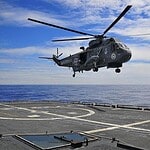
ASH-3D Sea King
2026 FlightGlobal estimate: Eight with the Islamic Republic of Iran Navy.
Iran's Sea Kings belong to the S-61 family and are generally identified as ASH-3Ds. The helicopter was developed primarily for maritime work, including anti-submarine missions, but the enormously successful Sea King family has also served in search-and-rescue, transport, and other naval roles around the world.
These aircraft are another holdover from Iran's pre-revolution military buildup. FlightGlobal listed eight in Iranian naval service immediately before the 2026 conflict, making the Sea King one more Cold War design that somehow remained on the books decades after its original procurement.
Bell 212
2026 FlightGlobal estimate: Nine, including one with the Air Force and eight with the Navy.
The Bell 212 traces its roots to the same Huey family that became one of the defining helicopter designs of the Vietnam era. Its twin-engine arrangement gave it added redundancy, while military operators adapted the basic airframe for transport, utility, search-and-rescue, and maritime missions.
Iran used variants of the 212 family across more than one service. FlightGlobal's prewar directory listed one in the Air Force combat-helicopter category and eight with the Navy. It was hardly glamorous hardware by 2026, but moving people and equipment is the sort of job militaries need every single day.
Su-22 Fitter
2026 FlightGlobal estimate: Nine with the Islamic Revolutionary Guard Corps.
The Sukhoi Su-22 is an export version of the Soviet Su-17 family, built primarily for ground-attack and strike missions. Iran's examples have a particularly strange backstory because Iraqi Su-20 and Su-22 aircraft were among the large number of Iraqi warplanes that fled east into Iran during the 1991 Gulf War.
Iran confiscated aircraft that crossed the border and later incorporated some former Iraqi equipment into its own forces. FlightGlobal listed nine Su-22s under the Revolutionary Guard immediately before Operation Epic Fury, rather than under the regular Iranian Air Force.
Dassault Mirage F1EQ
2026 FlightGlobal estimate: 12 with the Islamic Republic of Iran Air Force.
The Mirage F1 may be French, but Iran did not originally buy these aircraft from France. They arrived courtesy of one of the stranger episodes of the 1991 Gulf War, when Iraqi pilots flew scores of aircraft into neighboring Iran to keep them away from coalition strikes.
U.S. Air Force histories record more than 100 Iraqi aircraft reaching Iranian refuge, including Mirage F1EQ fighters. Iran kept the aircraft rather than returning them to Baghdad, and some eventually entered Iranian service. More than three decades later, FlightGlobal still listed 12 F1EQs in the prewar Iranian inventory.
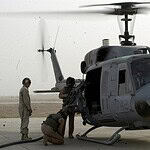
Bell AH-1J
2026 FlightGlobal estimate: 13 with Iranian Army Aviation.
Iran was once a major customer for Bell's Cobra attack helicopter. The Shah's government ordered more than 200 improved AH-1Js in the 1970s, giving Iranian Army Aviation a substantial dedicated attack-helicopter force before the revolution.
Iranian Cobras later saw extensive combat during the Iran-Iraq War. By 2026, the fleet was a shadow of its original size, but FlightGlobal still listed 13 AH-1Js. Few aircraft illustrate Iran's ability to keep aging American hardware alive under sanctions quite as neatly as this one.
Chengdu F-7
2026 FlightGlobal estimate: 17 with the Islamic Republic of Iran Air Force.
The Chinese-built F-7 traces its design lineage directly to the Soviet MiG-21, one of the most widely produced jet fighters in history. China developed the design into its own J-7 family and exported versions under the F-7 name.
Compared with the newest fighters flying elsewhere in the region, the F-7 represented a much older generation of technology. FlightGlobal nevertheless listed 17 in Iran's combat-aircraft inventory before Operation Epic Fury, where they supplemented a collection of equally aging Western and Soviet-era designs.
MiG-29 Fulcrum
2026 FlightGlobal estimate: 18 combat aircraft, plus six additional MiG-29s listed in the training category.
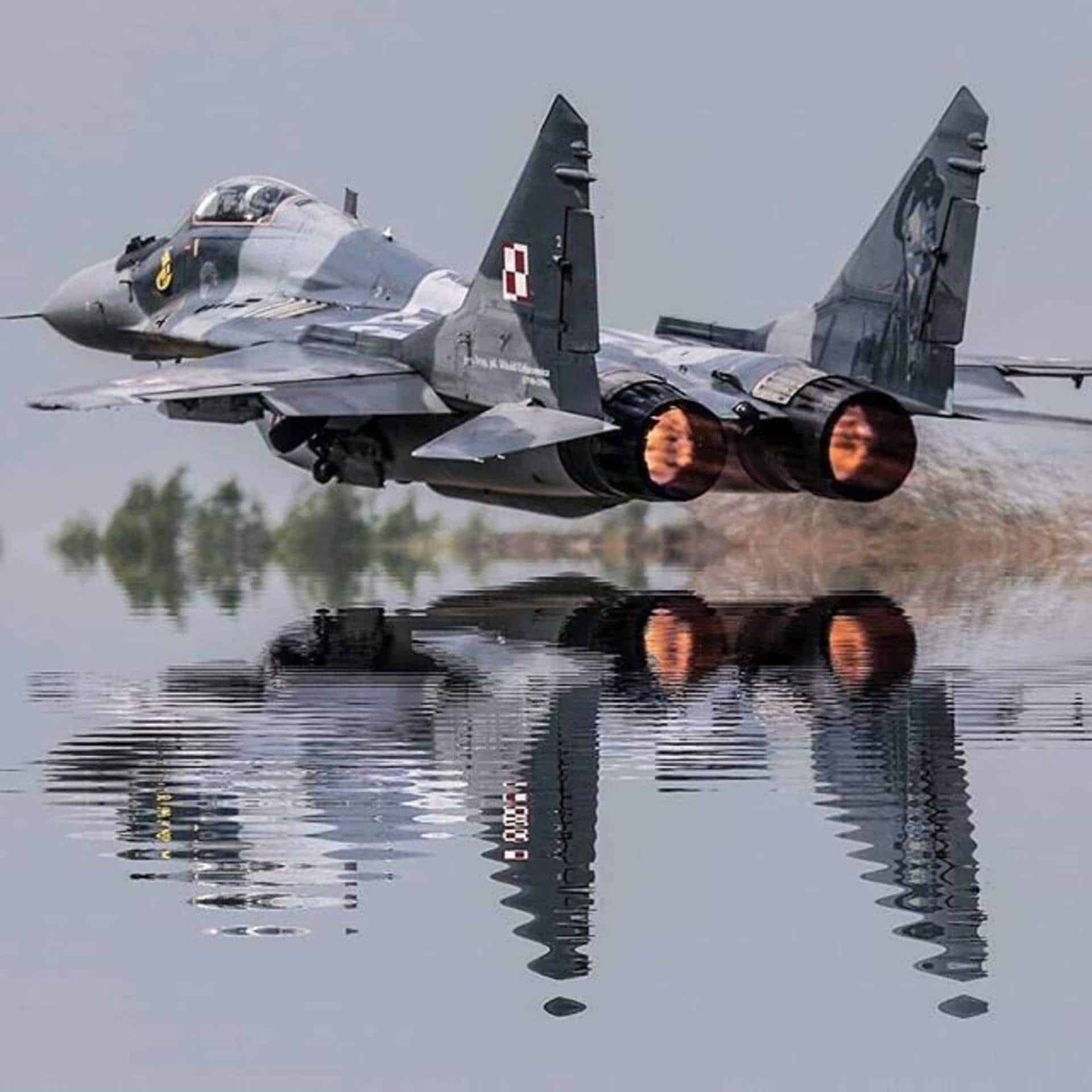
Unlike the F-14 and F-4, the MiG-29 entered Iran's fleet after relations with Washington had collapsed. Iran reached an agreement with the Soviet Union in 1989, and the United States Institute of Peace reports that 25 MiG-29s were delivered in 1990 and 1991.
The story gets stranger from there. Iraqi MiG-29s were also among the aircraft that fled to Iran during the Gulf War. By the time of FlightGlobal's 2026 count, the Fulcrum was one of the more modern fighter designs in Iran's aging conventional air fleet, although even the MiG-29 itself was a product of the Cold War.
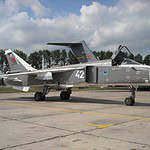
Su-24 Fencer
2026 FlightGlobal estimate: 21 with the Islamic Republic of Iran Air Force.
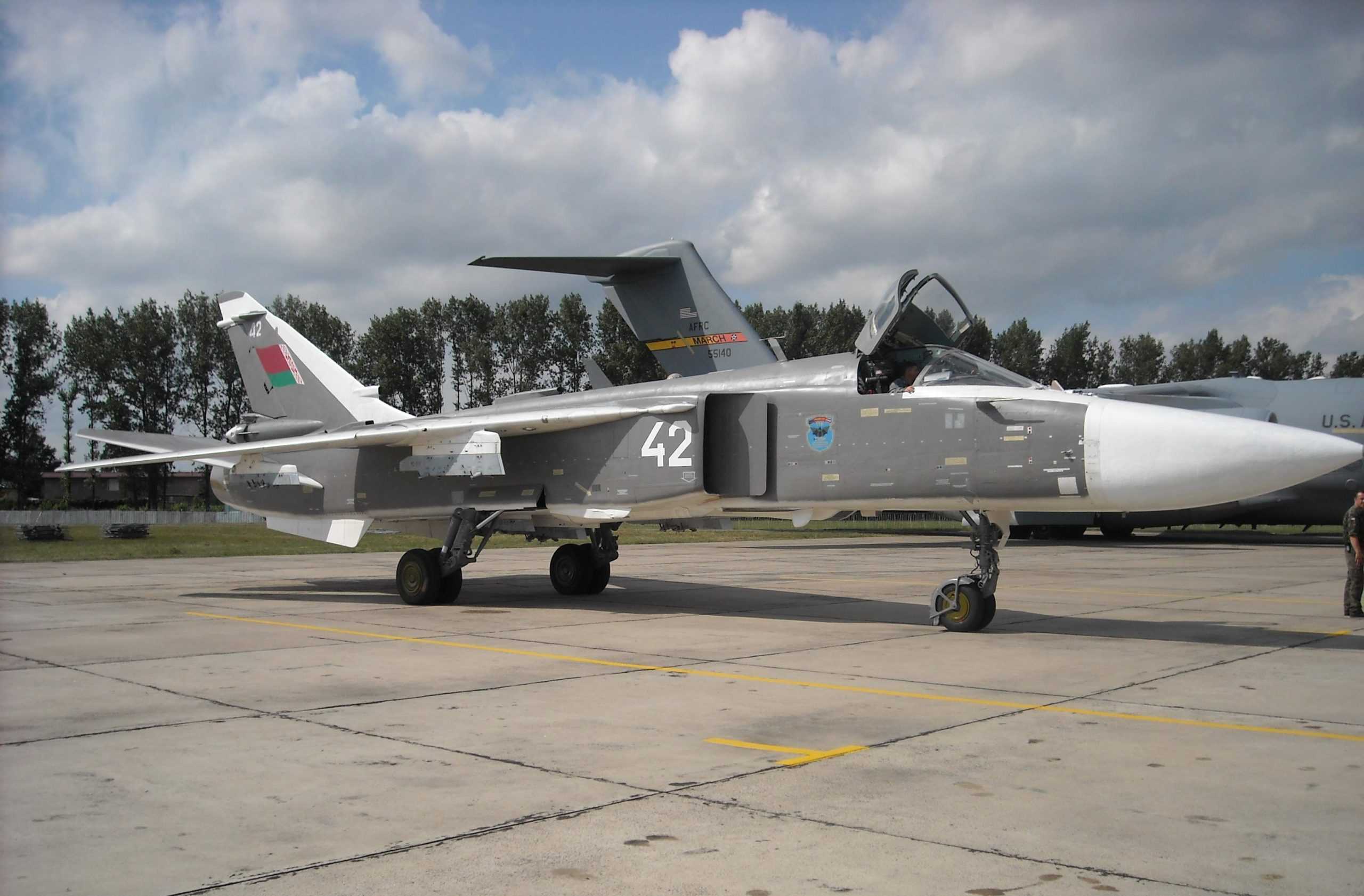
The Su-24 gave Iran something different from its lighter fighters: a twin-engine aircraft designed around long-range, low-level strike missions. Iran bought Su-24s directly from the Soviet Union around the end of the Iran-Iraq War, with U.S. Institute of Peace data showing 12 delivered in 1990 and 1991.
Then came the Gulf War, when Iraqi Su-24s were also among the aircraft flown into Iran to escape coalition attacks. FlightGlobal's 2026 directory listed 21 Su-24s, although the actual serviceability of a fleet built around Soviet-era aircraft remained difficult to establish from public information.
Mi-171
2026 FlightGlobal estimate: 22, including five with the Navy and 17 with the Revolutionary Guard.
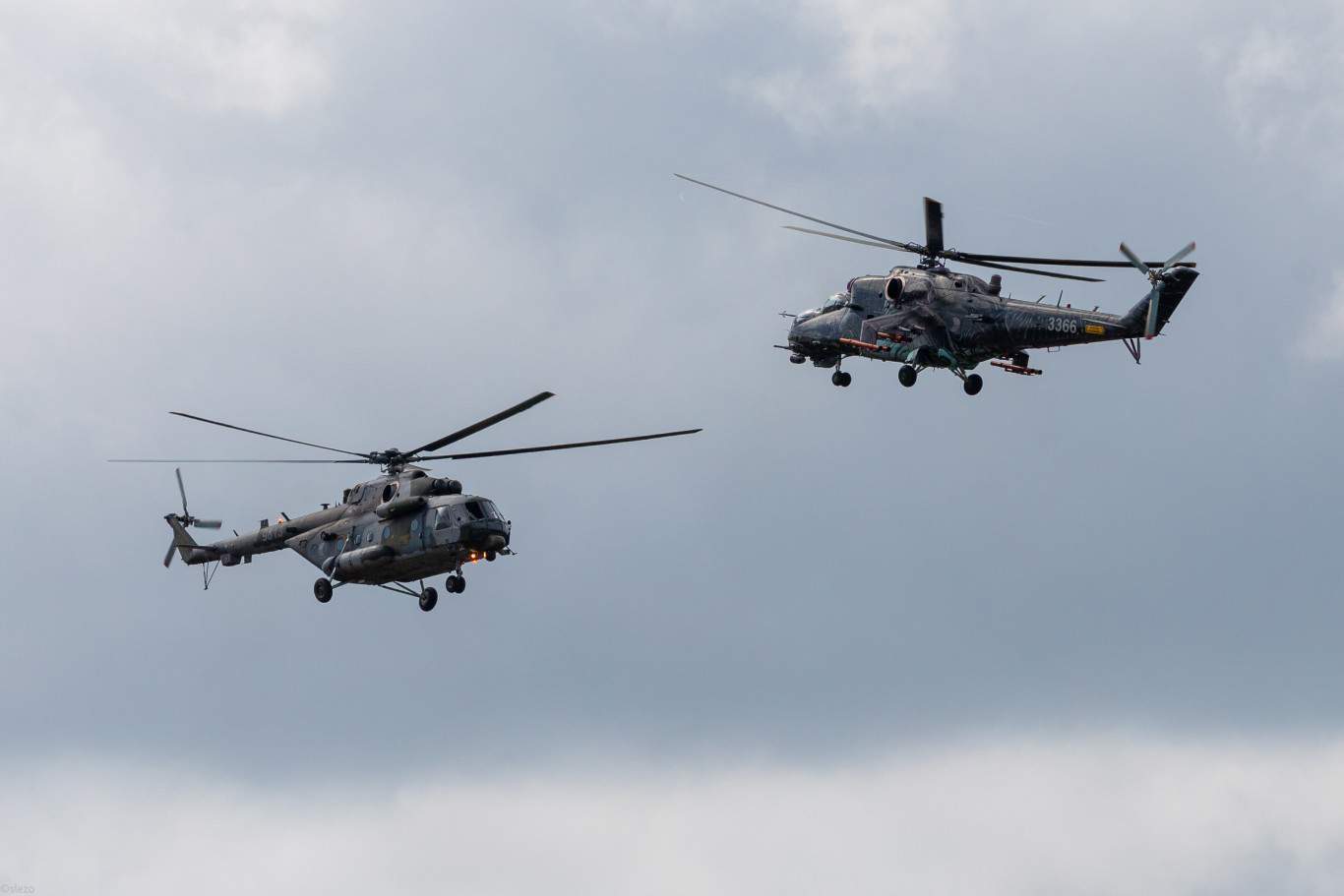
The Mi-171 belongs to the huge Mi-8 and Mi-17 helicopter family, one of the Soviet Union and Russia's most successful rotary-wing designs. Unlike Iran's American helicopters from the 1970s, these aircraft represent the country's later turn toward Russian equipment.
The basic design is built around utility. Depending on configuration, members of the family can move troops and cargo, support remote positions, and perform other military missions. FlightGlobal's division of the fleet between the Navy and Revolutionary Guard also shows that Iranian military aviation extended well beyond the country's regular Air Force.
Bell 214
2026 FlightGlobal estimate: 25 with Iranian Army Aviation.
This is one place where the original numbers needed updating. FlightGlobal's 2026 directory lists 25 Bell 214s, not 24. The helicopter itself also has an unusually close connection to Iran. Bell developed the larger, more powerful member of the Huey family with Iranian requirements playing a major role in the program.
The Shah's government ordered hundreds of Bell 214As for Army Aviation, where the type became known as the Isfahan. Only a fraction remained on FlightGlobal's books by 2026, but the fact that any were still being counted roughly half a century later says plenty about Iran's long-running effort to keep pre-revolution aircraft going.
Northrop F-5E Tiger II
2026 FlightGlobal estimate: 35 F-5Es in the combat-aircraft category, plus 15 F-5F trainers.
The F-5E Tiger II was designed to be relatively small, simple, and inexpensive compared with heavyweight fighters such as the F-4 and F-14. Iran became a major F-5 customer before the revolution, and the aircraft later fought extensively during the Iran-Iraq War.
Decades later, FlightGlobal still listed dozens of F-5-family aircraft. Iran has also spent years developing domestic aircraft based heavily on the F-5 airframe and its technology. By 2026, though, the basic Tiger II was unmistakably an old design operating in a region increasingly filled with far newer fighters.
CH-47C Chinook
2026 FlightGlobal estimate: 40, including two with the Air Force and 38 with Army Aviation.
Iran bought Chinooks in serious numbers during the 1970s. The Imperial Iranian Air Force received Italian-built CH-47Cs beginning in 1971, while Army Aviation received a much larger fleet during the following years.
The tandem-rotor Chinook is built to haul people and cargo, which made it particularly useful in Iran's mountainous terrain and during the Iran-Iraq War. FlightGlobal's count of 40 before Operation Epic Fury made the CH-47 one of the most numerous military aircraft types on this list, even though the Iranian examples trace their origins back roughly five decades.
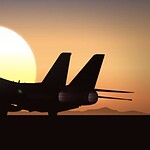
Grumman F-14 Tomcat
2026 FlightGlobal estimate: 41 with the Islamic Republic of Iran Air Force.
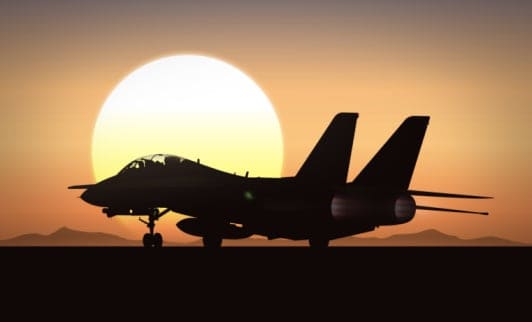
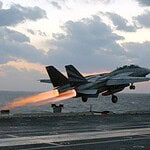
No aircraft better captures the bizarre history of Iran's air force than the F-14. Iran was the Tomcat's only foreign customer. The Shah ordered 80 aircraft, and 79 were delivered before the 1979 revolution ended the close military relationship between Tehran and Washington.
The U.S. Navy retired its own F-14s in 2006, leaving Iran as the world's only remaining operator. Keeping them flying required Iran to maintain aircraft, engines, radar systems, and weapons without normal factory support. FlightGlobal's figure of 41 should not be confused with 41 combat-ready Tomcats, but even having that many listed in inventory in 2026 was remarkable.
F-4 Phantom II
2026 FlightGlobal estimate: 65 F-4D, F-4E, and RF-4E aircraft combined.
The Phantom was the largest fixed-wing type in FlightGlobal's prewar Iranian combat-aircraft table. Iran bought F-4s in large numbers under the Shah, including fighter-bomber and reconnaissance versions, and then used them heavily during the Iran-Iraq War.
The F-4 was a formidable aircraft in its prime, capable of air-to-air combat, strike missions, and, in reconnaissance form, intelligence gathering. Its prime was also a very long time ago. The fact that Iran still listed dozens of Phantoms before Operation Epic Fury neatly sums up both sides of the country's aviation story: impressive maintenance ingenuity paired with an air fleet built around aircraft generations older than many of the pilots flying them.