Wikimedia Commons

Public Domain / Wikimedia Commons

Public domain / Wikimedia Commons
Missing attribution

Public domain / Wikimedia Commons

Public domain / Wikimedia Commons
wikimedia

No known restrictions / National Archives and Records Administration

No known restrictions / National Archives and Records Administration

No known restrictions / National Archives and Records Administration

No known restrictions / National Archives and Records Administration
Missing attribution

No known restrictions / National Archives and Records Administration

No known restrictions / National Archives and Records Administration
13 Colorized Photos That Bring the Wild West to Life
The Wild West we know from movies is filled with gunslingers, saloons, cattle drives, and dusty frontier towns. The real American West was more complicated. Cowboys worked brutally long days, families packed their lives into wagons, soldiers patrolled enormous stretches of territory, and famous outlaws were often very different from the legends built around them.
Fortunately, photography arrived early enough to preserve some remarkable glimpses of that world. These images capture working cowboys, homesteaders, frontier soldiers, infamous outlaws, crowded saloons, and other scenes from the second half of the 19th century and the very beginning of the 20th.
The photographs shown here have been digitally colorized to make their details easier to see. The added colors are modern interpretations, not original color photography, but they can make people and places from more than a century ago feel surprisingly close.
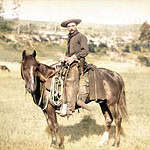
A Working Cowboy in Dakota Territory, 1888
Photographer John C.H. Grabill titled this image simply "The Cow Boy." Taken near Sturgis in Dakota Territory around 1888, it shows a mounted cowboy carrying the kind of gear needed for life and work on the range. The Library of Congress identifies the photograph as a cowboy portrait rather than a staged scene from a show. Real cowboys spent much more of their time handling cattle, horses, equipment, and long days in the saddle than participating in the shootouts Hollywood later made famous.
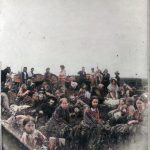
Refugees Flee the U.S.-Dakota War, 1862
This haunting image was taken by photographer Adrian Ebell on August 21, 1862, during the U.S.-Dakota War in Minnesota. The Minnesota Historical Society identifies the people as missionaries, mission workers, government employees, and family members who had fled the Upper Agency as fighting spread through the region. The six-week conflict followed years of broken treaties, delayed government payments, hunger, and rising tensions. Hundreds died on both sides, and the aftermath brought executions, imprisonment, and the forced removal of most Dakota people from Minnesota.
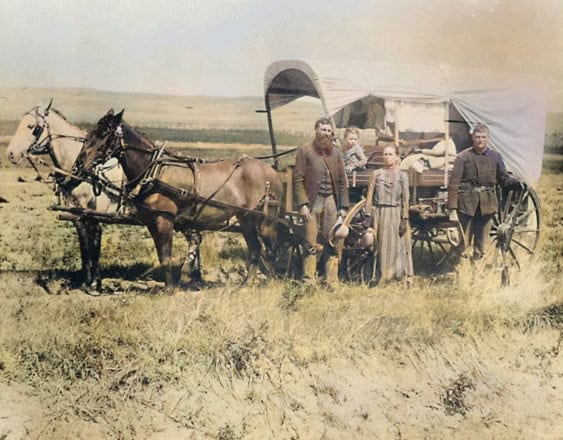
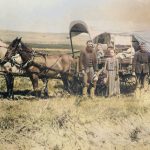
A Family Heads West in a Covered Wagon, 1886
This Nebraska photograph is sometimes mislabeled as being from 1866, but the National Archives caption dates it to 1886 in the Loup Valley. The family poses beside the covered wagon in which they lived and traveled while searching for a homestead. By then, Americans had been moving west under the Homestead Act for more than two decades. A wagon could carry clothing, tools, food, bedding, and other essentials, but families still had to make some ruthless decisions about what could come with them and what had to stay behind.
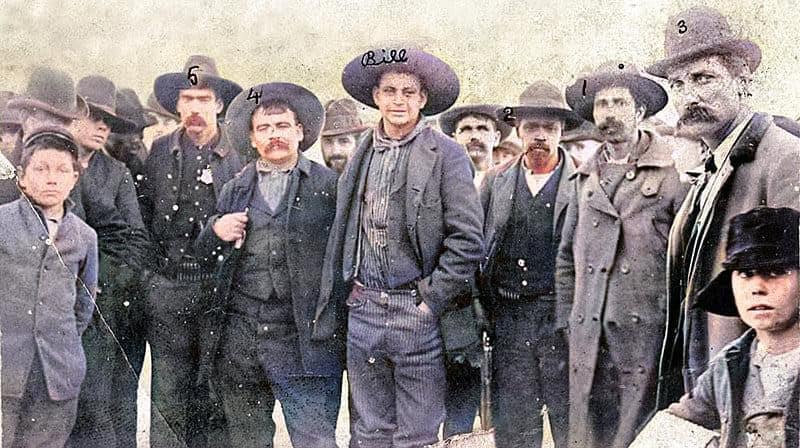
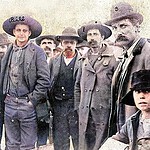
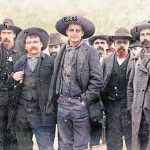
Cherokee Bill Surrounded by His Captors
The man surrounded by lawmen is Crawford Goldsby, better known as Cherokee Bill, one of the most notorious outlaws in Indian Territory during the 1890s. Federal authorities captured him in 1895 after a violent run involving robberies and murder. While jailed at Fort Smith, Arkansas, Goldsby obtained a smuggled pistol and killed guard Lawrence Keating during a failed escape attempt. He was eventually hanged on March 17, 1896. The National Park Service identifies surviving photographs like this one as part of the record of his capture and imprisonment.
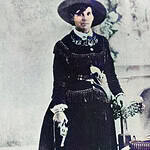
Belle Starr, the Woman Behind the Outlaw Legend
Belle Starr became one of the most famous female outlaws of the American West, but later books and movies made her criminal career much bigger than the surviving evidence supports. The Oklahoma Historical Society says her only clearly documented crime was horse theft, for which she and husband Sam Starr were convicted in 1883. She certainly associated with well-known outlaws, but much of the "Bandit Queen" image came later. Starr was shot and killed near her home in Indian Territory in February 1889. No one was ever convicted of her murder.
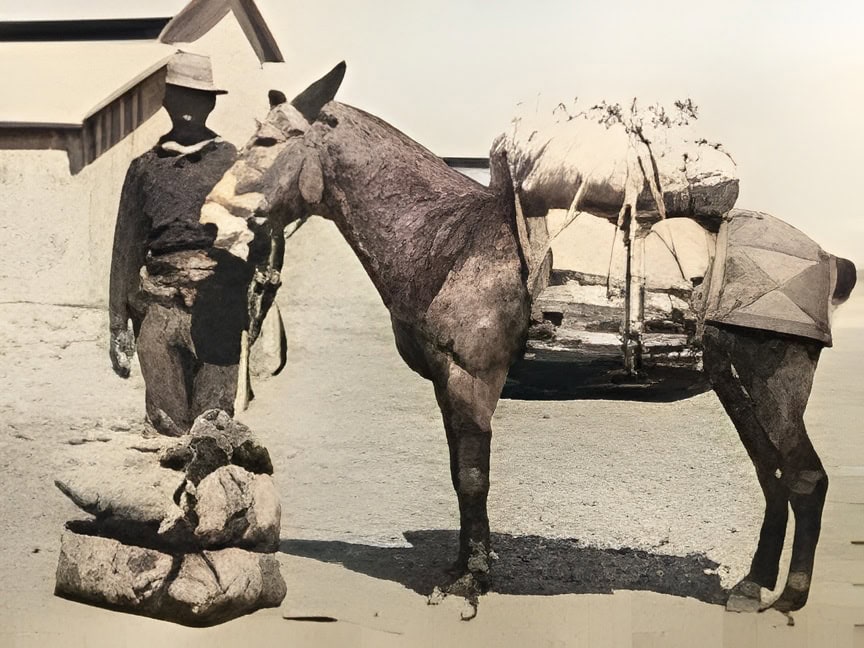
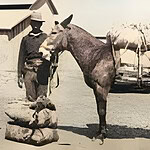
A Buffalo Soldier on the Western Frontier
After the Civil War, Congress created Black Army regiments that included the 9th and 10th Cavalry and the 24th and 25th Infantry. The men who served in these units became widely known as Buffalo Soldiers and were stationed across the Western frontier. They fought in the Indian Wars, guarded travel routes and settlements, served at remote forts, and later performed duties that included some of the earliest military protection of national parks. The exact origin of the nickname is still debated, with several explanations involving comparisons made by Native Americans to the buffalo.
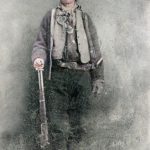
The Famous Portrait of Billy the Kid
This is the famous portrait of Henry McCarty, better known as Billy the Kid. It remains the one photograph of the outlaw that is universally accepted as authentic, while other alleged images continue to be disputed. The legend that Billy killed 21 men, one for every year of his life, is also exaggerated. Historians can connect him to far fewer killings with confidence. What is certain is that he did not kill himself. Sheriff Pat Garrett shot and killed the 21-year-old at Fort Sumner, New Mexico Territory, on July 14, 1881.
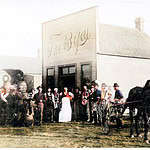
Gathered Around the Kegs at Kelley's Saloon
This is Kelley's Saloon, also known as "The Bijou," in Round Pond, Oklahoma Territory. The National Archives dates the photograph to January 1894 and credits a photographer named Kennett. Men crowd around wooden kegs while posing for the camera, giving us a rare look inside an actual territorial-era gathering place rather than the polished saloons built for Hollywood westerns. Round Pond itself was one of the communities that grew rapidly after land in the Cherokee Outlet was opened to non-Native settlement in 1893.
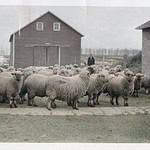
Cowboys Come Face to Face With Sheep
The archival image carries the memorable title "Cowboys Leering at Sheep." Whatever these particular riders were thinking, hostility between some cattlemen and sheep operators was very real in parts of the West. Both industries depended on access to open grazing land, and growing sheep herds sparked bitter disputes over who had the right to use it. In Wyoming and elsewhere, those conflicts sometimes escalated from arguments over grass and water into destroyed flocks, raids, and deadly violence.
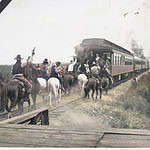
Horseback Riders Race Alongside a Train
This photograph captures two technologies that defined different sides of the West: horses and the railroad. Rather than guessing whether the riders were chasing the train, greeting passengers, or simply riding alongside it for the photograph, the image is interesting enough on its own. Railroads transformed the West during the late 19th century by moving people, cattle, supplies, and mail at speeds that would have seemed almost impossible only a generation earlier. For cowboys, railheads also became crucial destinations for cattle driven hundreds of miles across the range.
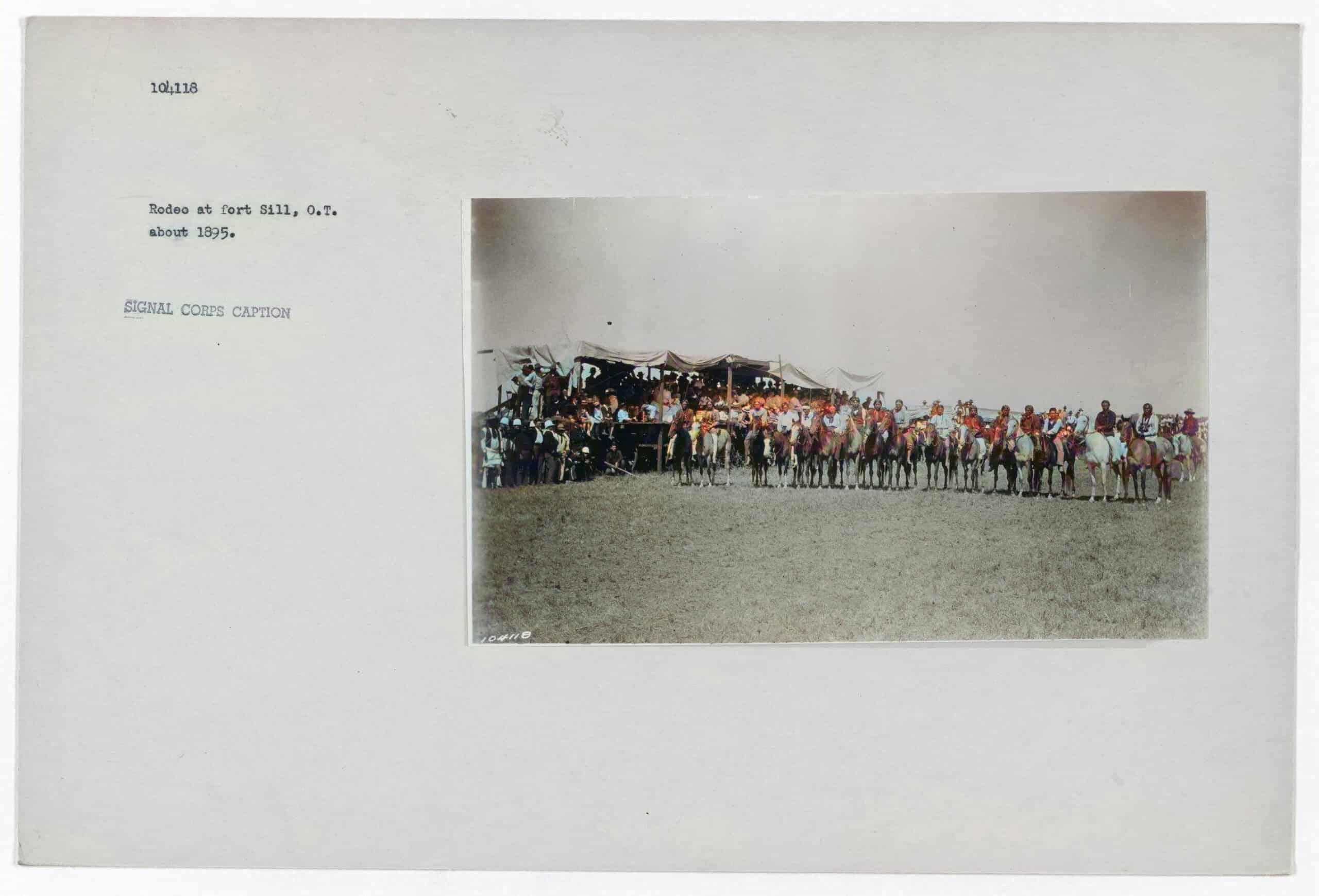
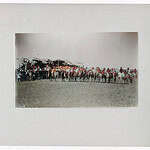
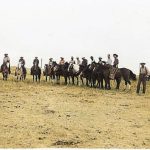
Riders Gather at Fort Sill
The archival description places this gathering at Fort Sill in Oklahoma Territory around the end of the 19th century. Organized rodeo had not yet become the polished professional sport Americans know today, but contests built around riding, roping, and other ranching skills were already becoming entertainment. Fort Sill itself was established in 1869 and became one of the most important military posts on the Southern Plains, making it a meeting point for soldiers, Native communities, ranchers, and settlers during a complicated period of Western history.
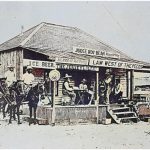
Judge Roy Bean Holds Court in a Saloon
This scene sounds like something written for a western, but the National Archives confirms it. Around 1900, Justice of the Peace Roy Bean was photographed trying a horse thief in Langtry, Texas, inside a building that doubled as both a courthouse and saloon. Bean became famous as the self-styled "Law West of the Pecos," although later stories exaggerated his reputation considerably. The photograph is still a wonderfully strange glimpse of how informal law enforcement and local government could look in isolated Western communities.
Native American Riders and Cowboys Work Cattle
The older archival description for this photograph uses a broad term for the Native American riders and does not identify a specific tribe, so it is better not to guess. What the image does show is something western movies often simplified: cowboy culture was never exclusively white. Native Americans, Black cowboys, Mexican and Mexican American vaqueros, and immigrants all worked with horses and livestock across the West. In fact, many of the tools, techniques, clothing, and even words associated with the American cowboy came directly from the much older Spanish and Mexican vaquero tradition.