Getty Images / Hulton Archive via Getty Images
Getty Images / Hulton Archive via Getty Images
Getty Images / Hulton Archive via Getty Images

2003 Getty Images / Getty Images News via Getty Images

2004 Getty Images / Getty Images Entertainment via Getty Images
2004 Getty Images / Getty Images News via Getty Images

2010 Getty Images / Getty Images Entertainment via Getty Images

2007 Getty Images / Getty Images Entertainment via Getty Images

2010 Getty Images / Getty Images Entertainment via Getty Images

2007 Getty Images / Getty Images Entertainment via Getty Images

2010 Getty Images / Getty Images Entertainment via Getty Images

2004 Getty Images / Getty Images News via Getty Images
2005 Getty Images / Getty Images Entertainment via Getty Images

Kevin Winter / Getty Images Entertainment via Getty Images

2008 Getty Images / Getty Images Entertainment via Getty Images

2003 Getty Images / Getty Images News via Getty Images

♔ Georgie R / BY-ND 2.0



15 Jerry Springer Moments That Made America Ask, “What Am I Watching?”
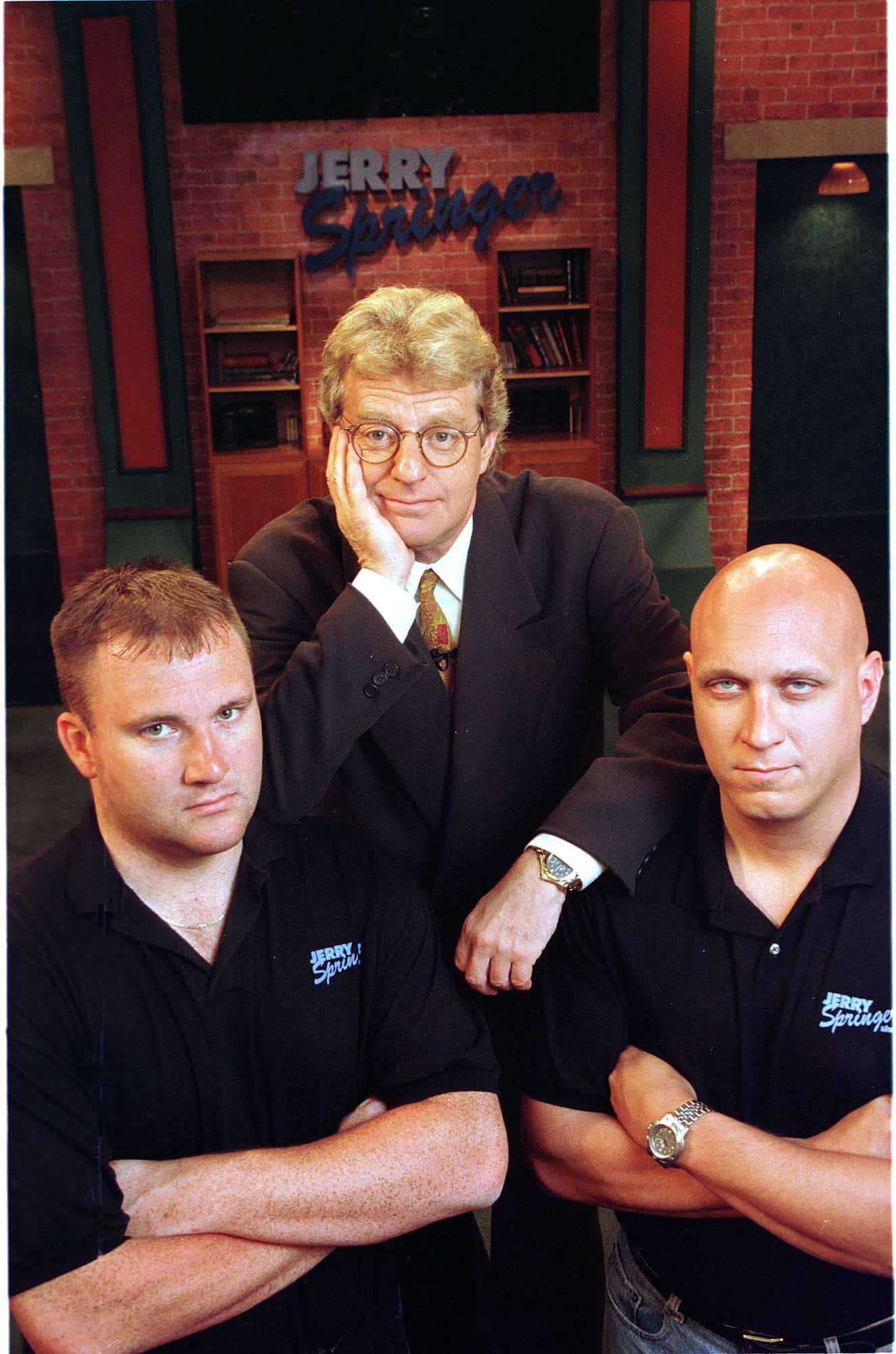
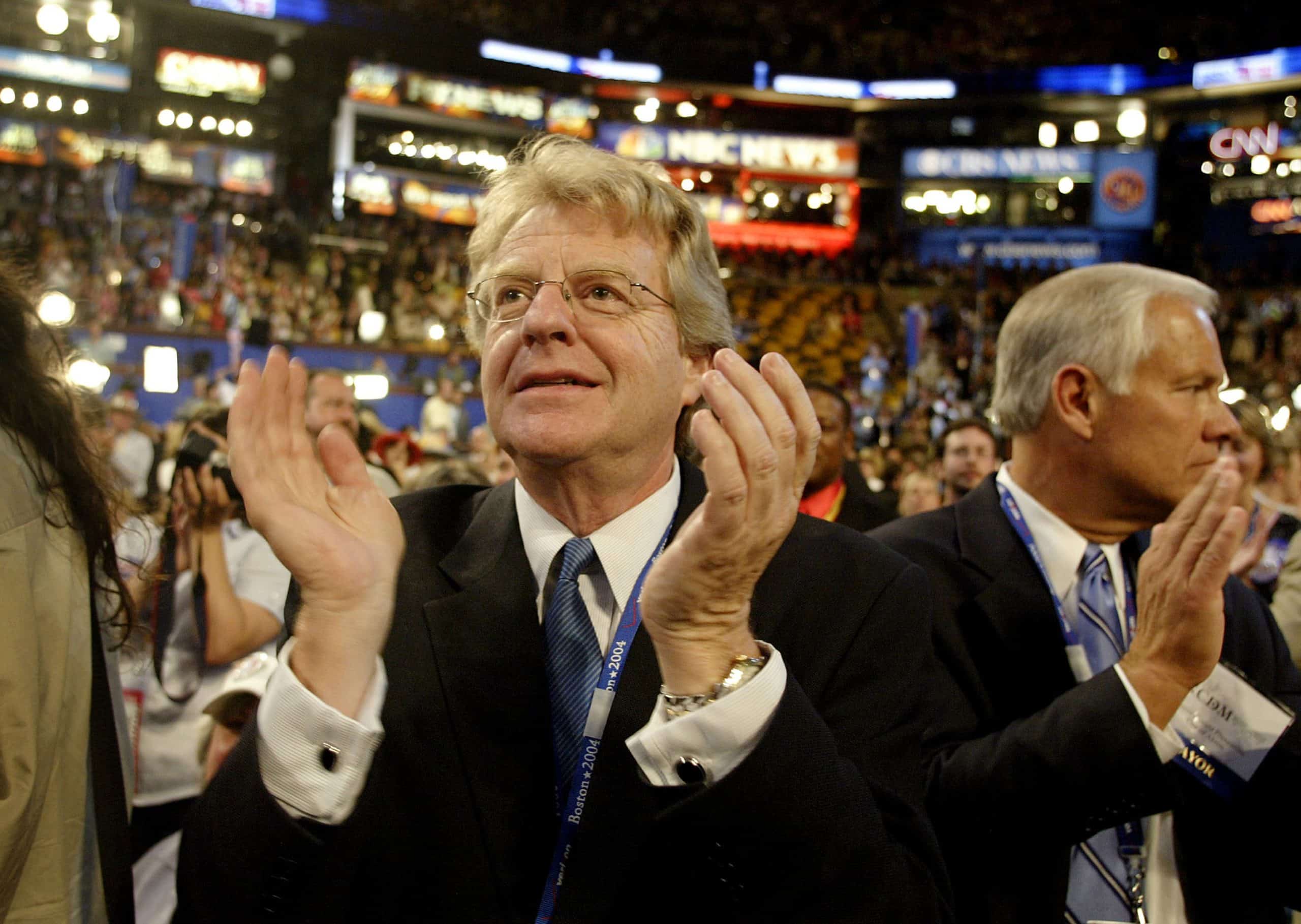
Before Jerry Springer became television's ringmaster of flying chairs, bleeped insults, and relationship diagrams that required a whiteboard, he was a lawyer, news anchor, and the 56th mayor of Cincinnati. His syndicated talk show even began in 1991 as a mostly serious program about politics and social issues. Then the ratings spoke, subtlety packed a bag, and daytime television entered a strange new dimension.
The Jerry Springer Show ran for 27 seasons before ending production in 2018. Former producers interviewed for the 2025 Netflix documentary Jerry Springer: Fights, Camera, Action described coaching guests, intensifying backstage emotions, and building segments for maximum conflict. In other words, the stories below are what the program presented on television. That does not mean every allegation made by every guest should be treated like sworn testimony.
With that necessary reality check in place, these are 15 moments when the show left ordinary trash TV behind and wandered into "what the actual hell am I watching?" territory. Some are funny in the way only deeply questionable television can be. Others now look exploitative, cruel, or genuinely disturbing. All of them help explain why Springer became impossible to ignore—and why television has never entirely escaped the circus he helped build. For more small-screen chaos, see these classic TV shows that probably would not be made today.
The Show Began as Respectable Daytime Television
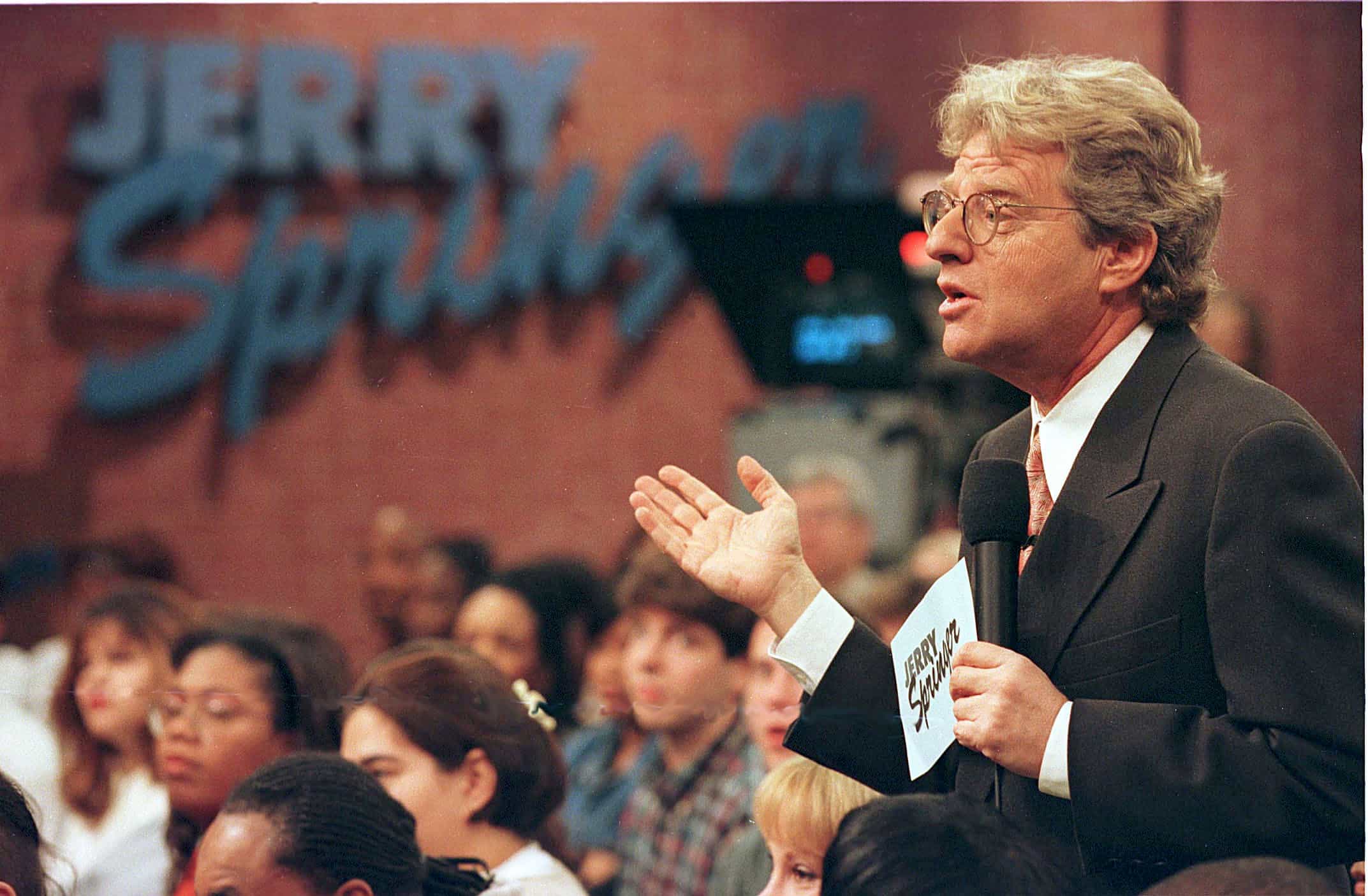
The first genuine plot twist is that The Jerry Springer Show was not created as a televised demolition derby. When it premiered in 1991, Springer was still known primarily as a Cincinnati politician and award-winning local news anchor. The early program chased serious interviews and public-affairs credibility, with the kind of topics a person could mention at dinner without causing everyone to put down a fork. Ratings were weak. By the middle of the decade, executive producer Richard Dominick had steered the show toward younger guests, confrontations, and tabloid subjects. The transformation worked almost too well. Springer eventually described his own program as a circus without lions, which was both self-deprecating and a surprisingly accurate format summary.
“Klanfrontation” Turned a Debate Into an Onstage Brawl
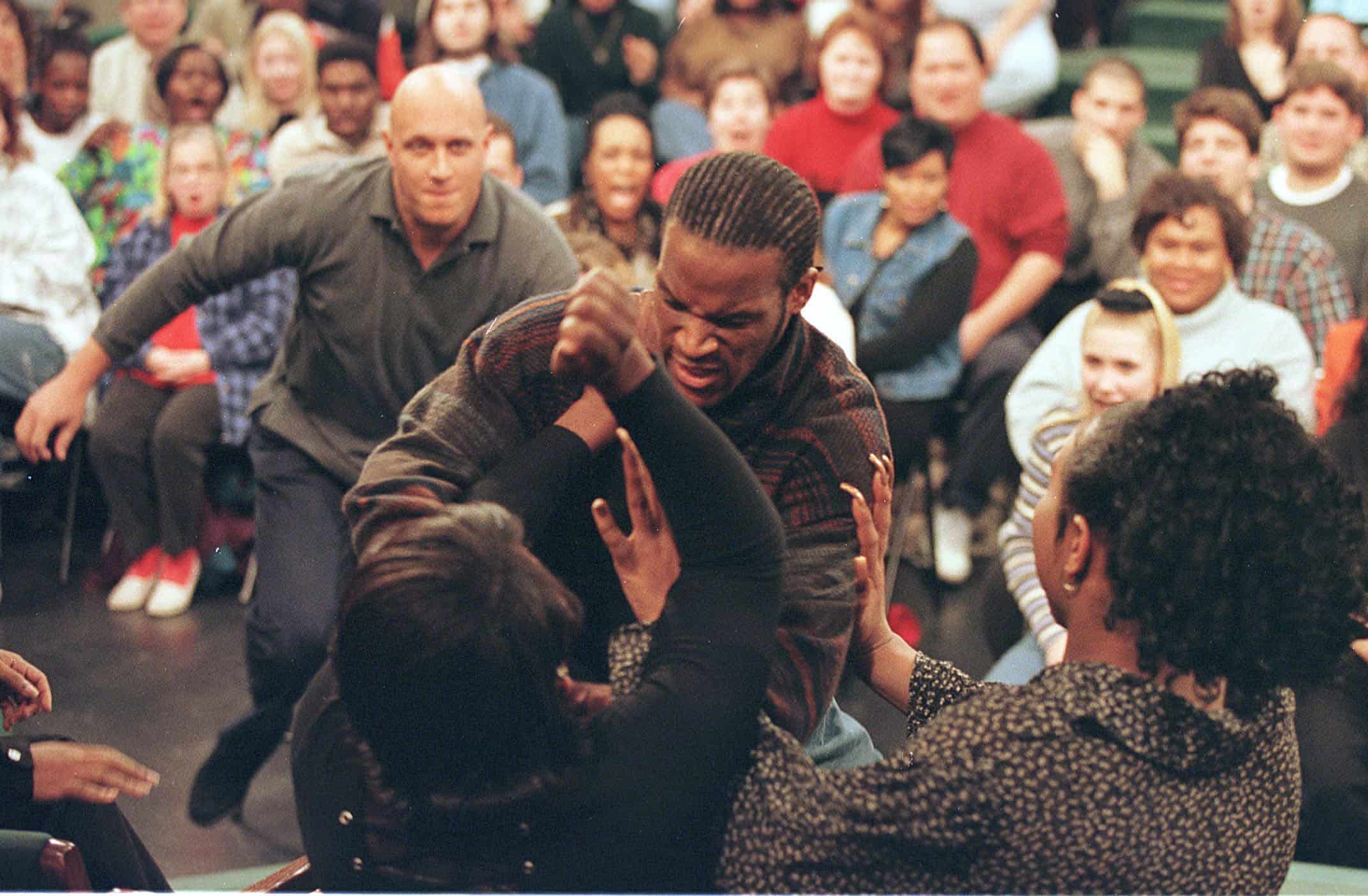
The infamous 1997 episode “Klanfrontation” put members of the Ku Klux Klan across from Irv Rubin of the Jewish Defense League. Calling what followed a debate would be generous. One Klansman removed his hood to reveal a kippah worn as a taunt, Rubin lunged toward him, and the stage dissolved into a brawl involving guests, security, and people from the audience. The episode became a turning point for the entire production. Former staff members later said its explosive reception encouraged producers to pursue more confrontations and to send guests onstage already primed for conflict. Springer had found the formula that would define the show: select people least likely to share oxygen peacefully, introduce them under bright lights, and hope Steve Wilkos had stretched beforehand.
A Man Said He Had Married a Horse
The original draft placed this episode in 2004, but Springer and his staff identified “I Married a Horse” as a 1998 broadcast. The program featured three guests who claimed to have sexual relationships with animals. The most remembered was a Missouri man named Mark, who described a pony named Pixel as his wife and displayed photographs of her wearing women's clothing. It was not treated as a cute eccentricity. The audience recoiled, Springer challenged him during the interview, and the host later joked that the horse had left the relationship. Behind the punchlines was alleged animal sexual abuse, something an animal cannot consent to. Even by this show's standards, the segment landed somewhere between “surely this is a bit” and “please make the television stop.”
“Zack, the 70-Pound Baby” Was a Toddler With a Rare Condition
Springer's 1996 episode title turned a child into an instant sideshow attraction, but the details deserve more care. Zack Strenkert was about 17 months old—not a newborn—when reports described him as weighing roughly 70 pounds. He had Simpson–Golabi–Behmel syndrome, a rare genetic overgrowth disorder. His parents said they were seeking attention and medical help for a condition that was difficult to diagnose and manage, not simply chasing television fame. Zack later returned to the show as an adult and spoke confidently about his life. The reunion offered a rare happy update, but it also sharpened the uncomfortable question underneath the original segment: was television helping a family, exploiting a child, or doing both at the same time?
A Guest Said She Had Amputated Her Own Legs
During the show's 16th season, a 48-year-old transgender woman named Sandra said she had spent decades feeling that her legs did not belong on her body. She told Springer that she first tried to create an infection that would force doctors to amputate them and, when that failed, eventually removed them herself with a saw. The program then brought out Kenny, a man born without legs, to confront her about the decision. The account is documented, but the old framing has aged badly. This was not merely a “wacky guest” story. It involved severe psychological distress, catastrophic self-harm, and a vulnerable person placed before an audience trained to react. The shock remains; the easy mockery does not need to.
The “251 Men” Headline Was Not the Whole Story
On May 1, 1995, adult-film performer Annabel Chong appeared in an episode sensationally titled “I Slept With 251 Men in 10 Hours!” Even that headline required an asterisk large enough to block the studio lights. Later accounts describe 251 sex acts involving far fewer individual men, and the entire event was marketed as a record attempt. Springer asked whether Chong would ever be able to love a man; she pushed back and described her participation as a reversal of the industry's usual gender dynamics. She later left adult entertainment and worked in software development. The segment remains a perfect example of the show at work: compress a complicated person into the most inflammatory sentence available, then act surprised when the room catches fire.
The Mother-Daughter Dominatrix Team
A 2012 episode called “Outrageous Guilty Pleasures” introduced a mother and daughter who said they worked together as dominatrices. That sentence alone would have carried most daytime programs through an entire sweeps week. Springer brought a male client onto the stage for a demonstration, and then—because this was still Jerry Springer—the program introduced the man's wife so she could confront him. The segment piled family business, sexual role-play, marital secrecy, and public humiliation into a single studio setup. It was less an interview than a series of escalating trapdoors. Just as viewers adjusted to one reveal, the show yanked another lever and dropped everybody into an even stranger room.
The “Kung-Fu Hillbilly” Challenged His Roommate
Diemon Dave described himself as a “kung-fu hillbilly” and said he had learned martial arts by watching Chuck Norris and Jean-Claude Van Damme movies on a VCR, then practicing the moves in a mirror. His roommate was called Lil Wayne, although he had no connection to the rapper. Dave warned Springer that if Wayne came out “acting a fool,” he intended to use his newly acquired skills. Wayne came out, shirts came off, and Dave's home-study program met the unforgiving peer-review process of an actual fight. Security intervened before anyone could earn a black belt or a hospital bracelet. It was Springer distilled to concentrate: a spectacular nickname, a ridiculous premise, a confident threat, and immediate evidence that confidence is not the same thing as training.
She Left Her Boyfriend for His Father—Then Wanted Him Back
The official Springer channel posted this 2012 segment under the perfectly calm title “Married To Your Dad, But Want You Back.” According to the story presented on the show, a Montana woman had dated a man from California after he supposedly walked roughly 1,200 miles to be with her. When that relationship collapsed, she became involved with his father and had a child—making the baby her former boyfriend's half-sister. She then invited the ex onto national television and asked to restart their romance. He declined, demonstrating the sort of survival instinct that had been missing from nearly every preceding decision. If a family tree begins resembling a bowl of charging cables, stepping away is generally the correct move.
“I'm Pregnant by My Brother” Became a National Controversy
The April 23, 1998, episode “I'm Pregnant by My Brother” featured a 17-year-old guest who said she was pregnant by her 16-year-old brother and romantically interested in an older brother. Her mother came onstage to confront her. The episode is verifiable; the personal claims remain the claims presented by the guests. It also became part of a broader argument about whether the program merely reflected extreme behavior or helped normalize it. The discussion intensified the next year when a Florida teenager accused of abusing a younger half-sister reportedly told police he had watched a television program about incest. Authorities did not establish that this specific episode caused the crime, but the controversy showed that Springer's circus could have consequences beyond the studio.
“I Cut Off My Manhood” Was Not Just an Episode Title
In the 1997 episode “I Cut Off My Manhood,” guest Earl Zea told Springer that he had mutilated himself with garden shears because he believed a male neighbor was pursuing him. The neighbor appeared and disputed parts of Earl's account, producing a confrontation that was disturbing long before the standard shouting began. Springer and his production team later selected the broadcast for a retrospective list of the show's signature “worst” moments, which at least removes the lingering question of whether the episode was an internet hallucination. It existed. It aired in daytime syndication. People presumably watched it while eating lunch. That final detail may be the most aggressive part of the entire story.
Springer Nearly Fought an Antisemitic Preacher
Springer usually let security handle the physical work, but a February 1995 episode called “A Racist Family” hit him personally. Springer was born to German-Jewish refugees, and members of his extended family were murdered in the Holocaust. When an antisemitic preacher denied the Holocaust and taunted him with grotesque remarks about his family, Springer first said, “I don't hate you. I feel sorry for you.” He then told the man to shut his face and moved toward him before security stepped between them. The confrontation was ugly, but unlike the show's manufactured love triangles, the anger did not look playful. For a moment, the ringmaster disappeared and the son of refugees was standing in his place.
“Three Pigs and a Trailer” Somehow Received a Sequel
The 2001 episode “Three Pigs and a Trailer” brought out three shirtless men and encouraged an audience to laugh at their bodies, eating habits, and competition over a woman. Then the program revisited the concept in 2007, because apparently one installment had left unresolved questions. Springer later joked that the episodes resembled a prequel to The Biggest Loser. The title and presentation were openly cruel, even for a series that treated humiliation as renewable energy. What makes the segment memorable now is not just the spectacle. It is how casually a national television program could turn real people into a demeaning punchline and still package the result as harmless afternoon fun.
Spam-Man Opened an Entire New Department of Weird
In 2001, the show introduced “Spam-Man,” a guest whose sexual fixation involved the canned meat product. That appearance apparently opened the casting office's pantry door, because Springer later recalled related guests known as Burrito-Girl, Meat Lady, and the Sushi Stripper. There is no responsible way to improve that sentence. The segment also captured the program's late-stage logic. A conventional affair was no longer enough; a guest needed a costume, a food group, a nickname, or preferably all three. Other talk shows booked actors promoting movies. Springer booked a man whose personal brand required an emergency meeting between Standards and Practices and the processed-meat aisle.
“Springer Break” Took the Circus to Jamaica
By 2002, an ordinary studio was apparently placing unacceptable limits on the operation. The show traveled to a Hedonism resort in Jamaica and recorded a week of “Springer Break” episodes amid the property's anything-goes atmosphere. Springer later joked that even the resort's swingers were put off after spending a week with his production. Consider the competitive field there. This was a program that had already hosted Spam-Man, a self-taught kung-fu combatant, and a man claiming to be married to a horse, yet it still found room to make a famously uninhibited resort wonder whether everybody might settle down. When Jerry Springer became too much for Hedonism, daytime television had officially reached the edge of the map.
Sources and Further Reading
The show's on-air claims were not always independently verifiable, so this article distinguishes between documented broadcast details and stories merely presented by guests. Dates, episode titles, biographical details, and production history were checked against the following sources:
- BBC News: The weirdest and wildest moments from The Jerry Springer Show
- TV Insider: Jerry Springer picks the show's 10 “worst” moments
- TIME: What former producers revealed in Jerry Springer: Fights, Camera, Action
- The Guardian: Jerry Springer's most outrageous television moments
- The verified Jerry Springer Show video archive
For another tour through television history, explore these famous TV catchphrases that became part of everyday conversation.