PunkToad / Wikimedia Commons

G. Edward Johnson / Wikimedia Commons

Coreyjune12 / Wikimedia Commons

Pacific Studios, / Wikimedia Commons

Wirestock Creators / Shutterstock.com

Bob McMillan / Wikimedia Commons / Public Domain

Detroit Publishing Company, / Wikimedia Commons

billy kerr / Wikimedia Commons

PunkToad / Wikimedia Commons

Rob Gallagher / Wikimedia Commons

kenzie campbell from springfield, mo / Wikimedia Commons

Public Domain/Wikimedia Commons

Joe Shlabotnik / Wikimedia Commons





12 Iconic U.S. Landmarks That Are Gone Forever
The United States is a vast and geographically diverse country, with mountains, deserts, plains, forests, and expansive coastlines. The National Park Service currently lists 606 designated National Natural Landmark sites across 48 states, American Samoa, Guam, Puerto Rico, and the U.S. Virgin Islands. There are also more than 2,600 National Historic Landmarks nationwide. But not every remarkable American landmark has survived. Natural erosion, fire, redevelopment, storms, vandalism, and changing tastes have erased some places that were once major attractions or beloved local symbols. These are once-iconic U.S. landmarks that are gone forever.
To create our list of once-iconic U.S. landmarks that are gone forever, 24/7 Tempo reviewed historical records and sources including the National Park Service, U.S. Geological Survey, state and local agencies, and historical archives. Some places on this list have disappeared completely, while others survive only as ruins or fragments of what once stood there.
Wall Arch (Arches National Park)
The Wall Arch in Utah’s Arches National Park was one of the major formations along the popular Devils Garden Trail. Sometime during the night of Aug. 4, 2008, the sandstone arch collapsed, sending thousands of tons of rock onto the trail. No one witnessed the collapse, although campers in nearby Devils Garden Campground later reported hearing a loud rumbling sound. No visitors were injured.
Lewis T. McKinney first reported and named Wall Arch in 1948. Its opening measured 71 feet wide and 33½ feet high, making it the 12th-largest among the more than 2,000 known arches in the park at the time of its collapse. National Park Service geologists noted stress fractures in the remaining formation afterward, but erosion and gravity are continuously reshaping the sandstone landscape, and all natural arches eventually collapse.
Disney’s River Country
Disney’s River Country opened on June 20, 1976, beside Disney’s Fort Wilderness Resort & Campground in Florida. It was the first water park at Walt Disney World and was designed to resemble an old-fashioned swimming hole, complete with man-made rock formations, slides, sandy areas, and a half-acre swimming area connected to Bay Lake.
River Country operated for 25 years before closing on Sept. 1, 2001. Disney later said the park’s popularity helped demonstrate demand for larger water parks, eventually leading to Typhoon Lagoon and Blizzard Beach. River Country never reopened, making it one of the rare Walt Disney World attractions to disappear entirely rather than simply receive a makeover or replacement ride.
Jump-Off Joe
Jump-Off Joe was a roughly 100-foot-high sandstone sea stack at Nye Beach in Newport, Oregon. The formation became a well-known coastal tourist attraction in the late 19th and early 20th centuries, but the relatively soft sandstone weathered quickly under constant exposure to waves, wind, and rain.
The large arch in Jump-Off Joe collapsed in 1916. Erosion continued for decades, and by 1970 only a few rocky remnants remained. Photographs taken by the U.S. Geological Survey document its gradual disappearance over roughly a century. Today, the USGS says nothing remains of the original sea stack.
Duckbill Rock
This sandstone hoodoo at Cape Kiwanda State Natural Area in Oregon earned the nickname Duckbill Rock because of its unusual shape. The fragile formation sat inside a fenced-off section of the park where visitors were warned to stay back because of unstable cliffs and rock.
In August 2016, a group of visitors was caught on video deliberately pushing the formation until it toppled. Oregon State Police investigated the destruction, while Oregon Parks and Recreation officials said the rock could not be restored. The incident drew national attention and became a particularly frustrating example of a natural landmark disappearing because of human actions rather than erosion alone.
Six Flags New Orleans
Six Flags New Orleans opened in 2000 as Jazzland, a roughly 140-acre amusement park in New Orleans East. Six Flags acquired the financially troubled park in 2002 and reopened it under the Six Flags name in 2003. It closed in August 2005 as Hurricane Katrina approached and never welcomed visitors again.
Hurricane Katrina left the low-lying site under roughly four to seven feet of floodwater, and the water remained for about a month after a pump failure. Six Flags ultimately decided not to reopen the park. The property changed hands through public agencies and sat abandoned for years, becoming an eerie landmark of the storm’s destruction. The New Orleans Redevelopment Authority now controls the property, and developer Bayou Phoenix is working on plans for a new mixed-use entertainment development at the site.
The Original Pennsylvania Station
The original Pennsylvania Station in New York City opened in 1910. Designed by McKim, Mead & White, the enormous Beaux-Arts terminal had 21 tracks and 11 platforms and was built to handle as many as 144 trains per hour. About 1,000 trains were scheduled through the station on a typical weekday when it began operating.
Passenger rail gradually lost ground to automobiles and commercial aviation after World War II, while maintaining the enormous station became increasingly expensive. Demolition of the above-ground terminal began in 1963 and continued into the 1960s, sparking outrage that helped energize the modern architectural preservation movement in New York. The tracks, platforms, and rail tunnels remained in use below ground, while Madison Square Garden and an office complex were built above the station site.
Stardust Hotel and Casino
The Stardust Hotel and Casino opened on the Las Vegas Strip on July 2, 1958, with more than 1,000 rooms. Over the decades it became one of the Strip’s best-known resorts, famous for its enormous roadside sign, the long-running Lido de Paris production, and a colorful history that included ties between some casino operators and organized crime figures.
By its final years, the Stardust had 1,552 rooms. Owner Boyd Gaming closed the resort on Nov. 1, 2006, to clear the property for a planned resort called Echelon Place. The Stardust was imploded on March 13, 2007, but construction of Echelon stalled during the financial crisis and was never completed. Resorts World Las Vegas eventually opened on the former Stardust property in 2021.
The Wawona Tree
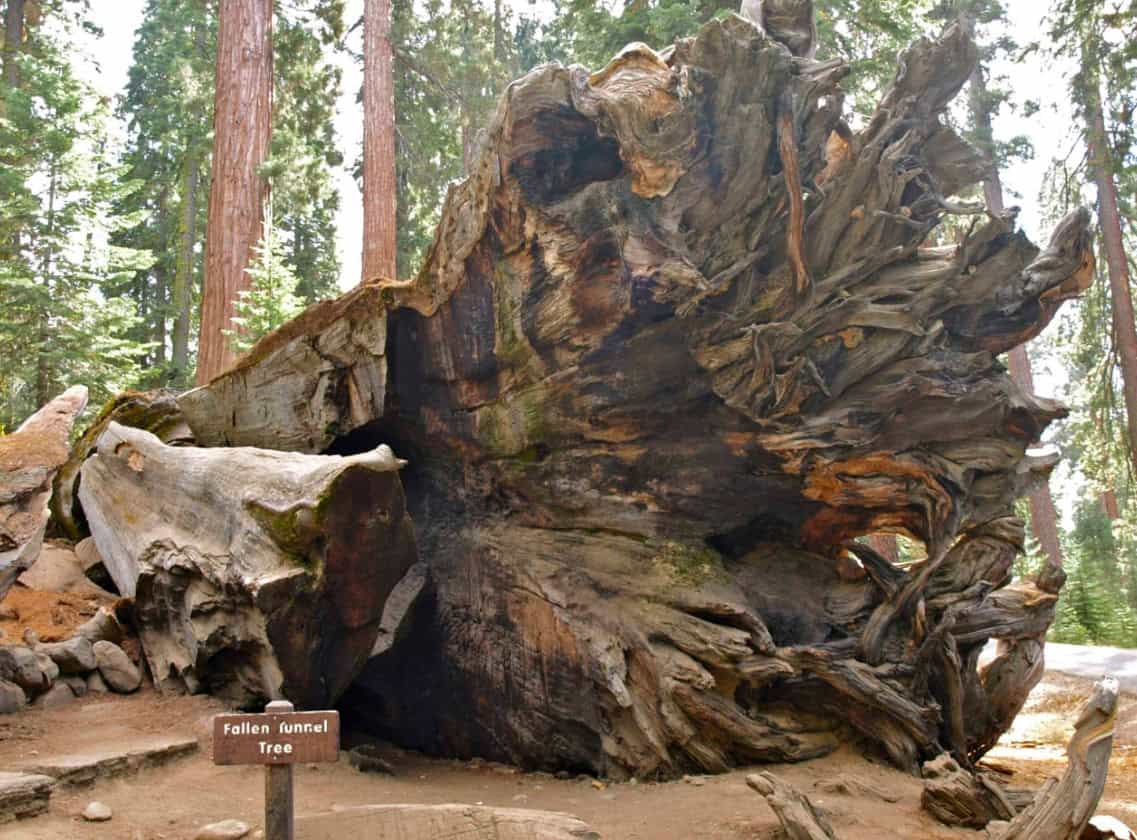
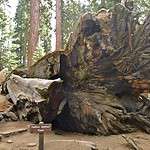
The Wawona Tree was one of Yosemite National Park’s most famous giant sequoias. In 1881, workers cut a tunnel through its trunk as a tourist attraction, allowing horse-drawn carriages and, later, automobiles to pass directly through the enormous living tree. Photographs of vehicles beneath the sequoia became some of Yosemite’s most recognizable early tourism images.
The tree finally fell during the severe winter of 1968-69. The National Park Service estimates that it was about 2,100 years old, 234 feet tall, and 26 feet in diameter at its base when it came down. Heavy snow and saturated soil contributed to the fall, while the tunnel itself had weakened the tree. Its fallen trunk remains in Yosemite’s Mariposa Grove and can still be visited today.
The Old Man of the Mountain
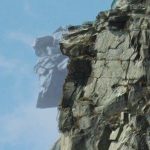
The Old Man of the Mountain was a series of five granite ledges on Cannon Mountain in New Hampshire that, from the right angle, looked remarkably like the profile of a human face. The formation stood about 40 feet high and 25 feet wide and became so closely identified with New Hampshire that its image appeared on road signs, license plates, souvenirs, and the state quarter.
Generations of caretakers tried to stabilize the increasingly fragile formation with cables, turnbuckles, and other repairs as cracks widened and freeze-thaw cycles took their toll. Sometime during the early morning of May 3, 2003, the granite slabs finally collapsed from Cannon Cliff. Visitors can no longer see the original face, but steel “profilers” at a viewing plaza allow people to recreate its outline against the mountain.
Dogpatch USA
Dogpatch USA was an amusement park near Marble Falls in northwest Arkansas based on Al Capp’s popular Li’l Abner comic strip. The park opened in 1968 and featured costumed characters, Ozark crafts, a trout farm, a railroad, rides, and attractions inspired by the fictional hillbilly community of Dogpatch.
The park changed owners several times and struggled financially as attendance declined. Dogpatch USA closed after the 1993 season, ending a 25-year run. The property went through several owners and proposed redevelopment plans in the decades that followed. Much of the abandoned park infrastructure deteriorated or disappeared, although the property itself has since attracted new preservation and redevelopment interest.
The Sutro Baths
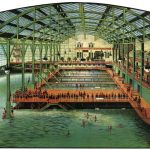
The Sutro Baths in San Francisco were an enormous privately operated recreation complex built by businessman and former mayor Adolph Sutro. Formally opened in 1896, the three-acre glass-covered facility contained seven swimming pools at different temperatures, slides, springboards, a high dive, restaurants, exhibits, and seating for thousands of spectators.
The massive complex became increasingly difficult to operate profitably, and portions were eventually converted to ice skating. Developers bought the property in 1964 with plans for a high-rise apartment development and began dismantling the structure. In June 1966, a fire destroyed what remained of the Baths before the apartment project could be built. The concrete ruins survive today as part of the Golden Gate National Recreation Area.
Action Park
Action Park opened in Vernon, New Jersey, in 1978 and developed a reputation unlike almost any other amusement park in America. Built around water slides, an alpine slide, go-karts, and unusually hands-on attractions, the park became hugely popular but also notorious for its poor safety record. Numerous visitors were injured over the years, and several deaths were associated with attractions at the park.
The original Action Park operated through the 1996 season while its parent company, Great American Recreation, was in bankruptcy proceedings. A new owner later redeveloped the property as Mountain Creek Waterpark. The Action Park name briefly returned from 2014 to 2016 before the attraction again became Mountain Creek Waterpark. Its chaotic reputation lived on in popular culture, including the 2020 documentary Class Action Park.