
History Archives / CC

G. Edward Johnson / Wikimedia Commons

Coreyjune12 / Wikimedia Commons

Pacific Studios, / Wikimedia Commons

Wirestock Creators / Shutterstock.com

Bob McMillan / Wikimedia Commons / Public Domain

Detroit Publishing Company, / Wikimedia Commons

billy kerr / Wikimedia Commons

PunkToad / Wikimedia Commons

Rob Gallagher / Wikimedia Commons

kenzie campbell from springfield, mo / Wikimedia Commons

Public Domain/Wikimedia Commons

Joe Shlabotnik / Wikimedia Commons







12 Iconic U.S. Landmarks That Sadly No Longer Exist
The United States, the world's third-largest nation, stretches across mountains, deserts, plains, and coastlines, a landscape as varied as it is vast. From the rugged Appalachians to the towering Rockies, from sun-bleached deserts to endless prairies, it is a land shaped by both nature and human ambition. Scattered across this expanse are marvels of architecture and design, each carrying its own story of pride, perseverance, and passage.
With more than 2,400 national historic landmarks, hundreds of national park sites, and countless museums, zoos, and roadside wonders, the sheer number of places worth visiting can feel endless. And yet, not all of them remain. Time, neglect, disaster, and tragedy have claimed their share, erasing landmarks that once stood as touchstones for generations. Some, like the Joy Road bridge in Ann Arbor, Michigan, vanish suddenly, struck down in a moment. Others fade more slowly, their grandeur reduced to fragments, photographs, and memory.
Wall Arch (Arches National Park)
The Wall Arch in Arches National Park was a gorgeous natural sandstone arch in Utah and was one of the most popular arches of over 12,000 arches of various sizes within the park.In August of 2008, the arch suddenly collapsed, with the rubble blocking the Devil's Garden Trail. No one was there when the arch collapsed, so there were no witnesses.
This arch was first recorded in 1948 by Lewis T. McKinney. At its known peak, the arch measured 71 feet wide and 33½ feet high. Stress fractures likely lead to its collapse. Although this arch no longer exists, there are larger ones in the park (before it collapsed, it was the 12th largest in Arches National Park).
Disney's River Country
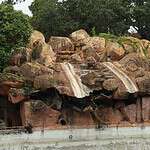
Disney's River Country first opened its doors on June 20, 1976. It was Disney World's first water park and was located in Bay Lake, Florida. For decades, the park remained busy. But after Disney opened Typhoon Lagoon and Blizzard Beach, fewer people opted to go to River Country, which couldn't compete with the larger and newer rides at the two new water parks.
It's hard to imagine how a Disney park could suddenly close, especially with how popular Disney parks are worldwide, but several other factors likely contributed to its demise. Tourism was impacted by 9/11, and three children lost their lives at this water park. Two drowned, and one died from a brain disease linked to amoeba after swimming at the park.The park closed in 2001, and it remains abandoned, along with Discover Island. Visiting Disney's River Country is illegal and considered trespassing.
Jump-Off Joe
Jump-Off Joe is one of many attractions that no longer exist in the US. It's a classic attraction, discovered around the late 1800s at Nye Beach in Newport, Oregon. It was a 100-foot-tall sea stack formed of sandstone that was once connected to the mainland, but by the 1890s had separated. The arch, which many Americans traveled to walk along or jump from, collapsed in 1916. By 1970, the sea stack was nearly flat, and today, nothing of this former sea stack remains.
Duckbill Rock
This once-sandstone hoodoo rock formation, at Cape Kiwanda State Natural Area in Oregon, was a unique rock formation that looked a lot like a duckbill. For years, visitors would flock to see this interesting natural wonder, but it was eventually fenced off for safety. In 2016, a group of teenagers was filmed purposefully toppling this natural tourist attraction. Even though the vandalism was caught on video, it became a cold case, and the statute of limitations has most likely run out. As of April 2024, no one has been caught.
Six Flags New Orleans
There were more than 30 Six Flags Amusement and Water Parks found throughout North America (a new one is slated to open in Saudi Arabia in 20240). But just like Six Flags New Orleans, not all are still open. Six Flags New Orleans opened on May 20, 2000, as Jazzland and became Six Flags New Orleans in 2003. The park temporarily closed on August 21, 2005, and was scheduled to reopen in late August of the same year.
However, Hurricane Katrina hit and destroyed the park, leaving it flooded and with a grim future.Water flowed from Lake Pontchartrain into the park, which was built in a low-lying section of Eastern New Orleans. Roughly 80% of the attractions suffered significant damage, and it was too costly to repair. The park remained closed. As of 2023, the Bayou Phoenix development group was awarded a contract to redevelop the land as a massive entertainment complex.
The Original Pennsylvania Station
The original Pennsylvania Station (Penn Station) in New York City opened in 1910, and this historic railroad station began to be demolished in 1963, lasting three years until the work was completed in 1966. When the railroad station opened, it could operate and run 144 trains per hour. It also had 21 tracks and was extremely busy, easily running 1,000 trains each weekday.
The railroad began losing customers in 1947 because of the construction of the Interstate Highway System, and despite its early success, Penn Station declined in prosperity and appearance. Although its terminals were destroyed, the original tunnels, tracks, platforms, and electric traction continue to be used today. Madison Square Garden now stands where the original terminal once was. (Some artwork and features were kept, like the eagle sculpture, some of which can be found throughout New York City.)
Stardust Hotel and Casino
The Stardust Hotel and Casino was very popular when it first opened on July 2, 1958. During its opening, the building had 1,065 rooms, and by the time this iconic hotel and casino closed on November 1, 2006, it had 1,552 hotel rooms. The Stardust was known for many things, including its long list of entertainers, some of which were Valerie Perrine, The Temptations, Siegfried & Roy, Chicago, and Billy Daniels, and it also had a lot of mob connections and affiliations.Loss of money forced its closure, and it was replaced by the Echelon, which met a similar fate. Now, the Resorts World Las Vegas stands in its place.
The Wawona Tree
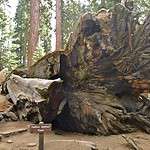
Technically, this tree still exists, but it is no longer a tunnel; however, it can still be viewed, and its impressive size is enough to entice a visit. In 1881, a huge tunnel was cut through a large sequoia tree that stood at 9 feet high and 7 feet wide. At the time of its cutting, the tree was already leaning and continued to lean further through the years.
Under heavy snow, the tree fell in February 1969. It may have been as old as 2,300 years.This tree is often confused for theTunnel Log, which you can drive through (the Tunnel Log tree fell in 1937, blocking the road, but is now just that – a tunnel that passenger cars can move through).
The Old Man of the Mountain
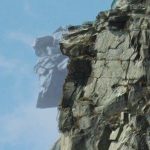
The Old Man of the Mountain was once a series of five granite cliff ledges in New Hampshire that gave the rock the appearance of an old man.The ledges were on Cannon Mountain over Profile Lake and were about 25 feet wide and 40 feet tall. This formation has likely been around since before the 1800s and was an important symbol to the Abenaki and Mohawk people. A few indigenous legends are tied to the formation of this face in the mountain.
Although a longstanding symbol of the Abenaki and Mohawk people and the state of New Hampshire, the face collapsed on May 3, 2003. The collapse wasn't unexpected, though, as the face was suffering from weathering. Large cracks continued to form, even with intervention.
Dogpatch USA
Dogpatch USA was once a thrilling amusement park in northwest Arkansas in Marble Falls. This family-friendly theme park operated for a little less than thirty years, opening in 1968 and closing in 1993. The park was a local favorite for many years, but it had multiple owners and was constantly being sold and acquired. Some attractions within Dogpatch USA include the Peter Bella Grist Mill, Trout Pond, Funicular Tram, and Dogpatch Caverns.
The Sutro Baths
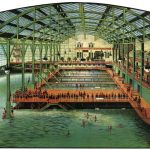
The Sutro Baths in San Francisco, California, were large, privately owned public saltwater swimming pools. This large complex was built in 1894, and at the time of its opening, it was the world's largest indoor swimming pool facility. The baths were very popular but burned down in June of 1966.Interestingly, even though the Sutro Baths were burned down, developers had plans to demolish them and build high-rise apartments. The high-rise apartments were never built. Now, the remains of the Sutro Baths are within the Golden Gate National Recreation Area.
Action Park
One of the most well-known and dangerous former water parks in New Jersey was Action Park. This dangerous water park, which was known for its thrills, resulted in several deaths and even more injuries. It first opened on May 26, 1978, and a lot of the rides and attractions were not up to safety codes and regulations, which resulted in many injuries.
Action Park closed due to the injuries and the park's low attendance. At the time of the park's closing (1996), the owner of the park, Gene Mulvihill, declared bankruptcy. The park was shortly revived in 2014, but it didn't last long. (There was even a film released in 2020 called "Class Action Park.") Now, Action Park goes by Mountain Creek Water Park and has different owners.