
RomoloTavani/iStock.com

Dora Ubaldina / Shutterstock.com

SeventyFour / Shutterstock.com

noPPonPat / Shutterstock.com
Rawpixel.com / Shutterstock.com

Ssirounarev / Shutterstock.com

Burnt Pineapple Productions / CC0 1.0

brian.ch / BY 2.0

designbysariful / Shutterstock.com

Andrew Moya / Shutterstock.com

melissaroseb / BY 2.0

Everett Collection / Shutterstock.com

gordontarpley / BY 2.0











12 Famous Inventions Their Creators Wish They Could Take Back
Most inventors are proud of their work. They built something, it worked, and the world changed. They can pass away peacefully once the time comes. But a handful of history's most consequential creators spent their final years wishing they could take it all back. Some saw their creations being used as tools of destruction or in other ways they did not approve of. A few just made something that got embarrassingly out of control.
What is interesting about these regretted inventions is that most of the regret was earned honestly. These weren't reckless people, but the gap between what an inventor imagines and what the world actually does can be colossal, and sometimes it takes decades to see it clearly. These are the inventions their creators came to regret.
Dynamite
Alfred Nobel created dynamite in 1867, hoping that it would make large-scale destruction so frightening that countries would give up fighting each other altogether. His actual quote: "My dynamite will sooner lead to peace than a thousand world conventions." He was wrong, and he learned it the hard way.
The moment that changed his outlook came in 1888 when a French newspaper mistakenly printed his obituary following his brother's death. Its headline referred to him as "the merchant of death." Reading it, Nobel saw how history would remember him and spent the rest of his life trying to rewrite that ending. This is why he donated nearly 95% of his fortune, creating the prizes that still bear his name, including the Nobel Peace Prize.
The Office Cubicle
Robert Propst did not start out designing a human filing cabinet. In the 1960s, Propst developed the "Action Office" for furniture maker Herman Miller: a flexible office design including adaptable work surfaces, options for standing desks, and moveable walls designed to promote physical activity and conversation among coworkers. He believed that it would improve workers’ health and productivity.
Businesses took one look at it and saw a cheaper way to pack more people in the same space. They stripped out every thoughtful element and built the cubicle we know today. The cubicle that became a symbol of American office misery. Propst called the result "monolithic insanity." That quote came decades before movies like "Office Space" and "Fight Club" made fun of the exact thing he'd inadvertently unleashed onto the world.
Leaded Gasoline and CFCs
Thomas Midgley Jr. is in his own weight class when it comes to terrible inventions. He invented two technologies that had disastrous effects on the environment at a global scale. That wasn’t just one experiment that went wrong. He did it twice. Two separate projects for the same employer, General Motors.
In 1921, he added tetraethyl lead to gasoline to prevent car engines from knocking. It worked. And it polluted the air with lead for decades in the process, causing mass health problems among children and, according to some researchers, a measurable rise in crime rates in the middle of the twentieth century.
Then, tasked with making refrigerants safer, he created chlorofluorocarbons, also known as CFCs or Freon. At that time, it was hailed as a miraculous substance, but it was soon discovered that CFCs were destroying the ozone layer. Author Bill Bryson described Midgley as having "an instinct for the regrettable that was almost uncanny" and his third and final invention proved it. He died in 1944, before the full damage of either invention became clear. He was strangled by a pulley system he had built to help himself out of bed.
The Airplane
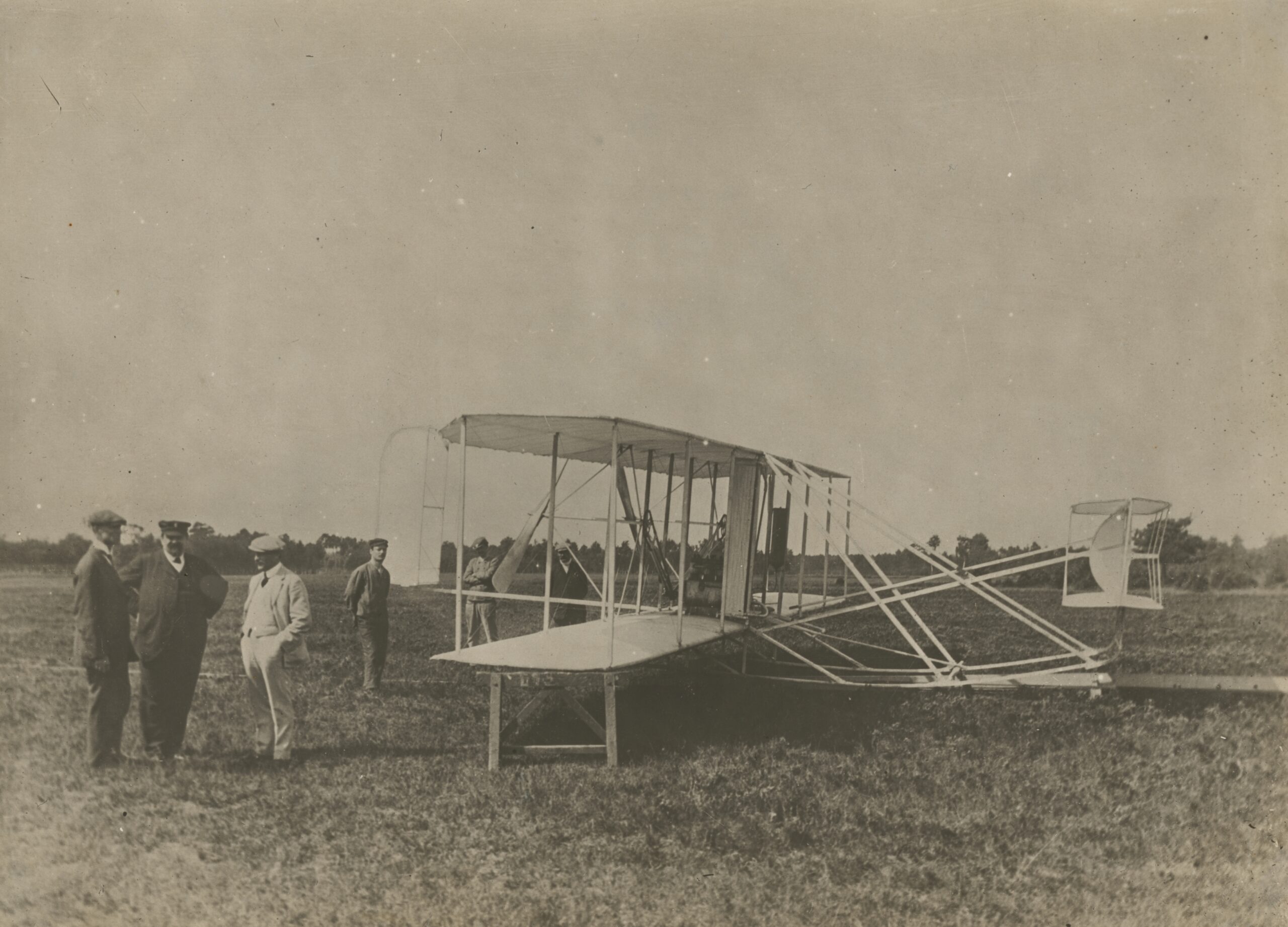
The Wright Brothers wanted to end war. An ambitious goal that, as we’ve seen before in this list, tends to backfire. Orville Wright once stated that he and his brother hoped they “had invented something that would bring lasting peace to the earth." The idea was that aerial observation would make surprise attacks impossible, making large-scale conflict pointless.
His brother, Wilbur, died in 1912, before World War I showed just how deadly airplanes could be in warfare. Orville survived until 1948 and watched the invention used in bombing campaigns in both world wars. The aforequoted statement by Orville was actually made after World War II, and the full version includes the following four words: "But we were wrong."
The K-Cup
The K-Cup was invented by John Sylvan, who was working for Keurig in the early 1990s. He intended to let office workers get a quick cup of coffee rather than having to brew the entire pot. He sold off his stake in the company before it became a household name and walked away without making much money from it. What else did he walk away from? His own creation. According to The Atlantic, he himself doesn't own a Keurig.
His reason was environmental. The pods, being made of multiple bonded plastic layers, are nearly impossible to recycle. In 2014, around 9.8 billion K-Cups were sold all over the world. Sylvan told an interviewer, "I feel bad sometimes that I ever did it." He has been working on solar energy projects since then, which reads less like a career change and more like an apology.
The Atomic Bomb
Oppenheimer headed the Manhattan Project at Los Alamos, which led directly to the first nuclear weapons being created. In July 1945, after the Trinity test, he cited lines from the Bhagavad Gita saying, "Now I become Death, the destroyer of worlds." These lines have been quoted so many times that they've almost lost their weight, but in this context, they are incredibly eerie.
After Hiroshima and Nagasaki, Oppenheimer became one of the most vocal advocates for international nuclear control. He opposed hydrogen bomb development and argued that the weapons he helped create posed an existential risk to humanity. The American government rewarded this stance by taking away his security clearance in 1954.
The AK-47
The AK-47 was invented by Mikhail Kalashnikov in 1947 for the defense of the Soviet Union against any invasions. A practical weapon for a specific military need. It never occurred to him that his invention would end up becoming the most widely produced firearm in history, with an estimated 100 million units built, and the preferred tool of armed groups on every continent.
Roughly one year before his death in 2013, at age 94, Kalashnikov wrote a letter to the Russian Orthodox Church. In the letter, he mentioned his "spiritual pain" as being "unbearable" and questioned himself about his moral accountability for the killings carried out using his gun. He had spent decades insisting he was proud of his invention. The letter told a different story.
The Emoticon
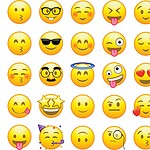
Scott Fahlman was a computer science professor at Carnegie Mellon University who inserted the :-) into an online message board in 1982, proposing its use as a way of signaling that something was a joke. It was a small, practical fix for a real problem: people kept misreading sarcasm as sincerity, and the emoticon became a practical way of conveying emotion in text messages that otherwise lacked any sense of tone.
What followed was something Fahlman never anticipated. The emoticon evolved into the emoji, the emoji evolved into sticker packs and reaction culture, and the whole ecosystem became a dominant mode of human communication. According to him, it made communication online more shallow, instead of improving it. "Sometimes I feel like Dr. Frankenstein," he said to The Wall Street Journal. "My creature started as benign, but it's gone places I don't approve of."
The Pop-Up Ad
Ethan Zuckerman wrote the code for the first pop-up ad in the mid-1990s while working at Tripod.com, a web hosting service. The problem he was solving was simple: advertisers didn't want their brands appearing next to user-generated content they couldn't control. A separate window, launched automatically, kept the ad clean from the page underneath it.
He has since called it one of the internet's original sins. In a 2014 essay for The Atlantic, Zuckerman wrote a public apology to the world for his role in building a model that flooded the web with intrusive advertising and helped establish surveillance-based tracking as the financial backbone of the internet. He did not mince words about what he'd helped create.
Mother's Day
In 1908, Anna Jarvis introduced the concept of Mother's Day as a tribute to her late mother, a social activist in West Virginia, whom she deeply admired. The first event took place in a church in Grafton, West Virginia, where her mother used to teach Sunday School. The concept soon gained popularity, and by 1914, President Woodrow Wilson made it a national holiday.
Then the greeting card companies arrived. And the florists. And the candy makers. In her last years, Anna Jarvis waged war against all these enterprises that had appropriated her concept. She labeled these industries as "charlatans, bandits, pirates, racketeers, kidnappers, and termites." She died in 1948 in a sanitarium, completely broke, having spent most of her money fighting legally to abolish Mother's Day.
Agent Orange
Arthur Galston's doctoral research in the 1940s looked into a substance that could be used to quicken the growth of soybeans, something that was extremely useful for wartime food production. He added an important note in his dissertation about how a high level of the substance could make the plants shed their leaves. The U.S. military read that as a feature, not a side effect.
Galston's research was part of the scientific foundation of Agent Orange, an herbicide that was used during the Vietnam War. It destroyed millions of acres of forest and cropland, and it has since been associated with serious birth defects and diseases among both Vietnamese civilians and American veterans. Galston campaigned against its use for decades, making multiple trips to Vietnam to campaign on behalf of the people affected. In 2003, Galston said that no scientific discovery is "guaranteed to result in benefits for mankind."
The Gatling Gun
The rapid-fire Gatling gun was patented by Richard Gatling in 1862, during the Civil War. There was a humanitarian idea behind it. A weapon that could do the work of a hundred soldiers, he reasoned, would mean armies needed fewer men. Fewer men on the battlefield meant fewer deaths. In theory, that would make war shorter and less deadly.
Though the American Civil War ended before the Gatling gun saw wide deployment, other wars that came afterward proved the real outcome. The Gatling Gun made it possible to kill far more people, far faster, with far less effort. Gatling was reportedly upset that his invention did not lead to a reduction in casualties as he expected it to do. His math wasn’t completely wrong, but he underestimated just how brutal war is in practice. Smaller armies did not follow. Bigger body counts did.