littleny / iStock Editorial via Getty Images
Public Domain / Wikimedia Commons

Joi Ito / Wikimedia Commons

a40757 / iStock via Getty Images

Anton Porsche / CC BY-SA 4.0 DEED/Wikimedia Commons

Oleg Nikishin / Getty Images News via Getty Images

Public Domain / Wikimedia Commons

Public Domain / Wikimedia Commons

Denis Comeau / Shutterstock.com

JohnnyGreig / E+ via Getty Images









The Creators of These Popular Inventions Wish They Never Made Them
Inventions are seen as products that can revolutionize our lives. For the most part, inventions give us a better quality of life. However, as groundbreaking as some of our greatest inventions are, there are still plenty of other inventions later regretted by those who made them.
Perhaps it is because not all inventions turn out as intended. This is a fact of life, especially when we consider inventors of weaponry or harmful substances that were never meant to see the light of day. There are, however, verified cases of inventors regretting their "harmless" or innocent inventions too.
To compile a list of inventions later regretted by those who made them, 24/7 Tempo consulted a range of sources, including Fortune Magazine and online encyclopedias. We then selected inventions from a range of eras and countries that had the biggest cultural impact. Let's check out these inventions now!
This post was updated on July 17th, 2025, to reflect additional information.
Anna Jarvis – Mother's Day
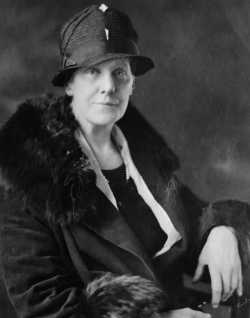
Distraught over her mother's death in 1905, Jarvis set about celebrating mothers as a whole with her creation of Mother's Day, which began in 1908 with a commemorative event at her church, supported by placements of her mother's favorite flower, the white carnation.The newfound holiday was perhaps too popular, as the floral industry cashed in on the event, expanding profits by offering red carnations for living mothers.
Jarvis tried to trademark her Mother's Day holiday, but it was too late, and she spent her remaining years attempting to stop the celebration altogether. As for the entities profiting off the day, Jarvis called them "charlatans, bandits, pirates, racketeers, kidnappers, and termites that would undermine with their greed one of the finest, noblest, and truest movements and celebrations."
Ethan Zuckerman – Pop-Up Ads
Computer programmer and activist Ethan Zuckerman wrote a little bit of code at Tripod.com that would change the internet experience forever – the pop-up ad. Since the site's revenue model was entirely based on advertising, Zuckerman thought of ways to incorporate ads without touching the actual website homepage.His solution was to create a dedicated new window for the ad that would pop up independent of the user's placement on the website page.
Thus, the Pop-Up Ad was born and would come to aggravate millions, if not billions, of people. In 2014, Zuckerman penned an op-ed for The Atlantic that expressed regret over his invention. As for the Pop-up Ad, he said, "I wrote the code to launch the window and run an ad in it. I'm sorry. Our intentions were good."
Robert Propst – Cubicles
Designer and researcher Robert Props was tasked by his firm to find solutions for problems outside of the furniture industry, which caused him to develop what he called the Action Office. Consequently, this open-air layout for offices promoted health and productivity via the efficiency of layout design.Unfortunately for Propst, the Action Office was a hit and many businesses incorporated it into its offices. So many in fact, the creation became warped into a way to fit as many workers in an office space at a time. Later in life, Propst expressed regret in creating a "monolithic insanity."
Wally Conron – Labradoodles
Dog breeder Wally Conron had an idea in the late 1980s for a new breed of dog. He combined two popular breeds, the poodle and the labrador to create the Labradoodle, a fluffy new breed that sparked a designer dog breed craze and made the labradoodle into one of the most popular breeds in the United States.
Though Conron stopped breeding them some twenty years ago, the dog's popularity only continued to sore. For this, he expressed regret, once telling the Associated Press that he'd "done a lot of damage…I've created a lot of problems…There are a lot of unhealthy and abandoned dogs out there."
Mikhail Kalashnikov – AK-47
Soviet Lieutenant General Kalashnikov was recovering in a hospital bed when he designed a rifle prototype that would become perhaps the most famous rifle ever made – the AK-47.Efficient, cheap, and practically indestructible, the AK-47 soon became associated with bloody conflicts around the world. Reportedly, right before his death at age 94, he expressed profound regret over his creation.
In a letter to Patriarch Kirill of the Russian Orthodox Church, he wrote, "The spiritual pain is unbearable…I keep having the same unsolved question: if my rifle claimed people's lives, then can it be that I… a Christian and an Orthodox believer, was to blame for their deaths?"
Scott Fahlman – Emoticons
More than 10 billion emoticons, or emojis, are sent every day worldwide and it seems strange to think there was a time when it didn't exist. Back in the early 1990s, however, Carnegie Mellon professor Scott E. Fahlman changed the game when he sent the first horizontal smiley face in a message to a friend.
Initially intended to say "I'm joking" in symbolic form, the horizontal smiley face slowly but surely kicked off a craze of symbol-based emoticons. This was much to the chagrin of Falhman, however, who later said, "Sometimes I feel like Dr. Frankenstein. My creature started as benign but it's gone places I don't approve of."
Kamran Loghman – Pepper Spray
Developer Kamran Loghman, a weapons-grade designer for the FBI, was tasked with creating weapons-grade pepper spray for crowd control. It was so successful that it was implemented by law enforcement agencies around the country. After seeing how it was used on ostensibly peaceful protestors, the invention didn't sit too well with Loghman.
In an interview with Democracy Now! the inventor said "I saw it, and the first thing that came to my mind wasn't police or students, but my own children sitting down, having an opinion, and they're being shot and forced by chemical agents…I feel it's my civic duty to explain to the public that this is not what pepper spray was developed for."
John Sylvain – K-Cups
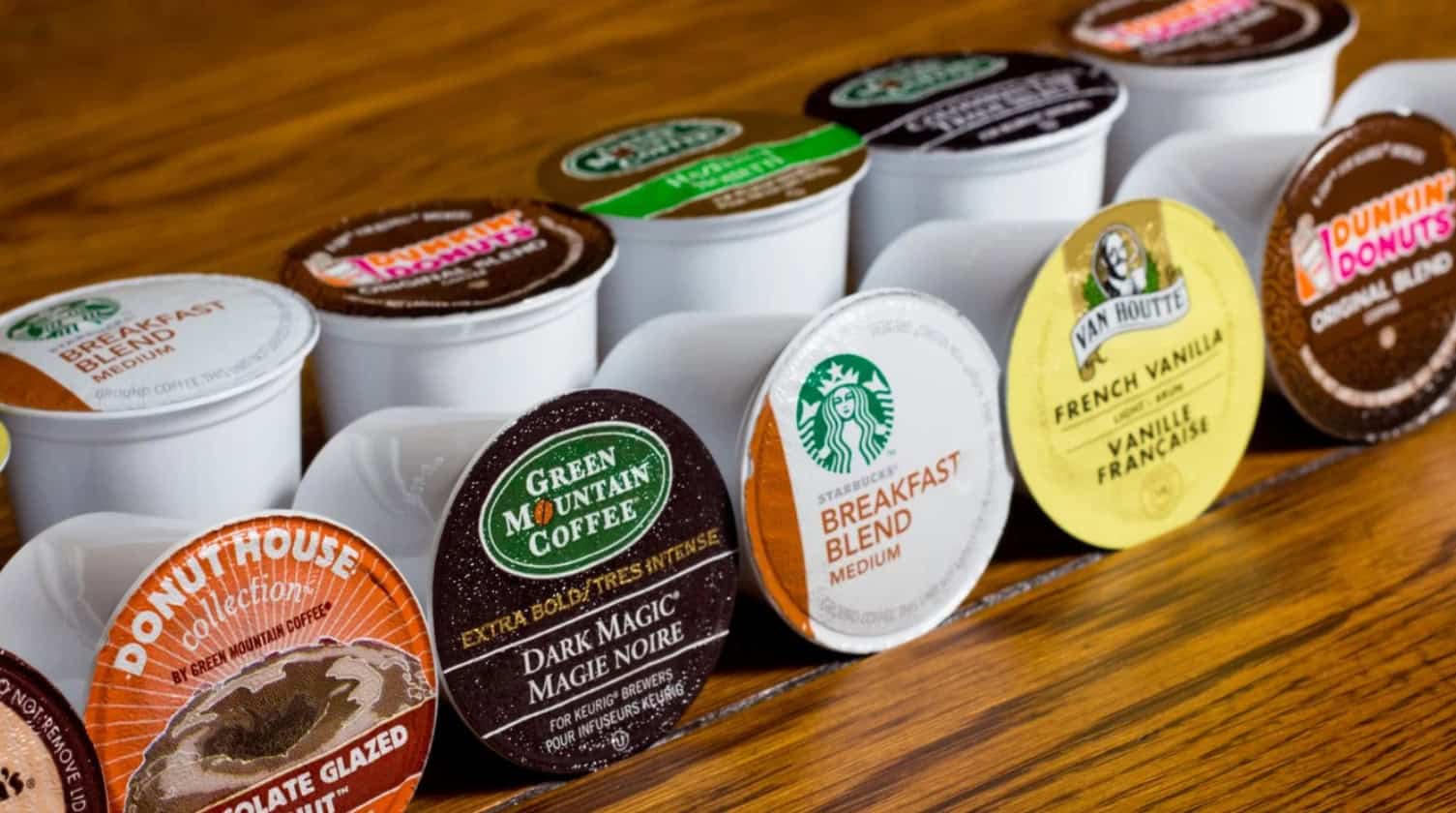
K-Cups are everywhere – from stores to offices, but at one point, they were but a figment of the imagination, until John Sylvain developed the single-serve instant brew plastic cup in 1992. Though it took another decade and a half for them to catch on, K-cups are now ubiquitous but they came with consequences. In the past year alone, the invention generated enough non-biodegradable waste to circle the globe over 10 times. As for Sylvain, he told The Atlantic, "I feel bad sometimes that I ever did it." To combat his regret, Sylvain now runs a solar panel business, at least in part to offset some of the environmental damage of the K-Cup.
Victor Gruen – The Shopping Mall
The first shopping mall was invented in Minnesota by Victor Gruen in the late 1950s as a way for the increasingly suburban population to get all their shopping done in a single location and was the perfect convenience for an evolving American Society.As the story goes, however, the success came with drawbacks. Soon, unscrupulous developers hijacked the concept and built countless shopping malls without the trappings of plant life and art that made the first one so welcoming.
Regarding this, Gruen said, "I would like to take this opportunity to disclaim paternity once and for all. I refuse to pay alimony to those bastard developments. They destroyed our cities."