Courtesy of Warner Bros.

Courtesy of Warner Bros.

Courtesy of Warner Bros

Courtesy of Warner Bros.

Courtesy of Warner Bros.

Courtesy of Warner Bros.

Courtesy of United Artists

Courtesy of Warner Bros.

Courtesy of United Artists

Courtesy of Warner Bros.

Courtesy of Warner Bros.

Courtesy of Warner Bros.

Courtesy of Warner Bros.

Courtesy of Columbia Pictures

Courtesy of United Artists

Courtesy of Warner Bros.

Courtesy of Warner Bros.

Courtesy of Warner Bros.

Courtesy of United Artists

Courtesy of Universal Pictures

Courtesy of Warner Bros.

Courtesy of United Artists

Courtesy of Warner Bros.

Courtesy of Warner Bros.

Courtesy of Warner Bros.


24 Clint Eastwood Movie Quotes Fans Never Forget
Few actors can deliver a line quite like Clint Eastwood. Sometimes it's a threat, sometimes it's a joke, and sometimes it's just a handful of words that somehow say everything. Whether he's wearing a cowboy hat, carrying a badge, or playing a grumpy old neighbor, Eastwood has a way of making even the simplest dialogue unforgettable.
Born in 1930, Eastwood first found widespread fame playing Rowdy Yates on the television Western "Rawhide." His movie career took off with Sergio Leone's "Dollars" trilogy in the 1960s, followed by the iconic "Dirty Harry" films. Along the way, he became one of Hollywood's most respected filmmakers, winning four competitive Academy Awards for directing and producing "Unforgiven" and "Million Dollar Baby." He even served as mayor of Carmel-by-the-Sea, California, from 1986 to 1988.
What makes his movie quotes so memorable isn't always what he says. It's how he says it. A slight pause, a raised eyebrow, or that unmistakable gravelly voice can turn a perfectly ordinary sentence into a moment audiences remember for decades.
From classic Western showdowns to police thrillers and Oscar-winning dramas, these 24 memorable Clint Eastwood movie quotes capture the humor, grit, and larger-than-life screen presence that made him a Hollywood legend.
"Go ahead. Make my day."
Movie: "Sudden Impact" (1983) | Character: Inspector Harry Callahan
Three words were all Clint Eastwood needed to deliver one of the most recognizable threats in movie history. In the fourth "Dirty Harry" film, Inspector Harry Callahan confronts an armed robber holding a waitress hostage. Rather than backing down, Harry practically dares the criminal to make a move. Eastwood's calm delivery makes the moment unforgettable. The line became so popular that President Ronald Reagan famously borrowed it during a 1985 speech about tax legislation. It's difficult to imagine another actor making such a short sentence sound quite so intimidating.
"Dyin' ain't much of a livin', boy."
Movie: "The Outlaw Josey Wales" (1976) | Character: Josey Wales
Eastwood's Josey Wales has little patience for bounty hunters, especially those foolish enough to confront him. When a young bounty hunter explains that chasing wanted men is how he makes a living, Wales responds with this devastating piece of advice. It's part warning, part dark humor, and completely in character for a man who has already survived more violence than most people could imagine. Eastwood also directed this Western, which follows a Missouri farmer driven by revenge after the murder of his family during the Civil War.
"A good man always knows his limitations."
Movie: "Magnum Force" (1973) | Character: Inspector Harry Callahan
Dirty Harry delivers this observation while speaking to Lieutenant Briggs, who prides himself on never having to draw his weapon. It's a compliment with a healthy dose of sarcasm, exactly the kind of remark Harry enjoys making to his superiors. The movie later revisits the idea with an even more famous variation: "A man's got to know his limitations." That final line carries considerably more weight after Harry uncovers a group of vigilante police officers operating outside the law. It's one of the character's rare moments of practical wisdom.
"It's a hell of a thing, killing a man."
Movie: "Unforgiven" (1992) | Character: William Munny
Not every memorable Eastwood line is meant to sound tough. In "Unforgiven," retired gunfighter William Munny reflects on the terrible finality of taking someone's life. Speaking to the Schofield Kid, who has just experienced his first killing, Munny makes it clear that violence carries consequences far beyond the moment itself. The exchange helps explain why "Unforgiven" stands apart from so many traditional Westerns. Instead of glorifying gunfights, the film examines their human cost. Eastwood directed and starred in the movie, which won four Academy Awards, including Best Picture and Best Director.
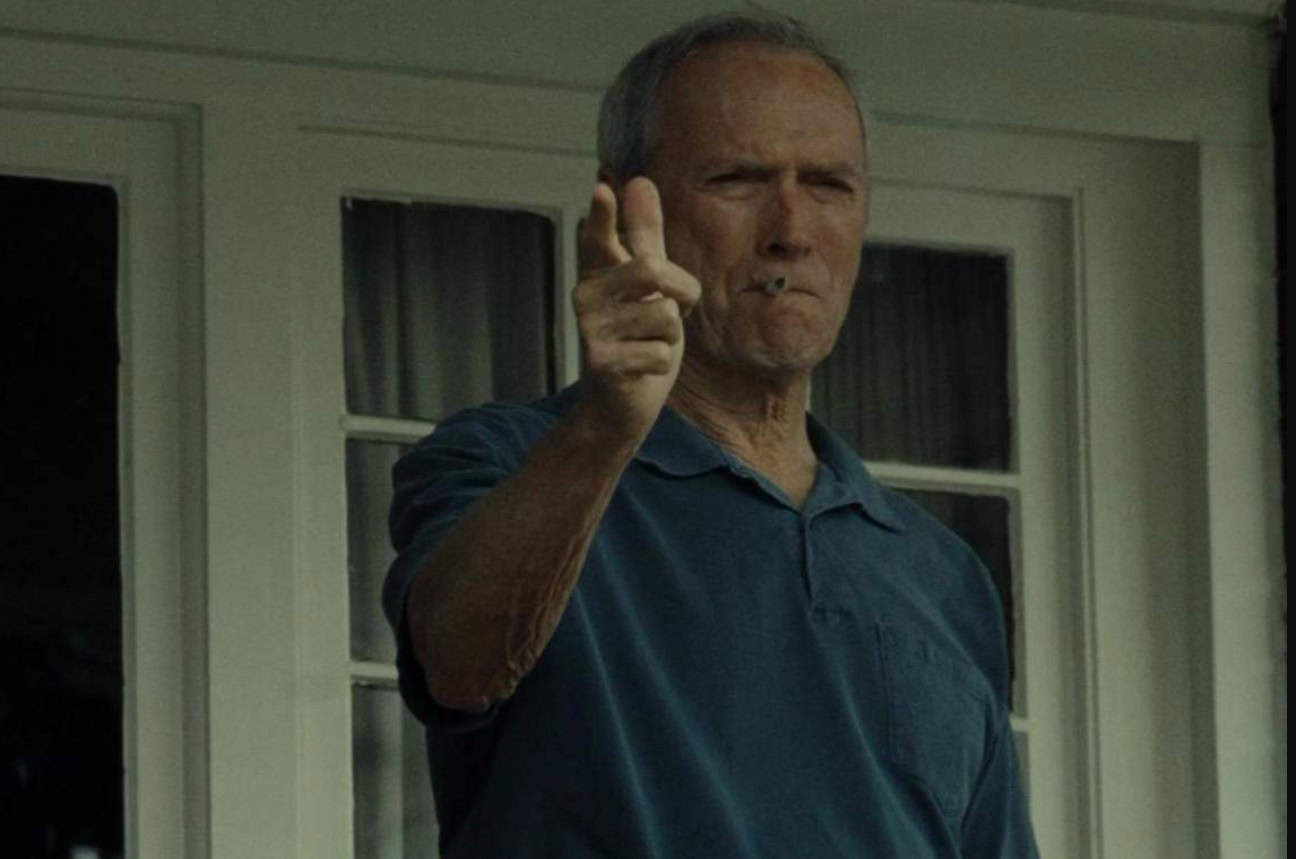
"Get off my lawn."
Movie: "Gran Torino" (2008) | Character: Walt Kowalski
Few movie characters have embodied the cranky neighbor stereotype quite like Walt Kowalski. A retired autoworker and Korean War veteran, Walt wants little more than to be left alone in his Detroit neighborhood. Unfortunately, that becomes increasingly difficult as gang activity spills onto his property. Eastwood turns this familiar complaint into a memorable moment of confrontation. Beneath Walt's abrasive personality, however, "Gran Torino" tells a much more complicated story about prejudice, friendship, sacrifice, and the possibility of changing one's outlook later in life.
"There's two kinds of people, my friend. Those with loaded guns and those who dig. You dig."
Movie: "The Good, the Bad and the Ugly" (1966) | Character: Blondie, the Man with No Name
Some movie lines require a little explanation. This one certainly doesn't. During the climactic search for buried Confederate gold, Eastwood's Blondie makes his position perfectly clear to Tuco, played by Eli Wallach. Blondie has the gun, Tuco has the shovel, and neither needs a lengthy discussion about how the arrangement works. Director Sergio Leone built much of his legendary Western around tense standoffs, unforgettable close-ups, and sparse dialogue. This quote captures all three elements in a single exchange.
"Okay, you did two things wrong. One is you asked a question, and two is you asked another question."
Movie: "Million Dollar Baby" (2004) | Character: Frankie Dunn
Training with Frankie Dunn apparently comes with one very important rule: don't ask so many questions. When aspiring boxer Maggie Fitzgerald, played by Hilary Swank, asks what she's doing wrong while practicing on the speed bag, Frankie delivers this wonderfully grumpy response. His coaching style isn't exactly encouraging at first, but his relationship with Maggie gradually becomes the emotional center of the film. Eastwood directed and starred in "Million Dollar Baby," which won Best Picture and earned Swank her second Academy Award for Best Actress.
"Every gun makes its own tune."
Movie: "The Good, the Bad and the Ugly" (1966) | Character: Blondie, the Man with No Name
In a Western where gunfire often does more talking than the characters, this line seems especially appropriate. Blondie recognizes that different firearms produce distinctive sounds, giving him another clue about what's happening around him. It's also a fitting observation for a Sergio Leone film, where sound plays such an important role in building tension. Composer Ennio Morricone's famous score gives the movie's central characters distinct musical identities, making Eastwood's remark feel almost like a commentary on the film itself.
"If you want a guarantee, buy a toaster."
Movie: "The Rookie" (1990) | Character: Nick Pulovski
Eastwood's characters aren't especially known for making promises they can't keep. In this action thriller, veteran Los Angeles detective Nick Pulovski responds to a request for a safety guarantee with a piece of advice that sounds more appropriate for a department store. The remark comes during a tense conversation involving the father of his inexperienced partner, played by Charlie Sheen. Eastwood directed the movie as well, combining explosive action with the familiar dynamic of a hardened veteran trying to work alongside a younger, less experienced colleague.
"We all have it coming, kid."
Movie: "Unforgiven" (1992) | Character: William Munny
William Munny has spent enough time around death to understand that it rarely follows anyone's idea of fairness. When the Schofield Kid suggests that the men they've killed deserved their fate, Munny responds with this bleak observation. It's a short line that says an enormous amount about the film's central themes. In "Unforgiven," the legendary gunfighter isn't interested in romanticizing violence or convincing anyone that he's a hero. He knows what he's done, and he understands that nobody gets to escape the consequences of mortality forever.
"Do I feel lucky?"
Movie: "Dirty Harry" (1971) | Character: Inspector Harry Callahan
It's one of the most frequently repeated questions in movie history, although people don't always remember the wording correctly. During a confrontation with an armed criminal, Harry Callahan wonders aloud whether he has fired five shots or six from his powerful revolver. The uncertainty becomes a psychological weapon of its own. The famous scene helped establish Eastwood's no-nonsense police inspector as a defining action character of the 1970s. It also turned the Smith & Wesson Model 29 revolver into one of the most recognizable movie firearms ever featured on screen.
"Look where you're going, and go where you're looking."
Movie: "Cry Macho" (2021) | Character: Mike Milo
By the time Eastwood starred in "Cry Macho," he was playing a very different kind of cowboy from the mysterious gunfighters who made him famous. His character, Mike Milo, is a retired rodeo star and former horse trainer tasked with bringing a young boy home from Mexico. While teaching the teenager to ride, Mike offers this simple piece of advice. The words work as practical riding instructions, but they also fit the film's larger themes of finding direction, learning from experience, and understanding what really matters in life.
"I'm not okay. I'm sick, I'm tired, and I'm armed too, so be careful."
Movie: "In the Line of Fire" (1993) | Character: Frank Horrigan
Eastwood plays veteran Secret Service agent Frank Horrigan, a man still haunted by his failure to save President John F. Kennedy in Dallas. Decades later, he becomes involved in a dangerous pursuit of a would-be presidential assassin, played by John Malkovich. When a fellow agent checks on him, Horrigan responds with this wonderfully unhelpful assessment of his condition. It's a classic Eastwood moment, combining exhaustion, sarcasm, and just enough menace to suggest that bothering him might not be the best idea.
"The dead can be very useful sometimes."
Movie: "A Fistful of Dollars" (1964) | Character: Joe, the Man with No Name
Leave it to Eastwood's mysterious gunfighter to find a practical advantage in something as grim as a dead body. In Sergio Leone's breakthrough Western, Joe manipulates two rival families fighting for control of a small town. His ability to outthink his enemies proves just as valuable as his speed with a gun. This remark comes as he explains how the dead can be used to deceive the living. The film introduced international audiences to the cool, calculating character who would become known as the Man with No Name.
"With all due respect, sir, you're beginning to bore the hell out of me."
Movie: "Heartbreak Ridge" (1986) | Character: Gunnery Sergeant Thomas Highway
Most people would hesitate before telling a superior officer that they're becoming boring. Gunnery Sergeant Thomas Highway isn't most people. In "Heartbreak Ridge," Eastwood plays a hard-drinking, battle-tested Marine approaching retirement while trying to whip a troubled reconnaissance platoon into shape. His blunt personality frequently puts him at odds with officers who prefer regulations to battlefield experience. This quote perfectly captures Highway's complete lack of enthusiasm for lectures, bureaucracy, and anyone who wastes his time.
"And I'm here to kill you."
Movie: "Unforgiven" (1992) | Character: William Munny
By the final confrontation in "Unforgiven," William Munny has abandoned any hope of leaving his violent past completely behind. After learning what happened to his friend Ned Logan, played by Morgan Freeman, Munny confronts Sheriff Little Bill Daggett, played by Gene Hackman. His chilling declaration comes as part of an admission about the terrible things he's done in his life. There's no swagger or clever wordplay here. Eastwood delivers the threat with an unsettling sense of certainty, making the moment one of the film's most memorable scenes.
"Girlie, tough ain't enough."
Movie: "Million Dollar Baby" (2004) | Character: Frankie Dunn
Maggie Fitzgerald has the determination to become a professional boxer, but convincing Frankie Dunn to train her is another challenge entirely. Initially dismissive of the idea, Frankie makes it clear that determination alone won't be enough to succeed in the ring. His attitude gradually changes as he recognizes Maggie's dedication and potential. The quote captures the gruff exterior of a character who ultimately becomes much more than a boxing trainer. Eastwood's performance gives Frankie a mixture of stubbornness, vulnerability, and reluctant compassion.
"When a man's got money in his pocket, he begins to appreciate peace."
Movie: "A Fistful of Dollars" (1964) | Character: Joe, the Man with No Name
Eastwood's wandering gunfighter arrives in a town divided between two ruthless families and quickly realizes there's money to be made from their rivalry. But even someone who makes his living with a gun understands the value of avoiding unnecessary trouble. This line reveals the practical philosophy behind Joe's otherwise mysterious personality. He's willing to take enormous risks when there's something to gain, but he isn't interested in fighting simply for the sake of fighting. The understated delivery makes the observation feel like hard-earned Western wisdom.
"About time this town had a new sheriff."
Movie: "High Plains Drifter" (1973) | Character: The Stranger
In "High Plains Drifter," Eastwood plays a mysterious stranger who arrives in the troubled town of Lago and quickly takes control of the situation. After the townspeople agree to give him extraordinary authority, he decides the community needs a change in leadership. Removing the sheriff's badge, he pins it on Mordecai, a town resident who has frequently been mistreated by others. It's an unexpected promotion and another example of the Stranger's unsettling sense of humor. Eastwood also directed the film, giving its familiar Western setting a darker, more mysterious atmosphere.
"Ever notice how you come across somebody once in a while you shouldn't have f***ed with? That's me."
Movie: "Gran Torino" (2008) | Character: Walt Kowalski
Walt Kowalski isn't particularly friendly on a good day, and threatening people in his neighborhood quickly discover just how intimidating he can be. In "Gran Torino," Walt confronts gang members whose actions threaten the people he's gradually come to care about. His warning is delivered with the same steely confidence Eastwood brought to his Western and police characters decades earlier. But the film ultimately challenges the idea that intimidation and violence can solve every problem, giving Walt a surprisingly emotional character arc.
"Alive or dead? It's your choice."
Movie: "For a Few Dollars More" (1965) | Character: Monco, the Man with No Name
Eastwood returned to Sergio Leone's world of ruthless outlaws and calculating bounty hunters in the second installment of the "Dollars" trilogy. This time, his character is known as Monco, a skilled gunfighter who joins forces with Colonel Douglas Mortimer, played by Lee Van Cleef. His approach to collecting rewards is refreshingly straightforward, at least by the standards of a spaghetti Western. This blunt warning leaves his opponent with two possibilities and very little time to consider either one. It's another reminder that Eastwood rarely needed lengthy speeches to command a scene.
"I know what you're thinking. 'Did he fire six shots or only five?'"
Movie: "Dirty Harry" (1971) | Character: Inspector Harry Callahan
One of the cleverest things about Harry Callahan's famous revolver speech is that he admits he isn't completely sure how many shots he's fired. Or at least that's what he wants the criminal to believe. With a potentially empty gun in his hand, Harry turns uncertainty into a weapon, forcing his opponent to decide whether challenging him is worth the risk. The scene became a defining moment of the original "Dirty Harry" and helped establish Eastwood's reputation for playing characters who seem almost impossible to intimidate.
"Everybody wants results, but nobody wants to do what they have to do to get them done."
Movie: "Sudden Impact" (1983) | Character: Inspector Harry Callahan
Harry Callahan has never been especially enthusiastic about rules that interfere with his version of police work. In "Sudden Impact," he explains his frustration to Jennifer Spencer, played by Sondra Locke, after she asks about his controversial methods. Harry believes that people demand results without accepting the difficult or unpleasant decisions sometimes involved in getting them. Whether viewers agree with his approach or not, the line captures the rebellious attitude that made Dirty Harry such a distinctive character throughout the five-film series.
"Well, do ya, punk?"
Movie: "Dirty Harry" (1971) | Character: Inspector Harry Callahan
It's the unforgettable conclusion to Harry Callahan's famous speech about whether his revolver still has a bullet in it. After explaining that he's lost track of how many shots he's fired, Harry leaves the criminal with one final question. Eastwood's delivery is almost casual, as though he's discussing something far less serious than a potentially fatal decision. The entire exchange became a landmark moment in action-movie history, and its closing words remain instantly recognizable more than half a century after "Dirty Harry" first reached theaters.