
Kyrien/ via Getty Images
ExaMedia Photography/Shutterstock.com

Jeremy Thompson from Los Angeles, California, CC BY 2.0, via Wikimedia Commons

Jeremy Thompson, CC BY 2.0, via Wikimedia Commons

w:User: Michael180, CC BY-SA 2.5, via Wikimedia Commons

Christophe95, CC BY-SA 4.0, via Wikimedia Commons

Jeremy Thompson from United States of America, CC BY 2.0, via Wikimedia Commons

fotovampir/ via Getty Images

Dusso Janladde, CC BY-SA 3.0, via Wikimedia Commons
Kyrien/ via Getty Images

Box Lab/Shutterstock.com

Airtime Thrills Raw Footage / CC BY 4.0

James Chow/ via Getty Images

Chris Hagerman / CC BY-SA 3.0



13 Coasters and Thrill Rides That Test Your Nerves
A great roller coaster should make your stomach drop, your hands grip the restraint, and your brain question why you got in line. That sensation is the whole point. But there is a difference between a ride that feels frightening and one that is demonstrably unsafe. Height, speed, and a near-vertical drop are not evidence of a defective attraction.
Some famous thrill rides do have complicated histories, including mechanical stoppages, injuries, and lengthy closures. Others make this list because their sheer scale or unusual design turns an ordinary theme-park afternoon into an unforgettable experience. A few have been retired, and several were temporarily unavailable as of November 2026.
Here are 13 memorable roller coasters and high-altitude thrill rides from the United States and around the world. The list is not a ranking of accident rates or current danger. It looks at the experiences that made these attractions famous, the incidents that can be verified, and what visitors should know about their status today.
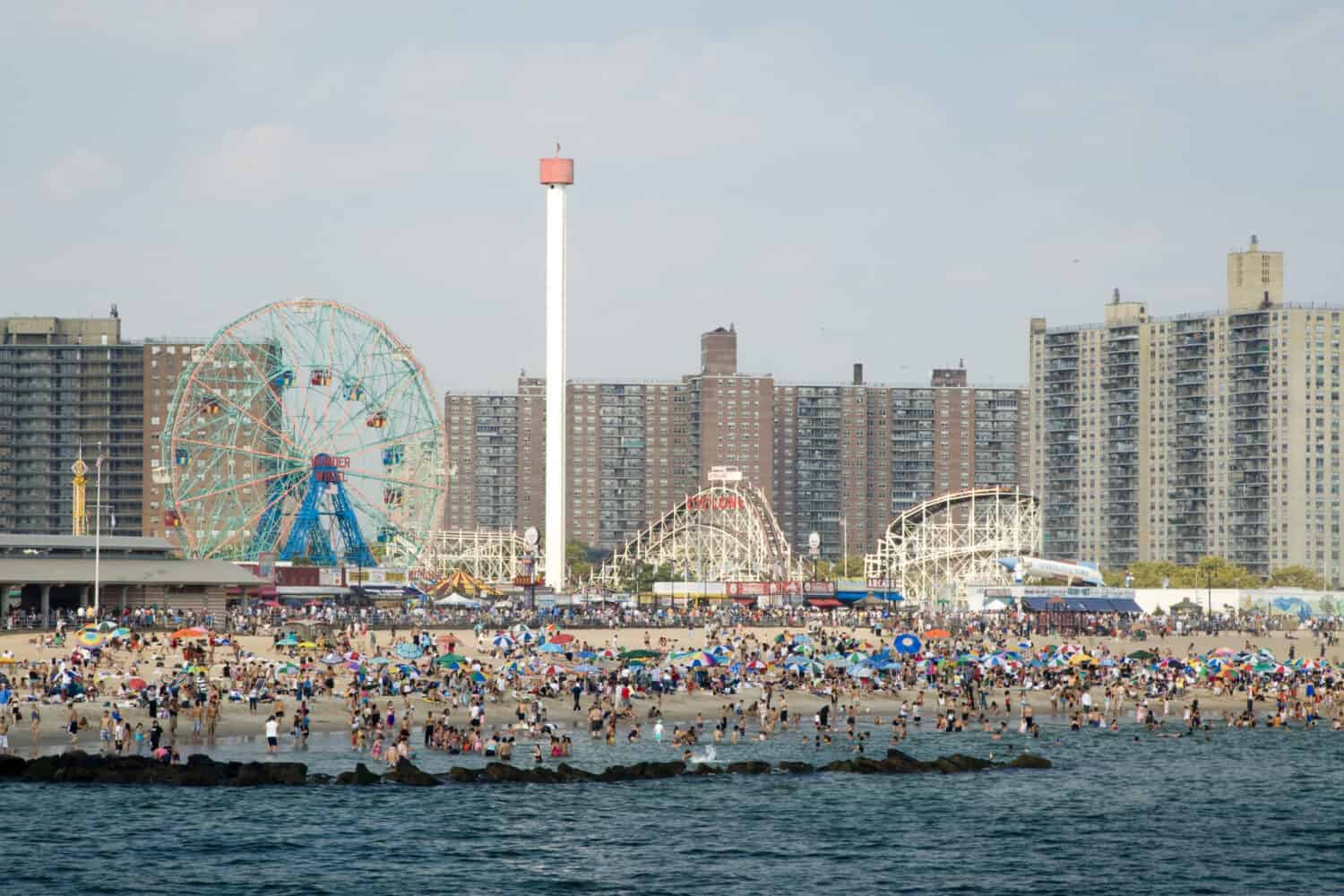
Coney Island Cyclone - Luna Park, New York
Most rides do not spend nearly a century making people scream. The Coney Island Cyclone opened in 1927, and its 85-foot first drop, tight turns, and top speed of about 60 mph still deliver an old-school jolt. Its history includes serious tragedies. A rider died after reportedly standing and striking part of the structure in 1985, and a maintenance worker died after falling from the ride in 1988. A passenger who suffered neck injuries in 2007 died days later following surgery. More recently, a mechanical problem stopped the Cyclone in August 2024. Riders were evacuated without reported injuries, and the coaster reopened after repairs and inspection that September. Those incidents deserve to be reported accurately, but they do not establish that the Cyclone is currently more dangerous than other operating coasters.
Formula Rossa - Ferrari World, Abu Dhabi
Ferrari World took the idea of a fast roller coaster and gave it the acceleration of a racing machine. Formula Rossa reaches about 149 mph, with a launch from zero to 240 kilometers per hour in roughly 4.9 seconds. Guinness World Records verified its record-setting launch speed in April 2026. Riders wear protective goggles because traveling that quickly in the open air is not quite like cruising down the highway with the windows open. Formula Rossa once held the title of world's fastest roller coaster overall, but Falcon's Flight in Saudi Arabia later surpassed it. There is another important update for anyone planning a trip: Ferrari World's official ride-information page listed Formula Rossa as closed for maintenance in November 2026. Its speed makes it extraordinary, not automatically unsafe.
GhostRider - Knott's Berry Farm, California
There is something wonderfully intimidating about a massive wooden coaster. GhostRider opened at Knott's Berry Farm in 1998 and sends riders through more than 4,500 feet of track, with a 118-foot lift and plenty of airtime. It also has a documented incident in its past. In August 1999, a piece of wood broke loose and struck passengers, injuring five people. The park closed the ride, reinforced its structure, and reopened it after repairs and testing. GhostRider later underwent a major refurbishment in 2015 and 2016, including replacement track and new trains intended to improve the ride experience. Its thundering wooden structure still makes it feel wilder than many newer coasters, but the 1999 incident should not be presented as evidence that today's ride is inherently unsafe.
Insanity - The STRAT, Las Vegas (Closed)
Insanity was never a roller coaster, but it earned a place among Las Vegas' most nerve-rattling attractions. Instead of following a track, the ride used a mechanical arm to swing passengers beyond the edge of The STRAT tower. Seats spun roughly 900 feet above the ground and tilted outward, giving riders an unsettling view of the city far below. A safety-related stoppage in 2005 left guests stranded high above the Strip until they could be recovered, a reminder that an emergency stop can be frightening even when it functions as intended. One crucial update: Insanity has not operated since 2023 and is no longer listed among The STRAT's available thrill rides. This is a look back at a former attraction, not something visitors can currently book.
Steel Dragon 2000 - Nagashima Spa Land, Japan
Steel Dragon 2000 is the sort of roller coaster that seems to keep going long after you expect the station to appear. The Japanese ride stretches more than 8,100 feet, rises about 318 feet, and reaches roughly 95 mph. Its enormous layout was designed with seismic conditions in mind, and the nearly four-minute ride includes huge hills and two tunnels. In August 2003, a wheel detached from a train, injuring a passenger and a man in a nearby swimming pool. The coaster remained closed until 2006 while the incident was investigated and changes were made. Steel Dragon returned to service and remains a major attraction. It was once the world's longest coaster, but should no longer be described as holding that record today. Its scale alone is enough to explain why enthusiasts remember it.
Twisted Colossus - Six Flags Magic Mountain, California
Twisted Colossus has two histories, and mixing them up changes the story. Its predecessor, the wooden Colossus, opened in 1978. A rider died on that original coaster later the same year, and a fire broke out during demolition work in 2014. Neither event occurred on the modern Twisted Colossus, which debuted in 2015 with a redesigned steel track supported by much of the older wooden structure. The newer ride has its own documented incident: in 2022, an eight-year-old girl needed stitches after a cellphone flew from another rider and struck her face. That was a loose-object injury, not a reported failure of the track or train. The present attraction is famous for racing-style elements, sharp turns, and an experience that combines old-school coaster structure with modern inversions.
Shambhala - PortAventura Park, Spain
Shambhala gets your attention before you even reach the entrance. The steel hypercoaster towers over PortAventura Park in Spain and features a drop of approximately 256 feet, along with speeds near 83 mph. But the signature thrill is not a series of upside-down loops. It is airtime: the strange floating sensation created when the train crests one of the ride's five camelback hills. Shambhala opened in 2012 and earned a reputation for its scale and long, sweeping layout. Earlier descriptions have incorrectly called it the world's tallest roller coaster, a record it never held. There is also no good basis for labeling it one of the world's most dangerous attractions simply because the first drop is enormous. Its appeal is how carefully that height and speed are turned into a memorable ride.
Kingda Ka - Six Flags Great Adventure, New Jersey (Retired)
For nearly two decades, Kingda Ka was the roller coaster people pointed to when they wanted to explain just how extreme these machines could get. Opened in 2005 at Six Flags Great Adventure, the launched coaster shot riders toward a 456-foot tower and reached a top speed of 128 mph. Its operating history included mechanical problems and weather-related closures, but those episodes should not be lumped together as proof of a constant safety threat. The biggest update is that the ride no longer exists. Kingda Ka gave its final rides in November 2024, and its towering structure was demolished in February 2025. It remains an important chapter in coaster history, but any article describing it as still running is now plainly out of date.
Boomerang - Wiener Prater, Vienna
A Boomerang coaster sounds fairly straightforward until you realize you have to ride the same inversions backward. At Vienna's Wiener Prater, the Vekoma shuttle coaster sends its train through a cobra roll and a loop before climbing a second ramp and retracing the route in reverse. The park describes speeds above 85 kilometers per hour, and the compact layout makes the ride feel more intense than its footprint suggests. Boomerang-style rides operate at multiple parks around the world, and some have had incidents at those other locations. Those separate cases should not be attributed to the Vienna attraction without evidence. The good reason to include this particular coaster is its distinctive, disorienting forward-and-backward ride, not an invented injury record.
SheiKra - Busch Gardens Tampa Bay, Florida
SheiKra builds suspense by doing something cruelly simple: it pauses riders near the edge of a 200-foot drop before sending them almost straight down. The Tampa coaster opened in 2005 and reaches about 70 mph. A widely reported stoppage on May 12, 2016, stranded 64 passengers in two trains near the top of the ride after an electrical error. Park staff evacuated everyone, and officials reported no injuries. The ride reopened following testing. That distinction matters. Being stopped high above the ground was undoubtedly frightening, but an automatic shutdown is not the same thing as a train plunging out of control. With its near-vertical descent and dramatic setting, SheiKra provides plenty of thrills without exaggerating its safety history.
Orion - Kings Island, Ohio (Temporarily Closed)
Orion looks like the type of roller coaster built specifically to make the first drop feel impossible. The giga coaster opened at Kings Island in 2020, reaching 91 mph along more than 5,300 feet of track. Its first plunge measures 300 feet, even though its lift hill is slightly shorter. There is a timely reason to handle its status carefully. In October 2026, Kings Island temporarily closed Orion and Diamondback as a precaution after a fatal incident on a different coaster at Six Flags Over Georgia. The company did not announce that Orion itself had malfunctioned. As of November 2026, the official Kings Island attraction page still labeled Orion temporarily closed. Its size makes it impressive, but its precautionary closure should not be rewritten as an accident involving passengers on Orion.
Star Flyer - Edinburgh Christmas Market, Scotland
The Star Flyer makes a dramatic change from the usual roller coaster: there is no track, only suspended seats that swing high above the ground. Versions of the attraction have appeared at Edinburgh's Christmas festivities, turning the city skyline into part of the thrill. In December 2013, a piece of plastic seat casing detached from an occupied carriage on the Edinburgh ride and fell to the ground. The attraction closed for checks, and no injuries were reported. It would be misleading to say the entire ride fell apart or that the incident proved it structurally unsafe. Operators later described routine testing and inspection procedures for the seasonal attraction. It is a striking example of how a relatively simple ride can feel terrifying because of height, exposure, and the view beneath your feet.
Titan - Six Flags Over Texas, Arlington
Titan does not need inversions to make an impression. The steel coaster at Six Flags Over Texas rises 245 feet before plunging 255 feet into a tunnel, eventually reaching about 85 mph. It then throws riders through sweeping turns and two demanding helixes. The park advertises forces as high as 4.5 Gs, which helps explain why the ride can feel so intense even to people who have tried plenty of other coasters. Some riders describe a brief gray-out sensation during sustained positive G-forces, but anecdotes about discomfort are not proof of an unusual accident rate. The original version of this article tried to turn the Texas heat and reported headaches into a sweeping danger claim. A more accurate description is that Titan is a very powerful ride whose posted health and rider restrictions should be taken seriously.