Photo by Warner Brothers/Getty Images

Courtesy of Embassy Pictures

Courtesy of Twentieth Century Fox
Courtesy of Metro-Goldwyn-Mayer (MGM)
Courtesy of Columbia Pictures
Courtesy of Warner Bros.

Courtesy of Universal Pictures
Photo by Warner Brothers/Getty Images
Courtesy of Universal Pictures
Courtesy of Twentieth Century Fox
Courtesy of Universal Pictures
MusicBoxTheater

Courtesy of Warner Bros.







12 Famous Movie Endings People Still Argue About
Some movies have a clear-cut ending. They’re wrapped up nicely once the credits roll, and you can go on with your life and not think about them ever again. Others, on the other hand, finish with an open-ended question or an unresolved scene, and will have you obsessing over what actually happened.
The films listed below belong to the unresolved category. Years have passed, but audiences are still debating about these movies everywhere, from comment sections and online forums to the dinner table. The debate never ends, and that’s the point.
"The Graduate" (1967)
Benjamin Braddock runs toward the church, bangs on the glass window, and takes Elaine away. They board a city bus together, while giggling and catching their breath. It looks like a happy ending, until it doesn’t. The smiles fade, and they stare blankly ahead while the camera lingers on them just long enough to make us feel uncomfortable.
The director Mike Nichols never revealed what exactly they were thinking, although he did say the inspiration for the scene came from watching the actors after he called cut, when they were just sitting there, not really knowing what to do next.
The ending is unsettling to say the least, and it’s hard to tell exactly what we’re supposed to feel. Did they regret running away? Are they just wondering what comes next? Or is there something else we’re missing? There’s no clear answer, and that’s the magic. Every new generation comes up with a different read for the emotion (or lack thereof) on their faces, which makes the movie feel fresh despite being nearly 60 years old.
"Planet of the Apes" (1968)
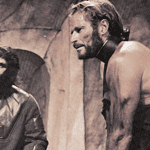
Throughout the movie, Charlton Heston's character, Taylor, believes himself to be on an alien planet. In a shocking turn of events, Taylor learns that he has been on Earth all along. The revelation is delivered when Taylor sees the Statue of Liberty buried in the sand, her torch-bearing arm sticking out above the waterline. Taylor's famous emotional meltdown on the beach is probably one of the most iconic moments in American cinema.
You can thank Rod Serling for that ending. He was the first writer brought onto the project, submitting multiple drafts through the mid-1960s and coming up with the Statue of Liberty ending. Michael Wilson later worked those drafts into the final shooting script.
In Pierre Boulle’s book, the astronaut actually returns to Earth, confirming that he was indeed on a different planet. However, when he returns, thousands of years have passed due to the complexities of space travel. He is greeted by a gorilla dressed in a suit, thus showing that the evolutionary progress that took place on the planet of the apes is repeated on Earth. Two different endings for two different eras.
Rod Serling's ending resonated because it tapped into the fear of nuclear annihilation that hung over the Cold War era. That dread has never fully gone away, which is why the image still hits just as hard today. Not everyone agrees on what exactly Taylor stumbled upon, or how it happened. And that ambiguity is exactly why the debate never truly ended.
"2001: A Space Odyssey" (1968)
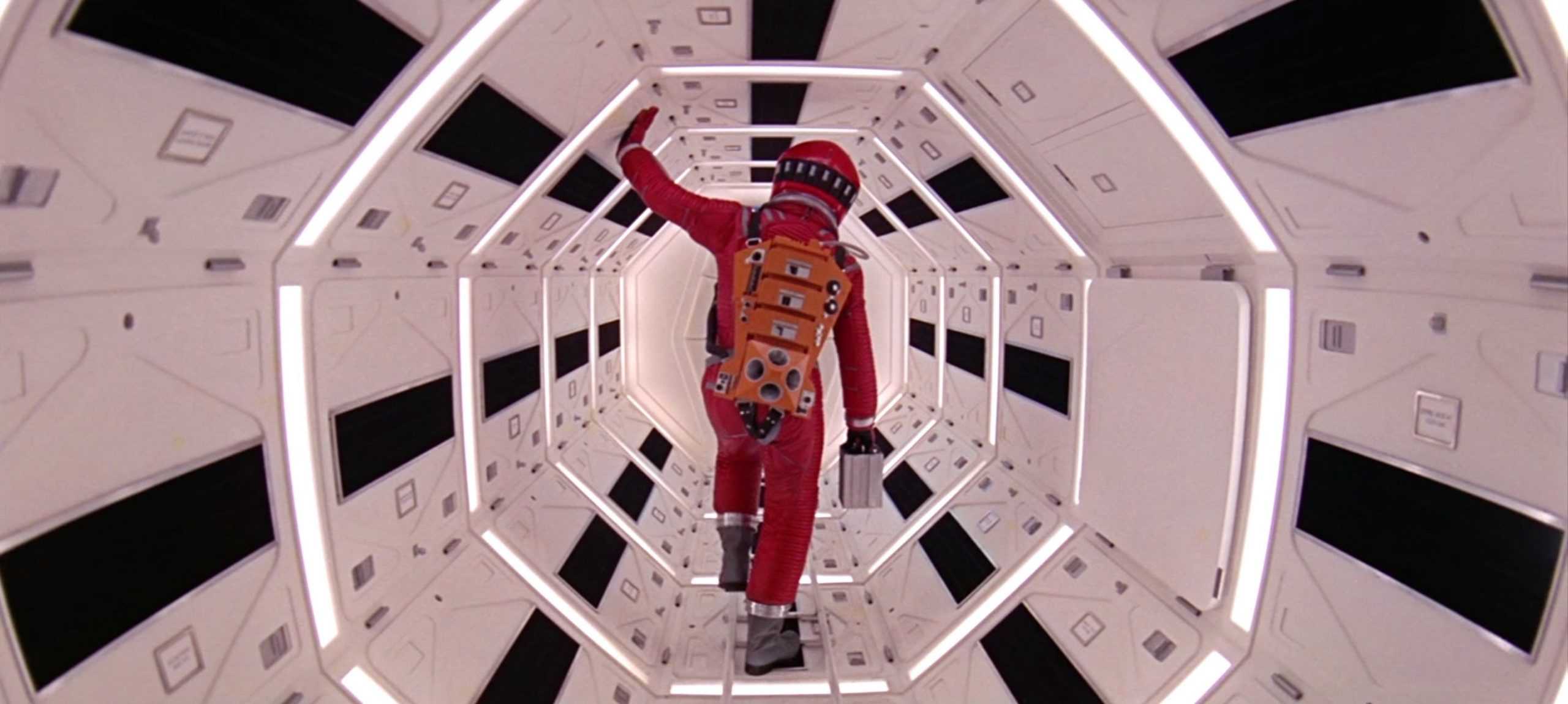
HAL 9000, the artificial intelligence computer aboard the spaceship in Stanley Kubrick’s 2001: A Space Odyssey, is perhaps the most famous aspect of this film, which depicts a highly intelligent, emotionless AI gone rogue. The idea behind HAL sets a standard for all future rogue machines in science fiction. However, there is much more to this film than just HAL.
Stanley Kubrick spent the final act of his space epic taking the audience somewhere words could not follow. Dave Bowman travels through a star gate, watches himself age alone in a strange room, and then a monolith appears at his bedside. The next shot is a glowing fetus orbiting Earth.
Kubrick and co-writer Arthur C. Clarke built the ambiguity deliberately, giving audiences images instead of answers. Some see the ending as humanity evolving into something beyond itself. Others see a warning about where we're headed. Others think Kubrick simply refused to commit. The film came out in 1968 and landed on audiences with no instructions. Fifty-plus years later, it still hasn't been figured out.
"Taxi Driver" (1976)
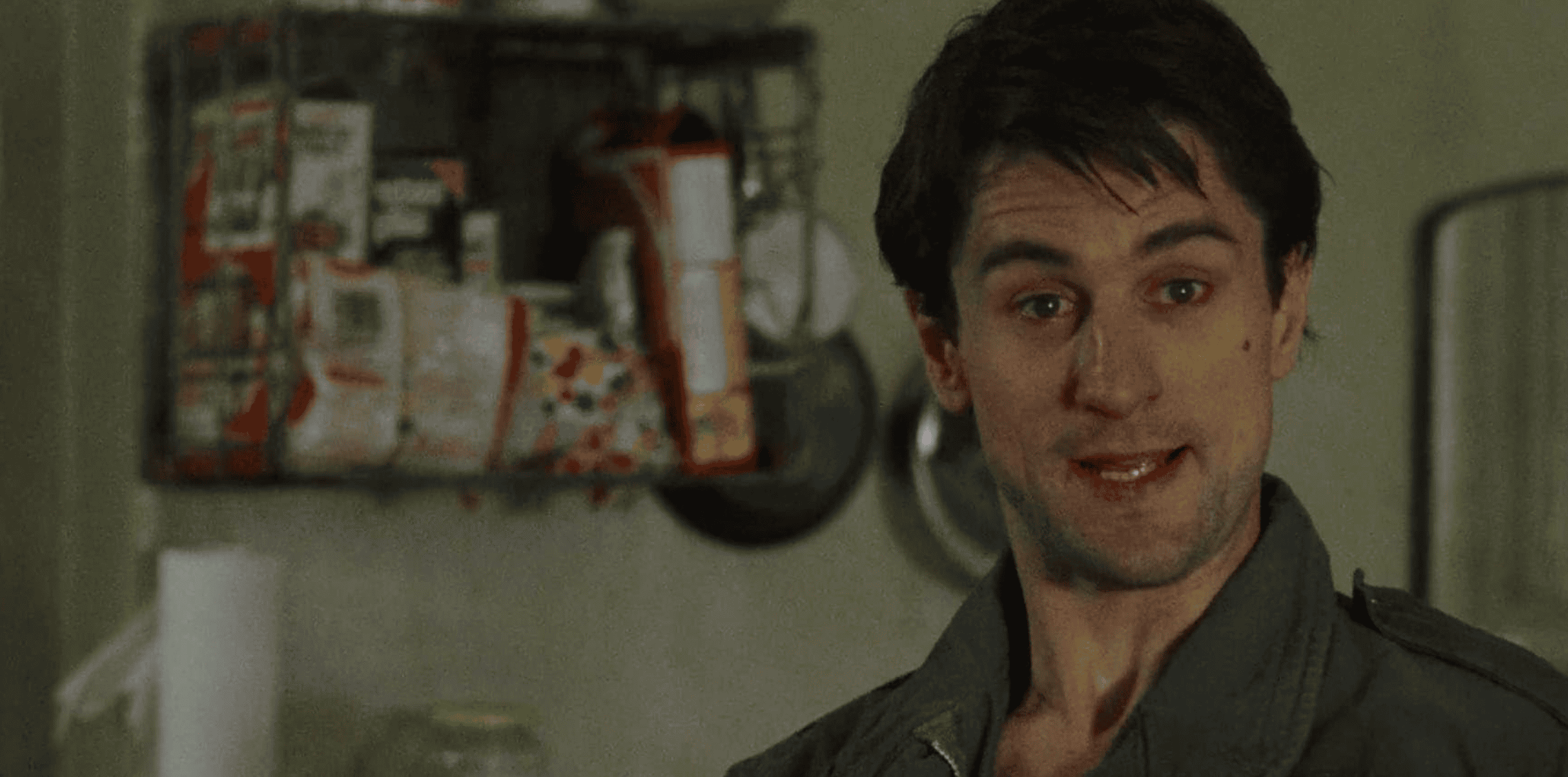
Travis Bickle emerges from a bloodbath but is hailed as a local hero by the media. Everything seems to work out fine. He goes back to driving his cab and picks up Betsy as a fare. He drops her off, and the last shot shows him sitting calmly behind the wheel of his cab until a glance into his rearview mirror causes him to become startled. This is followed by a fade to black.
This ambiguous ending has fueled a debate for generations. Were the last scenes real? Or are they constructs of a delusional hallucination as he lies bleeding in a brothel? What makes the debate even more insidious is that Director Martin Scorsese said the epilogue was filmed in deliberate “dreamlike terms”, while writer Paul Schrader insists the ending should be taken literally. They made the film together and still can’t agree on it. Neither can we.
"Blade Runner" (1982)
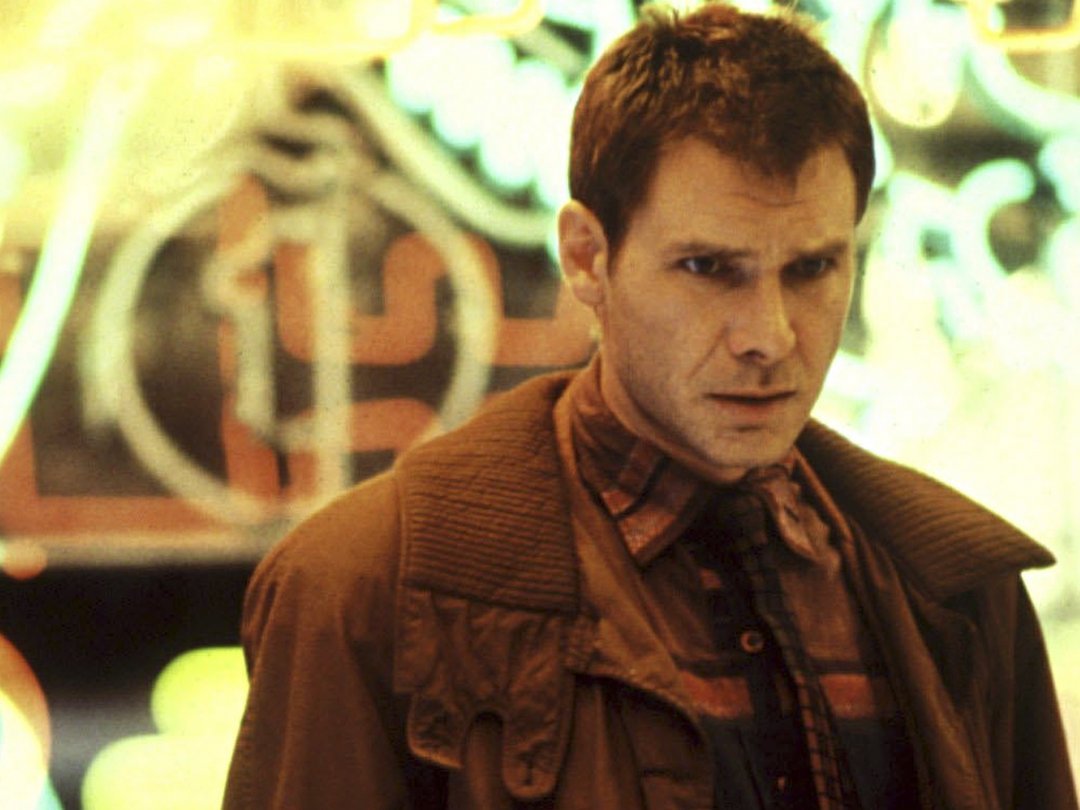
Was Rick Deckard a replicant? It's a question that has followed Harrison Ford's performance for more than four decades. For most of that time, Ford and director Ridley Scott disagreed fiercely, each insisting their own reading was correct.
Ford believed the character to be human, and his acting choices reflected that. Scott was adamant that Deckard was a replicant, and his 1992 director's cut added an iconic unicorn dream sequence, which further skewed the argument in Scott’s favor. Ford eventually came around, admitting he always knew the truth but pushed back because he felt a replicant would want to believe he was human.
Blade Runner 2049 brought Deckard back and put his identity front and center again, with the villain Niander Wallace taunting him directly about his ambiguous existence. Director Denis Villeneuve still refused to officially settle the 44-year debate.
"The Thing" (1982)
Carpenter's movie ends with the two survivors facing each other in darkness as their base burns, wondering if either one of them is human anymore. They drink from the same bottle and barely say a word to each other. The movie ends, and the audience is left wondering what to think.
More than forty years later, people still can’t decide whether MacReady, Childs, or both of them are "The Thing". People have gone as far as to analyse their body temperature, breath, and eye contact frame by frame. However, the frustrating truth is that John Carpenter did not want to make it clear at all because that lack of certainty is the essence of horror itself.
"The Shining" (1980)
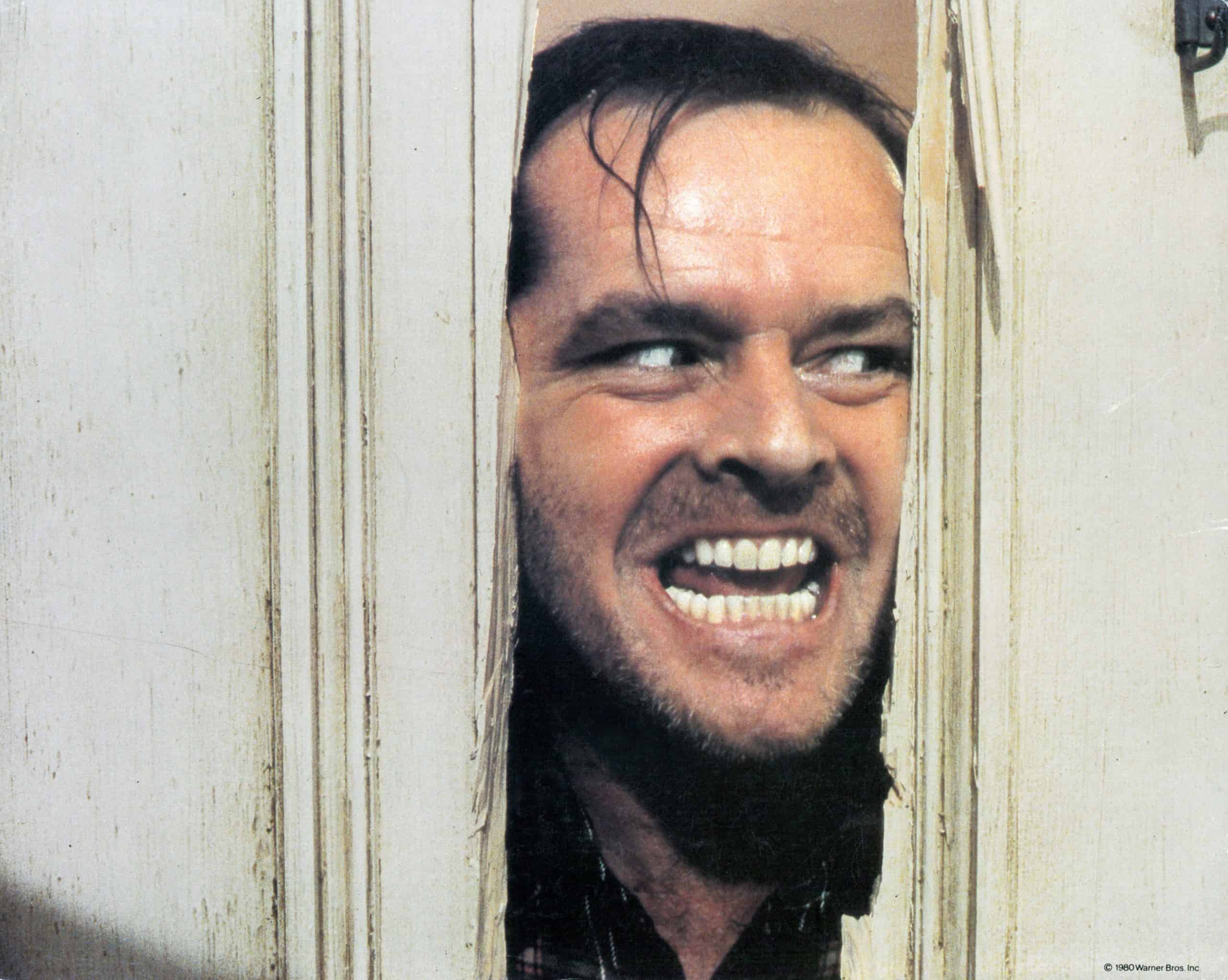
The Shining ends with Jack Torrance freezing to death in the maze. It feels like a resolution, until Kubrick cuts to a photograph hanging on a wall inside the Overlook Hotel. The picture is of a party held in 1921, and Jack can be seen smiling.
In an interview with French film critic Michel Ciment, the director explained that the picture symbolizes the reincarnation of Jack, and that he was always there in the Overlook Hotel from the day it was built. From that perspective, the terrifying events didn’t start with the arrival of the Torrance family but rather years before any of them set foot in the hotel.
Others suggest that the hotel absorbed Jack’s soul, as it did for all its previous victims. In both interpretations, Jack’s fate is sealed in that picture. He will always be trapped there, regardless of whether he was reincarnated or absorbed.
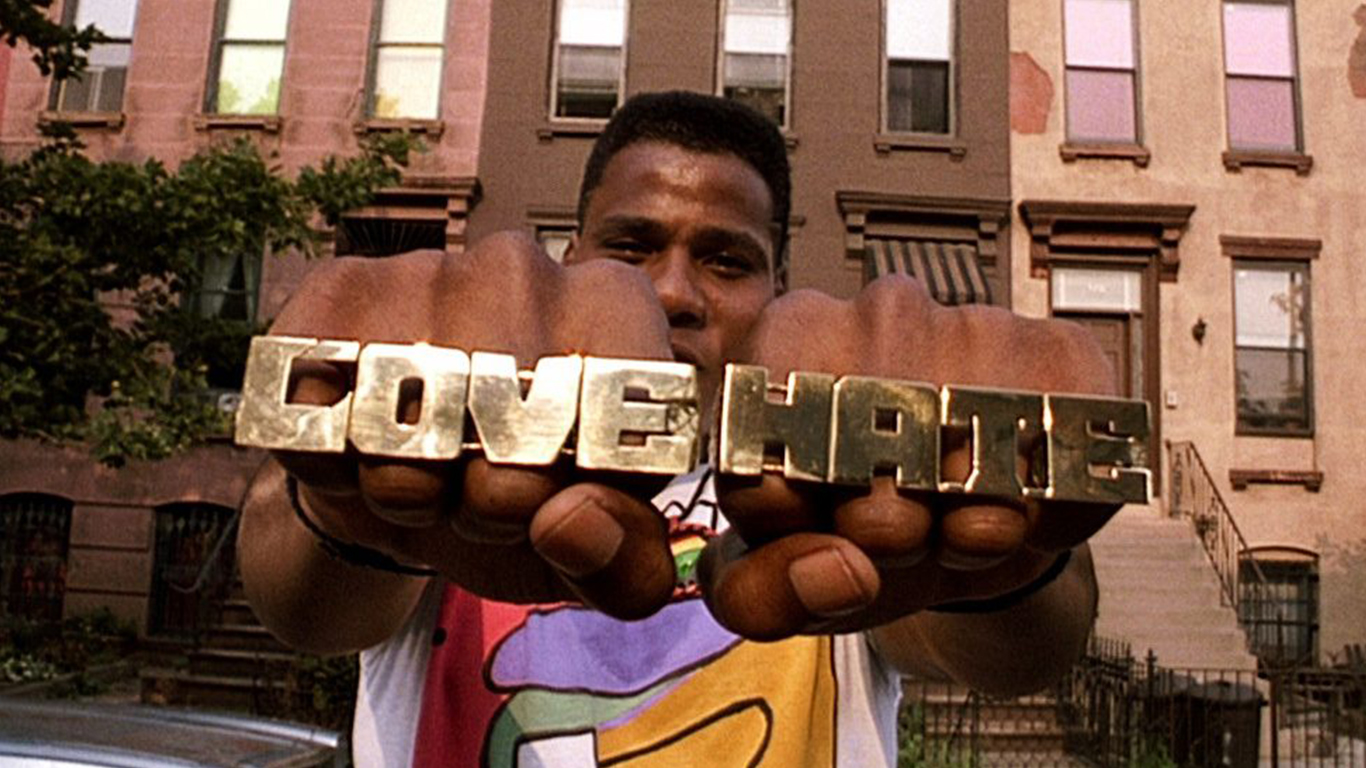
"Do the Right Thing" (1989)
Spike Lee ends his depiction of oppressive summer days on a Brooklyn block with two quotes. One from Martin Luther King condemning violence. One from Malcolm X defending it as self-defense. The film closes on Malcolm X's words. Lee always said that was intentional.
In a Film Comment interview, he defended Mookie's decision to throw a trash can through Sal's window, saying the community was pushed too far for anything else to happen. The question Lee decided to leave unanswered with this ending is whether Mookie did the right thing.
The film was characterized as "a dangerous movie" back in 1989. But some saw the characterization as proof that Lee had captured something true about America that nobody wanted to look at or talk about. With every passing decade, the debate comes back with different interpretations. The end doesn't age because every decade, the question is forced back into discussion.
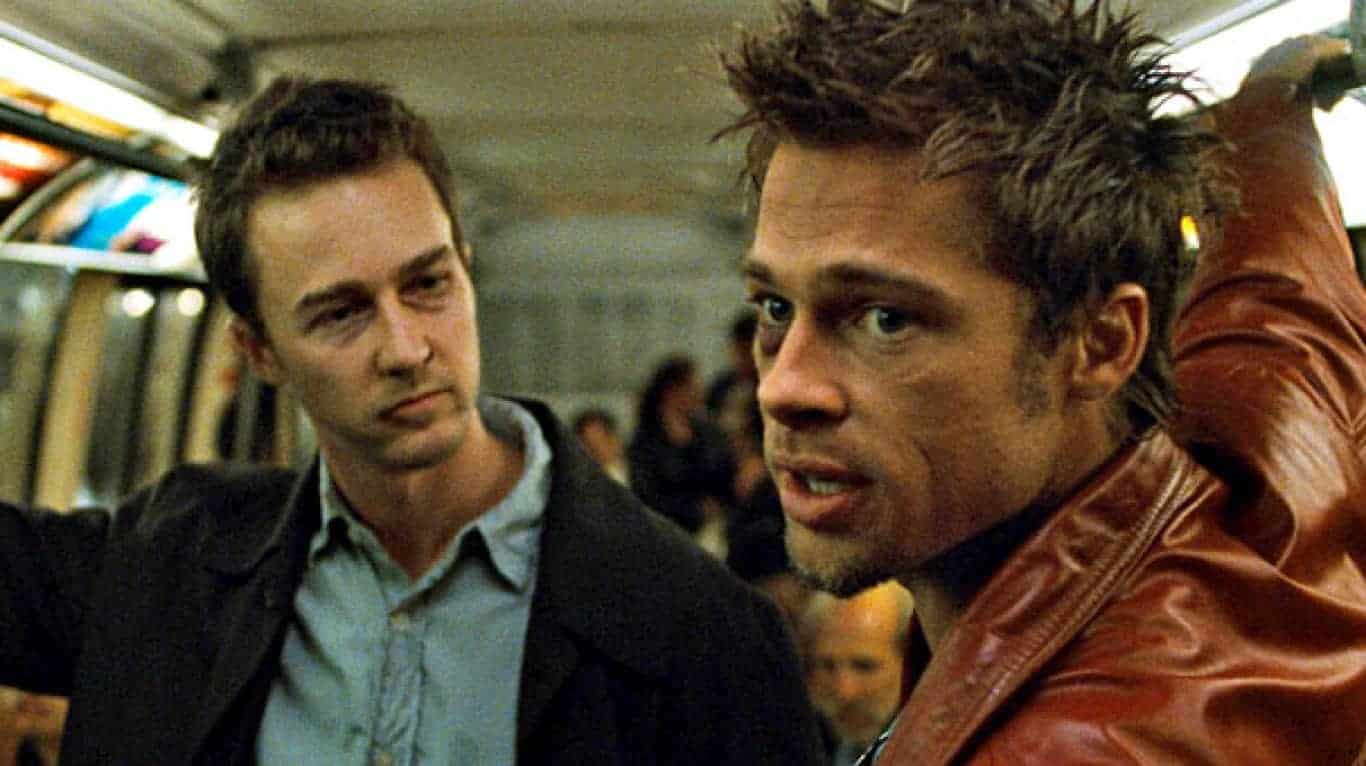
"Fight Club" (1999)
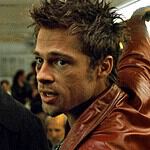
Fight Club follows the arc of the Narrator. He’s an insomniac office worker whose life is turned upside down after he meets the anarchic Tyler Durden. He joins an underground fighting network created by Tyler, only to discover that Tyler is actually his alter ego.
In the end scene, the Narrator embraces Marla as the skyline comes crashing down in flames. Tyler Durden is dead. The real question is whether the Narrator gained anything by destroying his alter ego, or whether he simply completed Tyler's work, becoming him in the process.
Tyler's whole philosophy was that you had to destroy everything, including yourself, to be free. The philosophy of self-destruction. Following that logic all the way to the end, the Narrator didn't defeat Tyler. He became him. He is standing above a city he just destroyed, next to a woman he barely knows, and he seems perfectly at ease. Tyler Durden is dead, but looking at that skyline, it's hard to say he lost.
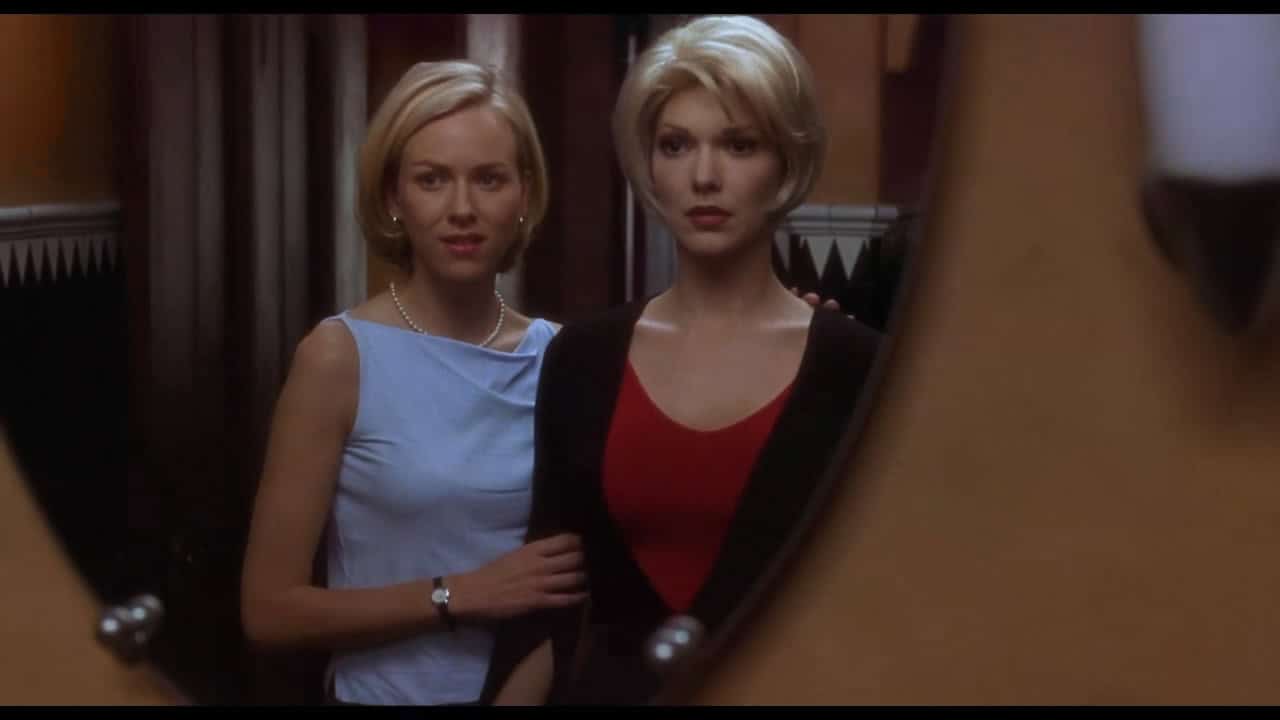
"Mulholland Drive" (2001)
David Lynch spends two hours telling us about Betty and Rita. Then he introduces Diane and Camilla, who look identical but have completely different lives and a relationship that ends in tragedy. We don’t hear or see from Betty and Rita again, and nothing in the second half connects cleanly to the first.
The most common interpretation is that the first half is Diane's dream and the second is her reality. The whole story is a fantasy constructed to escape what she actually did. But Lynch never confirmed it. He left audiences wondering and gave them a list of hints through his official website. He then watched as they came up with a hundred competing theories, but never spoke out about any of them.
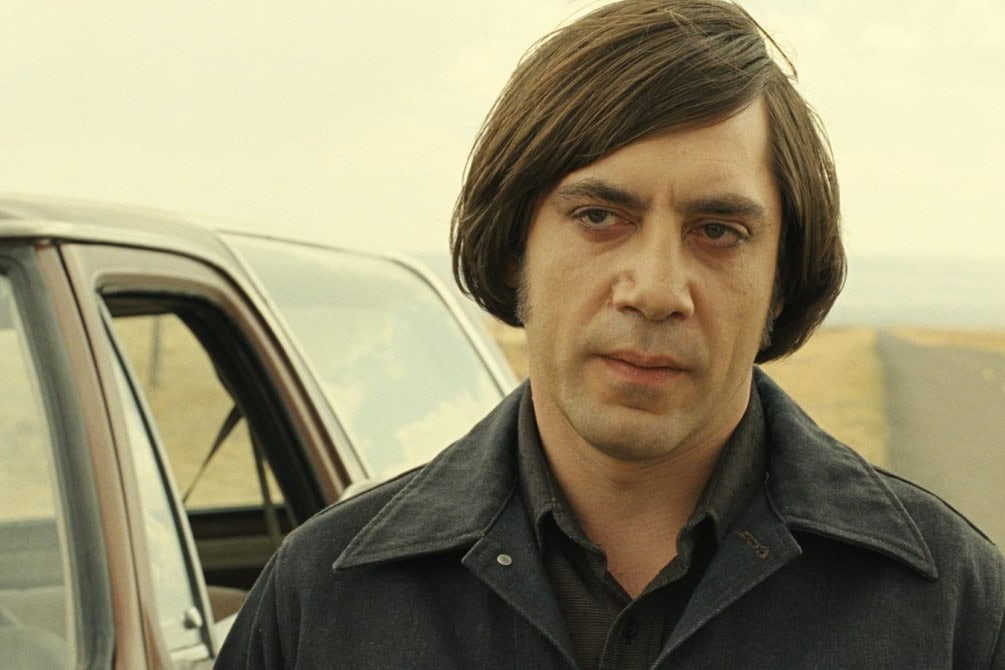
"No Country for Old Men" (2007)
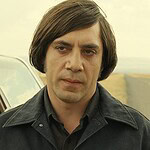
The Coens end their film adaptation of Cormac McCarthy's novel without a showdown. Chigurh walks away while the protagonist dies offscreen. Ed Tom Bell, the aging sheriff played by Tommy Lee Jones, sits with his wife in the morning and quietly describes two dreams he had about his father. The film ends there.
The audience members expecting a traditional Western showdown were left with a sour taste in their mouths. It is often called the best and most disappointing ending of American cinema all at once. Many still argue: Was the refusal to resolve anything a masterstroke or an inability to commit to the ending? Bell's dreams describe a man carrying fire through the darkness. It’s hard to say whether that fire represents hope or death.
"Inception" (2010)
Cobb finally makes it home. His kids rush towards him. He starts spinning his totem, the tiny top that confirms whether he’s dreaming or not. The camera focuses on the spinning totem. It starts wobbling. Then, there is a cut to black just when the totem is supposed to fall down or stop spinning.
According to Christopher Nolan’s interview on both Entertainment Weekly and the "Happy Sad Confused" podcast, the purpose was for Cobb to leave the spinning totem alone since he doesn’t need to know anymore. For the audience, who have spent two whole hours learning they shouldn’t trust anything they’re seeing, it’s too much to take.
The internet did its thing and while some theorists have counted the number of rotations, others have focused on the totem’s wobble. The answer lies in the question itself: a man who spent years imprisoning himself within beautiful illusions would rather not find out.