Briend Garcia/Shutterstock

FBI, Public domain, via Wikimedia Commons

Alexander C. Kafka / BY-ND 2.0
Florida Memory Project / Wikimedia Commons

Stepan_Bogdan / Shutterstock.com

Darrin Klimek / Getty Images

abardwell / BY-SA 2.0
katerha / BY 2.0

fsecart / BY 2.0

California Department of Corrections, Public domain, via Wikimedia Commons

DEA, Public domain, via Wikimedia Commons

hxdbzxy / Shutterstock.com



11 Prison Escapes So Wild They Sound Like Movie Plots
Prison escapes are not exactly everyday events, but they happen more often than the biggest headlines suggest. In a 2023 analysis, CBS News reviewed data from 26 states and found more than 1,100 documented escapes from law enforcement custody over the previous five years. Many were not dramatic breakouts from maximum-security prisons, but the number still shows how many different ways people manage to get out of custody.
Prison breaks have been happening for generations, and some are far stranger than fiction. The escapes below involve tunnels, helicopters, crawl spaces, rooftop breakouts, and fugitives who stayed free for years. Some escapees were recaptured within days. Others disappeared for decades, and a few cases remain unresolved.
For this slideshow, we reviewed reporting from CBS News, Time, the FBI, the U.S. Department of Justice, the U.S. Marshals Service, law enforcement agencies, court records, and other historical sources. These are some of the most remarkable prison escapes on record, including several stories that really do sound like movie plots.
Edward Edwards (1955 and 1960)
Long before Edward Wayne Edwards became known as a convicted serial killer, he had already built a reputation as an escapee and fugitive. Edwards escaped from a jail in Akron, Ohio, in 1955 and later broke out of the Portland, Oregon, city jail in December 1960. The FBI added him to its Ten Most Wanted Fugitives list in November 1961, and police arrested him in Atlanta in January 1962. Decades later, investigators tied him to five murders committed between 1977 and 1996, and he was convicted in those killings before his death in 2011.
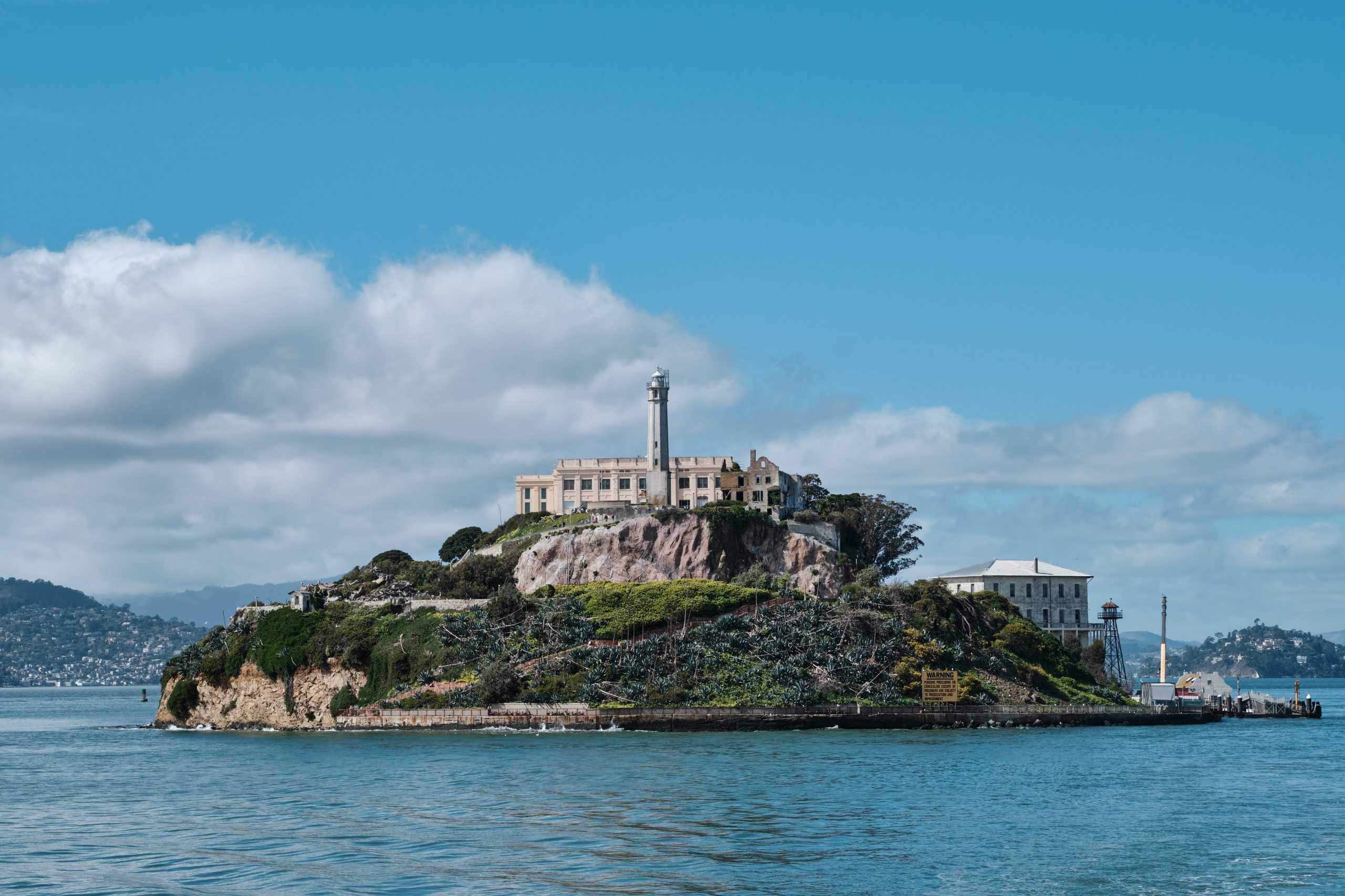
June 1962 Alcatraz Escape
Few prison breaks are as famous as the June 1962 escape from Alcatraz. Frank Morris and brothers John and Clarence Anglin spent months widening ventilation openings behind their cells with crude tools, then moved through an unguarded utility corridor to a hidden workspace above the cellblock. They built dummy heads from plaster, paint, and real hair to fool guards, along with life preservers and a homemade raft fashioned from more than 50 raincoats. On the night of June 11, they reached the shoreline and launched into San Francisco Bay. None of the three was ever located, and their ultimate fate remains unknown.
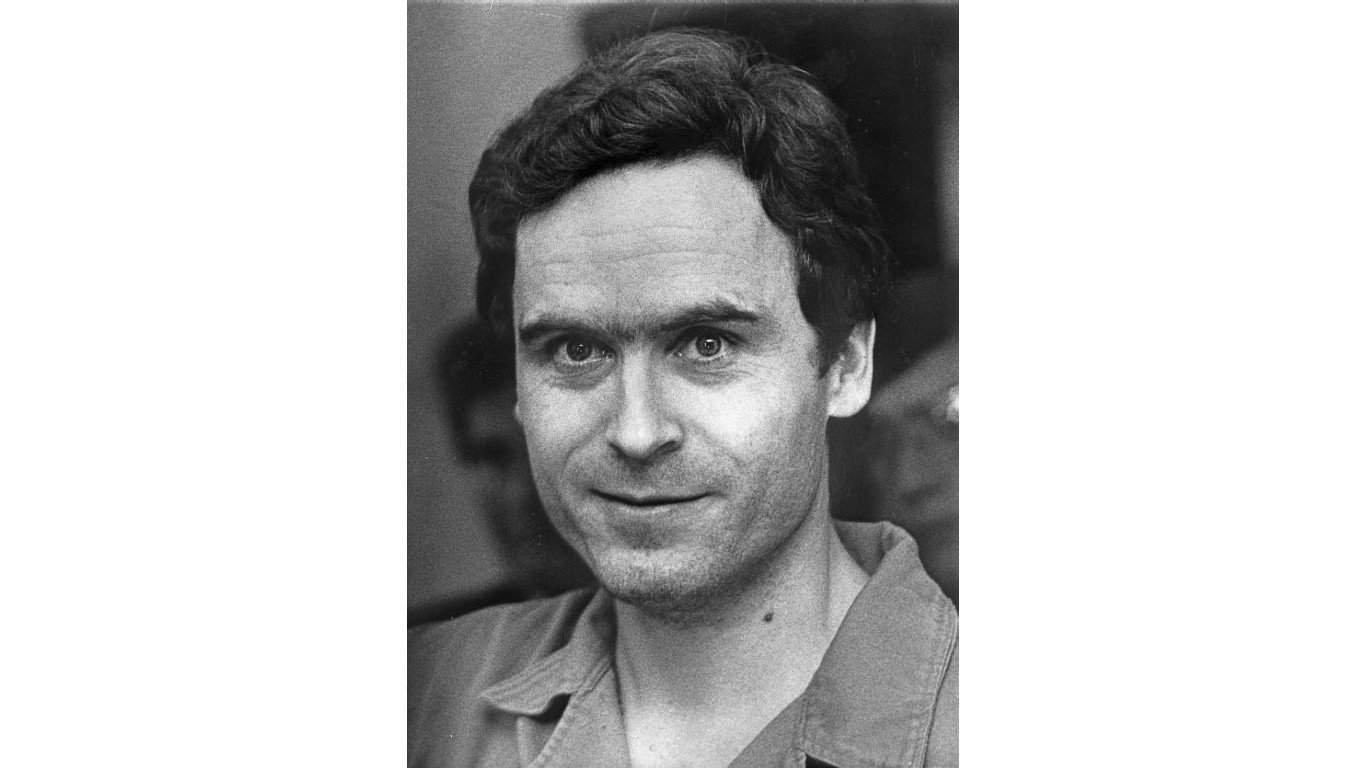
Ted Bundy
Ted Bundy escaped custody twice in 1977. The first came on June 7 while he was representing himself in a Colorado murder case. Left alone in the law library at the Pitkin County Courthouse in Aspen, Bundy jumped from a second-story window and fled into the mountains. He remained at large for six days, during which he broke into a cabin and stole supplies, before police caught him driving a stolen car.
His second escape was far more consequential. On December 30, 1977, Bundy slipped through an opening in the ceiling of his cell at the Garfield County Jail in Glenwood Springs, moved through a crawl space, dropped into a jailer's apartment, changed clothes, and walked out. Jail staff did not discover he was missing until more than 17 hours later. Bundy made his way to Florida, where he committed additional murders before his final arrest in February 1978.
Michel Vaujour's Helicopter Escape
Michel Vaujour's 1986 escape from La Santé Prison in Paris had everything a thriller writer could ask for. His wife, Nadine Vaujour, learned to fly a helicopter, rented one, and on May 26 flew over the prison while Michel waited on the roof. She lowered a rope, picked him up, and flew him away. The escape lasted about four months, not a few hours or days. Police finally captured Vaujour on September 26 after a shootout during an attempted bank robbery in Paris, where he was seriously wounded.
Arthur Rudy Martinez's Escape
Arthur Rudy Martinez escaped from a Washington state prison in 1994 while serving a life sentence for rape and robbery convictions. He then disappeared for roughly 20 years, living under an alias in California. After being diagnosed with terminal cancer, Martinez surrendered to authorities on April 30, 2014, knowing he could receive medical treatment in prison. He died less than two months later. In 2019, investigators in San Luis Obispo County said DNA evidence identified Martinez as the killer of Jane Morton Antunez in 1977 and Patricia Dwyer in 1978.
1995 Vellore Fort Jailbreak
In August 1995, 43 suspected members of the Liberation Tigers of Tamil Eelam escaped from a high-security detention facility inside Vellore Fort in Tamil Nadu, India. The men dug a tunnel roughly 153 feet long that carried them beneath the fortified site and toward the moat. The breakout triggered a major security scandal, and a number of the escapees were recaptured in the days and weeks that followed.
Texas 7
On December 13, 2000, seven inmates escaped from the John B. Connally Unit near Kenedy, Texas, after overpowering civilian workers and prison employees. They stole clothing, weapons, and a prison truck before fleeing. The group, soon known as the Texas Seven, remained on the run for about six weeks and was linked to the Christmas Eve robbery of a sporting-goods store in Irving, where police officer Aubrey Hawkins was killed. Four fugitives were arrested in Colorado on January 22, 2001, while Larry James Harper died by suicide as officers closed in. The final two escapees surrendered two days later.
Clovis, New Mexico Jailbreak
On August 24, 2008, eight inmates escaped from the Curry County Adult Detention Center in Clovis, New Mexico. Investigators said the men gained access to plumbing compartments, climbed pipes inside the walls, and used homemade tools to cut a hole through the roof. Four were back in custody within a week, but the manhunt stretched much longer for others. Edward Salas, a convicted killer who was the last of the eight still at large, was captured by Mexican authorities in Chihuahua City on October 4, 2012, more than four years after the jailbreak.
Darnell Keith Washington's Escape
Darnell Keith Washington escaped from the Glen Helen Rehabilitation Center in San Bernardino County on August 28, 2012, while being held on robbery and receiving-stolen-property charges. Authorities said his wife, Tania Washington, helped him get out. Days later, Darnell exchanged gunfire with Los Angeles County Sheriff's Deputy John Marquez in South El Monte, wounding the deputy, who survived. The couple then continued a multijurisdictional crime spree. In October, they were arrested in Washington state while driving a vehicle stolen from the home of 55-year-old Susie Ko, a retired teacher who had been stabbed to death in Hercules, California. Darnell Washington was later convicted of Ko's murder and sentenced to death.
El Chapo's Escape
Joaquín "El Chapo" Guzmán escaped from Mexican prisons twice. His first breakout came in 2001, when he fled the Puente Grande prison hidden in a laundry cart. After Mexican authorities recaptured him in 2014, Guzmán escaped again on July 11, 2015, through a tunnel dug from a nearby property to the shower area of his cell at the Altiplano prison. The sophisticated tunnel was ventilated and lighted and included a motorcycle mounted on rails to move people and materials. Guzmán was recaptured in January 2016, extradited to the United States the following year, and sentenced in 2019 to life in federal prison plus 30 years.
Casey White Prison Escape
Casey White escaped from the Lauderdale County Detention Facility in Florence, Alabama, on April 29, 2022, with help from Vicky White, the jail's assistant director of corrections. Casey was already serving a 75-year sentence and was awaiting trial on a capital murder charge. Investigators said the two, who were not related, had developed a romantic relationship. Their 11-day flight ended in Evansville, Indiana, on May 9 after a police pursuit and crash. Casey surrendered to authorities. Vicky suffered a self-inflicted gunshot wound during the encounter and later died at a hospital; a coroner ruled her death a suicide.