Wikimedia Commons

TomH2323 / BY 2.0

Jake from Manchester, UK / BY 2.0

Defence Images / BY-SA 2.0

Coral Springs Talk / BY 2.0

Skiba, Justin M. / BY-SA 4.0

stillunusual / BY 2.0

'FanSmiles' on YouTube / BY 3.0

Copyright: Copyright © Carrie McLain Museum / AlaskaStock / CC0 1.0
Wikimedia Commons

InSapphoWeTrust / BY-SA 2.0

Gene Hunt / BY 2.0

Eligius4917 / BY-SA 2.0

EdmondMeinfelder / BY 2.0
Wikimedia Commons

PumpkinSky / BY-SA 3.0

Tony Atkin / BY-SA 2.0

twm1340 / BY-SA 2.0

Miguel Villagran / Getty Images




18 Stories of Real-Life Courage We Should Never Forget
History remembers plenty of heroes, but fame and courage aren't the same thing. Some people become household names. Others make one extraordinary decision, save lives, stand against something terrible, or spend decades quietly helping strangers and somehow remain a footnote.
The stories here span war, terrorism, civil rights, disaster, personal survival, and even one remarkably determined sled dog. What connects them isn't perfection or celebrity. It's what they did when somebody else needed help and the easier option would have been to look the other way.
Some eventually received medals, memorials, or long-overdue recognition. Others never lived to see their actions widely celebrated. All of them are reminders that courage usually looks much less glamorous while it's actually happening.
Welles Crowther (2001)
Welles Crowther was a 24-year-old equities trader and volunteer firefighter working on the 104th floor of the World Trade Center's South Tower on September 11, 2001. After Flight 175 struck the building, Crowther covered his face with the red bandana he routinely carried and began guiding survivors toward the only usable stairway from the devastated 78th-floor sky lobby. He repeatedly went back upstairs rather than continuing to safety. Crowther is now credited with helping save as many as 18 people before the tower collapsed. Survivors initially knew him only as the mysterious "man in the red bandana." His identity emerged months later. In September 2026, Crowther was posthumously awarded the Presidential Medal of Freedom, 25 years after he gave his life helping strangers escape.
Witold Pilecki (1940s)
Getting sent to Auschwitz was something people desperately tried to avoid. Polish resistance officer Witold Pilecki deliberately went in. In September 1940, he allowed himself to be captured during a German roundup in Warsaw so he could enter the camp under an assumed name, organize resistance, and report what was happening inside. Pilecki spent more than two and a half years at Auschwitz, helping build an underground network while information about imprisonment, torture, executions, and mass murder made its way to the Polish resistance. He escaped in April 1943 and continued fighting the Nazis, including during the Warsaw Uprising. After the war, Poland's communist government arrested him on espionage charges and executed him in 1948. He was formally rehabilitated decades later.
Dipprasad Pun (2010)
During a 2010 deployment to Afghanistan, Gurkha soldier Dipprasad Pun found himself defending an isolated checkpoint during a nighttime Taliban attack. Pun later estimated there may have been 20 to 30 attackers, although local residents put the number closer to 15. Either way, he was badly outnumbered. For roughly 17 minutes, Pun fired about 250 machine-gun rounds, emptied six rifle magazines, used 17 grenades and a Claymore mine, and kept moving around the position as attackers approached from multiple directions. At one point, after running out of conventional options, he struck an attacker with the tripod from his machine gun. His defense prevented the checkpoint from being overrun and saved the other three soldiers there. Britain awarded him the Conspicuous Gallantry Cross.
Anthony Borges (2018)
Anthony Borges was only 15 when gunfire erupted at Marjory Stoneman Douglas High School in Parkland, Florida, on February 14, 2018. Borges and about 20 other students rushed into a classroom as the shooter approached. Borges was the last one through the doorway and tried to secure it while the others took cover. He was shot five times but stayed between the gunfire and his classmates. The students behind him survived. Borges endured multiple surgeries and a long recovery, but he lived. Heroism gets discussed so casually that the word can lose some of its weight. A teenager using his own body to protect a room full of classmates is one of those stories that puts the meaning back pretty quickly.
Richard Jewell (1996)
Security guard Richard Jewell noticed an unattended backpack beneath a bench in Atlanta's Centennial Olympic Park during the 1996 Summer Olympics. It contained a pipe bomb. Jewell alerted authorities and helped move spectators away before the device exploded, undoubtedly limiting what could have been an even worse attack. Then his life took a brutal turn. Jewell became the focus of the FBI investigation, and after his status as a suspect leaked, enormous media attention followed. He was never charged and was formally cleared. Years later, Eric Rudolph pleaded guilty to the bombing and several other attacks. Jewell's story is remembered both for what he did that night and for what happened when suspicion raced far ahead of proof.
Irena Sendler (1940s)
Irena Sendler was a Polish social worker and member of Żegota, the underground Council to Aid Jews, during the Nazi occupation of Poland. She played a major role in a network that moved Jewish children out of the Warsaw Ghetto and hid them with families, orphanages, convents, and other institutions. The number associated with that rescue effort is often given as roughly 2,500 children, although the work involved an entire underground network rather than Sendler acting alone. She maintained coded records linking children's assumed identities with their real ones in hopes families could be reunited after the war. The Gestapo arrested and tortured her in 1943 and sentenced her to death. Żegota members bribed officials, allowing her to escape and return to underground work.
Claudette Colvin (1955)
On March 2, 1955, a 15-year-old Claudette Colvin refused an order to give up her seat to a white passenger on a segregated Montgomery, Alabama, bus. Police arrested her. Nine months later, Rosa Parks made a similar stand and became the far better-known face of the Montgomery Bus Boycott. Colvin's role did not end with her arrest, though. She became one of the plaintiffs in Browder v. Gayle, the federal lawsuit that successfully challenged segregation on Montgomery's buses. Her juvenile record was finally expunged in 2021, 66 years after her arrest. Colvin died in January 2026 at age 86, having lived long enough to finally receive far more recognition for a stand she took when she was barely old enough to drive.
Togo the Sled Dog (1925)
Balto got the statue. Togo did most of the brutal mileage. During the 1925 emergency effort to carry diphtheria antitoxin to Nome, Alaska, multiple dog teams relayed the medicine across hundreds of miles of frozen wilderness. Twelve-year-old Togo led musher Leonhard Seppala's team for more than 261 miles, including what the National Park Service calls the longest and most dangerous leg of the journey. Balto's team covered the final 55 miles and therefore arrived in Nome with the serum, earning most of the immediate fame. That doesn't diminish Balto's role, but it left Togo's extraordinary run in the shadows for decades. A century later, history has become considerably better at giving both dogs their due.
Hugh Thompson Jr. and His Crew (1968)
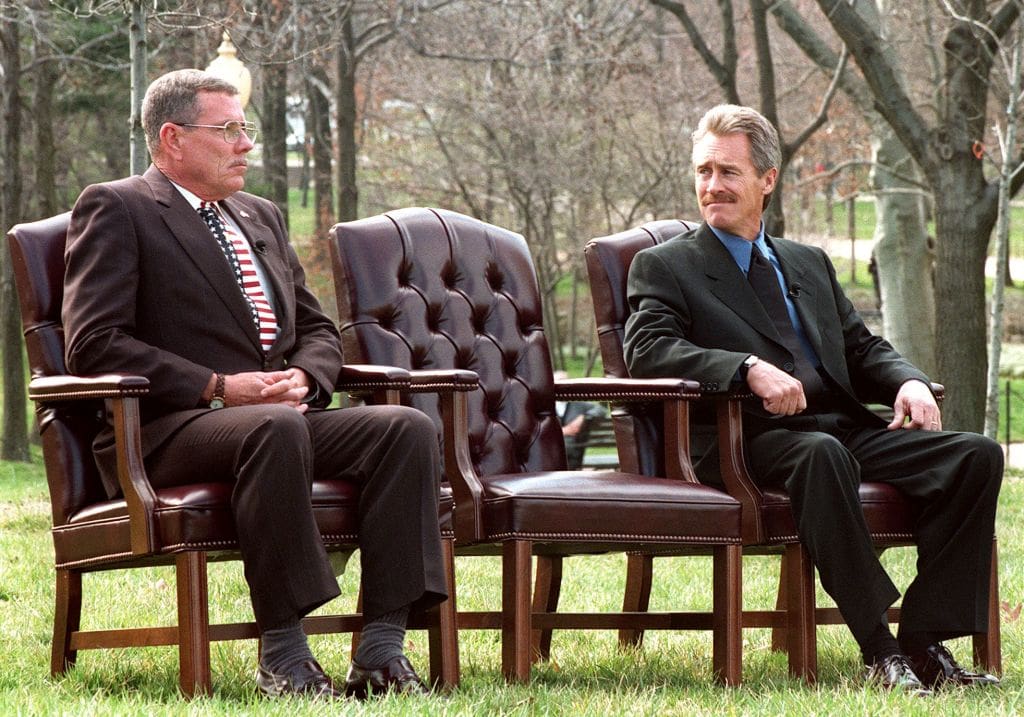
One of the hardest forms of courage is standing against your own side when you know something is terribly wrong. On March 16, 1968, Army helicopter pilot Hugh Thompson Jr. and crewmen Glenn Andreotta and Lawrence Colburn were flying over My Lai in South Vietnam when they realized American soldiers were killing unarmed civilians. Thompson landed his helicopter between U.S. troops and a group of Vietnamese villagers and ordered his crew to protect the civilians, even if that meant firing on fellow American soldiers who tried to kill them. Thompson then helped arrange helicopter evacuations and reported what he had witnessed up the chain of command. Decades later, Thompson and his crew were awarded the Soldier's Medal. Sometimes courage means charging toward an enemy. Sometimes it means being willing to tell your own people, "No."
Betty Ong (2001)
Betty Ong was a flight attendant aboard American Airlines Flight 11 when hijackers seized the plane on September 11, 2001. Shortly afterward, Ong called an American Airlines reservation center and calmly began explaining what was happening: crew and passengers had been injured, the cockpit was not responding, and she believed the aircraft was being hijacked. She stayed on the phone for about 23 minutes, relaying information from the cabin until Flight 11 struck the World Trade Center's North Tower at 8:46 a.m. Listening to portions of that call today, what stands out is how controlled she remained while describing something terrifying. Ong could not save herself, but she spent her final minutes making sure people on the ground understood what was happening in the air.
Stanislav Petrov (1983)
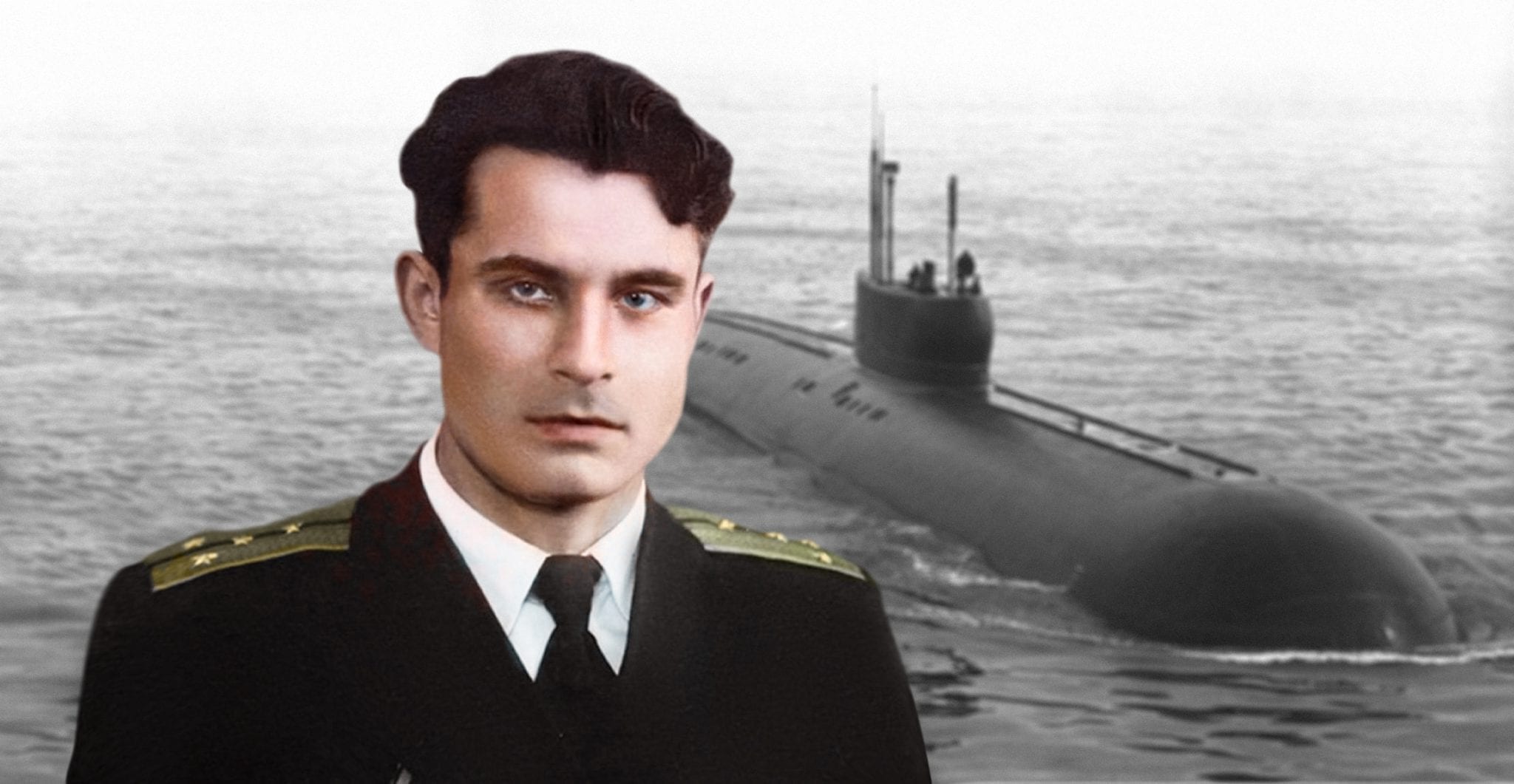
Stanislav Petrov didn't have a button that could single-handedly launch Soviet nuclear weapons, but his judgment during one terrifying night still mattered enormously. On September 26, 1983, the Soviet Union's satellite warning system indicated that the United States had launched nuclear missiles. Petrov was the duty officer responsible for evaluating the alarm and passing information up the chain of command. Something didn't make sense to him. A real American first strike, he reasoned, was unlikely to consist of only a handful of missiles, and ground radar had not confirmed the satellite warning. Petrov reported the alert as a false alarm. He was right. Sunlight reflecting from high-altitude clouds had fooled the system. How a different judgment might have played out is unknowable, but in the middle of an extremely tense Cold War, Petrov's restraint helped keep a computer error from becoming something far worse.
James Harrison (1954-2018)
Australian blood donor James Harrison became known as the "Man with the Golden Arm" for a reason. His plasma contained valuable anti-D antibodies used to produce medication that protects babies from potentially deadly complications when an Rh-negative mother is carrying an Rh-positive child. Harrison began donating in 1954 after receiving life-saving transfusions himself during major surgery as a teenager. He kept showing up for more than six decades. By the time age limits forced him to retire in 2018 at 81, Harrison had made 1,173 donations. Australian Red Cross Lifeblood estimates his contributions helped protect up to 2.4 million babies. Harrison died in February 2025 at age 88. He never rushed into a burning building. He just kept an appointment, again and again and again, for 64 years.
Ruben Garcia (1978-Present)
Ruben Garcia helped establish Annunciation House in El Paso, Texas, in 1978 as a volunteer-run place of hospitality for migrants, refugees, and other people arriving at the border with nowhere else to go. What began in an aging building near the U.S.-Mexico border developed into a network that has sheltered thousands of people over nearly five decades. Garcia has spent much of his adult life coordinating food, shelter, transportation, and basic assistance rather than simply talking about immigration from a distance. The work has also placed Annunciation House in the middle of major political and legal fights over border policy. Whatever someone's position on those larger debates, Garcia's personal work has been remarkably consistent: when exhausted people arrive needing a bed, a meal, or help reaching family, somebody opens the door.
Vasili Arkhipov (1962)
Stanislav Petrov wasn't the only Soviet officer whose restraint mattered during the nuclear age. On October 27, 1962, at the height of the Cuban Missile Crisis, U.S. ships were dropping signaling depth charges near the Soviet submarine B-59 in an effort to force it to surface. The Americans did not know the submarine carried a nuclear torpedo. Inside the overheated vessel, its captain believed they could be under attack and prepared to use the weapon. Vasili Arkhipov, the senior submarine flotilla officer aboard B-59, refused to approve the launch and helped calm the situation. The submarine surfaced instead. Nobody can know exactly what would have followed a nuclear detonation against American ships in the middle of the Cuban Missile Crisis. That's kind of the point. Thanks in part to Arkhipov, humanity never had to find out.
Liviu Librescu (2007)
Liviu Librescu had already survived extraordinary things before April 16, 2007. Born into a Jewish family in Romania, he survived persecution during the Holocaust and later built a distinguished career as an engineer and professor. At 76, he was teaching at Virginia Tech when a gunman began attacking classrooms inside Norris Hall. Librescu held his classroom door shut while telling students to escape through the windows. Students later credited those precious seconds with giving them the chance to get out. Librescu was fatally shot while resisting the gunman's entry. There isn't much need to dress this one up with inspirational language. A 76-year-old professor stood between an armed killer and his students and stayed there while they escaped.
Rick Rescorla (2001)
Rick Rescorla didn't wait until September 11 to start saving people. As Morgan Stanley's vice president of security at the World Trade Center, the Vietnam veteran had spent years insisting on evacuation drills and preparing employees for another attack after the 1993 bombing. When the North Tower was struck on 9/11, building announcements initially told occupants of the South Tower that it was secure. Rescorla ordered Morgan Stanley employees out anyway. The company credits his planning and evacuation with saving 2,687 employees. Rescorla then went back inside to search for others. He was last seen heading upward shortly before the South Tower collapsed. His remains were never recovered. The drills employees once found annoying suddenly became the reason thousands of them went home.
Gary Gordon and Randy Shughart (1993)
During the Battle of Mogadishu on October 3, 1993, U.S. Army snipers Gary Gordon and Randy Shughart watched from a helicopter as enemy fighters closed in on the crash site of a downed Black Hawk. Ground troops could not reach the crew in time. Gordon and Shughart repeatedly volunteered to be inserted at the site anyway, fully aware that they would be badly outnumbered. Permission was finally granted. The two men defended the wounded crew until both were killed. Their actions helped save pilot Michael Durant, who was captured and later released. Gordon and Shughart were posthumously awarded the Medal of Honor. Their decision wasn't complicated. Other soldiers were trapped below, so they asked to be put on the ground with them.
Tina Turner (1970s-1980s)
Tina Turner is hardly an unknown name, but the courage behind her comeback sometimes gets overshadowed by the music. Turner later spoke openly about years of physical and emotional abuse by her husband and musical partner, Ike Turner. In 1976, she finally left him. Their divorce was completed in 1978, and Turner had to rebuild a career that many in the music business assumed was already over. Then came one of pop music's great second acts. Her 1984 album Private Dancer transformed her into an international solo superstar in her 40s. Just as importantly, Turner's willingness to speak publicly about domestic abuse gave other survivors a famous voice saying that leaving, surviving, and rebuilding were possible. Turner died in 2023 at age 83.