PRO Visual Solutions/Shutterstock.com
"Colt Paterson 5th Model" by Hmaag is licensed under CC0 1.0.
Ricce / Public domain
"S&W Model 10 Mfg. 1960" by ~Steve Z~ is licensed under BY-SA 2.0.
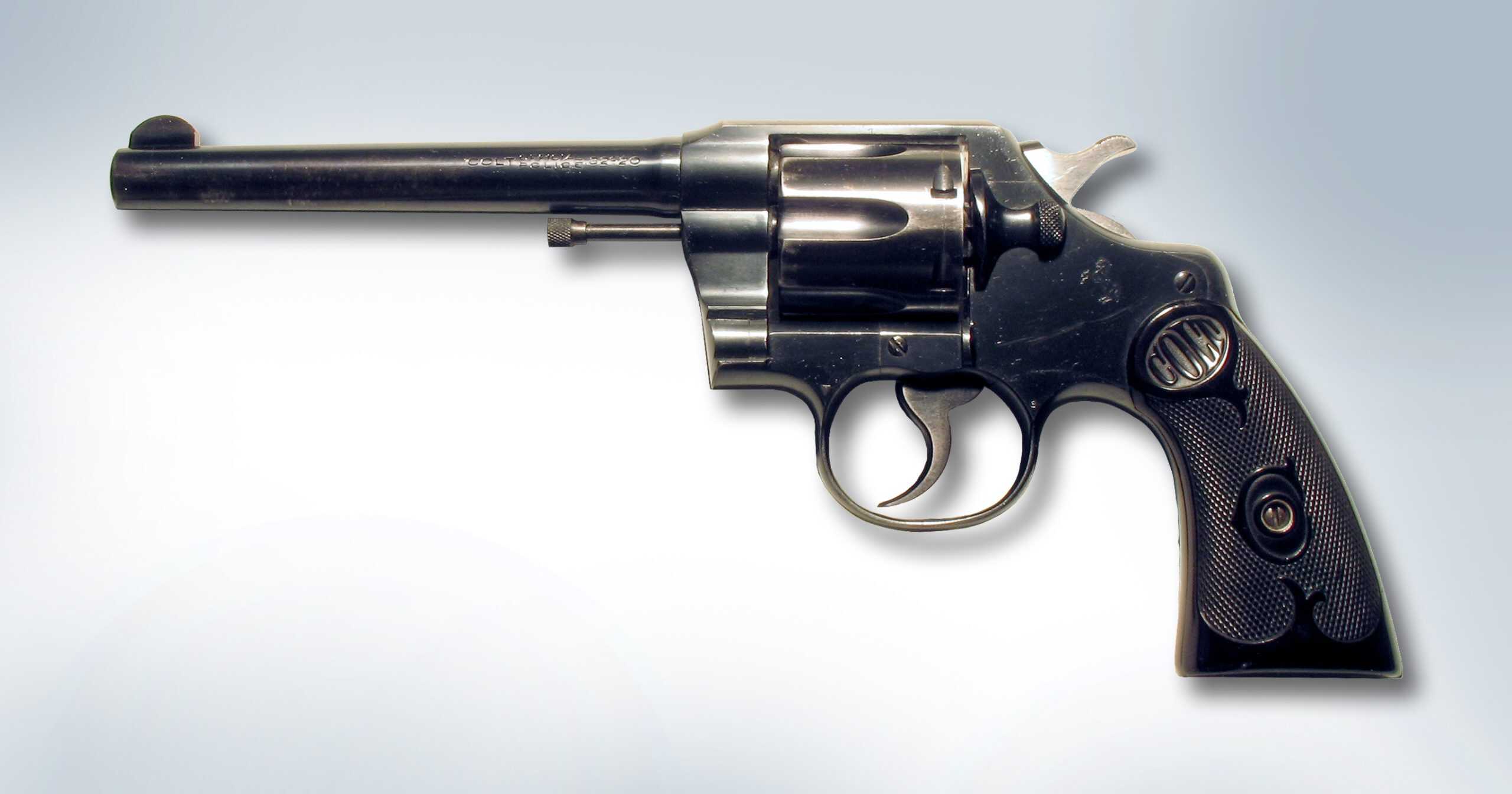
"Colt Official Police 32-20 1927 noBG" by Hatchetfish is licensed under BY-SA 3.0.
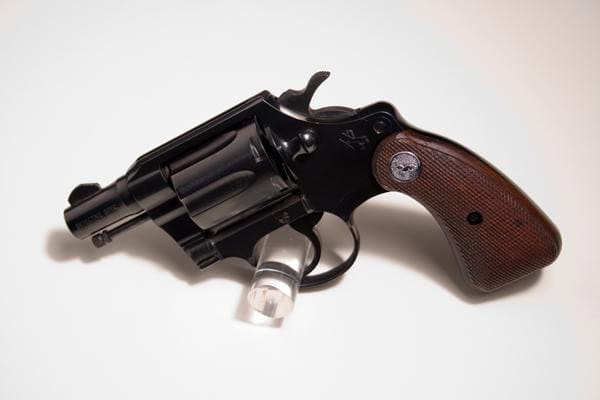
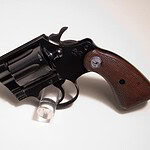
"File:Flickr - ~Steve Z~ - Colt Detective Special 1960 (1).jpg" by Stephen Z is licensed under BY-SA 2.0.
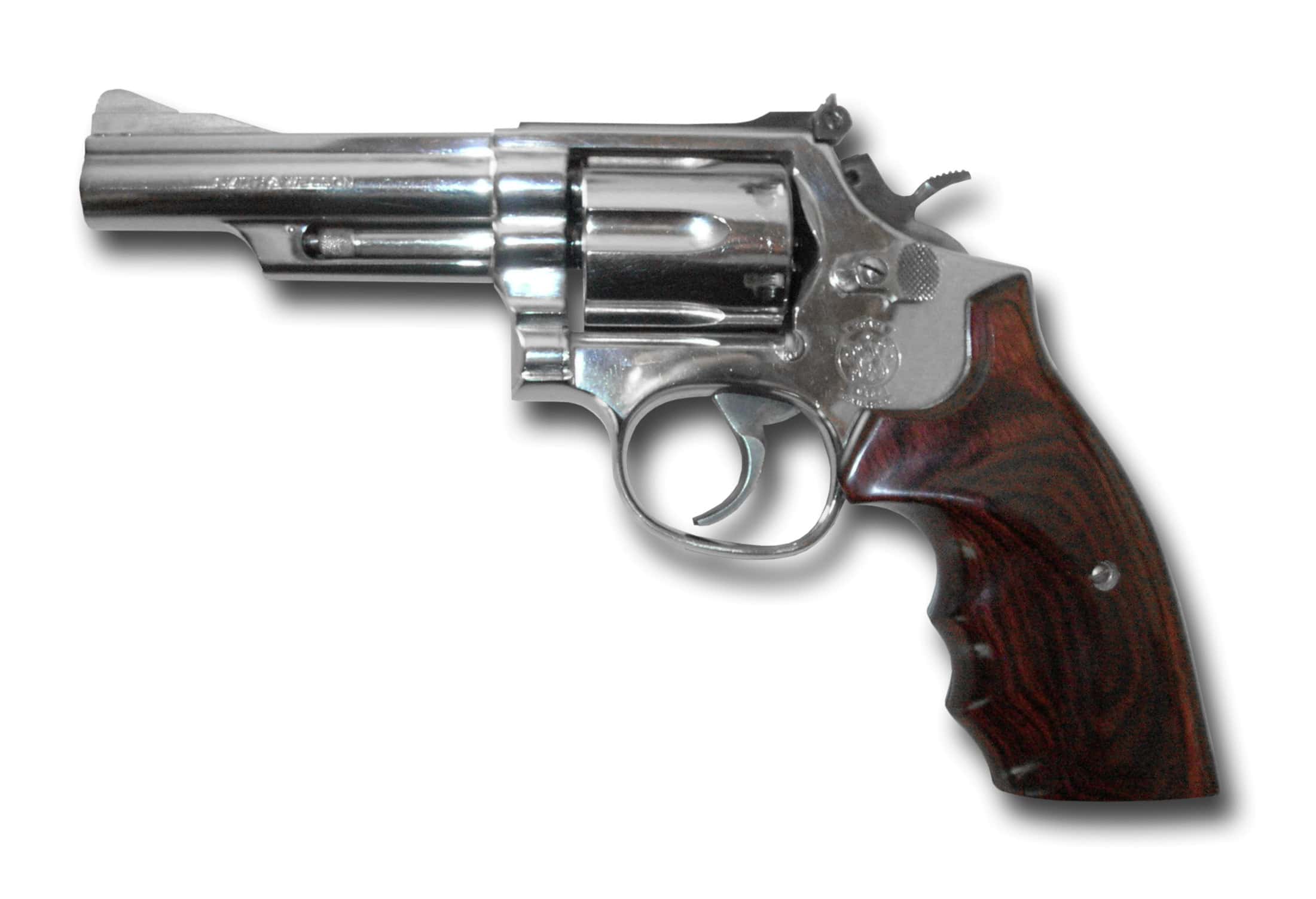
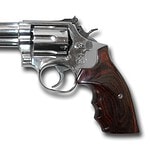
"S&W Model 19-5 .357 Magnum noBG" by Patrudisill in der Wikipedia auf Englisch is licensed under CC0 1.0.
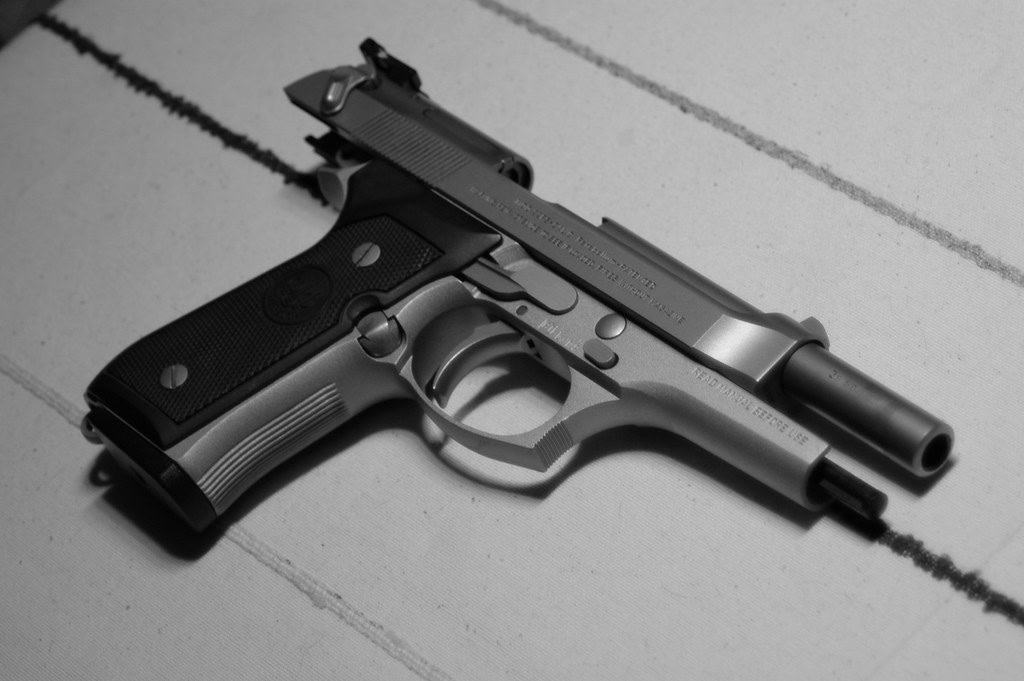
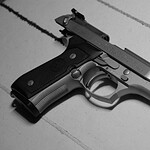
"Beretta 92FS (right)" by storem is licensed under BY-SA 2.0.
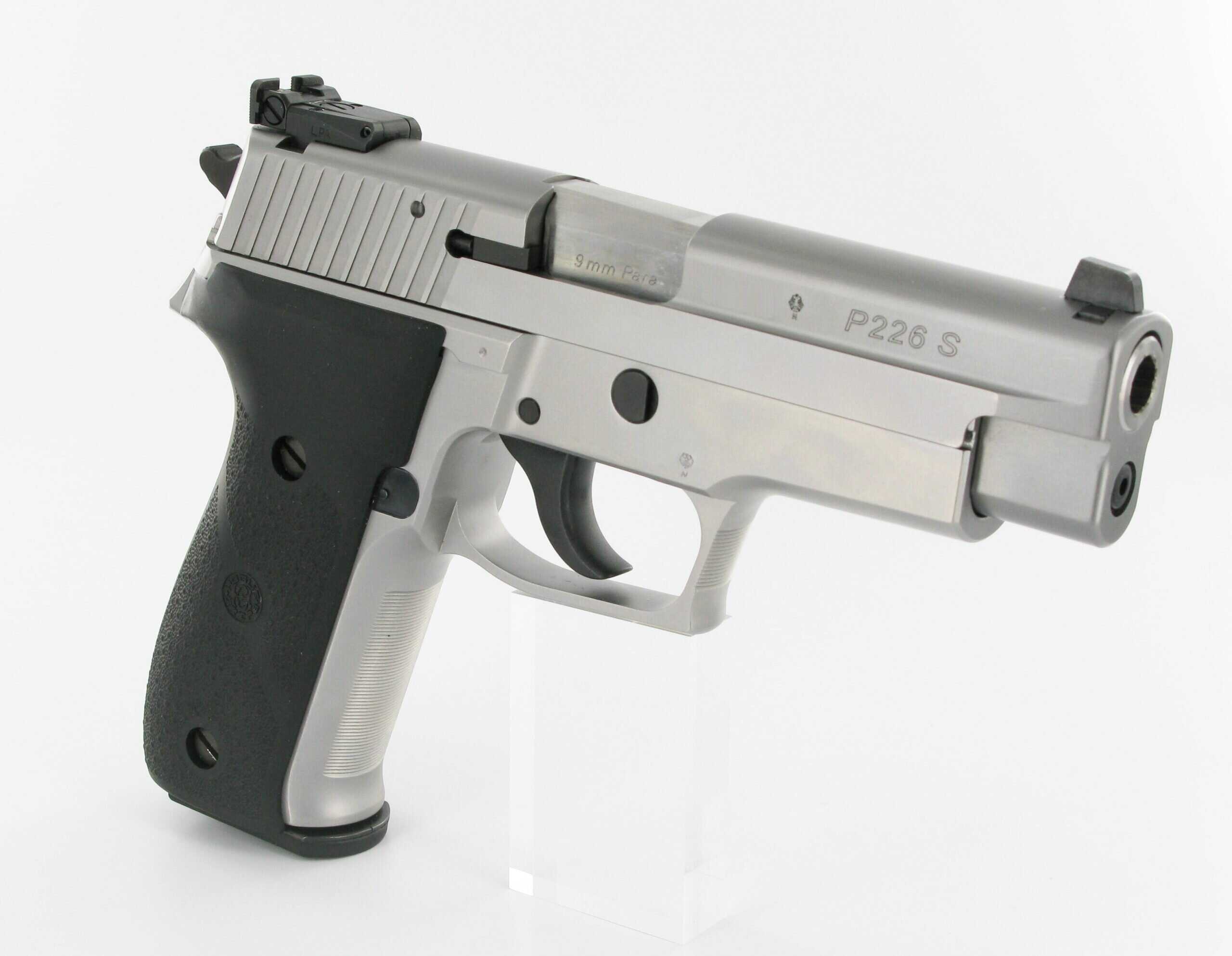
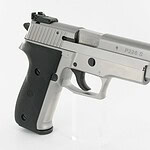
"Pistole SIG Sauer P226 S" by Michael Kneisch is licensed under BY-SA 3.0.
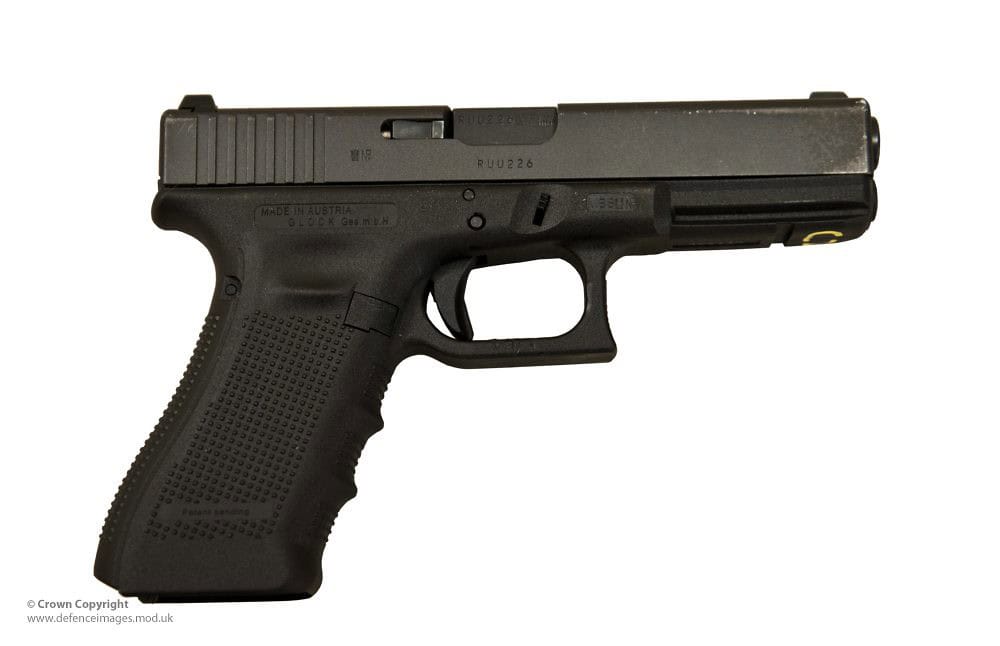
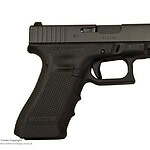
"Glock 17" by Defence Images is licensed under BY-SA 2.0.
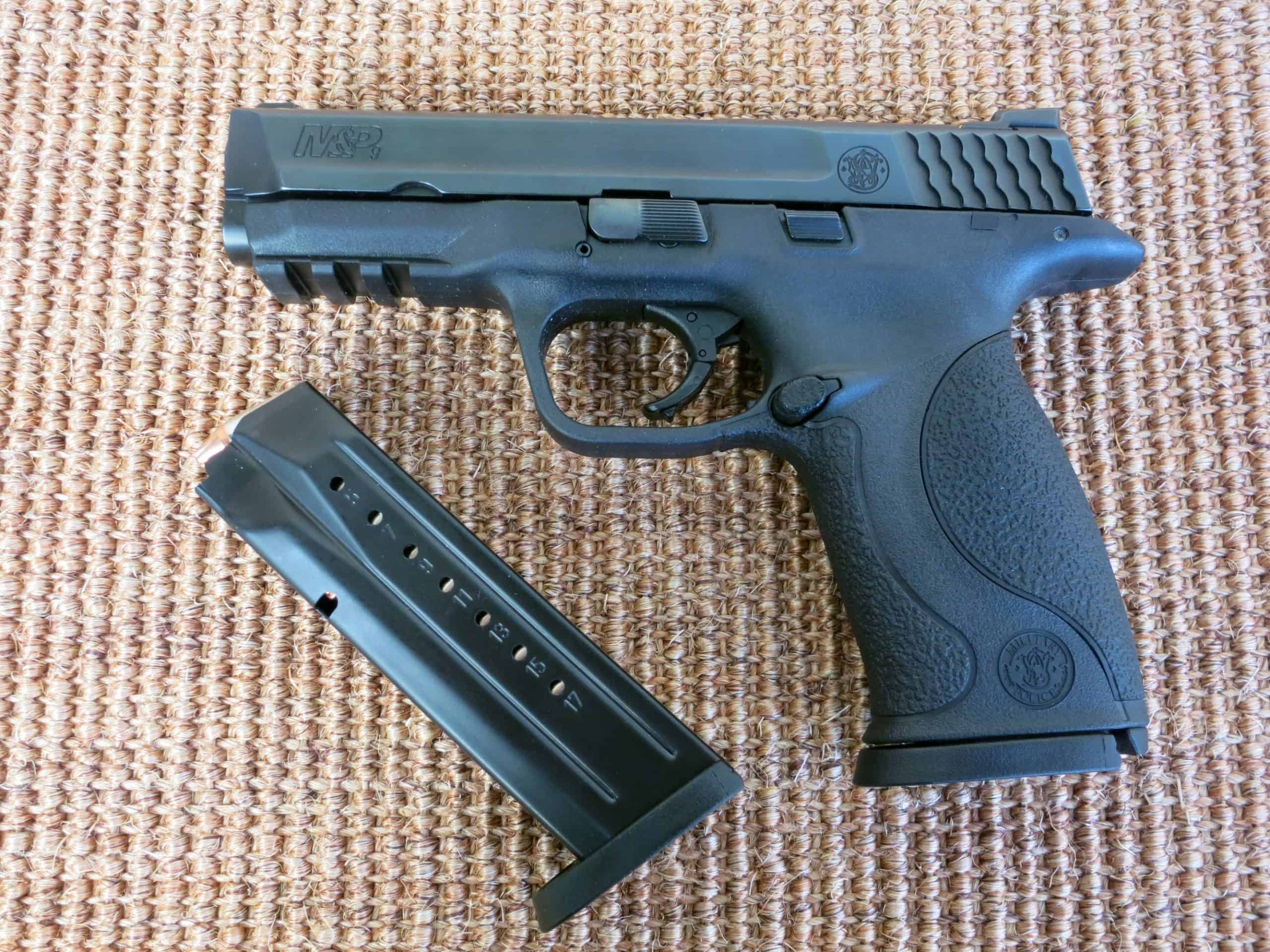
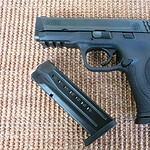
"Smith & Wesson M&P 9 (15626517354)" by James Case from Philadelphia, Mississippi, U.S.A. is licensed under BY 2.0.
These Pistols Define American Law Enforcement Over the Years
For much of American history, the handgun on a law enforcement officer's belt reflected the technology and threats of the era. Frontier lawmen carried single-action revolvers. By the early 20th century, dependable .38-caliber double-actions had become police staples. Then came the shift to higher-capacity semiautomatic pistols, followed by the lightweight polymer designs that dominate the job today.
There was never one handgun carried by every police department in America, and agencies have always set their own rules. Still, a handful of designs became closely tied to particular chapters of U.S. law-enforcement history. These 10 handguns helped define that evolution.
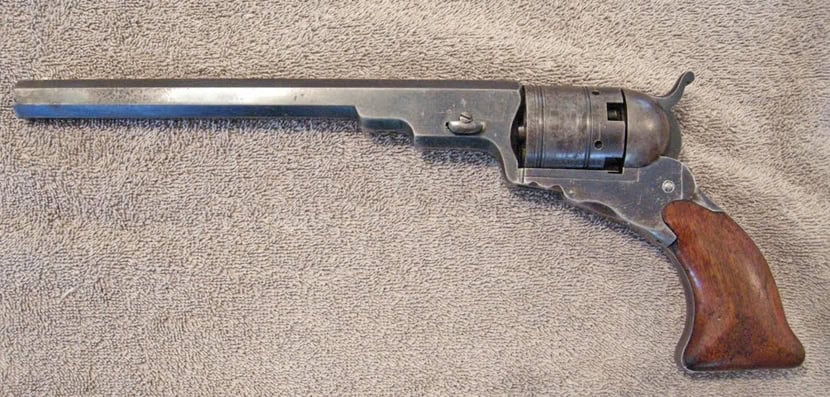
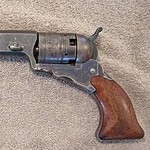
Colt Paterson
The Colt Paterson predates the modern American police department, so calling it a standardized police sidearm goes too far. Its place in law-enforcement history instead comes largely through the Texas Rangers. Rangers under Capt. John Coffee Hays famously used five-shot Colt Paterson revolvers against Comanche warriors at the Battle of Walker Creek in 1844, helping establish the advantages of a repeating handgun on the frontier. Samuel Colt's early revolver was not yet the universal lawman's weapon Hollywood later made it seem, but it helped point American sidearm design in that direction.
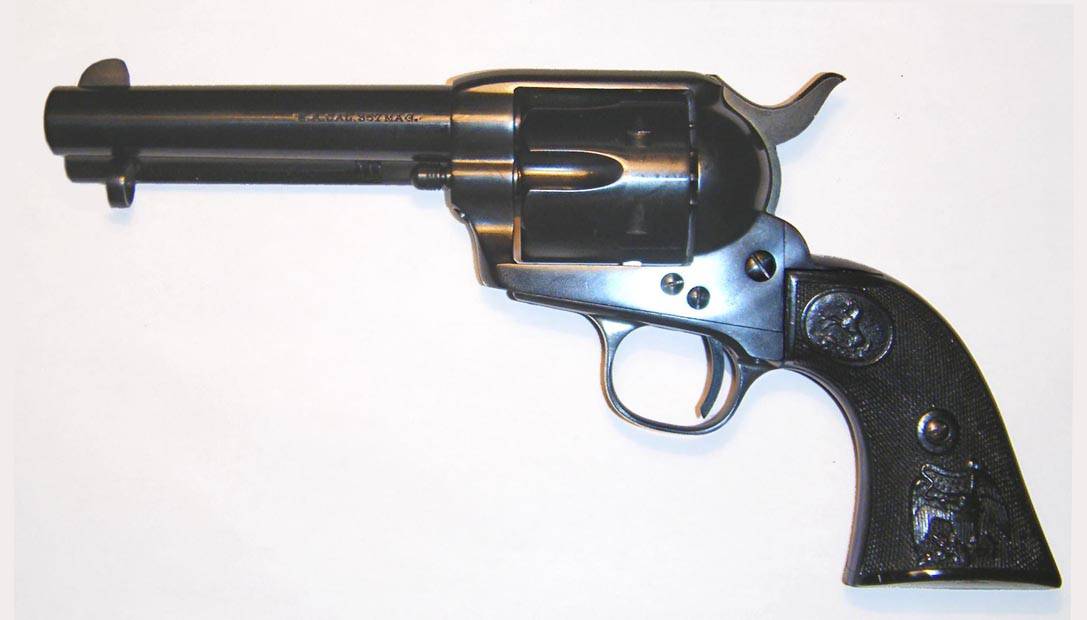
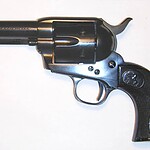
Colt Single Action Army
If one handgun is permanently associated with the American West, it is probably the Colt Single Action Army. Introduced in 1873, the revolver was adopted as a standard U.S. military sidearm, with Colt delivering more than 30,000 to the federal government through 1891. It also became closely associated with sheriffs, marshals, Texas Rangers, and other lawmen on the frontier. Individual officers often supplied their own firearms in that era, so there was nothing resembling today's nationwide procurement system, but the Peacemaker became one of the defining American service revolvers of the late 19th century.
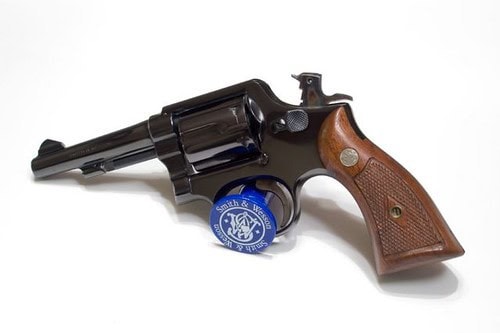
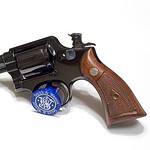
Smith & Wesson Model 10
This may be the most important police revolver on the entire list. Smith & Wesson introduced the .38 Military & Police revolver in 1899 alongside the .38 S&W Special cartridge. It received the Model 10 designation in 1957, but by then generations of American officers were already familiar with the design. More than six million have been produced, and the Library of Congress describes the Model 10 as the standard sidearm of American police officers for much of the 20th century. Before semiautomatics took over police duty belts, the six-shot .38 was about as familiar as a badge and radio.
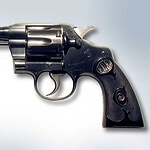
Colt Official Police
Smith & Wesson did not have the police-revolver market to itself. Colt introduced the Army Special in 1908, and by 1927 the company was selling the design under a much more revealing name: the Official Police. The full-size double-action revolver became a familiar law-enforcement sidearm during the first half of the 20th century and was offered in several chamberings, with .38 Special becoming especially important. Along with Smith & Wesson's Military & Police line, the Official Police helped establish the basic formula Americans came to expect from a police duty revolver.
Colt Detective Special
Uniformed patrol officers were only part of the equation. Detectives and plainclothes officers needed something smaller, and Colt answered that need with the Detective Special in 1927. The compact six-shot revolver paired a short barrel with a swing-out cylinder and became one of the classic concealed police handguns of the 20th century. It was especially associated with detectives, undercover officers, and off-duty carry. The basic idea was simple: shrink a dependable service revolver enough that an officer could carry it discreetly without dropping all the way to a tiny pocket gun.
Smith & Wesson Model 19
By the 1950s, some officers wanted the performance of a .357 Magnum without carrying one of Smith & Wesson's heavier large-frame revolvers all day. Border Patrol officer and firearms instructor Bill Jordan pushed the company toward a lighter .357 built on its medium-size K-frame. The resulting Combat Magnum debuted in 1955 and became the Model 19 when Smith & Wesson switched to numerical model names in 1957. It became a major law-enforcement revolver for decades, while the later stainless-steel Model 66 offered essentially the same concept in a different package.
Beretta 92FS
The great police transition from revolvers to semiautomatic pistols accelerated during the 1980s and 1990s, and the Beretta 92 family became one of the era's most recognizable designs. The U.S. military's 1985 selection of a Beretta 92 variant as the M9 gave the platform enormous visibility, while American law-enforcement agencies also adopted or authorized versions of the 92. The Los Angeles Police Department, for example, has long included the 92F and 92FS among its authorized duty handguns. With a 15-round standard magazine in 9mm, the full-size Beretta represented a very different police sidearm from the six-shot revolvers that had dominated the previous generation.
SIG Sauer P226
The SIG Sauer P226 came out of the same 1980s service-pistol competition that ultimately produced the military's Beretta M9. It did not win that contract, but it went on to build a long career with military units and American law enforcement. Police departments and federal agencies adopted P226-family pistols in multiple configurations over the following decades. Its double-action/single-action operating system and metal frame made it part of the generation that helped move American policing away from revolvers before polymer-framed pistols became the dominant trend.
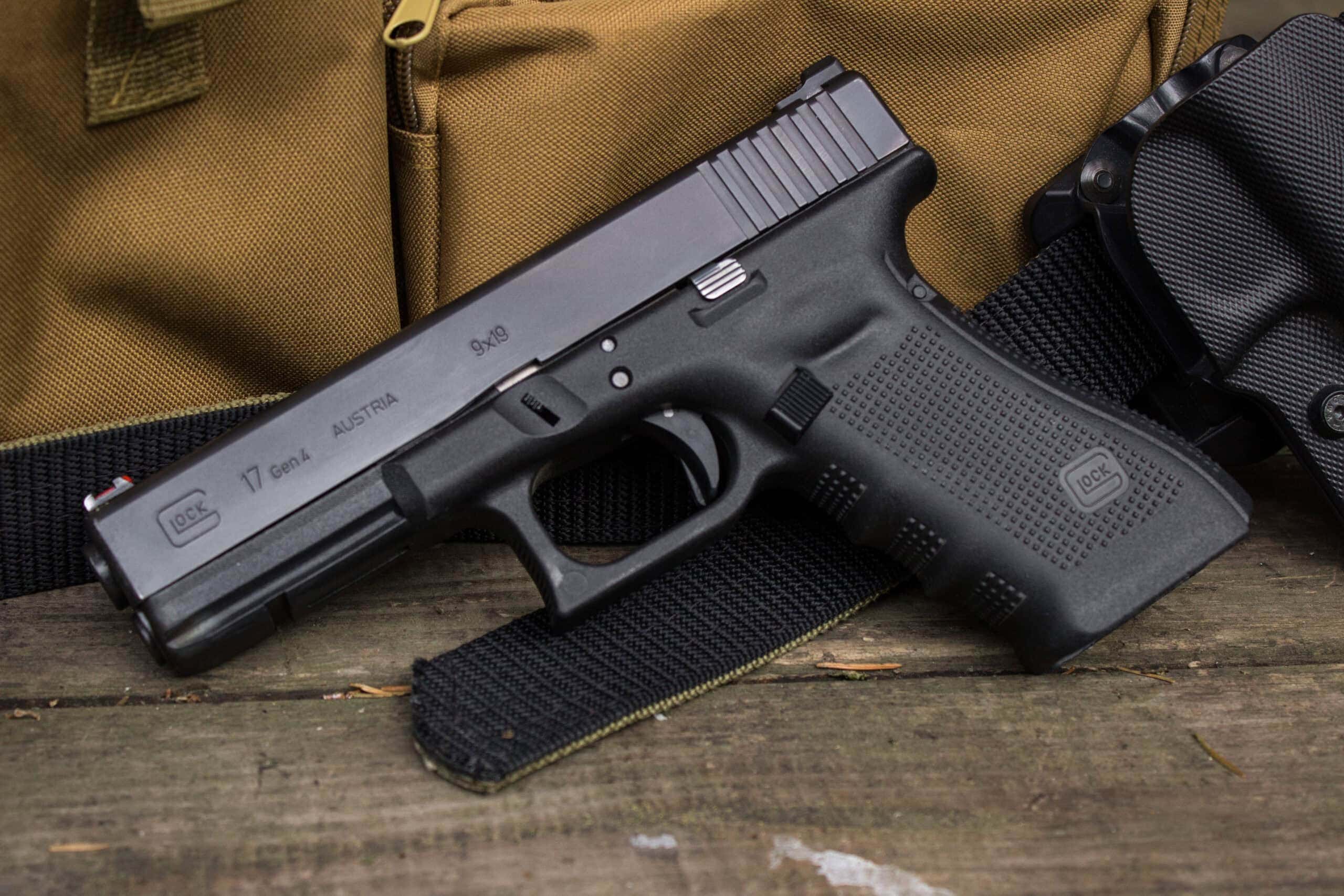
Glock 17
Few handguns changed American police equipment as much as Glock's polymer-framed designs. Developed in Austria and adopted there as a military pistol in 1982, the Glock 17 reached the United States in the mid-1980s. Glock identifies the Miami Police Department as the first U.S. law-enforcement agency to adopt its pistols in 1987, and other agencies followed quickly. The Glock 17 combined a lightweight frame, a 17-round standard magazine, and a consistent striker-fired trigger system. More important historically, its success helped make polymer-framed, striker-fired pistols the new normal across American law enforcement.
Smith & Wesson M&P Series
Smith & Wesson brought the old Military & Police name into the polymer-pistol era when it introduced the modern M&P semiautomatic line in 2005. The connection to the company's famous police revolvers was intentional, but the new handgun was designed for a very different market. The striker-fired M&P quickly won law-enforcement contracts, with Smith & Wesson reporting adoption by more than 100 departments during its first year. Later versions, including the M&P M2.0, kept the line competitive as departments increasingly standardized around polymer-framed duty pistols. More than a century after the original Military & Police revolver debuted, the M&P name was back on police duty belts in a completely different form.